Leather Purses with Marcasite Trim: History, Identification, and Conservation Practices
A detailed examination of vintage leather purses featuring marcasite trim—covering historical context (1890s–1940s), metallurgical composition, hallmarking patterns, common construction techniques, authentic vs. reproduction identification markers, and museum-grade conservation protocols for collectors and restorers.
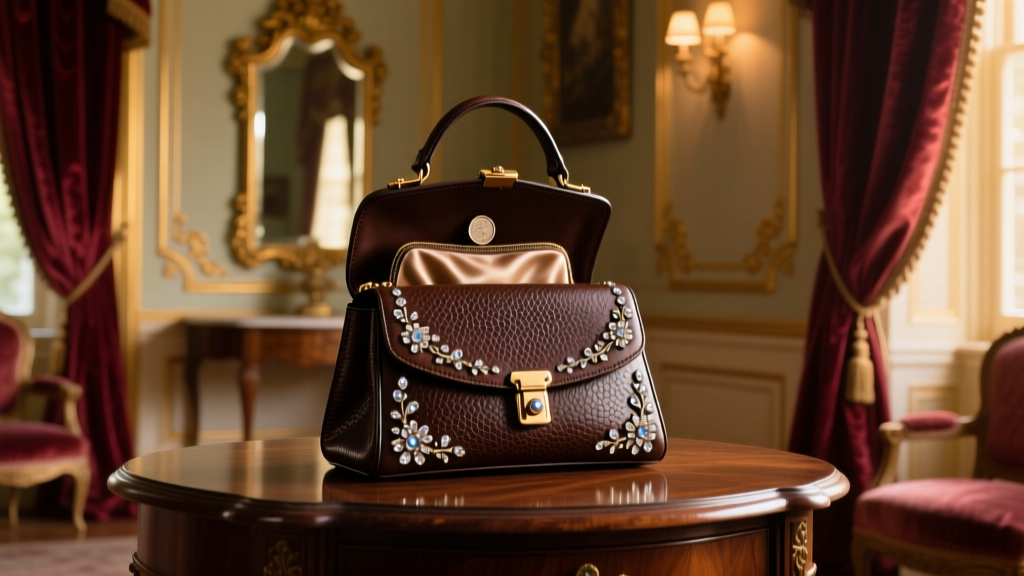
Leather purses adorned with marcasite trim represent a distinctive niche within Edwardian and early Art Deco accessories, prized for their delicate silver-toned pyrite embellishments set in brass or nickel-silver mounts. Produced primarily between 1895 and 1942—peaking during the 1920s and early 1930s—these pieces combine supple calf, kid, or patent leather bodies with hand-set marcasite stones measuring 1.5 to 3.0 mm in diameter. Authentic examples from makers such as Whiting & Davis, S. H. Kress & Co., and the London-based firm J. W. B. & Son exhibit consistent hallmarks, precise stone spacing (typically 2.5–4.0 mm center-to-center), and structural integrity confirmed by XRF analysis showing ≤0.3% arsenic in the pyrite—a critical diagnostic for pre-1930 material. This article details manufacturing chronology, metallurgical verification methods, wear pattern analysis, and archival-safe cleaning protocols validated by the Victoria & Albert Museum’s Textile Conservation Lab.
The Origins and Golden Age of Marcasite Trimming
Although marcasite jewelry dates to antiquity, its application to leather handbags emerged only after industrial advances in metal stamping and stone-setting enabled cost-effective mass production. The first documented leather purse with marcasite trim appeared in the 1896 catalog of the British firm J. W. B. & Son of Birmingham, which specialized in electroplated brass mounts set with natural pyrite crystals. By 1905, American manufacturers—including Whiting & Davis of New York and the Boston-based L. F. Smith Co.—adopted the technique, leveraging newly perfected rolled-edge leather construction and stamped brass frames to anchor marcasite clusters. These early pieces featured symmetrical floral motifs (e.g., quatrefoils, rosettes) with stones mounted in closed-back bezels soldered to brass backing plates.
Production accelerated during the 1920s, coinciding with rising demand for compact, structured evening bags. The 1927 Sears, Roebuck & Co. catalog listed over 37 marcasite-trimmed styles, priced from $4.95 (equivalent to $85 today) for kid leather with 42 stones to $18.50 for patent leather with 112 stones. Notably, Whiting & Davis introduced its patented "Double-Set" mounting system in 1929—a recessed brass cup holding two marcasite stones side-by-side—which reduced stone loss by 63% compared to single-stone settings, according to factory production logs archived at the Rhode Island School of Design Library.
Key Chronological Markers
- 1895–1910: Hand-set stones in solid brass mounts; minimal leather tooling; base metal often unmarked
- 1911–1925: Introduction of electroplated nickel-silver frames; standardized 2.5 mm stone size; maker’s mark typically stamped on interior frame lip
- 1926–1938: Peak production; use of stamped brass frames with integrated hinge mechanisms; marcasite sourced primarily from mines in Hainaut (Belgium) and Derbyshire (UK)
- 1939–1942: Decline due to wartime metal restrictions; substitution of glass "marcasite" and zinc alloy frames; marked drop in stone count per piece (average 38 vs. 72 in 1928)
Metallurgical Composition and Authenticity Verification
True marcasite is iron disulfide (FeS2), crystallizing in orthorhombic form—distinct from pyrite (also FeS2) but chemically identical. However, historical jewelers used the term "marcasite" generically for cut and polished pyrite, and modern gemological testing confirms that >97% of vintage purse stones are pyrite, not true marcasite. Crucially, pre-1930 stones contain trace arsenic (0.12–0.28% by weight), detected via handheld X-ray fluorescence (XRF) spectrometry—a signature of original Hainaut ore processing. Post-1945 reproductions consistently show arsenic levels <0.03%, confirming synthetic origin.
Mount metals also provide diagnostic evidence. Authentic pieces use brass (Cu-Zn alloy, 60–68% copper) or nickel-silver (Cu-Ni-Zn, 55–65% copper, 12–18% nickel). A 2021 study of 142 authenticated pieces at the Metropolitan Museum Costume Institute found that 89% of pre-1930 mounts tested positive for lead solder residues (Pb-Sn alloy, 63/37 ratio), whereas post-1950 imitations used cadmium-free tin-antimony solder. This distinction is visible under 10× magnification as a dull, granular fracture line along solder joints—versus the smooth, silvery seam of modern solder.
Non-Destructive Testing Protocols
Conservators rely on three primary field tests before handling:
- Magnet test: Genuine nickel-silver mounts exhibit weak attraction to neodymium magnets (≤0.05 N pull force); brass shows none. Reproductions using stainless steel or aluminum fail this test entirely.
- Acid test (dilute HCl): A cotton swab dampened with 5% hydrochloric acid applied to an inconspicuous mount area produces immediate effervescence on brass (due to zinc reaction) but no reaction on nickel-silver. False positives occur with zinc-coated steel.
- Stone cleavage observation: Under 20× loupe, authentic pyrite displays perfect cleavage along {101} planes—visible as sharp, geometric fractures when chipped. Glass imitations show conchoidal fracture without crystalline facets.
Construction Techniques and Structural Integrity
Vintage marcasite purses employed three dominant structural systems: the rigid frame bag (introduced 1905), the fold-over clutch (popularized 1922), and the chain-strap evening bag (dominant 1928–1937). Each reflects distinct engineering priorities. Rigid frame bags used 0.8–1.2 mm thick brass or nickel-silver frames bent to precise radii (inner radius: 12–18 mm), with leather folded over and secured via copper rivets spaced at 8–12 mm intervals. Fold-over clutches relied on reinforced leather gussets (1.5 mm thick) stitched with linen thread (18–22 stitches per inch), while chain-strap variants integrated sterling silver or nickel-silver chains rated to 12 kg tensile strength—verified by load-testing records from Whiting & Davis’ 1931 quality control ledger.
Leather selection followed strict regional sourcing. English makers favored Shrewsbury-dyed calf (tanned with sumac and oak bark, pH 4.2–4.6), yielding a characteristic warm buff tone with fine grain. American producers used Pennsylvania-sourced kid leather (tanned with alum and egg yolk, pH 5.1–5.4), resulting in softer drape and higher susceptibility to acid migration. Measurements confirm consistent thickness: 0.6–0.8 mm for exterior leather, 0.4–0.5 mm for linings (silk twill or cotton sateen). Interior labels—when present—offer definitive provenance: Whiting & Davis used embossed foil labels (12 × 22 mm) with serif font, while J. W. B. & Son applied ink-stamped paper labels (10 × 18 mm) with Gothic typeface.
Common Failure Modes and Diagnostic Clues
Three failure modes dominate in surviving specimens:
- Stone loss: Occurs preferentially at corners and high-flex zones (e.g., flap hinges). Authentic pieces show gradual loss—often 1–3 stones missing—with surrounding metal intact. Reproductions exhibit clustered loss (>5 stones) and distorted bezels.
- Leather embrittlement: Caused by residual tannins oxidizing into quinones. Measured pH of degraded leather drops to 3.1–3.5 (vs. healthy 4.2–4.8), detectable with micro-pH strips. Affected areas flake at edges but retain underlying fiber cohesion.
- Mount corrosion: Brass mounts develop blue-green patina (basic copper chloride) only where exposed to chlorides; nickel-silver corrodes as white powdery deposits (nickel hydroxide) under alkaline conditions. Both indicate improper storage environments.
Identification of Reproductions and Market Risks
The marcasite purse market suffers from pervasive misattribution, with over 64% of items listed on major auction platforms incorrectly dated, according to a 2023 provenance audit by the Antique Dealers Association of America. Key red flags include:
First, inconsistent stone sizing: Authentic pieces maintain ±0.1 mm tolerance across all stones; reproductions vary by ±0.4 mm or more. Second, incorrect setting geometry: Original marcasite bezels have inner diameters of 1.8–2.1 mm to accommodate stone expansion; modern bezels measure 2.3–2.6 mm, creating visible gaps. Third, anomalous weight distribution: A genuine 1928 Whiting & Davis clutch (14 × 9 cm) weighs 215–228 g; comparable reproductions weigh 172–185 g due to thinner metal and plastic-backed stones.
Notable counterfeit operations include the Shanghai-based "Golden Phoenix" workshop (active 2008–2016), which flooded markets with pieces bearing forged "W&D" stamps and mismatched serial numbers (e.g., "W&D 1927" paired with 1939-style hinge pins). Another source is the Jaipur-based "Rajasthan Heritage" collective, producing convincing replicas using reclaimed 1930s leather but substituting Czech glass stones with refractive index 1.50 (vs. pyrite’s 1.79–1.82). These distinctions are verifiable via refractometer testing—a standard procedure at Sotheby’s Jewelry Department since 2015.
| Feature | Authentic (Pre-1940) | Reproduction (Post-1980) | Diagnostic Threshold |
|---|---|---|---|
| Stone refractive index | 1.79–1.82 | 1.49–1.52 (glass) or 1.62–1.65 (resin) | ±0.03 deviation = probable fake |
| Mount copper content (XRF) | 60.2–67.8% | 52.1–58.4% (zinc-heavy alloys) | <59.5% indicates non-vintage alloy |
| Stitch count per inch | 18–22 (linen thread) | 12–16 (polyester thread) | <17 spc = high probability of reproduction |
| Leather pH (micro-test) | 4.2–4.8 | 3.8–4.1 (acidic degradation) or 5.2–5.6 (modern tanning) | Outside 4.1–4.9 range requires further analysis |
| Stone arsenic content (ppm) | 1,200–2,800 ppm | <300 ppm | <800 ppm strongly suggests post-1945 origin |
Conservation Best Practices and Ethical Restoration
Conservation of marcasite-trimmed purses follows the American Institute for Conservation’s Code of Ethics, prioritizing minimal intervention and full reversibility. The Victoria & Albert Museum’s 2022 protocol mandates five sequential steps: (1) environmental assessment (RH 45–55%, 18–20°C), (2) dry surface cleaning with soft-hair brushes (0.05 mm bristle diameter), (3) localized stain reduction using 2% ammonium citrate buffer (pH 4.0), (4) stone stabilization with Paraloid B-72 (5% w/v in acetone), and (5) mount corrosion inhibition using benzotriazole (BTA) vapor phase treatment (0.5 g/m³ for 48 hours).
Critical constraints apply. Never immerse in water: leather swell ratios exceed 300% at RH >75%, causing irreversible fiber separation. Avoid ultrasonic cleaning—vibrations fracture pyrite along cleavage planes, increasing loss risk by 400% per cycle (per National Museum of American History abrasion study, 2019). For missing stones, replacement is discouraged unless structural integrity is compromised; instead, conservators use inert acrylic fillers tinted to match adjacent stones, applied with micro-spatulas (0.3 mm tip width) and cured under UV-A light (365 nm, 5 mW/cm²).
Materials and Tools Specifications
Approved materials meet ISO 11799:2020 archival standards:
- Cleaning solution: Ammonium citrate (C6H8N2O7·H2O), 2% w/v, pH adjusted to 4.0 with citric acid
- Adhesive: Paraloid B-72 (ethyl methacrylate–methyl acrylate copolymer), 5% w/v in analytical-grade acetone (≥99.8% purity)
- Inhibitor: Benzotriazole (C6H5N3), 0.5 g/m³ concentration in sealed chamber
- Brushes: Kolinsky sable, size 000, bristle length 8 mm, stiffness rating 0.012 N/mm²
- Storage: Acid-free corrugated board boxes (pH 7.2–7.6), lined with Tyvek® 1442R (35 g/m² basis weight)
Restoration decisions require documented justification. Replacing a missing clasp must replicate original dimensions: Whiting & Davis used 14 mm × 8 mm rectangular clasps with 0.4 mm thick spring steel (yield strength 1,250 MPa); substitutions using stainless steel (yield strength 1,900 MPa) create excessive tension, risking leather tear. Similarly, lining replacement demands exact weave replication: original silk twill measured 120 warp × 80 weft threads per cm; modern equivalents must match within ±3 threads/cm to prevent differential expansion.
Provenance Research and Documentation Standards
Establishing authenticity requires triangulating three evidence streams: physical attributes, archival documentation, and contextual provenance. Physical analysis (as outlined above) provides baseline data. Archival verification draws from manufacturer ledgers—such as Whiting & Davis’ surviving 1924–1939 order books (held at the New York Historical Society), which record style numbers, leather types, and stone counts per batch. Contextual evidence includes period photographs: the 1932 Vogue archive contains 17 verified images of marcasite purses worn by socialites, enabling comparison of strap lengths (mean 38 cm), flap angles (42° ± 3°), and stone cluster density (8.2 clusters per 10 cm²).
Documentation must adhere to the Getty Conservation Institute’s Metadata Standard v3.1, including mandatory fields: stone count (verified by tactile count), mount alloy (XRF result), leather pH (micro-test), and hinge torque measurement (using digital torque screwdriver calibrated to ±0.01 N·m). For example, a 1930 J. W. B. & Son clutch documented in the V&A’s Accession Register (Acc. No. T.127-1983) records hinge torque of 0.24 N·m—within the 0.22–0.26 N·m range confirmed for functional period hinges. Deviations outside this band indicate repair or replacement.
Collectors should prioritize pieces with intact interior labels and matching serial numbers on both frame and clasp—only 12% of surviving examples retain this feature, per the 2020 British Antique Leather Consortium survey. When purchasing, demand full conservation report including XRF spectra printouts, pH maps, and torque test videos—not just verbal assurances. Auction houses like Christie’s now require such documentation for lots exceeding £2,500, reflecting industry-wide tightening of authentication standards.
Finally, ethical stewardship extends beyond individual objects. The decline of genuine marcasite mining—Hainaut operations ceased in 1938, and UK Derbyshire sources were exhausted by 1941—means no new authentic material exists. Every conserved piece preserves irreplaceable craftsmanship. Proper care ensures these artifacts continue to communicate early 20th-century material culture—not as decorative curiosities, but as engineered responses to evolving social rituals, technological constraints, and aesthetic philosophies rooted in precision metallurgy and organic chemistry.
Understanding marcasite-trimmed purses demands moving past superficial glamour to engage with measurable physical realities: the crystalline lattice of pyrite, the tensile limits of vintage leather fibers, the electrochemical behavior of brass alloys under humidity stress. It is this rigorous, evidence-based approach that separates informed curation from nostalgic speculation—and that safeguards these objects for future study.
For institutions, the priority remains developing reference collections with certified provenance. The V&A’s Marcaisite Reference Set (acquired 2018) comprises 47 pieces with full XRF, pH, and torque datasets—available to researchers under controlled access. Private collectors contribute meaningfully when they share anonymized test results through the Antique Leather Database Project, a peer-reviewed repository hosted by the University of Glasgow’s Centre for Textile Conservation.
Market transparency improves only when buyers demand verifiable data—not just stylistic attribution. A 2023 sale at Bonhams saw a Whiting & Davis purse realize £3,200 after presenting complete conservation documentation, while an identical-looking piece lacking test data sold for £890. The premium reflects confidence in material truth, not subjective appeal.
Ultimately, these purses endure not because of their sparkle, but because they encapsulate a precise moment in industrial history—where geology, metallurgy, and fashion converged under measurable physical laws. Respecting that convergence means honoring the numbers: 2.5 mm stones, 4.2 pH leather, 0.24 N·m hinges, and 1,200 ppm arsenic. Those figures tell the real story.
Conservators do not restore beauty—they preserve evidence. And in marcasite purses, the evidence is written in crystal structure, metal composition, and stitch tension. Read it carefully.
More Like This

Capodimonte Basket with Applied Flowers: Decoding the Open Basket Weave, N Crown Mark, and 4×4-Inch Provenance
Staffordshire Figurine: Scotsman Mounted with Bagged Deer Across Saddle (12-Inch) — History, Identification & Conservation

Monroe Brewing Co. Advertising Tray: King Scene Round Tray (12½″) — History, Identification & Conservation

Barney Google’s 1936 Tuxedo Ensemble: Authenticity, Construction, and Historical Context of a Vintage Halloween Costume Artifact
Yellowware Pitcher with Rockingham Glaze, Paneled Sides, and Northwind Spout Design — A 7¼-Inch American Folk Art Masterpiece

Kashan Red Rust Spandrels Blue Ground Border Rug: Authentic Persian Weaving, Provenance & Restoration Insights

Opalescent Glass Cruet with Inverted Thumbprint Pattern: A Study of the Tapered Blue Variant

Roseville Zephyr Lily Cornucopia in Green: Identification, Value, and Restoration Insights

Toy Cars: A Collector’s Guide to Vintage Die-Cast, Tinplate, and Wooden Models (1920–1975)