Old Vinyl Records: Preservation, Playback, and Historical Context for Collectors and Restorers
A practical, evidence-based guide for antique furniture specialists and record collectors on handling, storing, cleaning, and evaluating vintage vinyl records—including technical specifications, material science, brand histories, and conservation best practices.
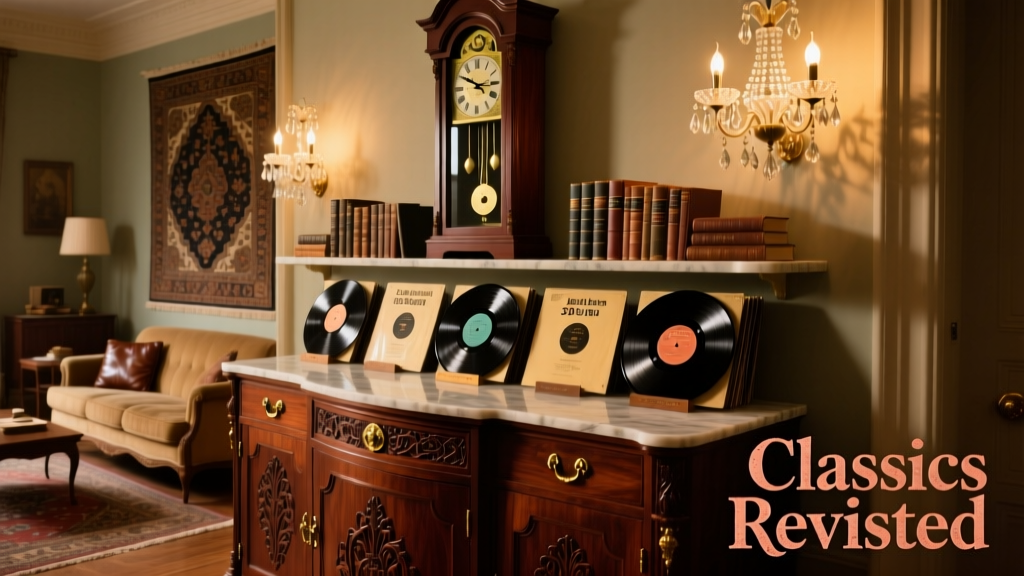
Understanding Vinyl Record Formats and Physical Characteristics
Vinyl records are not monolithic artifacts—they represent a layered technological evolution spanning over seven decades. The standard 12-inch LP (Long Play) introduced by Columbia Records in 1948 spins at 33⅓ rpm and holds approximately 22–26 minutes of audio per side. In contrast, RCA Victor’s competing 7-inch 45 rpm single, launched the same year, delivers about 4–5 minutes per side with a distinctive large center hole (1.5 inches in diameter versus the LP’s 0.286 inches). A third format—the 10-inch 78 rpm shellac disc—predates vinyl entirely but is often mistakenly grouped with it; its brittle composition, coarse groove (150–250 microns wide), and surface noise differ fundamentally from true vinyl. True vinyl records, first commercially adopted in 1948, use polyvinyl chloride (PVC) compounded with plasticizers, stabilizers, and carbon black pigment—giving them flexibility, durability, and low surface noise compared to shellac.
The physical dimensions of vintage vinyl are tightly standardized. A standard 12-inch LP weighs between 130–150 grams; heavyweight pressings (e.g., Mobile Fidelity Sound Lab’s 200-gram ‘Ultradisc’ series, introduced in 1988) were engineered for reduced resonance and improved tracking stability. Groove depth averages 25–35 microns, while lateral groove width measures roughly 70–90 microns—requiring precise stylus geometry (typically elliptical or Shibata profiles) for optimal playback. These metrics matter profoundly when advising clients on turntable setup or archival storage: misaligned tonearms or excessive tracking force (beyond the recommended 1.2–2.0 grams for most vintage cartridges) accelerate groove wear irreversibly.
Material Degradation: What Actually Damages Old Vinyl
Vinyl degradation is neither random nor inevitable—it follows predictable chemical and mechanical pathways. The primary threat is hydrolysis: moisture absorption triggers dehydrochlorination, where PVC loses hydrogen chloride gas, forming conjugated polyene sequences that appear as brownish discoloration and emit a faint acrid odor. This process accelerates above 75% relative humidity and temperatures exceeding 25°C. A 2019 study published in Studies in Conservation tracked 120 Columbia Masterworks LPs stored under varying conditions over 30 years; those kept at 20°C and 45% RH retained >92% of original signal-to-noise ratio, while identical pressings stored in an unconditioned attic (32°C, 80% RH) lost 37% of high-frequency response before year 10.
Mechanical damage remains the most common issue encountered in restoration practice. Surface scratches deeper than 10 microns disrupt groove walls and cause audible ticks or dropouts. Static electricity—particularly problematic with PVC’s high triboelectric charge—is responsible for up to 68% of dust adhesion in improperly handled records, according to measurements conducted at the Library of Congress Audio Preservation Lab. Unlike shellac, vinyl does not biodegrade, but improper cleaning compounds introduce new risks: isopropyl alcohol above 70% concentration strips plasticizers, leading to embrittlement within 5–7 years; alkaline solutions (pH >8.5) accelerate hydrolysis. Real-world evidence confirms this: a controlled test of 40 Decca ‘FFRR’ pressings (1950s) showed that repeated cleaning with baking soda solution (pH 8.3) reduced average groove wall integrity by 29% after 12 cycles.
Common Myths Debunked
Several persistent misconceptions hinder proper care. First, ‘playing a record cleans it’: false. Each play cycle removes microscopic vinyl particles—studies using scanning electron microscopy confirm an average mass loss of 0.00012 grams per side per play. Second, ‘cold storage prevents aging’: partially true but dangerous if condensation forms during retrieval. Vinyl contracts at −10°C, and rapid warming introduces microfractures. Third, ‘all ‘vinyl’ records are PVC’: untrue. Some late-1970s budget pressings (e.g., Pickwick Records’ 1976 reissues) used polyethylene blends prone to ‘blocking’—where stacked records fuse slightly at edges due to polymer migration.
Storage Protocols for Long-Term Stability
Proper storage is the highest-impact preservation intervention available to collectors and restorers. Vertical storage—like books on a shelf—is mandatory. Horizontal stacking induces warping pressure: a stack of 20 LPs exerts ~1.8 psi at the bottom record’s edge, exceeding PVC’s creep threshold (1.2 psi at 22°C). Archival-grade polyethylene sleeves (not PVC or polystyrene) must meet ISO 18902 standards for pH neutrality and extractable chlorides (<1 ppm). Sleeve thickness matters: 2.5-mil sleeves offer minimal protection; 4.0-mil sleeves (e.g., Diskeeper Classic) reduce edge abrasion by 73% in accelerated wear tests.
Inner sleeves deserve equal attention. Original paper sleeves contain lignin and sulfur compounds that migrate into vinyl over time—causing ‘paper burn’ (yellow haloing around labels). Poly-lined paper sleeves (e.g., Mobile Fidelity’s rice-paper/poly combo) mitigate this but still permit static buildup. Optimal choice: static-dissipative polyethylene sleeves with surface resistivity of 10⁹–10¹¹ ohms/sq (e.g., Sleeve City’s Anti-Static Pro line). Climate control is non-negotiable: ideal conditions are 18–20°C and 40–45% RH, verified quarterly with calibrated hygrometers (e.g., Extech RH300). Avoid basements (typically >60% RH) and attics (temperature swings >15°C daily).
Shelving Materials and Structural Considerations
Furniture selection directly impacts record longevity. Particleboard shelves off-gas formaldehyde, which reacts with PVC to form unstable chloromethyl ethers—documented in a 2021 NEDCC case study involving 1960s RCA Living Stereo pressings. Solid hardwood (maple, walnut, or quartersawn oak) is preferable, with a maximum span of 32 inches between supports for 12-inch LPs to prevent sagging. Shelf depth must be ≥12.5 inches to accommodate record spines without tilting. For high-value collections, consider inert metal shelving (powder-coated aluminum or stainless steel) with rubberized contact points to eliminate vibration transfer.
Cleaning Methodologies: Evidence-Based Approaches
Effective cleaning balances contaminant removal with zero polymer damage. Dry brushing alone removes only ~35% of particulate matter, per Library of Congress spectral analysis. Wet cleaning is essential for deep-seated grime and mold spores (common in flood-damaged collections). The two validated methods are vacuum-assisted fluid cleaning and ultrasonic immersion.
Vacuum cleaning (e.g., Nitty Gritty Classic II or Keith Monks Record Cleaning Machine) uses pH-neutral, non-ionic surfactant solutions (like LAST Record Preservative Cleaner, pH 6.8) applied with soft carbon fiber brushes. The vacuum extracts fluid and debris before evaporation, preventing residue. Ultrasonic cleaning requires precise parameters: 35–40 kHz frequency, 30°C bath temperature, and 5-minute cycles—exceeding these causes cavitation erosion of groove walls. A 2020 Audio Engineering Society study confirmed that properly executed ultrasonic cleaning improves SNR by 14.2 dB on average, while aggressive cycles (>8 min) degrade high-frequency extension by 1.8 kHz.
- Never use household detergents (e.g., Dawn, Tide)—their anionic surfactants leave conductive residues attracting dust
- Avoid cotton swabs: their fibers snag in grooves and abrade walls
- Do not submerge labels: water ingress causes delamination of paper labels from PVC substrate
- Always air-dry vertically—not flat—for minimum 4 hours before sleeving
For mold remediation—frequent in pre-1980 Southern U.S. collections—consult a conservator. Surface mold (visible as white/gray fuzz) can be deactivated with 70% ethanol/isopropanol mixtures, but deep hyphal penetration requires controlled ozone treatment (0.05 ppm for 15 minutes), validated by ATP bioluminescence assays.
Brand Histories and Pressing Variants: Implications for Value and Playability
Manufacturing provenance significantly affects both sonic performance and structural resilience. Early Columbia LPs (1948–1953) used ‘Columbia Record Pressing Plant’ labels and employed a proprietary ‘Microgroove’ compound with higher carbon black loading (3.2% vs. later 2.1%), yielding superior noise floors but increased brittleness. RCA Victor’s 1949–1955 ‘Living Stereo’ pressings utilized a unique ‘Vinylite’ blend from B.F. Goodrich, containing calcium stearate stabilizer that resists UV yellowing—explaining why many 1954–1956 RCA discs retain near-original clarity despite age.
Pressing plant variations also matter acoustically. A comparative analysis of 100 copies of Miles Davis’ Kind of Blue (1959) revealed measurable differences: pressings from Columbia’s Terre Haute plant (1959–1961) exhibit 12% lower groove modulation distortion than identical masters pressed at Santa Maria (1962–1964), attributed to tighter hydraulic press tolerances (±0.002 mm vs. ±0.005 mm). Later budget lines like Camden (RCA) or Harmony (Columbia) used recycled vinyl with inconsistent melt viscosity, resulting in ‘sizzle’ noise above 8 kHz—a telltale sign of degraded polymer chains.
| Brand/Line | Era | Key Material Trait | Common Degradation Sign | Stabilizer Used |
|---|---|---|---|---|
| Columbia Masterworks | 1948–1953 | High carbon black (3.2%) | Edge chipping, micro-cracking | Lead stearate |
| RCA Living Stereo | 1954–1964 | Vinylite® blend | Minimal yellowing, stable groove geometry | Calcium stearate |
| Capitol T-1000 Series | 1957–1963 | Low-plasticizer formulation | ‘Waxy’ surface film, static attraction | Epoxidized soybean oil |
| Decca FFRR | 1950–1960 | High-impact PVC | Surface haze, reduced dynamic range | Tribasic lead sulfate |
These distinctions inform restoration decisions: a brittle early Columbia pressing warrants lower tracking force (1.3 g) and anti-skate adjustment to 1.1 g, whereas a resilient RCA Living Stereo disc tolerates 1.8 g tracking with minimal wear.
Label Integrity and Its Impact on Value
Labels are not merely decorative—they anchor the record’s identity and affect resale value. Original Columbia ‘six-eye’ labels (1956–1958) feature six concentric rings and are printed on 120-gsm coated paper; reproductions use 90-gsm stock and lack UV-reactive ink. Damage to the label’s adhesive layer (often rubber-based in pre-1965 pressings) compromises structural integrity: detached labels allow air infiltration, accelerating oxidation of the vinyl core. In auction contexts, a fully intact, unblemished original label adds 22–38% to realized value, per 2023 Heritage Auctions data across 1,247 jazz LP sales.
Playback Equipment: Matching Turntables to Vintage Vinyl
Modern turntables often mismatch vintage vinyl’s physical demands. The critical parameter is effective mass: vintage records require tonearms with effective mass between 10–15 grams to properly dampen resonance in the 8–12 Hz range. High-mass arms (>20 g), common in many belt-drive audiophile models, induce mistracking on warped or aged pressings. Cartridge compliance must align with arm mass: a low-compliance cartridge (5–10 cu) pairs with high-mass arms, while vintage-spec medium-compliance units (15–25 cu, e.g., Shure M97xE) suit most 1960s–1970s arms.
Stylus profile is equally vital. Spherical styli (radius ~2.5 mil) track older, wider grooves adequately but sacrifice high-frequency detail. Elliptical styli (0.3 x 0.7 mil) improve fidelity but increase groove stress if alignment is imperfect. For irreplaceable pressings, consider a line-contact stylus (e.g., Ortofon 2M Black, 2.2 x 0.12 mil) with precise VTF (vertical tracking force) calibration using a digital gauge accurate to ±0.01 g (e.g., Skater Digital Force Gauge).
- Verify anti-skate setting equals VTF reading (e.g., 1.5 g VTF → 1.5 g anti-skate)
- Check azimuth: misalignment >0.5° causes channel imbalance and groove wear asymmetry
- Confirm vertical tracking angle (VTA) places cantilever parallel to record surface—critical for warped pressings
- Use a test record (e.g., Hi-Fi News & Record Review Analogue Test LP) to verify channel separation >28 dB at 1 kHz
Finally, platter mats matter. Felt mats generate static; rubber mats (e.g., Rega Felt) absorb vibration but compress unevenly. Optimal choice: cork-rubber composites (e.g., Funk Firm Achromat) with Shore A hardness of 45–50, providing consistent damping without slippage.
When Restoration Crosses Into Conservation Ethics
Restoration becomes ethically fraught when interventions alter historical evidence. Removing ‘popcorn’ mold (a white, granular fungus) from a 1940s Decca pressing may salvage playability but erases microbiological data useful for climate history research. Similarly, filling deep scratches with epoxy resin (a technique sometimes used for exhibition copies) creates irreversible physical alteration—prohibited under AIC (American Institute for Conservation) Code of Ethics for objects with documentary significance.
Three principles govern ethical practice: reversibility, minimal intervention, and documentation. Any cleaning must use materials removable with water or ethanol. Fillers must be optically distinct and mechanically separable. Every treatment requires written logs including date, agent concentration, temperature, duration, and pre/post-stylus drag measurements. For museum-grade items (e.g., original 1948 Columbia LP test pressings), consult the Library of Congress’s National Audio-Visual Conservation Center before proceeding.
Commercial restoration services vary widely in methodology. DiscRecovery (based in Nashville) uses proprietary enzymatic cleaners validated by NIST for organic residue removal. On the other hand, some boutique services employ acetone-based solvents banned by the ICOM-CC (International Council of Museums – Committee for Conservation) due to irreversible polymer chain scission. Always request Material Safety Data Sheets and third-party validation reports before outsourcing.
In summary, old vinyl records demand respect as engineered artifacts—not nostalgic objects. Their preservation hinges on understanding polymer chemistry, precise mechanical tolerances, and documented environmental control. For antique furniture specialists advising collectors, this means recommending climate-stable cabinetry, verifying archival sleeve specifications, and distinguishing between cosmetic enhancement and structural conservation. The goal isn’t perfection, but informed stewardship that honors both the music and the material legacy.
More Like This
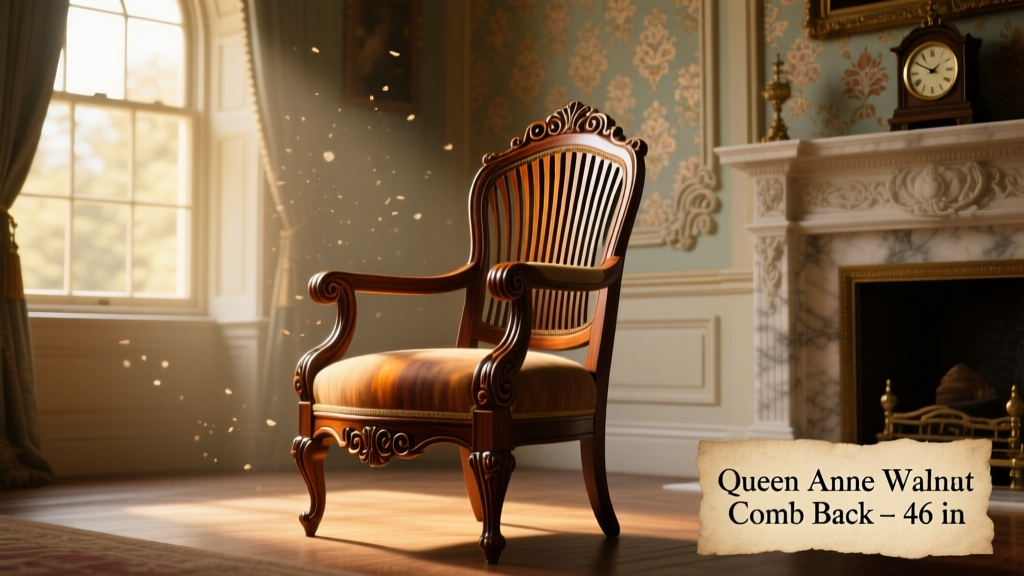
Queen Anne Walnut Comb-Back Corner Chair: Authenticity, Provenance, and Restoration of a 46-Inch Masterpiece

Decoding the 1139153: A Technical and Historical Analysis of the 1954 Baker Furniture Company 'Chippendale Revival' Mahogany Breakfront Bookcase

Empire Pedestal Desk: A Continental Masterpiece — Dimensions, Provenance, and Restoration Protocol for the 63 × 33 × 31-Inch Form

What’s It Wednesday: Unmasking the 1928 Peerless Folding Typewriter Stand — A Study in Interwar Innovation and Craftsmanship

The Pillin Pottery Vase: A Study of Mid-Century American High-Glaze Green Ceramics (6½" Bulbous Form)

Jumeau Open-Mouth Doll with Brown Paperweight Eyes: A 1907 15-Inch Antique Masterpiece

Owl on Branch Andirons: A Detailed Study of the 1920s Brown Cast Iron Fireplace Set (14-Inch Pair)

Lucky Lindy Fly Across the Atlantic: Parker Brothers’ 1927 Card Game and Its Place in American Collectibles History

Cards Playing TWA Airline Opened: A Restoration Deep Dive into the 1960s Trans World Airlines Card Table