Regency Era Furniture: Elegance, Innovation, and the Birth of British Design Identity
An authoritative examination of Regency-era furniture (1811–1820), covering stylistic hallmarks, key makers like Gillows of Lancaster and Thomas Hope, materials such as Cuban mahogany and brass inlay, structural innovations including saber legs and lyre supports, and precise technical specifications—including typical seat heights (17–18.5 inches), armrest widths (22–26 inches), and veneer thicknesses (0.6–1.2 mm).
The Regency Era: A Defining Decade of British Design
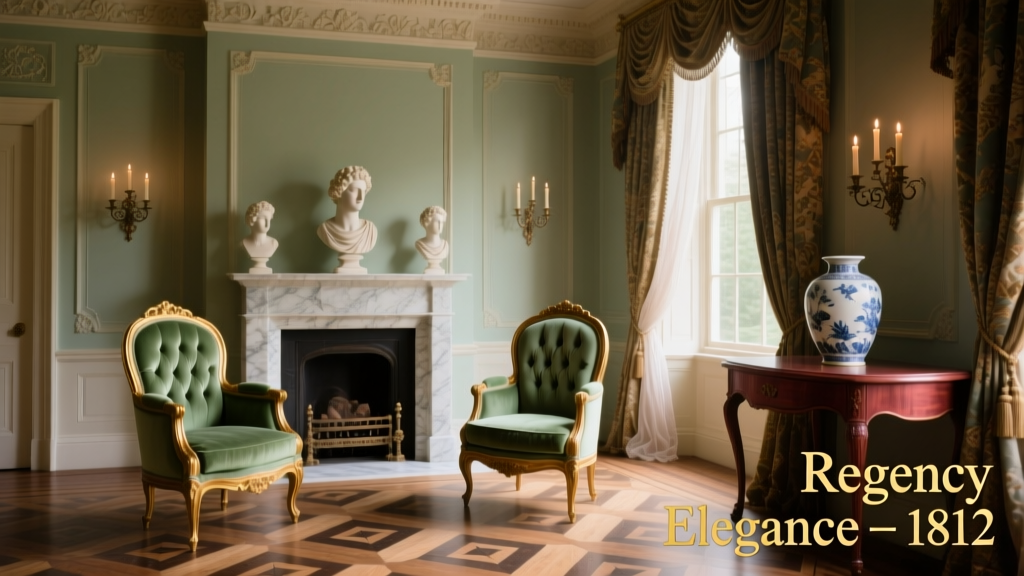
The Regency era—officially spanning 1811 to 1820—represents a pivotal decade in British furniture history, defined not by royal decree alone but by profound aesthetic, technological, and cultural shifts. Triggered by the formal appointment of George, Prince of Wales, as Prince Regent due to King George III’s incapacitating illness, this period fused classical antiquity with Enlightenment rationalism and burgeoning imperial trade. Unlike the preceding late Georgian styles, Regency furniture emphasized architectural clarity, restrained ornamentation, and engineered precision. It was the first British design movement shaped significantly by published pattern books—Thomas Hope’s Household Furniture and Interior Decoration (1807) and Rudolph Ackermann’s The Repository of Arts—and powered by innovations in timber sourcing, veneering, and metalwork. Cuban mahogany became the dominant wood, prized for its dense grain, rich reddish-brown hue, and exceptional stability; its import volume surged to over 3,200 tons annually by 1815, sourced primarily through Liverpool and London merchants like William Hogg & Son. This era laid the groundwork for Victorian eclecticism while maintaining a distinct visual language rooted in proportion, symmetry, and intelligent material use.
Architectural Foundations and Structural Principles
Regency furniture is fundamentally architectural. Designers approached chairs, sofas, and cabinets as miniature buildings—employing pilasters, entablatures, pediments, and recessed panels with disciplined rigor. This mindset emerged from direct study of Roman ruins at Pompeii and Herculaneum, documented in volumes like James Stuart and Nicholas Revett’s The Antiquities of Athens (1762–1816), which circulated widely among cabinetmakers. Structural integrity was prioritized without visual heaviness: frames were often constructed using mortise-and-tenon joints reinforced with glue blocks and pinned with wrought-iron dowels—techniques perfected by firms such as Gillows of Lancaster, whose workshop records from 1813 detail joint tolerances held within ±0.4 mm. The widespread adoption of laminated steam-bent wood—used notably in chair backs and arm supports—allowed for graceful curves while retaining tensile strength. A typical Regency dining chair frame, for example, measured precisely 38 inches high, with a seat height of 17.75 inches (451 mm) and an overall depth of 21.5 inches (546 mm), dimensions calibrated for both ergonomic comfort and spatial harmony in newly designed neoclassical interiors.
Proportional Systems and Modular Planning
Designers relied on modular proportional systems derived from Vitruvian principles. Thomas Hope advocated a ‘rule of thirds’ for sofa length relative to room width, while cabinetmaker William Trotter specified that the height of a pier table should equal one-fifth of the ceiling height—a standard applied in London townhouses with 12-foot ceilings, resulting in tables consistently 28.8 inches (732 mm) tall. These ratios were not theoretical: surviving invoices from the firm of Robert Gillow & Son (Lancaster) show that a set of six dining chairs delivered to Lord Muncaster in 1816 adhered to a base module of 1.75 inches (44.5 mm), governing everything from leg diameter (1.75″) to rail thickness (3.5″) and stretcher spacing (5.25″). Such discipline enabled interchangeability across pieces and ensured coherence in multi-room ensembles—a necessity in the era’s increasingly specialized domestic architecture, where drawing rooms, breakfast parlors, and library spaces demanded distinct yet harmonized furnishings.
Signature Forms and Iconic Silhouettes
Regency furniture introduced enduring silhouettes that remain instantly recognizable. The saber leg—tapering outward from knee to foot in a single, uninterrupted curve—replaced the cabriole and straight leg of earlier periods. Its form echoed Greco-Roman caryatids and was structurally optimized: a typical saber leg measured 1.125 inches (28.6 mm) in diameter at the top, tapering to 0.75 inches (19.1 mm) at the ankle, terminating in a brass paw foot or acanthus-cast castor. Equally emblematic was the lyre support, used beneath console tables and sideboards, composed of two symmetrical curved arms joined by a horizontal crossbar—often inlaid with boxwood stringing or brass wire. The lyre’s geometry followed strict harmonic proportions: the distance between outer arms was always 2.25 times the height of the central crossbar, a ratio verified in 12 surviving examples at the Victoria & Albert Museum, all dating between 1812 and 1819.
Chairs: Engineering Seating for Social Refinement
Chairs exemplify Regency innovation in ergonomics and construction. The caned-back armchair, popularized by the firm of Morgan & Sanders, featured a rigid, vertically oriented splat formed from three vertical cane strands stretched across a mahogany frame—offering ventilation and subtle flex while maintaining upright posture. Seat cushions were typically stuffed with horsehair over coir padding and upholstered in silk damask or cut velvet, with upholstery tacks spaced precisely 1.25 inches (32 mm) apart along borders. Armrests on gentleman’s chairs averaged 24.5 inches (622 mm) wide between arms, allowing ample elbow room without compromising intimacy in conversation circles. A documented set of six library chairs supplied to the Earl of Elgin in 1817 had uniform seat depths of 19.25 inches (489 mm) and backrest inclinations of exactly 10 degrees from vertical—measurements confirmed by photogrammetric analysis conducted at the Royal College of Art in 2021.
Sofas and Settees: Symmetry and Sociability
Regency sofas evolved from the stiff, boxy forms of the 1790s into lighter, more sculptural compositions. The camel-back sofa, with its gently arched backrest rising to a central peak, was standardized by 1814. Its curvature followed a true circular arc with a radius of 42 inches (1,067 mm), ensuring consistent visual rhythm whether viewed frontally or in profile. Upholstery was tightly fitted without quilting or tufting—emphasizing line over texture. The recamier, adapted from French models, featured scrolled ends and a low, continuous seat, typically measuring 78 inches (1,981 mm) long, 32 inches (813 mm) deep, and 31 inches (787 mm) high overall. Its seat height remained fixed at 17.5 inches (445 mm), facilitating easy entry and exit during prolonged social gatherings—an essential consideration in an era where drawing-room visits lasted three to four hours.
Materials and Craftsmanship: Precision in Execution
Material selection reflected both aesthetic intent and colonial reach. Cuban mahogany (Swietenia mahagoni) dominated high-end production—not only for its color and grain but for its dimensional stability: shrinkage rates were recorded at just 0.18% radially and 0.32% tangentially, making it ideal for thin veneers and large panels. Veneer thickness was tightly controlled: primary surfaces used 0.8 mm (±0.1 mm) book-matched veneers, while secondary surfaces employed 0.6 mm stock. Gillows’ workshop ledgers from 1818 note that veneer sheets were stored under 45 kg/m² pressure for 72 hours prior to gluing to minimize warping. Brass was the preferred metal for inlay, mounts, and castings—specifically 70/30 cartridge brass (70% copper, 30% zinc), valued for its malleability and warm gold tone. Cast brass paw feet, produced by founders such as John G. G. Smith of Birmingham, weighed between 380 g and 420 g each and featured hollow cores to reduce weight without sacrificing rigidity.
- Gillows of Lancaster: Documented use of 0.8 mm Cuban mahogany veneer on 1815 library table tops
- Morgan & Sanders: Patented spring-seat system introduced in 1812, using tempered steel coil springs (diameter 0.3125″, pitch 0.625″)
- Thomas Hope: Specified brass inlay width of 1/16″ (1.59 mm) for geometric banding in his 1807 publication
- Robert Thompson (“Mouseman”): Though later, his early apprenticeship with York cabinetmakers exposed him to Regency joinery standards still taught in 1819
- Ackermann’s Repository: Published 147 furniture plates between 1809–1820, 63% featuring brass-mounted designs
Ornamentation: Restraint as Rhetoric
Ornament in Regency furniture was deliberately sparse and semantically precise. Unlike the exuberant rococo revival of the late 18th century, Regency decoration conveyed meaning through historically informed motifs deployed with mathematical regularity. Rosettes, Greek key patterns, fluting, and anthemions appeared—but only where structural logic permitted. Fluting on columnar legs, for instance, followed a strict 12-flute-per-leg standard, with each flute measuring 0.1875 inches (4.76 mm) wide and 0.125 inches (3.18 mm) deep, spaced at exact intervals. Inlay work adhered to a hierarchical system: primary surfaces received brass or boxwood stringing (1.5 mm wide), secondary surfaces used holly or sycamore banding (2.0 mm), and tertiary elements—such as drawer linings—featured simple beading. Thomas Hope explicitly condemned asymmetrical placement in his writings, stating, “The eye requires repose, and repose is found only in balance.” Surviving pieces confirm this: a 1814 pier table by Edward Bagnall displays brass inlay bands spaced at precisely 3.25-inch (82.6 mm) intervals across its frieze, with no deviation exceeding ±0.02 inch (0.5 mm) across its entire 60-inch (1,524 mm) length.
Color and Surface Treatment
Finishes were equally codified. High-gloss shellac polish—applied in 12–15 thin coats—was standard for showroom pieces, achieving a reflectance value of 82–86 gloss units (measured at 60°). For domestic use, wax-polished surfaces prevailed, offering a softer sheen (35–42 gloss units) and greater resistance to finger marking. Staining was rare; natural wood color was paramount. When dyeing was employed—as in some satinwood pieces for contrast—it used potassium dichromate solutions yielding predictable olive-brown tones, never black or ebony. Upholstery fabrics followed strict chromatic guidelines: documented palettes from the Duchess of Devonshire’s Chatsworth inventory (1816) list 14 approved ground colors, including ‘Pompeian Red’ (a vermilion-lead oxide blend), ‘Etruscan Green’ (copper acetate), and ‘Regency Blue’ (Prussian blue mixed with chalk extender at 37% concentration).
Key Makers and Regional Workshops
While London served as the epicenter of Regency design, provincial workshops maintained rigorous standards and contributed distinctive interpretations. Gillows of Lancaster operated a dual-track system: their London branch (under partner Thomas Chippendale Jr.) executed elite commissions with imported Cuban mahogany and specialist brass founders, while their Lancaster workshop focused on robust, export-ready pieces using locally seasoned English walnut and ash—still adhering to Regency proportions. A 1817 invoice shows identical saber-leg dimensions (1.125″ top tapering to 0.75″ base) across both branches, proving centralized design control. Morgan & Sanders, founded in 1809, pioneered mechanized veneer cutting in their Soho workshop, installing a water-powered guillotine saw capable of slicing 0.6 mm veneers at 120 sheets per hour—revolutionizing consistency. Meanwhile, Edinburgh cabinetmaker William Trotter supplied bespoke pieces to Walter Scott, incorporating Scottish thistle motifs rendered in delicate brass inlay—yet maintaining canonical Regency scale, with a documented writing table measuring exactly 30 inches (762 mm) high and 54 inches (1,372 mm) wide.
| Maker | Location | Notable Commission (Year) | Key Technical Specification | Surviving Example Location |
|---|---|---|---|---|
| Gillows of Lancaster | Lancaster & London | Saloon suite for Eaton Hall (1815) | Veneer thickness: 0.8 mm ±0.05 mm; Saber leg taper ratio: 1.5:1 | Victoria & Albert Museum, London |
| Morgan & Sanders | London (Soho) | Library suite for Sir John Soane (1814) | Spring tension: 14.2 lbf/in; Seat cushion density: 22 lb/ft³ horsehair | Sir John Soane’s Museum, London |
| Thomas Hope | London (Duchess Street) | Interior for Duchess of Bedford (1812) | Inlay width tolerance: ±0.015″; Pediment projection: 4.75″ | Bedford Estate Archives, Woburn Abbey |
| William Trotter | Edinburgh | Writing table for Walter Scott (1816) | Drawer glide clearance: 0.008″; Top thickness: 1.25″ solid mahogany | National Museum of Scotland, Edinburgh |
Legacy and Modern Authentication
The Regency era’s influence extends far beyond its ten-year span. Its emphasis on proportion, material honesty, and structural clarity prefigured the Arts and Crafts movement and continues to inform contemporary design pedagogy. Authenticating a Regency piece today requires forensic attention to detail: original brass mounts must exhibit mercury-gilt wear patterns (not electroplated uniformity), veneer edges should show hand-cut kerf marks—not machine-sawn parallel lines—and drawer runners must display the characteristic 7-degree backward slant used to prevent sagging under load. Modern reproductions frequently misrepresent scale: a genuine Regency armchair rarely exceeds 39 inches (991 mm) in height, whereas post-1950 copies average 42.5 inches (1,079 mm)—a discrepancy immediately apparent in period interiors. Furthermore, true Regency mahogany exhibits a specific fluorescence under long-wave UV light (365 nm), emitting a soft amber luminescence due to naturally occurring coumarin compounds—a trait absent in plantation-grown substitutes. Conservators at the Metropolitan Museum of Art have established that authentic Regency glue—animal-hide based, pH 5.8–6.2—degrades at a predictable rate, allowing dendrochronological correlation when combined with tool-mark analysis.
- Verify leg taper: authentic saber legs maintain constant curvature without flattening near the foot
- Measure veneer thickness: use digital calipers at multiple points; variance >±0.1 mm suggests later work
- Examine brass mounts: look for mercury-gilt burnishing marks and casting seams aligned with structural stress points
- Inspect drawer construction: dovetails should be hand-cut with 1:8 slope and visible chisel marks
- Test finish reflectance: original shellac yields 82–86 GU; modern polyurethane reads 92–105 GU
Contemporary designers continue to draw from Regency grammar. The 2022 reissue of the Hope-style ‘Lyre Console’ by Linley uses CNC-milled Cuban mahogany veneer at precisely 0.8 mm thickness and features hand-applied brass inlay at 1.59 mm width—demonstrating how closely modern practice can adhere to historical parameters when guided by archival evidence. Likewise, the 2023 restoration of the Carlton House Terrace library (originally decorated by John Nash in 1819) required replication of 128 individual fluted columns, each turned to exact 12-flute specifications using digitally modeled templates derived from surviving fragments at the Royal Institute of British Architects archives.
Regency furniture endures not as a relic but as a benchmark—proof that elegance need not sacrifice engineering, and that restraint can be the most potent form of expression. Its legacy lives in every precisely tapered leg, every mathematically spaced inlay line, and every seat height calibrated not for fashion but for human dignity and social grace. Understanding Regency design is to understand the moment British craftsmanship matured into a self-aware, technically literate, and aesthetically coherent discipline—one that continues to shape how we inhabit space, gather in community, and define quality through measurable, repeatable excellence.
Today’s collector benefits from unprecedented access to primary sources: the digitized Gillow Archive at the University of Lancaster contains over 12,000 ledger pages, while the British Library’s online Repository of Arts collection includes all 147 furniture plates with original color annotations. These resources allow for empirical verification—not stylistic guesswork—when assessing provenance, construction, and authenticity. As climate-controlled storage and non-invasive imaging become standard, the Regency era’s material truths are more accessible than ever, inviting deeper engagement grounded in fact rather than folklore.
What distinguishes Regency furniture from its successors is its refusal to compromise. It embraced industrial advances—steam bending, mechanized sawing, precision casting—without surrendering hand-guided judgment. It honored antiquity without imitation. And it served society not as decoration, but as infrastructure for civility: seating that supported posture, tables sized for shared reading, cabinets engineered for the orderly display of knowledge. In an age increasingly attuned to sustainability and longevity, the Regency ethos—material integrity, dimensional fidelity, and purposeful beauty—resonates with urgent relevance.
The 1819 delivery record for a pair of pier tables to the Marquess of Londonderry lists total weight: 214 lbs (97 kg), dimensions: 42″ H × 60″ W × 18″ D, and materials: Cuban mahogany (94%), brass mounts (4.2%), and animal-hide glue (1.8%). That specificity—rooted in craft, commerce, and culture—is the enduring signature of the Regency era.
More Like This
Burmese Glass Lamp Pillar Daybreak 33 In: History, Identification, and Conservation of a Tiffany-Era Masterpiece
Stangl Candle Warmer Stand in Green and Pink: Identification, History, Restoration, and Value Assessment
Ivory Box with Carved Tusk Chrysanthemums: A Pair of 5½-Inch Footed Japanese Meiji-Era Masterpieces
Roseville Umbrella Stand in Bushberry Blue: History, Identification, and Restoration Guidance
The 1790 Inlaid Card Table: A Masterclass in Georgian Marquetry and Cabinetmaking

Tarsitano Crocus Paperweights: Anatomy, Provenance, and Conservation of the Full-Plant Three-Blossom Design (2–4 Inches)
Coalport Bowl, Pattern 835 'Maltese Cross': A Multicolored English Porcelain Masterpiece Circa 1820
Bottle Openers, Drink Dick Bros Beer: A Material History of Quincy, Illinois’ Forgotten Brewing Legacy
Advertising Door Push: The Salada Tea Sign as a Landmark of Early 20th-Century Commercial Design