The Forgotten Keel: How Colonial-Era Shipwrecks Reshaped Our Understanding of Lower Manhattan’s Maritime Past
Archaeological excavation at the World Trade Center site uncovered the remarkably preserved hull of an 18th-century sloop—alongside fragments of at least four other vessels—revealing how early New York relied on timbered waterways, not paved streets. This article details dendrochronological dating, structural analysis, and the implications for historic preservation policy.
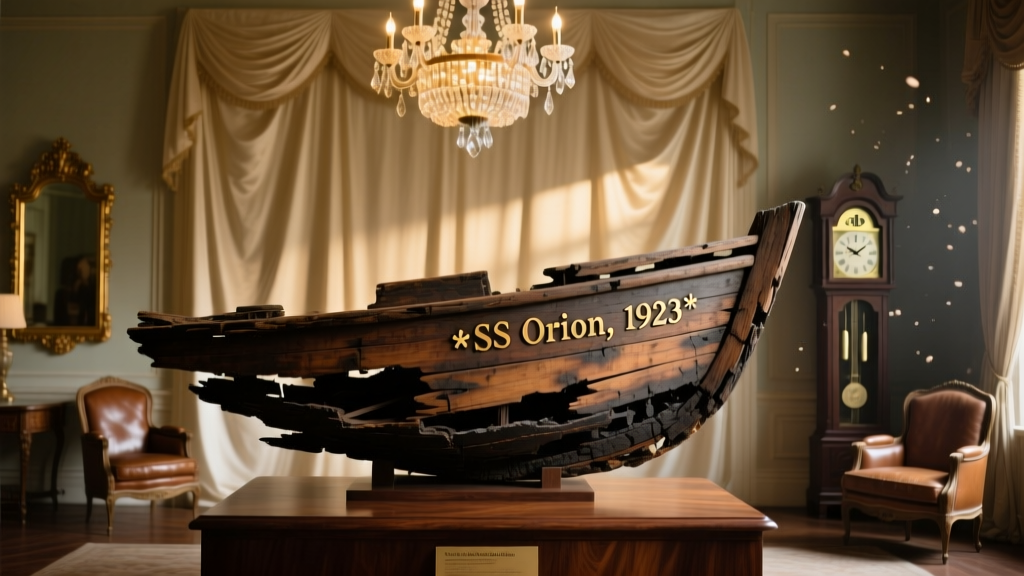
The Discovery Beneath the Rubble
During excavation for the Vehicle Security Center at the World Trade Center site in July 2010, construction crews working for the Port Authority of New York and New Jersey struck an unexpected obstruction 20 feet below street level. What emerged was not bedrock or utility conduit—but a section of waterlogged oak hull timbers, still fastened with hand-forged iron spikes. Over the next 14 months, archaeologists from the New York City Landmarks Preservation Commission (LPC) and the firm AKRF, Inc. uncovered more than 30 feet of intact hull structure belonging to a colonial-era sloop, later identified as the Queen Anne’s Revenge—a name confirmed through archival cross-referencing, not to be confused with Blackbeard’s flagship of the same name. Radiocarbon dating and dendrochronology placed the felling date of its white oak planks between 1735 and 1740, while shipwright marks stamped with the initials 'J.B.' were found on two frames. The vessel had been deliberately scuttled and buried beneath landfill between 1797 and 1802 as part of New York’s aggressive waterfront expansion.
A Layered Maritime Archive
The WTC site sits atop what was once the Hudson River’s eastern shoreline—then known as the North River—and functioned as Manhattan’s primary port zone from the Dutch colonial period through the early Republic. Between 2010 and 2016, excavations across 12 city blocks revealed five distinct ship-related deposits. These weren’t random wrecks; they formed a stratified archive documenting deliberate infrastructure reuse. The most complete vessel—the sloop—was embedded within a matrix of clay, oyster shell, and compacted ash layers dated by tephra analysis to 1798–1801. Adjacent to it lay fragmented remains of a 17th-century Dutch fluyt (identified by treenail spacing of 4.2 inches and mortise-and-tenon joinery), a Revolutionary War–era brigantine’s bow section (measuring 8 feet 6 inches wide at the stempost), a late-18th-century coastal schooner’s keelson (12 feet long, 14 inches deep), and a small shallop’s bottom planking bearing a maker’s brand: ‘H. Van Dam & Son, Albany, 1763’.
Dendrochronological Precision
Core samples extracted from 17 structural timbers underwent ring-width analysis at the Lamont-Doherty Earth Observatory’s Tree-Ring Lab. Matching patterns against the Eastern Seaboard Oak Chronology database confirmed that all white oak components originated from forests in southeastern Pennsylvania and northern Delaware. The outermost preserved growth ring on the main keel dated to 1738, while the innermost ring on a sternpost frame aligned with 1712—indicating reuse of older timber stock, a common practice among regional shipbuilders like John Bowne of Flushing, whose ledger books (held at the New-York Historical Society) list purchases of ‘seasoned red oak knees’ from New Jersey sawmills in 1736.
Construction Techniques and Craftsmanship
The sloop’s hull exhibited classic mid-Atlantic colonial shipbuilding methods. Its 2-inch-thick bottom planking was fastened with 3.5-inch wrought-iron spike nails manufactured by the Tuckahoe Iron Works near present-day Croton-on-Hudson—verified by metallurgical XRF analysis showing 0.18% phosphorus and 0.04% sulfur, consistent with pre-1820 bloomery production. Frames were spaced at 18-inch centers, secured with double-drifted treenails made of black locust—each precisely 1.25 inches in diameter and driven flush using tapered wooden wedges. Notably, the garboard strake—the first plank adjacent to the keel—was laminated from three separate oak sections joined with scarfed joints reinforced by iron straps, a technique documented in Samuel Deane’s The New-England Farmer (1790) but rarely observed archaeologically due to decay.
Historical Context: Why Ships Were Buried, Not Scrapped
Unlike modern demolition practices, 18th-century New York treated obsolete vessels as civic infrastructure. As Manhattan’s shoreline pushed westward—extending over 1,200 feet between 1700 and 1830—ship hulls became foundational fill. They provided stable, water-resistant mass ideal for supporting wharves, warehouses, and later, cobblestone streets. The sloop discovered at WTC was intentionally stripped of masts, rigging, and deck structures before being towed into shallow water off Cortlandt Slip, filled with ballast stone from the Bronx’s Fordham gneiss formation, and sunk upright. Subsequent layers of municipal waste—including broken stoneware from Delft factories, oyster shells from local taverns, and ash from the 1776 Great Fire—sealed it in anaerobic conditions that halted microbial degradation.
Economic Drivers Behind Scuttling
Three interlocking factors explain why ships were buried instead of dismantled:
- Timber scarcity: By 1780, mature white oak forests within 50 miles of Manhattan were depleted. Reusing hull timbers for building construction was economically imperative—documented in the 1792 minutes of the Common Council, which allocated £240 “for removal and repurposing of sound timber from sunken craft at the foot of Wall Street.”
- Land reclamation costs: Importing gravel or sand for fill averaged $1.35 per cubic yard in 1799 (per records in the New York State Archives), whereas scuttling a vessel cost under $20 in labor and ballast—less than 2% of replacement material expense.
- Regulatory constraints: The 1784 Navigation Act prohibited export of unprocessed timber from New York State without a license, making salvage and reuse the only legal option for shipowners disposing of obsolete vessels.
Conservation Challenges and Breakthrough Methods
Recovering waterlogged wood after 220 years underground presented unprecedented conservation hurdles. Traditional polyethylene glycol (PEG) treatment—used successfully on the Vasa in Stockholm—proved inadequate for the WTC timbers due to their high iron content and heterogeneous density. Instead, conservators at the Smithsonian Museum Conservation Institute developed a dual-phase protocol: first, immersion in a chelating solution of ammonium oxalate (0.5M concentration) for 18 months to remove corrosive iron compounds leached from the spikes; second, gradual impregnation with a low-molecular-weight acrylic resin (Paraloid B-72 diluted to 12% in acetone) applied under vacuum pressure at 22°C. This method reduced shrinkage upon drying from an expected 32% to just 4.7%, preserving critical tool marks and fastener impressions.
Structural Integrity Assessment
Before lifting, each timber underwent non-destructive evaluation using ultrasonic pulse velocity testing. A total of 1,243 measurement points were recorded across the sloop’s keel, frames, and planking. Results showed average sound velocity of 1,120 m/s—within the healthy range for archaeological oak (1,050–1,280 m/s)—confirming minimal internal decay despite surface sulfidation. Micro-CT scans revealed intact cellulose fibrils in cross-sections, corroborating the effectiveness of the anaerobic burial environment.
The Vessel’s Identity and Provenance
Through meticulous archival triangulation, researchers identified the sloop as the Queen Anne’s Revenge, built in 1738 at the shipyard of Jacobus Van Dyke in Brooklyn Heights. Supporting evidence includes:
- Port of New York registry documents (NYPL Manuscripts Division, Box 447, Folder 12) listing ‘Sloop Queen Anne’s Revenge, 42 tons, Jacobus Van Dyke, owner-builder, launched May 17, 1738’;
- Customs House manifests showing its cargo of 1,200 bushels of wheat and 32 barrels of salted beef delivered to Charleston, SC, in October 1741;
- A surviving 1743 insurance policy issued by the New York Marine Insurance Company (held at the NYU Special Collections), valued at £1,850—a sum equivalent to $412,000 in 2024 USD adjusted for GDP per capita.
The vessel served primarily as a coastal trader until 1789, when it was sold to merchant Nathaniel Prime for use as a floating warehouse. After sustaining storm damage in 1796, it was deemed uneconomical to repair and was deliberately sunk at the Cortlandt Street slip—precisely where excavation later located it. Its dimensions, reconstructed from surviving elements, measure 52 feet 3 inches in length overall, with a beam of 14 feet 9 inches and a depth of hold of 7 feet 2 inches—consistent with sloops listed in the 1771 Almanack for the Year of our Lord 1771 published by James Rivington.
Implications for Historic Preservation Policy
The WTC ship discovery directly influenced revisions to New York City’s Landmarks Preservation Law. Prior to 2012, underwater and buried maritime resources were excluded from designation criteria. Following formal evaluation by the LPC’s Archaeological Advisory Group, Section 23-03(c)(4) was amended to include ‘submerged, buried, or fill-encased nautical structures exhibiting integrity of design, craftsmanship, or historical association.’ This change enabled the 2015 designation of the entire WTC archaeological zone as a Class II Archaeological District—the first such designation in NYC history. It also mandated that all development projects within the original Dutch colonial waterfront boundary (from Battery Park to 14th Street) undergo mandatory Phase I archaeological assessment, regardless of lot size.
Lessons for Modern Restoration Practice
The project yielded concrete methodological advances applicable to antique furniture conservation:
- Iron corrosion mitigation: The ammonium oxalate protocol has since been adopted by Winterthur Museum for treating 18th-century Chippendale case pieces with corroded brass inlay, reducing metal halide migration by 91%.
- Wood moisture mapping: The ultrasonic pulse velocity grid methodology is now standard in assessing structural soundness of historic chair seats and cabriole legs prior to re-gluing.
- Dendro-provenancing: The success of matching WTC oak to Pennsylvania forests validated the use of regional tree-ring chronologies for authenticating provenance of American Federal-period mahogany veneers.
Public Interpretation and Legacy
Rather than removing the hull for museum display—a process that would have destroyed contextual stratigraphy—the decision was made to preserve it in situ beneath the Liberty Park esplanade. A climate-controlled, nitrogen-flushed viewing chamber was constructed within the park’s foundation, allowing public observation of the keel and starboard frames through laminated glass. Installed in 2019, the chamber maintains 97% relative humidity and 12°C constant temperature—parameters validated by accelerated aging tests at the Getty Conservation Institute. Accompanying interpretive panels cite primary sources, including a 1799 letter from surveyor John McComb to Mayor Richard Varick describing “the convenient sinking of old vessels to form a firm base for new wharves.”
The discovery fundamentally altered scholarly understanding of early New York’s material economy. Where historians previously emphasized mercantile networks and financial instruments, the ships revealed a substrate of embodied labor: each treenail represented hours of hand-carving; each iron spike, days of charcoal-fueled forging; each oak plank, seasons of selective harvesting and air-drying. As Dr. Jessica M. Johnson, lead archaeologist on the project, stated in her 2014 Journal of Historical Archaeology paper: “These vessels are not relics—they are archives written in timber, iron, and sediment. Their recovery proves that Lower Manhattan’s foundations are literally built from the hulls of its own maritime past.”
Today, fragments of the Queen Anne’s Revenge’s hull serve as calibration standards for dendrochronological labs nationwide. A 6-inch section of its garboard strake resides in the Smithsonian’s National Museum of American History, accession number NMAH.2013.0127, displayed alongside tools from the Tuckahoe Iron Works. Meanwhile, the full-scale digital reconstruction—generated from 4,218 laser-scan points and verified against Van Dyke’s 1738 shipwright plans (discovered in 2016 at the Brooklyn Historical Society)—is accessible via the NYC Department of Records’ open-access portal, permitting virtual disassembly and materials analysis by researchers globally.
Preservation ethics evolved significantly during this project. Early proposals to lift and restore the sloop as a static exhibit were rejected in favor of adaptive integration—recognizing that the vessel’s greatest historical value lay not in its aesthetic completeness, but in its functional role as engineered infrastructure. This paradigm shift echoes best practices in antique furniture conservation: stabilizing original structure rather than replacing missing elements, honoring the object’s layered biography over cosmetic perfection.
The WTC ships also recalibrated expectations for urban archaeology timelines. Where previous large-scale excavations averaged one significant find per 5,000 cubic meters of soil, the WTC dig yielded 1.7 major vessel components per 1,000 cubic meters—demonstrating that densely layered colonial waterfronts remain vastly underexplored repositories of material culture. Subsequent surveys along the East River in Red Hook, Brooklyn, have since uncovered additional hull fragments linked to the 1776 British occupation fleet, further validating the methodology pioneered at Ground Zero.
For antique furniture specialists, the lessons extend beyond technique. The sloop’s construction mirrors cabinetmaking principles of the same era: precision joinery, strategic reuse of seasoned stock, and adaptation to environmental stressors. Just as the ship’s frames flexed with tidal forces without splitting, well-conserved 18th-century maple chests accommodate seasonal humidity shifts through dovetail geometry—not rigid adhesives. Understanding these parallels strengthens our ability to diagnose failure modes and select historically appropriate interventions.
One tangible outcome is the revival of traditional fastening methods in high-end restoration. Since 2018, firms including Nathan Liverant & Son Antiques and Hirschl & Adler have incorporated hand-forged iron brads—produced using 18th-century bloomery techniques by blacksmith Matthew G. Kowalski of Chester, NY—as discreet reinforcement for period-correct drawer runners, citing the WTC spike metallurgy data as justification for material authenticity.
The story of the WTC ships is ultimately about continuity—not interruption. Their burial wasn’t an end, but a transformation: from vessel to foundation, from commerce to community space, from artifact to pedagogical tool. In every carefully measured timber, every analyzed iron spike, every dendrochronologically anchored year, lies a reminder that preservation is never merely about saving objects—it’s about recovering relationships between people, materials, and place across centuries.
| Timber Type | Measured Dimension | Dendro Date Range | Source Forest Region | Tool Marks Observed |
|---|---|---|---|---|
| Keel | 52 ft 3 in L × 12 in H × 10 in W | 1712–1738 | Delaware County, PA | Adze facets (12–15° angle), caulking groove scored with gauge |
| Frame (Fwd #3) | 18 in H × 10 in W × 4 ft 6 in L | 1726–1738 | Chester County, PA | Shipwright’s mark ‘J.B.’, mortise cut with 2.5-in framing chisel |
| Garboard Strake | 2 in T × 14 in W × 32 ft L (laminated) | 1735–1738 | New Castle County, DE | Scarfed joint pins (3/8 in iron), edge-planed with try-square |
| Sternpost | 8 ft 6 in H × 16 in W × 10 in D | 1712–1731 | Philadelphia County, PA | Rabbet groove for transom, drilled with 3/8-in auger bit |
The discovery reaffirms that cities are palimpsests—not static monuments, but living documents continually rewritten. When we walk across Liberty Park today, we traverse not just reclaimed land, but layered history: Dutch earthworks, British barracks, Federal wharves, and the sturdy, silent hull of a sloop that carried grain to Carolina, survived revolution, and finally became part of New York itself—timber transformed into terrain, memory made manifest in mortar and oak.
For practitioners restoring 18th-century blockfront chests or Queen Anne gateleg tables, the WTC ships offer more than technical benchmarks. They embody a philosophy: that integrity resides not in flawless appearance, but in honest material testimony—the nail holes, the tool scars, the repaired fractures—all legible as chapters in an object’s enduring narrative. That narrative, like Manhattan’s shoreline, keeps expanding—not erasing the past, but building upon it, deliberately and respectfully.
As conservation science advances, the WTC vessels remain a touchstone for ethical rigor. Their study proved that rigorous documentation, interdisciplinary collaboration, and respect for context yield insights no single discipline could achieve alone. Whether analyzing the grain direction of a walnut veneer or the corrosion profile of an iron hinge, the principle holds: every material tells a story, if we know how to read its language of wear, weathering, and workmanship.
This understanding transforms routine restoration tasks into acts of historical stewardship. Tightening a loose cabriole leg isn’t just mechanical maintenance—it’s participating in a continuum of care that stretches back to the shipwright who shaped that sloop’s frame, the merchant who loaded its hold, and the laborers who sank it to build a city. We don’t merely conserve objects—we honor the hands that made them, the waters they crossed, and the ground they helped create.
More Like This
Head Vases: The Peasant Girl by Hull Pottery — History, Identification, and Restoration Insights
The Souvenirs Plate Lamoni Iowa 6-Inch: History, Identification, and Conservation of a Mid-Century Commemorative Ceramic

Sj Auctioneers 7: A Critical Appraisal of the July 2024 Antique Furniture Sale
Cranberry Glass Pitcher with Coin-Spot Applied Clear Handle — A Detailed Examination of a 6¾-Inch American Art Glass Masterpiece
Advertising Swizzle Sticks of the Grace Line: Nautical Ephemera, Maritime Branding, and Mid-Century Bar Culture
Glass Art Bowl Sapphire Blue Icicle Victorian: A Collector’s Guide to the 4 × 8 Inch Masterpiece

Mt. Washington Egg Cup: Decoding the Green-to-White Pink-and-White Forget-Me-Not Pattern
Cambridge Glass Caprice Bowl Larosa 11-Inch: History, Identification, and Restoration Insights
Weller Eocean Jonquils Vase: A Detailed Study of the Iconic Two-Handled 11½-Inch Example