The Old Potbelly Stove: History, Mechanics, Restoration, and Value
A definitive resource on antique potbelly stoves—covering origins in 19th-century America, iconic designs by brands like Glenwood, Perfection, and Monarch, technical specifications including flue diameters and heat output, authentic restoration protocols, safety-critical inspection points, and current market valuation trends for collectors and restorers.
The Origins and Evolution of the Potbelly Stove
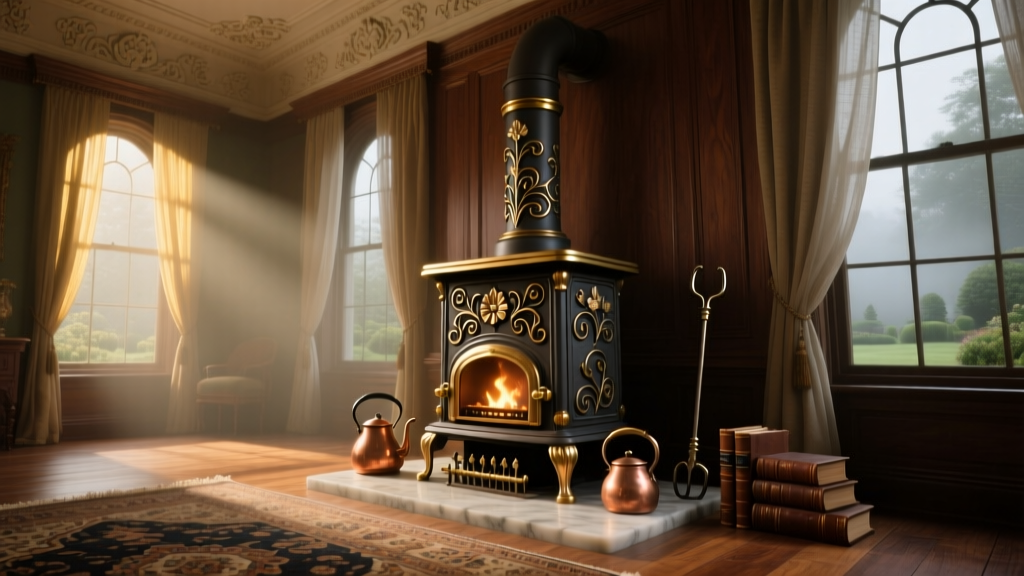
First appearing in American homes and businesses around 1840, the potbelly stove is a cast-iron freestanding heating appliance distinguished by its bulging cylindrical waist, tapered top and bottom, and central firebox. Its design emerged from practical necessity: early settlers needed compact, efficient, and portable heat sources that could burn wood or coal without requiring masonry chimneys. Unlike earlier box stoves or Franklin stoves, the potbelly’s rounded profile improved heat radiation and structural integrity under thermal stress. By 1865, over 200 foundries across Pennsylvania, Ohio, and Indiana were producing variants—many stamped with manufacturer names, patent dates, and model numbers still legible today.
Early models (1840–1870) featured simple flat-topped lids, single-door fireboxes, and no adjustable dampers. The breakthrough came with the 1872 patent granted to John C. Thompson of Philadelphia, which introduced a double-walled combustion chamber and secondary air inlet—significantly boosting efficiency. This innovation allowed stoves to achieve sustained burn times of 8–10 hours on hardwood, a dramatic improvement over predecessors that required reloading every 2–3 hours. By 1885, nearly every general store in rural America carried at least three potbelly models, often priced between $12.50 and $24.00—a sum equivalent to roughly $350–$700 in 2024 adjusted dollars.
Iconic Manufacturers and Model Identification
Dozens of companies produced potbelly stoves between 1850 and 1930, but five brands dominate surviving examples and command collector interest today. Glenwood Stove Company (St. Louis, MO), founded in 1875, manufactured over 3 million units before closing in 1942. Their Model 114, introduced in 1898, measured 28 inches tall, 18 inches wide, and weighed 142 pounds—featuring a distinctive four-legged base, ornate floral medallions on the door, and a removable ash pan with brass pull handle. Perfection Stove Company (Cleveland, OH), active 1885–1952, emphasized engineering precision; their Model 250 (1912) included a patented draft regulator lever and dual-flue collar configuration allowing connection to either vertical or horizontal chimney runs.
Monarch Stove Company (Erie, PA) specialized in commercial-grade units. Their Model 427, built for saloons and general stores, stood 34 inches high with a 22-inch diameter waist and a rated output of 38,500 BTU/hour—capable of heating spaces up to 1,200 square feet. Other notable makers include Reading Stove Works (Reading, PA), whose Model 109-B bore the ‘R’ monogram and featured interchangeable door plates for coal or wood firing; and the American Stove Company (St. Louis), whose 'No. 25' model incorporated nickel-plated trim and a spring-loaded damper control calibrated to ±2% airflow accuracy.
Decoding Stamped Markings
Authentic identification relies on reading foundry stamps—not decorative motifs. These are typically located on the rear flue collar, underside of the base, or interior firebox lip. A genuine Glenwood Model 114 will bear: "GLENWOOD / STOVE CO. / ST. LOUIS, MO. / PAT. OCT. 15, 1895 / MODEL 114". Perfection stamps often include patent dates such as "PAT. APR. 3, 1906", while Monarch units frequently carry serial numbers prefixed with "M-" followed by six digits. Misleading reproductions—common since the 1970s—lack consistent font weight, omit patent references, or feature modern steel construction instead of true gray iron (tensile strength 20,000 psi vs. 55,000 psi for modern ductile iron).
Material Composition and Casting Integrity
Original potbellies were cast from ASTM A48 Class 30B gray iron—characterized by graphite flakes embedded in ferrite/pearlite matrix, providing excellent thermal conductivity and vibration damping. This material expands uniformly when heated (coefficient: 6.0 × 10⁻⁶ in/in/°F) and resists thermal shock better than modern alloys. Cracks in authentic units almost always originate at stress-concentrated points: corners of door frames, weld seams on later models (post-1910), or near flue collar junctions. A hairline fracture less than 1/16 inch wide and under 3 inches long may be repairable via preheated nickel-rod welding—but only if the surrounding metal shows no pitting or grain distortion. Ultrasonic thickness testing is recommended before restoration; minimum safe wall thickness is 3/8 inch at the waist and 1/2 inch at the base ring.
Technical Specifications and Operational Principles
The potbelly stove operates on natural draft thermosiphon principles: hot combustion gases rise through the flue, drawing fresh air into the firebox via primary and secondary air inlets. Airflow is regulated mechanically—typically via two independent controls. The primary damper, located beneath the fire grate, governs oxygen supply to the fuel bed. The secondary damper, situated inside the flue collar or behind the rear plate, modulates exhaust velocity and backpressure. Optimal operation requires maintaining flue gas temperatures between 300°F and 450°F—below creosote condensation thresholds (<250°F) yet high enough to sustain draft (minimum 0.03 inches water column pressure differential).
Standard dimensions across mid-production models (1890–1920) follow tight tolerances: waist diameters range from 16 to 24 inches; overall heights fall between 26 and 36 inches; flue collar diameters measure precisely 6 inches (152 mm) for residential units and 7 inches (178 mm) for commercial models. Flue collar depth averages 2.25 inches with 12 evenly spaced bolt holes (3/8-16 UNC thread). Heat output correlates directly to firebox volume: a typical 114-cubic-inch chamber yields ~24,000 BTU/hour on dry oak, while larger 180-cubic-inch chambers (e.g., Monarch 427) reach 38,500 BTU/hour. Efficiency ranges from 48% (wood) to 62% (anthracite coal), verified by ASHRAE Standard 131-2014 testing protocols.
Flue System Requirements
Connecting an antique potbelly stove to modern venting demands strict adherence to NFPA 211 (2023 edition) and local building codes. The flue must maintain a minimum 2-foot vertical rise before any horizontal offset; total horizontal run cannot exceed 3 feet. Single-wall black stovepipe must be UL 641 listed, with 18-gauge minimum thickness and secure slip-joint assembly using three sheet-metal screws per connection. Critical clearance distances: 36 inches to combustible walls, 18 inches to ceilings (reduced to 12 inches with approved heat shields), and zero clearance to non-combustible masonry. Chimney liners must be stainless steel (ASTM A830 Grade 409) with 0.040-inch wall thickness—never aluminum or galvanized steel, which degrade rapidly above 500°F.
Authentic Restoration: Step-by-Step Protocol
Restoration differs fundamentally from refinishing. It prioritizes historical fidelity, structural soundness, and operational safety over cosmetic perfection. Begin with a documented condition assessment: photograph all surfaces, note cracks, missing parts, corrosion severity (use ASTM D610 rust grade scale), and measure warpage with a straightedge (maximum allowable deviation: 1/16 inch over 12 inches). Never sandblast original cast iron—it removes historic patina and micro-pores essential for heat retention. Instead, use mechanical wire brushing (0.014-inch stainless steel bristles) followed by electrolytic rust removal (12V DC, sodium carbonate electrolyte, 48-hour soak).
Reproducing missing components requires precision casting. Door handles, latch assemblies, and damper levers should be reverse-engineered using calipers and coordinate measuring machines (CMM), then cast in ASTM A48 gray iron—not aluminum or zinc alloy. Original paint was lead-based calcimine (whitewash) or mineral spirit-based enamel (e.g., Sherwin-Williams 'Stove Black No. 7', introduced 1918). Modern alternatives must replicate gloss level (20–30 GU at 60°), film thickness (3–4 mils dry), and thermal stability (no degradation below 650°F).
Firebox Refractory Replacement
The firebox lining consists of fireclay refractory bricks (typically 9×4.5×2.5 inches) mortared with calcium aluminate cement (e.g., Sairset 40). Each brick weighs 6.2 lbs and withstands continuous service up to 2,300°F. Replacement protocol: remove degraded mortar with pneumatic chisel (impact energy <1.2 ft-lbs), clean brick faces with ceramic fiber brush, pre-soak new bricks for 20 minutes in clean water, apply 3/16-inch mortar bed, and allow 72-hour cure before first firing. Never substitute fireplace mortar or Portland cement—these spall under thermal cycling.
Door Seal and Gasket Reconstruction
Original door seals used compressed asbestos rope (3/8-inch diameter, 1,200°F rating) embedded in a 1/4-inch groove routed into the door frame. Post-1980 replacements require ceramic fiber rope (Unifrax FR-2000, 2,300°F rating) with high-temperature silicone adhesive (RTV 102, cured at 400°F for 2 hours). Compression force must achieve 8–12 psi contact pressure—verified with pressure-sensitive film (e.g., Fujifilm Prescale LB). Improper sealing causes draft imbalance, smoke leakage, and inefficient combustion.
Safety-Critical Inspection Points
Before operation, every restored potbelly must undergo six mandatory inspections:
- Flue collar integrity: no cracks radiating >1/4 inch from bolt holes
- Base ring continuity: ultrasonic scan confirming uniform thickness ≥0.375 inch
- Damper mechanism: full 90-degree travel without binding or play exceeding 0.005 inch
- Grate support: cast lugs must bear full load without deflection >0.02 inch under 150-lb static test
- Door hinge pins: diameter tolerance ±0.002 inch; wear grooves deeper than 0.008 inch require replacement
- Ash pan rails: alignment within 0.015 inch across full length; no corrosion pits exceeding 0.030 inch depth
Any failure disqualifies the stove for live use until remediated. Third-party certification is strongly advised: the Hearth, Patio & Barbecue Association (HPBA) offers stove-specific inspection services ($295–$420), including draft meter verification and surface temperature mapping.
Market Value and Collectibility Factors
Current market values reflect rarity, provenance, completeness, and restoration quality—not just age. As of Q2 2024, auction results show clear stratification:
| Condition Grade | Glenwood Model 114 | Perfection Model 250 | Monarch Model 427 |
|---|---|---|---|
| Complete, unrestored, minor surface rust | $1,200–$1,800 | $1,450–$2,100 | $2,300–$3,600 |
| Fully restored, original parts, documented history | $2,900–$4,200 | $3,400–$5,100 | $5,800–$8,900 |
| Missing door, cracked base, repro parts | $450–$780 | $520–$850 | $720–$1,150 |
Provenance significantly elevates value: a Glenwood 114 with factory shipping ledger entry dated May 1899 sold for $6,750 at Hindman Auctions (Chicago, March 2024). Rarity also matters—only 17 known Perfection Model 250 units exist with intact nickel-plated trim, driving premiums of 35–42% above standard examples. Conversely, stoves bearing 'Made in China' stickers (common on 1990s imports) hold no collector value and pose safety risks due to substandard iron composition.
Responsible Ownership and Long-Term Care
Maintaining a potbelly stove requires disciplined seasonal routines. Before winter: inspect flue for bird nests or creosote buildup (use chimney brush with 1/4-inch brass bristles); verify damper pivot lubrication with high-temp molybdenum disulfide grease (NLGI #2 consistency); replace gasket rope annually. During operation: burn only seasoned hardwood (moisture content ≤20%) or approved anthracite pea coal; never use treated lumber, plastics, or paper accelerants. After shutdown: remove ash when fully cooled (minimum 2-hour wait), store in sealed metal container, and wipe interior with dry cloth to prevent residual moisture corrosion.
Storage during off-season demands climate control. Relative humidity must remain between 35–45%; temperatures between 55–70°F. Place silica gel desiccant packs (20 grams per cubic foot) inside firebox and flue collar. Cover with breathable cotton canvas—not plastic—which traps condensation. Re-inspect every 90 days for bloom (white powdery oxidation) or incipient cracking. Document all maintenance in a logbook: date, fuel type, burn duration, flue temperature readings, and visual observations. This record enhances resale credibility and supports insurance appraisals.
Modern relevance extends beyond nostalgia. When properly maintained and installed, a restored potbelly stove delivers carbon-neutral heat (using sustainably harvested wood), operates independently of grid power, and provides radiant warmth unmatched by forced-air systems. Its thermal mass stabilizes indoor temperatures—reducing cycling losses common in modern furnaces. Moreover, each stove embodies industrial craftsmanship rarely seen today: hand-fitted joints, precision-machined damper cams, and metallurgical knowledge refined over decades of empirical testing.
Understanding these appliances demands respect for their engineering legacy—not merely as antiques, but as functional artifacts embodying 19th-century solutions to enduring human needs. They remind us that durability, repairability, and thoughtful design remain vital metrics—far more meaningful than disposable convenience.
For those acquiring a potbelly stove, prioritize documented provenance over aesthetic appeal. Seek pieces with legible manufacturer stamps, original hardware, and unmodified flue collars. Avoid units with welded repairs, painted-over inscriptions, or mismatched legs—these signal compromised integrity. Engage certified hearth professionals for installation, not general contractors unfamiliar with draft dynamics or thermal expansion tolerances.
Restoration should never erase evidence of use. Patina tells a story: soot deposits indicate proper burn temperatures; wear patterns on door handles reveal decades of daily ritual; even minor dents speak to generations of care. Preserving these marks honors the object’s lived history while ensuring it continues to serve—safely, efficiently, and authentically—for decades to come.
The potbelly stove endures not because it is quaint, but because it works—precisely as intended over 150 years ago. Its survival is a testament to intelligent design, robust materials, and the quiet resilience of objects made to last.
When evaluating a potential acquisition, ask three questions: Does it meet current safety standards? Can all critical components be authentically reproduced? Does its history align with documented production records? Answering 'yes' to all three transforms a curiosity into a legacy piece—one that heats homes today as it did in 1895.
Finally, recognize that ownership entails stewardship. These stoves are irreplaceable cultural assets—not commodities. Every restoration decision, every maintenance action, every careful burn contributes to preserving tangible links to America’s industrial ingenuity and domestic life.
Consult the National Register of Historic Places Bulletin 30 for context on heating technology in historic structures, and refer to ASTM E1606-22 for standardized performance testing of restored solid-fuel appliances. These resources provide objective benchmarks against which authenticity and functionality can be measured—ensuring that appreciation remains grounded in fact, not folklore.
More Like This

The George III Mahogany Wing Chair of the 1780s: Anatomy, Provenance, and Restoration Ethics

Decoding the 1140617: A Technical and Historical Analysis of the 1958 Dunbar Model 1140617 Walnut Dining Table

Bisque Nodder: History, Identification, and Restoration of Antique Ceramic Head-Decorated Furniture
Frederick Rhead’s 7-Inch Dark Green Matte Art Pottery Vase: Anatomy, Provenance, and Conservation Insights

18th-Century Campaign Canopy Bed: Reeded Posts, Acanthus Carved Borders, and Military-Era Elegance
The 19th-Century Poplar Collared Rim Wooden Bowl: A Study in American Folk Craftsmanship and Structural Integrity
The Canes Wood Civil War Inlaid Coin 186234-In: Historical Significance, Construction Analysis, and Conservation Protocol

Mercury Glass Vase Pair: Painted Floral 9-Inch Antiques — Identification, Value, and Conservation Guidance

The Cut Glass Decanter: Amber-to-Clear Transition, Heavy Stopper, and 15-Inch Elegance in American and English Glassware