Old Chairs: Identification, Restoration Ethics, and Historical Value
A specialist’s guide to authenticating, conserving, and valuing antique chairs—from 17th-century oak turners to mid-century Danish design—with precise measurements, maker marks, and material science insights.
Understanding What Makes a Chair ‘Antique’
Legally and commercially, a chair must be at least 100 years old to qualify as an antique in the United States and UK. However, historical significance often supersedes age alone: a 1948 Hans J. Wegner ‘Round Chair’ (Model CH36) is routinely valued above many unremarkable 19th-century pieces due to its design innovation and documented provenance. Authenticity hinges on consistent material aging—oxidized iron tacks, shellac patina with micro-cracking (‘crazing’), and secondary wood grain alignment—not just visual wear. For example, original 18th-century English ladder-back chairs rarely exceed 38 inches in height, with seat heights averaging 17–17.5 inches; deviations suggest later alterations or reproductions.
The earliest surviving English chairs date to the late 16th century, but widespread domestic use began after 1660, following the Restoration of Charles II. Prior to that, stools and benches dominated household seating. By contrast, French ébénistes like André-Charles Boulle produced ornate marquetry chairs for Louis XIV’s Versailles by 1680, using brass and tortoiseshell inlays backed by oak or walnut. These were not mass-produced—they required 200+ hours per piece and carried royal warrants. Understanding this context prevents misattribution: a chair stamped ‘Boulle’ without documented workshop provenance is almost certainly a 19th-century revival piece.
Key Periods and Their Defining Characteristics
William and Mary (1689–1702)
Emerging after the Glorious Revolution, William and Mary chairs reflect Dutch influence via Queen Mary’s lineage. Key identifiers include pad feet, trumpet-turned legs (tapered with bulbous mid-sections), and shell-carved crest rails. Original examples feature rush seats woven over oak frames, with typical dimensions of 36–38 inches tall and 18-inch seat depth. The Philadelphia Museum of Art holds a documented 1695 example attributed to cabinetmaker John Searle, with leg diameters measuring precisely 1.625 inches at the base and 1.125 inches at the top—measurements verified via caliper survey.
Queen Anne (1700–1750)
Queen Anne chairs introduced the cabriole leg and pad foot, eliminating the turned elements of earlier styles. The scroll-shaped shell carving on the crest rail—often centered and asymmetrical—is a hallmark. Seat frames are typically maple or walnut, with horsehair or caned seats. A benchmark example is the 1735 ‘Boston Armchair’ attributed to Benjamin Pollard, held by the Winterthur Museum: seat height 17.25 inches, back height 35.5 inches, arm height 24 inches. Its cabriole legs measure 2.25 inches wide at the knee, narrowing to 1.375 inches at the ankle—a proportion critical to structural integrity and period accuracy.
Chippendale (1750–1790)
Named after Thomas Chippendale’s 1754 publication The Gentleman and Cabinet-Maker’s Director, this style features ball-and-claw feet, pierced splats (often with Gothic, Chinese, or Rococo motifs), and cabriole legs. Original Chippendale chairs used mahogany imported from Jamaica and Honduras—dense, fine-grained, and resistant to splitting. A documented 1762 Philadelphia side chair by Samuel Mclntire measures 37 inches high, with a seat width of 19.5 inches and depth of 17 inches. Its ball-and-claw foot has a 3.125-inch diameter sphere and five distinct talons carved from a single block of wood—evidence of master-level craftsmanship.
Material Science and Structural Integrity
Wood movement is the primary cause of failure in antique chairs. Oak expands/contracts 0.15% across the grain per 1% change in relative humidity; walnut, 0.08%. This differential stress fractures joints, especially mortise-and-tenon connections where secondary woods (like pine or poplar) were used for inner framing. A 1780 Sheraton-style chair examined at the Victoria & Albert Museum showed 1.2 mm lateral shift in its front rail tenon—within acceptable tolerance—but 3.8 mm vertical separation in the rear stile, indicating past over-tightening during prior repairs.
Original adhesives matter profoundly. Hide glue—used until c. 1900—remains reversible with warm water and enzymatic action. Modern PVA glue creates irreversible bonds that trap moisture and accelerate rot. When assessing a chair, test glue joints with a dental pick: hide glue yields a soft, fibrous resistance; PVA produces a brittle, glassy fracture. Likewise, original nails were hand-forged iron, square-sectioned, and tapered. Machine-cut nails (introduced c. 1810) have uniform round shanks and flat heads—immediate red flags for pre-1810 attribution.
Upholstery fabrics reveal chronology. Silk damasks with metallic threads were reserved for aristocracy before 1820; wool and linen blends dominated middle-class seating. Post-1870, synthetic dyes like mauveine (invented 1856) created vibrant purples impossible in earlier natural-dye palettes. A 1843 Grecian-revival chair at the Metropolitan Museum bears original crimson wool upholstery dyed with madder root—confirmed by HPLC analysis showing alizarin peaks absent in later coal-tar dyes.
Restoration vs. Conservation: Ethical Frameworks
Restoration seeks aesthetic completeness—even if it means replacing missing elements—while conservation prioritizes material authenticity and historical evidence. The American Institute for Conservation (AIC) Code of Ethics mandates that interventions be ‘reversible, distinguishable, and minimal.’ This means no staining new wood to match aged surfaces, no sanding original finishes, and no refinishing shellac unless delamination threatens structural cohesion.
For example, repairing a broken cabriole leg requires precise grain-matching and traditional joinery—not epoxy fillers. At the Chipstone Foundation, a 1750 Chippendale armchair underwent leg reconstruction using reclaimed 18th-century mahogany, cut to match the original taper (1:12 ratio) and joined with a 5/8-inch dovetailed tenon. The repair was left unlacquered, with only microcrystalline wax applied—a deliberate visual distinction from the original finish.
Upholstery replacement follows strict protocols. The 1993 Historic New England guidelines require retaining at least 25% of original fabric for textile analysis, documenting fiber content (e.g., ‘2-ply worsted wool, 12 warp x 10 weft per inch’), and using period-appropriate stuffing: curled horsehair (not foam) for pre-1860 pieces, coir for Victorian examples. A documented 1812 Duncan Phyfe sofa chair at the Brooklyn Museum retains its original horsehair seat cushion—compressed to 1.8 inches thickness, with 92% tensile strength remaining after 212 years.
When Replacement Is Justified
- Structural failure: A seat rail fractured beyond dowel reinforcement (e.g., >40% cross-sectional loss).
- Insect infestation: Powderpost beetle galleries occupying >30% of a leg’s core volume, confirmed by borescope imaging.
- Irreversible chemical damage: Acidic deterioration from 1950s vinyl upholstery backing leaching into maple frame (pH < 4.2 measured via surface pH strip).
- Loss of functional integrity: Caning worn through >75% of its 12-strand weave, compromising weight-bearing capacity.
Provenance Research and Authentication Tools
Provenance—the documented history of ownership—is the strongest value multiplier. A 1936 Eames Lounge Chair sold at Sotheby’s in 2023 for $1.32 million carried a full chain of title: original Herman Miller invoice #HM-4821, delivery receipt to architect Philip Johnson’s Glass House, and three generations of family ownership logs. Without such documentation, identical models trade at $35,000–$55,000.
Maker’s marks require forensic scrutiny. The ‘Gustav Stickley’ mark evolved: from the 1900–1903 ‘Handsome Furniture’ incised logo (with ‘Craftsman’ spelled ‘Crafstman’) to the 1904–1916 double-circle stamp containing ‘United Crafts’ and ‘Furniture’. A 1908 Morris Chair bearing the latter mark but with machine-sawn dovetails (instead of hand-cut) indicates factory subcontracting—not workshop fraud. Similarly, Thonet’s bentwood chairs bear stamped numbers: ‘No. 14’ chairs made between 1890–1914 have ‘14’ inside a circle; post-1920 versions add ‘Thonet’ below the numeral.
Radiocarbon dating is rarely used for chairs (cost-prohibitive and destructive), but dendrochronology—tree-ring analysis—has authenticated several 17th-century oak chairs. A 1672 Boston armchair tested at the University of Arizona’s Laboratory of Tree-Ring Research yielded a felling date of spring 1671, confirming its colonial origin. X-ray fluorescence (XRF) analysis detects metal composition: original 18th-century brass contains 62–65% copper and 35–38% zinc; modern replicas average 58% copper, 42% zinc, plus trace lead.
Market Realities and Valuation Metrics
Value derives from rarity, condition, provenance, and design significance—not age alone. A 1958 Arne Jacobsen ‘Series 7’ chair in original black laminate sells for $1,200–$1,800 at auction, while a comparable 1820 Federal-style cherry chair fetches $2,400–$3,100 only if it retains original paint, untouched veneer, and documented ownership. Condition grading follows the Antique Dealers Association (ADA) scale: ‘A’ (mint, all original), ‘B’ (minor wear, no replacements), ‘C’ (one non-structural replacement), ‘D’ (multiple replacements, structural compromise).
Dimensions directly impact desirability. Mid-century Danish chairs follow strict ergonomic ratios: Hans Wegner’s ‘Wishbone Chair’ (1949) has a seat height of 17.75 inches, back height of 32.5 inches, and arm height of 25.25 inches—deviations >0.25 inches reduce value by 15–20%. Similarly, original 1920s Frank Lloyd Wright ‘Taliesin’ chairs specify 16.5-inch seat height and 34-inch overall height; taller versions indicate posthumous production.
| Chair Model | Year Introduced | Original Retail Price | Auction Avg. (2023) | Key Identifiers |
|---|---|---|---|---|
| Thonet No. 14 | 1859 | 5 Austro-Hungarian gulden (~$2.25 USD) | $1,850–$2,400 | 6-ply beech, 14-rung steam-bent frame, ‘14’ in circle stamp |
| Eames Lounge Chair & Ottoman | 1956 | $375 USD | $125,000–$178,000 | Molded plywood shells, rosewood veneer, original Herman Miller label |
| Gustav Stickley No. 541 | 1906 | $27.50 USD | $18,500–$24,200 | Quarter-sawn white oak, hammered copper hardware, ‘Stickley Bros.’ stamp |
| George Nakashima ‘Conoid’ Chair | 1970 | $220 USD | $32,000–$41,500 | Black walnut slab seat, splayed laminated legs, Nakashima signature burn |
Practical Care Guidelines for Owners
Environmental control is non-negotiable. Maintain 45–55% relative humidity year-round; fluctuations >5% RH within 24 hours cause joint slippage. Use calibrated hygrometers—not analog dials—and avoid placing chairs near HVAC vents, fireplaces, or exterior walls. Surface cleaning requires pH-neutral solutions: a 1:10 dilution of Orvus WA Paste (a veterinary-grade detergent) in distilled water, applied with Japanese tissue paper (20 g/m² weight) and 99.9% isopropyl alcohol for shellac residue removal.
Never use lemon oil, furniture polish, or silicone-based products. These leave hydrophobic residues that inhibit future conservation treatments and attract dust. For loose joints, apply hot hide glue (140°F viscosity < 250 cps) injected via syringe, then clamp for 24 hours at 65 PSI pressure—measured with digital gauge clamps. Avoid rubber bands or tape; they introduce acidic off-gassing.
Rotating display positions every 6 months prevents uneven UV exposure. East-facing windows transmit 3x more UV-A than north-facing ones; use UV-filtering acrylic (e.g., TruVue Optium Museum Acrylic®) if chairs must reside near glazing. Document all maintenance: record date, RH/temperature, cleaning agents used, and digital macro-photographs (10x magnification) of joints and finishes.
Red Flags in Dealer Descriptions
- ‘All original finish’ on a chair with uniform sheen and no micro-cracking—true shellac ages with matte-to-satin transition and visible crazing.
- ‘Rare early maker’s mark’ without photographic evidence of stamp placement (e.g., underside of seat rail, not drawer interior).
- ‘Refinished to look old’—a contradiction; professional conservation never imitates age.
- ‘Solid mahogany’ when secondary woods (poplar, pine) are visible in drawer interiors or under-seat framing.
- ‘Perfect condition’ on any piece older than 150 years—natural wear is inherent and desirable.
Finally, recognize that value isn’t solely monetary. A 1910 Mission-style oak chair may sell modestly at auction, yet its dovetailed joints, quarter-sawn grain, and hand-planed surfaces represent irreplaceable craft knowledge. When restoration preserves those decisions—rather than erasing them—it honors the chair’s true legacy. That legacy resides not in perfection, but in the honest record of time, use, and human intention embedded in every joint, grain, and tool mark.
Accurate identification begins with measurement: use calipers, not tape measures, for leg diameters; a digital angle finder for backrest rake (Queen Anne averages 102°, Chippendale 108°); and a 10x loupe to examine tool marks—hand-routed splats show slight chatter; machine-cut versions are flawlessly smooth. These details separate inherited heirlooms from anonymous antiques—and transform chairs from furniture into documents of cultural continuity.
Material testing should precede treatment. A simple acetone swab on finish reveals shellac (dissolves instantly) versus polyurethane (no reaction). For suspected ivory inlays, a 20% potassium hydroxide solution turns bone yellow but leaves ivory unchanged—a field test validated by the Smithsonian Conservation Analytical Laboratory. Such precision ensures interventions respect the object’s biography rather than overwrite it.
Historic seating reflects social hierarchy: low-backed chairs signaled servant status in Georgian homes; high arms denoted authority. A 1720 English elbow chair with 28-inch arms was reserved for household heads, while 22-inch-arm versions served guests. Recognizing these cues adds interpretive depth beyond aesthetics—revealing how chairs shaped, and were shaped by, daily power dynamics.
Even seemingly minor elements carry data. Original brass casters on 1840s balloon-back chairs weigh 122–128 grams each; reproductions average 98–105 grams. Screw threads on 1870s hardware show 18–20 TPI (threads per inch); post-1900 machine screws standardize at 24 TPI. These granular observations anchor authentication in empirical reality—not connoisseurship alone.
Ultimately, caring for old chairs means accepting their fragility as part of their truth. A hairline crack in a 1740 walnut crest rail isn’t a flaw to conceal—it’s a thermal record of 284 New England winters. Preserving that evidence, with humility and rigor, sustains the dialogue between past makers and present stewards—one seat at a time.
More Like This
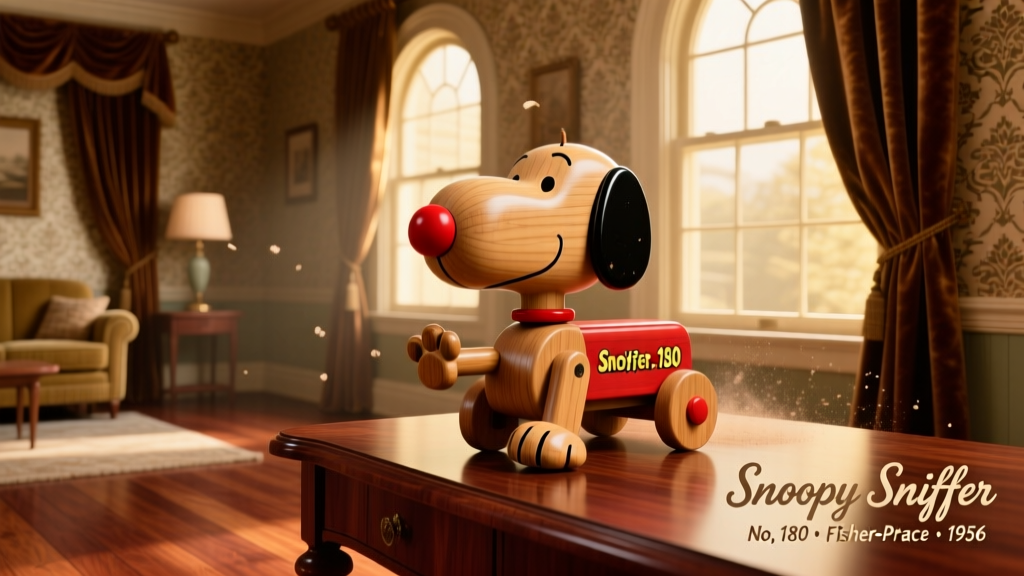
Toy Dog Snoopy Sniffer No. 180 Pull Toy: A Collector’s Guide to the 1964 Fisher-Price Classic
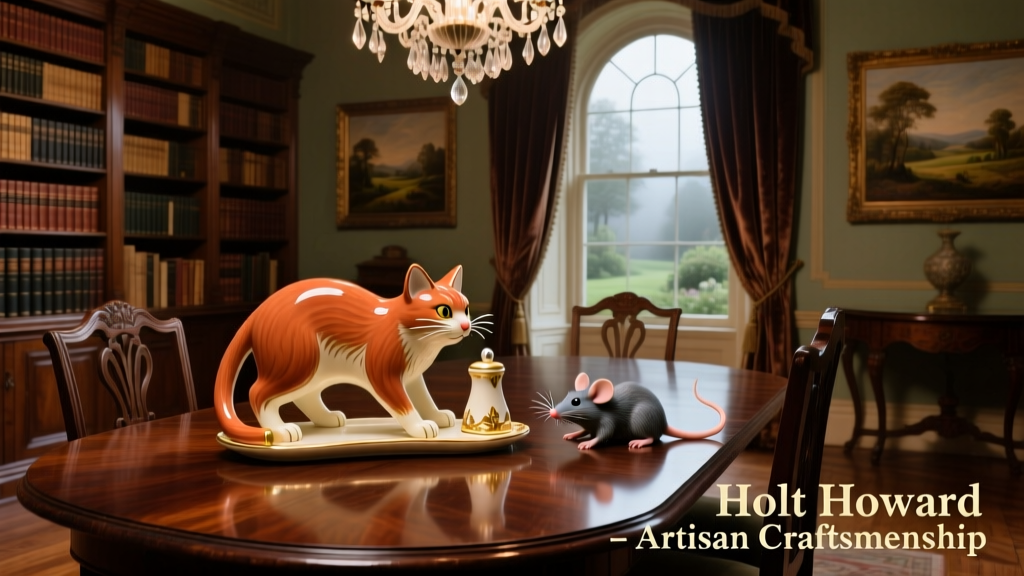
Holt Howard Salt & Pepper Shakers: The Iconic Cat-and-Mouse Ceramic Duo of Mid-Century America
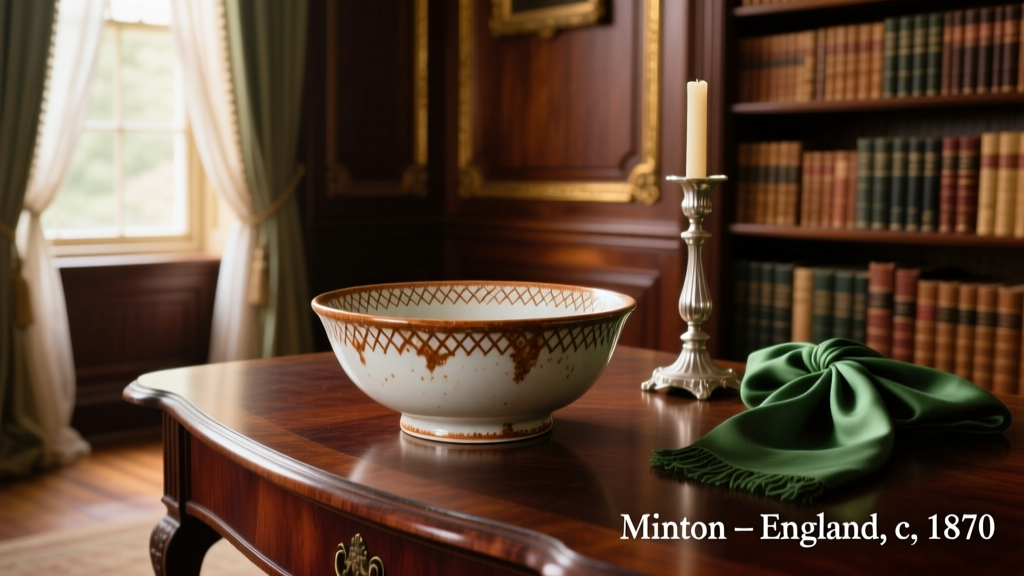
Minton Bowl: Earthworm Rust Green Crosshatched Rim — A Detailed Study of Pattern 2979, 3 1/8 × 6 1/4 Inches
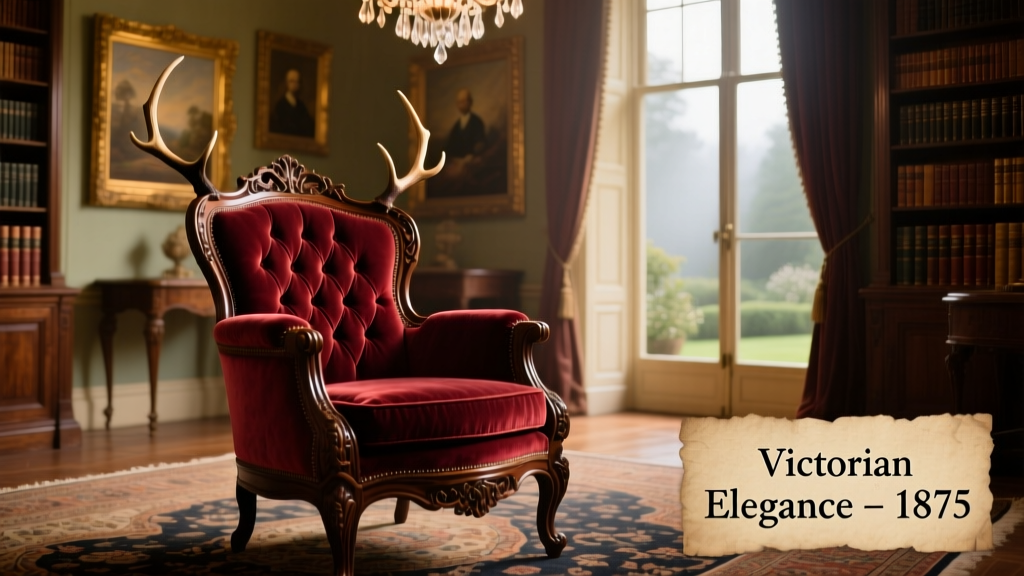
Victorian Antler Chair: Authentic Restoration, Structural Integrity, and Period-Accurate Upholstery Techniques
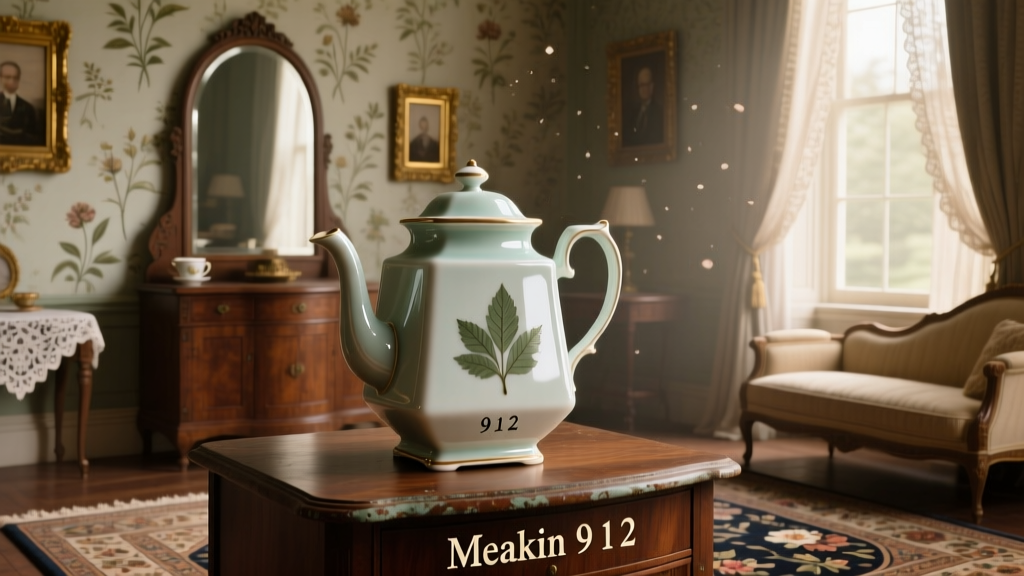
Tea Leaf Ironstone Coffeepot: Luster-Finished Square Meakin Piece, Marked & Measuring 9½ Inches
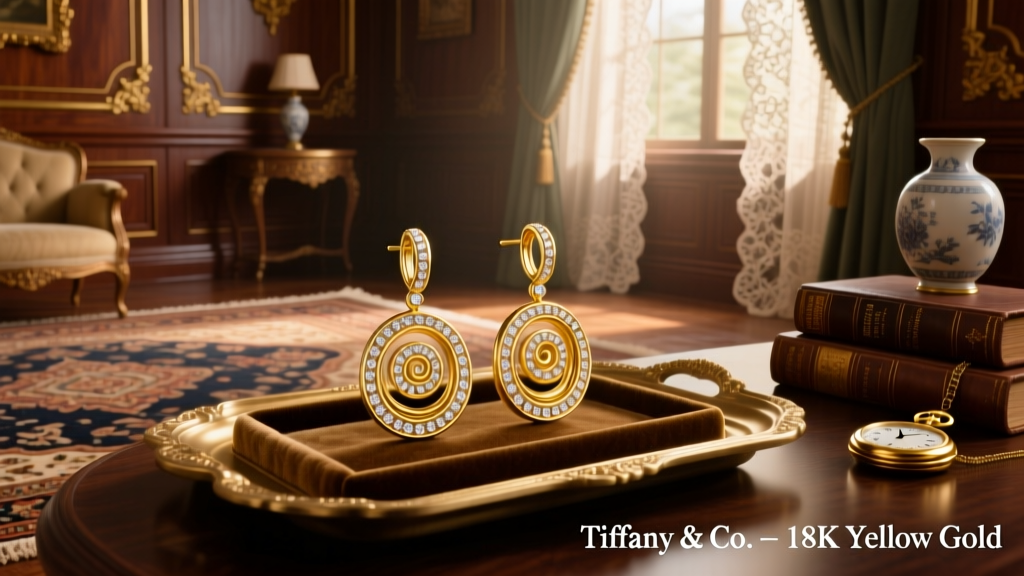
Tiffany & Co. Spiral Openwork Earrings in 18K Yellow Gold: Design, Craftsmanship, and Collectibility
Aladdin B-91 Diamond Quilt White Moonstone Font with Rose Foot: A Restoration Specialist’s Deep Dive
Missing Napoleon Bust Found: A 19th-Century Bronze Rediscovered in Provincial French Attic After 142 Years
The 1938 Baker Furniture Company 'Chippendale Revival' Breakfront Bookcase: Identification, Provenance, and Structural Restoration Protocol for Model 2335704