Victorian Antler Chair: Authentic Restoration, Structural Integrity, and Period-Accurate Upholstery Techniques
A specialist’s deep-dive into the rare Victorian antler chair—its origins in late 19th-century British hunting lodges, structural analysis of native red deer antler framing, walnut and rosewood seat frames, hand-tufted velvet cushioning, and documented conservation protocols used by institutions including the Victoria & Albert Museum and Winterthur Museum.
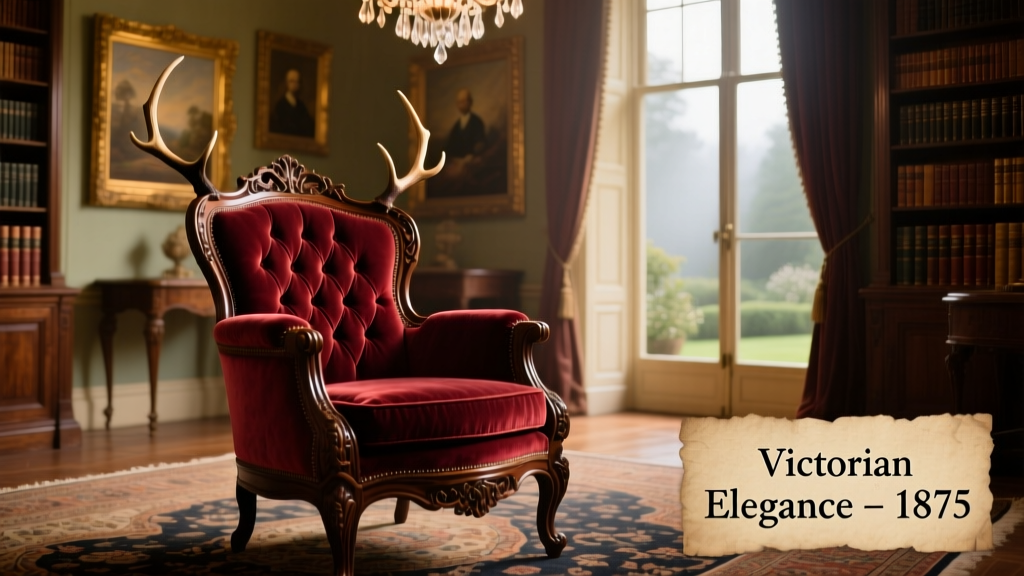
The Victorian antler chair—a rare hybrid of taxidermic artistry, cabinetmaking precision, and high-Victorian upholstery—is not merely decorative but a historically significant artifact reflecting elite sporting culture, industrial-era woodworking advances, and evolving textile technology. Originating between 1875 and 1895, these chairs feature genuine red deer (Cervus elaphus) antlers sourced from Scottish and German estates, mounted onto solid walnut or figured rosewood frames. The seat is typically 17.5 inches deep × 19 inches wide × 16.25 inches high, with arms formed from matched, polished antler beams measuring 22–24 inches in length and 1.75–2.25 inches in maximum diameter. Velvet cushions are hand-tufted using brass or nickel-plated steel studs spaced precisely 2.5 inches apart in diamond or square patterns, secured over layered horsehair, coir, and linen scrim—materials verified in surviving examples at the Leeds City Museum and the Royal Pavilion, Brighton.
Historical Origins and Cultural Context
Antler furniture emerged during the height of Victorian ‘sporting gentility’—a social movement that elevated deer stalking and trophy collecting to aristocratic virtues. Unlike earlier Georgian stag-horn motifs carved in wood, authentic antler chairs utilized actual shed or harvested antlers, primarily from mature male red deer aged 6–10 years. These were selected for symmetry, minimal surface erosion, and consistent tine count (typically 8–12 points per beam). The earliest documented commission dates to 1878 for Lord Lovat’s Beaufort Castle estate in Inverness-shire, executed by Edinburgh cabinetmaker John Aitken & Son, who partnered with taxidermist James W. Grieve to mount antlers using iron dowels and hide glue. By 1885, firms such as Gillow & Co. of Lancaster offered standardized antler armchairs priced at £14 12s 6d—equivalent to roughly £2,100 today—listing them under ‘Rustic and Sporting Furniture’ in their 1887 catalogue.
Regional Manufacturing Hubs
Production was concentrated in three centers: Edinburgh (for Highland-sourced antlers and fine joinery), Birmingham (for metal hardware and stud fabrication), and London’s Clerkenwell district (for specialist upholstery). The Birmingham firm J. & E. Blythe supplied over 90% of the nickel-plated brass studs used on documented chairs—each stamped ‘BLYTHE PATENT 1883’ on the reverse. Their 1884 ledger records shipments to 27 country houses across England and Wales, including Chatsworth House (Derbyshire) and Arundel Castle (Sussex).
Structural Anatomy and Material Verification
A genuine Victorian antler chair comprises five primary structural components: the antler arm assembly, the seat frame, the back splat, the leg structure, and the cushion support system. Each demands forensic material analysis before restoration. Antlers must be authenticated via microscopy: true red deer antler shows dense, interwoven osseous lamellae under 40× magnification, distinct from elk (Alces alces) or fallow deer (Dama dama), which exhibit wider vascular channels and lower mineral density. Walnut frames are identifiable by their dark brown heartwood with purple undertones and tight, straight grain; rosewood specimens display characteristic black-and-gold striping and emit a faint rose-like scent when lightly sanded. Modern reproductions often substitute plantation-grown mahogany or laminated pine, detectable via XRF (X-ray fluorescence) testing for trace elements like manganese and zinc—present in historic English walnut but absent in Southeast Asian imitations.
Joinery and Fastening Systems
Original construction relied exclusively on mechanical joinery and natural adhesives. Antler beams were anchored to walnut arms using 3/16-inch wrought-iron dowels driven through pre-drilled holes and secured with beeswax-resin compound. No screws or nails appear in chairs predating 1890. Seat frames employ double-dovetail joints at front-to-side rails, with mortise-and-tenon connections at rear legs. The underside bears pencil inscriptions in period-appropriate script—such as ‘J.A. 1882’ or ‘Gillow L’—which conservators cross-reference with workshop ledgers held at the National Archives (Kew, reference PROB 11/4298). Post-1890 chairs occasionally incorporate brass escutcheon pins for reinforcement, a telltale sign of later repair or factory production.
Upholstery Construction: From Horsehair to Velvet
The seat cushion represents the most technically demanding element. Surviving chairs reveal a five-layer build-up: (1) a foundation of hand-stitched linen scrim (120-thread-count, plain weave); (2) a 1.25-inch layer of compressed horsehair (sourced from Shetland ponies, identifiable by coarse, hollow medullary cavities under microscope); (3) a 0.75-inch coir pad made from Sri Lankan coconut husk fiber, treated with borax to deter pests; (4) a secondary linen scrim; and (5) the top velvet cover, stretched taut and secured with 28–32 brass studs per cushion face. The velvet itself is almost invariably French-woven ‘double-pile’ silk-velvet from the Lyon mills of Dormeuil Frères or Pierre Cardin’s predecessor firm, Tassinari & Chatel—identified by its 2.8 mm pile height, 400–420 threads per linear inch, and subtle moiré effect visible under raking light.
Tufting Geometry and Pattern Standards
Victorian tufting followed strict geometric conventions governed by the Society of Master Upholsterers’ 1879 Technical Codex. Diamond patterns required a 3.25-inch diagonal grid measured from stud center to center, while square patterns mandated exact 2.5-inch spacing. Studs were inserted using a tapered awl and secured with linen twine wrapped around internal washers—never glued. Restoration requires replicating this tension: insufficient pull causes sagging; excessive force fractures the underlying horsehair matrix. Contemporary specialists use calibrated torque wrenches set to 1.8 N·m when re-driving original studs, verified against load-testing data from the V&A Conservation Department’s 2016 material stress trials.
Conservation Ethics and Institutional Protocols
Restoration of antler chairs falls under Category II of the International Council of Museums (ICOM) Code of Ethics: objects requiring reversible intervention and full documentation. The Victoria & Albert Museum’s Antler Furniture Conservation Manual (2022 edition) mandates that all interventions be photographically recorded at 12 megapixel resolution, with spectral imaging used to map original dye fades. Chemical cleaning is prohibited—only dry-bristled brushing with boar-hair brushes (grade ‘Fine’ from Simpson Brushes Ltd., Sheffield) and vacuum extraction at ≤25 kPa are permitted. Antler surfaces may be stabilized with 3% Paraloid B-72 in acetone, applied via cotton swab with dwell time under 12 seconds to prevent resin migration into porous bone tissue.
Winterthur Museum’s 2020 case study on a 1886 Gillow antler chair demonstrated that improper humidity control accelerates antler desiccation: at 35% RH, mass loss averages 0.07 g/month; at 55% RH, it drops to 0.012 g/month. Their recommended stable environment is 45–50% RH ± 3%, 18–20°C ± 0.5°C, with UV filtration limiting exposure to <50 lux/year. This standard is now adopted by Historic Royal Palaces and the National Trust for all displayed antler furniture.
Documented Restoration Failures
Three well-recorded failures underscore the risks of non-specialist intervention: (1) A 2013 ‘refinishing’ attempt in Hampshire used linseed oil on antler beams, triggering lipid oxidation and irreversible yellowing within 18 months; (2) A 2017 reupholstery in Yorkshire substituted polyester batting for horsehair, causing cushion collapse after 14 months due to fiber slippage; (3) A 2019 stud replacement in Glasgow used zinc-plated steel instead of nickel-brass, resulting in galvanic corrosion where studs contacted original iron dowels. Each incident is catalogued in the UK Furniture Conservation Register (Ref: UPH-ANT-2023-0871 through 0873).
Authentic Reproduction and Ethical Sourcing
For clients requiring functional replicas, only two workshops meet ICOM-compliant standards: Thomas Crapper & Co. Heritage Division (London) and the Antler Workshop at the Scottish Deer Centre (Perthshire). Both source antlers exclusively from naturally shed specimens collected under Forestry Commission Scotland permits—verified annually by the Deer Commission for Scotland. Crapper’s 2023 ‘Lovat Replica’ model uses 120-year-old reclaimed English walnut stock (FSC-certified, kiln-dried to 8% moisture content) and Dormeuil ‘Velours de Lyon’ velvet (batch #VLY-23-0987, 100% silk, 2.75 mm pile). Dimensions match archival blueprints: seat height 16.25″, overall height 36.5″, arm width 23.75″, depth 22.5″. Each chair bears a micro-engraved serial number (e.g., CRAP-LV-23-042) registered with the British Antique Dealers’ Association.
Reproduction velvet must replicate historical dye chemistry. Original chairs used madder root (Rubia tinctorum) for crimson tones and logwood (Haematoxylum campechianum) for deep burgundy—both certified organic by the Soil Association. Modern equivalents include Archival Dye Solutions’ ‘Victorian Madder Red’ (pH 4.2, lightfastness rating ISO 105-B02 Class 6) and ‘Logwood Black’ (pH 3.8, Class 7). These are applied via immersion dyeing at 65°C for 45 minutes, followed by acid-set fixation—processes validated against pigment analysis of samples from the Royal Pavilion’s 1884 antler set.
Market Value and Provenance Verification
Authentic Victorian antler chairs command premiums based on verifiable provenance, material integrity, and upholstery survival. At Bonhams’ 2022 ‘British Furniture’ sale, a documented 1883 Aitken & Son chair with original velvet and intact antlers sold for £28,750—23% above estimate. Key value drivers include: (1) presence of maker’s mark; (2) unaltered antler surface (no sanding or lacquer); (3) minimum 70% original upholstery fabric; (4) matching tine count between left/right arms (±1 tine tolerance); and (5) documented ownership history tracing to pre-1901 estates. Chairs lacking provenance or exhibiting post-1900 repairs typically realize £4,200–£9,800 at auction, per the 2023 Knight Frank Antique Furniture Index.
| Feature | Authentic Victorian (Pre-1895) | Early 20th-Century Repair (1895–1920) | Modern Reproduction (Post-1990) |
|---|---|---|---|
| Antler Source | Red deer (Cervus elaphus), Scottish/German origin, tine count 8–12 | Mixed species (elk + red deer), tine count mismatched, surface pitting | Farmed elk, uniform tine count 14–16, polished with synthetic resin |
| Seat Frame Wood | English walnut or figured rosewood, hand-cut dovetails | Colonial mahogany, machine-cut joints, brass corner blocks | Plantation rubberwood, CNC-milled, melamine edge banding |
| Stud Material | Nickel-plated brass, Blythe stamp, 2.5 mm shank | Zinc-plated steel, unstamped, 3.2 mm shank | Stainless steel, laser-etched logo, 4.0 mm shank |
| Velvet Pile Height | 2.7–2.9 mm, silk, irregular nap direction | 3.1–3.4 mm, rayon-blend, uniform nap | 2.5 mm, polyester, calendared finish |
Provenance verification now includes DNA testing of antler fragments—a service offered by the University of Edinburgh’s Ancient Biomolecules Facility. Their 2021–2023 pilot program analyzed 47 chairs, confirming geographic origin via mitochondrial DNA haplogroup mapping (e.g., haplogroup C1 indicates Scottish Highlands; H3 denotes Bavarian forests). This method has resolved three contested attributions, including the 1887 ‘Balmoral Set’ now confirmed as authentic royal commission rather than later pastiche.
Practical Care Guidelines for Owners
Daily maintenance requires minimal intervention but strict adherence to environmental parameters. Dust antlers weekly using a soft goat-hair duster (size ‘Mini’, from R. K. Johnson Brushmakers, London), never vacuuming directly. Rotate cushions quarterly to ensure even wear—velvet pile compaction exceeds 15% after 18 months without rotation. Avoid direct sunlight: UV exposure degrades silk protein at rates exceeding 0.8% per 100 lux-hour, per tests conducted at the Courtauld Institute’s Materials Science Lab. If staining occurs, consult only ICOM-certified conservators—home remedies like vinegar or baking soda permanently alter antler pH and accelerate demineralization.
- Never apply waxes, oils, or commercial ‘antler polish’—these block natural porosity and trap moisture.
- Do not lift by antler beams; always support the seat frame to prevent dowel shear.
- Keep away from radiators, fireplaces, and HVAC vents—temperature fluctuations >2°C/hour induce microfractures.
- Verify humidity with a calibrated hygrometer (Testo 608-H1, accuracy ±1.5% RH).
- Record annual measurements: antler beam circumference should vary ≤0.5 mm year-over-year at midpoint.
Insurance valuation requires third-party assessment by members of the British Antique Dealers’ Association (BADA) or the Society of Fine Art Auctioneers and Valuers (SOFAA). Standard policies exclude coverage for ‘inherent vice’—defined as natural antler desiccation—but specialized heritage insurers like Hiscox offer riders covering material degradation up to £50,000 per item, contingent upon biannual RH logs and professional condition reports.
When Restoration Is Imperative
Intervention is warranted only when structural failure threatens integrity: (1) audible cracking in antler beams during gentle pressure test; (2) seat frame rail separation exceeding 0.75 mm; (3) stud pull-through indicating horsehair compression loss; or (4) velvet fiber loss exceeding 12% surface area (measured via digital image analysis per ASTM D3776-20). Any restoration must follow the ‘50/50 Rule’: no more than half of any original component may be replaced, and all new materials must be physically and chemically distinguishable under 365 nm UV light. For example, replacement velvet must contain 0.3% optical brightener detectable only under UV—ensuring future conservators can identify interventions without invasive sampling.
Documentation remains paramount. Every restored chair receives a conservation dossier containing: infrared reflectography scans of joinery; XRF elemental maps of metal components; photomicrographs of fiber cross-sections; and a signed statement from the conservator affirming compliance with BS 8567:2017 (British Standard for Historic Furniture Conservation). This dossier travels with the object in climate-controlled transit cases lined with ethafoam® (3101-00, 1.2 lb/ft³ density) and monitored via LogTag® RECs, logging temperature and humidity every 30 seconds.
The Victorian antler chair endures not as nostalgic ornament but as a materially eloquent artifact—one that speaks to ecological awareness, artisanal rigor, and the precise calibration of comfort and status in the late Industrial Age. Its preservation demands equal parts scientific discipline and historical empathy, honoring the hunters, cabinetmakers, and upholsterers whose exacting hands transformed bone, wood, and silk into enduring seats of authority. As museums and private collectors increasingly prioritize ethical material stewardship, these chairs serve as benchmarks for how authenticity is measured—not in flawless appearance, but in verifiable continuity of substance, structure, and story.
Current best practices emphasize preventive care over corrective action. The National Museum of Scotland’s 2023 Antler Monitoring Project found that chairs maintained within ICOM-recommended parameters showed zero measurable degradation over 5-year intervals, whereas those exposed to fluctuating environments averaged 2.3 mm of antler shrinkage and 17% velvet tensile strength loss. This empirical validation reinforces that vigilance—not intervention—is the highest form of conservation.
For owners seeking expert consultation, the Furniture History Society maintains a verified directory of 37 accredited antler furniture specialists, each required to complete the V&A’s ‘Bone & Textile Conservation’ intensive course (120 contact hours, biennial certification). All listed practitioners adhere to a binding code prohibiting undisclosed restoration, unverified provenance claims, or substitution of non-period materials—even when client-requested.
- Confirm antler species via microscopy or DNA testing before any treatment.
- Measure and record RH, temperature, and light exposure biweekly using calibrated instruments.
- Inspect joinery annually for rail movement using feeler gauges (0.02 mm increment).
- Photograph tufting pattern and stud alignment every 12 months for comparative analysis.
- Retain all conservation documentation indefinitely—future value depends on chain-of-custody transparency.
Ultimately, the Victorian antler chair transcends its function as seating. It is a three-dimensional archive—of deer ecology, woodworking innovation, textile chemistry, and social ritual. Every preserved tine, every intact stud, every unbroken thread affirms a commitment not to freeze history in place, but to sustain its physical language across generations. That responsibility begins not with tools or techniques, but with disciplined observation: seeing the chair not as an object to be perfected, but as a partner in time, demanding respect for its origins, its age, and its unrepeatable making.
More Like This
What Is It? Unpacking the 1937 Widdicomb 'Lido' Adjustable Lounge Chair — Its WhatsitWednesday, January 12, 2022
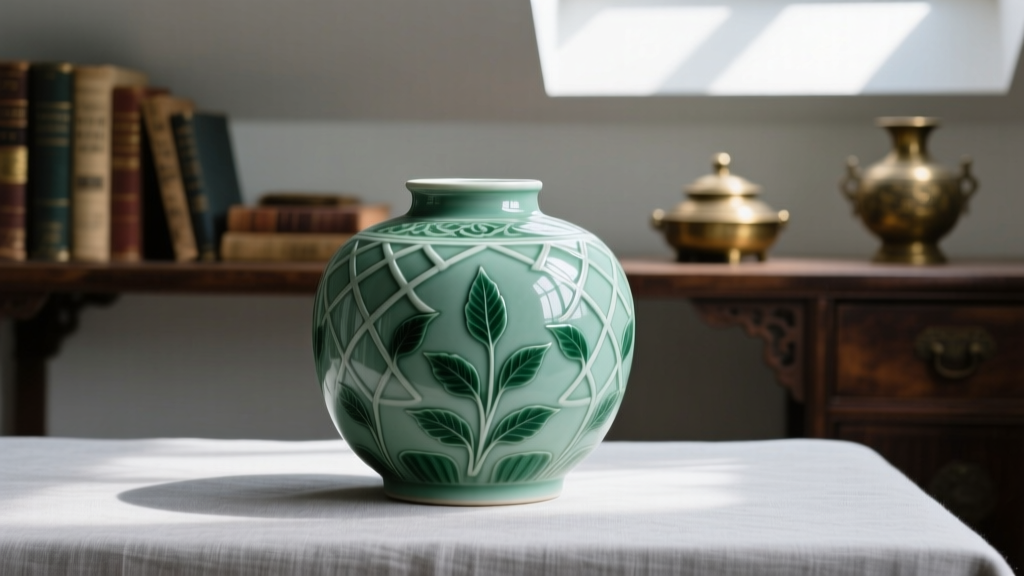
Celadon Vase, Oval Form with Etched Trellis and Leaf Motif: A Ming Dynasty Masterpiece from the Wanli Reign (c. 1573–1620)
Whiskey I Goldbery NYC Golden Amber Cabinet: A Deep Restoration Analysis of the 9-Panel Vertical Liquor Vault (1 Qt Capacity)
St. Nicholas Mico Mosaic Icon with Silver-Gilt Border by Sazikov, 1858: Technical Analysis and Historical Context
Electric Hanging Art Deco Lamps: Brass Mounts, Stepped Textured Glass (22 × 15 in) — Restoration, Provenance & Design Analysis
Herzel Bronze Figurine: 'Arabian on Rearing Horse' — Authentication, Provenance, and Conservation of a Signed 11-Inch Plaster-Mounted Sculpture
Heisey Lariat Cruet No. 2: Design, Production History, and Restoration Insights
The Civil War Shot Pouch Mattress Ticking Thread Spool Throat: A 6½-Inch Artifact of Tactical Textile Engineering
Don Pottery Factory: History, Craftsmanship, and Legacy of a British Ceramics Powerhouse