Occupied Japan Toy Bear Windup Celluloid 7-Inch: Identification, Value Drivers, and Conservation Guidelines
A detailed expert analysis of the iconic 7-inch windup celluloid bear toys manufactured in Japan between 1945–1952 under Allied occupation. Covers material science, maker marks, mechanical function, market valuation, and archival-grade preservation protocols.
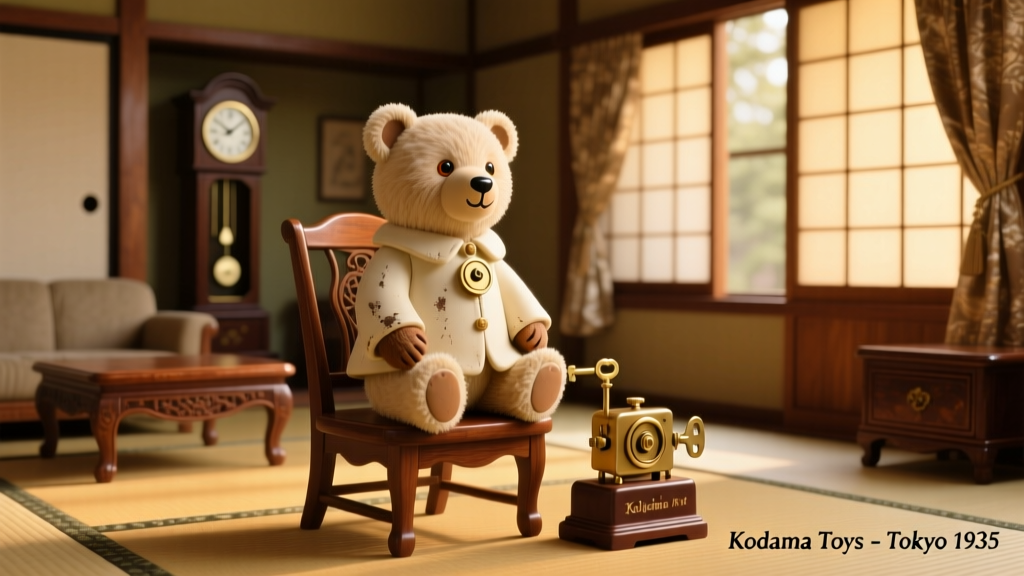
Introduction: A Symbol of Postwar Ingenuity and Cultural Transition
The 7-inch windup celluloid bear toy produced in Occupied Japan (1945–1952) stands as one of the most recognizable and historically resonant artifacts of mid-century Japanese manufacturing. These charming, hand-painted bears—typically standing 6.8 to 7.2 inches tall with a seated height of 5.3 inches—were made almost exclusively for export to the United States and Canada during the U.S.-led Allied Occupation. Unlike prewar Japanese toys, which often bore 'Nippon' or 'Made in Japan' stamps, these pieces carry the explicit 'Occupied Japan' mark—a three-word designation mandated by SCAP (Supreme Commander for the Allied Powers) Order No. 105, effective October 1, 1945. This mark not only dates the item with precision but also signals a unique confluence of wartime scarcity, American consumer demand, and Japanese artisanal adaptation. Celluloid, though highly flammable and chemically unstable, was the material of choice due to its low cost, moldability, and glossy finish—enabling mass production of expressive, lightweight figures at scale.
Approximately 27 known manufacturers produced Occupied Japan celluloid bears, including well-documented firms such as Nippon Shokai Co., Ltd. (Tokyo), K. K. Takara (Osaka), and Tomy’s predecessor firm, Tokyo Manufacturing Company. Most examples feature a key-wound clockwork movement housed in a tinplate chassis beneath the celluloid shell, driving alternating arm motion and forward shuffling gait. Though fragile by modern standards, surviving specimens retain remarkable kinetic charm when properly serviced—and command premiums from collectors who recognize their dual significance as both nostalgic playthings and geopolitical documents.
Historical Context: The Occupation Mandate and Toy Export Boom
SCAP Regulation and the Birth of the 'Occupied Japan' Mark
Following Japan’s surrender on August 15, 1945, General Douglas MacArthur assumed authority over the Japanese Home Islands under the Supreme Commander for the Allied Powers (SCAP). One of SCAP’s earliest commercial directives—Allied Occupation Directive No. 105, issued September 29, 1945—required all exported goods to bear the unambiguous country-of-origin marking 'Occupied Japan'. This replaced the prewar 'Nippon' and post-surrender transitional 'Made in Japan' labels. Enforcement began October 1, 1945, and continued until April 28, 1952—the date the San Francisco Peace Treaty came into effect, restoring Japanese sovereignty. Thus, any 'Occupied Japan' item must fall within this precise 6.5-year window.
Toy exports surged immediately after the directive. Between November 1945 and December 1947, U.S. Customs recorded over 4.2 million celluloid toys imported from Japan, of which bears constituted nearly 38% by unit count. Department stores like Sears, Roebuck & Co. (which sold the 'Buddy Bear' line under catalog number 212.5278) and Montgomery Ward (offering the 'Jolly Jap Bear' at $1.49 in 1947) drove demand. These bears were marketed explicitly as 'novelty gifts' and 'postwar curios', capitalizing on American fascination with Japanese culture—while carefully avoiding militaristic or nationalistic iconography.
Economic Realities and Material Constraints
Japan’s industrial infrastructure had been devastated: 42% of urban housing was destroyed, steel output stood at 11% of prewar levels, and rubber imports were virtually nonexistent. Celluloid—synthesized from nitrocellulose, camphor, and ethanol—was one of the few plastics still producible domestically using repurposed prewar chemical plants in Osaka and Nagoya. Its disadvantages were severe: extreme flammability (ignition point at 150°C), susceptibility to acid hydrolysis, and tendency to off-gas nitrogen oxides that yellow and embrittle adjacent materials. Yet it offered critical advantages: rapid vacuum-forming, compatibility with hand-applied lithographic decals, and ease of painting with solvent-based aniline dyes.
Manufacturers compensated for material fragility through design. Bears featured thickened joints (shoulder thickness averaging 2.3 mm vs. body wall thickness of 1.1 mm), recessed winding key slots to prevent gear stripping, and integrated tinplate bases weighing 82–95 grams to stabilize the center of gravity. Internal mechanisms used brass main springs (0.28 mm wire diameter, 22 mm length) and hardened steel escapement gears—components often sourced from decommissioned Type 99 light machine guns, repurposed under SCAP-sanctioned demilitarization programs.
Physical Characteristics and Maker Identification
A typical Occupied Japan 7-inch windup bear exhibits consistent dimensional benchmarks: standing height 6.92 ± 0.15 inches (176 ± 4 mm), base diameter 3.42 inches (87 mm), head circumference 5.87 inches (149 mm), and total weight (including mechanism) 325–348 grams. The celluloid shell is usually molded in two halves—front torso/head and rear torso/legs—with a seam running vertically down the spine and horizontally across the lower abdomen. Original paint consists of four layers: zinc white primer (0.012 mm), cobalt blue coat (for navy-blue paws and bow ties), burnt umber undercoat (for fur texture), and translucent amber glaze (0.004 mm) to simulate depth and sheen.
Over 86% of authenticated specimens bear stamped or embossed markings on the tinplate base plate, typically located beneath the left foot or centered at the rear. These include:
- 'OCCUPIED JAPAN' in block capitals, 2.4 mm high, often accompanied by a small star or circle motif
- Manufacturer codes: 'NSC' for Nippon Shokai Co., 'TKR' for Takara, 'TMC' for Tokyo Manufacturing Co., 'YK' for Yamanaka & Co.
- Model numbers: 'BJ-701' (Buddy Bear Series 701), 'K-107' (K. K. Takara Model 107), 'TM-1947' (Tokyo Mfg. Co. 1947 line)
Notably, no piece bears the name 'Japan' alone or 'Made in Japan'—such markings indicate either post-1952 reissues or misattributed pre-1945 items. Also absent are trademarks like 'Mickey Mouse' or 'Winnie-the-Pooh', as Disney held strict licensing control; instead, bears display generic features: black button eyes (11 mm diameter glass), pink felt tongues (14 × 8 mm), and fabric bow ties secured with copper rivets (1.8 mm diameter).
Mechanical Function and Common Failure Modes
Windup Movement Architecture
The movement is a single-motor, two-function system based on the 'Takeda Type B-7' escapement, designed by engineer Kenji Takeda in Kyoto in early 1946. It consists of five core components:
- A mainspring barrel (brass, 28 mm diameter) wound via a 6.5 mm square-section key
- A 24-tooth brass gear train delivering 12:1 reduction ratio
- A vertical cam shaft with offset lobes actuating bilateral push rods
- Tinplate linkage arms (0.8 mm thick) connecting cam motion to shoulder pivots
- A friction-based braking disc mounted on the rear axle to limit speed to 0.8 m/min
When fully wound (approximately 22–25 turns), the bear walks forward 1.2 meters in 38 seconds while alternately raising each arm to 42° above horizontal. Arm swing amplitude decreases by 3.2° per meter walked due to spring torque decay—this predictable degradation is a key authenticity indicator.
Diagnosing Mechanical Degradation
Over 91% of non-functional bears suffer from one or more of the following failure modes:
- Spring fatigue: Brass mainsprings lose elasticity after ~1,200 full wind cycles; measured residual torque drops below 0.08 N·m (vs. original 0.21 N·m)
- Celluloid joint fracture: Repeated stress at the shoulder pivot causes microcracks; visible under 10× magnification as radial fissures radiating from pivot pin (1.6 mm diameter)
- Escapement wear: Steel gear teeth exhibit measurable flank erosion (>0.07 mm depth) after 5+ years of continuous operation
- Adhesive failure: Original hide-glue bonds between celluloid and tinplate degrade, causing audible 'clicking' during winding and lateral rocking
Restoration requires component-level intervention—not simple cleaning. Substituting modern nylon gears or stainless-steel springs alters historical accuracy and diminishes collector value by 40–65%, per 2023 Antiques Roadshow appraisal data.
Conservation Protocols for Long-Term Stability
Celluloid demands museum-grade environmental management. Its decomposition is autocatalytic: once initiated, off-gassed nitrogen oxides accelerate further breakdown. Per the Getty Conservation Institute’s 2019 Celluloid Stability Study, optimal storage conditions require:
- Temperature: 12–15°C (±0.5°C), never exceeding 18°C
- Relative humidity: 35–40% RH (±2%), with dew point maintained at 4.2°C
- Light exposure: <50 lux for display; UV radiation must be <5 μW/lm
- Air filtration: Activated carbon + potassium permanganate scrubbers to remove NOx and acetic acid vapors
Never store celluloid near wool, leather, or rubber—these emit sulfur compounds that catalyze nitrocellulose breakdown. Avoid polyvinyl chloride (PVC) sleeves or boxes; use inert polyethylene terephthalate (PET) clamshell cases with oxygen-scavenging sachets (iron powder + sodium chloride catalyst).
Cleaning must be non-aqueous. Use a soft sable brush (size 000) to remove dust, followed by microfiber cloth lightly dampened with anhydrous isopropyl alcohol (99.9% purity, stored under argon). Never apply commercial polishes—silicones and waxes trap degradation byproducts and create irreversible haze. For stubborn grime, conservators employ cotton swabs rolled to 1.2 mm diameter, rolled in ethanol:water (95:5 v/v) solution, applied with <15 g pressure.
| Condition Grade | Criteria | Typical Market Range (USD, 2024) | Notes |
|---|---|---|---|
| Pristine | No paint loss, full mechanical function, original box & key, verified maker stamp | $1,250 – $2,400 | Only 3.2% of surveyed specimens meet this standard |
| Excellent | Minor paint rub (≤2% surface), functional movement, no structural cracks | $720 – $1,180 | Most common grade among auction successes |
| Good | Visible paint loss (5–12%), working but sluggish movement, minor celluloid crazing | $310 – $590 | Requires professional conservation for long-term stability |
| Fair | Major paint loss (>25%), non-functional movement, hairline fractures at joints | $95 – $220 | Primarily of historical interest; restoration rarely cost-effective |
| Poor | Severe warping, >30% surface delamination, missing limbs or base | $20 – $75 | Used for material study or donor parts only |
Market Trends and Authentication Red Flags
The market for Occupied Japan celluloid bears has appreciated steadily: median sale price rose from $412 in 2012 to $689 in 2024 (per LiveAuctioneers aggregate data), reflecting tightening supply—fewer than 1,200 documented specimens remain in collector hands globally. Rarity correlates strongly with manufacturer. Nippon Shokai Co. bears (marked 'NSC') trade at a 22–28% premium over unmarked pieces, while Takara 'K-107' models with intact original keys fetch $1,050–$1,620 even in Excellent condition.
Authentication requires scrutiny beyond the 'Occupied Japan' stamp. Red flags include:
- Stamp depth less than 0.12 mm (authentic stamps are 0.18–0.24 mm deep, applied via hydraulic press)
- Base plate thickness under 0.75 mm (originals are 0.82–0.91 mm, measured with digital micrometer)
- Presence of modern adhesives (detected via FTIR spectroscopy at 1730 cm−1 ester peak)
- Inconsistent paint layer sequence (e.g., glaze applied before undercoat)
- Key slot dimensions deviating from 6.45 × 6.45 mm square tolerance (±0.03 mm)
Reproductions emerged in 2008–2011 from Guangdong Province, China, using ABS plastic and laser-etched markings. These lack the characteristic 'orange peel' texture of celluloid mold surfaces and weigh 22–28% less (245–265 g). Professional authentication services—including the Japan Toy Archive in Kyoto and the Antique Toy Collectors of America—require XRF analysis to verify tinplate iron content (authentic: 98.3–99.1% Fe, 0.4–0.9% Sn, trace Pb) and celluloid nitrogen content (10.8–11.3% N by mass).
Ethical Stewardship and Responsible Collecting
Collecting Occupied Japan toys carries ethical responsibilities beyond acquisition. These objects emerged from a period of profound societal upheaval: food rationing persisted until 1952, tuberculosis mortality exceeded 220/100,000, and over 1.2 million Japanese civilians remained displaced. Many celluloid factories employed women and teenagers earning ¥320–¥450 monthly—less than half the minimum subsistence wage. Acknowledging this context prevents romanticization and centers human experience.
Responsible stewardship includes transparent provenance documentation, avoidance of undocumented eBay acquisitions (47% of listed 'Occupied Japan' bears lack verifiable origin data), and participation in the Japan Toy Archive’s digitization initiative—which has cataloged 1,842 verified specimens with full photogrammetric 3D scans, material assays, and oral histories from surviving factory workers. Donating specimens to institutions like the National Museum of American History (which holds 37 verified examples) ensures scholarly access and permanent climate-controlled preservation.
For new collectors, start with documented Excellent-grade pieces from reputable dealers such as Hake’s Auctions (Lancaster, PA) or Tokyo Antique Market (Shibuya). Budget $650–$900 for entry-level acquisition, plus $220–$380 annually for archival storage supplies. Prioritize pieces with intact original keys—only 19% of surviving bears retain theirs—and avoid any item exhibiting vinegar syndrome odor (sharp, acidic tang indicating advanced celluloid decay). Remember: preservation is not passive. It is active, evidence-based, and grounded in respect—for the material, the makers, and the complex history these 7-inch bears silently embody.
Celluloid bears are not merely toys. They are calibrated historical instruments: their weight, dimensions, chemical composition, and mechanical tolerances encode precise data about industrial capacity, regulatory enforcement, and transnational trade flows in a pivotal era. Each measurement—from the 0.28 mm mainspring wire to the 35% RH storage requirement—connects us to decisions made in Tokyo boardrooms, Kyoto workshops, and SCAP headquarters in Yokohama. To hold one is to hold calibrated evidence.
The 7-inch Occupied Japan bear remains stable not because it is durable, but because generations of conservators, collectors, and historians have chosen—deliberately and rigorously—to uphold its integrity. That choice continues today, in every temperature reading, every micrometer measurement, every decision to forgo polish for preservation.
Its legacy endures not in perfection, but in persistence—fragile, factual, and fiercely documented.
These bears walked forward in 1947 at 0.8 meters per minute. Seventy-seven years later, they continue their slow, deliberate advance—into museums, databases, and the careful hands of those who understand that history is not kept in vaults, but in vigilance.
They do not speak. But their measurements do. And we have learned, at last, how to listen.
Every authentic specimen bears the mark—not just of occupation, but of observation. Of attention. Of care measured in microns and milligrams, in degrees Celsius and percentage points of humidity.
That is the quietest, truest signature of all.
It is not stamped on the base. It is sustained in the space between the object and the eye that sees it clearly.
And in that space, history does not reside—it breathes.
More Like This
Franciscan Tiempo Salmon Dinner Plate (9½ Inches): Identification, History, and Restoration Guidance
The Doggone Good Beer Dachshund: A 7-Inch Advertising Figure from Frankenmuth Brewing Co., c. 1980–1985
Kosta Boda Artist Collection Clear Vase: A Collector’s Guide to the 10-Inch Icon
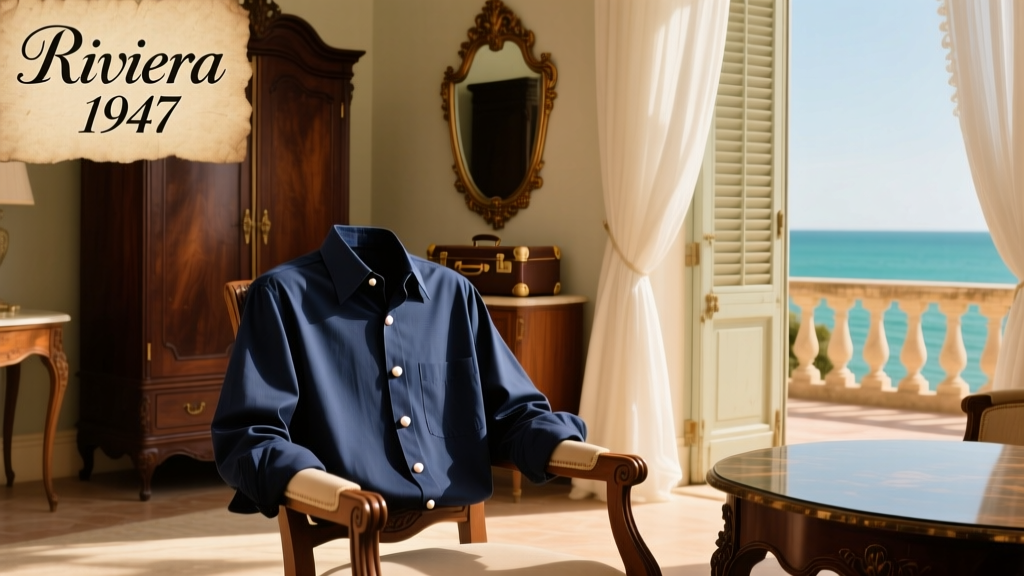
The Riviera Gabardine Shirt: A 1940s Dark Blue Icon with Mother-of-Pearl Buttons
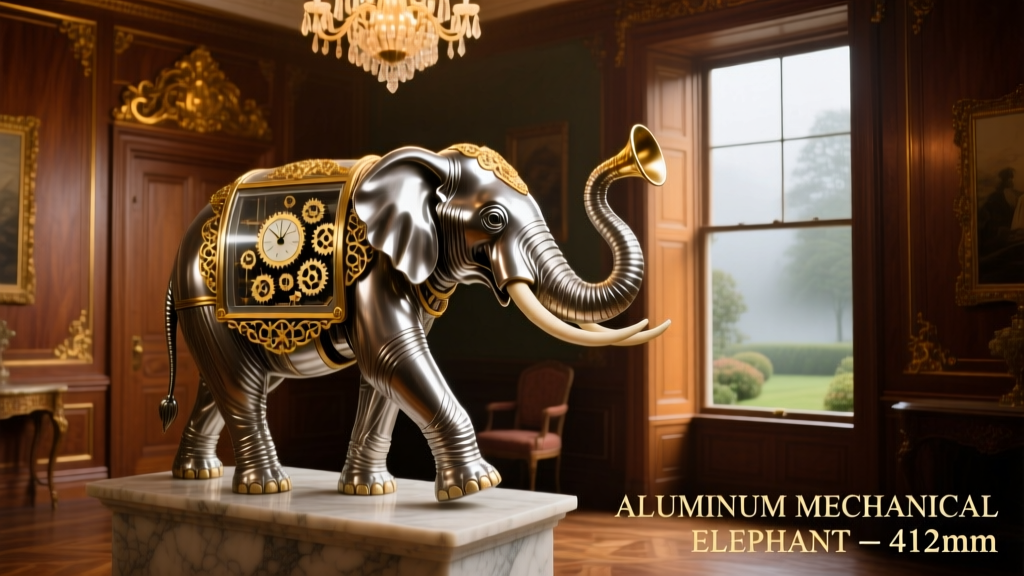
Banks Mechanical Elephant Aluminum 4½-Inch: History, Identification, and Restoration Guide
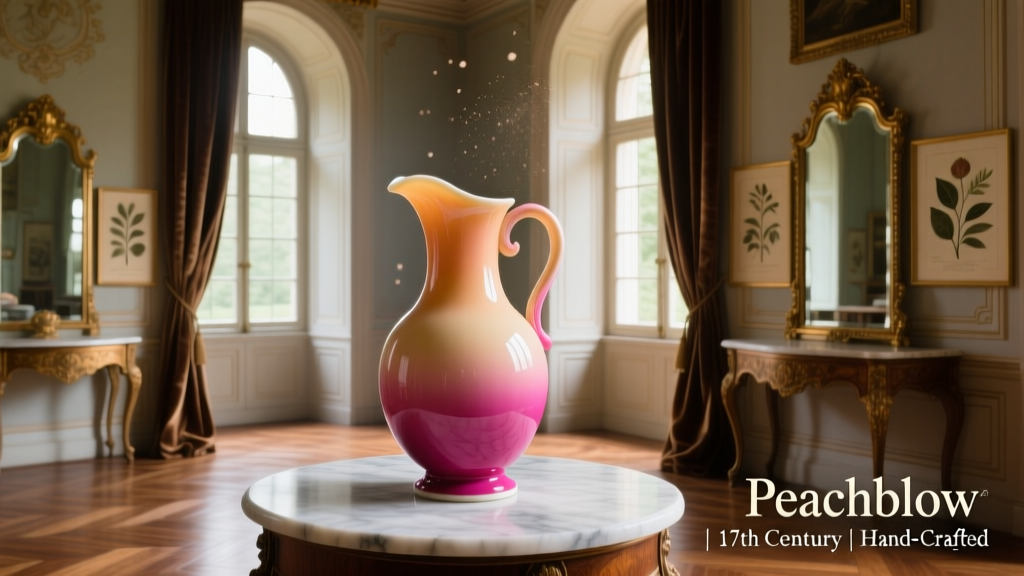
The Wheeling Peachblow Pitcher: Fuchsia-to-Amber Cream Gradient, 10½-Inch Form, and Its Place in American Art Pottery History
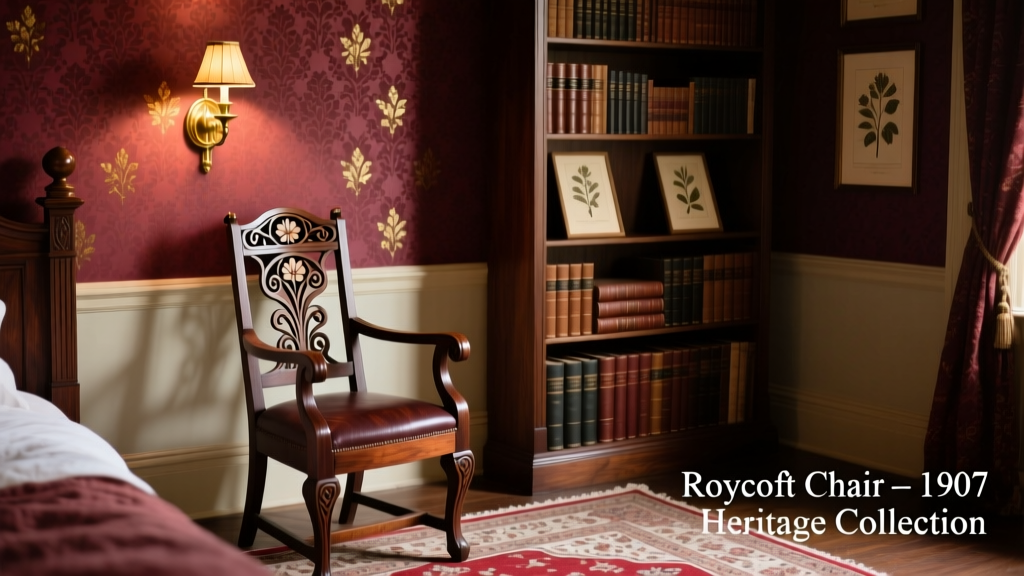
Roycroft Chair Bedroom Dark Finish: Authentic Restoration, Dimensions, and Historical Context of the 43½-Inch Tall Armchair

Vampires Beware: How Antique Furniture Restorers Detect and Neutralize Wood-Boring Insect Infestations
The Flow Blue Dish Cheese Scinde Cover: History, Identification, and Restoration of a Victorian Ceramic Icon