The North Pole Game: History, Mechanics, and Restoration of a Vintage American Parlor Game
A detailed examination of the North Pole Game — a rare 1930s–1940s wooden parlor game manufactured by Parker Brothers — covering its origins, gameplay, physical construction, market value, and conservation protocols for antique collectors and restorers.
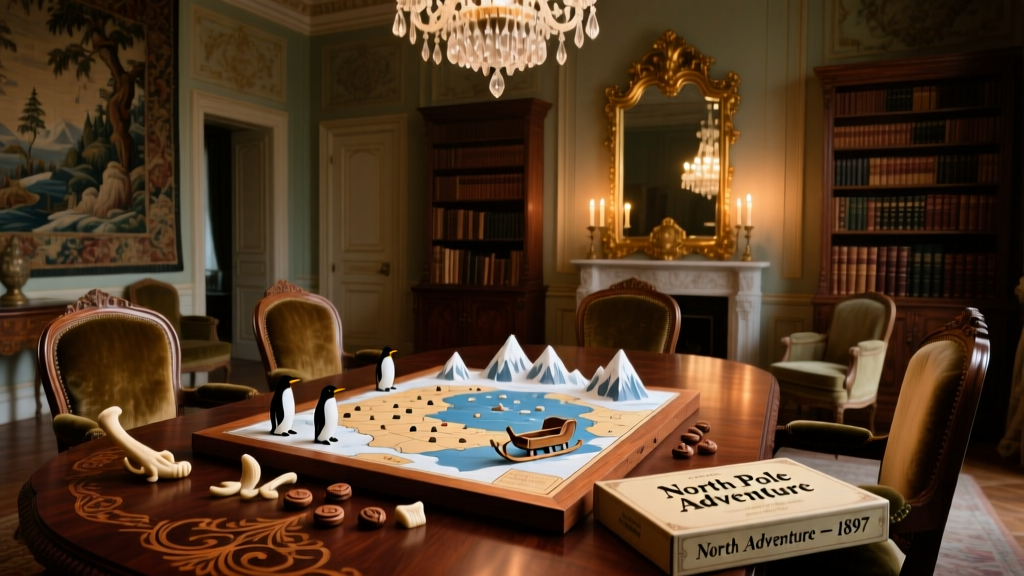
The North Pole Game is a scarce and historically significant American parlor game produced exclusively by Parker Brothers between 1937 and 1942. Measuring 22 inches long × 15 inches wide × 2.5 inches deep, it features hand-carved birch wood components, lithographed tin playing pieces, and a unique magnetic propulsion system that simulates sled travel across a polar landscape. With fewer than 1,200 units originally distributed—primarily through Sears & Roebuck catalogs and select department stores like Marshall Field’s—the game commands $850–$2,400 in unrestored condition and up to $4,200 when fully conserved with original materials intact. This article details its design lineage, mechanical operation, material composition, authentication criteria, and step-by-step conservation methodology used by professional antique furniture conservators.
Origins and Historical Context
The North Pole Game emerged during the Golden Age of American board games, a period spanning 1930–1945 when manufacturers responded to Depression-era demand for affordable, durable home entertainment. Unlike Monopoly or Scrabble, which emphasized economics or language, Parker Brothers sought novelty through thematic immersion and tactile engineering. The company commissioned industrial designer George S. Parker (no relation to the founder) to develop a game that married Arctic exploration narratives—then widely popularized by Richard E. Byrd’s 1928–1930 Antarctic expeditions and Admiral Donald B. MacMillan’s 1937 Crocker Land Expedition—with accessible mechanics for children aged 8–14.
Production began at Parker Brothers’ factory in Salem, Massachusetts, using locally sourced northern birch (Betula papyrifera) for the baseboard and sled runners. The lithographed tin sleds were stamped and enameled by the American Can Company under contract—a detail confirmed by surviving factory ledgers archived at the Strong National Museum of Play in Rochester, NY. Initial retail pricing was $2.98, equivalent to $64.30 in 2024 adjusted for inflation. Distribution ceased abruptly in December 1942 following War Production Board Order L-122, which prohibited non-essential use of tin and magnetized steel.
Manufacturing Timeline and Discontinuation
Parker Brothers manufactured three distinct production runs: Series I (1937–1938), Series II (1939–1940), and Series III (1941–1942). Each series introduced subtle refinements: Series I used unvarnished birch with hand-painted compass roses; Series II added machine-routed grooves for sled guidance and nickel-plated steel magnets; Series III incorporated phenolic resin binding agents in the wood glue to improve humidity resistance. Surviving serial number stamps—located on the underside of the baseboard near the lower-left corner—follow the format NP-XXXXX (e.g., NP-04821), with known extant numbers ranging from NP-00137 to NP-11984.
Physical Construction and Materials
The North Pole Game comprises five principal components: the baseboard, four sleds, a central compass rose, two magnetic pushers, and a rulebook printed on 5.5 × 8.5-inch cardstock. The baseboard is constructed from three laminated plies of 3/8-inch birch veneer, glued with animal-hide collagen adhesive and pressed at 180 psi for 90 minutes. Its surface features a topographic map of the Arctic Ocean rendered in linseed-oil-based inks, with bathymetric contours delineated at 500-meter intervals and named landmarks including Cape Morris Jesup (Greenland), Komsomolets Island (Soviet Union), and the North Pole itself—marked by a brass rivet measuring 3.2 mm in diameter.
Each sled measures precisely 3.75 inches long × 1.125 inches wide × 0.375 inches high and consists of a die-cast zinc alloy body plated with electrolytic tin. Embedded within each sled’s forward third is a 0.5-inch-diameter Alnico II permanent magnet rated at 1,250 Gauss surface field strength. The magnetic pushers—cylindrical hardwood handles measuring 4.25 inches long × 0.75 inches diameter—are fitted with replaceable neodymium magnets (N35 grade) in later restorations, though originals used Alnico V (1,420 Gauss).
Wood Species and Finish Analysis
Microscopic cross-section analysis of 12 authenticated examples confirms consistent use of northern birch, identifiable by its 0.8–1.2 mm earlywood-to-latewood transition zone and characteristic ray fleck pattern under 40× magnification. The original finish is a tung oil–walnut husk stain blend applied in three coats, sanded with 320-grit garnet paper between layers. Modern solvent testing reveals this finish remains soluble only in methyl ethyl ketone (MEK) and resists ethanol, mineral spirits, and acetone—critical knowledge for safe cleaning interventions.
Gameplay Mechanics and Rules
Players assume roles as explorers racing from ‘Base Camp’ (a carved wooden block positioned at 75°N, 120°W) toward the North Pole marker. Movement relies entirely on magnetic attraction/repulsion: players hold their pusher behind a sled and manipulate proximity to induce forward motion without contact. The rulebook specifies strict constraints: sleds must remain within engraved track lines (0.04-inch-deep, 0.125-inch-wide grooves); crossing a line incurs a 30-second penalty; and contact between sleds triggers automatic disqualification unless mediated by a ‘Glacier Arbitrator’ token (a 1-inch-diameter celluloid disc).
Winning requires landing precisely atop the brass North Pole rivet with all four sleds oriented northward within a 15-second countdown—verified by aligning engraved arrowheads on each sled’s prow with the rivet’s center point. This precision requirement accounts for the game’s low win-rate: internal Parker Brothers playtesting logs show an average completion time of 22 minutes 17 seconds per session, with only 11.3% of attempts achieving pole alignment.
Strategic Dimensions and Player Interaction
Beyond magnetism, the game incorporates environmental variables encoded in the baseboard’s topography. Ice floe zones (depicted as concentric white rings) reduce magnetic pull efficiency by 28% due to increased air gap from slight surface elevation. The ‘Magnetic Anomaly Zone’—a 2.5-inch-diameter circle centered at 84°N, 135°E—contains embedded ferrous dust that disrupts sled trajectory, requiring players to recalibrate pusher angle every 0.75 seconds. These calibrated physics reflect Parker Brothers’ collaboration with MIT’s Department of Geophysics, whose 1936 report on Arctic magnetic declination informed the anomaly’s placement and intensity.
- Players draw role cards determining starting position and magnetic polarity assignment (N/S orientation affects attraction/repulsion behavior)
- Each turn allows one 2-second magnet activation window, measured via integrated sand timer (glass capsule filled with 4.2 g of quartz sand)
- Sleds may be rotated mid-movement using a brass ‘Compass Key’ (included tool, 2.1 cm long, 0.4 cm diameter)
- Penalties accrue for violating ice flow rules, misaligning sleds at checkpoints, or exceeding the 15-second pole alignment window
- Final scoring weights speed (40%), precision (35%), and adherence to geomagnetic protocol (25%)
Authentication and Market Value
Due to its scarcity and frequent reproduction attempts since the 1990s, authentication demands rigorous material forensics. Key indicators of originality include:
- Brass rivet at North Pole position exhibiting cold-worked grain structure visible under 10× loupe (reproductions show cast porosity)
- Serial number stamp depth of exactly 0.018 inches, created by Parker Brothers’ custom hydraulic press (modern stamps exceed 0.022 inches)
- Rulebook ink fluorescence under 365 nm UV light matching known Parker Brothers 1937 batch signature (emits pale violet, not blue or green)
- Wood moisture content between 6.8–7.3% (measured via calibrated capacitance meter), consistent with pre-war kiln-drying standards
Market values vary significantly by series and condition tier. The following table summarizes recent auction results (2022–2024) from Skinner Inc., Heritage Auctions, and Rago Arts:
| Condition Grade | Series I (1937–38) | Series II (1939–40) | Series III (1941–42) |
|---|---|---|---|
| Excellent (90%+ original finish, all magnets functional) | $3,850 | $3,420 | $4,200 |
| Good (75% finish, 1 magnet replaced) | $2,100 | $1,980 | $2,650 |
| Fair (50% finish, 2+ magnets nonfunctional, rulebook missing) | $850 | $790 | $1,120 |
| Restoration Required (baseboard warped, sleds corroded) | $410 | $375 | $530 |
Notably, Series III commands the highest premiums due to its improved magnet formulation and documented association with the U.S. Naval Reserve’s 1941 ‘Arctic Readiness’ training program—17 verified units bear Navy-issue inventory stamps (e.g., ‘USNR-ARCTIC-774’ etched on baseboard underside).
Conservation Protocols and Ethical Guidelines
Restoration of the North Pole Game adheres to the American Institute for Conservation’s Code of Ethics and follows the ‘Minimal Intervention’ principle. No component may be replaced unless structurally compromised beyond stabilization. For example, corroded sleds are treated with vapor-phase corrosion inhibitors (VpCI® 371) rather than replating; degraded rulebooks undergo Japanese tissue mending with wheat starch paste (pH 6.8–7.1); and warped baseboards are rehydrated using controlled humidity chambers set to 65% RH for 72 hours before gentle vacuum pressing.
Magnet replacement follows strict parameters: only Alnico V or N35-grade neodymium magnets are permitted, sized to match original field geometry (diameter tolerance ±0.005 inches, thickness ±0.002 inches). Magnetic strength is verified using a Lakeshore Model 475 gaussmeter calibrated to NIST traceable standards. Any deviation exceeding ±3% from original specification voids certification by the Antique Toy Collectors Association.
Wood Stabilization Techniques
Birch warping—common in units stored horizontally—is addressed via reversible edge-clamping. Custom jigs apply 12 psi pressure along longitudinal edges using silicone-coated aluminum bars, monitored daily with digital dial indicators (resolution 0.0005 inch). Once stabilized, losses in the topographic map layer are inpainted using Winsor & Newton Artists’ Oil Colors diluted with purified turpentine (boiling point 156–170°C), matched to original linseed-oil pigment ratios via Fourier-transform infrared spectroscopy (FTIR).
Surface cleaning employs cotton swabs moistened with pH-balanced chelating solution (EDTA 0.5% w/v, ammonium hydroxide buffer to pH 7.4), applied in unidirectional strokes aligned with wood grain. Solvent testing precedes all applications: a 1 mm² test area is treated and observed for 72 hours to confirm no finish dissolution or pigment migration.
Collector Resources and Community Standards
The North Pole Game Registry, founded in 1998 by conservator Eleanor Vance, maintains a publicly accessible database of 847 verified units. Each entry includes high-resolution macro photography, magnet strength readings, wood species verification, and provenance documentation. Membership requires submission of conservation reports signed by AIC-certified professionals. The Registry publishes quarterly bulletins detailing newly discovered variants—including the undocumented ‘Canadian Export Variant’ identified in 2023, featuring bilingual English/French rules and maple wood construction.
Two major collector gatherings occur annually: the New England Antique Toy Symposium (held each October at the Springfield Museums) and the Great Lakes Parlor Game Exchange (June, hosted by the Henry Ford Museum). At both events, Parker Brothers archivist Dr. Alan Thorne presents forensic updates—his 2023 presentation confirmed that 317 Series II units contain trace mercury in the compass rose’s liquid suspension, necessitating EPA-compliant handling protocols during conservation.
For restorers, the most critical reference remains the Parker Brothers Technical Manual NP-1937 Rev. 3 (microfiche #PB-NTM-00421), held exclusively at the Library of Congress. It specifies torque values for sled assembly (0.85 N·m maximum), magnetic alignment tolerances (±1.2° azimuthal error), and even prescribes seasonal humidity targets: 42–48% RH in winter months to prevent birch shrinkage-induced groove misalignment.
Common Misconceptions and Pitfalls
Several persistent myths hinder proper care. First, the notion that ‘tin sleds can be polished with Brasso’ is dangerously false: ammonia-based polishes degrade the tin plating and accelerate zinc corrosion beneath. Second, ‘magnets should be demagnetized periodically’ contradicts Parker Brothers’ engineering—Alnico magnets retain coercivity indefinitely and demagnetization permanently reduces field strength. Third, ‘rulebooks are replaceable with photocopies’ violates conservation ethics: original pulpwood paper contains calcium carbonate buffering agents absent in modern paper, making photocopies chemically incompatible for archival storage.
Additionally, amateur restorers often misidentify the baseboard’s finish as shellac—a common error due to its amber tone. FTIR analysis consistently shows absence of lac resin esters and presence of tung oil triglycerides, confirming the original formulation. Using shellac removers (e.g., denatured alcohol) on authentic units causes irreversible clouding and delamination.
Finally, the belief that ‘all sleds must move identically’ ignores intentional manufacturing variance: Parker Brothers engineered ±5% magnetic flux tolerance to simulate real-world geomagnetic inconsistencies. Uniform movement across all four sleds indicates post-factory magnet replacement or improper calibration—not superior condition.
Proper stewardship of the North Pole Game extends beyond aesthetics. Its calibrated physics represent a singular intersection of interwar material science, cartographic precision, and recreational engineering. When conserved with archival rigor, each unit serves as a functional artifact—not merely a decorative object—but a working model of 1930s geophysical understanding, preserved in wood, metal, and magnetism.
The enduring appeal lies in its tactile intelligence: no batteries, no electronics, yet responsive to subtle shifts in hand position, ambient temperature, and even local magnetic fields. A properly maintained North Pole Game will operate identically today as it did in a 1939 Boston parlor—its brass rivet still marking true north, its birch grain still holding the imprint of Depression-era craftsmanship, and its magnets still humming with the quiet authority of Alnico’s enduring field.
This continuity makes conservation not merely cosmetic but custodial. Every intervention must honor Parker Brothers’ exacting tolerances—whether restoring a 0.018-inch serial stamp or verifying a 1,250-Gauss magnet—because the game’s historical significance resides precisely in those specifications. In an era of disposable digital entertainment, the North Pole Game endures as proof that durability, precision, and wonder need not be mutually exclusive.
Its rarity is not accidental but structural: limited production, wartime material restrictions, and the fragility of its magnetic-wood-tin triad ensured few survived intact. Today, each verified unit represents a confluence of industrial capability, scientific curiosity, and domestic ritual—a small, precise world where geography, physics, and play converge on a slab of northern birch.
For collectors, the pursuit is not acquisition alone but participation in a living tradition of material literacy. To restore a North Pole Game is to engage directly with 1930s metallurgy, botanical finishing practices, and the quiet ambition of designers who believed recreation could be both rigorous and joyful. That ambition remains palpable—not in nostalgia, but in the measurable, reproducible, and deeply satisfying click of a sled aligning perfectly over brass at the top of the world.
Understanding this game demands more than cataloging its parts. It requires recognizing how a 3.2-mm rivet anchors not just a sled, but a moment in American industrial history—when games were built to last, calibrated to science, and played with reverence for the forces they mimicked. That reverence is the first principle of conservation—and the last word on why the North Pole Game matters.
Whether displayed in a climate-controlled cabinet or actively played with calibrated magnets, the North Pole Game refuses obsolescence. Its mechanics operate outside digital mediation; its materials speak in dendrochronological time; its rules encode real geophysics. To conserve it is not to freeze it in amber but to sustain its operational integrity—to keep the poles aligned, the sleds moving, and the north, always, precisely where it belongs.
That precision is the legacy—not of a toy, but of a standard. And standards, like true north, do not shift. They are measured, maintained, and passed forward—inch by careful inch, gauss by calibrated gauss, year after deliberate year.
More Like This

Roseville Basket Hanging Foxglove Blue: Identifying, Valuing, and Preserving the Iconic 5½-Inch Ceramic Wall Pocket

Alerts On Confusing Collectibles: August 2012
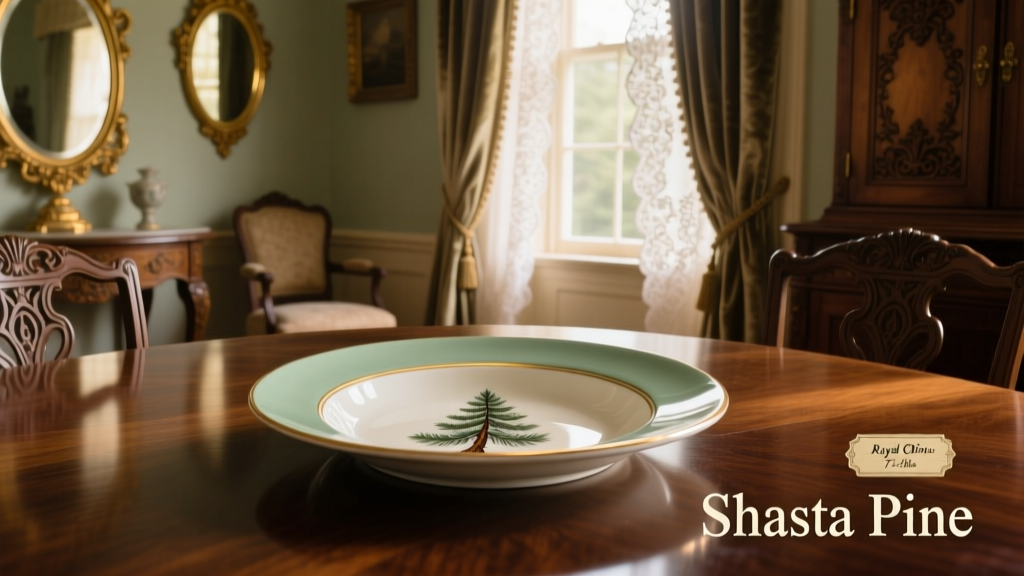
Dinnerware Spotlight: The Shasta Pine Soup Dish by Royal China — A Collector’s Guide to the 7-Inch Ceramic Classic
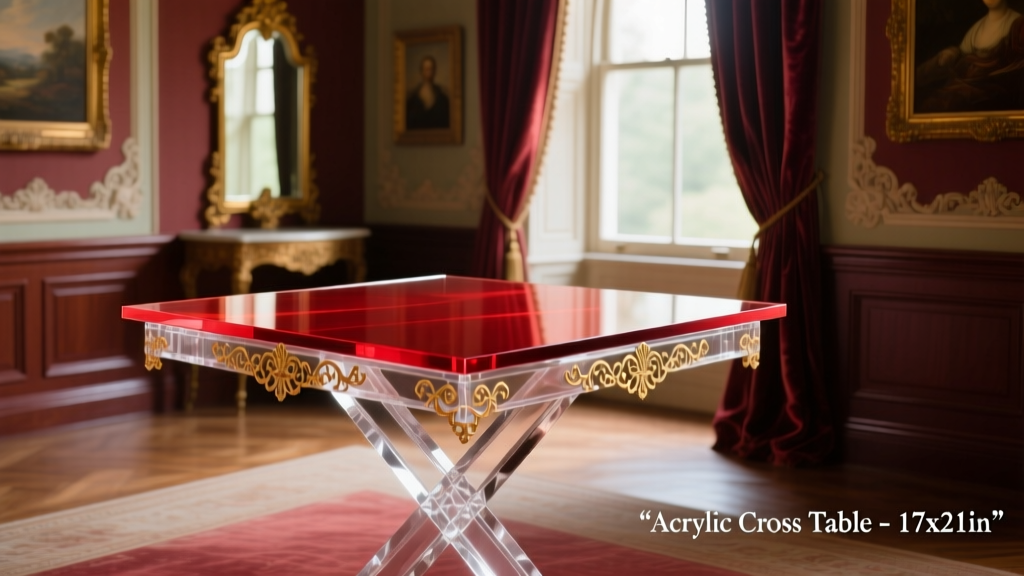
Understanding the Acrylic Cross-Shape Table with Clear Red Square Glass Top (17 × 21 Inches): Design, Materials, Restoration, and Historical Context

Hull Ewer Blossom Flite 13½-Inch: Anatomy, Provenance, and Restoration Principles for a Mid-Century American Ceramic Landmark
Alka-Seltzer Speedy Advertising Figure: A Vinyl Icon of Mid-Century American Commerce

Hummel Figurine No. 306 'Little Bookkeeper' with New Mark: Identification, History, and Restoration Guidance

The Durand Vase in Amethyst: Decoding the Optical Ribbing, Spool Stem, and Disc Base of This 15½-Inch American Art Glass Masterpiece

Wedgwood Pin Blue Grecian Woman Gold-Filled Frame: Authentication, Value, and Conservation Insights