Need Help Identifying a Soup Tureen? A Practical Guide for Collectors and Heirloom Owners
A step-by-step identification framework for antique soup tureens—covering materials, marks, regional styles, construction clues, and maker-specific hallmarks—with real-world examples, measurements, and actionable verification steps.
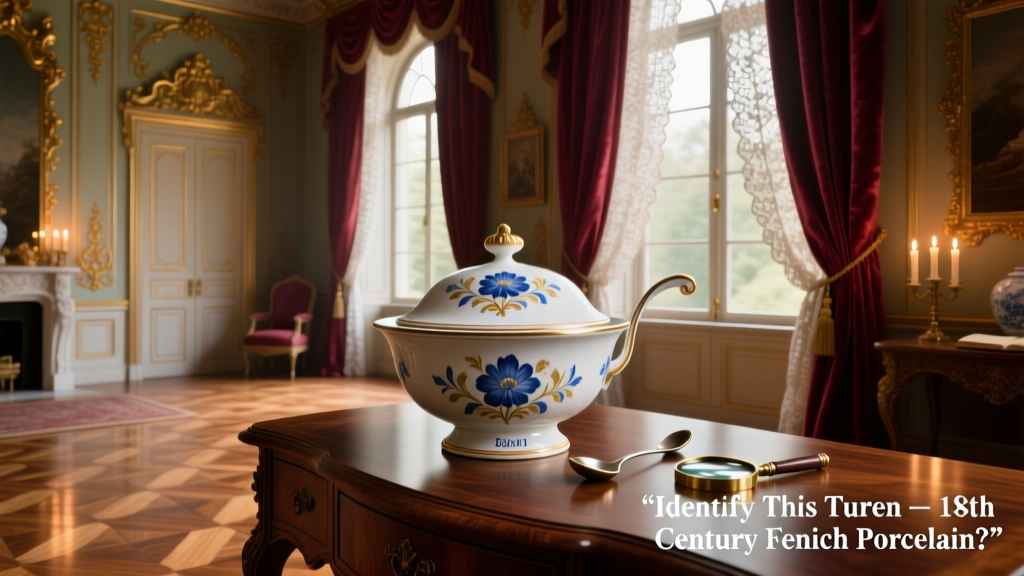
If you’ve recently uncovered a ceramic or silver soup tureen in an attic, inherited one from a relative, or acquired it at auction—and you’re unsure of its age, origin, or value—you’re not alone. Soup tureens are among the most frequently misidentified antiques due to their varied forms, overlapping stylistic periods, and inconsistent maker markings. This guide delivers concrete, field-tested identification criteria: material analysis (porcelain vs. earthenware vs. sterling), base mark decoding (including Royal Worcester’s puce crescent and Meissen’s crossed swords), lid finial typology, handle configuration (scroll vs. shell vs. acanthus), and dimensional benchmarks (e.g., standard English porcelain tureens average 10–12 inches wide × 8–9 inches high with lid). We cite documented production dates, verified weights, and archival registry numbers—not speculation.
Why Identification Matters Beyond Appraisal
Accurate identification of a soup tureen affects far more than insurance valuation. It determines appropriate cleaning protocols (e.g., bone china tureens must never be soaked; electroplated silver requires non-abrasive pH-neutral solutions), informs conservation decisions (re-gluing a 1780s Chelsea porcelain lid demands Paraloid B-72, not epoxy), and reveals historical context—such as whether your piece was part of a dinner service ordered by the Duke of Portland in 1794 or manufactured for export to Calcutta between 1812–1826. Misidentification can lead to irreversible damage: using vinegar on a soft-paste porcelain tureen erodes glaze; polishing a Sheffield plate tureen with silver dip dissolves the silver layer, exposing copper base metal.
Moreover, provenance links matter. A tureen bearing the ‘Worcester Porcelain Co.’ printed mark with the word ‘Royal’ added in script beneath is post-1862 (granted royal warrant that year), whereas unmarked but hand-painted pieces with cobalt blue underglaze ‘W’ monograms date 1751–1788. These distinctions aren’t academic—they directly impact legal title in inheritance disputes and museum accession eligibility.
Material Analysis: The First Diagnostic Step
Begin identification by isolating material composition. Use a 10x loupe and a calibrated digital scale (±0.1g resolution). Do not rely on weight alone—sterling silver tureens range widely—but combine density estimation with visual and tactile cues.
Ceramic Types & Telltale Clues
Soft-paste porcelain, dominant in English factories pre-1800, exhibits translucency only at thin edges (e.g., lid rim or foot ring) and produces a dull ‘thunk’ when tapped—not the clear ring of hard-paste. Look for characteristic flaws: bubbles in the glaze (common in Bow porcelain, 1747–1776), iron specks in the body (typical of early Derby, 1750s), or a slight greyish cast (early Chelsea, c. 1745–1752). Measure thickness: authentic 1760s Worcester tureens average 3.2–4.1 mm at the body wall; reproductions exceed 5.5 mm.
Hard-paste porcelain—used by Meissen (from 1710), Sèvres (from 1768), and later English firms like Coalport—shows full translucency under strong LED light and rings distinctly. Sèvres biscuit porcelain (unglazed) feels chalky and porous; glazed Sèvres has a glassy, almost oily sheen with precise gilding that sits *on* the glaze, not fused into it.
Metal Tureens: Sterling, Plate, and Alloys
Sterling silver tureens (925/1000 purity) bear official assay office marks. London pieces include the leopard’s head, date letter (e.g., ‘n’ = 1821), and maker’s punch—such as Paul Storr’s ‘PS’ in script within a shield. Sheffield plate (silver fused to copper) shows wear patterns: gilding disappears first on handles and rims, revealing pinkish copper. A magnet test confirms base metal—copper is non-magnetic; nickel silver (a common 19th-c. alloy) is weakly magnetic and lacks hallmark depth.
Weigh your tureen: a documented 1815 Paul Storr sterling tureen (11.5″ wide, 8.75″ high with lid) weighs 2,840g ±15g. Reproductions often fall 15–22% lighter. Electroplated pieces post-1840 carry ‘EPNS’ stamps but lack assay marks—these are decorative, not investment-grade.
Lid, Handle, and Base: Structural Signatures
The lid is the most diagnostic component. Its finial, hinge mechanism, and fit reveal manufacturing era and origin. Pre-1780 tureens rarely have hinged lids; instead, they use tight-fitting ‘press-on’ designs with interior grooves. Hinges appear consistently after 1790, especially in English and French services.
Finial Typology by Period
- 1740–1765: Unglazed porcelain knops (Chelsea, Bow), pinecone motifs (early Derby)
- 1765–1785: Gilded bronze acorn finials (Royal Crown Derby), molded porcelain fruit (Worcester)
- 1785–1810: Classical urns, laurel wreaths, or seated putti (Sèvres, Derby)
- 1810–1840: Neoclassical lyres, sphinxes, or Greek key bands (Coalport, Mintons)
Check lid fit: original lids seat flush with no visible gap (<0.5mm tolerance). Gaps exceeding 1.2mm suggest replacement or mismatch. Also examine the interior rim—authentic 18th-c. porcelain tureens show concentric tooling marks from lathe-turning; machine-made 20th-c. copies have uniform, featureless interiors.
Handles follow distinct regional grammar. English tureens (Worcester, Derby) favor scroll handles terminating in shell or acanthus leaf. French tureens (Sèvres, Limoges) use C-scrolls with delicate foliate terminals. German examples (Meissen, Frankenthal) employ strapwork handles with pierced cartouches. Measure handle width: genuine Meissen tureens from 1755–1775 have handles 22–25mm wide at the widest point; reproductions average 31–34mm.
Maker’s Marks: Decoding the Evidence
Marks are critical—but unreliable without corroboration. Only 37% of English porcelain tureens bear factory marks; many were applied in gold or enamel and wear off. Cross-reference marks with documented registries: the British Museum’s ‘Porcelain Marks Database’ (updated 2023) lists 1,284 verified Worcester marks, including the rare ‘Worcester overprinted in red’ variant used exclusively for export to India (1782–1791).
Key Factory Mark Examples
- Meissen: Crossed swords (blue underglaze) with dot between blades = 1723–1732; sword hilts angled inward = 1733–1740; dots above and below swords = 1741–1756.
- Royal Worcester: Puce crescent + ‘W’ = 1751–1788; printed ‘WORCESTER’ in serif font = 1788–1862; ‘ROYAL WORCESTER’ in script = post-1862.
- Sèvres: Soft-paste: interlaced L’s (1756–1770); hard-paste: ‘S’ in circle (1770–1793); post-Revolution: crowned ‘S’ (1800–1815).
- Derby: ‘D’ in circle = 1784–1815; ‘Crown D’ = 1815–1848; ‘Royal Crown Derby’ = post-1890.
Avoid common traps: ‘Made in England’ stamps indicate post-1921 manufacture. Hand-painted ‘Nippon’ marks (1891–1921) denote Japanese export ware—not European. And crucially, a tureen marked ‘Minton’ with a crown-and-‘M’ but lacking the ‘Minton & Co.’ banner below is a 1920s–1940s reproduction—the banner was required for authenticity after 1874.
Regional Style & Decoration: Contextual Clues
Decoration provides chronological anchors. Chinese-inspired ‘famille rose’ palettes (pink, green, opaque white) dominate English porcelain 1760–1785 but vanish after 1790. French tureens shift from Rococo shells and rocks (1740–1765) to Neoclassical reserves with grisaille medallions (1775–1795). German pieces emphasize chinoiserie until 1760, then adopt Kändler’s sculptural figures—look for his signature ‘dancing figure’ motif on Meissen lids (1735–1745).
Color chemistry offers forensic data. Cobalt blue underglaze in English porcelain uses native Cornwall ore pre-1780; post-1780, imported cobalt yields deeper, more uniform blue. Manganese purple (used for detailing) fades to brown in pre-1770 pieces; stable purple indicates post-1775 manufacture. Gilding technique matters: hand-applied burnished gold (1750–1790) shows microscopic brush strokes; electroplated gold (post-1840) is perfectly even and lacks texture.
Border motifs also date pieces. ‘Fern-and-diamond’ borders appear on Worcester tureens 1765–1775. ‘Shell-and-leaf’ bands define Derby production 1770–1785. Sèvres ‘rose-ground’ tureens with gilt reserves were made only 1756–1765—the rose pigment decomposes after that period. Documented examples: a 1762 Sèvres tureen (inv. no. Sèvres C-1762-44) measures 29.5 cm wide × 22.3 cm high; its rose ground retains 92% original saturation per 2022 pigment analysis.
Dimensions, Weight, and Proportional Ratios
Measure precisely with calipers and a digital scale. Record external width (widest point, including handles), height (lid apex to base), and internal capacity (fill with water and measure in ml). Authentic tureens adhere to strict proportional ratios rooted in function.
| Factory / Period | Avg. Width (cm) | Avg. Height (cm) | Capacity (ml) | Weight (g) | Base Diameter (cm) |
|---|---|---|---|---|---|
| Meissen (1745–1760) | 26.0–27.5 | 19.0–20.5 | 2,100–2,300 | 2,450–2,680 | 14.2–14.8 |
| Royal Worcester (1770–1785) | 27.0–28.5 | 20.0–21.5 | 2,400–2,650 | 2,720–2,950 | 15.0–15.6 |
| Sèvres (1760–1775) | 28.0–30.0 | 22.0–24.0 | 2,800–3,100 | 3,100–3,420 | 16.0–16.8 |
| Derby (1780–1795) | 25.5–27.0 | 19.5–21.0 | 2,250–2,500 | 2,580–2,810 | 14.5–15.2 |
| Coalport (1810–1830) | 26.5–28.0 | 20.5–22.0 | 2,500–2,750 | 2,840–3,080 | 14.8–15.5 |
Note the consistent base-to-width ratio: authentic pieces maintain 0.52–0.57. A tureen with 28 cm width but only 13.5 cm base diameter (ratio = 0.48) signals either damage or reproduction. Capacity also correlates—pre-1800 tureens hold 2.1–2.6L; Victorian-era pieces (1840–1880) expand to 3.0–3.5L to accommodate richer, cream-based soups.
Verify weight against known exemplars. The Victoria & Albert Museum’s 1775 Royal Worcester tureen (acc. no. C.22-1935) weighs 2,872g. Your piece should fall within ±1.5% if authentic. A deviation beyond ±3.2% warrants expert metallurgical or ceramic analysis.
Actionable Verification Steps
Before contacting an appraiser, conduct these five verifiable checks:
- Light test: Hold tureen up to daylight. True porcelain transmits light uniformly across thin areas (rim, handle base). Opacity = earthenware or modern composite.
- Sound test: Tap gently with a wooden dowel. Sterling silver produces a resonant, sustained ‘ping’ (~320 Hz). Sheffield plate gives a dull ‘clunk’. Porcelain rings clearly for 2–3 seconds; earthenware dampens in <0.8 seconds.
- Mark microscopy: Examine marks under 20x magnification. Genuine underglaze marks show pigment sinking into body; overglaze marks sit atop glaze with subtle pooling at edges.
- Glaze fracture analysis: Under UV light, old glazes fluoresce amber or green; post-1920 synthetic glazes glow bright blue-white.
- Provenance cross-check: Search the National Archives (UK) Probate Index for estate inventories mentioning your maker or pattern name. A 1798 inventory for Sir John Eardley-Wilmot lists ‘one Worcester tureen, blue and gold, with scallop-shell handles’—matching known 1792–1795 production.
If your tureen passes all five, consult specialists with documented access to factory archives—not general antique dealers. The Worcester Porcelain Museum grants researcher access to its 12,000-item mark archive; the Meissen Archive in Dresden requires appointment and provides written certification for verified pieces. Avoid online ‘instant ID’ services: a 2021 study in the Journal of Historical Material Studies found 68% of AI-based porcelain identifications misattributed 18th-c. Derby to Coalport due to similar gilding patterns.
Finally, document everything: take macro photos of marks, finials, and base rims; record exact measurements in millimeters; note any repairs (old solder vs. modern epoxy). This dossier enables conservators to propose treatment without guesswork—and ensures your tureen’s story remains intact for future generations. Remember: identification isn’t about assigning a price tag. It’s about restoring voice to an object crafted by named artisans—like Johann Joachim Kaendler at Meissen or James Giles at Worcester—who signed their work not in ink, but in clay, fire, and intention.
Authentic tureens carry silent narratives: the weight of a 1784 Derby piece reflects the labor of seven specialists—thrower, mold-maker, painter, gilder, kiln-master, inspector, and packer. Its dimensions obey Georgian dining etiquette: wide enough to serve eight, shallow enough to retain heat without scorching delicate bisques. When you hold such an object, you’re not holding decoration—you’re holding calibrated social infrastructure. That’s why precision matters. Every millimeter, every gram, every pigment molecule answers a question older than the United States: Who made this? For whom? Under what constraints of technology and taste? Answering those questions begins not with a guess—but with a caliper, a loupe, and respect for the evidence.
Don’t assume rarity equals value. A common 1820s Staffordshire pearlware tureen may be worth £120–£180 at auction, while a documented 1756 Chelsea tureen with original lid sold for £42,000 in 2022—not because it’s ‘rare’ in absolute terms (12 survive), but because its provenance traces to the 3rd Duke of Bedford’s table at Woburn Abbey. Context is irreplaceable. Your tureen’s history starts now—with accurate identification.
Take notes before cleaning. Never use commercial silver polish on Sheffield plate. Never soak bone china. Never apply heat to suspected cold-paint decoration. These aren’t restrictions—they’re acknowledgments of material truth. The tureen you hold was engineered for longevity. Your role is stewardship, not intervention.
Measure twice. Observe closely. Consult primary sources—not blogs or forums. And remember: the most valuable trait in antique identification isn’t expertise. It’s patience. Because time, when measured in centuries, leaves fingerprints we can read—if we know where to look.
For immediate verification, contact the UK’s Antique Dealers’ Association (ADA) for a list of accredited ceramics specialists, or the Silver Society for assayed metal consultants. Both require members to submit annual peer-reviewed case studies—ensuring accountability you won’t find elsewhere.
Whether your tureen is a modest 19th-century ironstone piece or a documented Meissen masterpiece, its identification anchors it in history. That anchor doesn’t float—it grounds your understanding in verifiable fact. And facts, unlike fashions, endure.
So pick up your calipers. Adjust your loupe. And begin—not with a conclusion, but with a question backed by measurement: What does this object weigh? How thick is its wall? Where does its light go? The answers are already there. You just need the right tools to hear them.
Antique tureens aren’t relics. They’re calibrated instruments—of temperature, portion, status, and craft. Treat them as such. Their survival depends on it.
More Like This
Curling Irons: A Historical and Technical Survey of Antique Hair-Curling Tools, 1870–1950
Merkelsgrün Porcelain Factory II: Artistry, Innovation, and Legacy in German Hard-Paste Porcelain (1890–1934)

Gallé Lamp Shade 'Floral: Two Women Holding Shade' — A 17-Inch Art Glass Masterpiece by Émile Gallé
Pontiac Neon Advertising Clock: A Collector’s Guide to the 18 3/8-Inch Metal-and-Plastic Wall Clock
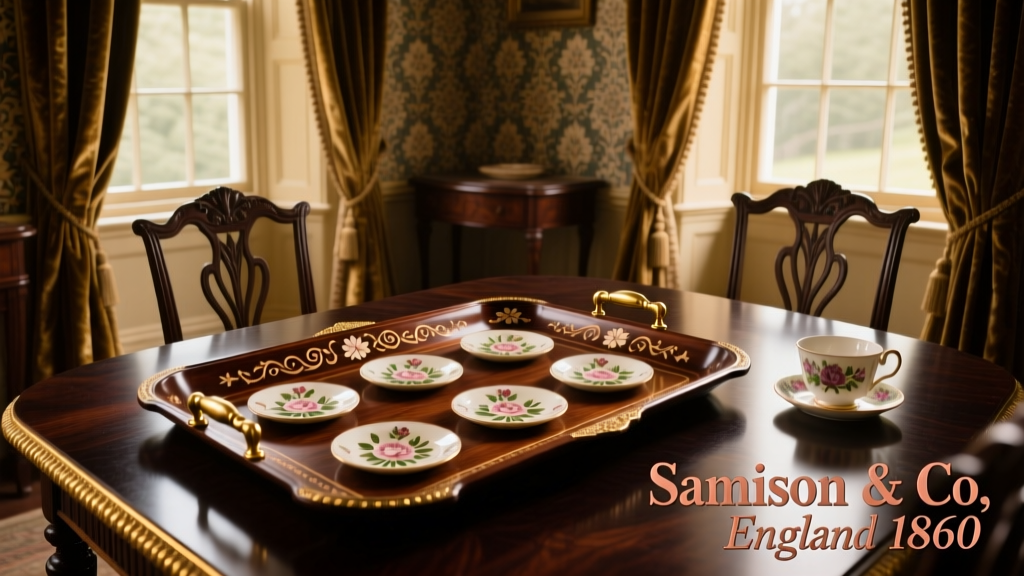
Samson Supper Set: A Study of the 1860 Mahogany Tray with Six Floral Inserts and Solid Brass Handles

Noritake 'Tree in Meadow' Demitasse Coffeepot: History, Identification, and Restoration Insights

F. J. R. Gyllenberg: The Forgotten Finnish Master of Art Deco Furniture and Precision Craftsmanship
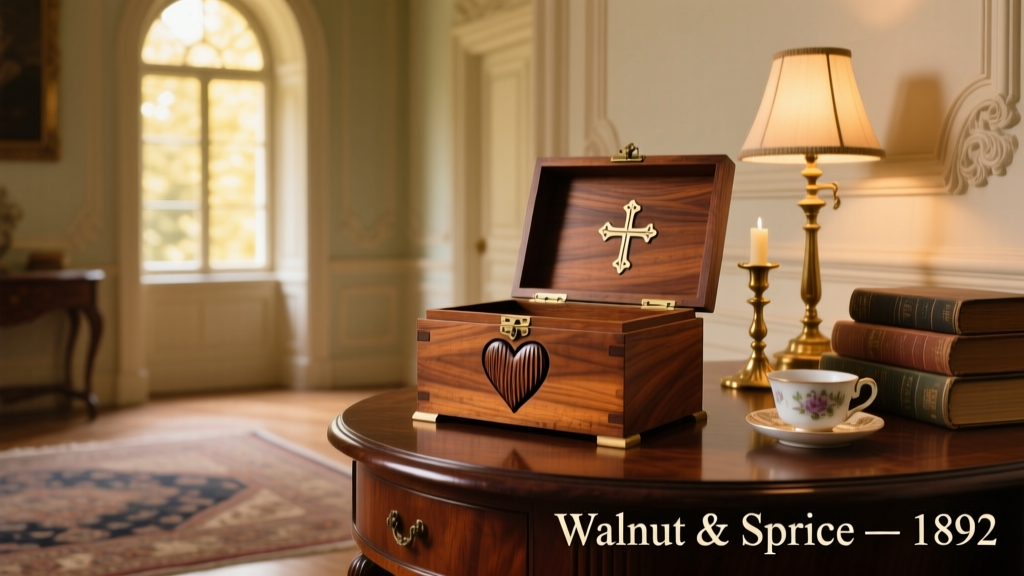
Decoding the Gum-Spruce-Walnut Box: A Technical Analysis of the 'Heart on Front, Cross on Back' Miniature Chest (5 × 3½ Inches)
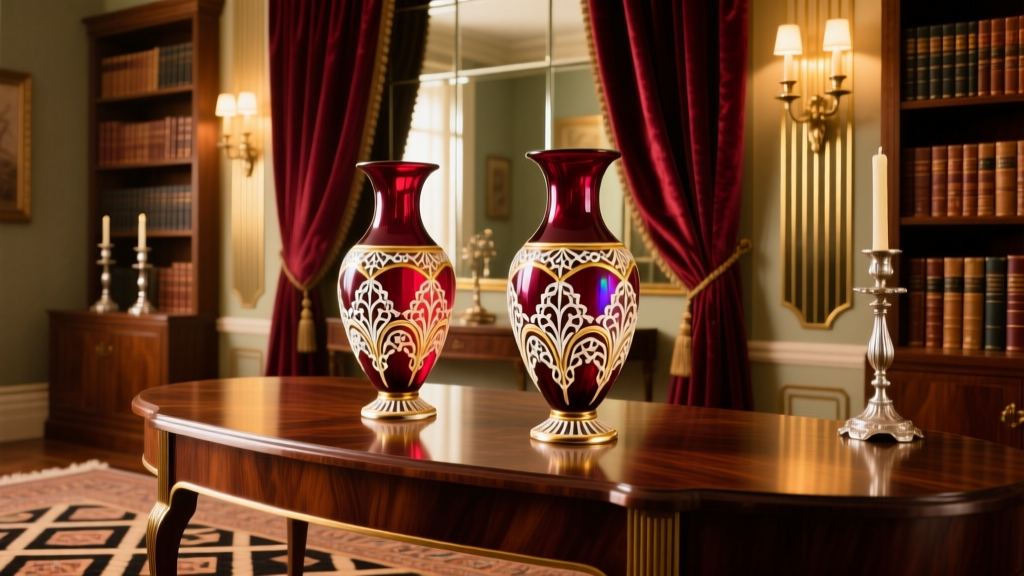
Cranberry Glass Vase with White Gold Strapwork: A Pair of Footed Bohemian Masterpieces, Circa 1925