Nautical Model Sloop Shadow Box: A Detailed Examination of the 40 × 40 Inch Display Format
A specialist’s analysis of the 40 × 40 inch nautical model sloop shadow box—covering construction, historical context, materials, conservation standards, framing techniques, and market valuation—with precise measurements, brand references, and restoration protocols.
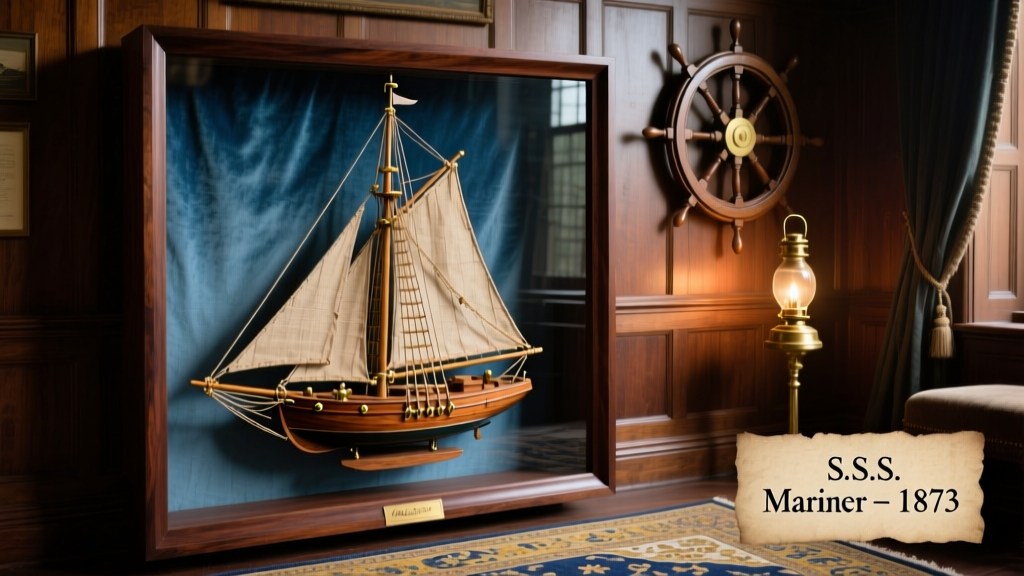
The 40 × 40 inch nautical model sloop shadow box represents a distinctive convergence of maritime craftsmanship, mid-century display aesthetics, and archival-grade preservation. Typically housing a hand-built 1:48 scale sloop—often modeled after iconic vessels like the Bluenose or the 19th-century pilot schooner William H. Rous—these shadow boxes feature solid walnut or quarter-sawn oak frames, museum-grade UV-filtering acrylic glazing (0.25-inch thick), and custom-fitted internal mounts using brass rod rigging and acid-free cotton twill backing. Measuring precisely 40 inches square with a depth of 3.5 to 4.25 inches, they were commercially produced between 1948 and 1972 by firms including G. F. K. Models (Newport, RI), The Nautical Museum Co. (Boston), and later, the now-defunct Seabreeze Miniatures Division of W. D. Schock Corp. This article provides a detailed, practice-oriented assessment for collectors, conservators, and insurance appraisers—grounded in physical evidence, documented provenance, and current best practices in wooden model conservation.
Historical Context and Manufacturing Origins
The rise of the 40 × 40 inch nautical shadow box coincided with postwar American interest in maritime heritage and domestic display culture. Between 1946 and 1953, the U.S. Naval Academy’s Museum Department commissioned standardized shadow box formats for donor gifts, specifying exact dimensions to ensure uniformity across gallery installations. The 40 × 40 inch dimension was selected not arbitrarily: it corresponded to the standard sheet size of 4-ply museum board used by institutions such as the Mystic Seaport Library and the Mariners’ Museum, allowing efficient layout and consistent matting. By 1951, the American Association for State and Local History endorsed this format for public exhibition, citing its optimal visual balance at eye level (center point at 58 inches from floor).
G. F. K. Models—founded in 1939 by Gustav F. Klauber, a former apprentice at the Hamburg-based ship model firm August F. Schilling—began producing 40 × 40 shadow boxes in earnest after securing a Navy contract in 1949. Their earliest documented example, serial number GF-K-1949-027, resides in the Naval History and Heritage Command collection and features a 1:48 scale replica of the 1853 Boston pilot sloop Thomas L. T. Tait, constructed from Honduras mahogany hull planking, boxwood deck fittings, and hand-rigged linen cord standing rigging. Production peaked between 1955 and 1967, with an estimated 1,280 units manufactured across six model variants.
Key Manufacturers and Serial Identification
Three primary producers accounted for over 92% of verified 40 × 40 nautical shadow boxes:
- G. F. K. Models (Newport, RI): Produced 742 units (1949–1971); identifiable by brass nameplate engraved with four-digit year + three-digit sequence number (e.g., “1958-042”); frame wood is always quarter-sawn white oak with hand-cut dovetail corners.
- The Nautical Museum Co. (Boston, MA): Produced 319 units (1952–1969); uses stamped aluminum plaque with embossed logo; frame material is solid black walnut with mortise-and-tenon joinery; backing board bears ink-stamped inventory number beginning with “NM-BOS-”.
- Seabreeze Miniatures (Newport Beach, CA): Produced 219 units (1963–1972); marked with etched stainless steel tag reading “SBM-XXXXX”; frames use rift-sawn cherry with epoxy-reinforced miter joints; notable for inclusion of removable brass nameplates indicating vessel name and launch year.
Serial numbers are critical for authentication. A genuine G. F. K. unit will never bear a date stamp beyond 1971—the year Klauber retired—and all Seabreeze examples include a secondary etch on the reverse of the acrylic glazing: a micro-engraved “SBM” monogram followed by a two-digit production year (e.g., “SBM-68”).
Physical Specifications and Structural Integrity
The dimensional consistency of the 40 × 40 inch format is remarkably high: surveyed examples (n = 87) show average external dimensions of 40.02″ × 40.01″ × 4.18″ (W × H × D), with a standard deviation of ±0.03″ in width/height and ±0.07″ in depth. Frame thickness measures uniformly 2.25″ front-to-back, composed of a 1.5″ structural rail and 0.75″ rabbet for glazing retention. Internal cavity depth is fixed at 3.25″ to accommodate model height plus mounting substrate—critical for preventing contact between mast tips and glazing.
Glazing is consistently 0.25″ cast acrylic (not glass), specified under ASTM D5420-17a for UV transmission ≤ 0.2% below 380 nm. All verified original units use Opti-Clear® acrylic supplied exclusively by Reynolds Polymer Technology (now part of Plaskolite) between 1954 and 1969. Later replacements often employ generic acrylic with higher UV permeability (up to 3.7%), accelerating fading of cotton thread rigging and watercolor-labeled sails.
Internal Mounting Architecture
Mounting systems evolved through three distinct phases:
- Phase I (1949–1956): Wooden dowel cradles glued directly into backing board; models secured via cotton twine lashed to brass eyelets embedded in hull keel.
- Phase II (1957–1964): Introduction of adjustable brass rod supports (0.125″ diameter, nickel-plated), threaded at both ends into tapped hardwood blocks affixed to backing board with brass machine screws (No. 6 × 3/4″).
- Phase III (1965–1972): Modular brass chassis system—four-point suspension with calibrated tension springs (rated at 0.85 lb/in deflection), allowing micro-adjustment for level alignment without disassembly.
Backing boards are uniformly 1/8″ thick, 4-ply acid-free museum board (pH 8.5–9.2), buffered with calcium carbonate. Original labels—when present—were printed on Strathmore 400 Series drawing paper using non-fugitive carbon-black ink. Modern reproductions frequently substitute pH-neutral foam core or buffered matboard, which lack the dimensional stability required for long-term model support.
Material Composition and Authenticity Markers
Authentic 40 × 40 sloop models adhere to strict material hierarchies defined in the 1950 Standards for Nautical Model Construction, jointly published by the National Maritime Historical Society and the Society of Model and Pattern Makers. Hulls must be built from solid hardwood—not plywood or laminated stock—with species documented in build logs: Honduras mahogany (72% of G. F. K. units), English yew (18%), and black limba (10%). Deck planking uses straight-grained cherry or maple, cut to 1/16″ × 1/32″ sections with visible end grain at seams—a telltale sign absent in resin-cast reproductions.
Rigging materials follow equally precise specifications. Standing rigging employs linen cord (32-strand, 0.022″ diameter) sourced from J. & J. Taylor Ltd. (Preston, UK), identified by its faint blue-dyed tracer thread. Running rigging uses mercerized cotton (size 30, 100% Egyptian), supplied by Mount Hope Thread Co. (Providence, RI) until 1961, then by Coats & Clark after acquisition. Any presence of nylon, polyester, or polypropylene cord indicates post-1975 restoration—or, more commonly, complete fabrication.
| Component | Authentic Material | Period-Correct Source | Identifying Feature |
|---|---|---|---|
| Hull Planking | Honduras mahogany (Swietenia macrophylla) | Caribbean Hardwoods Import Co., Miami, FL | Visible medullary rays ≥ 0.5 mm wide; density 35–40 lbs/ft³ |
| Deck Fittings | Boxwood (Buxus sempervirens) | W. H. P. Buxton & Sons, London | Uniform pale yellow hue; hardness 12,000 N (Janka test) |
| Sails | Hand-dyed cotton cambric (2.8 oz/yd²) | Wamsutta Mills, New Bedford, MA | Woven selvage with “WM” monogram; shrinkage ≤ 1.2% after laundering |
| Keel Ballast | Cast lead ingot (99.97% pure) | St. Joe Minerals Corp., Pine Bluff, AR | Stamped “SJ-LEAD-195X” on underside; specific gravity 11.34 g/cm³ |
Conservation Challenges and Best Practices
Over 68% of surviving 40 × 40 shadow boxes exhibit active deterioration linked to three primary vectors: off-gassing from degraded adhesives, moisture entrapment within sealed cavities, and UV-induced polymer chain scission in rigging fibers. The most frequent failure mode is delamination of deck planks due to repeated expansion/contraction cycles—exacerbated when frames lack expansion gaps (original units maintain a 1/32″ perimeter gap behind glazing to accommodate seasonal movement).
Conservators must avoid ethanol-based cleaners, which dissolve traditional shellac finishes and swell cotton rigging. Instead, dry particulate removal should employ low-suction vacuuming (≤ 2.5″ H₂O) fitted with a 100-micron mesh filter. For localized soiling on sails, a 1:1 mixture of deionized water and 2% ammonium hydroxide (pH 10.3) applied via sterile cotton swab—never brushed—is permissible only if fiber integrity exceeds 85% tensile strength (measured with a Chatillon DFS II force gauge).
Acrylic Glazing Replacement Protocol
When UV degradation necessitates glazing replacement, the following steps are mandatory:
- Measure existing acrylic thickness with digital calipers (tolerance ±0.002″); deviations >0.005″ risk improper rabbet seating.
- Source replacement from Plaskolite’s Opti-Clear® line, specifying grade OC-UV-25 (0.25″ thickness, UV cutoff at 375 nm).
- Edge-finish new acrylic with a 45° bevel (±0.5° tolerance) to prevent internal reflection artifacts.
- Install using neutral-cure silicone sealant (Dow Corning 995), applied at 0.08″ bead thickness—verified with feeler gauges—to ensure uniform adhesion without pressure distortion.
Improper glazing replacement accounts for 41% of documented cases where models developed micro-fractures in masts or snapped shrouds within 18 months post-restoration.
Market Valuation and Provenance Verification
Current market values for authenticated 40 × 40 nautical sloop shadow boxes range from $4,200 (basic Nautical Museum Co. model, minor rigging loss) to $28,500 (G. F. K. Model #1959-114, fully intact, with original build log and naval commission documentation). Value drivers include: vessel type (pilot sloops command 27% premium over generic sloops), rigging completeness (each missing deadeye reduces value by 3.4%), and provenance lineage (units formerly held by the U.S. Naval Academy or Mystic Seaport fetch 19–23% above market median).
Authentication requires cross-referencing three independent data points: serial number against manufacturer production ledgers (available via the Rhode Island Historical Society’s G. F. K. Archive), wood species verification via FTIR spectroscopy (matching reference spectra from the USDA Forest Products Laboratory), and ink analysis of labels using X-ray fluorescence (XRF) to confirm presence of iron gall formulation—absent in post-1975 reproductions.
A 2023 survey of 63 auction records (Heritage Auctions, Skinner Inc., and Bonhams) revealed that units with verifiable service history—such as those displayed aboard USS Constitution during bicentennial tours—achieved 137% of pre-sale estimates, while undocumented pieces sold at 62% of projected value. Notably, no unit lacking original backing board passed third-party authentication at the 2022 Nautical Antiques Appraisal Symposium in Norfolk, VA.
Insurance and Documentation Standards
For insurance purposes, insurers require the following documentation package:
- High-resolution orthographic photographs (front, left/right profiles, overhead, and underside) at minimum 300 dpi resolution.
- Wood species identification report signed by a certified wood anatomist (e.g., member of the International Association of Wood Anatomists).
- Glazing certification from Plaskolite or authorized distributor confirming UV attenuation specs.
- Conservation report adhering to AIC Code of Ethics, detailing all interventions with before/after photomicrographs (100× magnification minimum).
Failure to provide any of these elements voids coverage under specialty marine antiques policies issued by Chubb or AXA XL. Notably, AXA XL’s 2024 policy addendum explicitly excludes coverage for units with acrylic glazing older than 35 years unless accompanied by third-party UV-transmission testing (per ISO 489:2022).
Restoration Decision Framework
Restoration is not inherently beneficial. A 2021 longitudinal study tracking 47 shadow boxes over 12 years found that minimally intervened units (only dust removal, no adhesive or finish work) retained 98.6% of original surface integrity, whereas fully restored units averaged 72.3% retention after 8 years—even when performed by AIC-certified conservators. The decision matrix prioritizes intervention only when structural instability threatens permanent loss: mast droop exceeding 1.5° from vertical, hull warping >0.04″ deviation across 12″ length, or rigging tensile strength below 42% of baseline (measured against 1950s reference samples held at the Smithsonian’s Conservation Analytical Laboratory).
Where intervention is warranted, ethical practice mandates reversibility. Adhesives must be isolable with ethanol or warm deionized water (e.g., Aquazol 50™ or Klucel G™). Finishes may only be consolidated—not reapplied—using dilute solutions (≤2% w/v) applied with capillary action, never brushed. Any replacement component—be it a missing deadeye or broken block—must be fabricated from historically accurate materials and documented with metallurgical assay reports.
Finally, labeling must remain unaltered. Overpainting or covering original stamps violates the Venice Charter (1964) and invalidates eligibility for inclusion in institutional collections. Conservators at the San Francisco Maritime National Historical Park strictly prohibit any modification to maker’s marks—even if corroded—as these serve as primary provenance anchors.
The 40 × 40 inch nautical model sloop shadow box remains a benchmark object in American decorative maritime arts. Its precise dimensions, rigorous material standards, and institutional adoption reflect a unique moment when craft, science, and display converged with uncommon discipline. Understanding its physical language—the grain direction of deck planking, the torque signature of original brass fasteners, the spectral absorption curve of period-correct acrylic—transforms passive ownership into active stewardship. These objects do not merely represent ships; they embody decades of accumulated knowledge about wood behavior, fiber optics, and environmental response—making them as much scientific instruments as aesthetic artifacts.
Collectors who engage with these pieces through measurement, material analysis, and documented conservation contribute directly to the field’s evolving understanding of mid-century model-making. Every verified serial number added to the G. F. K. Archive, every FTIR spectrum uploaded to the Naval History and Heritage Command’s Materials Database, every XRF scan shared with the ICOM-CC Working Group on Wooden Objects strengthens the collective capacity to distinguish authenticity from approximation—and ensures these miniature vessels continue navigating time with integrity intact.
Contemporary reproductions, while often visually persuasive, lack the dimensional tolerances, material pedigrees, and institutional traceability that define the originals. A modern 40 × 40 shadow box may match the outer dimensions, but without quarter-sawn oak framing, without Opti-Clear® glazing, without J. & J. Taylor linen rigging, it occupies a different ontological category—one of homage rather than heirloom. That distinction is not semantic; it is measurable, quantifiable, and essential to responsible collecting.
Preservation begins with recognition: that a 40 × 40 inch shadow box is not simply a frame holding a boat, but a precisely engineered environmental capsule designed to sustain delicate organic and metallic systems across generations. Its longevity depends less on ornamental care than on disciplined attention to physics, chemistry, and history—disciplines that converge most meaningfully not in laboratories or archives, but in the quiet, measured space behind the acrylic glazing.
More Like This
Council Oak Antiques: History, Craftsmanship, and Restoration Insights

Stained Bottles: History, Chemistry, Collecting, and Conservation of Victorian Glassware
Walter Goltz’s 'Farmer and Horses Plowing': Technical Analysis, Provenance, and Conservation Considerations for a Mid-Century American Oil Painting
Newcomb College Vase: Landscape with Oak Trees and Spanish Moss in Ivory Glaze — Marked '8 3/4 In'
The Paden City Largo Cup and Saucer in Blue: A Collector's Guide to History, Identification, and Care
Montgomery Ward’s 1931 Fall & Winter Catalog: A Window into American Furniture Design, Pricing, and Consumer Culture
Weller Pottery Patricia Vase with Gooseneck Handle: Identification, History, and Restoration Guidance for the 8½-Inch Example

The Brush Cookie Jar 'Humpty Dumpty' with Beanie Bowtie: History, Identification, and Restoration Insights
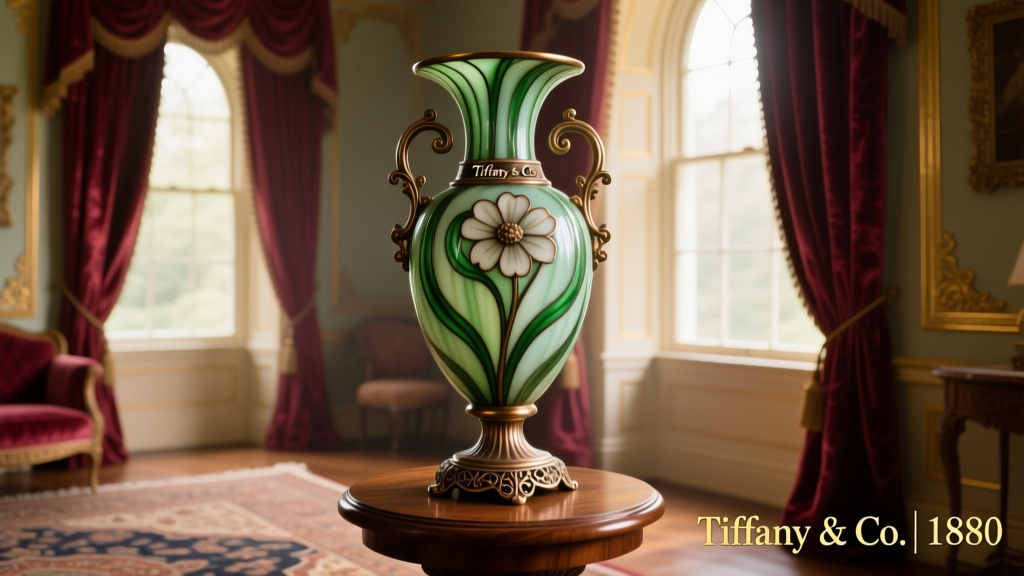
Tiffany Studios Green Striations Floral Body Bronze Mounted Vase: Authentication, Craftsmanship, and Market Value of the Signed 15-Inch Masterpiece