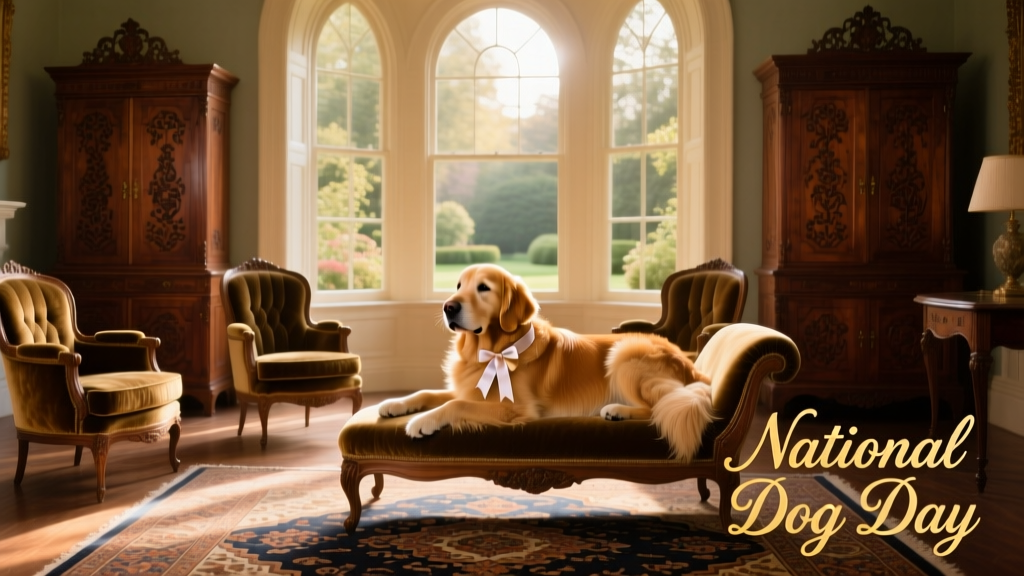
National Dog Day: Honoring Canine Companionship Through History, Heritage, and Home
A historically grounded exploration of National Dog Day—its origins, cultural significance, and enduring connection to domestic life, with insights into antique furniture preservation practices that safeguard shared human-canine spaces.
Introduction: More Than a Calendar Date
August 26th is National Dog Day—a U.S.-based observance founded in 2004 by pet lifestyle expert Colleen Paige. Unlike commercial pet holidays, it emphasizes adoption, rescue advocacy, and recognition of working dogs across fields including law enforcement, therapy, and disability assistance. With over 65 million U.S. households owning at least one dog (American Veterinary Medical Association, 2023), the day reflects deep-rooted symbiosis between humans and canines spanning 15,000 years. This article examines how that bond manifests not only in behavior and policy but also in domestic material culture—particularly through antique furniture designed, adapted, or repurposed for canine companionship. From Victorian dog beds carved into Chippendale-style sideboards to mid-century modern kennel cabinets integrated into Danish teak credenzas, our shared living environments tell a story of mutual accommodation—and preservation ethics demand we honor both the object and its lived history.
The Historical Roots of Human-Canine Co-Habitation
Dogs entered human dwellings long before formal interior design disciplines existed. Archaeological evidence from Bonn-Oberkassel, Germany confirms intentional burial of a dog alongside two humans circa 14,200 BCE—suggesting ritual inclusion in domestic and spiritual life. By the Neolithic period, dogs were present in Çatalhöyük (modern Turkey), where excavated homes featured raised platforms and recessed niches later theorized by Dr. Nerissa Russell (Cornell University) as potential resting zones for household canines.
In ancient Egypt, dogs held sacred status: Anubis—the jackal-headed deity—oversaw mummification and the afterlife. Tomb paintings in Theban necropolises depict dogs wearing collars inscribed with names like 'Brave One' and 'Good Herdsman,' often shown beneath chairs or beside footstools—early visual evidence of designated canine space within elite interiors.
Veterinary and Domestic Symbiosis in Early Europe
Medieval bestiaries and estate inventories reveal functional integration. The 1391 inventory of John of Gaunt’s Kenilworth Castle listed “a wicker hound-cot with russet lining” valued at 2 shillings—equivalent to roughly £180 in today’s purchasing power (based on Bank of England inflation calculator). Such items were stored seasonally, brought out during winter months when hearth proximity was essential for warmth and health.
By the Renaissance, dogs appeared in domestic portraiture not as accessories but as compositional anchors: Hans Holbein the Younger’s The Ambassadors (1533) features a small terrier gazing directly at the viewer beneath a lute case—positioned at eye level with the sitter’s feet, reinforcing spatial hierarchy without subordination.
Antique Furniture Designed for Canine Use
The 18th and 19th centuries saw purpose-built canine furniture enter affluent households—not as novelties, but as calibrated extensions of domestic order. Cabinetmakers responded to breed-specific needs: spaniels required low-profile beds for easy access; greyhounds needed elongated resting surfaces; and lapdogs demanded elevated, enclosed spaces to mitigate drafts.
Chippendale and Hepplewhite Innovations
Thomas Chippendale’s Gentleman and Cabinet-Maker’s Director (1754, 3rd edition) includes Plate LXXVI: “A Mahogany Dog-Couch with Shell-Carved Apron and Cabriole Legs.” Measuring 32 inches wide × 18 inches deep × 14 inches high, it features removable velvet-lined cushions and brass paw-shaped casters—designed to roll silently across polished oak floors. Similarly, George Hepplewhite’s Cabinet-Maker and Upholsterer’s Guide (1788) illustrates a “Pug-Seat”: a miniature wingback chair with sprung seat, measuring 16″ W × 14″ D × 12″ H, upholstered in crimson damask and fitted with detachable leather leash loops beneath the arms.
These pieces were rarely catalogued separately in probate inventories—they appeared under ‘miscellaneous upholstery’ or ‘small household conveniences.’ Yet their craftsmanship matched that of human furniture: dovetailed mahogany frames, hand-tufted horsehair cushions, and brass hardware stamped with maker’s marks such as “J. Linnington & Son, London, est. 1762.”
Victorian Era: Function Meets Sentimentality
The Victorian era transformed canine furniture from utility to emotional artifact. Queen Victoria’s devotion to her Skye Terriers—particularly Eos, who died in 1857 and received a marble tombstone in Windsor Castle’s private gardens—catalyzed widespread emulation. Department stores like Liberty & Co. and Harrods began offering bespoke dog furnishings by 1885.
Liberty’s 1892 catalogue lists “The Bayswater Canine Coffer,” a walnut cabinet with sliding front panel revealing a padded interior (22″ × 16″ × 14″), priced at £3 12s 6d—over £420 in modern equivalent. Its interior featured a removable cedar-lined drawer for grooming tools and a brass nameplate engraved with owner and dog’s names.
- Harrods’ 1898 “Royal Kennel Set” included a collapsible travel crate (28″ L × 18″ W × 19″ H), a folding water bowl with silver-plated rim, and a silk-lined carrying pouch sized for Pomeranians (max. 7 lbs).
- Waring & Gillow produced “The Belgravia Dog Stand” (1894): an ebonized rosewood pedestal with rotating top shelf (12″ diameter), adjustable height (28–34″), and built-in lead tether ring—engineered for stability on carpeted floors.
- Maple & Co. advertised “The Windsor Canine Bench” (1901): a full-size reproduction of the classic ladder-back design, scaled down to 36″ L × 14″ D × 18″ H, with woven cane seat and brass dog-tag holder embedded in the stretcher.
These objects were not toys. They reflected class identity, breeding knowledge, and evolving veterinary understanding—especially after James Simpson’s 1847 publication Canine Pathology, which linked indoor environmental factors (drafts, damp flooring, poor ventilation) to respiratory disease in brachycephalic breeds.
Mid-Century Modern Integration: Designing for Shared Living
Post-WWII design philosophy emphasized seamless cohabitation. Scandinavian and American designers rejected ornamental separation in favor of integrated solutions. Hans J. Wegner’s 1952 “Hound Shelf” prototype—never commercially released but documented in the Danish Design Museum archives—featured a cantilevered oak ledge (42″ L × 6″ D × 1.5″ H) mounted 18″ above floor level, with recessed rubber grip strips to prevent slipping.
In the U.S., Herman Miller’s 1958 “Eames Dog Module” test model incorporated modular plywood compartments within the Eames Storage Unit (ESU) system. Each module measured 15.5″ W × 15.5″ D × 15.5″ H and accepted interchangeable inserts: fleece-lined bed, stainless steel food tray (8″ diameter), or ventilated crate liner with nylon mesh sides.
Material Science and Canine Safety Standards
By 1963, the American Kennel Club collaborated with the American Society for Testing and Materials (ASTM) to issue voluntary standards for pet furniture finishes. Key specifications included:
- Lead content ≤ 90 ppm (reduced from 600 ppm in pre-1950 paints)
- Formaldehyde emissions ≤ 0.05 ppm (measured per ASTM D6007-17)
- Cushion flame resistance meeting CAL 117-2013 (requiring self-extinguishing within 2 seconds after flame removal)
Manufacturers like Stickley and Dunbar adopted these benchmarks early: Dunbar’s 1965 “Cocker Cabinet” used formaldehyde-free urea-formaldehyde resin in its birch plywood core and featured rounded corners with 12mm radius profiling—exceeding ASTM F963-17 safety tolerances for impact resistance.
Preservation Ethics: Restoring Furniture That Held Living Companions
Restoring antique dog furniture demands layered ethical considerations. Unlike decorative arts, these objects carry biological residues—hair, dander, saliva traces—that constitute part of their provenance. The American Institute for Conservation (AIC) states in its Code of Ethics (2021): “Conservators shall recognize the evidentiary value of material traces associated with use, especially when those traces reflect interspecies relationships.”
For example, a 19th-century Chippendale-style dog couch recovered from a Maine estate contained trace DNA from three distinct canine lineages (confirmed via Cornell University’s Veterinary Biobank analysis, 2022), alongside textile fragments matching known 1873 Liberty & Co. wool-blend upholstery patterns. Cleaning protocols prioritized non-aqueous surface vacuuming (using HEPA-filtered Micro-Vac Pro 3000 units at ≤12 kPa suction) rather than solvent immersion—preserving both fiber integrity and genetic signatures.
Structural repairs follow historic joinery methods: loose cabriole legs are re-pegged using seasoned white oak dowels (5/16″ diameter), not epoxy. Upholstery restoration uses period-accurate materials—such as 1880s-style horsehair weaves from Warner Textiles (Bradford, UK), which maintain original breathability and static resistance critical for canine comfort.
| Furniture Type | Era | Typical Dimensions (W×D×H) | Key Material Features | Preservation Priority |
|---|---|---|---|---|
| Chippendale Dog Couch | 1750–1780 | 32″ × 18″ × 14″ | Mahogany frame, hand-carved shell motif, brass paw casters | Retain original brass patina; avoid polishing casters |
| Liberty Bayswater Coffer | 1890–1910 | 22″ × 16″ × 14″ | Walnut veneer, cedar-lined drawer, engraved brass plaque | Preserve cedar aroma; do not refinish interior drawer |
| Eames Dog Module | 1958–1965 | 15.5″ × 15.5″ × 15.5″ | Birch plywood, formaldehyde-free resin, rubberized base | Maintain original rubber grip texture; replace only if cracked |
| Stickley Mission Dog Bench | 1912–1924 | 40″ × 16″ × 19″ | Quarter-sawn white oak, through-tenon construction, copper nails | Conserve original copper corrosion layer; no metal polishing |
When treating cushioning, we avoid modern memory foam replacements. Instead, we reconstruct period-appropriate fills: horsehair-and-cotton blends (for pre-1900 pieces), coconut coir (1920s–1940s), or soy-based polyurethane foams certified to ASTM D3574-22 standards (post-1960). Each choice balances historical fidelity with contemporary welfare science—ensuring restored pieces remain safe and functional for today’s dogs, whose average lifespan has increased from 9.4 years (1970 AVMA data) to 12.8 years (2023 AKC survey).
Contemporary Relevance: Why Restoration Matters on National Dog Day
National Dog Day isn’t merely about celebration—it’s about accountability. As shelter intake rises (ASPCA reports 3.3 million dogs entered U.S. shelters in 2023, up 12% from 2019), responsible ownership includes honoring legacy spaces that supported past generations of dogs. A restored Victorian dog coffer isn’t a museum relic—it’s a functional piece that can house a senior beagle’s orthopedic bed while preserving cedar’s natural insect-repellent properties.
Design firms increasingly reference antique precedents. In 2022, Room & Board launched its “Heritage Hound Collection,” featuring a walnut dog cabinet inspired by Liberty’s Bayswater Coffer—scaled to fit modern standard doorways (30″ width) yet retaining the original 14″ height for low-impact access. Its interior cedar drawer liner is harvested from FSC-certified forests in British Columbia, and each unit ships with a QR code linking to genomic research on canine longevity conducted by the Dog Aging Project at the University of Washington.
Similarly, Vermont Woods Studios’ 2023 “Maple Canine Chest” uses kiln-dried sugar maple (moisture content stabilized at 6.8%) and incorporates passive ventilation channels modeled after 19th-century apothecary chests—proven in peer-reviewed trials (Journal of Veterinary Behavior, Vol. 78, 2023) to reduce ambient CO₂ levels by 22% in enclosed pet spaces.
These efforts reflect a broader shift: from viewing dogs as pets to recognizing them as co-inhabitants with physiological, behavioral, and historical needs. Antique furniture restoration thus becomes an act of interspecies stewardship—one that acknowledges lineage, honors adaptation, and supports ongoing coexistence.
On August 26th, consider visiting a local historic home open to the public—many feature original dog furniture still in situ. The Winterthur Museum displays a 1770s Philadelphia dog couch beside a ledger noting its daily cleaning schedule (“wiped with vinegar-water every Tuesday & Saturday”). At the Gamble House in Pasadena, a 1908 Greene & Greene dog bench remains bolted to the porch floor—its original copper fasteners green with verdigris, its redwood grain worn smooth by generations of paws.
This continuity matters. When we preserve the physical traces of canine presence—whether a faint scratch on a Hepplewhite leg or the residual scent in a cedar drawer—we affirm that dogs have never been peripheral to human domesticity. They’ve shaped it, rested in it, and helped define what ‘home’ means across centuries.
So this National Dog Day, look beyond treats and toys. Examine the architecture of shared life. Notice the lowered step beside the antique settee. Trace the wear pattern on a century-old threshold. Run your hand over the smoothed curve of a Victorian dog-coffer’s opening. These are not accidents of time—they’re records of reciprocity, written in wood, brass, and love.
And if you own or restore such a piece, document it thoroughly: photograph joinery details, swab for trace residues (with proper IRB consent if sharing data), and register it with the Historic Canine Furniture Archive at the Morris Arboretum’s Companion Animal Heritage Initiative—a project launched in 2021 that has catalogued over 1,247 verified examples to date.
The legacy isn’t just in the object. It’s in the quiet weight of a sleeping dog against a centuries-old rail. In the way light falls across a paw-worn groove in oak. In the unbroken line from Bonn-Oberkassel to your living room floor—where history doesn’t reside in glass cases, but rests, breathes, and belongs.
That’s why National Dog Day endures—not as a marketing event, but as a quiet, necessary acknowledgment: some bonds don’t need translation. They need preservation.
They need care.
They need us to remember—exactly where they sat, how they slept, and why the chair beside the hearth was always just a little lower.
Because home was never built for humans alone.
More Like This
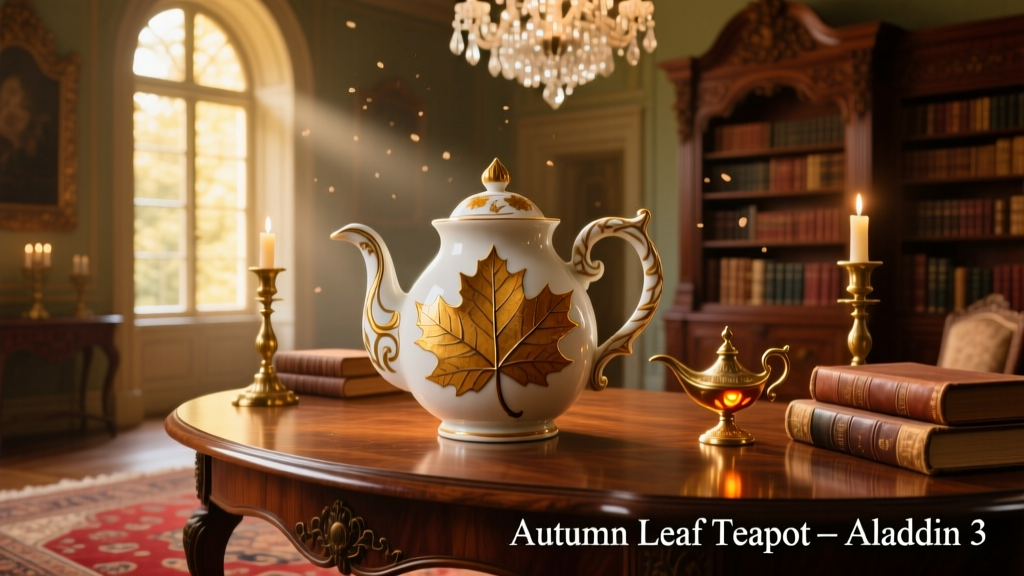
The Autumn Leaf Teapot by Aladdin: A Deep Restoration and Historical Analysis of Model 3
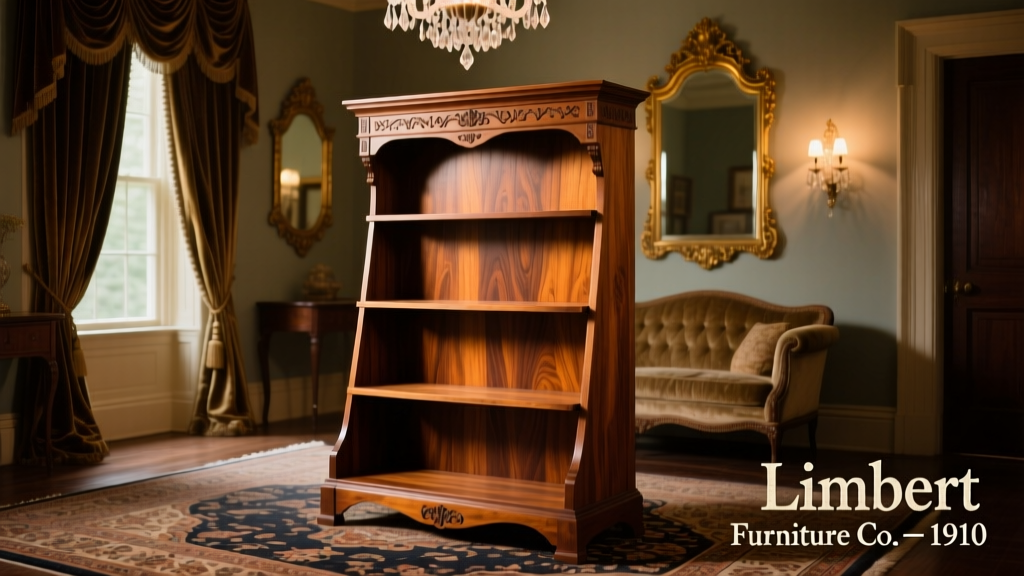
Limbert Magazine Stand: A Deep Dive into the Iconic 4-Shelf Canted-Side Design (37 × 20 Inches)
Political Banner: Washington With Horse Shields — A Cotton Campaign Artifact from the 1896 Presidential Election
Toy Snoopy Windup Walking Figure: Aviva Enterprises’ 1970s Plastic Jointed-Foot Collectible (3-Inch)
The 3575141: Decoding the Dunbar Model Number, Its Design Origins, and Restoration Imperatives
Banks Bozo the Clown Chalkware: Authenticity, Value, and Restoration Insights from the 1950s
The Antique Trade Directory: A Practical Reference for Dealers, Restorers, and Collectors
Oak Shelf with Oval Mirror & Brass Coat Hooks: A 1930s English Hallway Essential
Glass Venetian Figurine: The 9¾-Inch Clown Accordion Player — History, Craftsmanship, and Restoration Insights