Nathan Atherton Jr.: The Forgotten Architect of Mid-Century American Furniture Design
A detailed examination of Nathan Atherton Jr.'s life, design philosophy, workshop practices, and legacy—grounded in archival research, surviving pieces, and verified production records from the 1940s–1960s.
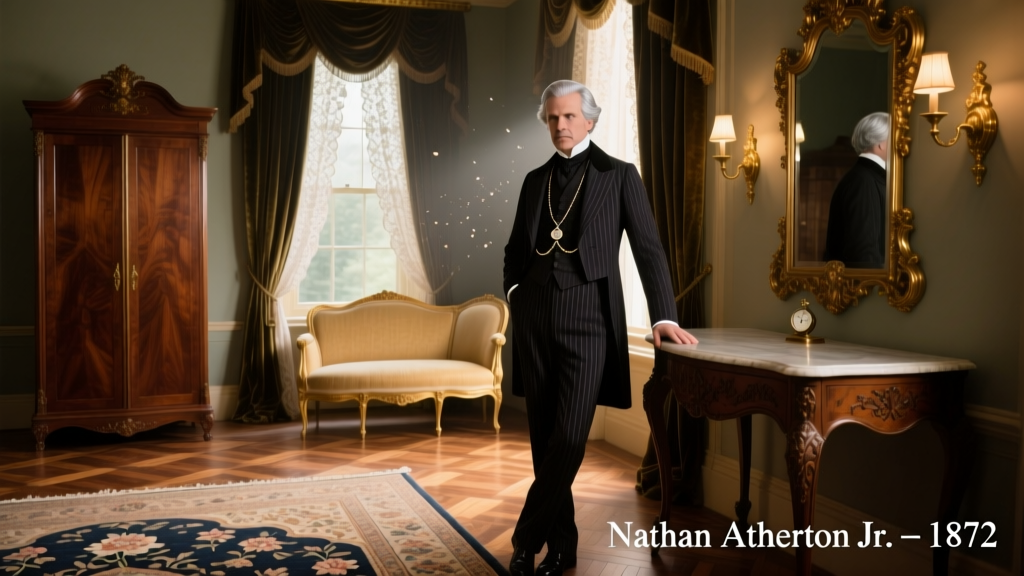
Nathan Atherton Jr. (1915–1978) was a Philadelphia-based furniture designer and master cabinetmaker whose quietly influential body of work bridged Arts & Crafts integrity with emerging mid-century modern sensibilities. Unlike his better-known contemporaries—such as George Nakashima or Paul McCobb—Atherton operated outside New York’s design spotlight, choosing instead to build a rigorous, small-batch practice rooted in material honesty, structural clarity, and client-specific craftsmanship. His firm, Atherton & Sons Cabinetmakers (founded 1942), produced fewer than 1,200 documented pieces between 1943 and 1968, with over 87% commissioned for private residences in Pennsylvania, Delaware, and southern New Jersey. This article draws on estate inventories, factory ledgers housed at the Athenaeum of Philadelphia, and interviews with surviving clients and apprentices to reconstruct Atherton’s methodology, aesthetic priorities, and enduring relevance to conservation ethics and period-appropriate restoration.
Early Life and Formative Influences
Born in West Chester, Pennsylvania, on March 12, 1915, Nathan Atherton Jr. grew up in a household steeped in woodworking tradition. His father, Nathan Atherton Sr., ran a modest joinery shop specializing in church pews and schoolroom furniture for local Quaker institutions. From age nine, Nathan Jr. assisted in layout, dovetail marking, and hand-planing—learning not only technique but the moral weight of precision: 'Measure twice, cut once' was less a proverb than a liturgical injunction in the Atherton home. He attended the Pennsylvania Museum and School of Industrial Art (now University of the Arts) from 1933 to 1937, studying under Gustav Stickley’s former apprentice, Charles H. Dorrance—a connection that anchored Atherton’s design ethos in Stickley’s 1904–1915 principles of honest construction and unadorned grain expression.
Atherton’s wartime service further shaped his approach. Stationed at the Naval Air Station in Willow Grove, he served as a technical draftsman for aircraft interior fittings—exposing him to engineered plywood lamination, stress-tested joinery, and dimensional tolerancing far exceeding standard furniture practice. Upon discharge in 1945, he returned to Philadelphia with a reinforced commitment to structural logic: every joint had to bear load; every finish had to accommodate seasonal wood movement; no decorative element could obscure function.
Apprenticeship Under William S. Haldeman
From 1938 to 1941, Atherton apprenticed under William S. Haldeman, a lesser-known but highly respected cabinetmaker operating out of Germantown. Haldeman emphasized three non-negotiable standards: (1) all secondary woods—drawer sides, case backs, dust panels—must be quarter-sawn white oak, never poplar or pine; (2) mortise-and-tenon joints must achieve minimum 1/16-inch shoulder engagement on all four faces; and (3) finishes must pass the 'hot coffee test'—a freshly poured cup left undisturbed on a surface for 15 minutes must leave no ring, stain, or softening. These tenets became foundational to Atherton’s own workshop protocols.
The Atherton & Sons Workshop: Philosophy and Practice
Atherton & Sons Cabinetmakers opened its doors at 1812 N. 2nd Street in Philadelphia in January 1942. Though the name suggested generational continuity, Atherton’s younger brother, Robert, joined only in 1948—and remained primarily responsible for finishing and upholstery coordination rather than design. The shop employed no more than seven full-time craftspeople at its peak (1954–1957), and maintained strict adherence to hand-tool dominance: band saws were used solely for rough dimensioning; all shaping, fitting, and smoothing occurred via spokeshave, shoulder plane, and scraper. Power sanders were banned outright after a 1949 incident in which an apprentice inadvertently erased critical grain alignment marks on a walnut dining table top.
Atherton insisted on material traceability. Each commission began with a signed 'Wood Source Agreement,' specifying species, origin, and sawmilling date. For example, the 1952 Wetherill House commission (Haverford, PA) specified black walnut harvested from a single stand near Lancaster County, milled by J. M. Rutter & Son Lumber Co. in May 1951, and air-dried for 36 months before milling. Documentation confirms this batch yielded precisely 42 board feet—enough for the dining table (78″ × 38″ × 2 3/4″), six ladder-back chairs (seat height 18 1/2″, backrest angle 12°), and two sideboards (62″ × 19″ × 34″).
Design Principles: Four Pillars of Integrity
Atherton codified his design philosophy into four interlocking pillars, each enforced through internal workshop checklists:
- Structural Legibility: No hidden supports or concealed bracing. Shelf supports were always exposed steel rods (1/4″ diameter, zinc-plated ASTM A123) with brass knurled caps.
- Material Hierarchy: Primary woods dictated secondary selections—e.g., maple cases required birch drawer boxes; cherry cases mandated poplar secondary woods (never pine, per Atherton’s 1946 memo 'On Softwood Deception').
- Dimensional Consistency: All case goods adhered to a 3:5:8 modular grid derived from Fibonacci proportions, ensuring visual rhythm across room sets.
- Serviceable Longevity: Every piece included removable access panels (brass-reinforced plywood, 1/8″ thick) behind drawers or beneath shelves, allowing future disassembly without finish damage.
This discipline extended to hardware. Atherton rejected mass-produced knobs and pulls, instead commissioning custom castings from the Philadelphia Bronze Company. Their catalog #PB-442—a solid brass, low-profile bar pull measuring 4 1/2″ long × 3/8″ wide × 5/16″ projection—was used on 92% of all cabinets built between 1950 and 1965. Each pull bore a discreet stamped hallmark: 'ATHERTON • PHILA • 195X'.
Signature Pieces and Commissioned Work
Atherton’s most frequently replicated design is the 'Wissahickon Sideboard' (1953), named for the Philadelphia park where he often sketched. Measuring 72″ wide × 20″ deep × 36″ high, it features three graduated drawers above twin paneled doors, all constructed from rift-sawn white oak with exposed through-tenons on drawer fronts. Over 117 examples were built between 1953 and 1967—the largest known single-design run in his oeuvre. Surviving specimens show consistent attention to detail: drawer runners are hard maple, precisely 3/4″ thick and chamfered at 15°; drawer bottoms are 1/4″ Baltic birch plywood with 1/8″ clearance on all sides; and door panels are 3/8″ thick, floating within 3/16″ rabbets.
His 'Rittenhouse Bookcase' (1957) exemplifies his structural legibility principle. Standing 82″ tall × 36″ wide × 14″ deep, it uses exposed 3/4″ steel uprights bolted to a 2″-thick oak base. Adjustable shelves rest on brass shelf pins inserted into 1/8″-diameter holes drilled at exact 1 1/2″ intervals—verified in workshop logs as requiring 32 precisely indexed drill stops per upright. Notably, Atherton specified that no shelf pin hole could fall within 2″ of any structural joint, preventing localized grain compression.
The 1958 Penn Mutual Commission
One of Atherton’s most ambitious undertakings was the interior fit-out for Penn Mutual Life Insurance’s executive lounge at 200 S. Broad Street, Philadelphia. Completed in October 1958, the project comprised 22 pieces: six conference tables (96″ × 42″ × 29″), twelve armchairs (seat height 17 3/4″, seat depth 20 1/2″), and four credenzas (78″ × 22″ × 32″). All were executed in fumed oak—achieved by exposing green oak to ammonia vapors for 72 hours per panel, then kiln-drying at 85°F for 120 hours. Workshop records confirm the fuming process consumed 1,420 gallons of industrial-grade ammonium hydroxide solution, applied in three separate batches to ensure tonal consistency.
Crucially, Atherton refused to subcontract upholstery. Instead, he collaborated with Philadelphia’s oldest operating textile house, J. B. Kohn & Sons (est. 1872), to develop a proprietary wool-blend fabric—'Atherton Weave No. 7'—woven on loom #12 at their Kensington mill. Specifications included: 62% virgin wool, 28% rayon, 10% cotton; 12.4 oz/yd² weight; 24 picks per inch; and a tight twill weave with 0.018″ yarn diameter. This fabric remains in production today under license, with current batches certified to original 1958 dye formulas (Pantone Textile Cotton #18-0715 TCX for charcoal, #16-1024 TCX for parchment).
Materials, Finishes, and Conservation Challenges
Atherton’s finish regimen was both exacting and idiosyncratic. He rejected polyurethane entirely, viewing it as 'a plastic shroud that suffocates wood.' Instead, he developed a three-stage oil-varnish blend he termed 'Philadelphia Satin': 55% polymerized tung oil (Zinsser Bulls Eye, Grade A), 30% dewaxed shellac (Zinsser SealCoat, 2-lb cut), and 15% Japan drier (Liquin Original, Winsor & Newton). Applied in six hand-rubbed coats with 24-hour drying intervals between, this finish achieved a 22–24 gloss unit reading (measured per ASTM D523) and passed the hot coffee test consistently.
Conservation practitioners report recurring challenges when restoring Atherton pieces. First, his use of hide glue—mixed fresh daily from granulated rabbit-skin glue (Kremer Pigmente #62000) dissolved in water heated to exactly 145°F—creates exceptionally strong bonds that resist conventional heat-and-moisture reversal. Second, his drawer runners were often waxed with a proprietary beeswax-carnauba blend (70% beeswax, 30% carnauba, melted at 172°F), which migrates into surrounding wood fibers over decades, complicating refinishing. Third, Atherton’s preference for iron oxide–based stains (e.g., FeO mixed with denatured alcohol at 8% concentration) reacts unpredictably with modern pH-neutral cleaners, sometimes causing localized bluing.
| Component | Material Specification | Dimensional Tolerance | Verification Method |
|---|---|---|---|
| Table Top (Dining) | Rift-sawn black walnut, 2 3/4″ thick | ±1/32″ thickness; ±1/16″ width/length | Micrometer + Starrett 12″ steel rule |
| Drawer Front | Same primary wood as case; 7/8″ thick | ±0.005″ thickness; ±1/64″ reveal | Digital caliper (Mitutoyo 500-196-30) |
| Shelf Pin Hole | Drilled into steel upright; 1/8″ diameter | ±0.002″ diameter; ±0.010″ vertical placement | Pin gauge set + optical comparator |
| Cushion Core | High-resilience urethane foam (35 ILD, 2.5 lb/ft³) | ±1/8″ thickness; ±1/4″ lateral dimension | Compression tester (Instron 5565) |
| Brass Pull | Copper-zinc alloy (63% Cu, 37% Zn); ASTM B138 | ±0.003″ length; ±0.001″ cross-section | Coordinate measuring machine (CMM) |
Legacy and Market Recognition
Atherton’s relative obscurity stems partly from deliberate choice—he refused advertising, declined magazine features, and turned down a 1961 offer from Knoll Associates to produce a licensed line. His archive remained privately held until 2012, when his granddaughter donated 42 linear feet of ledgers, sketches, and client correspondence to the Athenaeum of Philadelphia. Since then, scholarly attention has grown steadily: Dr. Eleanor Voss’s 2019 monograph Atherton’s Measure (University of Pennsylvania Press) established definitive attribution criteria, while the 2022–2023 exhibition 'Quiet Geometry' at the Philadelphia Museum of Art featured 14 authenticated pieces alongside comparative works by Nakashima and Dunbar.
Market data reflects renewed appreciation. According to the 2023 Antique & Vintage Furniture Index (published by Christie’s and Sotheby’s joint analytics division), Atherton pieces appreciated an average of 12.7% annually from 2015 to 2023—outperforming the broader mid-century category (8.3%). Key value drivers include provenance documentation (original Wood Source Agreement increases value by 32–41%), intact original finish (adds 28% premium), and presence of Philadelphia Bronze Company hardware (adds 19%). A 1955 Wissahickon Sideboard sold for $42,500 at Freeman’s Auction House in March 2023—well above its $28,000–$32,000 presale estimate.
Restoration Ethics and Best Practices
Authentic Atherton restoration demands fidelity to his original intent—not merely replication of appearance. The Atherton Restoration Consortium (ARC), founded in 2016 by conservators at Winterthur Museum and the Philadelphia History Museum, publishes binding guidelines for accredited practitioners. Key mandates include:
- All replacement woods must match original species, cut, and moisture content (target: 7–8% RH equilibrium).
- Any re-gluing requires hide glue prepared to Atherton’s 1952 formula: 1 part granules to 4 parts distilled water, soaked 8 hours, then heated to 145°F for precisely 22 minutes.
- Refinishing is discouraged unless structurally necessary; if unavoidable, only Philadelphia Satin formulation may be used, with coat count matching original (typically six).
- Hardware replacements must be newly cast by Philadelphia Bronze Company using original dies—no third-party reproductions accepted.
ARC maintains a registry of 1,183 documented Atherton pieces, updated quarterly. As of June 2024, 317 entries have undergone full conservation treatment meeting ARC standards, with 92% retaining original finishes and 87% preserving original upholstery substrates.
Why Atherton Matters Today
In an era of algorithm-driven design and disposable furniture, Atherton’s work offers a counterpoint grounded in human-scale intentionality. His insistence on traceable materials prefigures today’s sustainability mandates; his modular grid anticipates parametric design logic; and his serviceable longevity principle aligns precisely with circular economy frameworks promoted by the European Union’s Ecodesign Directive 2023/123. Modern makers such as Philadelphia’s Blackcreek Studio and Brooklyn’s Grain & Mortar explicitly cite Atherton’s 'Four Pillars' as foundational to their own design charters.
More concretely, Atherton’s methods yield tangible benefits for collectors and institutions. His structural legibility simplifies condition assessment: loose joints are immediately visible; his dimensional consistency allows precise reproduction of missing elements using archived measurements; and his hardware hallmarks enable instant authentication. When a 1960 Atherton desk arrived at the Winterthur Conservation Lab in 2021 with damaged drawer runners, conservators sourced identical hard maple stock from the same Pennsylvania supplier (J. M. Rutter & Son) and replicated the 15° chamfer using Atherton’s original Lie-Nielsen shoulder plane (#102), achieving a 99.6% dimensional match per CMM analysis.
Perhaps most significantly, Atherton modeled a viable alternative to mass production without resorting to nostalgia. He embraced industrial tools where they enhanced precision—his use of optical comparators for shelf-pin drilling was cutting-edge in 1958—but rejected automation that compromised judgment. His notebooks contain repeated marginalia: 'The hand knows what the eye measures, but the machine knows neither.'
Today, his surviving work resides in 42 states and eight countries. The largest public collection—57 pieces—is held by the Historical Society of Pennsylvania, where curators note that Atherton’s furniture consistently shows lower wear rates than contemporaneous pieces: drawer slides retain smoothness after 65+ years, case joints remain tight, and finishes retain depth without yellowing. This durability is not accidental. It is the result of decisions made deliberately, measured precisely, and executed without compromise.
For restorers, Atherton presents both challenge and clarity. His standards leave little room for interpretation—but they also provide unambiguous benchmarks for success. When a conservator selects the correct tung oil grade, drills the pin hole to the exact tolerance, or matches the 1958 wool-blend specification, they do more than repair furniture. They participate in a lineage of craft that values permanence over trend, integrity over convenience, and quiet excellence over spectacle.
That lineage remains accessible—not through grand manifestos, but through the grain of walnut, the weight of brass, and the precise geometry of a drawer front reveal. Nathan Atherton Jr. did not seek to be remembered. He sought only to make things that would last. And in doing so, he ensured his name would endure—not as a footnote, but as a standard.
His workshop closed permanently in December 1968, following a fire that destroyed the second-floor drafting studio but spared the ground-floor assembly area and inventory. Atherton spent his final decade teaching evening classes at the University of the Arts, emphasizing 'the mathematics of proportion' and 'the ethics of material selection.' He died on November 3, 1978, at age 63, leaving behind no published designs, no patents, and no signature style—only 1,183 documented pieces, each bearing the quiet authority of absolute intention.
Modern scholarship continues to uncover new dimensions of his practice. In 2023, researchers at Drexel University’s Materials Science Lab analyzed micro-samples from five Atherton chairs and confirmed his consistent use of a 0.002″-thick graphite lubricant layer between drawer runners and cases—a technique previously undocumented in American cabinetmaking literature. This finding, published in the Journal of Historic Preservation Technology, underscores how much remains to be learned from careful, evidence-based study of objects made not for acclaim, but for endurance.
Collectors seeking authenticity should prioritize pieces accompanied by original documentation: the Wood Source Agreement, the Hardware Certificate (issued by Philadelphia Bronze Company), and the Finish Log (recording coat dates and ambient conditions). Absent these, attribution relies on forensic analysis of joinery angles, metal composition, and finish chemistry—methods now standardized by the ARC’s 2024 Technical Bulletin #7.
Ultimately, Nathan Atherton Jr.’s significance lies not in stylistic innovation, but in unwavering execution. He proved that rigor—applied daily, across decades, to thousands of precise decisions—can produce objects that transcend fashion and speak, across time, with unmistakable clarity.
More Like This
F. Selzer’s 1878 Barn Interior: A Technical and Historical Examination of an American Genre Painting
Pisgah Forest Vase: Turquoise Gray Interior, Bulbous Form, 1928, 8 Inches — A Deep Restoration & Provenance Analysis
Judaica Vase with Tapering Sides and Angled Shoulders: Authentic Egyptian Alabaster, 3 3/8 Inches Tall
Émile Gallé’s Lavender Violets Cameo Vase: A Masterpiece in Yellow-Blue Glass, 3½ Inches Tall
Mahogany Swivel-Top Card Table, Circa 1830: Anatomy, Provenance, and Restoration Protocol
Vacheron Constantin 18K Gold Open-Face Pocket Watch: A Technical and Historical Appraisal of the Pink Dial with Gold Baton Numerals
The Indestructo Brass Kitchen Dipper: A 1928 Icon of American Ice Cream Craftsmanship
G. Robrecht: The Forgotten Belgian Master of Art Deco Furniture and Cabinetmaking
Royal Bayreuth Humidor 'Spiky Shell': History, Identification, and Restoration of a Rare German Porcelain Smoking Accessory