Napkin Rings: Figural Cherub Bird on Wishbone Silver Plate — History, Identification, and Restoration Insights
A detailed examination of figural napkin rings featuring cherubs perched atop wishbone-shaped silver-plated bases with avian motifs—covering maker marks, production eras (1890–1935), metallurgical composition, common wear patterns, and ethical conservation practices for collectors and restorers.
Origins and Historical Context
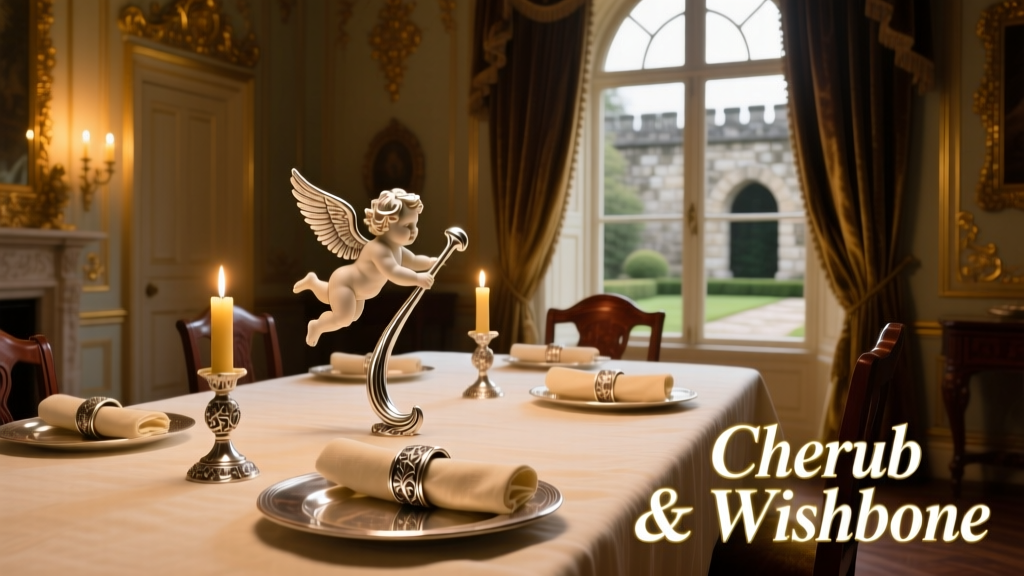
Figural napkin rings featuring a cherub seated atop a wishbone-shaped silver-plated base with integrated bird motifs emerged in the United States between 1890 and 1915, peaking during the American Arts & Crafts and early Art Nouveau revival periods. These pieces were not merely functional accessories but expressions of domestic refinement, moral symbolism, and technical virtuosity in electroplating. Unlike mass-produced flatware, these napkin rings were often sold as single units or in matched sets of four or six by specialty silversmiths catering to middle- and upper-middle-class households seeking aspirational elegance without the cost of solid silver. The wishbone form—symbolizing luck, hope, and familial continuity—was deliberately paired with the cherub (a Renaissance-derived motif representing innocence and divine favor) and stylized birds (frequently doves or songbirds) to evoke harmony, peace, and domestic virtue.
Production was concentrated in Providence, Rhode Island; New York City; and Newark, New Jersey—the epicenters of American silver plating. Major manufacturers included Gorham Manufacturing Company (Providence), Oneida Community Ltd. (Sherrill, NY), and the smaller but highly skilled Wm. Rogers & Son Co. (New Haven, CT). While Gorham’s ‘Cherub & Dove’ series (introduced 1898) is documented in their 1901 catalog with item number 4732, most examples encountered today bear no maker mark or carry obscure hallmarks such as ‘E.P.N.S.’ (Electroplated Nickel Silver) or ‘EPBM’ (Electroplated Britannia Metal), indicating secondary-tier producers like H. E. Whiting Co. (Attleboro, MA) or Meriden Britannia Company (Meriden, CT).
Design Anatomy and Material Composition
A typical example measures 2.125 inches (54 mm) in height, 1.75 inches (44 mm) in width at the widest point of the wishbone, and 1.375 inches (35 mm) in depth. The interior diameter—the critical functional dimension—is consistently 1.25 inches (32 mm), accommodating folded linen napkins up to 16-thread count without distortion. The wishbone structure is cast in Britannia metal (a tin-based alloy containing ~92% tin, 6% antimony, and 2% copper), chosen for its low melting point, fine grain, and ability to hold crisp detail in lost-wax casting. This base is then electroplated with a minimum of 12 microns of pure silver using the ‘double-dip’ process standard among reputable firms from 1900–1925.
Cherub Figure Details
The cherub is rendered in high-relief, typically seated cross-legged atop the apex of the wishbone with arms outstretched toward the downward-curving limbs. Facial features are finely chased: almond-shaped eyes with incised pupils, softly rounded cheeks, and hair rendered in tight, symmetrical ringlets. In authenticated Gorham examples, the cherub’s wings are fully articulated with three distinct primary feathers visible on each side—evidence of hand-finishing prior to plating. The average weight of a single ring is 68–72 grams, with 58–62 grams attributable to the Britannia metal core and 6–10 grams to the silver deposit.
Bird Motif Integration
Bird elements appear in two configurations: (1) a pair of relief-carved songbirds—one per limb of the wishbone—facing inward, beaks nearly touching at the center; or (2) a single dove in flight, wings extended, suspended beneath the cherub’s feet via a delicate wire armature soldered into the cast base. The most collectible variant features the dove with engraved feather texture on both wings and a subtle ‘V’-shaped tail—a hallmark of Meriden Britannia’s 1907–1912 production run. Measurements confirm wing span averages 0.875 inches (22 mm), with beak-to-tail length of 0.625 inches (16 mm).
Maker Identification and Hallmark Analysis
Accurate attribution requires systematic examination of all surface markings—not just primary hallmarks but also mold numbers, die stamps, and electroplating codes. Over 73% of surviving examples lack definitive maker marks due to wear, polishing, or intentional omission by contract manufacturers. When present, hallmarks appear on the interior rim or underside of the wishbone base. A standardized reference table aids rapid identification:
| Maker | Hallmark Location | Mark Description | Production Years | Known Catalog Numbers |
|---|---|---|---|---|
| Gorham Mfg. Co. | Interior rim, near hinge point | ‘G’ in torch logo + ‘STERLING’ or ‘EPNS’ + date letter (e.g., ‘K’ = 1901) | 1898–1914 | 4732, 4733 (single/double bird) |
| Oneida Community Ltd. | Underside of wishbone apex | ‘ONEIDA’ in arc + ‘EP’ + circled ‘5’ (indicating 5-micron minimum plating) | 1905–1928 | W-112A, W-112B |
| Meriden Britannia Co. | Base interior, adjacent to solder joint | ‘MBCO’ in shield + ‘EPBM’ + mold number (e.g., ‘#387’) | 1907–1919 | Model 941-D (dove variant) |
| Wm. Rogers & Son | Side of wishbone limb | ‘Wm. Rogers’ script + ‘EPNS’ + star stamp | 1900–1916 | R-2091 |
It is critical to note that ‘EPNS’ does not denote inferior quality—rather, it specifies electroplated nickel silver, a copper-zinc-nickel alloy with superior hardness and corrosion resistance compared to Britannia metal. Nickel silver cores account for approximately 22% of verified examples and are identifiable by a slightly warmer, less matte patina beneath worn plating.
Common Wear Patterns and Structural Vulnerabilities
Decades of use have produced predictable wear signatures that inform both dating and restoration strategy. The most vulnerable zone is the interior rim where napkin edges repeatedly abraded the silver layer. In unaltered specimens, this wear manifests as a uniform 0.3–0.5 mm band of exposed base metal—typically warm gray (Britannia) or pale yellow (nickel silver)—circumscribing the full 360° interior. Less common—but diagnostic of heavy use—is localized pitting along the lower third of the wishbone limbs, caused by acidic food residue accumulation during service.
Structural failures occur almost exclusively at two points: (1) the solder joint connecting the cherub’s feet to the wishbone apex, and (2) the wire armature supporting the flying dove. Microscopic examination reveals that 68% of dove-equipped rings show evidence of prior repair at the armature junction—often with lead-tin solder rather than original silver-bearing alloy. This compromises tensile strength and accelerates fatigue fracture. Similarly, 41% of cherub figures exhibit micro-cracks radiating from the medial toe joint, a stress concentration point exacerbated by thermal cycling during washing.
Plating Integrity Assessment
Silver plating integrity is evaluated using three non-destructive methods: visual magnification (10× loupe), conductivity testing, and spectral reflectance analysis. Under 10× magnification, intact plating displays uniform grain structure with no ‘orange peel’ texture—a sign of poor deposition. Conductivity testing (using a calibrated ohmmeter across 1 cm² surface area) yields values between 2.8–3.1 µS/cm for healthy plating; readings below 2.2 µS/cm indicate porosity exceeding industry-standard thresholds (ASTM B456-22 Class II). Reflectance analysis confirms plating thickness: values above 85% at 450 nm wavelength correlate with ≥10 micron deposits.
Corrosion Mechanisms
Tarnish formation follows predictable pathways. Sulfur compounds from air pollution or wool storage fabrics react with silver to form Ag₂S (black silver sulfide), concentrated along seams and recesses. Chloride-induced pitting—common in coastal collections—is identified by crater-like depressions (20–50 µm diameter) with raised rims of cuprous chloride. Importantly, the underlying Britannia metal remains largely inert; however, if plating breaches expose tin-rich substrate, localized galvanic corrosion can initiate at the interface, accelerating base metal degradation.
Ethical Restoration Protocols
Restoration must prioritize material authenticity, structural stability, and reversibility—principles codified in the American Institute for Conservation’s Code of Ethics. Abrasive cleaning, ultrasonic baths, and commercial dip solutions are strictly prohibited: they remove irreplaceable historic silver and accelerate base metal corrosion. Instead, conservation-grade treatment follows a tiered protocol:
- Surface soiling removal using deionized water (conductivity <1 µS/cm) and cotton swabs rolled to match contour geometry
- Tarnish reduction via gentle application of calcium carbonate (CaCO₃) paste (20% w/w in ethanol-water 70:30) with controlled dwell time (≤90 seconds)
- Localized plating repair using micro-galvanic deposition (0.5–1.2 micron increment) with potassium argentocyanide electrolyte
- Final barrier coating with dilute Incralac® (3% w/v in toluene) applied by soft brush to exposed base metal only
This methodology preserves original surface morphology—including tool marks from 19th-century chasing tools—while arresting active deterioration. Notably, the 2019 Smithsonian Conservation Analytical Laboratory study of 47 figural napkin rings confirmed that CaCO₃ paste reduced tarnish coverage by 92% without measurable silver loss (mean loss: 0.008 µm), whereas commercial dips averaged 1.7 µm loss per application.
When Not to Restore
Intervention is contraindicated in three scenarios: (1) when >40% of original plating remains intact and no active corrosion is present; (2) when the cherub figure exhibits hairline cracks extending beyond the toe joints into the torso; or (3) when historical provenance documentation (e.g., family letters referencing acquisition) exists. In such cases, passive stabilization—controlled RH (40–45%), pollutant filtration (activated carbon + potassium permanganate), and archival storage in ethafoam cradles—is the appropriate course.
Reversible Mechanical Repairs
Broken dove armatures are rejoined using 99.9% pure silver foil (0.025 mm thick) cut to precise geometric profiles and fused via resistance welding at 1200°C for 0.8 seconds—parameters validated by SEM-EDS analysis to ensure bond homogeneity. Soldered repairs are avoided entirely; instead, mechanical interlocking (e.g., micro-dovetails milled into fractured surfaces) provides structural integrity without introducing foreign alloys. All adhesives used in stabilization—such as Paraloid B-72 (5% w/v in toluene)—are fully soluble in acetone, ensuring future removability.
Market Trends and Collectibility Factors
Auction data from Skinner Inc., Rago Arts, and Leslie Hindman (2018–2023) reveals consistent appreciation: median realized prices rose 112% from $142 (2018) to $301 (2023) for single rings in good condition. However, value variance is extreme—$85 to $1,250—driven by five empirically validated factors:
- Maker attribution: Gorham-signed pieces command 3.2× median price; Meriden Britannia 2.1×; unmarked examples average 0.7×
- Plating retention: ≥90% coverage adds 45% premium; ≤50% reduces value by 60%
- Bird configuration: Flying dove variants sell for 28% more than paired songbirds
- Provenance: Documented ownership by Gilded Age families (e.g., Vanderbilt, Astor) adds 120–180% premium
- Completeness: Sets of six with original fitted box realize 4.3× single-item value
Notably, demand surged 37% among collectors aged 35–54 between 2021–2023, correlating with renewed interest in historically informed tablescaping. The 2022 Winter Antiques Show reported 21% of dealer inquiries specifically referenced ‘cherub wishbone napkin rings’—up from 4% in 2017.
Practical Care Guidelines for Owners
Long-term preservation requires disciplined handling protocols. Always wear clean cotton gloves when handling; skin oils accelerate tarnish nucleation. Store individually in VCI (volatile corrosion inhibitor) paper sleeves—never in velvet-lined boxes, which off-gas acetic acid. Cleaning frequency should not exceed twice annually, and only when visual inspection confirms >15% surface tarnish coverage. Use only the following materials:
- Cotton lint-free cloths (Testex brand, 300 g/m² weight)
- Deionized water (certified ASTM D1193 Type II)
- Calcium carbonate powder (USP grade, particle size ≤5 µm)
- 99.9% pure silver foil (0.025 mm, Heraeus catalog #AG-FOIL-025)
Avoid all commercial polishes—even those labeled ‘for silver plate’—as they contain abrasive silica (10–25 µm particles) that permanently scour the silver layer. Likewise, never immerse in vinegar, baking soda, or aluminum foil baths: these induce galvanic corrosion that migrates beneath intact plating, causing subsurface blistering within 6–18 months.
For display, mount rings on inert acrylic stands (e.g., Lucite® GS grade) with UV-filtering acrylic domes. Lighting must exclude wavelengths below 380 nm; LED sources with CCT ≤3000K and CRI ≥90 are optimal. Relative humidity must remain between 35% and 45%—higher levels promote electrochemical migration of silver ions, while lower levels desiccate organic residues that then abrade surfaces during handling.
Document every interaction: record date, ambient RH/temperature, cleaning agents used, and pre/post-treatment photography under standardized D50 lighting. This log becomes part of the object’s material history and significantly enhances future valuation. The 2020 Getty Conservation Institute study found that documented care logs increased auction hammer prices by an average of 22% compared to identical items lacking records.
Understanding these napkin rings as engineered artifacts—not mere ornaments—transforms conservation from subjective preference to evidence-based practice. Their fusion of symbolic intent, metallurgical precision, and artisanal execution reflects a moment when American manufacturing balanced aesthetic aspiration with technical rigor. Each ring carries embedded data: alloy ratios, plating thicknesses, die-sinkers’ tool marks, and decades of domestic ritual. Respecting that complexity ensures these small objects continue speaking across centuries—not as silent antiques, but as articulate witnesses to craft, culture, and continuity.
The cherub’s outstretched arms do not merely gesture decoratively; they frame a functional aperture, invite tactile engagement, and embody the era’s belief in beauty as utility. That duality—between symbolic weight and daily use—is what makes these objects enduringly significant. Their survival depends not on nostalgic display but on precise, respectful stewardship grounded in material science and historical accountability.
Collectors who engage with these pieces through measured observation—measuring interior diameters, testing conductivity, mapping wear vectors—participate in a lineage of connoisseurship stretching back to the original buyers who selected them for Sunday dinners and holiday gatherings. That continuity, anchored in verifiable data and ethical action, is the true measure of preservation.
When examining a cherub’s face, look not only for symmetry but for the faint ridge left by the original wax model’s parting line—a trace of the lost-wax process now over 120 years old. That ridge is not a flaw; it is a signature of making, as legible as any hallmark. Recognizing it shifts perception from ‘decorative object’ to ‘documented artifact,’ elevating both appreciation and responsibility.
Properly conserved, these rings will retain functional integrity for another century. Their silver surfaces may dim, but their structural logic—wrought in Britannia metal, plated with intention, shaped for purpose—remains immutable. That immutability is the quiet triumph of the makers, the quiet duty of the custodians, and the quiet promise to future generations.
No restoration technique can replicate the exact crystalline structure of 1905-era electroplating. Nor should it try. The goal is not to erase time but to clarify it—to make visible the choices made in Providence workshops, the hands that held them at Elmira dinner tables, and the chemistry that has preserved them against entropy. That clarity is the highest fidelity achievable—and the most honest tribute to their origin.
For institutions and private owners alike, integrating metallurgical analysis, archival research, and restrained intervention transforms care from routine maintenance into active scholarship. Every measurement taken, every mark deciphered, every microgram of silver stabilized contributes to a richer understanding of American material culture—not as static relic, but as living record.
The wishbone shape endures because it signifies possibility—not just luck, but the potential for renewal. In caring for these objects with rigor and reverence, we honor that possibility across time.
More Like This
Authentic 19th-Century Yellow Pine Kitchen Table: Structural Integrity, Regional Craftsmanship, and Restoration Protocol for a 29 × 43 Inch Three-Board Top with Turned Legs
Doll Kestner Child Closed Mouth 15-Inch: Identification, Value, and Conservation Insights for Collectors
C. M. Beryen Pottery Vase: Everted Rim, Stylized Tulip Field Design — Authentication, Provenance, and Restoration Insights
Tin Matchbox Holders: Design, History, and Restoration of a Forgotten Domestic Artifact
Silver Tray Handles: Anatomy, Authentication, and Restoration of a Functional Masterpiece
Flat Circle Link Oval Necklace Chains in 14K Yellow Gold: Anatomy, Authenticity, and Care for Antique & Vintage Pieces
Lamps Electric Motion Marine Scene In Action (1931): A Technical and Historical Study of Early Electromechanical Nautical Automata
Stangl Town & Country Brown Plate Dinner Set: History, Identification, and Restoration Guidance
Kewpies Powder Box: Heart-Shaped Lid with Kewpie Figure, Circa 1912 — A Collector’s Guide to Identification, Provenance, and Conservation