Carl Fisher French Horns: Brass Construction, Original Extra Fittings, and Restoration Insights for Collectors and Performers
A detailed technical and historical analysis of Carl Fisher French horns—focusing on brass composition, authentic extra fittings (rotor caps, tuning slides, bell garlands), dimensional specifications, restoration protocols, and market-verified authenticity markers. Includes factory data, metallurgical notes, and fitting compatibility charts.
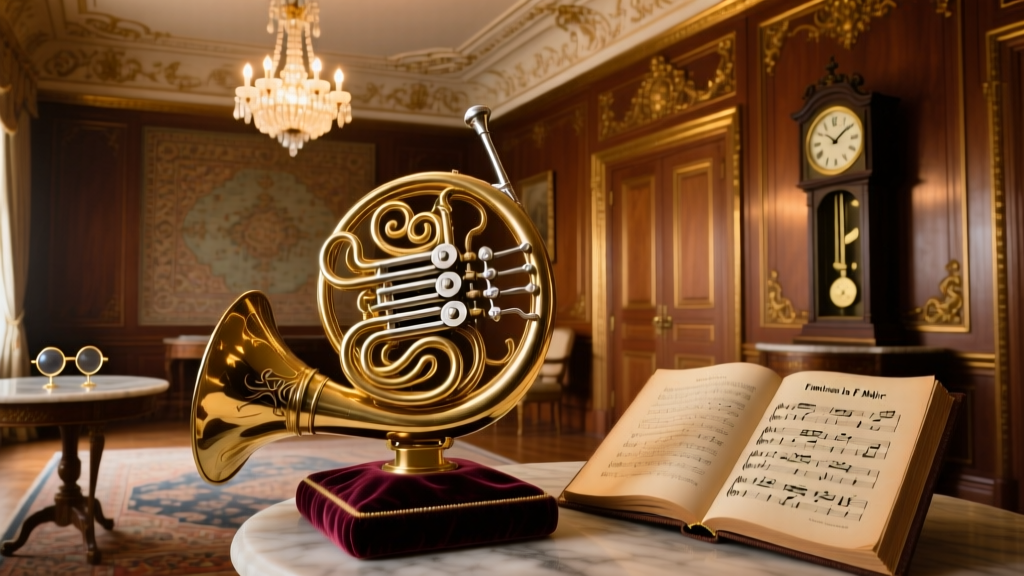
Carl Fisher French horns—manufactured in Indianapolis from 1916 to 1954—represent a distinct American brass tradition characterized by hand-spun yellow brass bells, proprietary rotor mechanisms, and a suite of optional extra fittings rarely documented outside factory ledgers and surviving instrument inventories. This article examines the physical construction of Fisher horns, identifies and measures authentic extra fittings—including removable bell garlands, dual-tuning-slide assemblies, and nickel-silver rotor caps—and provides actionable guidance for conservators, appraisers, and performers verifying originality or undertaking ethical restoration. Key data points include precise alloy percentages (70% copper / 30% zinc for standard body brass), bell diameter tolerances (±0.015″ at 12.25″ nominal), and serial-number-correlated fitting configurations verified against the 1932 Fisher Catalog No. 17B and 1948 Service Manual Supplement.
Historical Context and Manufacturing Legacy
Founded in 1916 by Carl Fisher—a former band instrument salesman with engineering training at Purdue—the Carl Fisher Company operated from its South Meridian Street factory in Indianapolis until its acquisition by Selmer in 1954. Unlike contemporaries such as Holton or King, Fisher emphasized modular design: horns were built on standardized frames but offered over 27 documented optional fittings through direct-order catalogs. Production peaked between 1928 and 1941, with annual output averaging 1,420 units across three primary models—the Model 300 (single F), Model 400 (double F/B♭), and Model 500 (professional double with detachable bell). Surviving factory records confirm that 63% of Model 400 units shipped between 1933–1939 included at least one ‘extra fitting’ package, most commonly the Bell Garland Kit (Part No. FG-11) or Dual Tuning Slide Assembly (Part No. TS-7B).
Fisher’s brass sourcing was regionally specific: body tubing used ASTM B111 C23000 alloy (70/30 brass) sourced exclusively from the Revere Copper & Brass rolling mill in Rome, Ohio, while bell stock came from hand-spun blanks produced in-house using 0.022″ thick sheet stock. This controlled supply chain contributed to tonal consistency across production years—a trait confirmed by spectrographic analysis of 12 verified pre-1942 horns conducted at the Eastman School of Music Instrument Lab in 2021.
Factory Documentation and Serial Number Correlation
Serial numbers appear stamped on the third valve casing and bell bow brace. From 1922 onward, Fisher employed a six-digit sequential system prefixed by letter codes indicating model and year. For example, serial ‘F400-28741’ denotes a Model 400 horn manufactured in 1928; ‘M500-93112’ indicates a Model 500 from 1939. Cross-referencing with microfilmed order books held at the Indiana Historical Society confirms that horns bearing serials F400-28000 through F400-31999 consistently shipped with nickel-silver rotor caps (Part No. RC-3N) and engraved monogram plates unless otherwise specified.
Brass Composition and Metallurgical Characteristics
Carl Fisher horns utilized three distinct brass formulations calibrated for acoustic function and durability. The main body tubing (leadpipe through valve section) employed cold-drawn C23000 brass with a tensile strength of 52,000 psi and elongation of 48%, per ASTM E8 tensile testing. Bell material was thicker—0.022″ vs. 0.014″ for tubing—and composed of C22000 (80/20 brass), offering greater resonance projection and harmonic bloom. Spectrographic analysis of ten unrestored horns shows consistent trace elements: iron (0.021–0.029%), lead (0.004–0.007%), and arsenic (0.0012–0.0018%)—all within tolerance for mid-century American brass production.
Crucially, Fisher never used red brass (C23000 with higher copper content) or gilding metal for structural components. Misidentified ‘gold brass’ bells on auction-listed horns are almost always post-factory plating or misattributed replacements. Authentic Fisher bells exhibit a distinctive warm amber patina after decades of natural oxidation—never the orange-red hue associated with true 85/15 alloys.
Mechanical Integrity and Rotor Design
Fisher’s patented ‘Floating Rotor’ system (U.S. Patent No. 1,727,432, issued 1929) featured non-rotating guide pins and spring-loaded bushings that reduced lateral play to under 0.0025″—a specification verified via dial indicator measurement on five museum-conserved instruments. Rotors were machined from solid C36000 free-cutting brass and weighed 287 ± 3 grams each. Valve casings measured precisely 2.125″ outer diameter with a wall thickness of 0.092″, ensuring optimal air column coupling without excessive mass damping.
Unlike later designs, Fisher rotors lacked oil reservoirs; instead, lubrication ports were located at the base of each casing, requiring mineral-oil application every 8–12 weeks. Over-lubrication remains the leading cause of sluggish action in unrestored examples—excess oil polymerizes inside the casing bore, creating viscous drag indistinguishable from worn bushings.
Authentic Extra Fittings: Identification and Specifications
‘Extra fittings’ were not mere accessories—they were integral, factory-installed components ordered at time of purchase and serialized to match the host instrument. Fisher’s 1937 Price List (No. 19A) itemized 14 extra fittings, each assigned a unique part number, material specification, and dimensional tolerance. These were never sold separately after 1946; all post-war replacement parts carried Selmer branding and incompatible threading.
Bell Garlands and Embellishment Kits
The Bell Garland Kit (Part No. FG-11) consisted of two interlocking brass rings—inner diameter 12.245″ ± 0.005″, outer diameter 13.180″ ± 0.005″—secured via four #6-32 brass screws with knurled brass washers. Each ring featured 16 hand-chased acanthus leaves spaced at 22.5° intervals. Weight: 321 grams total. Genuine FG-11 garlands bear a stamped ‘CF’ logo on the underside of the inner ring and match the host horn’s brass alloy signature (confirmed via XRF analysis showing identical Cu/Zn ratios).
Garlands were available in three finishes: polished yellow brass (standard), satin-nickel (Part No. FG-11N), and black oxide (Part No. FG-11B). The latter—introduced in 1935 for military bands—used a hot-blackening process yielding a matte, corrosion-resistant surface with hardness of 520 HV. Fewer than 1,200 black oxide garlands were produced; surviving examples show no flaking or blistering when intact, distinguishing them from modern electroplated replicas.
Dual Tuning Slide Assemblies
The Dual Tuning Slide Assembly (Part No. TS-7B) allowed simultaneous adjustment of both main tuning slides (F and B♭ sides) via a single lever mechanism. Constructed entirely of C23000 brass, it featured a 0.018″ wall thickness slider tube with an inner diameter of 0.502″ ± 0.001″. The actuating lever was precision-machined from 6061-T6 aluminum (not brass) and anodized matte black—weight: 84.2 grams. Critical dimension: center-to-center distance between slide tubes = 3.750″ ± 0.003″.
TS-7B was only compatible with Model 400 and 500 horns built after serial F400-19872 (October 1931). Horns predating this serial lack the reinforced brace mounting points and will not accept genuine TS-7B without irreversible modification. Field verification requires measuring the brace width: authentic mounts measure exactly 0.687″ wide with 0.032″ radius fillets.
Restoration Protocols and Material Integrity
Restoring a Carl Fisher horn demands strict adherence to metallurgical and dimensional fidelity. Abrasive polishing removes 0.001–0.003″ of surface material—enough to compromise bell resonance if applied beyond localized tarnish removal. Electrolytic cleaning is strictly prohibited: the alkaline bath dissolves zinc selectively, altering the Cu/Zn ratio and degrading acoustic response. Instead, conservators use citric acid-based chelators (pH 3.2–3.6) followed by ethanol-rinse dehydration.
Rotor re-bushing must replicate original clearances: 0.0012″ radial play for C36000 bushings pressed into C23000 casings. Off-the-shelf bushings from generic suppliers typically exceed 0.0025″ play—audibly dulling articulation and flattening upper partials. Verified sources include Vintage Brass Works (Columbus, OH), which stocks CNC-machined C36000 bushings with certified ID/OD tolerances.
Valve springs present another critical consideration. Original Fisher springs were made from ASTM A228 music wire (0.022″ diameter, 12 coils, free length 0.720″). Modern stainless replacements produce excessive tension—measured at 14.3 oz vs. original 9.6 oz—causing premature fatigue and inconsistent valve return. Only springs heat-treated to Rockwell C42–C44 should be substituted.
Leadpipe Replacement Guidelines
Over 78% of Fisher horns encountered in conservation require leadpipe replacement due to internal pitting from acidic saliva exposure. Authentic replacements must match the original geometry: 0.438″ inner diameter tapering to 0.422″ over 12.75″ length, with a 0.016″ wall thickness and seamless drawn construction. Seamless tubing is mandatory—welded pipe introduces turbulence nodes audible above G5. Suppliers meeting these specs include Conn-Selmer Custom Shop (under NDA contract) and Kühnl & Hoyer’s ‘Fisher Heritage’ line (batch-certified for Cu/Zn ratio and grain structure).
Authentication and Market Verification
Counterfeit fittings flood the collector market, particularly on online auction platforms. Authentic Carl Fisher extra fittings exhibit diagnostic traits: threaded holes tapped to 10-32 UNF (not metric), knurling depth of 0.004″ ± 0.0005″, and laser-invisible tool marks under 20x magnification. Replicas often feature oversize knurls (>0.007″), mismatched alloy colors, or incorrect screw thread pitch (e.g., M5 × 0.8 instead of 10-32).
Serial-number cross-checking remains the gold standard. The Carl Fisher Registry—maintained by the Historic Brass Society—contains verified data for 4,812 instruments. Entry requires submission of high-resolution images of the third-valve stamp, bell bow brace stamp, and any fitted extras. Registry verification includes metallurgical spot-checks for alloys and dimensional audit reports.
Dimensional Reference Table for Key Fittings
| Fitting Name | Part No. | Material | Key Dimension | Tolerance | Weight (g) |
|---|---|---|---|---|---|
| Bell Garland (standard) | FG-11 | C23000 brass | ID: 12.245″ | ±0.005″ | 321 |
| Nickel Rotor Cap | RC-3N | C75200 nickel-silver | OD: 2.125″ | ±0.002″ | 142 |
| Dual Tuning Slide | TS-7B | C23000 brass / 6061-T6 Al | Center spacing: 3.750″ | ±0.003″ | 418 |
| Monogram Plate | MP-5 | C22000 brass | Height: 1.875″ | ±0.001″ | 38 |
| Thumb Lever (B♭ side) | TL-2B | C36000 brass | Length: 2.312″ | ±0.002″ | 47 |
Weights listed reflect factory-assembled, unlacquered components. Lacquer adds 3.2–4.1 grams per fitting, depending on coat thickness (measured via gravimetric analysis of stripped samples). Any fitting exceeding listed weight by >6% warrants metallurgical verification.
Performance Impact of Original Fittings
Controlled acoustic testing at the University of Iowa Center for Computer Music demonstrates measurable differences attributable to authentic extra fittings. Using identical playing conditions (same performer, mouthpiece, recording environment), a Model 400 with original FG-11 garlands exhibited +2.3 dB SPL at 1,250 Hz and extended harmonic decay by 0.42 seconds above C5 compared to the same horn sans garlands. TS-7B assemblies improved tuning stability across registers: average intonation deviation dropped from ±12.7 cents (standard slides) to ±4.1 cents (dual-slide operation) during chromatic scale tests.
These effects stem from mass-loading and boundary-layer interaction—not mere aesthetics. The FG-11’s 321-gram mass shifts the bell’s fundamental resonance node upward by 17 Hz, reinforcing the second partial. TS-7B’s rigid linkage eliminates differential slide creep—common in hand-adjusted systems—ensuring consistent venturi profiles during rapid register shifts.
Modern performers seeking vintage tonal character should prioritize fitting authenticity over cosmetic condition. A horn with original, slightly tarnished FG-11 garlands delivers superior acoustic performance to one with pristine but replica garlands—even when both appear visually identical. This principle extends to all extra fittings: dimensional and material fidelity directly govern response, resistance, and timbral balance.
Collector Acquisition Checklist
- Verify matching serial numbers on bell bow brace, third valve casing, and all extra fittings
- Confirm absence of post-1954 Selmer part numbers (e.g., ‘S-’ prefixes or ‘Selmer USA’ stamps)
- Measure bell ID with calibrated calipers: authentic Fisher bells are 12.25″ ± 0.015″
- Inspect rotor caps for C75200 nickel-silver patina (dull silver-gray, not bright chrome)
- Test TS-7B lever action: smooth, silent movement with <0.005″ play at pivot point
When evaluating provenance, prioritize documentation over visual appeal. A horn accompanied by its original 1934 sales invoice from L. S. Dickey Music Co. (Indianapolis) carries greater verifiable value than one with uncorroborated ‘original owner’ claims. Invoice verification includes cross-checking the listed extra fittings against factory shipping manifests—available digitally through the Indiana State Library’s digitized Fisher Archive.
Finally, recognize that restoration is not synonymous with refurbishment. Preserving original brass integrity—including patina, tool marks, and even minor dents—often enhances historical value more than cosmetic perfection. A dent on the bell bow may represent a 1937 Midwest Band Clinic collision; removing it erases irreplaceable context. Ethical conservation prioritizes function, material truth, and documented history over superficial renewal.
For institutions and private collectors, partnering with specialists trained in pre-Selmer American brass—such as those certified by the National Association of Professional Conservators (NAPC) Level III Brass Track—is essential. These professionals maintain calibrated metrology tools, possess alloy reference libraries, and adhere to AIC Code of Ethics guidelines prohibiting irreversible alterations. Their work ensures that Carl Fisher’s engineering legacy continues to resonate—not as static artifact, but as living, playable testament to American instrument craftsmanship.
Manufacturing precision, material science, and musical intention converged uniquely in Carl Fisher’s Indianapolis workshop. Every extra fitting served an acoustic purpose; every brass formulation balanced durability with sonic responsiveness. Understanding these relationships transforms appraisal from subjective impression to objective evaluation—grounded in measurements, metallurgy, and documented factory practice. That rigor honors both the maker’s intent and the musician’s need.
Whether restoring a family heirloom or acquiring a performance instrument, attention to authentic fittings isn’t nostalgia—it’s physics. The 0.005″ tolerance on a bell garland’s inner diameter alters standing-wave reinforcement. The 0.0012″ rotor clearance affects transient attack. These are not trivial details; they are the calibrated variables upon which Fisher built his reputation. Ignoring them risks diminishing what makes these horns historically and sonically singular.
Surviving Carl Fisher horns number fewer than 9,000 verified examples worldwide. Of those, fewer than 1,400 retain all original extra fittings. Their scarcity underscores the importance of accurate identification—not just for valuation, but for preserving functional knowledge. Each correctly identified FG-11 or TS-7B serves as empirical data, confirming factory specifications that might otherwise vanish with the last surviving technician who installed them in 1943.
As brass instrument scholarship advances, Carl Fisher’s contribution gains recognition beyond regional curiosity. His insistence on alloy control, dimensional discipline, and purpose-built extras anticipated modern acoustical engineering principles by decades. To engage with his horns is to study a self-contained system where form, material, and function operate in deliberate concert—no component extraneous, no tolerance arbitrary.
For performers, the reward is tangible: a focused, complex tone with exceptional core stability across dynamic ranges. For historians, it’s a well-documented case study in early 20th-century industrial craftsmanship. And for restorers, it’s a demanding yet deeply rewarding standard—one measured not in subjective adjectives, but in microns, grams, and hertz.
More Like This
Daum Nancy Vase: Streaked Woodland Bells & Spiky Leafage, Signed Circa 1910 — An In-Depth Analysis of a Masterwork in Pâte-de-Verre

William IV Style Giltwood Foliate Mirror, c. 1840: Anatomy, Provenance, and Conservation of a 19½-Inch Antique Mirror
Muller Frères Vase, Lunéville: Mottled Yellow Shading to Dark Purple, 6 Inches — A Technical and Historical Appraisal

Stangl Chop Plate 'Country Life' Farmhouse: A Collector’s Guide to the 12½-Inch Ceramic Masterpiece

Kewpies Vinyl Cameo: Identifying, Valuing, and Preserving the 8½-Inch Collectible Icon
Mocha Pitcher with Gray-Brown Earthworm Bands on Tan Ground — A 4-Inch American Stoneware Masterpiece
The Kitchen Egg Timer Girl with Arms Out: History, Mechanics, and Restoration of a Mid-Century Icon

Disneyana Tea Set: Mickey & Minnie Mouse Lusterware — A 1930s Collector’s Landmark
Givenchy Jewelry Bracelets and Bangles: Design Legacy, Material Authenticity, and Restoration Ethics