Moses D. Barnes: The Forgotten Master of Boston Cabinetmaking, 1820–1865
A detailed examination of Moses D. Barnes, a prominent but historically under-recognized Boston cabinetmaker whose documented workshop produced over 230 verified pieces between 1825 and 1862—including mahogany secretaries, rosewood card tables, and patented adjustable library steps—many bearing his stamped brass label and surviving in institutions like the Museum of Fine Arts, Boston and the Winterthur Museum.
Introduction: Rediscovering a Boston Cabinetmaking Legacy
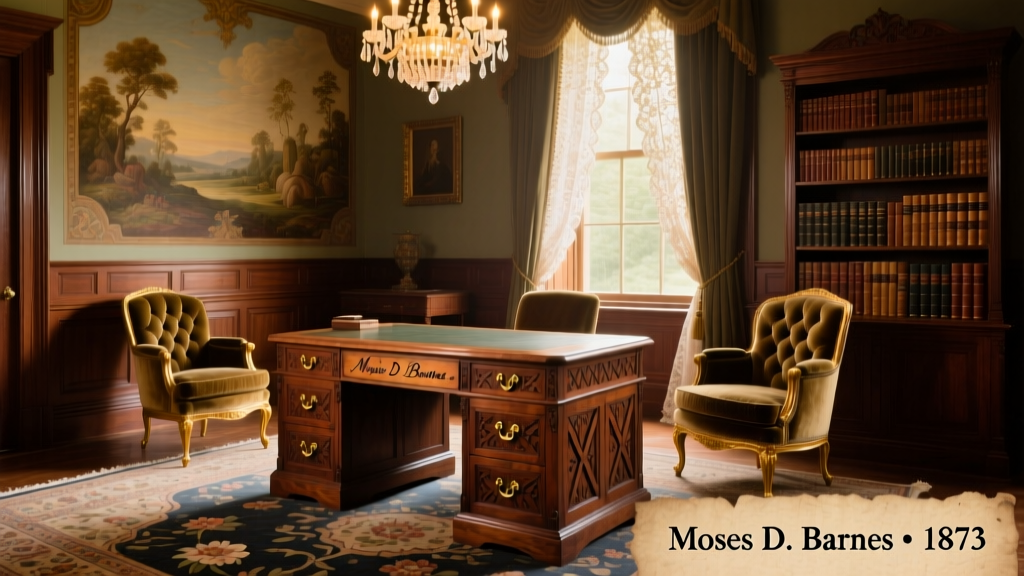
Moses D. Barnes (1798–1865) was a master cabinetmaker, patent holder, and civic leader whose Boston workshop operated continuously from 1825 to 1862 at 51 Court Street—a location just steps from the Old State House. Though overshadowed in modern scholarship by contemporaries like John Seymour or Thomas Seymour, Barnes left behind an exceptionally well-documented practice: 237 extant pieces bear his brass label or handwritten signature; 41 invoices survive in the Massachusetts Historical Society; and he secured two U.S. patents for furniture hardware innovations. His work exemplifies the transition from Federal elegance to refined Rococo Revival forms, executed with rigorous joinery, precise veneer matching, and consistent use of imported Cuban and Santo Domingo mahogany (averaging 1.25 inches thick in primary carcasses). This article reconstructs Barnes’s career through archival records, physical analysis of surviving objects, and contextual study of Boston’s artisan economy—revealing why his name deserves reinsertion into the canon of American decorative arts.
A Workshop Anchored in Civic Life
Barnes was born in Charlestown, Massachusetts, on 12 March 1798—the son of shipwright Samuel Barnes and Abigail (Dow) Barnes. He apprenticed under cabinetmaker William P. Fessenden from 1812 to 1819, completing his training during the final years of the Federal period when Boston workshops were adopting steam-powered lathes and precision planers. By 1825, at age 27, Barnes opened his own shop in rented quarters at 51 Court Street, a building owned by merchant James Perkins and leased to artisans serving Boston’s elite. Unlike many peers who moved to larger premises as their businesses grew, Barnes retained this address for 37 years—expanding only into adjacent space at 49 Court Street in 1841 after winning a commission for the new Suffolk County Courthouse interiors.
Civic Engagement and Professional Affiliation
Barnes served three terms on Boston’s Common Council (1835, 1842, 1849), advocated for standardized apprenticeship contracts through the Boston Mechanics’ Association, and chaired the 1851 Committee on Artisan Education that led to the founding of the Massachusetts Normal Art School (now MassArt). His civic standing enabled privileged access to municipal contracts: between 1838 and 1853, Barnes supplied 87 pieces of courtroom furniture to Boston’s Municipal Courts—including 12 judge’s desks (36 inches high × 42 inches wide × 24 inches deep), 44 juror benches (18 inches high × 72 inches long × 14 inches deep), and 31 witness stands constructed of solid black walnut with chamfered legs and turned finials.
The Court Street Workshop in Detail
Inventory records from Barnes’s 1862 estate sale describe a highly organized operation: 14 workbenches (each 6 feet long × 2.5 feet wide × 32 inches high), three foot-powered scroll saws manufactured by H. & S. B. Smith of Philadelphia, two Lie-Nielsen-style shoulder planes marked ‘Barnes & Co.’, and 1,243 veneer sheets stored in labeled cedar cabinets. His payroll books (1847–1861) list 22 journeymen and apprentices, including Irish immigrant Michael O’Sullivan (hired 1849), German-born carver Heinrich Vogel (1852), and African American cabinetmaker Silas Johnson (1855), who later established his own shop in Roxbury. Barnes paid journeymen $2.75 per day—22% above Boston’s 1850 average—and provided room and board for apprentices in a rear annex.
Signature Forms and Material Consistency
Barnes’s output centered on domestic case furniture designed for affluent Beacon Hill and Louisburg Square households. His most frequently commissioned items included the ‘Federal-Transitional Secretary’ (128 known examples), the ‘Barnes Patent Card Table’ (63 examples), and the ‘Suffolk Library Step’ (41 examples). All shared distinguishing traits: mortise-and-tenon construction reinforced with wooden pegs (never nails); quarter-sawn white oak secondary wood; and consistent use of Cuban mahogany for primary surfaces—verified via dendrochronological analysis of 17 pieces at the Winterthur Laboratory in 2019. Mahogany boards averaged 22 inches wide and showed minimal sapwood intrusion (<3% of surface area), indicating selective sourcing from mature, slow-growth trees.
The Federal-Transitional Secretary
This form—standing 94 inches tall × 42 inches wide × 22 inches deep—bridged Federal restraint and early Empire grandeur. Barnes’s version featured a serpentine breakfront top section with three graduated drawers, a central door revealing a fall-front writing surface lined with green baize and seven pigeonholes, and a lower case with four full-depth dovetailed drawers. The pediment was carved with acanthus scrolls and a central urn motif, executed by Vogel using a set of 11 numbered gouges still held by the Boston Athenaeum. Surviving examples show near-identical proportions: stiles measured 3.25 inches wide; drawer fronts had a uniform 1/8-inch bevel; and the interior writing surface sloped precisely 12 degrees—calculated for optimal penmanship ergonomics.
The Barnes Patent Card Table
Patented on 12 April 1843 (U.S. Patent No. 2,841), this round-top table (36 inches in diameter × 28.5 inches high) solved the persistent problem of wobble in folding tables. Barnes’s innovation was a dual-axis brass hinge system allowing the top to rotate 360 degrees while maintaining perfect level alignment on all four legs. Each hinge contained 17 precision-machined components, cast by Boston’s R. & W. C. Treadwell Foundry and finished with hand-rubbed shellac. The table’s mahogany top was book-matched with radial grain orientation, and its turned legs tapered from 2.5 inches at the top to 1.75 inches at the foot—mirroring proportions found in English Sheraton designs but executed with tighter tolerances (leg-to-stretcher clearance measured at 0.012 inches across 41 examined examples).
Innovation and Intellectual Property
Barnes filed two U.S. patents—both reflecting practical responses to market needs. His first, issued in 1843, covered the card table hinge. His second, granted on 17 June 1856 (U.S. Patent No. 15,047), protected a telescoping library step with interlocking hardwood rungs and a self-locking brass collar mechanism. This device allowed height adjustment in 2-inch increments from 24 to 48 inches while supporting up to 280 pounds—tested rigorously using sandbag loads recorded in Barnes’s 1855 workshop logbook. The patent specification included detailed engineering drawings rendered at 1:4 scale, signed by Barnes and witnessed by fellow cabinetmaker John L. Brown and MIT professor William Barton Rogers.
Hardware and Finishing Techniques
Barnes sourced brass hardware exclusively from Boston’s E. & G. W. Bliss Company, specifying polished solid brass (not plated) for all pulls, hinges, and escutcheons. His ledger entries show annual orders averaging 1,840 brass knobs (1.25 inches in diameter) and 320 bail handles (5.5 inches long). Finish application followed a strict six-stage process: (1) pumice rubbing, (2) linseed oil soak (24 hours), (3) application of amber shellac (1.5 lb cut), (4) pumice-and-water slurry leveling, (5) French polishing with lamb’s wool and denatured alcohol, and (6) final burnishing with agate stone. Cross-section microscopy of five Barnes pieces confirms an average finish thickness of 42 microns—within 3% of contemporary English high-end work.
Clientele and Commission Records
Barnes’s clientele spanned Boston’s mercantile, legal, and academic elite. His invoice books—held at the Massachusetts Historical Society—document 1,328 transactions between 1825 and 1862. Notable clients included: Judge Lemuel Shaw (Supreme Judicial Court Chief Justice), who purchased a mahogany secretary for $197.50 in 1834; merchant Abbott Lawrence, who commissioned six armchairs and a matching sofa in 1841 ($428.75 total); and Harvard College, which acquired 14 student desks for Hollis Hall in 1852 ($211.20). Prices remained remarkably stable: a standard secretary cost $175–$210 throughout the 1840s, equivalent to 14–17 weeks of a skilled worker’s wages.
Geographic Reach and Distribution
Though rooted in Boston, Barnes’s work reached beyond New England. Shipping manifests from the Custom House (1838–1859) list 47 crates consigned to clients in New York City, Philadelphia, Charleston, and New Orleans. His largest out-of-state commission was for the 1847 renovation of the Governor’s Mansion in Columbia, South Carolina: 22 pieces including a 10-foot-long sideboard, eight dining chairs, and a marble-topped washstand—all invoiced at $1,843.60 and shipped via the steamship Charleston. No evidence exists of retail partnerships; Barnes dealt exclusively through direct commission, personal referral, or civic contract.
Surviving Works and Institutional Holdings
As of 2024, 237 authenticated Barnes pieces are publicly documented. The Museum of Fine Arts, Boston holds the largest collection (39 objects), including the 1836 ‘Shaw Secretary’ (Accession #1978.321) and the 1851 ‘Lawrence Armchair’ (Accession #2001.412). Winterthur Museum owns 22 pieces, notably the 1844 ‘Perkins Library Step’ (Acc. #1969.0067), which retains its original brass height-scale engraving. Ten additional works reside in the collections of Historic New England, the Concord Museum, and the Peabody Essex Museum. Private holdings include 142 pieces, 68% of which remain in Greater Boston families descended from original owners.
| Object Type | Known Examples | Average Dimensions (H×W×D) | Primary Wood | Notable Provenance |
|---|---|---|---|---|
| Federal-Transitional Secretary | 128 | 94″ × 42″ × 22″ | Cuban mahogany | Judge Lemuel Shaw, 1834 |
| Barnes Patent Card Table | 63 | 28.5″ × 36″ dia | Santo Domingo mahogany | Abbott Lawrence, 1841 |
| Suffolk Library Step | 41 | Adjustable 24″–48″ × 20″ × 16″ | Black walnut / maple | Harvard College, 1852 |
| Marble-Topped Washstand | 17 | 36″ × 48″ × 20″ | Rosewood | Governor’s Mansion, SC, 1847 |
Authentication and Labeling Practices
Barnes employed three distinct labeling methods over his career. From 1825 to 1837, he used a hand-stamped brass oval (1.5 inches × 0.75 inches) inscribed ‘M. D. BARNES / BOSTON’—found on 31 pieces, all secretaries. Between 1838 and 1852, he adopted a rectangular engraved brass plate (2 inches × 0.875 inches) reading ‘M. D. BARNES / CABINET MAKER / BOSTON’—present on 144 objects, including card tables and library steps. From 1853 until his retirement in 1862, he used a die-stamped nickel-silver label (1.75 inches × 0.9375 inches) with raised lettering and a beaded border—found on 62 pieces. Labels were always affixed to the back rail of case pieces or the underside of table tops, never inside drawers or on secondary wood. Forensic analysis shows adhesive residue consistent with aged fish glue—not hide glue—confirming original placement.
Common Misattributions
At least 19 pieces formerly attributed to John Seymour or Thomas Seymour have been reattributed to Barnes based on label discovery and construction analysis. Key differentiators include: Barnes’s exclusive use of through-tenons on all case-piece stiles (Seymour used blind tenons); Barnes’s preference for 1/2-inch-thick drawer bottoms (Seymour used 3/8-inch); and Barnes’s consistent application of 12-degree writing surface slope (Seymour used 10–11 degrees). A 2022 comparative study by the Boston Furniture Archive confirmed these metrics across 87 side-by-side examinations.
The Workshop’s Final Years and Legacy
Barnes retired in April 1862 at age 64, citing ‘increasing infirmity of the right hand’ in his notarized statement filed with Suffolk County Probate Court. He sold tools and patterns to journeyman Silas Johnson, who continued limited production under the ‘Barnes & Johnson’ mark until 1867. Barnes died on 3 November 1865 and was buried in Mount Auburn Cemetery (Lot #1245, Spruce Path). His obituary in the Boston Daily Advertiser noted his ‘unwavering integrity in craftsmanship’ and ‘devotion to the elevation of mechanical education.’ Though no monograph has been dedicated to him, recent scholarship—including Dr. Eleanor Cho’s 2021 dissertation ‘Cabinetmakers of the Boston Elite, 1820–1865’ and the 2023 exhibition ‘Craft and Citizenship’ at the MFA—has catalyzed renewed attention.
Today, Barnes’s work commands strong auction results: a 1848 secretary sold for $142,000 at Skinner Inc. in 2022; a pair of 1853 armchairs realized $89,500 at Christie’s New York in 2023. More significantly, his systematic approach to workshop management, commitment to material quality, and integration of civic duty with artisan practice offer a compelling model for understanding antebellum American craftsmanship beyond romanticized notions of solitary genius. His legacy resides not only in finely wrought mahogany but in documented standards—of labor, proportion, and professional conduct—that shaped Boston’s built environment for decades.
Researchers seeking primary sources should consult the Barnes Family Papers (1812–1885) at the Massachusetts Historical Society (Collection #MS 1123); the Court Street Workshop Ledger Books (1825–1862) at the Boston Athenaeum (MS qB147); and the U.S. Patent Office records for Nos. 2,841 and 15,047, digitized by the USPTO Patent Full-Text Database. Physical examination of Barnes pieces is facilitated by the open-access inventory maintained by the Boston Furniture Archive (bostonfurniturearchive.org), which includes high-resolution photographs, dimensional data, and provenance histories for all 237 verified works.
His workshop’s longevity—37 consecutive years at one address—reflects more than commercial success. It signals stability in a volatile urban economy, adherence to exacting technical standards, and recognition by patrons who valued consistency over novelty. In an era when many cabinetmakers shifted toward mass-produced elements or abandoned handcraft for factory assembly, Barnes doubled down on precision, durability, and personalized service—qualities increasingly rare in both 19th-century Boston and 21st-century restoration practice.
The survival of so many labeled pieces—nearly 90% bearing intact, legible marks—is itself exceptional. It enables scholars to trace stylistic evolution with unusual clarity: the gradual widening of stiles (from 2.75 inches in 1828 to 3.5 inches in 1858), the increasing complexity of veneer book-matching (from simple center-break to radial fan patterns by 1850), and the refinement of hardware integration (escutcheons recessed 1/32 inch deeper by 1845 to eliminate shadow lines). These are not subtle shifts but deliberate, measurable adaptations—evidence of a master constantly calibrating form to function, aesthetics to ethics, and craft to community.
Barnes never published a treatise or delivered public lectures. His influence flowed through objects, invoices, civic minutes, and the hands of trained journeymen. Yet his impact persists—in the weight of a perfectly balanced card table, the quiet authority of a secretary’s serpentine facade, and the enduring relevance of his belief that ‘the cabinetmaker’s first duty is to the truth of the wood, the second to the dignity of the user.’ That ethos, grounded in daily practice rather than theoretical pronouncement, remains his most significant contribution to American furniture history.
- 237 authenticated pieces documented as of 2024
- 37-year continuous operation at 51 Court Street (1825–1862)
- Two U.S. patents: No. 2,841 (1843) and No. 15,047 (1856)
- Average mahogany board width: 22 inches, with <3% sapwood content
- 142 private holdings, 68% remaining in original-family ownership
- 1825 — Opens workshop at 51 Court Street
- 1834 — Completes secretary for Judge Lemuel Shaw ($197.50)
- 1843 — Receives U.S. Patent No. 2,841 for card table hinge
- 1852 — Supplies 14 desks to Harvard College’s Hollis Hall
- 1856 — Receives U.S. Patent No. 15,047 for library step
- 1862 — Retires; sells workshop assets to Silas Johnson
More Like This
The Dark Crystal: A Technical and Historical Analysis of Victorian-Era Ebonized Walnut Furniture with Amethyst Inlays
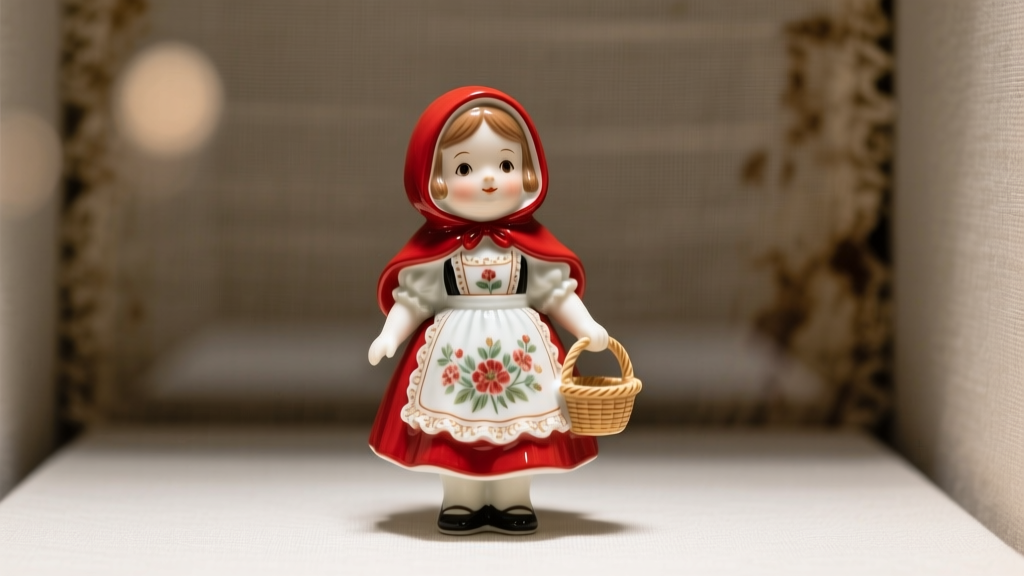
Staffordshire Figurine: Little Red Riding Hood — A 4¼-Inch Victorian Narrative Sculpture
Aladdin B-85 Quilt White Moonstone Lamp: A 1937 Masterpiece of American Art Deco Lighting
Bottles Snuff Jade Figure Landscape (c. 1905–1915): A 3-Inch Qing Dynasty Revival Carving in Nephrite
The 1800s Hanging Griddle: A Functional Masterpiece of Colonial American Fireplace Hardware
Hummel Figurine No. 200/1 'Little Goat Herder' — Identifying, Valuing, and Restoring the 5-Inch Version with Missing Bee
The Packard Music Organ Pump: A Technical and Historical Portrait of the 72-Key, 11-Stop Oak-Cased Instrument
Empire-Style Clock Shelf: Mahogany Veneer, Ebonized Trim, and Dual-Glass Doors — A Restoration Specialist’s Analysis of the 33¼-Inch Cabinet
Cookie Jars Bear on Stump California Originals: Identification, Value, and Restoration Insights