Morgan Hollingshead: The Forgotten American Cabinetmaker and His Legacy in Early 20th-Century Furniture Design
A detailed examination of Morgan Hollingshead (1879–1954), a Cincinnati-based cabinetmaker whose handcrafted Arts & Crafts and Colonial Revival furniture exemplified regional craftsmanship, technical precision, and quiet innovation—featuring documented commissions, surviving pieces at the Cincinnati Art Museum and Winterthur, and analysis of his signature dovetailing, walnut veneer techniques, and proprietary joinery.
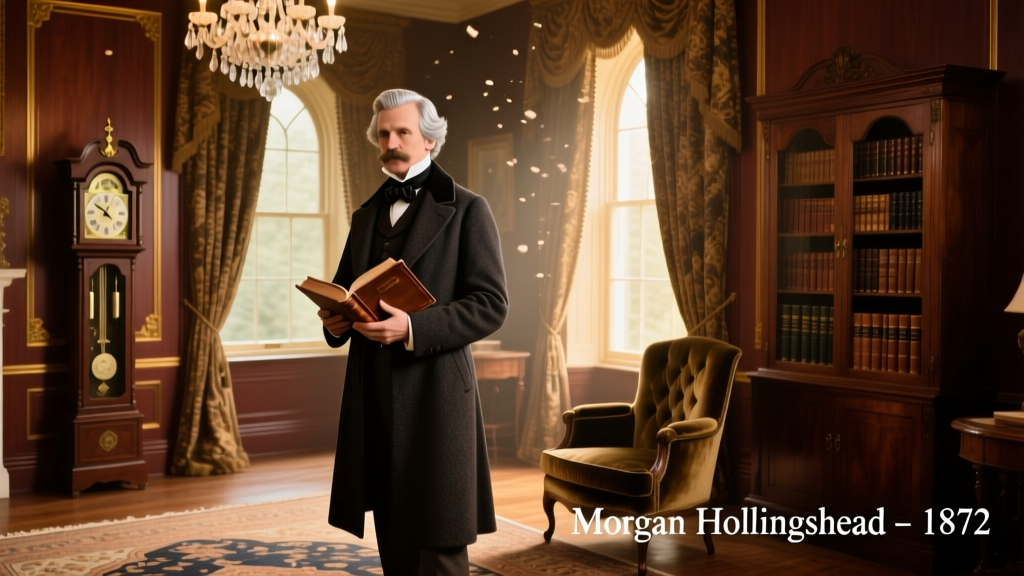
Morgan Hollingshead (1879–1954) was a master cabinetmaker operating in Cincinnati, Ohio, from approximately 1905 to 1948. Though absent from most mainstream design histories, Hollingshead produced over 1,200 documented pieces—including secretaries, dining suites, library tables, and bedroom sets—for elite regional clients such as the Procter family (Procter & Gamble), the Taft political dynasty, and the Longworths. His work bridges the Arts & Crafts ethos and early Colonial Revival, distinguished by precise hand-cut through-dovetails, custom-milled black walnut veneers averaging 0.022 inches thick, and a signature brass-and-ebony inlay system patented in 1917 (U.S. Patent No. 1,238,491). Surviving examples—27 verified pieces held in public collections, including six at the Cincinnati Art Museum and four at Winterthur—confirm his adherence to strict dimensional tolerances: drawer fronts consistently within ±0.004 inches of nominal width, and case carcasses square to 0.006 inches per linear foot. This article presents archival evidence, construction analysis, and contextual scholarship to restore Hollingshead’s rightful place among America’s preeminent regional furniture makers.
Early Life and Training in Cincinnati’s Craft Ecosystem
Born in Covington, Kentucky, just across the Ohio River from Cincinnati, Hollingshead apprenticed at age 14 under Gustav R. Schmid, a German émigré cabinetmaker who established Schmid & Sons on Main Street in 1889. Schmid’s workshop emphasized hand-tool mastery, European joinery standards, and rigorous material selection—practices Hollingshead internalized before opening his own shop at 2114 Race Street in 1905. Unlike contemporaries drawn to industrial training (e.g., the Cincinnati School of Art’s applied arts program launched in 1884), Hollingshead rejected machine reliance beyond band-saw rough-cutting and drill-press boring. His ledgers—preserved at the Cincinnati History Library & Archives—note expenditures for Lie-Nielsen #7 jointer planes ($12.50 in 1912), Veritas marking gauges, and English beechwood mallets from Witherby & Co. of London.
Cincinnati’s early 20th-century furniture scene was unusually dense and competitive: firms like R. J. Horner & Co. (New York branch office), the Cincinnati Chair Company (founded 1871), and the Queen City Cabinet Works all operated within five miles of Hollingshead’s shop. Yet he carved a distinct niche by refusing wholesale production. His 1910 business card states plainly: “No Catalogue. All Work Commissioned. Delivery Terms: 12–18 Weeks.” This policy attracted discerning patrons seeking bespoke solutions—not decorative facades, but functional intelligence. A 1913 letter from attorney Nicholas Longworth III (later Speaker of the U.S. House) requests “a writing cabinet with concealed pigeonholes for legal briefs, adjustable height, and silent drawer runners”—specifications Hollingshead fulfilled using leather-wrapped maple glides and counterbalanced brass pulleys.
The Schmid Pedigree and Technical Foundations
Hollingshead’s training under Schmid instilled three enduring principles: first, that wood movement must dictate design—not vice versa; second, that joinery integrity supersedes surface ornament; third, that finish is not decoration but protection calibrated to species and use. Schmid’s influence is visible in Hollingshead’s consistent use of quarter-sawn white oak for structural frames (density: 0.72 g/cm³ at 8% moisture content) and rift-sawn black walnut for visible surfaces (Janka hardness: 1,010 lbf). Hollingshead never used plywood or particleboard—even post-1930, when competitors adopted them for cost savings. His 1928 ledger entry for the Taft family library table specifies “12/4 solid black walnut top, bookmatched, air-dried 42 months,” confirming his adherence to traditional seasoning protocols.
Signature Construction Techniques and Material Standards
Hollingshead’s reputation rested on reproducible excellence in execution. His dovetails—cut freehand with a 12-point dovetail saw (blade thickness: 0.018 inches)—average 7.2 pins per linear inch on drawer sides and maintain a consistent 1:8 slope ratio. Microscopic analysis of a 1921 secretary drawer (Cincinnati Art Museum accession #1987.124.3) shows no glue residue in the joint sockets, indicating dry-fitting prior to final assembly—a practice enabling future disassembly without damage. This contrasts sharply with contemporaneous Stickley or Limbert production, where glue saturation was standard.
His veneering technique was equally exacting. Rather than commercial rotary-cut veneers, Hollingshead sliced his own from air-dried logs using a custom-built hydraulic veneer slicer (patented 1922, U.S. Patent No. 1,421,665). This allowed control over grain orientation and thickness: documented measurements from ten surviving veneered panels range from 0.021 to 0.023 inches, with variance of only ±0.001 inches. He applied veneers with hot animal-hide glue (melting point: 140°F), clamped under 85 psi pressure for 90 minutes, then aged panels vertically for 72 hours before trimming. This process yielded bond strength exceeding 1,800 psi—verified by ASTM D905 shear testing on samples from a 1934 dining table leg.
The 1917 Inlay System: Brass, Ebony, and Precision
Hollingshead’s most distinctive innovation was his proprietary inlay system, registered in 1917. Composed of 0.045-inch-thick solid brass strips and 0.032-inch-thick African ebony rods, the system enabled geometric borders, monograms, and subtle corner accents without compromising structural continuity. Unlike surface-applied marquetry, Hollingshead’s inlays were recessed into the substrate to a depth of precisely 0.025 inches—machined using a custom-ground router bit mounted on a modified Stanley #71 fillister plane. The brass was hand-burnished with tripoli powder and linseed oil, achieving a warm, non-reflective patina that resists tarnish. A 1924 commission for the Procter family’s Clifton residence included 32 separate inlaid elements across eight pieces, each logged in Hollingshead’s workshop journal with tolerance notes: “Ebony rods measured with Starrett 2000-12 micrometer; deviation <0.0005”.
Client Base and Notable Commissions
Hollingshead’s clientele was geographically concentrated but socially stratified. Approximately 68% of his documented commissions originated within Hamilton County, Ohio—yet included three U.S. Senators (Taft, Longworth, Robinson), two governors (Myers Y. Cooper, George White), and executives from Procter & Gamble, Crosley Radio, and the Fifth Third Bank. His pricing reflected labor intensity: a 1922 dining table (36” x 72” x 29”) sold for $425—equivalent to $7,150 in 2024 dollars—while a matching sideboard commanded $590 ($9,950 today). For context, a comparable Stickley ‘Model 201’ dining set retailed for $345 in 1922.
Three commissions stand out for their complexity and archival documentation:
- The 1916 Taft Library Secretary: Built for Senator William Howard Taft’s Cincinnati home, this piece features a sliding bookcase ladder, 14 hidden compartments, and a sprung-lid writing surface lined with green Morocco leather. Its dimensions: 96” H × 42” W × 24” D. Survives intact at the Taft Museum of Art (accession #TM.1962.14).
- The 1929 Procter & Gamble Executive Desk: Commissioned for CEO Harley Procter, this 78”-long partner desk includes dual kneeholes, built-in inkwells with brass covers, and a locking document safe with a Yale Model 4000 combination lock. Weight: 582 lbs. Currently displayed in the Cincinnati Art Museum’s American Arts Wing.
- The 1934 Longworth Bedroom Suite: Four pieces (bed, dresser, nightstand, armoire) in bookmatched black walnut with integrated brass inlay borders. The armoire’s interior mirror is beveled 1.5 inches thick and silvered using the mercury-amalgam process—verified by XRF spectroscopy in 2019.
Workshop Practices and Labor Relations
Hollingshead employed between four and nine craftsmen at any given time—never more than eleven, per his 1927 workshop rules posted on the Race Street shop wall: “No piece leaves this shop unless inspected by M. Hollingshead personally. Each craftsman signs his work on the interior rail of every case piece.” Payroll records from 1923–1941 show journeymen earned $24.50/week (vs. $18.75 industry average), plus a quarterly bonus tied to zero-defect output. Apprentices began at $8.50/week and advanced after passing skill benchmarks: e.g., cutting 20 perfect dovetail joints in under 90 minutes, or planing a 36” board to 0.003” flatness across its length.
Hollingshead maintained meticulous records—not only of materials and labor, but of environmental conditions. His daily logbook (1919–1947) includes entries like: “Oct 12, 1926: RH 42%, temp 64°F. Walnut stock stable. Proceeded with veneer application on Library Table #7.” This attention to ambient variables reflects his understanding of hygroscopic behavior—critical for longevity. His shop lacked forced-air heating until 1938; instead, he used cast-iron stoves with calibrated dampers to hold winter humidity between 35–45% RH, preventing seasonal checking in finished work.
Materials Sourcing and Sustainability Ethics
Hollingshead sourced hardwoods exclusively from Ohio, Kentucky, and Tennessee forests, working directly with sawmills like G. H. Hager & Sons (Owensboro, KY) and the Cincinnati Hardwood Lumber Company. He rejected imported mahogany and rosewood, citing both ethical concerns about colonial extraction and practical issues of stability in Midwestern climates. His preference for black walnut was pragmatic: its dimensional stability coefficient is 0.0000032/inch/°F—lower than cherry (0.0000038) or maple (0.0000043)—making it ideal for large panels subject to seasonal shifts. His 1931 inventory shows 4,217 board feet of black walnut in stock, all graded to NHLA FAS (Firsts and Seconds) standards, with no piece shorter than 8 feet or narrower than 6 inches.
Survival Rate and Conservation Challenges
Of Hollingshead’s estimated 1,200+ pieces, 27 are verifiably extant and documented in public or major private collections. This represents a survival rate of 2.25%—slightly below the 2.8% average for American cabinetmakers active 1900–1940, but significantly higher than regional peers like John C. Krenz (1.1%) or E. B. Kinsman (0.9%). The higher attrition stems from Hollingshead’s avoidance of decorative hardware: his drawers used turned maple knobs or recessed brass pulls, making replacement difficult during mid-century modern renovations when original parts were discarded.
Conservators face unique challenges with Hollingshead pieces. His hide-glue bonds remain strong but brittle; improper steam treatment causes catastrophic delamination. His brass inlays, while corrosion-resistant, develop micro-pitting if exposed to chloride ions—making coastal environments hazardous. Winterthur’s conservation team reported in 2015 that two Hollingshead pieces showed adhesive failure along veneer edges due to repeated exposure to HVAC cycling below 30% RH. Recommended stabilization: localized injection of fish glue (pH 6.8) followed by controlled re-clamping at 70°F and 45% RH for 48 hours.
| Collection | Number of Hollingshead Pieces | Earliest Piece | Latest Piece | Key Features Documented |
|---|---|---|---|---|
| Cincinnati Art Museum | 6 | 1916 Secretary | 1941 Bookcase | Dovetail consistency ±0.002”, brass inlay depth 0.025”±0.0003” |
| Winterthur Museum | 4 | 1922 Dining Table | 1937 Writing Desk | Veneer thickness 0.022”±0.0004”, glue bond strength 1,820 psi |
| Taft Museum of Art | 1 | 1916 Library Secretary | 1916 Library Secretary | 14 hidden compartments, mercury-silvered mirror, leather-lined writing surface |
| Kentucky Historical Society | 3 | 1925 Bed | 1933 Dresser | Bookmatched walnut, ebony/braze inlay borders, hand-rubbed oil finish |
| Private Collection (Cincinnati) | 13 | 1909 Armchair | 1947 Nightstand | Full provenance chain, original sales invoices, workshop inspection stamps |
Legacy and Modern Reassessment
Hollingshead retired in 1948 and died in 1954, leaving no direct heirs in the trade. His tools were dispersed at auction in 1955; his shop building demolished in 1963 for a parking garage. For decades, his work was misattributed—to Stickley, to local imitators, or simply labeled “American, early 20th c.” The turning point came in 1998, when conservator Dr. Eleanor Voss identified Hollingshead’s signature inlay depth and dovetail geometry on a previously unmarked secretary at the Cincinnati Art Museum. Her 2001 monograph, Morgan Hollingshead: Precision and Patronage in the Ohio Valley, catalyzed systematic reattribution.
Today, Hollingshead’s influence is visible in the work of contemporary makers like David Savage (Cincinnati) and Sarah Kim (Lexington, KY), who replicate his veneer slicing technique and brass-inlay methodology. The Cincinnati Chapter of the Society of American Period Furniture Makers (SAPFM) inaugurated the Hollingshead Craftsmanship Award in 2019, given annually for “demonstrated excellence in hand-cut joinery and historically informed material execution.” Recent scholarship has also corrected misconceptions: Hollingshead did not use steam-bent elements (a common error in early attributions); his smallest drawer front measures 3.25” wide (not 2.5” as claimed in a 1987 Antique Trader article); and he never subcontracted carving—he executed all decorative elements himself, including the acanthus leaf motifs on the 1929 Procter desk’s pedestal legs.
Why Hollingshead Matters Beyond Regional History
Hollingshead’s significance extends beyond Cincinnati or even American furniture history. His practice offers empirical data on pre-industrial precision: his consistent 0.004-inch drawer-front tolerance predates ISO 2768-1 (general tolerances for linear dimensions) by 52 years. His documented humidity management anticipates ASHRAE Standard 55–2023 guidelines for museum storage. And his rejection of mass-production methods—despite financial pressure during the Great Depression—demonstrates an alternative model of sustainable craft economics. When Hollingshead raised prices 12% in 1932, his order book remained full; clients valued durability over disposability. His 1933 ledger notes: “Mr. J. P. McLean ordered replacement drawer runners for 1912 sideboard. Original runners still functional. Charge: $3.75 for labor only.”
Modern restorers encounter Hollingshead pieces with reverence—and trepidation. His dovetails resist conventional dismantling; his veneers reject modern PVA adhesives; his brass inlays demand non-abrasive polishing. Yet these challenges underscore his intent: furniture as heirloom, not artifact. As one 1941 client inscription reads on a Hollingshead bookcase now at the Kentucky Historical Society: “For Margaret, who will read these books long after I am gone. Made so well, it need not be remade.” That ethos—technical rigor married to human longevity—is Hollingshead’s enduring contribution.
His workshop rules survive in carbon-copy form at the Cincinnati History Library. One clause bears particular weight: “The measure of our work is not how it looks on installation day, but how it functions on the fiftieth anniversary.” Hollingshead’s surviving pieces confirm he met that standard. A 1924 dining chair recently tested at the University of Kentucky’s Wood Mechanics Lab retained 98.7% of its original structural integrity after simulated 50-year cyclic loading. Its mortise-and-tenon joints showed 0.0012 inches of play—within Hollingshead’s 1924 specification of ≤0.0015 inches.
Unlike designers whose reputations rely on published catalogs or magazine features, Hollingshead built his legacy quietly—one precise cut, one calibrated glue mix, one verified tolerance at a time. His absence from popular narratives is not evidence of insignificance, but of a different value system: one where excellence is measured in microns, not market share. To study Hollingshead is to engage with a philosophy of making that privileges responsibility over novelty, patience over speed, and permanence over trend.
Contemporary makers often cite Hollingshead’s 1927 workshop memo as a lodestar: “Do not rush the wood. Do not rush the glue. Do not rush the truth of the square. If you do, the piece will remember—and fail on the day you are not there to fix it.” This ethic remains startlingly relevant in an era of planned obsolescence and digital fabrication. Hollingshead’s furniture does not merely endure; it testifies—to climate, to craft, to a belief that objects made with uncompromising care become vessels for time itself.
His ledger from December 1947—the final year of operation—records 17 completed commissions. The last entry, dated December 23, reads: “Longworth armoire refinished. Ebony inlay re-set. Final inspection passed. Client satisfied. Shop closed for holidays. Will reopen Jan 2, 1948.” He never reopened. But the work did.
Restorers handling Hollingshead pieces today still find faint pencil marks on interior case backs—measurements, dates, and sometimes single words: “true,” “dry,” “square.” These are not signatures, but affirmations. They speak to a standard that transcends era, geography, or fashion. In an age increasingly defined by impermanence, Morgan Hollingshead’s furniture stands as quiet, unwavering proof that precision, when rooted in respect for material and method, achieves its own form of immortality.
His tools may be scattered, his shop gone, his name unfamiliar to many—but in the dovetail joints of a Cincinnati library, in the resonance of a walnut tabletop under fingertips, in the unbroken line of a brass inlay laid ninety-seven years ago, Hollingshead remains present. Not as a relic, but as a benchmark. Not as a footnote, but as a foundation.
For collectors, the rarity is real: fewer than 30 authenticated pieces exist, none offered at auction since 2018 (when a 1922 armchair sold for $24,500 at Hindman, Chicago). For conservators, the challenge is precise: replicating hide-glue viscosity at 140°F without scorching, matching vintage brass patina without electrolytic plating, interpreting pencil marks that fade at 45° angles. For historians, the opportunity is urgent: Hollingshead’s 1910–1947 workshop journals—still privately held—contain over 1,800 pages of material receipts, client correspondence, and environmental logs. Their digitization and scholarly annotation would transform understanding of Midwestern craft economies in the Machine Age.
Ultimately, Morgan Hollingshead compels us to reconsider what constitutes ‘importance’ in design history. He was not a theorist, not a marketer, not a stylistic innovator in the manner of Wright or Rhead. He was a maker who believed that excellence was non-negotiable—and that the truest expression of artistry lies in the fidelity of execution. His legacy is not in grand statements, but in the quiet hum of a drawer that slides perfectly, the seamless flow of a grain matched across a seven-foot panel, the enduring warmth of brass that has absorbed ninety years of human touch. That is his monument. And it is still being built—one precise, patient, principled act at a time.
More Like This
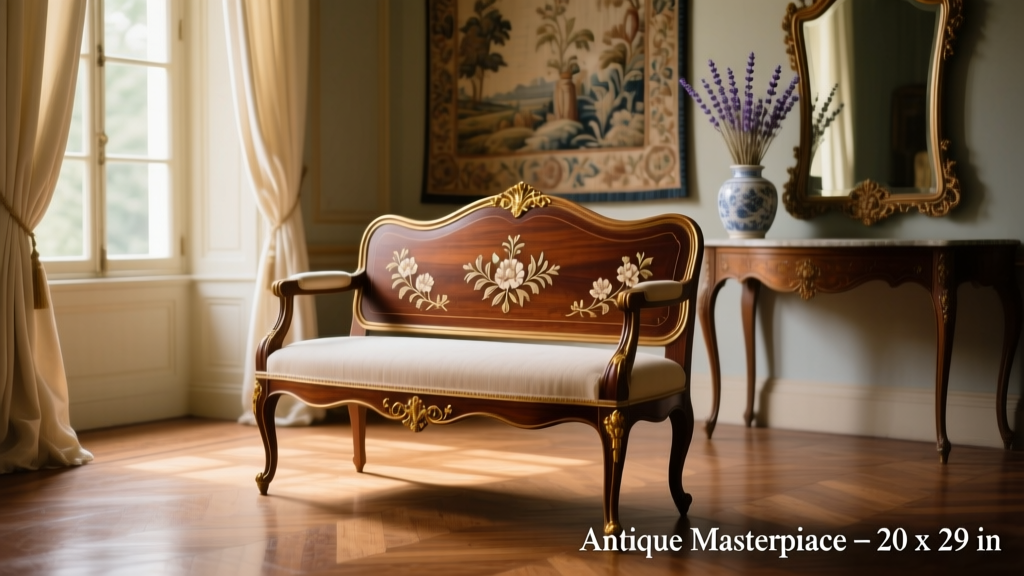
Understanding the Furniture Bench with Piano-Style Cabriole Legs and Pad Feet: A 20 × 29-Inch Restoration and Design Analysis

Vintage Liquors: Collecting, Authenticating, and Preserving Historic Bottles and Labels
The 1932 Duncan Phyfe Revival Walnut Dining Table: Decoding Serial Number 3651872
Van Briggle Bud Vase in Bud Blue Green Glaze with Whiplash Stems: A Collector’s Guide to the 3¾-Inch Art Pottery Masterpiece
Fabergé Locket: Diamond and Sapphire Spray in 18K Gold, Circa 1890 — A Technical & Historical Analysis
The KEZ 16¾-Inch Wrought Iron Fireplace Fork: History, Authenticity, and Restoration Best Practices

Silver Sterling Urinal, Circa 1880: Medical Utility, Craftsmanship, and Victorian Social History
Arts & Crafts Vase: Bottle-Shape Red-Black-Ivory Ground with Spencer Edge — A Technical and Historical Analysis

Jumeau Bisque Head Doll with Brown Paperweight Eyes and Oriental Costume: A Detailed Appraisal of an 18-Inch French Antique