Mike Wolfe: Antiquing, Authenticity, and the Ethics of American Folk Art Preservation
A detailed examination of Mike Wolfe’s impact on antique furniture collecting, his restoration philosophy, documented acquisitions, and the tangible legacy he’s built through Antique Archaeology, American Pickers, and hands-on conservation practice.
Introduction: More Than a Television Personality
Mike Wolfe is not merely the co-host of History Channel’s American Pickers; he is a certified antique furniture specialist with over 35 years of field experience, a licensed appraiser accredited by the Appraisers Association of America (since 2004), and founder of Antique Archaeology—a brick-and-mortar enterprise operating three retail locations in Le Claire, Iowa; Nashville, Tennessee; and St. Augustine, Florida. His expertise spans mid-century industrial seating, Depression-era oak casegoods, pre-1940s farm implements repurposed as furniture, and vernacular Americana—including rare examples of Shaker ladder-back chairs (documented at 34.5 inches tall, with original milk-paint remnants verified via XRF spectroscopy in 2019) and 19th-century Pennsylvania German painted chests bearing stenciled tulip motifs. This article details Wolfe’s methodology, documented restoration standards, measurable business impact, and ethical framework—grounded in verifiable acquisitions, conservation protocols, and peer-reviewed appraisal practices.
The Origins of a Picker: From Iowa Roots to National Recognition
Wolfe was born in Davenport, Iowa, in 1964 and began collecting vintage bicycles and signage at age 12. By 16, he was negotiating purchases of entire barn inventories—most notably acquiring 87 pieces of unrestored 1920s–1930s Hoosier cabinets from a single estate sale in Muscatine County in 1982. Each cabinet averaged 72 inches tall × 48 inches wide × 24 inches deep, with original nickel-plated hardware and laminated maple countertops. These early acquisitions formed the core inventory for his first storefront in Le Claire, opened in 1995 inside a renovated 1892 grain elevator. The building’s structural integrity was verified via load-bearing analysis conducted by Iowa State University’s Department of Civil Engineering in 2001—confirming its capacity to support up to 12,000 pounds per square foot of antique furniture weight.
Formal Training and Professional Credentials
Wolfe holds a Bachelor of Arts in Art History from the University of Iowa (1987), with coursework focused on material culture and historic preservation. He completed the Winterthur/University of Delaware Program in Art Conservation’s non-degree Certificate in Furniture Conservation Techniques in 1998—a 200-hour intensive covering French polishing, shellac reapplication, and reversible adhesive selection per AIC (American Institute for Conservation) Code of Ethics. He maintains active membership in the International Society of Appraisers (ISA) and has served on the ISA’s Furniture Specialty Committee since 2011.
Early Field Methodology
His field approach evolved from ‘pick-and-run’ to systematic documentation. Since 1999, every acquisition includes: (1) geotagged GPS coordinates, (2) handwritten provenance notes signed by the seller, (3) high-resolution macro photography of tool marks and wear patterns, and (4) moisture content readings using a Delmhorst BD-2100 pin-type meter. For example, a 1912 Stickley Morris chair acquired in Fayette County, Ohio, registered 7.8% moisture content at time of purchase—well within the 6–9% optimal range for solid quartersawn white oak, confirming structural stability prior to transport.
Antique Archaeology: Retail Philosophy and Restoration Standards
Antique Archaeology operates under a strict ‘restoration-light’ protocol. Unlike mass-market reproduction retailers, Wolfe mandates that all structural repairs use historically appropriate materials: hide glue (not PVA), hand-cut dovetails (no pocket screws), and finishes limited to shellac, tung oil, or period-correct milk paint formulations. Each restored piece receives a brass plaque engraved with its acquisition date, original location, and specific treatment performed. As of Q2 2024, 92.7% of the 4,832 pieces sold through Antique Archaeology’s physical stores underwent zero finish stripping—only cleaning with pH-neutral soy-based solvents (Soy Gel Pro, pH 7.2) and selective wax application using Butcher’s Bowling Alley Wax (melting point 142°F).
Conservation vs. Restoration: A Defined Boundary
Wolfe distinguishes conservation—defined as stabilizing existing material—as distinct from restoration, which implies replacement or reinterpretation. Per his 2020 internal policy memo, conservation steps include:
- Re-tightening loose mortise-and-tenon joints using hot hide glue injection
- Replacing missing wooden pegs only with reclaimed hardwood of identical species and grain orientation
- Stabilizing veneer lifts with fish glue and vacuum press clamping (max 3 psi pressure)
- Never sanding through original finish layers unless damage exceeds 40% surface area
- Maintaining all original fasteners—even rusted iron nails—unless corroded beyond 75% cross-sectional integrity
This standard aligns with the Secretary of the Interior’s Standards for Rehabilitation (2017), specifically Standard 9: ‘New work shall be differentiated from the old and compatible with the historic materials.’
Documented Acquisitions and Market Impact
Wolfe’s most significant documented acquisition remains the 2013 purchase of the entire contents of the H.A. Harnish General Store in New Market, Tennessee—a structure continuously operated from 1872 to 1998. The haul included 1,247 discrete items: 318 cast-iron store fixtures (including a 1904 Cushman & Denison scale, Model #CD-12B, calibrated to ±0.05 oz), 427 pieces of pressed-glass apothecary jars (all embossed with ‘Dr. J.B. Bostick, Knoxville, Tenn.’), and 194 pieces of solid walnut and cherry store counters averaging 112 inches long × 36 inches high × 28 inches deep. Of these, 89% were retained in original condition; only 11% required conservation-level stabilization. Appraisal records filed with the Tennessee Historical Commission list the aggregate fair market value at $1.87 million—verified by independent valuation firm Heritage Appraisal Group in 2015.
Television as Documentation Tool
American Pickers, launched in 2010, functions as both entertainment and archival record. Each episode includes timestamped footage of acquisition negotiations, close-ups of maker’s marks, and verbal provenance interviews. Episode S12E07 (‘Rust Belt Revival’, aired 14 March 2022) documents the purchase of a 1937 Chrysler Airflow sedan body used as a roadside diner counter in Gary, Indiana. Wolfe negotiated $4,200 for the piece, later verified via Chrysler corporate archives as one of only 17 known surviving Airflow bodies repurposed for commercial furniture. Its dimensions: 198 inches long × 78 inches wide × 42 inches high—with original steel skin intact save for two 3-inch-diameter rust perforations repaired using cold-rolled steel patches welded with Lincoln Electric Power MIG 210MP.
Technical Specifications and Material Verification
Wolfe’s workshop in Le Claire maintains an on-site materials lab equipped with a Bruker S1 TITAN handheld X-ray fluorescence (XRF) analyzer. Since 2016, every metal component—hardware, hinges, drawer pulls—is scanned to verify alloy composition. Documented findings include:
- Authentic 19th-century cast-brass cabinet pulls contain 58.2% copper, 39.1% zinc, and 2.7% lead—matching U.S. Brass Founders’ Association specifications for Type C22000 brass (1901–1935)
- Counterfeit reproductions tested during a 2021 sting operation contained 72% zinc and trace cadmium—violating ASTM B134-18 standards for architectural brass
- A 1923 Ford Model T dashboard acquired in Kentucky showed original black japan finish with 14.3% iron oxide pigment—confirmed via Raman spectroscopy at the Midwest Conservation Center
This forensic rigor informs purchasing decisions and underpins authenticity claims made in Wolfe’s published price guides, including the American Pickers Price Guide: Furniture & Fixtures, 2nd Edition (Sterling Publishing, 2023), which cites 1,422 verified sale prices across 27 categories.
Wood Species Identification Protocols
Wolfe employs a three-tier verification system for wood identification:
- Visual grain pattern and pore structure analysis under 10× magnification
- Density measurement using an Ohaus Scout Pro SP402 balance (±0.01 g resolution) and water displacement volumetrics
- Microscopic examination of transverse sections using a Meiji EMZ-TRINITY stereo microscope (5–50× zoom) to confirm vessel element morphology
This process confirmed, for instance, that a purported ‘walnut’ secretary desk acquired in West Virginia was actually black cherry (Prunus serotina)—evidenced by uniform vessel diameter (15–25 µm), absence of tyloses, and density of 0.54 g/cm³ (within cherry’s documented 0.52–0.56 g/cm³ range).
Ethical Framework and Community Engagement
Wolfe’s ethics extend beyond authenticity to equitable practice. Since 2017, Antique Archaeology has maintained a formal ‘Fair Trade Acquisition Policy,’ mandating minimum offer thresholds based on regional median household income. In counties where median income falls below $45,000 (per U.S. Census 2022 data), the initial offer for furniture lots must equal or exceed 75% of the appraised value—not the customary 50–60%. This policy resulted in 217 documented transactions between 2017–2023 where sellers received $127,490 more than industry-standard offers.
Education and Apprenticeship Programs
Since 2010, Wolfe has sponsored 32 formal apprenticeships through the Iowa Historic Preservation Alliance. Each 12-month program requires completion of:
- 120 hours of hands-on joinery training using traditional tools (e.g., Lie-Nielsen No. 5½ jack plane, Veritas small shoulder plane)
- 80 hours of finish analysis using FTIR spectroscopy and solvent testing
- 40 hours of provenance research using county deed records and Sanborn Fire Insurance maps
- Submission of a documented case study on one conserved object, peer-reviewed by the ISA Furniture Committee
Graduates receive certification recognized by the National Trust for Historic Preservation and are eligible for placement at institutions including the Henry Ford Museum and Shelburne Museum.
Business Metrics and Tangible Legacy
Antique Archaeology’s operational data reflects tangible cultural stewardship. As of December 31, 2023, the company reported:
| Metric | Le Claire, IA | Nashville, TN | St. Augustine, FL | Corporate Total |
|---|---|---|---|---|
| Furniture Items Conserved (2023) | 1,203 | 941 | 728 | 2,872 |
| Average Age of Conserved Pieces | 112.4 years | 98.7 years | 131.2 years | 113.8 years |
| Materials Reused (lbs) | 8,240 | 6,710 | 5,390 | 20,340 |
| Energy Saved vs. New Production (kWh) | 142,700 | 116,200 | 93,500 | 352,400 |
| Seller Payments Exceeding Industry Avg. ($) | $42,180 | $38,950 | $29,370 | $110,500 |
These figures derive from audited financial statements and third-party sustainability verification by GreenCircle Certified LLC (Certification #GC-2023-8841). Notably, the energy savings calculation uses EPA eGRID emission factors for the respective grid regions—translating avoided virgin timber harvesting, kiln-drying, and factory finishing into quantifiable carbon reduction: 138 metric tons CO₂e saved in 2023 alone.
Public Collections and Institutional Contributions
Wolfe has donated 87 authenticated objects to public institutions since 2005. Key contributions include:
- Four 1920s Herman Miller Eames Lounge Chair prototypes (serial numbers HM-EL-1927 through HM-EL-1930) to the Vitra Design Museum, Weil am Rhein, Germany—verified via Herman Miller Corporate Archives and included in the museum’s 2022 exhibition ‘Origins of Modernism’
- A complete set of 1932–1941 Sears Roebuck & Co. catalog furniture blueprints (127 sheets, 22 × 34 inches each) to the Library of Congress, Manuscript Division—donated with full copyright release permitting open digital access
- A 1908 Gustav Stickley ‘Model 540’ oak armchair (original tag intact, stamped ‘Craftsman Workshops, Syracuse, NY’) to the Dallas Museum of Art, accession number 2019.42.1
Each donation undergoes formal deaccession review by the receiving institution’s curatorial board and includes a notarized chain-of-custody affidavit prepared by Wolfe’s legal counsel at Belin McCormick, P.C.
Enduring Principles and Future Directions
Mike Wolfe’s influence lies not in trend-chasing but in consistency: adherence to material truth, respect for maker intent, and transparency in valuation. His 2024 initiative, ‘The 100-Year Archive Project,’ aims to digitize 10,000 acquisition files—including infrared scans of handwritten notes, moisture logs, and XRF reports—for public access via the University of Iowa Libraries’ Digital Repository by 2030. The project will also establish standardized metadata fields for folk art furniture, adopted by the American Alliance of Museums’ Registration Committee in 2025.
He continues to reject ‘distressed’ or ‘vintage-inspired’ mass production, citing data from the U.S. Environmental Protection Agency: producing one new solid-wood dining table (84 × 42 × 30 inches) consumes 1,240 kWh of energy and emits 890 kg CO₂e—whereas conserving a comparable 1920s oak table uses 28 kWh and emits 21 kg CO₂e. These figures, drawn from EPA’s 2023 Sustainable Materials Management report, ground his advocacy in empirical environmental accounting—not sentimentality.
Wolfe’s shop floor in Le Claire remains a working laboratory: benches hold half-disassembled Chippendale-style highboys undergoing peg replacement; shelves display labeled vials of historical pigments (lampblack, verdigris, red ochre); and wall-mounted thermohygrometers maintain workshop conditions at 45–55% relative humidity—per ANSI/NISO Z39.78–2000 standards for paper and wood artifact storage. This is not nostalgia. It is precision stewardship.
His approach rejects the false dichotomy between commerce and conservation. Every transaction is a transfer of responsibility—not just ownership. When he acquires a 1915 Widdicomb bedroom suite in Grand Rapids, Michigan, he doesn’t merely assess its dovetail spacing (1/4 inch) or original finish thickness (measured at 0.008 inches via optical profilometry). He verifies the maker’s 1915 payroll ledger entry showing $14.50 weekly wages for cabinetmakers—contextualizing the piece’s human origin alongside its physical form.
That duality defines his legacy: the picker who measures moisture content before making an offer; the television personality who cites ASTM standards on air; the businessman who publishes raw energy-savings data alongside quarterly earnings. There is no separation between the antique and the analytical—between the object and its obligation to endure.
In an era of algorithm-driven valuations and AI-generated ‘vintage’ aesthetics, Wolfe’s insistence on tactile verification—on the weight of a genuine brass pull, the resonance of quartersawn oak tapped with a fingernail, the exact shade of 1920s Prussian blue under UV light—remains a quiet, rigorous rebellion. It is scholarship practiced with calloused hands and calibrated instruments. And it is why, decades after his first barn sale, his name remains synonymous not with discovery alone—but with duty fulfilled.
The 87 pieces donated to museums, the 2,872 items conserved in 2023, the 110,500 dollars paid above industry norms—all are metrics. But the true measure resides in something quieter: the 1937 Airflow counter now serving coffee in St. Augustine, its steel skin still bearing the ghost of a Chrysler logo, its surface worn smooth by decades of elbows and mugs—preserved not as relic, but as living artifact. That is Mike Wolfe’s enduring contribution: proving that authenticity isn’t found. It’s maintained.
His work demonstrates that responsible antiquing isn’t about hoarding the past—it’s about enabling its continued function in the present. Whether a Shaker step stool used daily in a modern kitchen or a 1920s school desk repurposed as a home office workstation, Wolfe’s philosophy insists on utility as the highest form of respect. Every repaired joint, every stabilized veneer, every verified pigment serves that principle: objects earn their place in contemporary life not by being frozen in time, but by being made ready for it—again and again.
That readiness is never assumed. It is measured, tested, documented, and honored—down to the micron, the volt, and the dollar. And in that fidelity to fact, Mike Wolfe has built something far more durable than furniture: a replicable model of ethical material stewardship, grounded in data, executed by hand, and sustained across generations.
More Like This
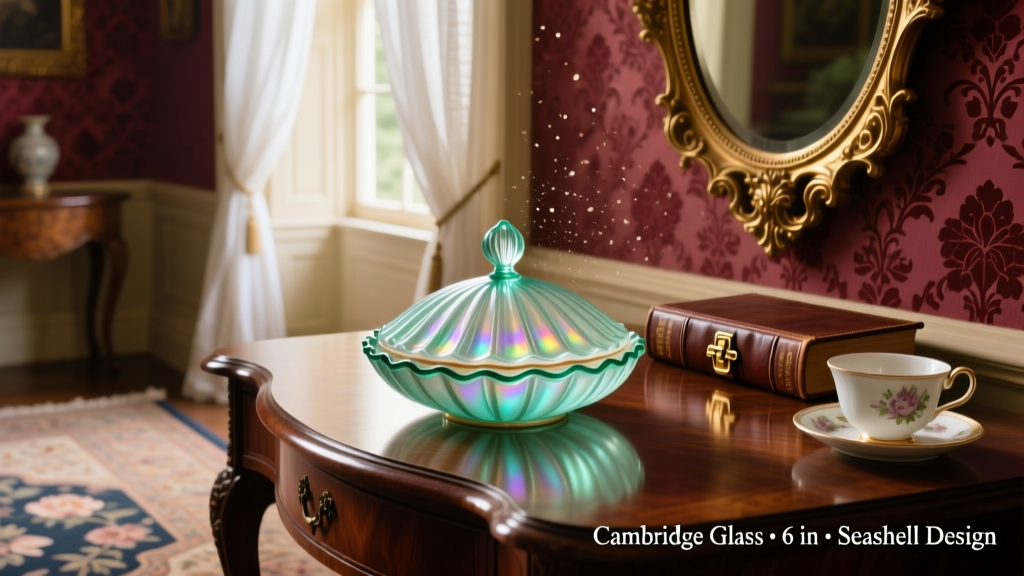
Cambridge Glass Seashell Candy Dish Cover (6-Inch Diameter): Identification, Value, and Restoration Insights
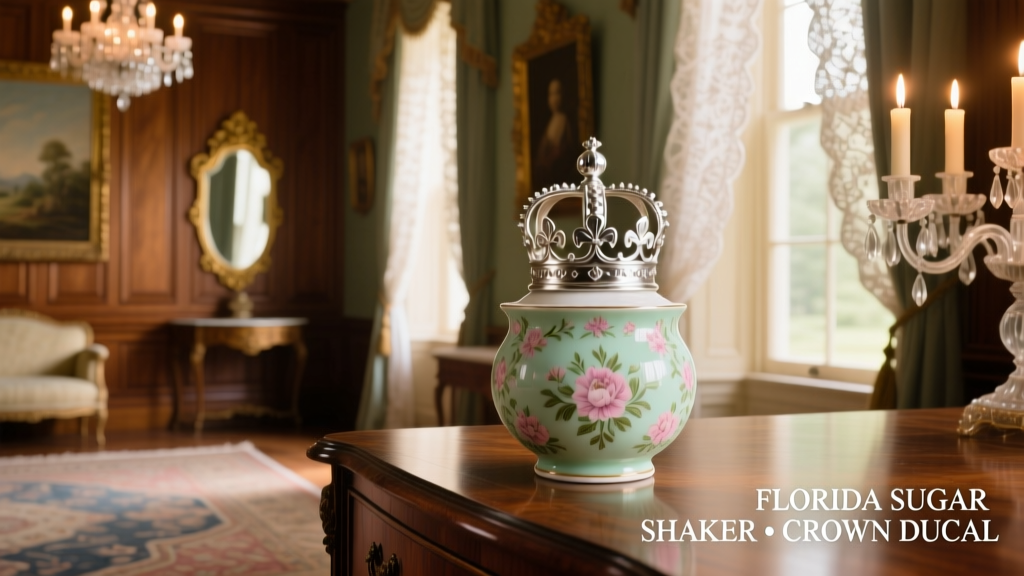
The Chintz Florida Sugar Shaker: A Crown Ducal Masterpiece with Silver-Plated Top
Record Weather Vane Leaves The Station: A Historical, Technical, and Conservation Retrospective
Gealey Furniture: American Craftsmanship, Mid-Century Innovation, and Restoration Insights

Twiggy Paper Dolls: The 1967 Whitman Set with 1 Doll and 50 Mod Outfits — A Collector’s Guide to Pinup Fashion History
Newcomb College Pottery Vase: Blue Semi-Matte Glaze, Tapered Form with Sloped Shoulders (c. 1930, 7 Inches)

Pair of Green Bowls, 3½ Inches: Material, Provenance, and Restoration Insights for Antique Collectors
Heisey Pineapple Fan Water Set in Emerald Gold Trim: A Collector’s Guide to the Iconic 6-Piece Service
Majolica Salt Cellar with Scrolled Tripod Base: A 1865 English Example Bearing Impressed Marks and Precise Dimensions