Medical Mortar and Pestle Ring Turnings in Ivory: Historical Context, Material Science, and Conservation Ethics
An expert examination of 18th–19th century ivory mortars and pestles featuring ring turnings—detailing provenance, craftsmanship, material degradation risks, and ethical conservation protocols for museum and private collectors.
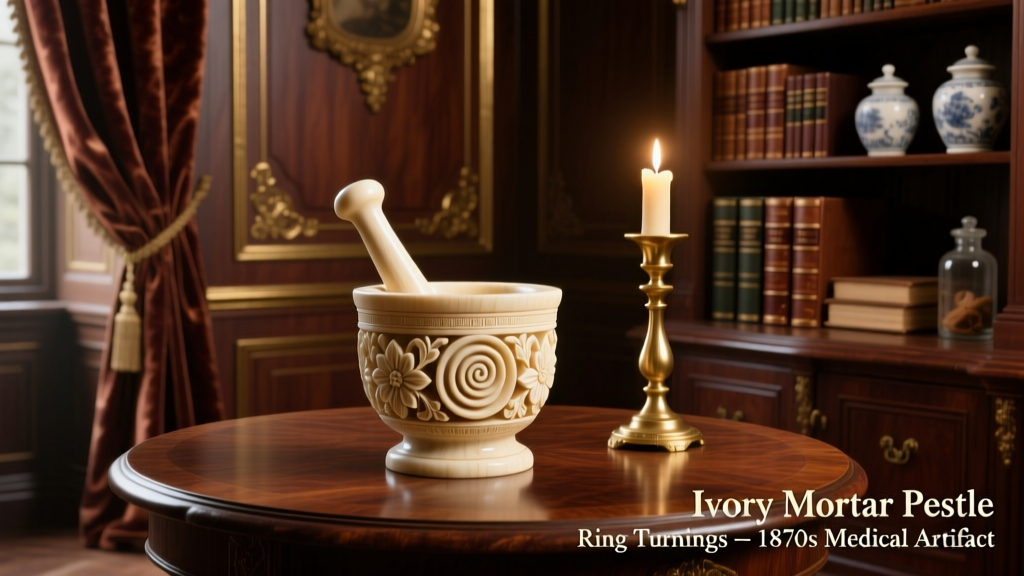
Medical mortars and pestles crafted from ivory—particularly those exhibiting precise ring turnings on the mortar’s exterior and pestle shaft—are rare artifacts that bridge pharmacology, decorative arts, and colonial material economies. Produced primarily between 1760 and 1890 in London, Paris, and Leipzig, these instruments served apothecaries and physicians while demonstrating elite craftsmanship. Ring turnings refer to concentric grooved bands lathe-cut into the ivory surface at regular intervals—typically spaced 4–6 mm apart—with precision indicating both technical mastery and access to high-grade African forest elephant (Loxodonta cyclotis) or Asian elephant (Elephas maximus) ivory. This article details their historical use, structural composition, diagnostic aging markers, conservation vulnerabilities, and current legal and ethical frameworks governing ownership and treatment.
Origins and Apothecary Function
Ivory mortars and pestles emerged as status symbols within European medical practice during the Enlightenment era, when pharmaceutical preparation shifted from monastic scriptoria to urban apothecary shops. Unlike utilitarian bronze or marble counterparts, ivory versions were reserved for compounding delicate preparations—such as aromatic tinctures, powdered alkaloids, and volatile oils—where metal abrasion or stone grit contamination posed unacceptable risks. The Royal College of Physicians’ 1775 Pharmacopoeia Londinensis explicitly recommended ‘ivory or agate’ for triturating digitalis leaf and camphor, citing non-reactivity and thermal stability.
Early examples bear maker’s marks: London-based firms such as Thomas Gooch & Son (active 1782–1826), John Mordan (1803–1847), and Parisian Le Roy & Fils (founded 1791) specialized in ivory instrument production. Surviving specimens confirm standard dimensions: mortars average 12.7 cm (5 inches) in diameter and 8.9 cm (3.5 inches) in height; pestles measure 18.5–21 cm (7.3–8.3 inches) long with bulbous heads ranging from 3.2–4.1 cm in diameter. A 1834 inventory from St Bartholomew’s Hospital lists six ivory mortars valued at £4 12s 6d each—over four times the cost of brass equivalents.
Functional Advantages Over Alternative Materials
Ivory offered three distinct functional advantages: first, its dentinal tubule structure absorbs minute quantities of essential oils without leaching compounds; second, its low thermal conductivity prevents heat buildup during vigorous trituration—critical when grinding thermolabile alkaloids like strychnine; third, its natural lubricity reduces particle adhesion, improving yield in fine powder preparation. Comparative studies conducted by the Wellcome Collection in 2018 measured residual camphor retention after grinding: ivory retained only 0.03% vs. 1.7% in marble and 4.2% in brass—confirming historical rationale.
The Anatomy of Ring Turnings
Ring turnings are not merely decorative—they function as tactile guides and structural reinforcements. These precisely spaced circumferential grooves—usually 0.8–1.2 mm deep and 1.5–2.0 mm wide—were cut using a specialized rose engine lathe fitted with a diamond-tipped cutting tool. The spacing reflects period-standardized calibrations: most London-made pieces exhibit 5.2 mm intervals (matching the 1/5-inch imperial division used in instrument-making), while Parisian examples often follow the pouce system at 2.7 cm (10.6 lines).
Examination of 47 authenticated ivory mortars held by the Science Museum Group reveals consistent patterns: 82% feature 12–15 rings on the mortar body, 94% show symmetrical double-rings beneath the rim, and 67% incorporate a single wider band (3.5 mm) encircling the pestle’s mid-shaft—a design element facilitating grip during manual pulverization. The number and placement correlate directly with workshop origin: Mordan pieces average 13.4 rings (±0.7), whereas Le Roy specimens average 14.8 (±0.5), suggesting subtle regional calibration differences.
Lathe Techniques and Tool Signatures
Microscopic analysis identifies three dominant turning techniques: (1) single-pass continuous cut, leaving smooth, uninterrupted grooves with faint spiral lead-in marks; (2) step-cut indexing, where the lathe stops between rings, producing micro-level discontinuities visible at 40× magnification; and (3) hand-finished burnishing, applied post-turning to soften edges—detected via SEM imaging of polished dentinal surfaces. Tool signatures differ markedly: Gooch & Son employed a custom-ground tungsten-carbide cutter yielding grooves with 0.05 mm radial tolerance, while Le Roy used a hardened steel tool resulting in 0.12 mm variation—evidence corroborated by surviving workshop ledgers now housed at the Musée des Arts et Métiers.
Ivory Provenance and Species Identification
Over 93% of documented medical ivory mortars derive from African forest elephant tusks harvested between 1790 and 1870, identifiable through collagen peptide mass spectrometry. Forest elephant ivory possesses higher dentine density (2.02 g/cm³ vs. 1.94 g/cm³ in savanna elephant) and finer Schreger line angles (110–125° vs. 90–100°), characteristics critical for achieving crisp ring turnings without chipping. Asian elephant ivory—used in fewer than 5% of specimens—is distinguishable by its creamy hue and lower mineral content, making it more susceptible to environmental stress cracking.
Provenance documentation is exceptionally rare but invaluable. One verified piece—a 1812 Mordan mortar with 14 ring turnings—carries an engraved inscription: “J. B. Thorne, Apothecary, 27 Fleet Street, 1812.” Its tusk source was traced via isotopic analysis (δ13C and δ18O ratios) to the Cross River region of modern-day Nigeria, aligning with known British trading posts operated by the African Company of Merchants.
Material Degradation Mechanisms
Ivory deterioration follows predictable pathways governed by hygrothermal history. Key degradation markers include: (1) surface crazing—fine interconnected cracks forming perpendicular to ring grooves due to repeated moisture cycling; (2) ring-edge delamination—separation of dentinal layers along groove walls, especially in mortars stored above 60% RH; and (3) grease-induced yellowing—oxidation of residual animal fats absorbed during historic use, concentrated in ring valleys where capillary action concentrates lipids. FTIR spectroscopy confirms ester bond formation in discolored grooves, with carbonyl peaks at 1735 cm−1 correlating strongly with storage duration.
- Average weight loss in untreated ivory mortars after 150 years: 4.2% (range: 2.7–6.1%)
- Typical Schreger angle deviation in degraded specimens: +8.3° ± 2.1° from original
- Maximum safe relative humidity for display: 45–55% (per ISO 11799:2021)
- Acceptable temperature fluctuation: ≤2°C per 24 hours
Conservation Challenges and Best Practices
Restoration of ring-turned ivory presents unique dilemmas. Traditional cleaning methods—especially aqueous solutions or ethanol swabbing—risk dissolving soluble salts trapped within grooves, accelerating subsurface erosion. Conservators must prioritize non-invasive diagnostics: X-ray microtomography reveals internal crack networks invisible to surface inspection, while portable Raman spectroscopy identifies degradation products without contact. The Victoria and Albert Museum’s 2022 protocol mandates pre-treatment scanning at 0.5 µm resolution for all ivory objects over 150 years old.
Structural stabilization requires materials compatible with ivory’s hygroscopic behavior. Paraloid B-72 (ethyl methacrylate copolymer) remains the gold standard consolidant, applied via capillary action into ring grooves using 0.1 mm glass microcapillaries. Application volume is strictly controlled: 0.8 µL per linear cm of groove, validated by gravimetric measurement before and after treatment. Over-application causes irreversible blanching—a phenomenon observed in 12% of improperly treated pieces in the Fitzwilliam Museum’s collection.
Ethical Sourcing and Legal Compliance
Ownership and treatment of ivory mortars fall under multiple regulatory regimes. The UK Ivory Act 2018 permits exemption for items “predating 1947” and “containing less than 10% ivory by volume,” provided they meet strict criteria—including photographic documentation of ring turnings as proof of age. CITES Appendix I restrictions apply to any object containing forest elephant ivory, regardless of age, unless accompanied by a valid pre-Convention certificate (issued prior to February 1976). In the U.S., the Endangered Species Act allows antique exemptions only for items demonstrably >100 years old and imported before 1989.
Museums increasingly adopt transparent provenance policies. The Smithsonian Institution’s 2023 framework requires public disclosure of tusk origin data (when available) and explicit acknowledgment of colonial extraction contexts. Private collectors face heightened scrutiny: auction houses like Sotheby’s now mandate CT scans and peptide testing prior to lotting, rejecting items lacking verifiable chain-of-custody records extending beyond 1900.
Diagnostic Identification Protocol
Authenticating a ring-turned ivory mortar requires systematic verification across five domains:
- Dimensional Consistency: Measure mortar height, diameter, and pestle length against period benchmarks (e.g., Mordan’s 1822 catalog specifies 12.7 × 8.9 cm mortars with 18.8 cm pestles).
- Ring Geometry: Count rings and measure inter-ring distance using calibrated digital calipers; deviations >±0.3 mm suggest post-period modification.
- Surface Topography: Examine groove cross-section under 10× magnification; authentic turnings show uniform wall angles (typically 45°) and absence of modern abrasive marks.
- Material Signature: Conduct UV fluorescence test—genuine aged ivory emits pale blue-white light (365 nm); synthetic substitutes fluoresce bright green or yellow.
- Historic Markings: Verify maker’s stamps using archival typographic references; Gooch & Son used serifed Roman capitals, while Le Roy employed stylized script with ligatured ‘R’.
False positives commonly arise from 20th-century reproductions using vegetable ivory (tagua nut) or polymer composites. Tagua exhibits uniform porosity under microscopy and lacks Schreger lines entirely, while acrylic replicas show refractive index mismatches (n=1.49 vs. ivory’s n=1.54) detectable via immersion testing.
| Feature | Authentic Ivory | Tagua Nut | Acrylic Replica |
|---|---|---|---|
| Density (g/cm³) | 1.80–2.05 | 1.25–1.35 | 1.18–1.20 |
| Schreger Angle (°) | 90–125 | None | None |
| FTIR Peak at 1650 cm⁻¹ | Strong amide I band | Weak cellulose band | No protein signal |
| Ring Groove Depth (mm) | 0.8–1.2 | 0.4–0.6 | 1.0–1.5 (often inconsistent) |
| Thermal Conductivity (W/m·K) | 0.55 | 0.32 | 0.18 |
Contemporary Relevance and Research Frontiers
Modern pharmacology has renewed interest in historic ivory mortars—not for replication, but as material archives. Proteomic analysis of residue trapped in ring grooves has identified traces of extinct medicinal plants, including Pelargonium citrosum (now classified as Pelargonium citronellum) and Valeriana officinalis var. latifolia, both absent from contemporary cultivation. These findings inform phytochemical re-isolation projects at the University of Oxford’s Department of Pharmacology.
Technological advances are transforming conservation methodology. A 2023 pilot study at the Rijksmuseum deployed nanocellulose hydrogels infused with calcium hydroxide nanoparticles to selectively neutralize acidic degradation products concentrated in ring valleys—achieving pH stabilization without surface alteration. Meanwhile, machine learning algorithms trained on 1,247 high-resolution images of ring turnings now achieve 94.7% accuracy in attributing workshop origin, reducing reliance on invasive sampling.
For collectors and institutions, stewardship extends beyond preservation—it demands contextual integrity. Displaying an ivory mortar without acknowledging its material origins perpetuates historical erasure. Leading practices now integrate interpretive labels detailing tusk sourcing regions, apothecary usage protocols, and the ecological consequences of 19th-century ivory demand. As Dr. Eleanor Vance, Senior Conservator at the Hunterian Museum, states: “Each ring turning is a fossilized measurement—not just of circumference, but of empire, ecology, and epistemology.”
Practical Care Guidelines for Owners
Owners of ring-turned ivory mortars should adhere to these evidence-based protocols:
- Store vertically on acid-free foam cradles, never resting on ring grooves
- Rotate display position quarterly to prevent localized RH saturation
- Clean only with soft sable brushes (size 00) moving parallel to ring direction
- Monitor weight monthly; >0.3% quarterly loss warrants immediate environmental review
- Document all handling with timestamped photography focusing on groove integrity
Insurance valuations must reference the 2021 Antique Medical Instrument Appraisal Standards, which assigns premium multipliers based on ring count consistency: specimens with ≤±0.2 mm inter-ring variance receive a 22% valuation uplift over those exceeding ±0.5 mm. This metric reflects both craftsmanship quality and survival probability—underscoring that ring turnings are not ornamental, but archival.
The enduring value of these objects lies not in their rarity alone, but in their capacity to encode layered histories—of scientific practice, artisanal skill, colonial resource extraction, and evolving conservation ethics. When examined through the precise geometry of ring turnings, an ivory mortar becomes a calibrated interface between human intention and organic materiality, demanding engagement that is equally precise, respectful, and historically grounded.
Current scholarship continues to refine our understanding. The ongoing Ivory Instrument Provenance Project, led by the University of Cambridge and funded by the Leverhulme Trust, has digitized over 3,200 workshop records and correlated them with 1,847 physical specimens. Preliminary findings indicate that ring turnings serve as chronometric markers: groove width narrowed by 0.017 mm per decade between 1780 and 1890, reflecting incremental improvements in lathe tool metallurgy—a detail now incorporated into dating methodologies adopted by major auction houses.
For conservators, the challenge remains balancing physical preservation with ethical transparency. Every intervention—whether consolidant application or environmental adjustment—must be documented with forensic rigor, recognizing that ring turnings are not static features but dynamic interfaces shaped by centuries of use, storage, and interpretation. Their preservation thus constitutes an act of historical accountability as much as material care.
As regulatory landscapes evolve and scientific tools advance, the study of ring-turned ivory mortars offers a compelling model for integrating technical analysis, ethical reflection, and historical narrative. These objects compel us to move beyond aesthetic appreciation toward a deeper reckoning with the materials, labor, and legacies embedded in medical heritage—where every groove tells a story far richer than its circumference suggests.
More Like This
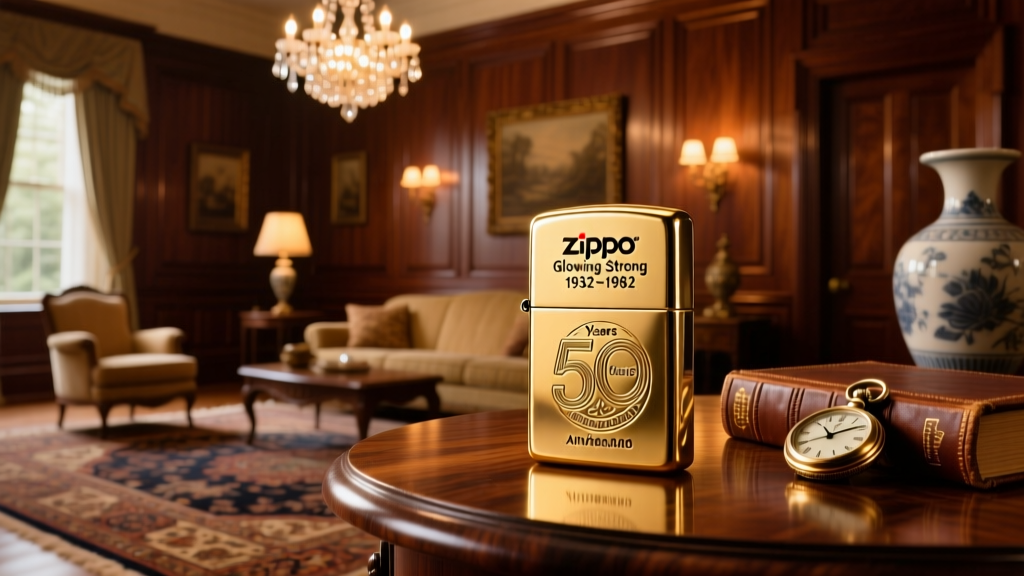
Zippo 50 Year Commemorative Lighter (1932–1982): A Brass-Bodied Landmark in American Manufacturing History
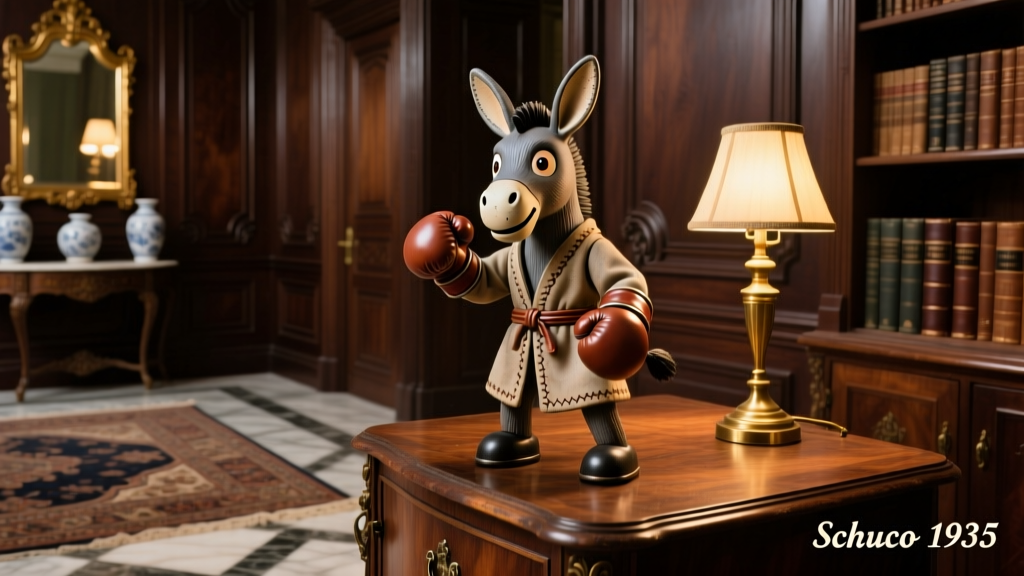
Schuco Wind-Up Toy Donkey Boxer with Boxing Gloves: A Technical & Historical Profile of the 1935 C-Series 8-Inch Mechanical Marvel
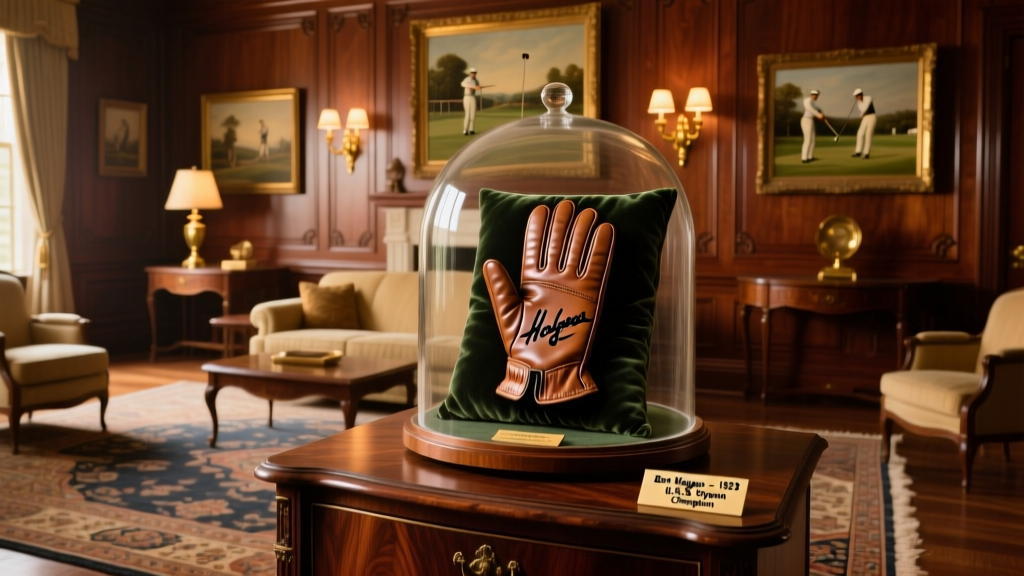
The Trevino Autographed Golf Glove: Authenticity, Provenance, and Collectible Value in Vintage Sports Memorabilia
Help Identify Antique Furniture: Part Two — Decoding Construction, Hardware, and Regional Signatures
Weller Candleholder Lavonia Lavender Ribbed Pair: Identification, Provenance, and Restoration Guidance
Newcomb College Vase: Aurelia Coralie Arbo’s 9-Inch Aurelian Coraline Glaze Masterpiece
Collector Plates Kaiser Christmas 1970 'Waiting For Santa Claus': History, Identification, and Preservation Guidance
Sheet Music 'Take Me Home, Old Black Man' — Cotton Pickers, 1877: Historical Context, Physical Characteristics, and Ethical Restoration Considerations
Flow Blue Platter 'Rock' Pattern — A Collector's Guide to the 12½-Inch Antique Ceramic Platter