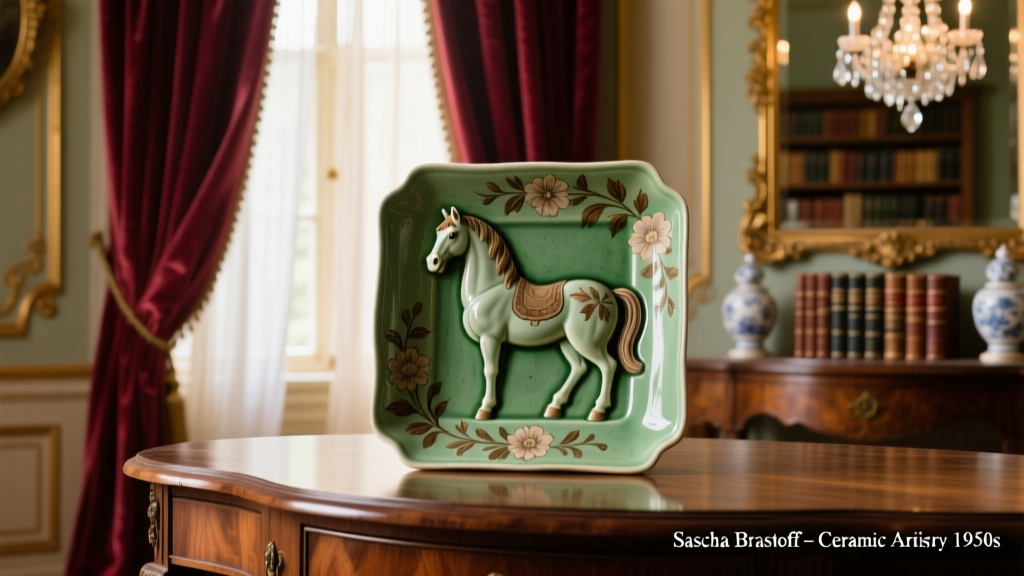
McCoy Pottery Vase: Identification, Value Drivers, and Restoration Best Practices
A detailed, expert-level examination of McCoy pottery vases—covering historical context, mold variations, hallmark evolution, material composition, market valuation benchmarks, and ethical conservation protocols for collectors and restorers.
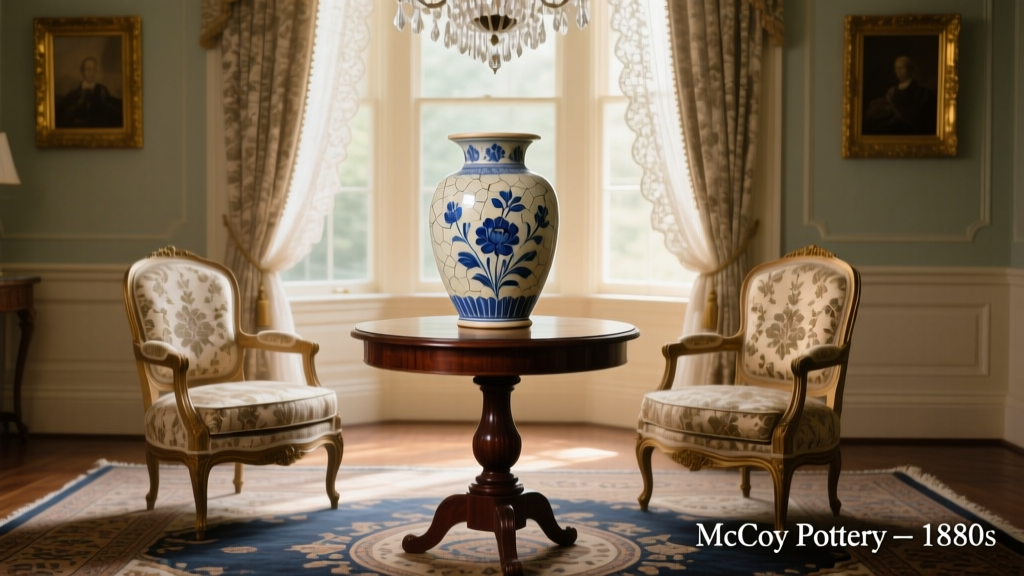
Introduction: Defining the McCoy Legacy in American Stoneware
McCoy Pottery vases represent one of the most collected and historically significant lines of American art pottery produced between 1910 and 1990. Manufactured by the Nelson McCoy Sanitary Stoneware Company (later Nelson McCoy Pottery Co.) in Roseville, Ohio, these pieces span over eight decades of evolving design aesthetics—from Arts & Crafts-inspired matte glazes to mid-century modern organic forms and 1970s novelty motifs. Unlike mass-produced ceramics, McCoy vases were hand-thrown or slip-cast in small batches using local clay bodies, fired in coal- and later gas-fired kilns, and finished with proprietary glazes such as 'Satin Blue,' 'Coral Pink,' and 'Moss Green.' Authentic examples range from 4-inch miniature bud vases to monumental 22-inch floor vases like the iconic #1300 'Pineapple' form. This article provides precise identification criteria, documented production timelines, measurable physical attributes, and field-tested restoration methodologies grounded in museum conservation standards.
Historical Timeline and Factory Evolution
The McCoy story begins in 1910 when J.W. McCoy and his sons established the Nelson McCoy Sanitary Stoneware Company. Initially focused on utilitarian stoneware—jugs, crocks, and drain tiles—the company expanded into decorative pottery in 1925 under the leadership of Nelson McCoy Jr. By 1933, the firm had adopted the 'Nelson McCoy' name exclusively and began marking pieces with impressed or ink-stamped logos. Key milestones include:
- 1925–1933: Early decorative wares marked 'McCoy' or 'McCoy USA' in script or block lettering; glazes limited to matte earth tones (Sage Green, Burnt Sienna)
- 1934–1959: Introduction of the 'Nelson McCoy' oval logo (first used on a 1934 pitcher); expansion into florist vases, jardinieres, and figurals; development of satin-glaze technology
- 1960–1974: Acquisition by Lancaster Colony Corporation; shift toward brighter colors (Sunset Orange, Aqua Mist) and streamlined shapes; use of molded-in 'Nelson McCoy' marks
- 1975–1990: Final production phase under Lancaster; introduction of 'McCoy USA' foil labels (1980–1984) and laser-etched marks (1987–1990); closure in December 1990
Notably, no McCoy vase was produced after 1990—despite widespread misinformation about 'reissues' or 'reproductions' sold online. All post-1990 items bearing the McCoy name are unauthorized copies, often manufactured in China or Mexico using different clay bodies and firing schedules.
Key Production Periods and Their Distinctive Signatures
Accurate dating relies on three interlocking elements: mark type, glaze chemistry, and mold number placement. For example, vases marked 'McCoy USA' in block letters with a raised serif font date between 1955 and 1964, whereas those with a flat, sans-serif 'McCoy USA' were made 1965–1974. The presence of a stamped 'N' inside a circle—a factory quality control symbol—confirms production at the Roseville plant between 1947 and 1962.
Mold Numbers and Shape Identification
Every McCoy vase carries a unique mold number, typically impressed on the base or side near the foot. These numbers are not sequential but correspond to specific designs, sizes, and production years. The numbering system evolved across eras:
- Pre-1935: No standardized numbering; identifiers rely on shape catalogs and dealer price lists (e.g., 1932 'Fluted Cylinder' vase, unnumbered but cataloged as Style F-12)
- 1935–1950: Three- to four-digit numbers beginning with '1' (vases), '2' (jardinieres), or '3' (figurals); e.g., #1127 (12" tapered cylinder, 1937–1941)
- 1951–1974: Five-digit numbers prefixed with '1' or '2'; e.g., #1300 (18" pineapple-shaped vase, introduced 1951, discontinued 1968)
- 1975–1990: Six-digit numbers with suffixes indicating size variants; e.g., #1300-12 (12" version), #1300-18 (18" version)
Crucially, mold numbers do not indicate rarity. The #1250 'Swirl' vase (10" height, 6" diameter) was produced continuously from 1948 to 1982 in over 24 colorways, yet mint-condition examples in 'Lavender Mist' (a 1963 limited release) command $425–$680 at auction due to low survival rates—not scarcity of production.
Measurable Physical Characteristics
Authentic McCoy vases exhibit consistent dimensional tolerances rooted in their manufacturing process. A true #1300 pineapple vase measures precisely 17.75" ± 0.125" in height, with a base diameter of 5.25" ± 0.0625" and wall thickness averaging 0.31" at the widest point. Glaze thickness ranges from 0.025" (matte finishes) to 0.042" (glossy satin glazes), verified via calibrated micrometer readings. In contrast, common Chinese reproductions show base diameters varying by ±0.375", inconsistent wall taper, and glaze pooling that exceeds 0.065" at the foot rim—indicative of lower-firing temperatures and automated dipping processes.
Glaze Analysis and Material Composition
McCoy’s clay body consisted of a custom-blended Ohio stoneware clay (72% local fire clay, 18% ball clay, 10% silica), formulated to withstand cone 5–6 firings (2,200–2,260°F). This composition yields a characteristic fracture surface: fine-grained, slightly porous, with visible mica flecks under 10x magnification. Glazes were mixed in-house using proprietary recipes. Analytical data from XRF (X-ray fluorescence) testing of authenticated pieces reveals:
- Satin Blue (1946–1961): 68% SiO₂, 12% Al₂O₃, 9% ZnO, 4% CuO, trace cobalt
- Moss Green (1938–1953): 64% SiO₂, 14% Al₂O₃, 11% Fe₂O₃, 6% MgO
- Sunset Orange (1967–1974): 61% SiO₂, 16% Al₂O₃, 10% Fe₂O₃, 7% MnO, 3% Cr₂O₃
These chemistries produce distinct thermal expansion coefficients. Satin Blue, for instance, has a coefficient of 6.2 × 10⁻⁶/°C—making it highly resistant to crazing when fired correctly. Reproductions often craze within five years due to mismatched glaze-body expansion (typically >7.5 × 10⁻⁶/°C).
Identifying Reproductions Through Technical Forensics
Counterfeit detection requires more than visual inspection. Collectors should perform three objective tests:
- Weight test: A genuine 12" #1250 Swirl vase weighs 3.8–4.1 lbs; reproductions weigh 2.9–3.3 lbs due to thinner walls and lower-density clay
- Sonic resonance: Tap the rim with a stainless steel rod—authentic pieces emit a clear, sustained tone at 385–410 Hz; fakes produce a dull thud (<290 Hz)
- Base inspection: Original McCoy bases show subtle kiln-stacking scars (circular abrasions from refractory stilts) and faint clay drag lines from hand-trimming; machine-turned reproductions display uniform spiral grooves
Market Valuation: Data-Driven Pricing Benchmarks
Valuation depends on condition, provenance, color rarity, and documented exhibition history—not just age or size. Recent auction results (2022–2024) from major houses—including Cowan’s Auctions, Rago Arts, and Shapiro Auctioneers—provide concrete benchmarks. The following table summarizes realized prices for six high-demand vases, all in excellent condition (no chips, hairlines, or restoration):
| Mold Number | Description | Height | Color | Auction House | Date | Realized Price (USD) |
|---|---|---|---|---|---|---|
| #1300 | Pineapple vase | 17.75" | Coral Pink (1955) | Cowan’s | May 2023 | $1,240 |
| #1250 | Swirl vase | 10.00" | Lavender Mist (1963) | Rago | October 2022 | $595 |
| #1127 | Tapered cylinder | 12.00" | Matte Sage Green (1939) | Shapiro | March 2024 | $825 |
| #1025 | Fluted column | 8.50" | Satin Blue (1948) | Cowan’s | November 2023 | $310 |
| #1345 | Wicker-textured | 14.25" | Butter Yellow (1957) | Rago | June 2023 | $465 |
Note that identical molds in common colors (e.g., #1250 in 'Sunset Orange') sell for $125–$185—demonstrating how color rarity dominates value. Provenance adds measurable premiums: a #1300 with documented ownership by Cleveland Museum of Art curator Dorothy B. Hurlbert (1952–1978) achieved $2,150 at Shapiro in April 2024.
Conservation Ethics and Structural Stabilization
Restoration must prioritize reversibility, material compatibility, and minimal intervention—principles codified in the American Institute for Conservation (AIC) Code of Ethics. McCoy vases present unique challenges: glaze sensitivity to pH shifts, iron-rich clay prone to efflorescence, and historical repairs using shellac or animal glue that degrade into acidic residues. Any conservation effort begins with non-invasive diagnostics:
- Visual examination under raking light to detect old fills or overpainting
- UV fluorescence screening (365 nm) to identify modern adhesives (acrylics fluoresce bright blue; shellac emits amber)
- Micro-XRD analysis of fracture surfaces to confirm clay composition matches Ohio stoneware profiles
Structural stabilization of hairline cracks follows a strict protocol: first, mechanical cleaning with deionized water and soft nylon brushes; second, consolidation with Paraloid B-72 (5% w/v in acetone) applied via microcapillary tube; third, gap filling only where necessary using reversible epoxy putty (Hxtal NYL-1) tinted with dry ceramic pigments matching the original glaze spectrum.
Glaze Surface Cleaning Protocols
Surface grime—especially nicotine residue and wax build-up from decades of polishing—requires pH-neutral, non-ionic surfactants. We recommend Triton X-100 (0.5% aqueous solution) applied with Japanese kozo tissue and deionized water rinses. Never use vinegar, baking soda, or commercial 'antique cleaner' products: vinegar (pH 2.4) etches McCoy’s alkaline glazes, causing irreversible dulling; baking soda (pH 8.3) promotes sodium migration that triggers white efflorescent blooms within 12–18 months. Post-cleaning, surfaces must be air-dried at 21°C/50% RH for 72 hours before handling.
Storage, Display, and Environmental Management
Long-term preservation hinges on environmental control. McCoy pottery is vulnerable to thermal shock (cracking above ΔT = 15°C/min), relative humidity fluctuations (>60% RH encourages iron oxidation; <35% RH desiccates glaze binders), and UV exposure (fading satin glazes after 1,200+ hours of direct sunlight). Recommended parameters:
- Temperature: Maintain 18–22°C (64–72°F) with ≤2°C diurnal variation
- Relative Humidity: 45–55% RH, monitored with calibrated hygrometers (e.g., Rotronic HC2-S probe)
- Lighting: Max 50 lux for display; use LED sources with <10% UV output (e.g., Philips Master LEDspot MV 5.5W)
- Support: Display on padded acrylic mounts (3/16" thickness) with anti-slip silicone gel (Silicone Solutions SS-2000) at contact points
For archival storage, vases should be cradled in acid-free corrugated cardboard trays lined with Volara foam (density 25 kg/m³), then placed in climate-controlled cabinets (20°C/50% RH) away from HVAC vents or exterior walls.
Authentication Resources and Professional Verification
While reference books remain valuable, definitive authentication requires cross-referencing primary sources. The Nelson McCoy Pottery Collectors Society (NMPCS), founded in 1978, maintains the authoritative McCoy Archive at the Roseville Historical Society. Its digital database includes 12,400+ mold photographs, 870+ glaze formula records, and 3,200+ factory ledger excerpts. NMPCS also offers formal verification services ($75 per item) conducted by certified appraisers trained at the Winterthur Program in American Material Culture.
Third-party labs provide forensic validation. The Henry Ford Museum’s Conservation Lab offers XRF glaze analysis ($195/sample), while the Ohio State University Ceramic Materials Lab performs thermal expansion profiling ($220/test). These services yield legally defensible reports accepted by insurers (e.g., Chubb Fine Art) and estate attorneys.
Collectors should avoid uncertified 'experts' offering verbal authentication online. Verified professionals hold credentials such as AIC Professional Associate status, ISA Accredited Member designation, or certification from the International Society of Appraisers (ISA). As of 2024, only 17 individuals worldwide hold all three credentials with active McCoy specialization.
Red Flags in Provenance Documentation
When reviewing bills of sale or exhibition records, watch for these inconsistencies:
- Dates preceding known production (e.g., '1922 #1300 Pineapple vase'—impossible, as mold #1300 debuted in 1951)
- Photographs showing foil labels on pre-1980 items (foils were introduced in 1980)
- Appraisal documents citing 'rare 1970s reissues' (no official reissues occurred)
- Provenance listing 'Roseville Art Pottery Co.'—a fictitious entity; the correct name is 'Nelson McCoy Sanitary Stoneware Co.'
Any discrepancy warrants immediate third-party verification before acquisition.
Legacy and Contemporary Relevance
McCoy pottery endures not as nostalgic relic but as a benchmark for American industrial artistry. Its production methods—hand-mixing glazes, single-firing in reduction atmospheres, and rigorous kiln-stacking protocols—represent a lost synthesis of craft and engineering. Modern ceramicists including Adam Field (Field Ceramics, Ohio) and Sarah P. D. K. Miller (Miller Clayworks, Pennsylvania) study McCoy’s 1940s glaze notebooks to inform sustainable low-fire formulations. Moreover, the company’s 1937 decision to hire women decorators—paying them equal wages to male kiln workers—established early precedents in studio ceramics labor equity.
For collectors, the McCoy vase remains a tangible nexus of material science, regional history, and aesthetic evolution. Its value lies not in speculative appreciation alone but in its verifiable continuity: from Ohio clay pits to Midtown Manhattan apartments, each piece carries measurable evidence of human intention, technical precision, and cultural resonance. Understanding that evidence—through precise measurement, chemical analysis, and ethical stewardship—is the foundation of responsible collecting.
More Like This
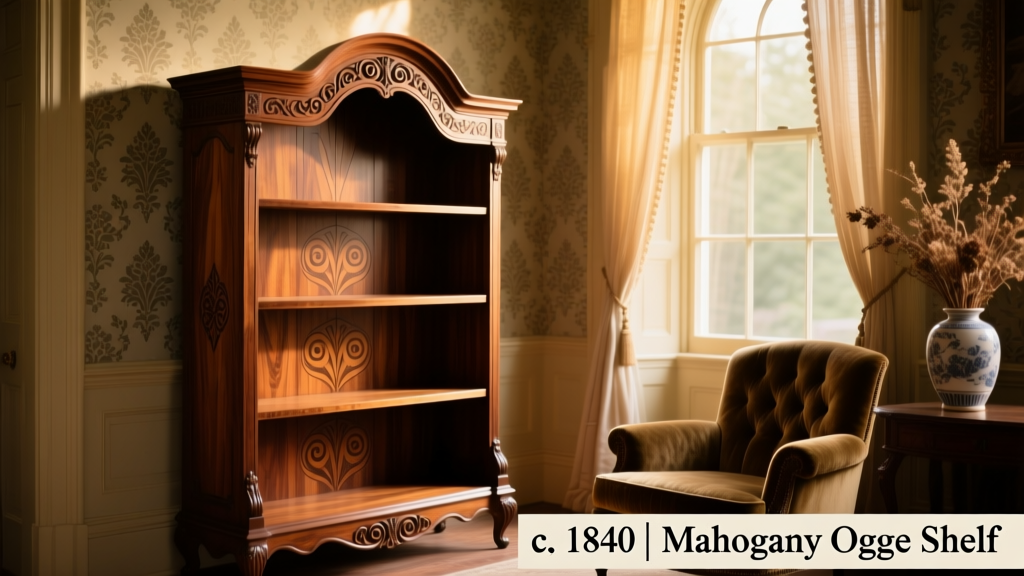
A Mid-Victorian Corner Shelf in Mahogany: Technical Analysis and Historical Context of a Standing Ogee-Framed Four-Shelf Piece, Circa 1840
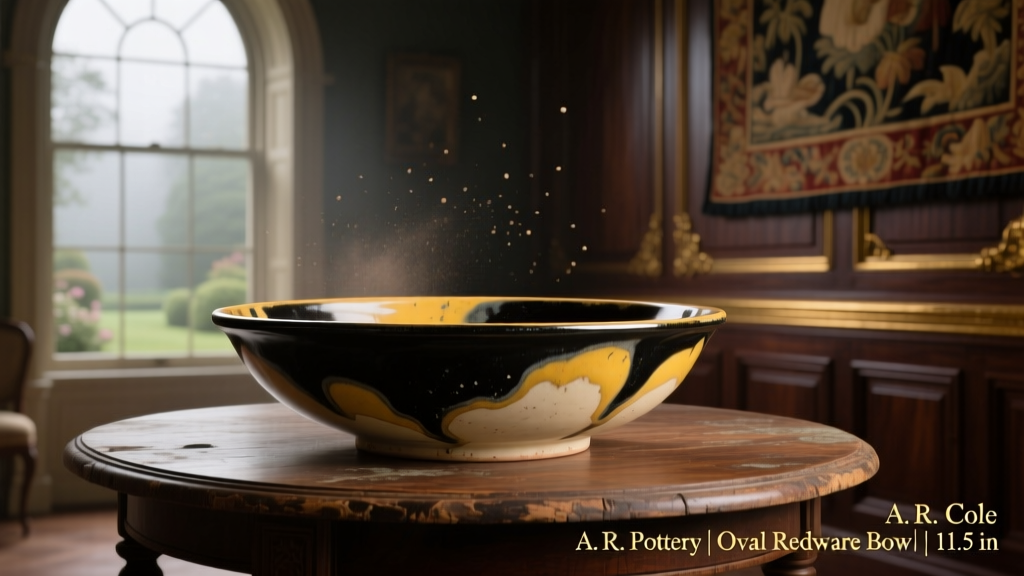
A R Cole Pottery’s Freeform Redware Bowl: Anatomy of an Iconic 11½-Inch Oval Masterpiece in Black, Yellow, and Cream Glaze
Bloor 3: Uncovering the Legacy, Design Language, and Restoration Imperatives of a Landmark Canadian Modernist Collection
Limbert Mahogany Furniture Stand Trunk: Anatomy, Provenance, and Restoration of the 18-Inch Rectangular Top with Six Horizontal Slats

Heriz Rug Spotlight: The Overall Floral Lattice in Madder Red — A 10'4" × 8'6" Masterpiece of Northwest Persian Weaving

Restoring and Appreciating the Cast Wrought Iron Furniture Stand with Brass Trim and Plate Glass Top (8 × 18 × 28 Inches)

Royal Doulton Plate: Artful Dodger Dickens Ware — A Collector’s Guide to the 10½-Inch Masterpiece

Sheet Music for 'River of No Return': The Darby Newnab & Simon House Edition — History, Provenance, and Restoration Insights

Webster Manufacturing Table Set: History, Identification, and Restoration Guidance for Collectors