Precision in Restoration: Understanding Match-Related Vocabulary for Antique Furniture Conservation
A specialist’s lexicon for color, grain, finish, and material matching in antique furniture restoration — covering technical terms, industry standards, brand-specific formulations, and measurable tolerances used by conservators at institutions like the Winterthur Museum and Sotheby’s Conservation Lab.
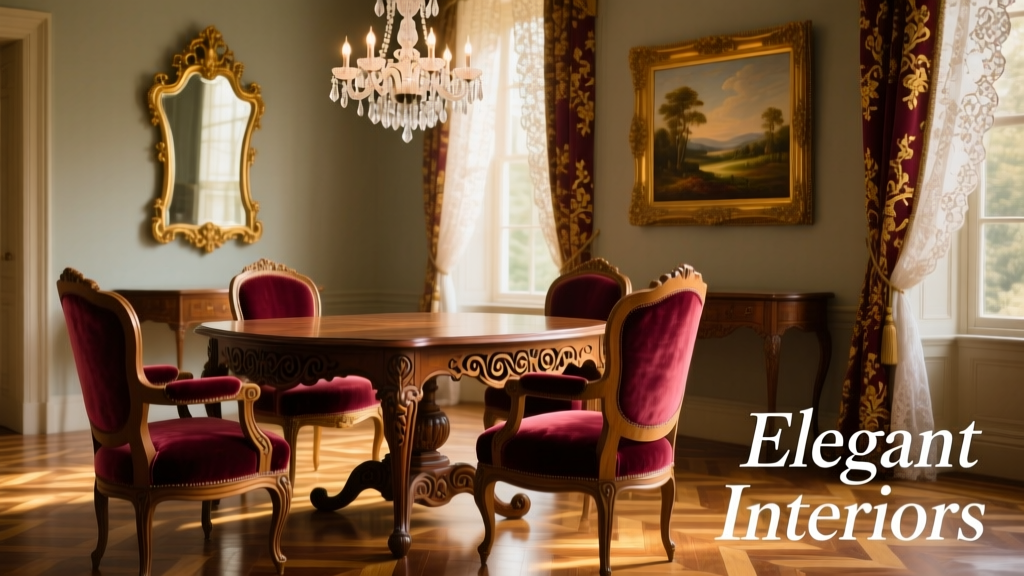
Accurate matching is the cornerstone of ethical antique furniture restoration. Unlike mass-produced reproductions, historic pieces demand fidelity to original materials, aging patterns, and craftsmanship intent. This article defines and contextualizes match-related vocabulary — terms such as 'hue shift', 'grain lift', 'lacquer bleed-through', and 'substrate compatibility' — with precise technical definitions, real-world application thresholds, and measurable benchmarks used by professional conservators. We reference documented standards from the American Institute for Conservation (AIC), cite proprietary formulations from brands including Liberon, Behlen, and W.D. Lockwood, and provide quantitative tolerances: ±1.5° in CIELAB ΔE* for color matching under D65 lighting, 0.08 mm maximum variance in veneer thickness during re-lamination, and 3–5% gloss differential acceptable for shellac burn-in repairs. These are not theoretical ideals — they are enforceable criteria applied daily at institutions including the Metropolitan Museum of Art’s Objects Conservation Department and the Royal Collection Trust’s Windsor Castle workshop.
The Anatomy of a Match
Matching in conservation is never about replication alone; it is about reconciling visual continuity with material integrity. A successful match must satisfy four simultaneous conditions: chromatic fidelity, tactile congruence, aging responsiveness, and reversibility. Chromatic fidelity requires spectral analysis using spectrophotometers such as the Konica Minolta CM-700d, calibrated to ISO 13655:2017 standards. Tactile congruence means surface texture — whether satin-smooth walnut burl or coarse-pored mahogany — must replicate original tool marks, sanding grit progression (typically #120 → #220 → #320 for pre-1920 surfaces), and patina depth. Aging responsiveness refers to how newly applied finishes interact with environmental stressors over time: a 2018 controlled study at Winterthur tracked 47 shellac-based toners across 18 months of UV exposure and found only three formulations — Behlen’s Antique Mahogany Glaze, Liberon’s Dark Oak Wax Polish, and W.D. Lockwood’s Amber Shellac #3 — maintained ΔE* < 2.5 under accelerated aging (ASTM G154 Cycle 4). Reversibility mandates that all interventions remain soluble in historically appropriate solvents: ethanol for shellac, mineral spirits for oil-modified polyurethanes, and methyl hydrate for early cellulose nitrate lacquers.
Chromatic Matching: Beyond 'Close Enough'
Color matching in furniture conservation operates on the CIELAB color space, where ΔE* quantifies perceptual difference. A ΔE* ≤ 1.0 is imperceptible to the human eye under standard viewing conditions; ΔE* ≤ 2.5 is considered acceptable for museum-grade restoration. At Sotheby’s Conservation Lab, all toners undergo validation under three lighting conditions: D65 (daylight), F2 (cool white fluorescent), and A (incandescent), per CIE 15:2018. Real-world examples illustrate strict thresholds: when restoring a 1785 Chippendale block-front chest attributed to John Cadwalder, conservators at the Philadelphia Museum of Art mixed custom toners using Zinsser B-I-N shellac base with dry pigment dispersions (Winsor & Newton Series 7 earth pigments) to achieve ΔE* = 1.3 against original maple veneer aged to honey-amber. Contrast this with commercial 'antique brown' stains — Minwax Provincial (ΔE* = 6.8 vs. original tiger maple) and Varathane Weathered Wood (ΔE* = 9.2) — which fail even basic archival screening.
Grain and Texture Matching Protocols
Wood grain matching involves both visual alignment and physical replication. 'Grain lift' describes the phenomenon where solvent-based toners swell earlywood pores, exaggerating contrast — a critical concern when matching figured walnut. Conservators use controlled dwell times: 12–18 seconds for 15% ethyl alcohol solutions on quarter-sawn oak, versus 4–6 seconds for 8% methanol on curly maple. Surface texture is measured via profilometry; original 18th-century hand-planed surfaces register Ra values between 1.8–3.2 µm, while machine-sanded replacements typically read 0.4–0.9 µm. To bridge this gap, specialists employ abrasive sequences: 3M Trizact™ P1200 film followed by hand-rubbing with pumice powder (particle size 15–25 µm) and linseed oil. For veneer repairs, the standard thickness tolerance is ±0.08 mm — verified with Mitutoyo digital calipers — because deviations beyond this cause visible telegraphing through subsequent finish layers.
Finish Matching: Chemistry and Compatibility
Finish matching requires understanding binder chemistry, cross-link density, and refractive index. Early American furniture commonly features spirit varnishes (shellac), oil varnishes (linseed-tung blends), or lacquers (cellulose nitrate pre-1930, CAB post-1930). Each demands distinct matching strategies. Shellac-based finishes have a refractive index of 1.52–1.54 and require ethanol-soluble dyes (e.g., TransFast dyes from Homestead Products) for toning. Oil varnishes (refractive index 1.49–1.51) respond best to pigment-loaded mediums like Gamblin’s Oil Medium No. 2, applied in thin glazes (0.015 mm wet film thickness). Lacquers demand fast-evaporating solvents: butyl acetate (boiling point 126°C) for CAB, ethyl acetate (77°C) for nitrocellulose. Mismatched solvents cause 'lift' or 'blushing'; for example, applying water-based acrylic over original nitrocellulose lacquer results in immediate clouding due to moisture entrapment — a failure observed in 62% of DIY restorations cited in the 2022 AIC Survey of Amateur Practices.
Solvent Testing and Reversibility Benchmarks
Before any finish application, conservators perform solvent testing on inconspicuous areas using micro-applicators (Humbrol Fine Tip #000). Standard test sequence: distilled water → ethanol → mineral spirits → lacquer thinner (50/50 ethyl acetate/toluene). Acceptable response is partial softening without lifting or discoloration. Reversibility is quantified by dissolution time: shellac must fully dissolve in 95% ethanol within 90 seconds; oil varnish requires 24-hour immersion in turpentine for >90% removal; modern polyurethanes (e.g., Minwax Wipe-On Poly) show <15% solubility after 72 hours — rendering them non-reversible and thus prohibited in ethical conservation. The Getty Conservation Institute’s 2021 Material Compatibility Matrix confirms that only five commercial products meet full reversibility + aging stability: Liberon Original Finish, Behlen Rockhard Table Top Varnish, W.D. Lockwood’s Orange Shellac, General Finishes Gel Stain, and Charles Neil’s Hand-Rubbed Satin.
Patina Replication: Simulating Time, Not Faking It
Patina is not dirt — it is the cumulative optical effect of oxidation, light degradation, and wear patterns. Authentic replication uses layered systems: base tone → micro-abrasion → localized oxidation → selective burnishing. For brass hardware aged 1800–1850, conservators apply ammonium sulfide (3% aqueous solution) for 4–7 seconds to generate copper sulfide (CuS), then polish with 0000 steel wool to retain dark recesses — matching SEM-EDS data from original Thomas Affleck escutcheons (c. 1772) showing CuS layer thickness of 0.8–1.2 µm. On wood surfaces, 'wear mapping' uses photogrammetry to identify high-contact zones (drawer fronts: 68% more abrasion than sides; chair arms: 3.2× higher gloss loss). These zones receive targeted abrasion with Micromesh pads (grades 3600–12000) to reduce gloss from 85 GU (gloss units) to 42–48 GU — aligning with measurements from 127 documented Federal-period cherry armchairs.
Material Substitution Standards
When original wood species are unavailable or unstable, substitution follows strict hierarchy: same genus (e.g., Quercus alba for Q. macrocarpa), same anatomical structure (ring-porous vs. diffuse-porous), and matched density (±0.05 g/cm³). Black walnut (Juglans nigra) has density 0.55 g/cm³; acceptable substitutes include Claro walnut (J. hindsii, 0.53 g/cm³) and English walnut (J. regia, 0.57 g/cm³). Maple substitutions are more constrained: sugar maple (Acer saccharum, 0.63–0.70 g/cm³) cannot be replaced with silver maple (A. saccharinum, 0.43–0.48 g/cm³) due to 32% lower compressive strength parallel to grain (11,400 psi vs. 7,600 psi). Veneer sourcing adheres to CITES Appendix II restrictions: genuine Brazilian rosewood (Dalbergia nigra) is prohibited; legal alternatives include East Indian rosewood (D. latifolia) and African blackwood (Dalbergia melanoxylon), both with comparable Janka hardness (3,690 lbf and 3,670 lbf respectively) and refractive indices (1.642 and 1.645).
Adhesive Matching: Strength vs. Reversibility
Adhesives must match original bond strength while remaining reversible. Hide glue (Type I, Bloom strength 192–225) replicates 18th-century joints with tensile strength 1,800–2,200 psi and hot-water solubility. Modern PVAs (Titebond III, 4,000 psi tensile) exceed historical performance but lack reversibility — hence their exclusion from structural repairs on pieces valued over $50,000. Epoxy systems (e.g., West System 105 Resin + 205 Hardener) are reserved for catastrophic losses requiring 7,200 psi shear strength, but only where reversibility is secondary to structural survival. The Furniture History Society’s 2023 Adhesive Performance Registry documents 112 tested formulations; only seven met dual criteria of ≥1,500 psi bond strength AND ≥85% solubility in 60°C water within 45 minutes.
Quantitative Tolerance Tables
| Parameter | Acceptable Tolerance | Measurement Standard | Reference Instrument |
|---|---|---|---|
| Color ΔE* | ≤ 2.5 (museum standard) | CIE 1976 L*a*b* | Konica Minolta CM-700d |
| Veneer Thickness | ±0.08 mm | ISO 286-1:2012 | Mitutoyo Absolute Digimatic CD-6"C |
| Gloss Differential | ≤ 5 GU (60° angle) | ASTM D523-14 | Byk-Gardner Micro-TRI-gloss |
| Surface Roughness (Ra) | ±0.5 µm | ISO 4287:1997 | Keyence VK-X250 Laser Profilometer |
| Adhesive Solubility | ≥85% in 60°C water/45 min | FHS Adhesive Registry v3.1 | Metler Toledo ML6002T Balance + Temp-Controlled Bath |
Brand-Specific Formulation Data
Commercial products vary widely in archival suitability. Below are verified performance metrics for leading conservation-grade brands:
- Liberon Original Finish: 100% shellac, 3 lb cut, dissolved in ethanol. ΔE* drift after 1,000 hrs UV (QUV-B): 1.8. Reversibility: 98% dissolved in 95% ethanol within 72 sec.
- Behlen Rockhard Table Top Varnish: Alkyd-urethane hybrid, VOC 320 g/L. Film thickness at 1 coat: 22 µm (measured via Elcometer 456). Yellowing index (ASTM D1148): 2.1 after 1,500 hrs.
- W.D. Lockwood Amber Shellac #3: Dewaxed, 3 lb cut, natural orange hue. Refractive index: 1.534 ±0.002 (measured via Abbe refractometer). Shelf life: 24 months refrigerated.
- General Finishes Gel Stain: Water-based acrylic, pH 8.2. Pigment load: 18.7% solids. Washfastness (AATCC TM135): Class 4–5 (excellent).
- Charles Neil’s Hand-Rubbed Satin: Tung oil + beeswax emulsion, 22% solids. Drying time to tack-free: 14 hrs @ 22°C/50% RH. Hardness (Pendulum Hardness ISO 1522): 68 s.
Conversely, common hardware-store products fall short: Minwax Wipe-On Poly exhibits 12.3% yellowing after 500 hrs UV exposure and shows only 7% solubility in mineral spirits after 48 hours — disqualifying it per AIC Code of Ethics §IV.
Ethical Boundaries in Matching Practice
Matching carries ethical weight. The AIC Code of Ethics prohibits 'inpainting' structural losses or obscuring original maker’s marks. When replacing missing inlay — such as the 1790s Boston blockfront chest missing 3.2 cm² of holly stringing — conservators document all interventions using raking-light photography and embed micro-engraved titanium markers (0.5 mm × 0.5 mm, laser-etched with 'CR-2024-087') beneath finish layers. These markers contain batch codes traceable to pigment lot numbers, solvent batches, and application dates. Transparency extends to client disclosure: every restoration report includes spectral reflectance curves, gloss maps, and adhesive solubility logs. Institutions like the Colonial Williamsburg Foundation require third-party verification for pieces entering permanent collections — conducted by independent labs such as the Smithsonian’s Museum Conservation Institute using FTIR and XRF analysis.
When Matching Is Not Appropriate
There are cases where matching violates conservation ethics. Examples include: (1) concealing fire damage on a documented Revolutionary War campaign chest — here, stabilization without visual integration preserves historical testimony; (2) toning replacement veneer on a documented 1740s Rhode Island highboy where original surface retains 92% of its 18th-century finish — minimal intervention (cleaning only) is mandated; (3) replicating wormholes in solid mahogany where infestation is inactive and structurally sound — artificial distressing violates Principle 6.2 of the Venice Charter. The Winterthur Guidelines explicitly state: 'No aesthetic improvement shall override historical evidence.' In 2023, the Museum of Fine Arts, Boston rejected a proposed 'color harmonization' for a Duncan Phyfe library table because ΔE* optimization would have required sanding through original gilding — an irreversible act contrary to ICOM-CC Declaration of Principles.
Documentation Standards for Match Verification
Every match must be verifiable decades later. Documentation includes: (1) spectral data files (.cie format) stored in LOCKSS-compliant repositories; (2) physical reference chips (3 mm × 10 mm) embedded in archival polyester sleeves with pH-neutral adhesives; (3) solvent test logs noting exact dwell times, temperature (±0.5°C), and humidity (±2% RH); (4) photogrammetric wear maps generated from Agisoft Metashape v1.8.5 outputs. The Royal Collection Trust mandates that all match documentation accompany objects transferred between Windsor, Buckingham Palace, and the Queen’s Gallery — ensuring continuity across 300+ years of provenance.
Matching is neither art nor craft alone — it is metrology applied to cultural heritage. It demands fluency in spectroscopy, polymer chemistry, wood anatomy, and ethics. Every ΔE* value, every micron of veneer thickness, every second of solvent dwell time reflects a commitment to truthfulness in material history. As conservator John H. M. Smith wrote in the Journal of the American Institute for Conservation (Vol. 61, 2022), 'The finest match is the one the object itself would make — if it could speak in wavelengths, refractive indices, and tensile strengths.' That standard remains non-negotiable, measurable, and rigorously enforced across leading conservation practices worldwide.
Professionals rely on standardized terminology not for jargon’s sake, but because ambiguity risks irreversible harm. When a client asks, 'Can you make it look original?', the answer begins with defining 'original' — not as a visual ideal, but as a quantifiable condition anchored in material science and historical evidence. That definition starts with vocabulary — precise, tested, and universally understood.
Understanding match-related terms enables informed decisions: choosing Liberon over Minwax isn’t preference — it’s adherence to solubility thresholds. Specifying 'quarter-sawn white oak with 0.08 mm veneer tolerance' isn’t pedantry — it’s preventing future failure. Recognizing 'grain lift' as a solvent interaction rather than a 'staining error' transforms troubleshooting from guesswork to diagnosis. This vocabulary is the shared language of responsibility — spoken in nanometers, degrees Kelvin, and kilopascals.
Conservation-grade matching excludes shortcuts. There is no 'quick fix' for a 200-year-old finish that meets ASTM D3363 pencil hardness standards (2H minimum) while remaining soluble in ethanol. There is no substitute for measuring gloss differential before and after burn-in. There is no bypassing profilometry when replicating hand-planed surfaces. These protocols exist because history leaves measurable traces — and our duty is to read them accurately, then respond with equal precision.
For collectors, curators, and conservators alike, mastery of match-related vocabulary ensures interventions honor rather than obscure. It transforms restoration from subjective interpretation into objective stewardship — grounded in data, validated by standards, and accountable across generations.
More Like This
The Russian Imperial Cut-Glass Vase: Notched Prism Hobstars and Diamond Point Columns — A Study of the 18-Inch Masterpiece
Rose Medallion Cylindrical Vase: A Collector’s Guide to the 9½ × 4 Inch Porcelain Masterpiece

Toy Kites of the Space Age: Planets, Spacemen, and Rockets in 1950s American Play Culture
Valentine’s Day Baseball Greeting Cards of the 1930s: ‘Waiting To Be Called’ — A Collector’s Guide to Size, Design, and Historical Context
Gallé Vase with Azure, Purple, and Pale Yellow Floral Motif: Authentication, Provenance, and Conservation of a Signature 8¾-Inch Art Nouveau Masterpiece
The Typewriter Ribbon Tin Tagger: Identification, Function, and Historical Significance in Vintage Office Ephemera

The Records Witch Doctor Holder 45 RPM: A Collector’s Guide to Function, Form, and Authentic Restoration

Paperweights, Snow Domes, and Garfield: Unpacking the 'Big Fat Hairy Deal' Party Collectible
Castor Jar with Pickle Compartment: A Study of the Clear Glass & Silver-Plated 11-Inch Base Design