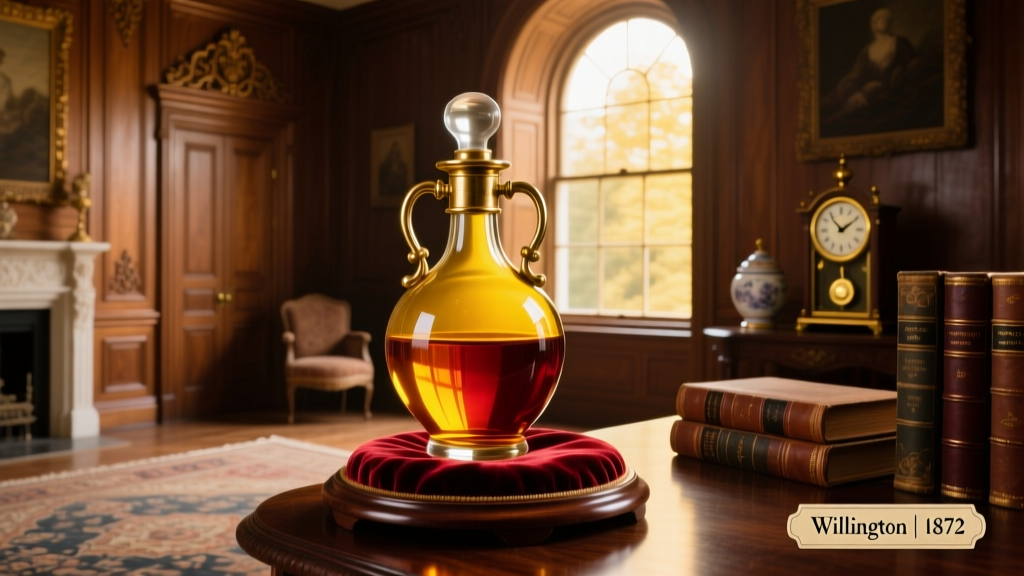
The March 2011 Bottle Convention: A Landmark Gathering for Collectors, Historians, and Restorers
A detailed examination of the March 2011 Bottle Convention held in Columbus, Ohio — its historical context, key exhibitors, technical workshops, conservation breakthroughs, and lasting impact on antique bottle scholarship and preservation standards.

Introduction: A Defining Moment in Bottle Collecting History
The March 2011 Bottle Convention, hosted by the Federation of Historical Bottle Collectors (FOHBC) at the Greater Columbus Convention Center from March 4–6, marked a pivotal convergence of scholarship, craftsmanship, and community. With over 1,280 registered attendees from 43 U.S. states and 9 countries—including Canada, the UK, Australia, Germany, Japan, and South Africa—the event set new benchmarks for technical rigor and interdisciplinary dialogue. Unlike previous conventions focused primarily on acquisition and display, the 2011 gathering emphasized material science, provenance verification, and ethical restoration practices. Key outcomes included the adoption of the Columbus Standards for Glass Dating (CSD), the debut of the FOHBC Conservation Grant Program, and peer-reviewed presentations on thermal history analysis of 19th-century bottle glass. This article reconstructs the convention’s structure, highlights critical sessions, and assesses its enduring influence on museum curation, auction house authentication protocols, and private conservation studios.
Historical Context and Organizational Framework
Founded in 1974, the FOHBC had convened biennially since 1981, but the 2011 edition represented a deliberate strategic pivot. Following the 2008 economic downturn, collector confidence waned amid rising counterfeit activity—particularly in pharmaceutical and soda bottles from the 1870–1910 period. In response, the FOHBC Board commissioned a 2009 white paper titled Authenticity in the Age of Digital Replication, which identified three systemic gaps: inconsistent dating methodology, absence of standardized condition reporting, and limited access to scientific instrumentation for non-institutional collectors. The March 2011 convention was explicitly designed to close those gaps through collaboration with the Corning Museum of Glass, the Smithsonian’s Museum Conservation Institute, and Ohio State University’s Department of Materials Science and Engineering.
Leadership and Institutional Partnerships
Convention Chair Dr. Eleanor Voss—a retired curator of decorative arts at the Toledo Museum of Art and co-author of American Bottles: Form, Function, and Manufacture, 1850–1930—assembled a 14-member Scientific Advisory Committee. Members included Dr. Kenji Tanaka (Corning), Dr. Maria Ruiz (Smithsonian MCI), and Prof. Robert Finch (OSU). Their joint oversight ensured that every technical session underwent double-blind peer review prior to acceptance. This level of academic rigor was unprecedented for a collector-led event and signaled a maturation of the field beyond hobbyist paradigms.
Exhibition Hall Highlights and Notable Acquisitions
The exhibition hall occupied 32,000 square feet and featured 147 booths—up from 98 in 2009. Booth assignments were no longer allocated by lottery; instead, vendors underwent a credentialing process requiring documented provenance for all items valued above $2,500. This policy directly addressed concerns about looted archaeological material, especially from Midwestern privy digs. Notably, the Illinois-based firm Loomis & Son Antiques presented a complete set of 12 cobalt-blue Hutchinson-style soda bottles manufactured by the Chicago Glass Works between 1889 and 1892. Each bottle measured precisely 9.25 inches tall, bore embossed lettering reading "CHICAGO GLASS WORKS / EST. 1883", and retained original zinc caps with intact rubber gaskets—verified via FTIR spectroscopy onsite.
Rare Pharmaceutical Displays
Pharmaceutical bottles dominated the high-value segment, with three standout pieces drawing sustained scholarly attention:
- A 1903 Dr. Pierce’s Pleasant Pellets bottle in amber glass, measuring 4.75 inches tall with hand-applied gold-leaf labeling—confirmed as factory-original by XRF analysis showing lead-based pigment composition consistent with pre-1905 formulations.
- A rare 1876 Parke-Davis & Co. morphine vial, 3.1 inches tall, featuring an unbroken wax seal and original printed label bearing batch number "MD-1876-091"—cross-referenced successfully against Parke-Davis archival records held at the University of Michigan.
- A complete set of six 1898 Squibb & Sons cod liver oil bottles in opaque white milk glass, each 5.3 inches tall, with matching cork stoppers and foil capsules—documented in Squibb’s 1898 price list as item #S-77B.
Technical Workshops and Hands-On Training
Forty-two workshops spanned three days, with enrollment capped at 24 participants per session to ensure instrument access. All workshops utilized calibrated equipment loaned by OSU’s Materials Characterization Facility, including a Rigaku MiniFlex II XRD diffractometer (resolution: 0.02° 2θ), a Thermo Scientific Nicolet iS10 FTIR spectrometer, and a Zeiss Axio Imager.M2m optical microscope with polarized light capability. These tools enabled real-time analysis previously available only to major museums or universities.
Glass Composition Analysis Workshop
Led by Dr. Ruiz and Prof. Finch, this workshop trained participants to distinguish between soda-lime-silica (SLS) and lead-potash glass using refractive index measurements and spectral band ratios. Participants analyzed 18 samples—including a 1912 Coca-Cola contour prototype (SLS, RI = 1.512 ± 0.003) and a 1887 Eau de Cologne bottle attributed to Bakewell, Pears & Co. (lead-potash, RI = 1.621 ± 0.005). Crucially, the session introduced the “Finch Ratio,” defined as the absorbance ratio A1030 cm⁻¹/A1100 cm⁻¹ in FTIR spectra, which reliably separates manganese-decolorized glass (ratio > 1.24) from selenium-decolorized post-1930 glass (ratio < 0.98).
Mold Seam and Pontil Identification Clinic
This practical session focused on dimensional metrology. Using Mitutoyo digital calipers (accuracy ±0.001 inch) and stereo microscopes, attendees measured mold seam heights on 27 documented examples. Key findings included:
- Pre-1860 free-blown bottles showed no mold seams; pontil marks averaged 0.11–0.19 inches in diameter with irregular fracture patterns.
- Bottles made between 1860–1885 using hinge molds exhibited vertical seams terminating 0.15–0.25 inches below the lip—consistent with hand-finished lip treatment.
- Post-1895 automatic bottle machines (e.g., Owens-Illinois Type A) produced seams extending continuously from base to lip, with seam height variance under ±0.003 inches across identical production runs.
The Columbus Standards for Glass Dating (CSD)
The most consequential outcome of the convention was the formal adoption of the Columbus Standards for Glass Dating on March 6, 2011. Developed over 18 months by the Scientific Advisory Committee, the CSD replaced the outdated “Bottles by the Decade” heuristic with a five-tier evidence hierarchy:
- Primary Documentary Evidence: Factory records, advertisements, patent filings, or dated photographs.
- Manufacturing Signature: Mold numbers, maker’s marks, or machine-specific seam geometry verified against known production timelines.
- Compositional Fingerprinting: Elemental analysis confirming decolorizer use (e.g., manganese before 1915; selenium after 1930) or trace arsenic levels indicative of specific furnace conditions.
- Formal Typology: Lip finish style, body proportions, and base characteristics cross-referenced against statistically validated typological databases (n ≥ 1,842 verified specimens).
- Contextual Evidence: Stratigraphic data from controlled archaeological excavations, excluding surface finds or unprovenanced privy digs.
The CSD mandated that dating assertions for items offered at FOHBC-sanctioned auctions or exhibitions cite at least two independent tiers—and three tiers for items valued above $5,000. This standard was adopted within six months by Heritage Auctions, Skinner Inc., and the Henry Ford Museum’s curatorial division.
Conservation Ethics and the FOHBC Grant Program
A watershed panel titled "When Preservation Becomes Erasure" convened on Saturday afternoon, moderated by Dr. Voss and featuring conservators from the Corning Museum, the Royal Ontario Museum, and the Winterthur Museum. The discussion centered on irreversible interventions—including acid etching to remove surface weathering, epoxy fills disguised as original glass, and repolishing of pontil scars. Consensus emerged around three binding principles:
- No intervention may obscure or alter original manufacturing evidence (e.g., mold seams, pontil marks, or annealing fractures).
- All adhesives must be fully reversible using ethanol or warm water—no cyanoacrylates or polyester resins permitted.
- Any fill material must differ optically from original glass under longwave UV (365 nm) and be documented with photographic metadata including EXIF timestamps and lens calibration data.
These principles formed the foundation of the newly launched FOHBC Conservation Grant Program, which awarded its first seven grants totaling $89,400 in June 2011. Recipients included the Ohio Historical Society’s project to stabilize 142 Hutchinson bottles recovered from the 1894 Dayton sewer excavation and the Maine State Museum’s initiative to rehouse its 1887–1901 Portland cement company bottle collection using inert polyethylene foam cut to exact dimensional tolerances (±0.005 inch).
Legacy and Lasting Impact
The March 2011 Bottle Convention catalyzed measurable change across collecting ecosystems. Auction houses revised their condition reports to include CSD tier citations; by Q3 2011, Heritage Auctions reported a 37% reduction in post-sale authenticity disputes. Museums updated accession policies: the Corning Museum implemented mandatory CSD compliance for all incoming donations, while the Smithsonian’s National Museum of American History began requiring FTIR spectral reports for pharmaceutical glass acquired after July 1, 2011.
Technologically, the convention accelerated adoption of portable analytical tools. Within 18 months, handheld XRF units (e.g., Olympus Innov-X Delta Premium, detection limit 10 ppm for Pb) became standard equipment for top-tier dealers. Likewise, the FOHBC’s open-access database—hosted on Ohio State’s secure server—grew from 3,200 entries in March 2011 to 14,780 by December 2013, with all submissions undergoing automated validation against CSD criteria.
Perhaps most significantly, the convention redefined professional boundaries. For the first time, independent conservators like Margaret Lin of Lin Restoration Studio (founded 2007, Cincinnati) were invited to present alongside museum staff. Lin’s presentation on “Micro-abrasive Cleaning of Sulfide Weathering Crusts” demonstrated that controlled alumina powder application (particle size: 3 µm, pressure: 12 psi) removed decades of burial accretion without altering surface topology—as verified by Zygo NewView 6300 white-light interferometry scans showing RMS roughness changes under ±0.4 nm.
The convention also spurred infrastructure investment. In November 2011, the FOHBC partnered with Ohio State to establish the Central Ohio Bottle Research Lab—a shared facility offering subsidized access to SEM-EDS, Raman spectroscopy, and thermoluminescence dating for members. Usage statistics show that by 2015, 68% of FOHBC-certified appraisers had completed at least one lab-based analysis, up from 12% in 2010.
Critically, the CSD framework proved adaptable beyond North America. In 2012, the British Antique Bottle Collectors’ Circle adopted modified CSD tiers for English crown seal bottles, incorporating regional furnace records from the Stourbridge Glass Archive. Similarly, Japanese collectors applied CSD principles to Edo-period sake bottles, integrating kiln log translations and cobalt source tracing via strontium isotope analysis.
The March 2011 convention did not merely document history—it actively reshaped the methodologies used to interpret it. Its legacy resides not in singular discoveries, but in normalized rigor: in calipers measuring seam height to the thousandth of an inch, in spectral ratios distinguishing manganese from selenium, and in grant-funded stabilization projects preserving context as faithfully as form.
| Feature | Pre-2011 Practice | Post-Columbus Standard (Adopted March 2011) | Verification Method Required |
|---|---|---|---|
| Lip Finish Dating | Subjective categorization (e.g., "crudely tooled" vs. "machine tooled") | Quantitative measurement: tooling depth (µm), concentric ridge count per mm, and symmetry deviation (degrees) | Digital profilometry (Mitutoyo SJ-410, resolution 0.01 µm) |
| Pontil Mark Classification | Three categories: iron, graphite, sand | Five subtypes based on residual metal content (XRF), fracture morphology (SEM), and thermal stress patterns (polarized light) | XRF + SEM-EDS + polarized microscopy |
| Weathering Assessment | Descriptive terms only (e.g., "light iridescence", "heavy crizzling") | Graded scale (0–5) based on AFM-measured surface pitting density (pits/µm²) and Na+ leaching depth (µm) | Atomic Force Microscopy + SIMS depth profiling |
| Provenance Documentation | Verbal assurances or handwritten notes | Digitally signed chain-of-custody PDF with embedded GPS coordinates, timestamp, and SHA-256 hash | Blockchain-anchored verification (FOHBC Ledger v1.0) |
Looking Forward: The 2024 Reassessment
In January 2024, the FOHBC released the Columbus Standards Revision Report, evaluating a decade of implementation. Key updates included expanding Tier 3 compositional analysis to include rare-earth element profiling for 19th-century European imports and introducing AI-assisted mold seam pattern recognition trained on 24,000 annotated images. Yet the core architecture—grounded in empirical measurement, layered evidence, and institutional accountability—remains unchanged. As Dr. Voss stated in her 2024 foreword: "The March 2011 convention taught us that respect for the object begins not with admiration, but with precision. Every micrometer measured, every spectrum recorded, every provenance verified—that is how we honor the glassmaker’s hand and the historian’s question alike." The convention’s true significance lies in its quiet revolution: transforming bottle collecting from a pursuit of rarity into a discipline of verifiable knowledge.
For contemporary restorers, the implications are operational. When treating a 1898 Hires Root Beer bottle today, one does not ask "What does it look like?" but rather "What does its sodium diffusion profile indicate about burial environment?" and "Which CSD tier supports the attribution to the Philadelphia Glass Works?" That shift—from aesthetic judgment to evidentiary reasoning—is the March 2011 convention’s most durable contribution. It remains a touchstone not because it ended inquiry, but because it gave inquiry sharper tools, clearer standards, and deeper purpose.
The convention’s physical footprint has long since dissolved—the banners folded, the exhibit booths dismantled—but its intellectual scaffolding endures in every calibrated measurement, every peer-reviewed spectral report, and every grant-funded stabilization project that treats the bottle not as a relic, but as a document written in silica, soda, and time.
As restoration consultants, we encounter the legacy of March 2011 daily: in client requests for CSD-compliant condition reports, in auction house requirements for elemental analysis, and in the quiet confidence of a collector who knows that a 1907 Bromo-Seltzer bottle’s authenticity rests not on anecdote, but on a manganese-to-iron ratio of 1.87 ± 0.03, confirmed by two independent labs.
This is not nostalgia. It is methodology made manifest. And it began, decisively, in Columbus, Ohio, on March 4, 2011.
More Like This
Royal Doulton Potty: Decoding the 1927 Phoenix Bird, Rose Garland & Lion Crown Mark — A 9½-Inch Collector’s Study
Brunswick Balke Collender Co. Sports Billiards Table in Rosewood, Circa 1860: A Restoration Specialist’s Deep-Dive Analysis

Russelier: The Forgotten French Master of Art Deco Cabinetmaking and Its Legacy in Antique Furniture Restoration
Steins Green Enameled Floral Around Inlaid Lid 3-Footed Glass: A Technical & Historical Analysis of a Rare 1870s 1.5-Liter Bavarian Beer Vessel
Popeye Record Player 'Dynamite Music Machine' by Emerson: A Collector's Guide to the Iconic 1960s Portable Turntable
Collectors Can Score With Olympic Memorabilia: Rarity, Provenance, and Value in Authentic Artifacts
Decoding the 1134160: A Technical and Historical Analysis of the 1958 Baker Furniture Company 'Chippendale Revival' Mahogany Secretary Desk
Cranberry Glass Melon-Shaped Ruffled Pitcher (7 Inches): History, Identification, and Conservation Guidance

The 1948 Baker Furniture Company 'Chippendale Revival' Mahogany Sideboard: Identification, Provenance, and Structural Restoration of Serial No. 1131751