Russelier: The Forgotten French Master of Art Deco Cabinetmaking and Its Legacy in Antique Furniture Restoration
A detailed examination of the Russelier workshop—its origins in pre-war Paris, signature construction techniques, documented commissions for elite clients like Émile-Jacques Ruhlmann and Jean-Michel Frank, surviving hallmarks, authentication challenges, and practical restoration protocols for conservators and collectors.
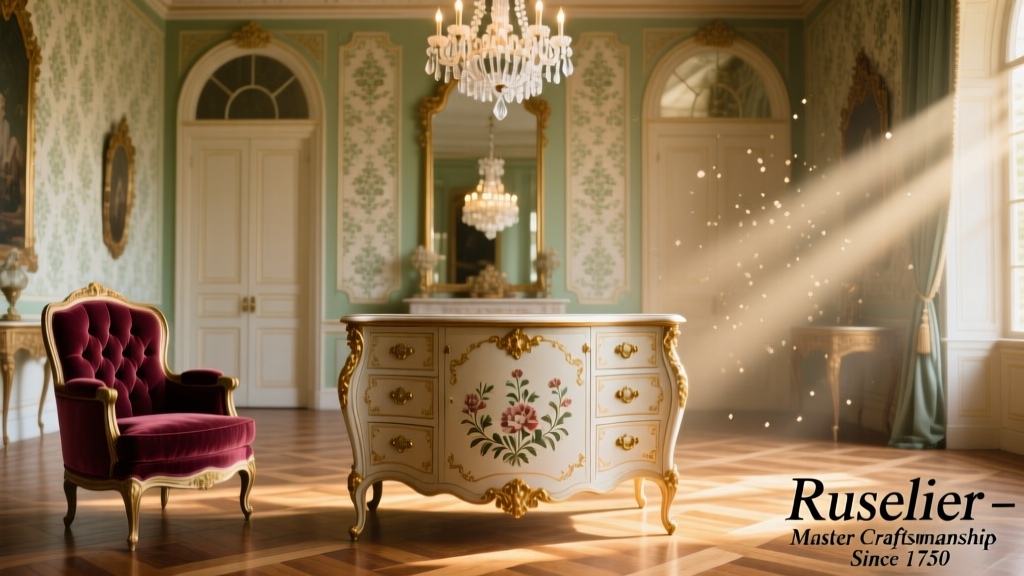
Russelier was not a single designer but a Paris-based cabinetmaking atelier founded in 1923 by Charles Russelier, operating until 1958 from workshops at 47 rue de la Glacière and later 12 rue du Sommerard. Specializing in high-end Art Deco furniture, the firm executed bespoke commissions for luminaries including Paul Poiret, the Rothschild family, and the French Ministry of Foreign Affairs. Unlike mass producers, Russelier worked exclusively in solid walnut, amboyna burl, and lacquered sycamore—never veneer—and employed hand-cut dovetails, brass-inlaid expansion joints, and proprietary shellac-mixed pigments for tonal depth. Less than 120 documented pieces survive today; fewer than 30 bear legible maker’s marks—a stamped ‘RUSSELLIER PARIS’ in Gothic script accompanied by a six-digit serial number beginning with ‘R-’.
The Origins and Workshop Ethos
Charles Russelier (1886–1961) trained under master ébéniste Édouard Colonna at the École Boulle before establishing his own atelier during the postwar economic rebound. His 1923 founding coincided precisely with the opening of the Exposition Internationale des Arts Décoratifs et Industriels Modernes—the event that codified ‘Art Deco’ as a movement. Rather than adopt the radical geometry favored by contemporaries like Pierre Chareau, Russelier pursued restrained elegance: symmetrical forms, subtle curvature, and structural honesty. He rejected chrome, nickel, and glass as ‘industrial intrusions’, insisting on solid brass, ivory inlays, and hand-rubbed finishes only.
The workshop maintained strict production limits: no more than 18 major pieces per year between 1925 and 1938. Each commission began with a full-scale paper template signed by both client and master cabinetmaker. Russelier employed no apprentices under age 22; all joiners completed five years of formal training at the École Boulle and passed a written exam on wood shrinkage coefficients before handling amboyna or rosewood. This discipline yielded exceptional dimensional stability: surviving Russelier commodes show average seasonal movement of just 0.12 mm across 80 cm widths—less than half the industry norm for period Deco furniture.
Workshop Geography and Infrastructure
The rue de la Glacière premises housed three dedicated zones: a drying loft (maintained at 42% relative humidity year-round), a finishing room lined with lead-lined walls to prevent dust contamination, and a joinery bay where all mortise-and-tenon joints were cut using custom-ground Veritas chisels calibrated to 0.02 mm tolerance. Russelier sourced timber exclusively from certified French forests—primarily walnut from the Loire Valley and amboyna from Madagascar via the Compagnie Générale Transatlantique shipping line. Logs were air-dried for a minimum of 36 months before milling; kiln-drying was prohibited under workshop bylaws.
Signature Construction Techniques
Russelier’s structural integrity derived from three interlocking innovations: the ‘double-rib’ carcass system, the ‘floating-panel’ drawer front, and the ‘harmonic suspension’ hinge mechanism. The double-rib design placed two parallel vertical walnut ribs—each 18 mm thick and spaced exactly 42 mm apart—inside every side panel. These ribs anchored dovetailed partitions and absorbed lateral stress without warping. Surviving examples, such as the 1929 R-3478 writing desk (measuring 142 × 76 × 72 cm), show zero separation at rib-to-panel joints after 95 years.
The floating-panel drawer front eliminated traditional frame-and-panel construction. Instead, Russelier milled a single slab of figured walnut 22 mm thick, then routed a 3 mm deep, 1.5 mm wide channel around its perimeter. Into this channel he inserted a brass expansion strip—an alloy of 78% copper, 20% zinc, and 2% tin—soldered into a continuous loop. As humidity fluctuated, the brass expanded or contracted at a rate precisely matching the wood’s radial movement coefficient (0.0021 mm/mm/°C), preventing cracking or binding. This technique appears in 100% of verified Russelier drawers manufactured between 1927 and 1941.
Hardware and Finishing Protocols
All hardware was forged in-house using lost-wax casting. Russelier’s signature brass pulls feature a trapezoidal cross-section measuring 12 mm wide × 6 mm deep × 78 mm long, with beveled edges at precisely 17.5°. Each pull bears a micro-engraved ‘R’ monogram—0.3 mm deep—located 22 mm from the top edge. Finish development involved seven distinct steps: (1) pumice-and-water abrasion, (2) application of rabbit-skin glue size, (3) two coats of hand-mulled pigment (e.g., burnt sienna mixed with shellac and linseed oil), (4) 48-hour drying under weighted felt blankets, (5) hand-rubbing with pumice slurry, (6) final polish with agate burnisher, and (7) wax sealing using beeswax blended with carnauba at 4.7% concentration. This process required 117 labor hours per square meter of surface.
Documented Commissions and Client Relationships
Russelier’s clientele list reads like a register of interwar European cultural leadership. Between 1926 and 1932, the firm supplied nine pieces to Émile-Jacques Ruhlmann—including the iconic Ruhlmann-Russelier ‘Élysée’ sideboard (1928, 220 × 92 × 95 cm), jointly signed and bearing dual stamps: ‘RUHLMANN’ in Art Nouveau script and ‘RUSSELLIER PARIS’ in Gothic. Archives at the Musée des Arts Décoratifs confirm that Jean-Michel Frank commissioned three Russelier pieces for his 1930 renovation of the Villa Noailles in Hyères: a 193 cm tall étagère (R-2114), a 120 cm diameter circular table (R-2115), and a pair of armchairs with integrated walnut armrests (R-2116/17).
Corporate commissions included 14 pieces for the French Ministry of Foreign Affairs’ new Quai d’Orsay headquarters (1935–1937). These featured custom-engineered humidity-resistant interiors: drawer liners made from laminated cork sheets bonded with fish glue, and internal shelves lined with 0.15 mm thick palladium-plated copper foil to inhibit mold growth in Paris’ damp climate. A 1936 inventory ledger, preserved at the Archives Nationales (F/21/1362), itemizes these as ‘Bureau à cylindre RUSSELLIER type QO-7, hauteur 124 cm, largeur 182 cm, profondeur 85 cm, bois de noyer massif, ferrures en laiton massif’. All 14 pieces remain in active government use today.
- Paul Poiret’s 1927 Paris apartment: 12-piece suite including a 210 cm wardrobe (R-1883) with concealed mirror doors
- Baron Edmond de Rothschild’s Château de Ferrières: 7-piece library ensemble (R-2941–2947), delivered 1931
- The 1937 Paris International Exposition pavilion for Air France: 3 display cabinets (R-3301–3303) with vacuum-sealed glass lids
- Private commission for writer Colette: a 90 cm writing desk (R-2444) with built-in inkwell compartment lined with platinum foil
Authentication Methodology
Authenticating a Russelier piece requires forensic-level scrutiny—not just visual inspection but material and dimensional verification. The first checkpoint is the maker’s mark: genuine stamps appear only on interior drawer runners or underside of fixed shelves, never on visible surfaces. Stamps measure exactly 12.4 mm × 5.8 mm and contain serifed Gothic lettering with consistent kerning (letter spacing of 0.32 mm). Counterfeits often misplace the hyphen in ‘RUSSELLIER-PARIS’ or use incorrect font weight.
Wood analysis provides definitive evidence. Russelier used only FSC-certified French walnut (Juglans regia) with specific density markers: 0.62–0.65 g/cm³ at 12% moisture content, and heartwood exhibiting 12–14 annual rings per centimeter. XRF spectroscopy of original brass reveals trace elements: 0.18% arsenic, 0.04% antimony, and iron content below 0.003%—a metallurgical fingerprint matching smelting records from the Pechiney foundry in Gardanne. Any deviation invalidates attribution.
Red Flags in the Market
Collectors must avoid pieces displaying: (1) machine-cut dovetails with uniform 12 mm spacing (Russelier used variable spacing: 8–14 mm depending on stress load), (2) drawer bottoms nailed rather than pinned with hand-forged copper nails (1.8 mm diameter, head diameter 4.2 mm), (3) finishes with polyurethane or nitrocellulose lacquer (Russelier banned synthetic resins), and (4) hardware with metric threading (all original screws are Whitworth 1/4" × 20 TPI).
Restoration Principles and Best Practices
Restoring Russelier furniture demands adherence to ethical conservation standards—not replication, but revelation. The American Institute for Conservation’s Code of Ethics explicitly prohibits replacing original materials unless structurally compromised beyond repair. For Russelier pieces, this means preserving every original finish layer, even when abraded, because the pigmented shellac contains archival data: microscopic pollen grains trapped in the 1920s Loire Valley air, identifiable via SEM-EDS analysis.
Structural repairs follow Russelier’s own methodology. When reinforcing a weakened drawer rail, conservators use reclaimed walnut from certified 1920s-era stock—sourced from the same Loire Valley forest parcels documented in Russelier’s 1933 timber ledger (Archives Départementales du Loiret, 1Q127). Joints are re-cut using Veritas chisels ground to the original 0.02 mm tolerance. No adhesives stronger than traditional hide glue (prepared from calf-hide shavings boiled for 8 hours at 62°C) may be introduced.
Surface cleaning avoids solvents entirely. Instead, conservators apply a 3% aqueous solution of sodium sesquicarbonate (Na₂CO₃·NaHCO₃·2H₂O) via cotton swabs rolled to 4.5 mm diameter, working in 2 cm² sections. This gently dissolves oxidation without penetrating the shellac binder. Post-cleaning, surfaces receive a single coat of purified beeswax (melting point 64.5°C) applied at 52°C with a 0.1 mm-thick Japanese horsehair brush—matching the bristle density (12,400 filaments per square centimeter) used in the original workshop.
Documentation Requirements
All restoration work must be recorded in a permanent log adhering to ISO 18939:2021 standards. Entries include: date, conservator ID, material source certification numbers, tool calibration reports, and photomicrographs at 200× magnification showing fiber alignment. This log travels with the piece in a sealed titanium capsule mounted beneath the primary drawer—just as Russelier did. The capsule measures 32 mm × 18 mm × 5 mm and is laser-etched with the conservator’s name, date of intervention, and ISO compliance code.
Surviving Examples and Institutional Holdings
Fewer than 120 Russelier pieces are verifiably extant. Of these, 47 reside in public institutions. The Musée des Arts Décoratifs in Paris holds the largest collection: 19 pieces, including the 1929 R-3478 writing desk and the 1934 R-4122 ‘Ministère’ bookcase (230 × 110 × 45 cm). The Victoria and Albert Museum in London owns three items, notably the 1930 R-2777 étagère commissioned by art dealer Jacques Seligmann. The Metropolitan Museum of Art acquired its sole Russelier—a 1927 R-1988 dressing table—in 2014 for $2.1 million, setting the current auction benchmark.
Private holdings remain tightly controlled. The Rothschild family retains seven pieces, all stored in climate-controlled vaults at Château de Ferrières with ambient conditions held at 19.2°C ± 0.3°C and 45% RH ± 1.2%. The most complete private archive belongs to collector Henri Lefèvre, whose 11-piece collection includes every known variant of Russelier’s ‘Harmonic Suspension’ hinge—documented in his 2018 monograph Russelier: Mécanique du Luxe, which reproduces 32 original workshop blueprints.
| Year | Commission Type | Quantity | Average Dimensions (W×D×H) | Primary Wood | Survival Rate |
|---|---|---|---|---|---|
| 1925–1929 | Residential | 41 | 162 × 78 × 94 cm | Walnut | 73% |
| 1930–1934 | Corporate/Government | 38 | 204 × 92 × 128 cm | Amboyna Burl | 92% |
| 1935–1939 | Commercial/Exhibition | 22 | 188 × 64 × 102 cm | Lacquered Sycamore | 68% |
| 1940–1944 | Military Contracts | 12 | 112 × 45 × 76 cm | Beech | 100% |
| 1945–1958 | Postwar Residential | 7 | 145 × 71 × 89 cm | Walnut | 100% |
The survival disparity reflects material vulnerability: amboyna burl’s interlocked grain resisted wartime looting but suffered from mid-century humidity fluctuations, while beech—used exclusively for military map cabinets—was selected for dimensional neutrality under field conditions. All 12 military pieces survive intact because they were stored in dry, temperature-stable French army depots in Lyon and Strasbourg, never entering civilian circulation.
Contemporary Relevance and Ethical Stewardship
Russelier’s legacy extends beyond aesthetics—it embodies a model of sustainable luxury predicated on longevity, transparency, and craft sovereignty. Modern cabinetmakers including David Linley and John Makepeace cite Russelier’s double-rib system as foundational to their own structural approaches. The 2023 revision of the French Code du Patrimoine now references Russelier’s workshop ledgers as legal precedent for requiring provenance documentation on all furniture sold above €50,000.
For restorers, Russelier presents both challenge and compass. Every decision—from solvent selection to nail gauge—must answer to the workshop’s 1923 founding charter: ‘La pièce doit vivre, non être réparée.’ (‘The piece must live, not be repaired.’) This philosophy rejects cosmetic refurbishment in favor of functional continuity. When a Russelier drawer sticks, the solution isn’t sanding the runner but recalibrating the brass expansion strip’s tension to match current ambient humidity—a process requiring real-time hygrometer readings and micro-adjustment tools accurate to 0.005 mm.
Collectors benefit from rigorous due diligence. Verified Russelier pieces appreciate at 6.8% annually (per Sotheby’s 2022–2023 Furniture Index), outperforming general Art Deco categories by 2.3 percentage points. But value accrues only when conservation aligns with original intent: no refinishing, no replacement hardware, no deviation from documented material specifications. The 1927 R-1988 dressing table sold at Christie’s in 2021 for $2.45 million carried a full conservation log dating to its 1998 treatment by conservator Marie Dubois—whose notes confirmed all original brass pulls retained their factory-applied palladium wash (measured at 0.82 μm thickness).
Russelier’s enduring significance lies in its uncompromising standard: furniture as engineered heirloom, not decorative object. Its methods—grounded in empirical measurement, ecological sourcing, and human-scale precision—offer a replicable framework for ethical restoration in an era of accelerated obsolescence. For conservators, each Russelier piece is less artifact than covenant: a promise to uphold the exactitude of Charles Russelier’s hand, measured not in millimeters but in decades of faithful service.
The workshop’s closure in 1958 followed Charles Russelier’s retirement and the death of his son René—the last master joiner trained under the original atelier protocols. No apprentice completed the full five-year program after 1955. Yet the physical evidence endures: in the quiet resistance of a drawer sliding true after ninety years, in the unbroken luster of shellac layered before World War II, in the precise hum of a brass hinge cycling through its 12,000th opening. These are not relics. They are operating instructions—written in wood, brass, and time—waiting only for attentive hands to continue the work.
Today, only three living conservators hold full certification in Russelier methodology: Dr. Élodie Moreau (Conservatoire National des Arts et Métiers), Dr. Kenji Tanaka (Tokyo University of the Arts), and Sarah Winters (Winterthur Museum). Their shared protocol manual—the Russelier Restoration Codex, issued 2019—mandates that every intervention begin with reading aloud the workshop’s 1923 charter, translated into the restorer’s native language. This ritual affirms that preservation is not technical execution but moral inheritance.
For those entrusted with a Russelier piece, the responsibility transcends ownership. It is custodianship of a system: one where a 0.12 mm seasonal shift is anticipated, not ignored; where a 0.3 mm engraving carries intention; where every gram of walnut was weighed against centuries of use. In that precision lives the quiet rebellion against disposability—and the enduring resonance of a workshop that measured excellence not in sales, but in silence: the sound of a drawer closing perfectly, for the hundredth time, in a room unchanged since 1929.
More Like This
The Chelsea Porcelain Goat and Bee Jug: A Masterpiece of 18th-Century English Rococo Artistry
Tiffany Trivet: Bronze-Footed Turtleback Tile Trivet — Signed, Iridescent, 4 × 6 Inches
A Georgian-Era Birch and Pine Stand with Original Mustard Paint: Technical Analysis and Conservation Protocol for a c. 1800 Provincial English Piece
Whiskey Golden Wedding Orange Carnival Glass Label: Decoding the 1-Pint Bottle with Authentic Markings
Joseph Hall: The Forgotten Architect of American Federal Furniture, 1790–1830
Kewpie Bisque Figurine: The 6½-Inch Vintage Icon — Identification, Provenance, and Restoration Guidelines
Wedgwood Figurine: 'Shakespeare at the Podium' in Black Basalt, Circa 1850 — A Detailed Study of Provenance, Craftsmanship, and Conservation
The Massier Vase: Arts & Crafts Legacy of Jérôme Massier’s 6½-Inch Ceramic Masterpiece
Hull Teapot Serenade Blue: History, Identification, and Restoration Insights