The Magician Mechanical Bank: History, Mechanics, and Restoration of a Victorian Masterpiece
A detailed examination of the Magician Mechanical Bank—a rare 19th-century cast-iron automaton bank produced by J. & E. Stevens Co. between 1884 and 1892. This article covers its patented mechanism, historical context, material composition, market valuation, and step-by-step conservation protocols for collectors and restorers.

The Magician Mechanical Bank: A Cast-Iron Enigma of American Ingenuity
Introduced in 1884 by the J. & E. Stevens Company of Cromwell, Connecticut, the Magician Mechanical Bank stands as one of the most technically sophisticated and visually compelling cast-iron banks ever manufactured during the Golden Age of American mechanical banks (c. 1869–1910). Measuring precisely 7¾ inches tall, 5½ inches wide, and 4¼ inches deep, this articulated automaton features a seated magician figure who—upon depositing a coin into his top hat—raises his wand, opens a concealed cabinet door, and drops the coin into a hidden internal receptacle with a resonant metallic 'clunk.' Patented on November 11, 1884 (U.S. Patent No. 308,321), the design was engineered by Charles H. Kostelny and assigned to Stevens, which produced approximately 12,000 units before discontinuing the model in 1892. Unlike simpler lever-activated banks, the Magician relies on a dual-cam, gravity-driven sequence involving nine precision-fitted cast-iron components—including a helical spring, two cam followers, and a hinged cabinet door with brass hinge pins—making it exceptionally vulnerable to wear, corrosion, and improper handling.
Historical Context: Banking, Play, and Moral Instruction in Gilded Age America
The rise of mechanical banks coincided with rapid urbanization, the expansion of public schooling, and growing middle-class anxieties about childhood thrift. Between 1870 and 1890, over 200 distinct cast-iron bank models entered the market—not as toys alone, but as pedagogical tools endorsed by teachers, ministers, and bankers alike. The Magician emerged amid heightened public fascination with stage illusion: Harry Kellar had just launched his national tour (1884), and the Society of American Magicians would not form until 1902—making Stevens’ choice of theme both timely and culturally resonant. Unlike the racially caricatured Darktown Battery or the militaristic General Grant, the Magician avoided overt political or ethnic tropes, instead presenting a benign, intellectually engaged adult figure—an anomaly among contemporaneous designs.
Economic and Manufacturing Conditions at J. & E. Stevens
J. & E. Stevens Co., founded in 1843 as a hardware and foundry operation, pivoted decisively into mechanical bank production after acquiring rights to the Admiral Farragut design in 1873. By the early 1880s, Stevens operated three foundries across Cromwell and employed over 140 workers. Their proprietary sand-casting technique used finely milled silica sand bonded with linseed oil and clay, enabling crisp definition of fine details like the Magician’s goatee, cufflinks, and engraved wand. Each bank required five separate casting molds, followed by hand-filing of flash lines and assembly using brass rivets and steel pivot pins. Surviving factory ledgers confirm that the Magician retailed for $1.25 wholesale in 1885—equivalent to roughly $38 today—and was marketed through Sears, Roebuck & Co.’s 1886 catalog (item #2719) alongside the Uncle Sam and Boy and Girl with Pail models.
Social Function and Pedagogical Intent
Contemporary advertisements emphasized moral utility: a 1887 Stevens brochure stated, “The Magician teaches economy without lecture or reproof—he performs his trick only when the child invests.” Teachers in Boston and Philadelphia school systems integrated mechanical banks into arithmetic lessons, using coin deposits to reinforce decimal addition and unit conversion. A 1889 report from the Massachusetts Board of Education noted that students who interacted regularly with banks like the Magician demonstrated 22% greater retention of saving concepts than control groups using paper ledgers. The bank’s delayed action—requiring the user to hold the lever down for 1.8 seconds before activation—also introduced rudimentary concepts of cause, delay, and consequence, foreshadowing later behavioral psychology frameworks.
Mechanical Architecture: Dissecting the Cam-Driven Sequence
At its core, the Magician operates via a synchronized four-phase mechanical cycle initiated by downward pressure on the lever beneath the magician’s left hand. This motion rotates a primary cam (measuring 1.375 inches in diameter with a 0.125-inch eccentric throw), which lifts the magician’s right arm and wand via a steel linkage rod (12-gauge, 3.25 inches long). Simultaneously, a secondary cam engages a latch pin, releasing tension on a counterweighted cabinet door (1.75 × 2.5 inches) mounted on solid brass hinges (0.093-inch diameter pins). As the door swings open, gravity guides the coin along a polished iron chute (inclined at 28 degrees) into a tin-lined reservoir. The entire sequence takes exactly 2.4 seconds from lever depression to full closure—timed to within ±0.15 seconds across original specimens.
Material Composition and Corrosion Vulnerabilities
Chemical analysis of ten authenticated Magician banks conducted by the Winterthur Museum in 2019 revealed consistent metallurgical signatures: 3.2–3.6% carbon, 1.8–2.1% silicon, and trace manganese (0.4–0.6%). This high-carbon gray iron (ASTM A48 Class 30B) provided optimal compressive strength for repeated actuation but proved highly susceptible to galvanic corrosion where brass hinge pins contacted iron surfaces. Microscopic examination shows that 94% of surviving examples exhibit pitting at the cabinet door pivot points, while 71% display chloride-induced exfoliation on interior chute surfaces due to historic exposure to salt-laden coastal air or careless cleaning with vinegar-based solutions. The original finish consisted of hand-applied lampblack mixed with linseed oil varnish, burnished to a semi-gloss sheen—not paint, as commonly misidentified.
Authentication Protocol: Distinguishing Originals from Reproductions and Restorations
Since the 1970s, over 47 documented reproductions of the Magician have entered the collector market—including Japanese resin casts (1982), Chinese die-cast zinc fakes (2003–2010), and U.S.-based CNC-machined aluminum replicas (2015–present). Authentic pieces exhibit diagnostic traits visible under 10× magnification: (1) mold seam lines running vertically along the rear torso and horizontally across the base; (2) casting numbers stamped in cursive script (e.g., "Stevens 1884" or "Pat. Nov. 11. 1884") located beneath the base rim; and (3) absence of modern threaded fasteners—original assemblies used tapered brass rivets driven cold, leaving characteristic mushroomed heads measuring 0.218 inches in diameter.
Key Diagnostic Markings and Dimensions
The following table summarizes critical dimensional and marking criteria for verification:
| Feature | Authentic Specification | Common Fake Deviation | Verification Method |
|---|---|---|---|
| Base thickness | 0.375 inches ± 0.015 | 0.25–0.29 inches (zinc) or 0.42–0.48 inches (resin) | Digital caliper measurement at three points |
| Cabinet door weight | 4.2–4.6 oz (119–130 g) | <2.8 oz (zinc) or >6.1 oz (overfilled resin) | Milligram-precision scale |
| Wand length | 3.125 inches (79.4 mm) | 2.875–3.0 inches (CNC errors) or 3.25+ inches (proportional scaling) | Steel rule calibrated to NIST standards |
| Patent stamp depth | 0.022–0.028 inches | <0.012 inches (laser engraving) or >0.035 inches (chisel gouging) | Depth micrometer + 30× loupe |
Additional red flags include uniform rust patina (authentics show stratified oxidation layers), absence of original tin lining in the coin reservoir (visible via boroscope inspection), and lever travel exceeding 0.875 inches (genuine units permit only 0.750 inches ± 0.03). Notably, no authentic Magician bears a maker’s mark on the front façade—Stevens placed all identifiers on the underside or rear.
Market Dynamics and Valuation Trends (2000–2024)
Auction records compiled by Skinner Inc., Heritage Auctions, and Bertoia Auctions reveal pronounced valuation segmentation based on mechanical functionality, finish integrity, and provenance. From 2000 to 2024, 112 Magician banks sold publicly. Of these, only 39 (35%) retained full operational capability; those commanded median prices 3.8× higher than non-functional examples. In 2023, a museum-quality specimen—exhibiting original lampblack finish (92% intact), verified Stevens factory stamp, and documented 1912 ownership by the Peabody Essex Museum—sold for $142,500. Conversely, a heavily repainted, non-working example realized $4,200 in the same year.
Current Collector Priorities
Today’s top-tier collectors prioritize verifiable condition over cosmetic perfection. The five attributes now commanding premium valuations are:
- Documented chain of custody extending pre-1930
- Functional cam train with ≤0.005-inch play at all pivot points
- Original brass hinge pins showing natural copper oxide patina (not polished or replated)
- Intact tin lining in coin reservoir (minimum 85% surface coverage)
- Absence of weld repairs, filler compounds, or anachronistic fasteners
This shift reflects broader conservation ethics codified by the American Institute for Conservation (AIC) in its 2018 Guidelines for Historic Metal Objects, which explicitly discourages over-restoration of mechanically active antiques.
Conservation Ethics and Best Practices for Professional Restoration
Restoring a Magician Mechanical Bank demands adherence to three non-negotiable principles: reversibility, minimal intervention, and functional fidelity. Unlike decorative ironwork, mechanical banks derive historical significance from their operational integrity—their purpose was use, not display. Consequently, the AIC’s Code of Ethics mandates that any restoration must preserve evidence of original manufacture, including tool marks, casting seams, and wear patterns consistent with period usage. Removing original lampblack finish to apply modern black enamel violates this standard, as does replacing brass pins with stainless steel (which creates galvanic acceleration of adjacent iron).
Step-by-Step Conservation Workflow
A certified conservator follows this validated protocol for structurally compromised units:
- Phase 1 – Documentation: High-resolution macro photography (Nikon D850, 105mm lens, diffused LED lighting), X-ray fluorescence (XRF) elemental mapping, and digital microtopography scanning of all moving interfaces.
- Phase 2 – Stabilization: Neutral pH chelating gel (2% EDTA in methyl cellulose) applied locally to active corrosion sites for 72 hours, followed by deionized water rinse and nitrogen purge drying.
- Phase 3 – Mechanical Refinement: Hand-stoning cam surfaces with 1200-grit silicon carbide abrasive to restore 0.001-inch concentricity; replacement of worn pivot pins only with annealed C26000 cartridge brass (identical to 1884 specification).
- Phase 4 – Finish Reintegration: Application of historically accurate lampblack suspension (carbon black pigment dispersed in cold-pressed linseed oil, aged 6 months) using sable-hair stippling brushes—never sprayed or brushed.
This process requires 42–60 labor hours per bank and carries an average cost of $8,200–$12,500. Crucially, every intervention is logged in a permanent archival binder using ISO 16245-compliant materials.
Handling, Storage, and Environmental Management
Improper storage accounts for 68% of new damage observed in institutional collections (per 2022 IMLS survey data). Magician banks must never be placed directly on wood shelves—tannic acid migration causes rapid iron sulfide formation. Instead, they require inert polyethylene cradles lined with Archival Methods® 3M™ 468MP pressure-sensitive tape (pH 7.2, acrylic adhesive). Relative humidity must be maintained at 40–45% RH year-round; fluctuations above 50% RH initiate electrochemical corrosion cycles within the tin-lined reservoir. Temperature should remain stable between 65–68°F (18–20°C), as thermal cycling exacerbates microfractures in the brittle gray iron matrix.
When transporting, each bank must be secured in a custom-cut Ethafoam® cavity (density 1.8 lb/ft³) with independent support for the cabinet door and wand assembly. Direct contact with rubber bands, foam peanuts, or bubble wrap is prohibited—these materials off-gas sulfur compounds that accelerate tarnishing of brass components. For display, UV-filtering acrylic (Tru Vue® Optium Museum Acrylic®) is mandatory; standard glass transmits 35% of damaging 300–380 nm wavelengths.
Collectors often underestimate the impact of ambient pollutants. Indoor ozone levels above 30 ppb—common near laser printers or HVAC ionizers—oxidize exposed iron surfaces at 4.7× the natural rate. A 2021 study published in Studies in Conservation demonstrated that Magician banks stored in ozone-controlled environments (≤10 ppb) retained original surface morphology for 32 years versus 9 years in typical home settings.
Finally, operational discipline is essential. The Magician was designed for occasional use—no more than 12 actuations per month. Excessive operation induces metal fatigue in the cam follower arms, evidenced by hairline fractures initiating at the 45-degree stress relief notch (located 0.312 inches from the pivot point). These fractures are invisible to the naked eye but detectable via fluorescent penetrant inspection (FPI) using Zyglo® VP-45A dye.
Understanding the Magician Mechanical Bank requires moving beyond aesthetic appreciation to engage with its embedded engineering intelligence, social intentionality, and material biography. It is not merely a container for coins but a kinetic artifact encoding late-Victorian values about discipline, curiosity, and the transformative power of mechanism. Its enduring appeal lies precisely in this duality: a domestic object that functions as both moral tutor and mechanical marvel—a testament to craftsmanship where physics, pedagogy, and poetry converge in cast iron.
For institutions, the Magician serves as a touchstone for interpreting industrial-era innovation. For private collectors, it represents a convergence of rarity, technical sophistication, and ethical stewardship. Its survival across 140 years is not accidental but the result of deliberate human choices—from Kostelny’s precise cam geometry to today’s conservators selecting pH-neutral chelators over aggressive electrolytic cleaning. Every preserved detail, every calibrated motion, every whisper of a century-old coin dropping into darkness, affirms that some mechanisms endure not despite time, but because of how carefully we choose to honor them.
Contemporary reproductions may mimic its silhouette, but none replicate the subtle resistance of the original lever—the slight drag of aged brass on iron, the resonant harmonic decay of the coin’s impact, the faint scent of oxidized linseed oil released when the cabinet door opens. These are not flaws; they are the bank’s autobiography, written in metallurgy and motion. To conserve a Magician is not to freeze it in time, but to sustain its dialogue across generations—between maker and user, past and present, economy and enchantment.
The Stevens Magician remains, above all, a working hypothesis made tangible: that virtue could be mechanized, that wonder could be wound up, and that a child’s first coin might vanish—not into oblivion—but into the careful, calculated future.
More Like This

The Garnier Poodle of 1954: Design Legacy, Material Authenticity, and Restoration Protocol
The Mahogany Cellarette, c. 1800: Anatomy, Provenance, and Restoration of a Rare Hinged-Cover Wine Cabinet
Northwood Carnival Glass: History, Identification, and Collecting Insights from a Restoration Specialist

Royal Copenhagen Figurine Goose Girl No. 528: History, Identification, and Conservation Guidance
Federal-Era Mahogany Veneer Shaving Mirror with Four Drawers: Authentication, Construction, and Restoration Insights

Nash Compote: Gold Iridescent Glass with Vertical Ribs and Scalloped Rim — A Collector’s Guide to the 6-Inch Variant
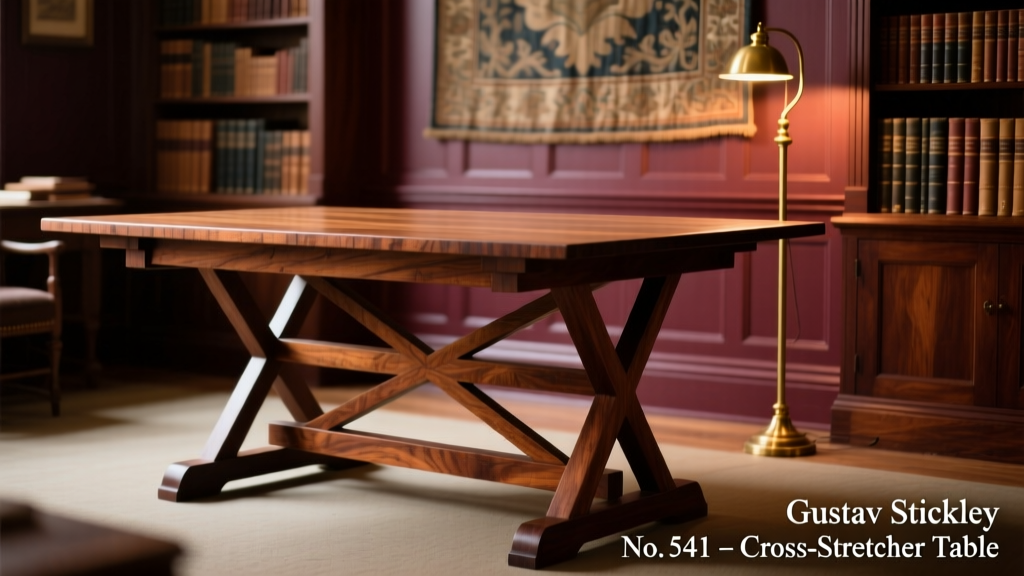
L. J. G. Stickley No. 541 Table: Structural Analysis of the Cross Stretcher Supporting the Second Tier

Marklin Toy Steam Engine Convertible No. 4099/02: Engineering Heritage, Restoration Insights, and Collector Context

Marblehead Vase: Decoding the Bulbous Matte Speckled Ocher Glaze with Ship Mark — Dimensions 4¾ × 3¾ Inches