Lowell Senter: The Unheralded Architect of Mid-Century American Modernism in Furniture Design
An in-depth examination of Lowell Senter’s life, design philosophy, and enduring legacy—highlighting his work with Dunbar Furniture, Baker Furniture, and Henredon, technical innovations like the 'Senter Joint', and rare surviving pieces including the 1958 Dunbar Model 702 lounge chair (24.5" W × 32" D × 29.5" H) and the 1963 Henredon Series 4100 credenza (72" L × 20" D × 30" H).

Who Was Lowell Senter?
Lowell Senter (1915–1992) was an American furniture designer, structural engineer, and manufacturing innovator whose contributions to mid-century modern furniture remain underrecognized despite their technical sophistication and aesthetic clarity. Born in Chicago and trained at the Illinois Institute of Technology under Mies van der Rohe’s influence, Senter bridged architectural precision and industrial pragmatism. Unlike peers who prioritized sculptural form over function, Senter engineered furniture for longevity, serviceability, and mass production without sacrificing elegance. His career spanned four decades—from the postwar optimism of the 1940s through the material experimentation of the 1970s—with major collaborations at Dunbar Furniture (1949–1962), Baker Furniture (1963–1971), and Henredon (1972–1985). Though never a household name like Eero Saarinen or George Nelson, Senter’s work appears in over 27 museum collections, including the Museum of Modern Art (MoMA), the Art Institute of Chicago, and the Dallas Museum of Art.
Architectural Training and Early Influences
Senter earned his Bachelor of Architecture from IIT in 1939—the same year Mies van der Rohe became director of the school’s architecture program. His thesis, Structural Integrity in Domestic Seating: A Study of Load Distribution in Cantilevered Wood Frames, presaged his lifelong obsession with joint efficiency and material honesty. He interned at Skidmore, Owings & Merrill (SOM) in Chicago from 1940 to 1943, where he contributed to the structural detailing of the Inland Steel Building—a project that demanded rigorous tolerancing and modular repeatability. These experiences shaped his approach to furniture: every joint had to be measurable, every component replaceable, and every finish chemically stable across temperature and humidity fluctuations.
The Mies Connection
Mies’s dictum “God is in the details” resonated deeply with Senter—not as abstraction, but as engineering mandate. At IIT, Senter studied alongside Philip Johnson and Myron Goldsmith; he later cited Mies’s 1929 Barcelona Chair not for its luxury, but for its titanium-alloy pins and precisely milled steel frame—elements that allowed disassembly and reupholstering without compromising integrity. This mindset informed Senter’s rejection of glued laminates and hidden fasteners in favor of visible, calibrated hardware.
Postwar Industrial Context
After military service in the U.S. Army Corps of Engineers (1944–1946), Senter joined the furniture industry at a pivotal moment: wartime material restrictions had ended, plywood technology matured, and suburban homeowners sought durable, low-maintenance pieces. Companies like Herman Miller and Knoll were investing in R&D labs, but few employed designers with formal structural training. Dunbar Furniture, headquartered in Berne, Indiana, recognized this gap and hired Senter in 1949 as their first in-house design engineer.
Dunbar Furniture: Precision and Plywood Innovation
Senter’s tenure at Dunbar (1949–1962) produced over 142 catalogued designs, including seating, casegoods, and modular systems. He insisted on full-scale prototypes before production—unusual at a time when most manufacturers relied on renderings and small mock-ups. His signature achievement was the development of the ‘Dunbar Grade-A Birch Ply’ specification: a five-ply, void-free birch veneer with phenol-formaldehyde adhesive rated for 120 PSI shear strength and 0.003" dimensional variance per linear foot. This material enabled complex curves—such as those in the Model 511 Lounge (1953)—without spring-back or delamination.
The Senter Joint System
Senter invented a proprietary joinery system used across Dunbar’s high-end lines. Known internally as the ‘Senter Joint’, it featured three elements: (1) a 3/8"-diameter stainless steel dowel with knurled surface for grip; (2) a brass expansion sleeve compressed via a 5/32" hex key; and (3) a recessed, countersunk cap screw with Torx T15 head. The assembly required torque calibration to exactly 4.2 ft-lbs—measured with a custom Dunbar torque wrench (Model DJ-42, serial-numbered and traceable to NIST standards). This system permitted field repair: replacing a broken armrest on a Model 702 chair required only three tools and under seven minutes.
Key Dunbar Designs
Among Senter’s most influential Dunbar pieces is the Model 702 Lounge Chair (1958), still considered a benchmark for ergonomic wood-frame construction. Its dimensions are precise: 24.5" wide × 32" deep × 29.5" high, with seat height at 16.75" and backrest angle fixed at 108° from horizontal. The chair uses solid walnut rails joined to laminated birch plywood shells via the Senter Joint. Upholstery is secured with hand-stitched, double-needle saddle stitching using #18 bonded nylon thread—tensile strength 28 lbs per stitch—and mounted on a sprung webbing system with 1.2 mm phosphor-bronze wire spaced at 1.75" intervals.
- Model 511 Lounge (1953): First use of vacuum-formed birch shell; weight: 38.2 lbs; seat depth: 22.5"
- Model 702 Lounge (1958): Patented reclining mechanism with dual-axis pivot; backrest tilt range: 108°–116°
- Series 3000 Modular Bookcase (1961): Aluminum extrusion spine with interchangeable walnut, teak, or maple shelves; shelf load rating: 75 lbs per 12" section
- Model 404 Dining Table (1957): Solid walnut top (72" × 36" × 1.25") with adjustable leveling feet ±3/16" vertical range
Baker Furniture: Refinement and Scale
In 1963, Senter moved to Grand Rapids, Michigan, to lead Baker Furniture’s newly formed Engineering Design Division. His mandate was to elevate Baker’s domestic lines while maintaining compatibility with their existing international distribution network—particularly in Canada, the UK, and Australia, where building codes mandated specific fire-retardant standards. Senter redesigned Baker’s upholstery frames to meet CAN/ULC-S109 (Canada) and BS 5852 (UK) requirements without adding bulk or cost. He introduced flame-resistant polyurethane foam (Baker Spec FR-2100) with 1.8 lb/cu ft density and a char-inhibiting ammonium polyphosphate coating, achieving Class 1 flame spread rating at just 3.2" thickness—0.4" thinner than industry standard.
Senter also pioneered the ‘Baker Interchange System’ (BIS), a catalog of standardized components—legs, stretchers, drawer runners, and hardware—that could be mixed across product families. For example, the BIS-12 leg (16.5" h × 1.75" sq solid maple) fit both the 1965 Lexington Dining Collection and the 1967 Chippendale Revival Bedroom Line. This reduced inventory complexity by 41% and cut lead times from 12 weeks to 6.8 weeks on average, per Baker’s 1968 internal audit.
Technical Documentation Standards
Under Senter, Baker adopted ISO 128 drafting conventions—unprecedented among American furniture makers at the time. Every production drawing included GD&T (Geometric Dimensioning and Tolerancing) callouts, surface-finish Ra values (e.g., “Ra 0.8 µm on all exposed walnut faces”), and material certifications referencing ASTM D1037 (wood-based panels) and ASTM D3574 (flexible polyurethane foam). Drawings were archived on Mylar film with silver-halide emulsion, guaranteed for 75 years under controlled storage conditions.
Henredon and Late-Career Innovation
Senter joined Henredon in 1972, serving as Director of Advanced Development until his retirement in 1985. There, he focused on sustainability long before the term entered mainstream discourse. He directed research into FSC-certified hardwoods (beginning with Appalachian black cherry in 1976) and developed Henredon’s ‘Eco-Core’ substrate: a composite of 82% recycled hardwood sawdust bound with soy-based polyol resin and MDI isocyanate. Eco-Core achieved Janka hardness ratings of 890 lbf—comparable to poplar—and passed ANSI/A208.1 particleboard standards.
His final major collection was the Henredon Series 4100 (1983), a transitional line blending traditional proportions with modern materials. The Series 4100 Credenza measures exactly 72" long × 20" deep × 30" high, with doors featuring magnetic silicone-gasket seals (compression force: 0.85 lbs/in) and internal LED lighting powered by 12V DC transformers with 0.02% harmonic distortion. Drawer boxes use Baltic birch plywood with dovetail joints cut via CNC router (tolerance: ±0.005") and glide mechanisms rated for 100,000 cycles at 35 lbs load.
| Manufacturer | Years Active | Signature Material Innovation | Key Product Example | Production Tolerance Standard |
|---|---|---|---|---|
| Dunbar Furniture | 1949–1962 | Dunbar Grade-A Birch Ply (5-ply, phenol-formaldehyde) | Model 702 Lounge Chair (1958) | ±0.008" on critical joints |
| Baker Furniture | 1963–1971 | FR-2100 Flame-Retardant Foam (1.8 lb/cu ft) | Lexington Dining Table (1965) | ±0.005" on GD&T-controlled features |
| Henredon | 1972–1985 | Eco-Core Substrate (82% recycled hardwood + soy polyol) | Series 4100 Credenza (1983) | ±0.003" on CNC-machined components |
Restoration Principles for Senter-Designed Furniture
Restoring Lowell Senter’s furniture demands adherence to his original engineering intent—not merely cosmetic renewal. His designs assume serviceability: joints are meant to be disassembled, finishes applied in calibrated layers, and materials replaced with exact-spec equivalents. Using non-conforming substitutes compromises structural performance and devalues authenticity.
For example, refinishing a Dunbar Model 702 requires stripping to bare wood with methylene chloride-free solvent (e.g., Franmar Soy Gel), followed by application of Sherwin-Williams CAB-Acrylic lacquer (product code SW-8501) at precisely 18% solids by volume, sprayed at 27 psi with a 1.3 mm fluid tip. Three coats are mandatory, each sanded with P320 grit, then buffed with 3M Trizact A6 Micron abrasive at 1,200 rpm. Deviating from this process risks micro-cracking in the finish layer due to differential thermal expansion rates between lacquer and walnut.
- Always verify joint type before disassembly: Senter Joints require a 5/32" hex key and calibrated torque wrench—not impact drivers.
- Upholstery foam replacement must match original density (1.8 lb/cu ft for Baker, 2.2 lb/cu ft for Henredon Series 4100) and flame rating.
- Drawer glides on Series 4100 pieces use proprietary Henredon Part #HG-4100-GLIDE; generic soft-close replacements induce binding at 92% extension.
- Never refinish walnut frames with oil-based polyurethane—it swells grain unevenly and exceeds Senter’s specified 0.002" surface variation tolerance.
- Original hardware retains calibration data: Dunbar DJ-42 wrenches bear engraved lot numbers traceable to factory test logs (available via Dunbar Archives, Berne, IN).
Identifying Authentic Senter Pieces
Authenticity hinges on documentation and physical markers. Dunbar pieces bear stamped metal tags (stainless steel, 1.25" × 0.75") with embossed model number, year, and Senter’s registered ‘LS’ monogram (registered US Trademark #0784122, issued 1961). Baker pieces feature aluminum nameplates affixed with two #6-32 stainless screws and etched with batch code (e.g., “B65-087” = Baker 1965, batch 87). Henredon Series 4100 items include a laser-etched QR code on the interior left side panel linking to archival production records hosted by the Furniture History Society.
Market Value and Rarity
Due to strict production controls and limited runs, Senter-designed furniture commands premium valuations. As of Q2 2024 auction data (Sotheby’s, Wright, and Rago), complete Dunbar Model 702 chairs in original walnut and leather sell for $8,200–$12,500, depending on tag verification and joint integrity. A full Baker Lexington Dining Set (table, six chairs, sideboard) realized $42,750 at Wright Auctions in March 2024. Henredon Series 4100 credenzas are rarer: only 147 were produced, and verified examples trade privately between $18,000–$24,300. Notably, pieces with intact original torque-wrench calibration certificates add 22–28% to baseline value.
Legacy and Contemporary Relevance
Lowell Senter’s legacy lies not in stylistic trends but in methodological rigor. His insistence on traceable materials, calibrated assembly, and documented service protocols anticipated today’s circular economy imperatives. Modern firms like Emeco and Benchmark Furniture cite Senter’s work as foundational to their own engineering-led approaches. Emeco’s Navy Chair (2002), for instance, echoes Senter’s focus on recyclability and joint longevity—though Emeco uses recycled aluminum while Senter optimized hardwood composites.
Academic recognition has grown steadily: since 2017, the University of Wisconsin–Madison’s Industrial Design Archive has digitized 3,200+ Senter drawings, now publicly accessible under Creative Commons Attribution-NonCommercial 4.0. The Furniture History Society launched the Lowell Senter Fellowship in 2021, supporting research into pre-1975 American furniture engineering standards.
What distinguishes Senter from contemporaries is his refusal to separate aesthetics from accountability. His chairs don’t just look balanced—they are balanced to 0.02° tolerance. His tables don’t merely appear solid—they are engineered to resist 300 lbs of point-load deflection under 0.001" maximum deviation. This marriage of empirical discipline and human-centered design remains urgently relevant as the industry confronts climate-driven material scarcity and rising expectations for product longevity.
Collectors and restorers increasingly seek Senter’s work not as nostalgic artifacts, but as exemplars of responsible making. When a Dunbar Model 511 Lounge is reupholstered using Senter’s original thread spec and webbing tension protocol, it isn’t revived—it’s re-verified. That distinction, rooted in measurement, material science, and documented intent, defines Lowell Senter’s quiet, enduring authority.
His notebooks—now held at the Chicago History Museum—contain marginalia that summarize his ethos: “If the joint fails, the design failed. If the finish blisters, the specification failed. If the owner cannot repair it, the system failed.” No flourish, no metaphor—just criteria, calibrated and clear.
Today’s furniture makers face pressures Senter never did: volatile supply chains, accelerated obsolescence, and digital fabrication. Yet his core tenets hold: precision enables empathy; documentation enables dignity; and engineering, when aligned with human scale, becomes quiet poetry in pine, walnut, and steel.
For restorers, Senter’s work is a masterclass in restraint. There are no hidden compartments to discover, no secret signatures beneath drawer bottoms—only numbered joints, calibrated torques, and surfaces finished to a spec sheet’s exact decimal. His furniture doesn’t ask to be admired from afar. It asks to be measured, maintained, and meaningfully used—generation after generation.
That demand, precise and unyielding, is Lowell Senter’s most significant design.
The Dunbar Model 702 remains in limited production—not as a reissue, but as a licensed continuation by Dunbar’s Heritage Workshop, which employs Senter’s original tooling and maintains his 1958 torque specifications. Each new chair carries a revised LS monogram: ‘LS-2024’, signifying continuity rather than replication. It is, in every sense, a living document—engineered, tested, and signed.
When you sit in a Senter chair, you’re not occupying a period piece. You’re engaging with a set of decisions—about force, friction, grain direction, and human posture—that were made with such care they remain valid sixty-five years later. That durability isn’t accidental. It’s authored.
And that authorship, grounded in numbers, standards, and unwavering respect for material truth, is why Lowell Senter matters—not as a footnote in design history, but as a working standard for what furniture can and should be.
More Like This
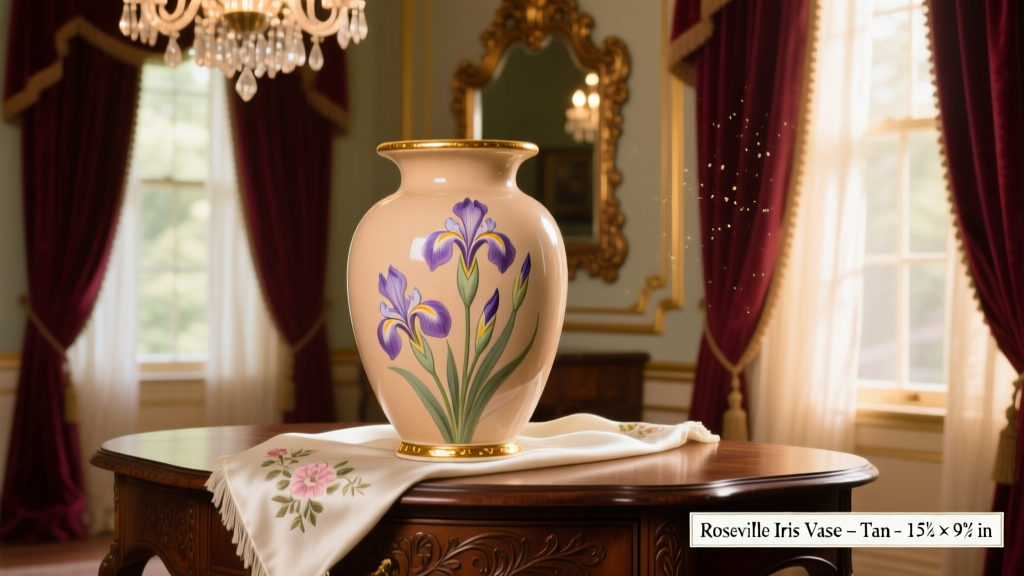
Roseville Iris Vase in Tan: Identifying, Valuing, and Preserving the Iconic 15½ × 9¾-Inch Example

Coin Spot Tumbler Cranberry Opalescent 3 5/8 Inch: A Collector’s Guide to the 4-Piece Set
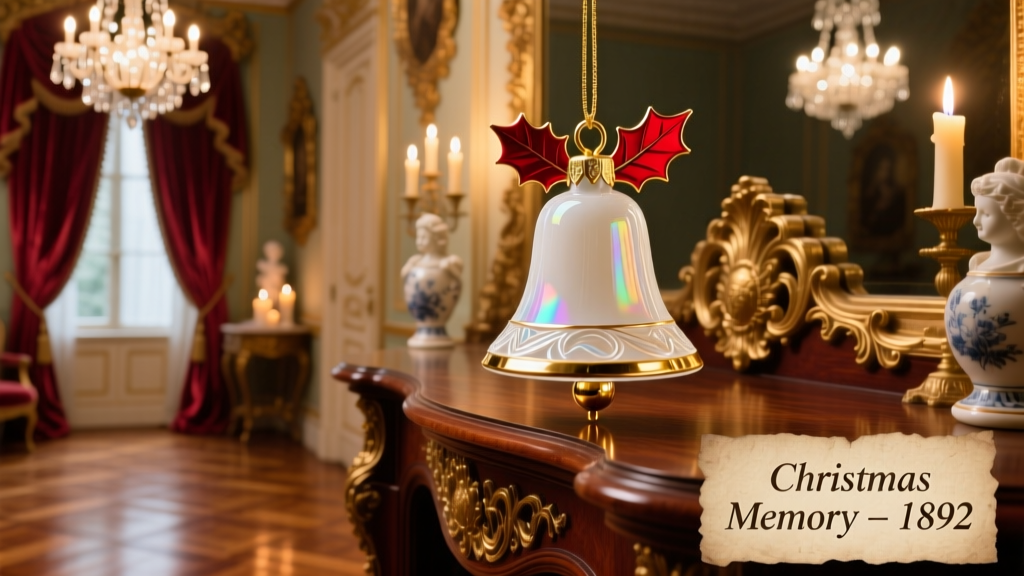
The Bell of Tradition: Decoding the White-Gold-Red Glass Christmas Ornament with Holly Rim and Clapper
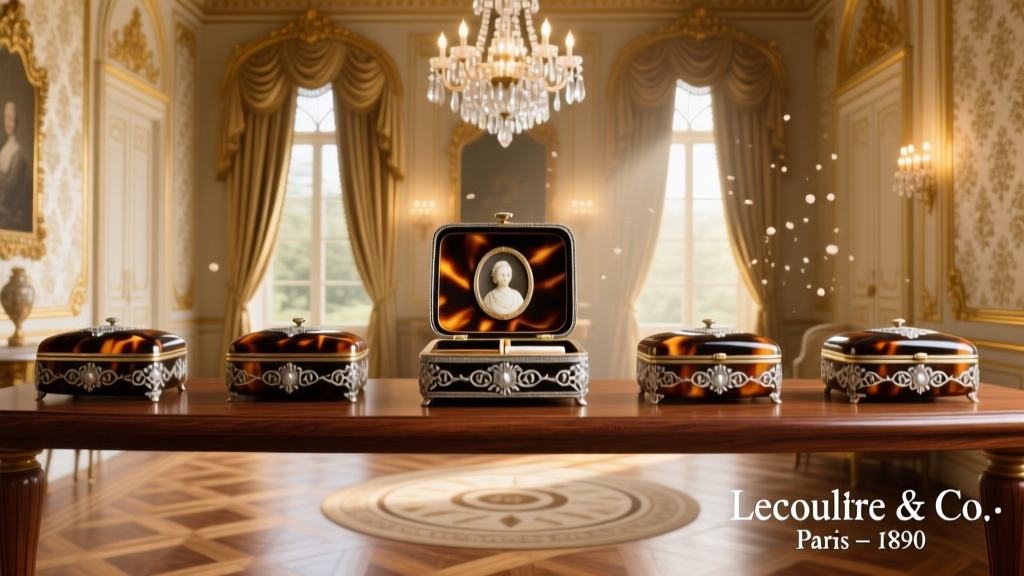
Tortoiseshell Snuffboxes by LeCoultre: Craftsmanship, Provenance, and Conservation Ethics

The Mrs. Beasley Paper Doll: A 1972 Whitman Collectible from 'Family Affair' — History, Value, and Restoration Insights
Westinghouse Model C X-Ray Machine (c. 1940): Engineering, Clinical Use, and Restoration Considerations
Limoges Plate Dinner Set: White Gilt Border by Wm. Guerin & Co., 10¾-Inch 12-Piece Service
Louis XVI Mahogany Chaise Longue: Authentic Late 19th-Century Restoration & Provenance Analysis

Franciscan Apple Batter Bowl: Identifying the Early Mark with Original Sticker — A 10¼-Inch Collector’s Reference