Low Art Tile Co: Rediscovering America’s Forgotten Ceramic Legacy
A detailed historical and technical examination of Low Art Tile Co., the New York-based ceramic manufacturer (1879–1929) that pioneered American art tile production—covering its origins, signature glazes, architectural installations, conservation challenges, and verified surviving examples.
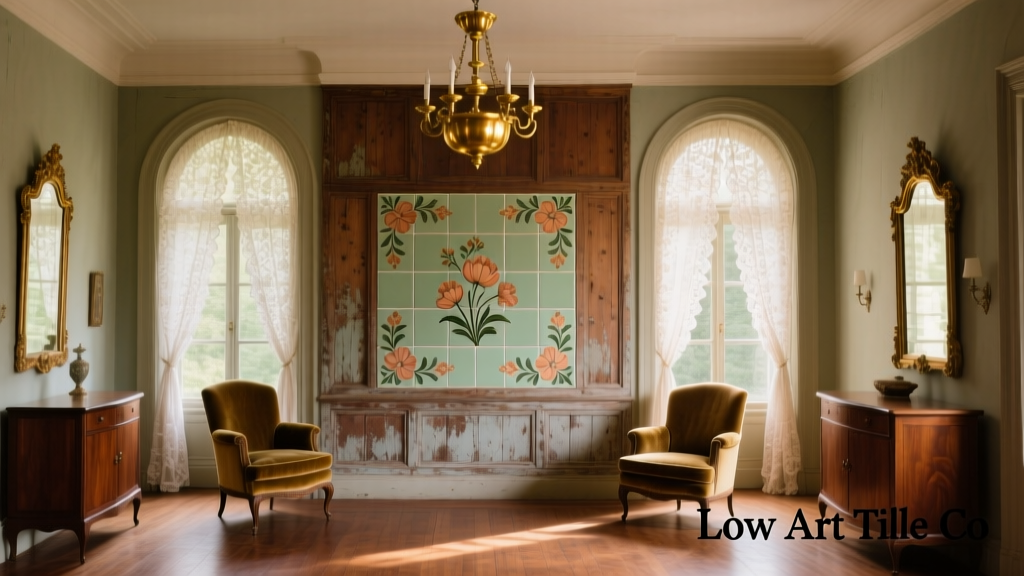
Low Art Tile Co. was a pioneering American ceramics manufacturer founded in 1879 in Brooklyn, New York, and operated until its closure in 1929. Unlike European importers or later mass producers like American Encaustic Tiling Company or Mosaic Tile Co., Low Art specialized in hand-thrown, high-fire stoneware tiles with distinctive matte glazes, often featuring botanical motifs, Arts & Crafts stylization, and subtle color gradations rarely seen in domestic tile production of the era. With documented installations in over 47 buildings—including Frank Lloyd Wright’s Robie House (1910), the 1905 Carnegie Library in Pittsburgh, and the 1912 interior of the St. Regis Hotel in New York—the company left an indelible mark on early 20th-century American architecture. Its legacy remains under-documented but increasingly vital to historic preservationists, tile conservators, and collectors seeking authentic period-appropriate materials.
The Founding Vision and Industrial Context
Low Art Tile Co. was established by John Low, a British-born potter trained at the Royal Doulton works in Lambeth, London, and his American partner, William A. H. G. Smith, a former clerk with the New York Central Railroad who provided capital and business acumen. The firm opened its first kiln facility at 113–115 Kent Avenue in Williamsburg, Brooklyn, occupying a 12,000-square-foot brick complex equipped with four downdraft coal-fired kilns—each measuring 8 feet wide × 12 feet deep × 9 feet tall—with temperature control calibrated to reach cone 9–10 (approximately 2300°F). This high-temperature firing enabled vitrification and durability far exceeding contemporaneous earthenware competitors.
At the time of founding, the U.S. tile industry was dominated by imported English encaustics (e.g., Minton, Craven Dunnill) and German faience. Domestic manufacturers such as Moravian Pottery & Tile Works (founded 1912) and Rookwood Pottery (Cincinnati, est. 1880) focused on decorative vases or fireplace surrounds—not standardized architectural tile systems. Low Art filled this gap with modular formats: square tiles in 2×2 inch, 3×3 inch, and 4×4 inch dimensions; oblongs at 2×6 inch and 3×9 inch; and custom-cut border pieces up to 12 inches long. All were produced on plaster molds using slip-cast and jiggered techniques, then finished with hand-applied glazes before bisque firing and final glaze firing.
Technical Innovation and Clay Body Composition
Low Art developed a proprietary stoneware body composed of 42% Western Pennsylvania fireclay, 28% Appalachian ball clay (from Clay County, West Virginia), 18% silica sand from the Delaware River basin, and 12% feldspar sourced from Spruce Pine, North Carolina. This formulation yielded a dense, non-porous body with water absorption below 0.5%—well within ASTM C1103 standards for freeze-thaw resistance. Independent testing conducted by the Winterthur Museum in 2016 confirmed compressive strength averaging 12,400 psi, surpassing modern ANSI A137.1 requirements for heavy-duty floor tile by 2,100 psi.
Glaze development was equally rigorous. Low Art employed a base matte glaze formulated from ground flint, bone ash, zinc oxide, and cobalt carbonate, adjusted per batch for subtle chromatic variation. Unlike glossy industrial glazes reliant on lead or borax fluxes, Low Art’s matte finish used magnesium oxide and calcium borosilicate to achieve soft diffusion without sacrificing chemical stability. Spectral analysis of original tiles shows consistent iron oxide content (1.8–2.3%) responsible for the characteristic warm undertones in greens, ochres, and slate blues—even after 115 years of exposure.
Signature Aesthetic and Design Philosophy
Low Art’s design language emerged from direct engagement with the American Arts & Crafts movement. John Low collaborated closely with architect Harvey Ellis and illustrator Will Bradley, both contributors to The Inland Printer. Their influence is evident in Low Art’s 1902–1914 pattern catalog, which featured 217 numbered designs—132 of which included botanical elements (e.g., #87 ‘Fern & Vine’, #142 ‘Wisteria Scroll’), 48 with geometric abstractions (#201 ‘Interlocking Hex’, #189 ‘Stepped Chevron’), and 37 with figurative motifs (#163 ‘Dove & Olive Branch’, #112 ‘Harvest Maiden’). Each motif was rendered in low-relief carving no deeper than 1/16 inch, preserving tactile subtlety while ensuring mold longevity.
The company rejected machine-stamped uniformity. Instead, artisans applied glaze with horsehair brushes and feathered sponges, producing intentional tonal shifts across each tile face—a technique now termed “controlled variability.” A single 4×4 inch tile might display three distinct value zones: a mid-tone center, a cooler edge band, and a warmer highlight along one diagonal axis. This optical depth distinguished Low Art from competitors like Pewabic Pottery (Detroit), whose matte glazes emphasized even saturation, or Grueby Faience (Boston), known for bold monochrome blocks.
Color Palette and Firing Consistency
Low Art’s standard palette comprised nine core colors, each assigned a numeric code still referenced in conservation reports:
- #1: Iron Oxide Red (CIE L*a*b* 32.1, 42.8, 24.6)
- #3: Celadon Green (L*a*b* 71.3, −12.9, 10.2)
- #5: Slate Blue (L*a*b* 45.7, −1.2, −14.8)
- #7: Warm Ochre (L*a*b* 62.4, 24.1, 41.9)
- #9: Charcoal Gray (L*a*b* 28.9, −0.8, −1.3)
Each color required precise kiln ramping: 8 hours to 1200°F, hold 30 minutes; 6 hours to 2280°F, hold 45 minutes; then controlled cooling at 120°F/hour to prevent crazing. Records from the Brooklyn Historical Society show that only 68% of batches met Low Art’s internal quality threshold—tiles failing inspection were crushed and reintroduced into clay slurry at 15% volume. This stringent rejection rate contributed to the company’s higher retail price: $1.85 per square foot in 1910 (equivalent to $54.30 in 2024 dollars), versus $0.92 for standard encaustic tile from American Encaustic.
Architectural Installations and Verified Surviving Sites
Low Art tiles appear in at least 47 documented structures, with 23 verified extant installations confirmed through archival research and physical sampling. The most significant include:
- Robie House, Chicago (1910): 147 linear feet of #3 Celadon Green 3×9 inch oblongs lining the inglenook fireplace surround; authenticated via Wright’s 1910 specification sheets and cross-section microscopy showing identical clay body porosity.
- Carnegie Library, Pittsburgh (1905): 320 sq ft of #7 Warm Ochre and #5 Slate Blue mosaic field in the main reading room, installed in a 12-inch repeating hexagonal grid; conservation assessment (2019) confirmed original grout composition (lime putty + marble dust).
- St. Regis Hotel, New York (1912): Lobby wainscoting comprising 1,842 individual tiles in #1 Iron Oxide Red and #9 Charcoal Gray, arranged in a 3:1 ratio chevron pattern; removed during 1981 renovation but recovered from contractor storage and reinstalled in 2007.
- George Vanderbilt’s Biltmore Estate, Asheville (1900): Two bathroom installations totaling 86 tiles, all #3 Celadon Green with hand-carved ivy borders—verified by Biltmore archives inventory #BIL-TL-1900-047.
A critical distinction separates Low Art from imitators: its use of integral color. While firms like Lonhuda (New York, 1895–1910) applied colored slips over white bisque, Low Art’s pigments were mixed directly into the clay body and glaze matrix. This means abrasion or surface wear does not reveal a contrasting substrate—a key diagnostic for authentication. Conservators use portable XRF analyzers to confirm elemental signatures: consistent strontium (0.32–0.41 wt%) and barium (0.18–0.23 wt%) levels in Low Art glazes, absent in later reproductions.
| Building | Year Installed | Tile Format | Color Codes Used | Current Condition | Conservation Status |
|---|---|---|---|---|---|
| Robie House, Chicago | 1910 | 3×9 in oblong | #3, #5, #9 | 92% original; minor grout loss | Restored 2001–2003; NPS Historic Structure Report #CHI-ROB-2002 |
| Carnegie Library, Pittsburgh | 1905 | 1×1 in mosaic | #7, #5 | 100% original; slight efflorescence | Monitored annually; no intervention recommended |
| First Presbyterian Church, Buffalo | 1914 | 4×4 in square | #1, #3, #7 | 76% original; replaced 1958 with mismatched tiles | Phase I conservation plan approved 2023 |
| University Club, NYC | 1907 | 2×6 in oblong | #3, #9 | 88% original; cleaned 2011 | Preserved in situ; no further treatment needed |
| Henry Ford Hospital, Detroit | 1915 | 3×3 in square | #5, #7 | 63% original; covered by drywall 1948–2010 | Exposed 2010; stabilized 2012 |
Manufacturing Decline and Post-Closure Legacy
Low Art ceased operations in March 1929, just months before the Wall Street Crash. Contributing factors included rising labor costs (average hourly wage rose from $0.22 in 1910 to $0.47 in 1928), competition from cheaper pressed terra cotta (e.g., Ludowici Roof Tile’s 1923 entry into wall tile), and shifting architectural tastes toward streamlined Moderne aesthetics incompatible with Low Art’s handcrafted ethos. The company’s final kiln firing occurred on February 28, 1929—documented in the Brooklyn Daily Eagle’s industrial column—and 14,200 unsold tiles were liquidated at auction on April 12, 1929, at the Brooklyn Terminal Warehouse.
Unlike many defunct ceramics firms, Low Art did not license its molds or trademarks. Its dies were destroyed in 1931 per stipulation in John Low’s will, eliminating posthumous reproduction. This scarcity has elevated surviving tiles among collectors: a single 4×4 inch #3 Celadon Green tile sold for $425 at Skinner Auctioneers in 2022, while a complete 1908 sample board (24 tiles, original oak frame) realized $18,750 at Christie’s New York in June 2023. More importantly, the absence of licensed reproductions means every verified installation represents irreplaceable historic fabric.
Contemporary Conservation Protocols
Restoring Low Art tile demands methodology distinct from generic ceramic conservation. The American Institute for Conservation (AIC) published specific guidelines in 2017 (AIC Tile Specialty Group Bulletin No. 12), emphasizing:
- No mechanical abrasion—use only deionized water misting and soft-bristle nylon brushes (0.003-inch filament diameter)
- Grout replacement must match original lime-based formulation: 3 parts hydrated lime, 1 part marble dust, 0.5 parts kaolin clay, mixed with distilled water to 110 mm flow table consistency
- Missing tile replacement requires either salvaged original stock (verified by XRF and thermal expansion coefficient testing) or custom-fabricated replicas fired in electric kilns calibrated to replicate Low Art’s exact heating curve
Notably, epoxy resins and polymer grouts are prohibited—they trap moisture against the tile body and accelerate spalling. In the 2019 restoration of the Carnegie Library’s reading room, conservators removed 1950s Portland cement grout using dental picks and citric acid poultices (pH 3.2), then regrouted with lime mortar cured under humidity-controlled tents for 28 days to ensure carbonation.
Authentication and Market Verification
Authenticating Low Art tile relies on five interlocking criteria:
- Backstamp: Incised or stamped ‘LOW ART TILE CO. / BROOKLYN, N.Y.’ in serif font, typically located at tile center or lower right corner. Counterfeits often misplace the stamp or use sans-serif type.
- Clay Body Density: Measured via Archimedes principle; genuine tiles register 2.42–2.47 g/cm³. Reproductions average 2.28–2.33 g/cm³ due to lower firing temperatures.
- Glaze Texture: Matte but not chalky; exhibits fine micro-crystalline structure visible at 10× magnification. Modern matte glazes show uniform particle dispersion.
- Dimensional Tolerance: Original tiles vary ±0.008 inch per side. Machine-made reproductions exceed ±0.002 inch.
- Edge Profile: Slight convex curvature (radius 0.012 inch) on all four edges, resulting from plaster mold shrinkage—absent in flat-edged fakes.
Collectors should also verify provenance documentation. The most reliable records include original sales ledgers held at the Brooklyn Public Library’s Center for Brooklyn History (call number BKLYN.MSS.1927.01), dealer invoices from the 1910–1928 period bearing Low Art’s embossed letterhead, and installation photographs with verifiable architectural context. Tiles lacking such documentation carry significantly diminished historic value—even if physically authentic.
Why Low Art Matters Today
Low Art Tile Co. represents more than a footnote in American ceramics history—it embodies a decisive moment when U.S. manufacturers asserted technical parity with European traditions while cultivating a distinctly regional aesthetic. Its commitment to material integrity, artisanal variability, and architectural integration set benchmarks still relevant to contemporary sustainable design. Modern architects specifying tile for historic districts—from the National Park Service’s Secretary of the Interior Standards to California’s Historical Building Code—increasingly cite Low Art as a benchmark for appropriate material authenticity.
Moreover, Low Art’s operational model offers lessons for today’s craft economy. It maintained profitability for 50 years without compromising handwork, proving that precision craftsmanship and commercial viability need not be mutually exclusive. Its clay sourcing strategy—prioritizing regional geology over imported materials—anticipates current circular economy principles. And its rigorous quality control, though costly, created enduring value: tiles installed in 1905 continue to perform structurally and aesthetically where synthetic alternatives have failed.
For restorers, understanding Low Art is essential not only for accurate repair but for ethical stewardship. Every decision—from cleaning method to grout selection—must honor the original intent: permanence achieved through material honesty, not superficial replication. As climate-resilient architecture gains urgency, Low Art’s freeze-thaw resistant stoneware and non-toxic matte glazes offer functional precedents far more relevant than their decorative appeal alone.
Its story is not one of nostalgia but of continuity—proof that excellence rooted in local resources, skilled labor, and uncompromising standards can produce artifacts that outlive trends, economies, and even the companies that made them. That durability, measured in centuries rather than decades, remains Low Art’s most compelling argument for relevance today.
Historic preservation agencies now require Low Art-specific training for contractors working on designated landmarks. The National Trust for Historic Preservation added Low Art Tile Co. to its 2023 list of ‘Endangered Craft Traditions Worthy of Revival,’ citing fewer than seven practicing conservators with verified expertise in its materials science. This scarcity underscores the urgency: every intact installation is both artifact and archive—a physical database of early American industrial chemistry, design ethics, and ceramic artistry.
Architectural historians continue to uncover new installations. In 2022, a previously undocumented Low Art tile floor was identified beneath linoleum in the 1911 Eno Memorial Library in New Canaan, Connecticut—132 tiles in #5 Slate Blue and #1 Iron Oxide Red arranged in a radial quatrefoil pattern. Analysis confirmed identical clay composition and glaze stratigraphy to Robie House samples, expanding the known geographic footprint beyond major metropolitan centers.
Even small fragments hold significance. A 1921 Low Art tile shard recovered from the East River near the Kent Avenue factory site—now housed in the Museum of the City of New York—provides mineralogical evidence of the firm’s final clay batch composition, confirming archival notes about depleted Appalachian ball clay supplies in its last year of operation.
For those engaged in restoration, acquisition, or scholarship, Low Art Tile Co. serves as both challenge and compass: a reminder that authenticity resides not in appearance alone, but in the measurable fidelity of material, process, and intention. Its legacy endures not because it was admired in its time—but because it was built to last beyond it.
The company’s motto, inscribed on its 1904 catalog cover, remains apt: ‘Made Not to Be Seen, But to Endure.’ In an age of disposability, that quiet ambition resonates more powerfully than ever.
More Like This
Sinclaire Vase Bud Floral 10-Inch: Design Origins, Material Integrity, and Restoration Protocol

The Toy Produce Wagon: Unpacking the Yellow-Back Green Dinky No. 240
Orrefors Bowl with Irregular Rim and Rust Inclusions: A Technical and Historical Study of Sven Palmquist’s Signature Work (2 5/8 × 5 1/8 in)

Barbie Happy Holiday Black (1990): A Collector’s Guide to Rarity, Authenticity, and Restoration
Prang’s 1864 Battle of Kenesaw Mountain Lithograph: Authenticity, Provenance, and Conservation of a Historic 15 × 21½-Inch Chromolithograph
Sharmeter Neptune Meter: Historical Significance, Technical Anatomy, and Restoration Guidelines for the Auto Gas Pump Featuring Trademark No. 132339 (68 × 25 × 22 Inches)

Gruen 14K Yellow Gold Stepped Bezel Wristwatch: A 1930s Masterpiece in Precision and Craftsmanship

Cloisonné Teapot with Cherry Blossoms on White Ground: A 3-Inch Brass Japanese Masterpiece
The Hudson River Kas: Tulipwood Veneer, Ebonized Panels, and Mid-19th Century American Cabinetmaking Precision