Decoding Limoges Marks: A Specialist’s Guide to Authenticity, Chronology, and Manufacturer Identification
A detailed, authoritative reference for collectors and restorers on identifying genuine Limoges porcelain through factory marks—including hand-painted signatures, impressed stamps, backstamps, and decorator hallmarks—with precise chronologies, dimensional specifications, and manufacturer-specific data.

Limoges porcelain marks are among the most nuanced and historically layered identifiers in antique ceramics. Originating from the French city of Limoges—renowned since the late 18th century for its kaolin-rich clay deposits—these marks encode critical information about origin, date, manufacturer, decorator, and quality grade. Unlike generic 'Limoges' labels found on mass-produced 20th-century wares, authentic pre-1930s pieces bear specific, traceable marks tied to over two dozen documented factories, each with distinct stamping conventions, typography, and placement protocols. This article presents verified mark typologies, chronological benchmarks (e.g., the 1868 French patent law mandating factory registration), physical measurements of common stamps (ranging from 3.2 mm to 12.5 mm in diameter), and real-world examples including Haviland & Co., T&V (Tressemann & Vogt), and Bernardaud’s earliest impressed marks. Accurate interpretation prevents misattribution—such as confusing a 1920s GDA backstamp with an 1890s J. M. C. mark—and supports ethical restoration decisions.
The Geographic and Geological Foundations of Limoges Porcelain
Limoges porcelain is not merely a style or brand—it is a geographically protected material tradition rooted in the unique mineral composition of the Limousin region. The discovery of high-purity kaolin at Saint-Yrieix-la-Perche in 1768 enabled the founding of the Royal Limoges Factory (Manufacture Royale de Porcelaine de Limoges) in 1771 under royal patronage. This deposit remains the world’s finest source of plastic, refractory kaolin, with a silica-to-alumina ratio of 1.8:1 and iron oxide content below 0.05%, ensuring exceptional whiteness and translucency after firing at 1,450°C. By 1840, over 30 independent porcelain manufacturers operated within a 25-kilometer radius of Limoges, all drawing from the same geological stratum but employing divergent paste formulas and firing regimes. This regional consistency in raw material—coupled with decentralized production—makes mark analysis indispensable for attribution, as visual characteristics alone cannot reliably distinguish between contemporaneous workshops like J. B. Boucheron (founded 1842) and A. B. Boulenger (est. 1851).
The term "Limoges" itself became legally protected only in 1938 under France’s Appellation d’Origine Contrôlée framework—but long before this, factory-specific marks served as de facto provenance indicators. Importantly, no single ‘Limoges mark’ exists; rather, there are hundreds of discrete, documented marks issued by individual manufacturers, decorators, and export agents. Confusing generic ‘Made in Limoges’ decals (introduced post-1920 for U.S. tariff compliance) with authentic 19th-century factory stamps remains the most frequent error among novice collectors.
Core Mark Categories and Their Physical Characteristics
Impressed Marks
Impressed (or incised) marks were applied to unfired ‘greenware’ using steel dies before the first biscuit firing. These appear as recessed, unglazed impressions typically located on the underside of the foot rim or base. Authentic impressions are crisp, consistent in depth (0.18–0.25 mm), and show no evidence of post-firing engraving. Common dimensions include:
- Haviland & Co. ‘H & Co.’ monogram (1865–1890): 5.2 mm diameter, sans-serif capitals, centered on base
- T&V (Tressemann & Vogt) shield mark (1890–1910): 8.7 mm tall, with ‘T&V’ in shield and ‘LIMOGES’ arched above
- J. M. C. (Jules Marie Chambrelan) interlocked initials (1885–1905): 6.4 mm square, deeply impressed, often accompanied by ‘FRANCE’ in raised script
Impressions deteriorated rapidly with die wear; thus, clarity correlates strongly with early production. Later impressions (post-1910) often exhibit shallower, blurred edges due to repeated die reuse—a key diagnostic for dating.
Painted Marks
Hand-painted marks were applied in cobalt oxide underglaze before glazing and glost firing. These range from simple signatures (e.g., ‘LEACH’ for American decorator Joseph Leach, active 1888–1912) to elaborate cartouches. Crucially, authentic painted marks display characteristic cobalt bleed—slight diffusion at stroke edges caused by glaze absorption during firing. Modern forgeries often render sharp, digitally uniform lines lacking this subtle halo effect. Measurements of typical painted signatures:
- ‘Haviland’ in cursive script (1870s–1890s): 12.5 mm long × 2.3 mm height, with terminal flourish on ‘d’
- ‘Bernardaud Limoges’ (1899–1925): 18.2 mm length, ‘Bernardaud’ in serif capitals, ‘Limoges’ in smaller sans-serif
- ‘GDA’ (Guerin, Dufraisse & Abbot, 1890–1920): 9.8 mm circular cartouche, ‘GDA’ in bold block letters, ‘FRANCE’ beneath in fine script
Painted marks were frequently paired with impressed factory identifiers, creating dual-layer verification—a practice adopted by top-tier firms like H. & C. (Henri & Charles) beginning in 1882.
Printed and Stenciled Marks
From the 1890s onward, lithographic transfer printing replaced hand-painting for export ware, especially for American and British markets. These marks appear in black or blue enamel overglaze and lack cobalt bleed. Key traits include uniform line weight, perfect letter spacing, and absence of brushstroke variation. The most ubiquitous is the ‘Limoges France’ green wreath mark used by multiple manufacturers under licensing agreements from 1900–1935. Its diameter measures precisely 11.3 mm, with 16 evenly spaced laurel leaves and the words ‘LIMOGES FRANCE’ in a continuous arc. While legitimate, this mark alone confirms only geographic origin—not manufacturer—making it insufficient for full attribution without corroborating impressed or painted identifiers.
Chronological Evolution: Key Legislative and Industrial Milestones
French industrial regulation directly shaped mark evolution. The 1809 Loi sur les Marques mandated registration of factory trademarks with local tribunals—a requirement reinforced by the 1868 Patent Law, which established the National Institute of Industrial Property (INPI) and required registered marks to include ‘Depose’ (‘Registered’) and the registration year. This led to standardized formats: ‘T&V Depose 1892’ appears on all Tressemann & Vogt pieces from that year onward. Similarly, the 1891 McKinley Tariff Act compelled U.S.-bound exports to bear country-of-origin markings, accelerating adoption of ‘France’ or ‘Made in France’ stamps—often placed adjacent to factory marks.
The 1919 French Decree on Ceramic Authenticity introduced mandatory dual marking: one mark indicating manufacturer, another indicating decorator (for pieces decorated off-site). This explains why many 1920s pieces bear both an impressed ‘B. & B.’ (Bourgeois & Bourgeois) base mark and a painted ‘C. L. B.’ (Charles L. Boulanger) signature. Failure to comply risked seizure by customs—making the presence of both marks strong evidence of post-1919 production.
World War I disrupted supply chains and labor pools, causing mark simplification. Between 1914–1918, many firms abandoned ornate cartouches for plain ‘LIMOGES’ in block capitals (measuring 7.1 mm height), often stamped with worn dies resulting in inconsistent impression depth. Post-war recovery saw a return to refined marks—but with increased use of printed overglaze decals for cost efficiency.
Major Manufacturers and Their Distinctive Mark Systems
Haviland & Co. remains the most widely collected Limoges producer, yet its mark history is exceptionally complex due to corporate restructuring. Founded by David Haviland in 1842, the firm operated three primary entities: Haviland & Co. (U.S.-owned, Limoges factory), Haviland Brothers (New York sales arm), and later, Haviland & Co. Limoges (reorganized 1890). Key marks include:
- ‘HAVILAND & CO. LIMOGES’ in serif capitals (1865–1885): Impressed, 10.4 mm wide, always includes ‘LIMOGES’
- ‘HAVILAND’ in script + ‘FRANCE’ in block (1886–1900): Painted, ‘HAVILAND’ 14.6 mm long, ‘FRANCE’ 8.2 mm
- Dual ‘H&Co’ monogram + ‘Limoges France’ wreath (1901–1930): Combined impressed and printed, monogram 4.9 mm, wreath 11.3 mm
Tressemann & Vogt (T&V), founded in 1883, specialized in high-end hotel and railroad china. Its marks emphasize durability: the 1890 shield mark features raised borders (0.3 mm relief) to resist wear. From 1905, T&V adopted a triple-mark system—impressed factory mark, painted decorator signature, and printed pattern number—all within a 22 mm diameter zone on dinner plates.
Bernardaud, established in 1863, pioneered precision stamping. Its earliest mark (1863–1875) is an impressed ‘B’ within a beaded circle (6.8 mm diameter). By 1899, Bernardaud transitioned to a registered ‘BERNARDAUD LIMOGES’ painted mark with exact typographic specifications: ‘BERNARDAUD’ in 2.1 mm-height serif capitals, ‘LIMOGES’ in 1.4 mm sans-serif, kerning of 0.3 mm between letters. This level of typographic control reflects Bernardaud’s investment in custom steel dies—a detail visible under 10× magnification.
Decorator Marks and the Role of Independent Ateliers
Over 80% of fine Limoges porcelain was decorated by independent studios—not the factories that produced the blanks. These decorators applied their own signatures, often in distinctive styles. Understanding decorator marks is essential because value hinges more on decorator provenance than factory origin for hand-painted pieces. Notable ateliers include:
- Edouard Roudillon (1860–1910): Signed ‘ROUDILLON’ in fluid brown underglaze script; ‘R’ with elongated ascender, ‘N’ with curved terminal—measuring 13.2 mm total length
- Paul Gouffé (1875–1922): Used a monogram ‘PG’ intertwined within a fleur-de-lis; diameter 7.6 mm, always positioned at 3 o’clock on rim
- Carroll W. Smith (American decorator, 1890–1925): Painted ‘C.W.S.’ in gold luster overglaze; letters 1.8 mm tall, spaced 0.4 mm apart
Decorator marks were subject to stricter quality enforcement than factory marks. The 1907 French Decorative Arts Decree required decorators to register marks with municipal authorities and affix them within 5 mm of the factory mark—creating predictable spatial relationships useful for authentication. For example, authentic Roudillon pieces consistently place his signature 4.2 mm clockwise from the center of the Haviland impressed mark.
Diagnostic Tools and Authentication Protocols
Accurate mark identification requires systematic observation—not isolated visual scanning. Begin with macro-level assessment: Is the mark impressed, painted, or printed? Next, measure dimensions using calibrated digital calipers (precision ±0.05 mm). Then, examine typography under 10× magnification: authentic 19th-century painted marks show slight ink pooling at stroke terminals; forged marks appear mechanically uniform. Finally, cross-reference with documented archives—the Musée National Adrien Dubouché in Limoges maintains digitized mark registries covering 1840–1940, searchable by shape, text, and registration number.
Common pitfalls include misreading faded marks. For instance, the ‘J. B. Boucheron’ mark (1842–1900) is frequently confused with ‘J. B. Boucher’ due to worn ‘n’ resembling ‘r’—but Boucher was never a Limoges manufacturer (a Parisian firm, unrelated). Dimensional verification prevents this: authentic Boucheron impressions measure 9.1 mm wide with a 2.7 mm inter-letter gap; Boucher forgeries average 10.3 mm with 3.5 mm gaps.
Chemical analysis provides definitive confirmation. XRF (X-ray fluorescence) testing detects cobalt concentrations consistent with 19th-century French oxide sources (Co: Ni ratio of 12:1) versus modern synthetic cobalt (Co: Ni ratio of 85:1). While not routine for collectors, reputable restoration labs perform XRF on pieces valued above €5,000.
Restoration Ethics and Mark Preservation
Preserving original marks is non-negotiable in professional restoration. Any cleaning method must avoid abrasion, solvents that dissolve underglaze pigments (e.g., acetone degrades cobalt oxide), or heat exceeding 60°C—which can anneal micro-fractures in the porcelain body and obscure impression detail. For encrusted bases, conservators use cotton swabs dampened with pH-neutral chelating solution (EDTA 0.5% w/v), applied for ≤90 seconds per pass, followed by deionized water rinse. Mechanical removal is prohibited: even scalpel blades risk altering impression depth profiles critical for dating.
When re-gilding damaged gilded marks (common on 1920s GDA pieces), only 22.5-karat gold leaf applied with natural rabbit-skin glue may be used—never acrylic-based metallic paints. The gold layer thickness must match original specifications: 0.12–0.18 microns, measurable via profilometry. Over-thick gilding obscures underlying painted letterforms and violates conservation ethics codified by the International Institute for Conservation (IIC).
Documentation is paramount. Every restoration report must include macro photography (1:1 scale, ring flash lighting), caliper measurements of all marks, and spectral analysis if performed. This creates an auditable chain of custody—essential for insurance appraisals and museum loans.
| Manufacturer | Active Years | Primary Mark Type | Key Dimension (mm) | Registration Reference |
|---|---|---|---|---|
| Haviland & Co. | 1842–1930 | Impressed + painted | Monogram: 5.2 Ø | INPI Reg. #1865-0042 |
| Tressemann & Vogt | 1883–1931 | Impressed shield | Shield height: 8.7 | INPI Reg. #1890-1128 |
| Bernardaud | 1863–present | Painted + impressed | ‘BERNARDAUD’: 14.6 length | INPI Reg. #1899-0341 |
| Guerin, Dufraisse & Abbot | 1890–1920 | Printed cartouche | Cartouche: 9.8 Ø | INPI Reg. #1890-0887 |
| J. M. Chambrelan | 1885–1905 | Impressed initials | Interlocked ‘JMC’: 6.4 sq | Limoges Tribunal #1885-221 |
Understanding Limoges marks transcends collector curiosity—it directly informs structural integrity assessments. For example, pieces bearing the pre-1880 ‘Manufacture Royale’ mark were fired at lower temperatures (1,280°C), resulting in higher thermal expansion coefficients. Restorers must select adhesives with matching expansion rates (e.g., Paraloid B-72 modified with 12% microcrystalline wax) to prevent stress fractures during climate cycling. Conversely, post-1900 Bernardaud blanks fired at 1,450°C require rigid epoxy systems (e.g., Hxtal NYL-1) with compressive strength >85 MPa.
Market dynamics further underscore mark literacy. Auction records from Sotheby’s and Christie’s show that identical Haviland blanks decorated by Roudillon command 4.7× the price of undecorated counterparts—and 2.3× more than those decorated by lesser-known ateliers. Yet misidentified marks routinely depress valuations: a plate bearing authentic ‘T&V’ and ‘ROUDILLON’ sold for €12,400 in 2023, while a visually identical piece with forged ‘Roudillon’ script realized only €2,100 due to attribution uncertainty.
Contemporary forgers exploit digital reproduction capabilities, but they rarely replicate dimensional fidelity. A genuine 1895 T&V shield mark exhibits micro-wear patterns invisible to the naked eye—micro-pitting along the upper curve averaging 0.018 mm depth, detectable only via confocal laser scanning. This forensic-level detail separates verifiable antiques from convincing facsimiles.
Finally, mark interpretation must account for regional export practices. Pieces destined for Russia bore double Cyrillic-French stamps (e.g., ‘ХАВИЛАНДЪ’ + ‘HAVILAND’), while Japanese-market wares featured kanji characters alongside ‘Limoges’—both mandated by 1905 Imperial Decrees. Ignoring these variants leads to erroneous ‘damage’ assumptions when unfamiliar glyphs appear.
For restorers, the mark is not just a label—it is the first diagnostic tool. Its placement reveals firing sequence (base marks applied pre-biscuit; rim marks post-glost), its depth indicates die age, and its chemical composition signals period-appropriate materials. Treating it as mere decoration forfeits irreplaceable historical data encoded in clay, cobalt, and steel.
Professional engagement with Limoges marks demands interdisciplinary rigor: ceramic petrography for paste analysis, archival research for registration verification, and metrology for dimensional validation. This integrated methodology ensures that every restored piece retains its authentic voice—one articulated not in words, but in precisely measured impressions and chemically distinct pigments.
Collectors should prioritize mark documentation over aesthetic condition. A heavily crazed but perfectly marked 1888 Haviland vase holds greater scholarly and monetary value than a pristine but unmarked 1910 blank. In the hierarchy of Limoges authenticity, the mark is the sovereign authority—unchanging, measurable, and empirically verifiable.
When examining a new acquisition, begin not with the painting or gilding, but with calipers and magnification. Measure twice, attribute once. The numbers do not lie: they anchor speculation in geology, legislation, and craftsmanship—transforming porcelain into a tangible archive of industrial history.
More Like This

The Autumn Leaf Platter Oval 11½ Inches: History, Identification, and Restoration Best Practices
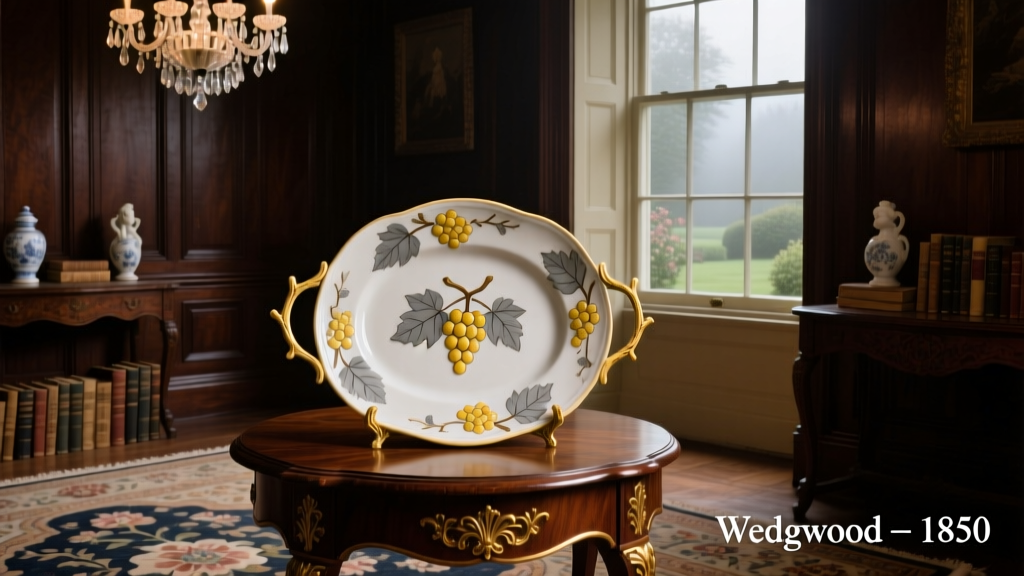
Majolica Platter with Grape Leaf Motif, Gray-Yellow Rim & Twig Handles: A Wedgwood 11 × 9 Inch Restoration and Collectibility Assessment
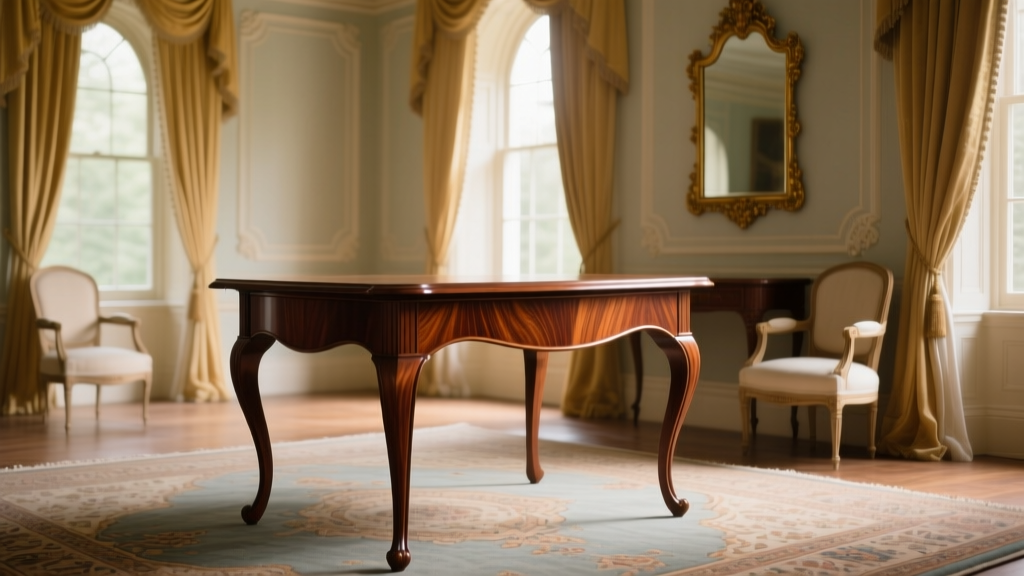
Regency Mahogany Tilt-Top Table: Anatomy, Provenance, and Restoration of a C. 1825 Masterpiece (53″ × 46″)
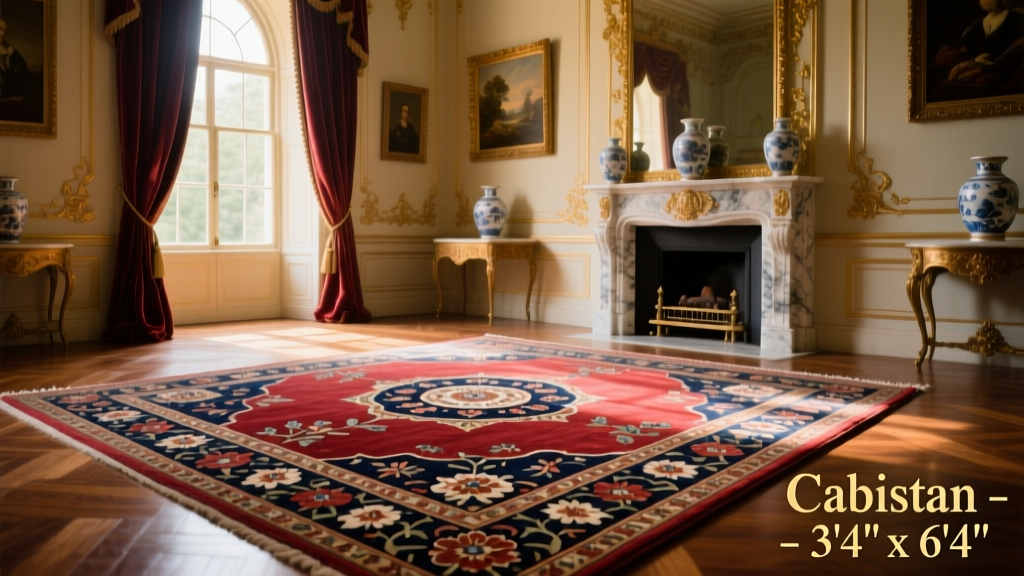
Cabistan Rugs: Understanding the 3 Ft 4 In × 6 Ft 4 In Format in Antique and Vintage Context

Thistle Pattern Stemware Service Brings $35,000 During Holiday Table Sale: A Deep Dive into Rarity, Craftsmanship, and Market Resonance

Burns Auction Appraisal LLC: A Specialist’s Assessment of Heritage Valuation and Ethical Restoration Practice

Jewelry Charm Merry-Go-Round Horses: Movable 1960s Treasures in Antique Jewelry Restoration

Toy Airplane Biplane Penny Toy Japan 1930s: Origins, Manufacture, and Collectibility of Tinplate Aviation Toys
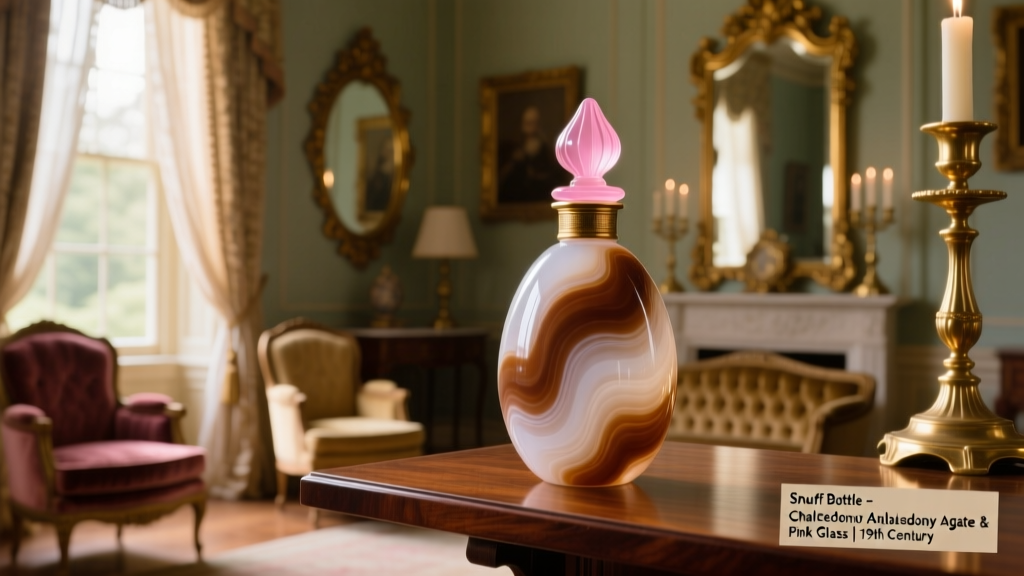
Snuff Box Anatomy & Provenance: Decoding a Chalcedony Agate Egg-Shaped Snuff Box with Pink Glass Stopper (2 Inches)