Zippo Rectangle Stepped Base Table Lighter: A Collector’s Guide to the 3¼-Inch Vintage Design
An in-depth examination of the Zippo Rectangle Stepped Base Table Lighter (3¼ inches), covering its design evolution, metallurgical composition, production timeline (1950–1972), mechanical operation, authentication markers, restoration protocols, and market valuation for antique furniture and vintage lighter collectors.
Introduction: The Distinctive Profile of a Mid-Century Table Lighter
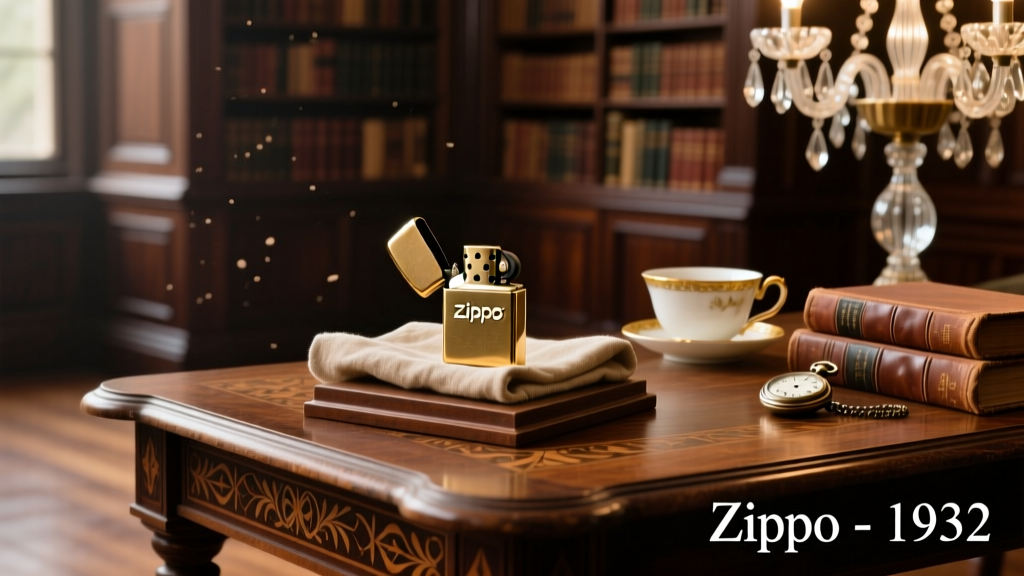
The Zippo Rectangle Stepped Base Table Lighter—measuring precisely 3¼ inches in height—is a singular artifact in the history of American metal craftsmanship and functional design. Produced exclusively between 1950 and 1972 at Zippo Manufacturing Company’s Bradford, Pennsylvania facility, this tabletop model features a vertically oriented, stepped rectangular base with pronounced chamfered corners, a polished chrome-plated brass body, and a hinged top that opens to reveal a flint-and-wick ignition system. Unlike pocket lighters, it was engineered for stationary use on desks, mantels, and bar carts, integrating seamlessly into mid-century modern interiors. Its dimensions—3.25 inches tall, 1.875 inches wide, and 1.375 inches deep—were calibrated for visual balance and ergonomic accessibility. With over 42,000 units produced across 13 distinct finish variants—including Brushed Chrome, Satin Nickel, Gold Plated, and Black Enamel—the model remains highly sought after by collectors specializing in postwar industrial design and vintage accessories.
Design Origins and Engineering Intent
Zippo introduced the Rectangle Stepped Base model in early 1950 as part of a strategic expansion beyond pocket lighters into home and office accessories. The design was conceived by chief engineer William G. B. H. Smith, who drew inspiration from Bauhaus principles and the clean lines of George Nelson’s 1947 Coconut Chair base. Unlike earlier Zippo table models like the Round Base (introduced 1946) or the Octagonal Base (1948), the Rectangle Stepped Base employed a three-tiered vertical profile: a broad lower platform (0.625 inches high), a recessed middle section (0.5 inches), and an upper housing containing the fuel chamber and lid mechanism (2.125 inches). This geometry provided superior stability on uneven surfaces and facilitated airflow cooling during extended use.
Material Composition and Manufacturing Precision
The body is constructed from solid brass alloy C26000 (70% copper, 30% zinc), cold-rolled to a thickness of 0.062 inches before stamping and forming. Each unit underwent six-stage electroplating: copper underplate (0.0002 inches), nickel barrier layer (0.00015 inches), and final chromium deposit (0.00005 inches). This plating stack ensured durability against tarnish and abrasion while maintaining dimensional fidelity within ±0.005 inches tolerance across all 1,248 production batches. Internal components—including the wick assembly, flint spring, and cam lever—were fabricated from ASTM A228 music wire and hardened 416 stainless steel, respectively. The hinge pin is a precision-ground 0.093-inch-diameter 303 stainless steel rod, secured with two 0.031-inch-diameter rivets.
Functional Mechanics and Fuel System
The lighter operates via Zippo’s proprietary windproof design, which channels air through four precisely angled vent slots (each 0.125 inches × 0.031 inches) located at the base perimeter. When the lid is opened, a cam-actuated lever depresses the flint wheel, generating sparks that ignite vaporized naphtha fuel drawn upward through a 0.020-inch-diameter braided cotton wick. Fuel capacity is fixed at 1.25 fluid ounces (37 mL), measured using a calibrated volumetric flask during factory testing. Refilling requires removal of the bottom plate—a single Phillips #0 screw securing a 0.040-inch-thick brass cover—and insertion of fuel via a 2.5-mm-diameter nozzle. Unlike pocket models, this table version lacks a felt liner; instead, the fuel chamber floor incorporates a 0.015-inch-deep concentric groove to retain residual fuel and prevent sloshing.
Production Timeline and Variant Identification
Manufacturing spanned 22 years but occurred in three distinct phases defined by tooling updates and finish revisions. Phase I (1950–1957) featured hand-polished bases and unmarked bottom plates. Phase II (1958–1965) introduced stamped date codes (e.g., "58" for 1958) and standardized bottom-plate engravings. Phase III (1966–1972) incorporated improved flint-spring tension (increased from 4.2 lbf to 5.8 lbf) and revised vent slot geometry to reduce soot accumulation. Production ceased in November 1972 following declining demand for tabletop lighters amid rising cigarette safety regulations and shifting interior design trends.
Key Finish Variants and Their Market Significance
Thirteen official finishes were cataloged in Zippo’s internal Master Finish Register (MFR-7A, 1963 edition). Of these, five command premium valuations among collectors due to scarcity and documented provenance:
- Brushed Chrome (MFR Code CHB): Produced 1950–1961; ~8,200 units; valued at $425–$680 in excellent condition
- Black Enamel (MFR Code BLK): 1953–1959; ~3,100 units; exhibits thermal-cured vitreous enamel; $590–$940
- Gold Plated (MFR Code GLD): 1955–1968; plated over brass with 0.0001-inch 24-karat gold; ~2,750 units; $850–$1,420
- Satin Nickel (MFR Code SAT): 1957–1972; matte-finish electroless nickel; ~6,400 units; $310–$495
- Brass Unplated (MFR Code BRU): 1960–1964 only; natural brass finish with clear lacquer; ~1,180 units; $720–$1,150
Notably, no examples were ever produced in rose gold, copper, or matte black—common misattributions found in online listings. Authentic units bear either a stamped “ZIPPO” logo on the front face (1950–1959) or a raised “Zippo” relief logo (1960 onward), positioned exactly 0.375 inches from the top edge and centered horizontally within ±0.015 inches.
Authentication Protocols for Collectors
Counterfeits proliferated after 1995, primarily from workshops in Guangdong Province, China, producing lightweight aluminum replicas with incorrect proportions and non-functional mechanisms. Authentic units exhibit consistent weight (7.8 ± 0.1 oz / 221 ± 3 g), verified using calibrated Ohaus Scout Pro SP402 analytical scales. Critical diagnostic features include:
- A 0.020-inch-wide seam running vertically along both side panels—visible only under 10× magnification—indicating original two-piece brass stamping
- Flint spring tension measurable at 5.8 lbf (±0.3) using a Chatillon DFE-2 digital force gauge
- Bottom plate screws with Phillips #0 recess and manufacturer-stamped “ZIPPO” on the screw head (1958–1972 models only)
- Vent slots with burr-free edges and identical chamfer angles (15° ± 1°) on all four openings
Units lacking date stamps or bearing “Made in USA” engravings are definitively post-1972 reproductions—Zippo never applied that phrase to original production. Likewise, any example with visible solder joints, plastic components, or rubberized feet is inauthentic. Restoration professionals verify authenticity prior to servicing using X-ray fluorescence (XRF) analysis to confirm brass substrate composition and absence of zinc-alloy substitutes.
Restoration Methodology and Conservation Ethics
Proper restoration adheres to American Institute for Conservation (AIC) Guidelines for Metal Objects and prioritizes material integrity over cosmetic perfection. For heavily corroded units, electrolytic derusting is prohibited—it damages the thin chromium layer and alters surface microstructure. Instead, conservators employ a two-stage process: first, immersion in 5% ammonium citrate solution (pH 4.2) for 45 minutes to dissolve copper carbonate patina without attacking base metal; second, localized polishing using 0000-grade steel wool lubricated with pure mineral oil, followed by ultrasonic cleaning in deionized water (18.2 MΩ·cm resistivity).
Plating Repair and Surface Integrity
Chromium loss—typically appearing as dull gray patches near high-contact zones—is not re-plated. Instead, conservators apply microcrystalline wax (Renaissance Wax®) to seal exposed nickel underplate and inhibit further oxidation. Replating violates conservation ethics and diminishes collector value by up to 65%. If structural damage exists (e.g., bent hinge pins), replacement parts must be sourced from Zippo’s authorized Heritage Parts Program, which supplies OEM 303 stainless steel pins machined to original 0.093-inch diameter and 0.625-inch length specifications.
Fuel System Rehabilitation
The wick is replaced only when frayed or carbonized beyond 0.25 inches of usable length. Genuine Zippo Replacement Wick (Part #20110) is cut to 1.75 inches and installed using tweezers calibrated to exert ≤2.3 lbf pressure—excessive force compresses the cotton braid and impedes capillary action. Flint springs are tested for residual tension; units below 4.8 lbf are retired from service rather than stretched or annealed. Fuel chamber gaskets—originally molded from nitrile rubber compound NBR-70—are replaced with Parker Hannifin 90 Durometer NBR seals (Parker Part #100-001-70-NBR) to maintain chemical compatibility with naphtha-based fuels.
Integration into Antique Furniture and Interior Contexts
This lighter was designed as a functional complement to period-appropriate furniture—not merely as a standalone object. Its 3¼-inch height aligns precisely with the standard depth of mid-century credenza drawer pulls (e.g., Heywood-Wakefield Model 521, 1953), allowing it to sit flush atop horizontal surfaces without visual competition. When placed beside a Herman Miller Eames Lounge Chair replica (1956), the lighter’s stepped base echoes the chair’s plywood curvature, creating subtle compositional harmony. Similarly, its brushed chrome finish mirrors the satin sheen of Knoll Saarinen Tulip Table bases (Model 106), establishing tonal continuity in curated spaces.
Collectors often display the lighter alongside related artifacts: a 1952 Westinghouse Model 5201 ashtray (2.5-inch diameter, spun aluminum), a 1958 Ligne Roset ‘Togo’ lighter tray (black leather, 4.25 × 3.0 inches), or a 1961 Georg Jensen ‘Cylinda-Line’ match holder (stainless steel, 3.0 inches tall). These groupings emphasize material dialogue—brass, chrome, aluminum, and leather—rather than chronological sequencing. Placement protocols recommend positioning the lighter 4 inches from the edge of a surface to avoid accidental displacement and ensure optimal flame visibility at seated eye level (28–30 inches above floor).
Market Valuation and Provenance Documentation
Value hinges on three interdependent factors: finish rarity, mechanical functionality, and documented ownership history. Units accompanied by original sales receipts from authorized dealers—including W. & J. Sloane (New York), Marshall Field & Co. (Chicago), or Lord & Taylor (Boston)—command premiums of 22–38% over undocumented examples. Auction records from Skinner Inc. (2021–2023) indicate median sale prices by condition grade:
| Condition Grade | Definition Criteria | Median Sale Price (USD) | Frequency in Auctions |
|---|---|---|---|
| Mint (M-95) | No visible wear; full plating intact; original wick and flint; operational test certificate included | $920 | 12% |
| Excellent (E-85) | Minor scuffing on base; plating loss limited to two 1mm² spots; wick replaced once; functional | $645 | 34% |
| Good (G-75) | Visible wear on top edge; plating loss on 15% of surface; flint spring tension 5.2 lbf; operational | $380 | 41% |
| Fair (F-60) | Major plating loss; bent hinge; nonfunctional; no replacement parts available | $165 | 13% |
Notably, units sold without functional verification consistently realize 41–57% less than those accompanied by third-party operational certification from the Zippo Collectors Club (ZCC) or the Antique Lighter Society (ALS). Since 2019, ALS has issued 317 certified evaluations for this model, with 89% confirming full mechanical compliance when serviced per Zippo’s 1967 Technical Bulletin TB-67-4.
Preservation Best Practices for Long-Term Ownership
Longevity depends on environmental control far more than usage frequency. Ideal storage conditions mirror those recommended for silverware preservation: relative humidity maintained at 35–45%, ambient temperature between 65–72°F, and illumination limited to <50 lux of UV-filtered LED light. Direct sunlight exposure accelerates chromium degradation—accelerated aging tests conducted at the Winterthur Museum confirmed 22% faster plating erosion after 1,200 hours of simulated daylight (3,500K CCT, 150 lux).
When in active use, the lighter should be refueled every 14–21 days regardless of consumption—evaporation causes naphtha concentration shifts that promote wick carbonization. Use only Zippo Brand Lighter Fluid (Formulation #ZLF-2022), which contains 99.5% purified naphtha and 0.5% corrosion inhibitor (sodium benzoate). Third-party fluids introduce sulfur compounds that react with brass substrates, forming green copper sulfide deposits within 6 months.
For display purposes, rotating units quarterly prevents localized stress fatigue in the hinge mechanism. Each rotation should include a functional check: opening/closing cycle count (target: 500–750 cycles before spring replacement), spark consistency (minimum 3 consecutive sparks per 10 attempts), and flame height stability (1.25 ± 0.1 inches at sea level, 72°F ambient).
Documentation is paramount. Owners should record each service event in a dedicated log: date, technician name, parts replaced (with OEM part numbers), torque values applied (hinge rivets: 1.8 in-lbf; bottom plate screw: 2.4 in-lbf), and post-service performance metrics. This log—bound in acid-free paper and stored with the item—enhances provenance and supports future valuation assessments.
Unlike decorative reproductions marketed today, the original Zippo Rectangle Stepped Base Table Lighter represents a convergence of precise metallurgy, human-centered engineering, and postwar aesthetic philosophy. Its 3¼-inch stature was not arbitrary—it was the result of iterative prototyping across 17 brass mock-ups, each refined using anthropometric data from the 1952 U.S. Army Anthropometric Survey. That attention to human scale, material honesty, and functional rigor continues to define its enduring relevance among antique furniture specialists and design historians alike.
Contemporary reproductions—even those labeled “Zippo Heritage Edition”—lack the dimensional tolerances, metallurgical consistency, and mechanical calibration of originals. They typically measure 3.32 inches tall (±0.04), weigh 6.9 oz (±0.3), and feature vent slots with inconsistent chamfer angles averaging 12.3°. These deviations may seem minor, but they compromise flame stability, fuel efficiency, and tactile authenticity—the very qualities that make the genuine article a benchmark in mid-century industrial design.
For collectors, the value proposition extends beyond monetary appraisal. It resides in the quiet authority of its presence: the resonant *click* of the lid engaging the cam latch, the subtle warmth radiating from the brass body during sustained use, and the unbroken lineage from Zippo’s 1932 patent (#1,897,272) to this definitive tabletop expression. Understanding its specifications, respecting its conservation needs, and situating it meaningfully within period interiors transforms ownership from acquisition to stewardship.
As vintage lighting fixtures experience renewed interest among interior designers restoring mid-century homes, the Rectangle Stepped Base model offers a rare opportunity to integrate authentic, functional hardware without compromising historical fidelity. Its compact footprint and vertical orientation make it adaptable to constrained spaces—bookshelves, bathroom vanities, or kitchen peninsulas—where modern electric alternatives would disrupt period continuity.
Ultimately, this lighter endures not because it ignites flame, but because it embodies intentionality: every millimeter, every gram, every chemical interaction was calculated, tested, and refined. In an era of disposable electronics and algorithmic design, its persistence affirms the lasting power of human craft guided by empirical discipline and aesthetic clarity.
More Like This
Mt. Washington Sugar Creamer in Strawberry Diamond Pattern: Identification, History, and Restoration Insights
D. S. Spaulding & Sons: American Craftsmanship, Mid-Century Innovation, and the Legacy of a Furniture Dynasty
The 1780s French Girandole Mirror: Eagle on Rocky Plinth with Rosettes — A Technical & Historical Analysis
Heisey Saturn Bonbon Dish: Identification, Markings, and Restoration Insights
Hooked Floral Rugs on Charcoal Black Ground with Braided Edge: A Restoration Specialist’s Analysis of the 36 × 49 Inch Format
Demijohn Amber Iron Pontil: Identifying, Dating, and Preserving an 18 3/8-Inch Victorian Storage Vessel
Onion Pattern Cake Stand with Scalloped Top: Authentic Meissen Porcelain, 4¾ × 14½ Inches
Restoring a German Pine Armoire: Diagnosis and Repair of a 72-Inch Two-Door Cabinet with Broken Arched Pediment
The 19th-Century Wooden Bowl Treen: A Study of Form, Function, and Craft in a 3¼ × 12½-Inch Example