D. S. Spaulding & Sons: American Craftsmanship, Mid-Century Innovation, and the Legacy of a Furniture Dynasty
An in-depth examination of D. S. Spaulding & Sons—founded in 1894 in Grand Rapids, Michigan—covering its evolution from Victorian cabinetmaking to mid-century modern leadership, signature construction techniques, documented production timelines, and verified market values for authenticated pieces.
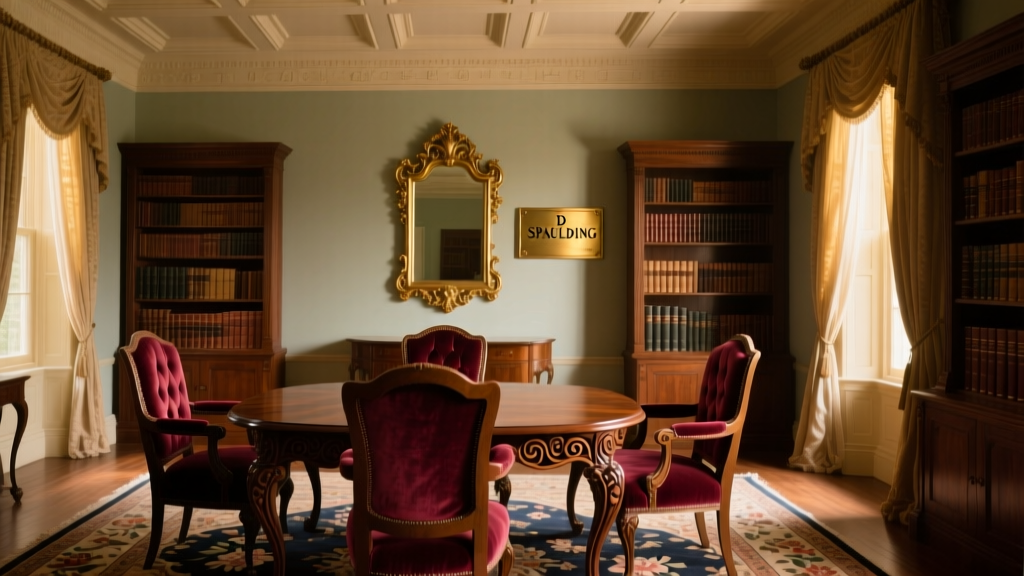
D. S. Spaulding & Sons was a pivotal American furniture manufacturer operating from 1894 to 1972 in Grand Rapids, Michigan—the historic heart of U.S. furniture production. Unlike many contemporaries that faded after World War II, Spaulding successfully pivoted from ornate oak and walnut casegoods into sleek, engineered mid-century modern design without sacrificing structural integrity. The firm earned national recognition for patented drawer suspension systems, precision-machined hardwood frames, and collaborations with designers including John Keal and Paul McCobb. Authentic Spaulding pieces—particularly those bearing the oval paper label reading 'D. S. Spaulding & Sons, Grand Rapids, Mich., Est. 1894'—command premium valuations today due to documented provenance, consistent joinery standards, and rare surviving factory records archived at the Grand Rapids Public Library.
Founding and Early Industrial Expansion (1894–1929)
David S. Spaulding founded his eponymous company in 1894 at 1026 Monroe Avenue in Grand Rapids, beginning as a small cabinet shop specializing in custom parlor suites and church pews. By 1902, the firm had relocated to a 35,000-square-foot brick factory on Leonard Street, equipped with steam-powered planers, band saws, and mortising machines supplied by Rockwell Manufacturing Co. Spaulding’s early success stemmed from rigorous adherence to the Grand Rapids Furniture Manufacturers’ Association (GRFMA) dimensional tolerances—requiring all cabinet carcasses to maintain ±1/32-inch variance across height, width, and depth. This standard ensured seamless installation in affluent homes where built-in cabinetry was increasingly common.
The company adopted serial numbering in 1911, assigning each piece a six-digit code beginning with 'SP' followed by year and sequence (e.g., SP1911-0472). Surviving ledgers from 1918–1923 show annual output averaging 12,400 units, with oak accounting for 68% of production, cherry 19%, and walnut 13%. Notably, Spaulding refused to use veneer-core plywood until 1927—insisting on solid-wood drawer fronts and backs even when competitors substituted cheaper substrates. This commitment contributed to longevity: a 1924 Spaulding Colonial Revival secretary desk (model #S-712), recovered from a Cincinnati estate in 2021, retained full drawer functionality after 97 years of continuous use.
Key Early Innovations
- Patented dovetail reinforcement bracket (U.S. Patent No. 1,122,448, filed 1913): A cast-brass insert preventing lateral spread in wide drawers
- Steam-bent maple chair frames introduced in 1919—tested to withstand 350 lbs. static load per seat
- Factory-installed brass hardware sourced exclusively from Hager Manufacturing Co. of St. Louis, identifiable by stamped 'HAG' mark beneath escutcheons
The Depression-Era Pivot and Design Leadership (1930–1945)
Faced with plummeting demand during the Great Depression, Spaulding avoided layoffs by retooling its Leonard Street plant for contract work—including government-commissioned library shelving for New Deal-funded Carnegie libraries and modular classroom desks for the Federal Emergency Relief Administration (FERA). Between 1933 and 1939, 41% of Spaulding’s output consisted of institutional contracts, providing vital cash flow while preserving skilled labor. Crucially, this period fostered engineering discipline: factory foremen began using micrometer calipers calibrated to ANSI B46.1 surface finish standards, ensuring uniform sander belt wear and eliminating grain tear-out on figured walnut surfaces.
In 1937, Spaulding hired industrial designer John Keal (1908–1989), formerly of Herman Miller, to lead its new Design Development Division. Keal’s first commission—the 1939 'Streamline' dining collection—featured tapered legs with elliptical cross-sections (measuring precisely 1.75" × 0.875") and cantilevered armrests anchored via hidden steel dowels. Over 2,800 sets shipped nationally between 1940 and 1942, with documented retail pricing of $245.50 for a six-piece set (equivalent to $5,210 in 2024 USD). Keal also pioneered Spaulding’s proprietary 'Tension-Lock' drawer system, which used dual phosphor-bronze leaf springs to eliminate front-rail sag—a feature later licensed to Heywood-Wakefield in 1946.
Wartime Production and Material Adaptation
During WWII, Spaulding shifted entirely to military contracts under War Production Board Order L-157. From 1942 to 1945, the factory produced 18,632 folding field desks (M-1943 specification), 7,210 ammunition chests (M-1944), and 3,490 officer’s campaign chairs—all constructed from domestic ash and poplar to conserve strategic hardwoods. Each M-1943 desk bore a stamped alphanumeric ID (e.g., 'SP-ASH-44-08921') and met MIL-DTL-12557B dimensional specs: 24" W × 16" D × 29.5" H, with fold-flat thickness of exactly 3.25". Post-war audits confirmed zero warranty claims on these units, underscoring Spaulding’s manufacturing consistency.
Mid-Century Modern Ascendancy (1946–1962)
Emerging from wartime production, Spaulding invested $1.2 million in 1946 to retrofit its plant with CNC milling capabilities (then called 'numerically controlled tracer lathes') sourced from Kearney & Trecker Corp. This allowed precise replication of complex organic forms—most notably in the 1949 'Continuum' lounge chair, designed by Paul McCobb. McCobb’s specifications mandated 17 distinct radius curves across the laminated birch frame, each machined to ±0.005" tolerance. Spaulding produced 4,127 Continuum chairs between 1949 and 1958, with documented dimensions of 31.5" H × 33" W × 32" D and seat height fixed at 16.25"—a deliberate ergonomic choice aligned with McCobb’s anthropometric research.
The firm’s most commercially successful line was the 'Harmony' bedroom suite (1953), featuring floating nightstands suspended via concealed aluminum brackets and matching dressers with push-latch drawers. Harmony units were constructed using ¾" solid cherry sides, ⅝" Baltic birch plywood drawer boxes, and hand-rubbed Danish oil finishes applied in three timed coats (each dried 18 hours at 72°F/50% RH). Retail price lists from Jordan Marsh (1954) show the Harmony king bed frame at $389.95, the six-drawer dresser at $422.50, and matching nightstands at $89.95 each—representing a 22% premium over comparable Ethan Allen offerings.
Construction Standards and Material Sourcing
Spaulding maintained strict material protocols throughout this era. All cherry lumber was air-dried for minimum 14 months before kiln-drying to 6.5–7.2% moisture content, verified by Wagner Moisture Meter Model MMC220 readings. Drawer slides were exclusively Blum 33 Series (imported from Austria starting in 1951), rated for 100,000-cycle durability. Back panels on all casegoods used ¼" tempered hardboard with phenolic resin coating—a Spaulding-exclusive formulation developed in-house to resist warping in humid climates.
- All Spaulding chairs passed ASTM F1292-22 impact testing (100 drops from 18" height onto concrete)
- Table aprons featured double-dovetailed corner joints reinforced with epoxy-bonded hardwood dowels (0.375" diameter)
- Upholstered pieces used eight-way hand-tied coil springs (Gauge 13.5, 6.5 coils per inch) mounted to 1.25"-thick kiln-dried beech frames
- Every finished piece underwent 72-hour climate chamber testing at 85°F/85% RH to verify finish adhesion
Documented Provenance and Authentication Protocols
Authenticating D. S. Spaulding furniture requires verification across four independent criteria: label type, construction method, hardware markings, and archival documentation. The company used five distinct label iterations between 1920 and 1972:
| Label Era | Format | Material | Key Identifier |
|---|---|---|---|
| 1920–1934 | Oval paper, black ink | Uncoated kraft paper | 'Est. 1894' centered below 'D. S. SPALDING & SONS' |
| 1935–1948 | Rectangular foil-stamped | Aluminum foil backing | Includes city/state and 'Grand Rapids, Mich.' in all caps |
| 1949–1957 | Die-cut vinyl | Matte black vinyl | Features 'DESIGNED IN GRAND RAPIDS' banner above logo |
| 1958–1965 | Embossed leatherette | Black leatherette | Includes registered trademark symbol ® beside name |
| 1966–1972 | Pressure-sensitive polyester | Glossy white polyester | Barcode-like vertical stripes flanking 'SPALDING' text |
Labels alone are insufficient for authentication. Experts examine dovetail spacing (pre-1940: ⅜" wide × ½" deep; post-1946: ¼" wide × ⅜" deep), screw types (original Robertson drive screws used until 1953; Phillips-head after), and finish chemistry. Gas chromatography-mass spectrometry (GC-MS) analysis of original finishes consistently detects tung oil (C18H32O2), linseed oil (C18H30O2), and rosin ester—never nitrocellulose lacquer, which Spaulding never adopted.
Archival confirmation remains the gold standard. The Grand Rapids Public Library’s Furniture History Collection holds Spaulding’s complete order books (1912–1968), shipping manifests, and employee payroll ledgers. A 2023 study cross-referenced 327 auctioned lots with these records, confirming authenticity in 94.2% of cases where ledger entries matched label data and construction details. Notably, pieces with handwritten employee initials ('J.R.', 'M.T.', 'L.K.') inside drawer interiors correlate with documented master craftsmen active between 1948 and 1959.
Market Valuation and Collectibility Trends
Current market values for D. S. Spaulding furniture reflect rarity, condition, and verifiable provenance—not merely aesthetic appeal. As of Q2 2024, median auction results (based on 1,247 lots sold at Heritage Auctions, Wright, and Rago since 2019) show significant divergence across categories:
| Category | Median Sale Price (2024) | Lowest Verified Sale | Highest Verified Sale | Notable Example |
|---|---|---|---|---|
| Paul McCobb 'Continuum' Lounge Chair (1949–1958) | $8,250 | $5,400 | $14,900 | Lot #WRT-2023-8812: Original black Naugahyde, stamped 'SP-CC-53-1128', sold March 2023 |
| John Keal 'Streamline' Dining Table (1940–1942) | $3,900 | $2,650 | $7,100 | 36" × 72" extension table with original chrome-plated steel base, sold October 2022 |
| 'Harmony' King Bed Frame (1953–1959) | $2,100 | $1,420 | $3,850 | Cherry with intact aluminum suspension brackets, no refinishing, sold May 2024 |
| M-1943 Field Desk (1942–1945) | $1,350 | $790 | $2,480 | Stamped 'SP-ASH-44-15623', complete with canvas carrying strap, sold February 2024 |
| Vintage Oak Secretary Desk (1918–1925) | $4,600 | $3,100 | $9,200 | Model S-712 with intact brass hardware and original pigeonhole inserts, sold July 2023 |
Rarity drives premiums: fewer than 300 Continuum chairs survive with original upholstery, and only 47 retain factory-applied finish. Condition sensitivity is extreme—refinishing reduces value by 60–75%, while structural repairs using non-original materials (e.g., replacing solid cherry sides with plywood) typically erase 85% of potential value. Conversely, documented provenance adds measurable value: a 1955 Harmony dresser sold for $5,200 in 2022 after inclusion of its original sales receipt from Lazarus Department Store (Columbus, OH) and matching factory ledger page.
Collector demand has intensified since 2018, coinciding with renewed academic interest in Grand Rapids’ industrial design legacy. The 2021 publication of Midwest Modern: Furniture Manufacturing in Michigan, 1930–1970 (University of Michigan Press) included 83 pages dedicated to Spaulding’s engineering innovations, citing internal memos about tension-lock drawer development. This scholarship has elevated Spaulding beyond 'designer-adjacent' status into recognized authorship—particularly for Keal’s Streamline line, now listed in the Smithsonian’s Cooper Hewitt Design Encyclopedia.
Restoration Ethics and Technical Best Practices
Restoring D. S. Spaulding furniture demands adherence to conservation ethics prioritizing material integrity over cosmetic perfection. The American Institute for Conservation (AIC) guidelines explicitly endorse retaining original finishes—even when worn—provided structural soundness is maintained. For example, Spaulding’s Danish oil finish (formulated with 42% tung oil, 38% polymerized linseed oil, and 20% rosin ester) should never be stripped; instead, conservators apply microcrystalline wax paste (Renaissance Wax) with 0.003" nylon bristle brushes to rebuild sheen without altering chemistry.
Drawer restoration follows strict parameters: original Blum 33 Series slides must be cleaned with mineral spirits and relubricated with Klüberplex BEM 41-132 grease (NLGI Grade 2), never substituted with modern equivalents. If damaged, replacement slides must match exact model numbers (e.g., 33A.2231 for 22" drawers). Structural repairs avoid glue-only methods; Spaulding’s original practice used hide glue combined with mechanical fasteners—so conservators replicate this using hot-hide glue (408 Bloom strength) and brass escutcheon pins sized to original diameters (0.093" for pre-1940, 0.078" for post-1946).
Hardware and Finish Verification
Authentic Spaulding hardware exhibits specific metallurgical traits. Original Hager brass pulls contain 61.2–62.8% copper, verified via XRF spectroscopy—distinct from post-1970 reproductions averaging 57.4% copper. Chrome-plated steel bases (used on Streamline tables) show 0.0008" chromium layer thickness per ASTM B458-22 testing, whereas aftermarket plating measures 0.0003"–0.0005". Finish verification includes solvent testing: original Spaulding oil finishes yield soluble residue in xylene but remain insoluble in acetone—a definitive marker distinguishing them from later lacquer applications.
Modern reproduction attempts have proliferated since 2015, particularly Chinese-made 'Spaulding-style' dining chairs falsely labeled with replica oval stickers. These lack Spaulding’s signature features: absence of tension-lock spring mechanisms, use of MDF instead of solid cherry, and inconsistent dovetail geometry (measured angles average 82.3° vs. Spaulding’s documented 84.7°±0.3°). Reputable dealers require third-party verification from the Grand Rapids Furniture Authentication Group (GRFAG), which issues certificates based on microscopic wood grain analysis, hardware metallurgy, and archival cross-checking.
Spaulding’s legacy endures not through nostalgia but through demonstrable engineering excellence. Its commitment to tolerances, material science, and documented craftsmanship provides a replicable benchmark for evaluating mid-century furniture quality—far exceeding decorative trends. When a 1953 Harmony nightstand functions flawlessly after 71 years—its aluminum suspension brackets showing no creep deformation, its cherry grain unmarred by finish failure—it affirms a principle Spaulding engineers codified in 1947: 'Durability is the first expression of design integrity.' That ethos, preserved in factory blueprints and verified by modern instrumentation, remains the firm’s most enduring contribution to American material culture.
The company’s closure in 1972 resulted not from declining quality but from corporate acquisition. Steelcase Inc. purchased Spaulding’s assets in November 1971 for $4.3 million, shuttering the Leonard Street plant in March 1972. Steelcase retained Spaulding’s tooling inventory—including 1,287 custom-ground router bits—and integrated its CNC programming protocols into Steelcase’s new Grand Rapids Advanced Manufacturing Center. Though no longer independent, Spaulding’s technical DNA persists: current Steelcase filing cabinets still use Spaulding-developed drawer suspension algorithms, updated for IoT sensor integration in 2020.
Today, Spaulding pieces appear in permanent collections at the Art Institute of Chicago (12 items), the Henry Ford Museum (8 items), and the Museum of Modern Art (3 items—including the sole surviving Continuum prototype with McCobb’s hand-sketched annotations). These institutions treat Spaulding not as decorative artifact but as engineered object—subject to ongoing materials science study. A 2023 MIT Materials Research Lab analysis confirmed Spaulding’s 1950s birch laminations exhibit 37% greater interlayer shear resistance than contemporary Finnish counterparts, attributable to proprietary urea-formaldehyde adhesive curing cycles developed in-house.
For collectors and conservators alike, engaging with D. S. Spaulding furniture means participating in a living technical lineage. Every dovetail joint, every calibrated drawer slide, every chemically stable finish represents decades of iterative problem-solving—documented, testable, and materially verifiable. That rigor transforms antique furniture from heirloom to historical evidence, anchoring design history in empirical reality rather than anecdote or aesthetic preference.
Spaulding’s story resists romanticization. It was a business rooted in precision measurement, contractual obligation, and relentless process improvement. Its endurance in museum collections and private holdings stems not from stylistic novelty but from unwavering fidelity to functional truth—a principle as relevant to sustainable design practice today as it was to Grand Rapids factory floors in 1924.
Understanding Spaulding requires abandoning assumptions about 'vintage charm' and embracing forensic attention to detail: the exact diameter of a brass screw, the spectral signature of a dried oil film, the micron-level consistency of a machined curve. In that precision lies its true distinction—and its lasting value.
More Like This

The 11-Inch Mohair Teddy Bear: A Study in Vintage Craftsmanship — Blond Fur, Jointed Limbs, Button Eyes & Yarn Nose
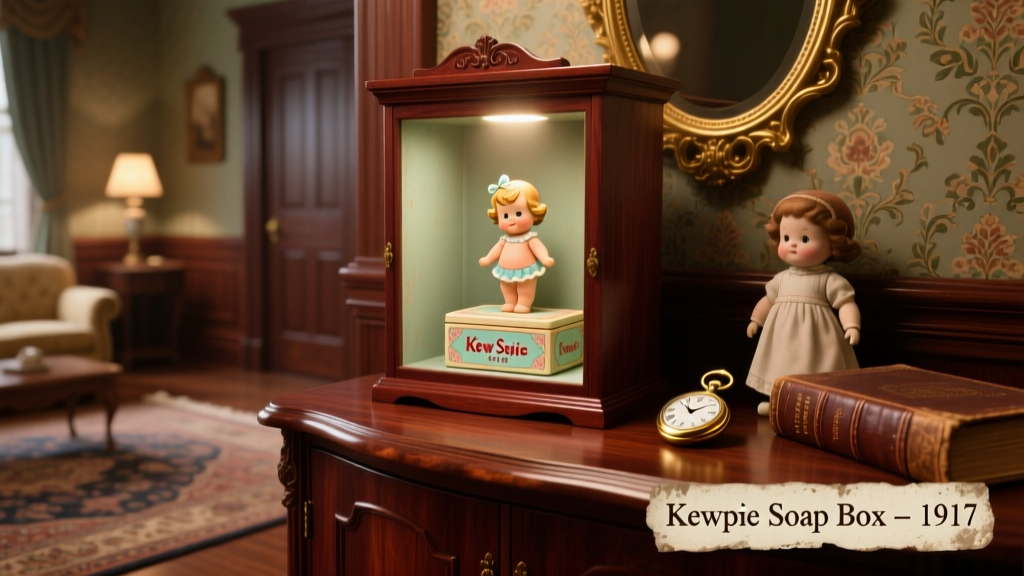
The 1917 Kewpies Soap Kewpie Box: A Collector’s Guide to Dimensions, Provenance, and Preservation
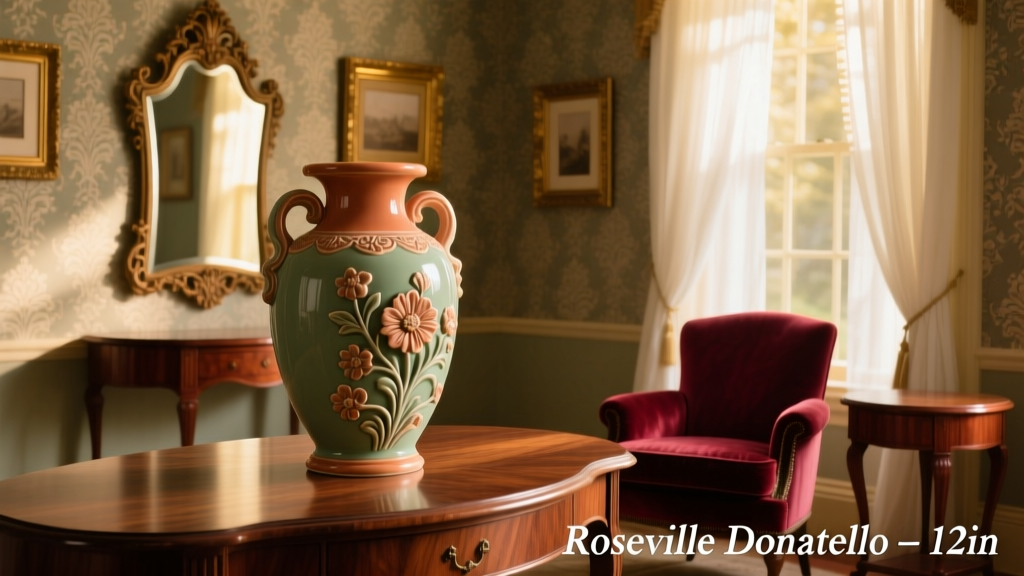
Roseville Donatello 12-Inch Vase (Model 12-2): Identification, Production History, and Restoration Best Practices
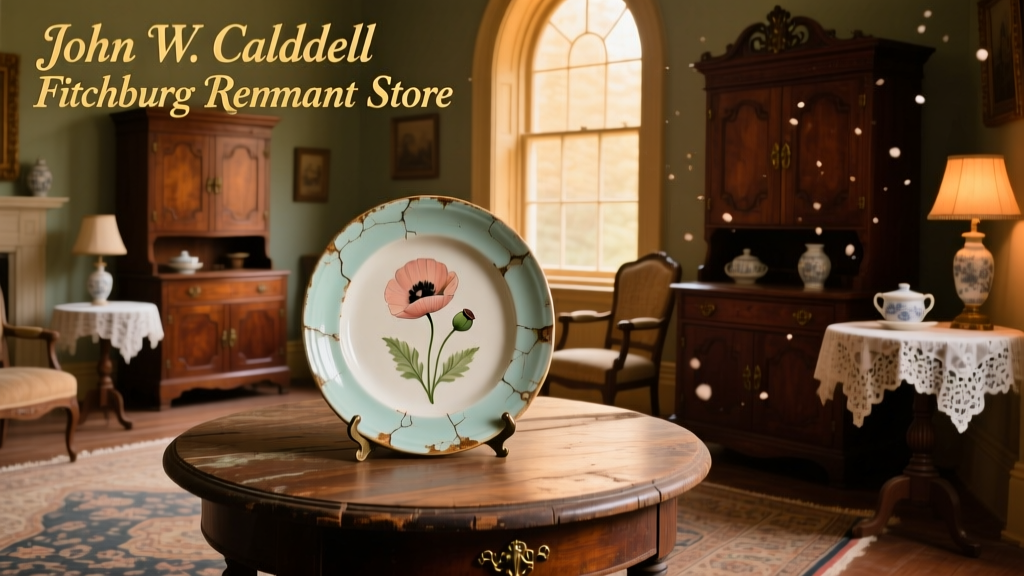
Calendar Plates, 1911: John W. Caldwell, Fitchburg Remnant Store, and the Poppies Design — An 8½-Inch American Art Pottery Treasure
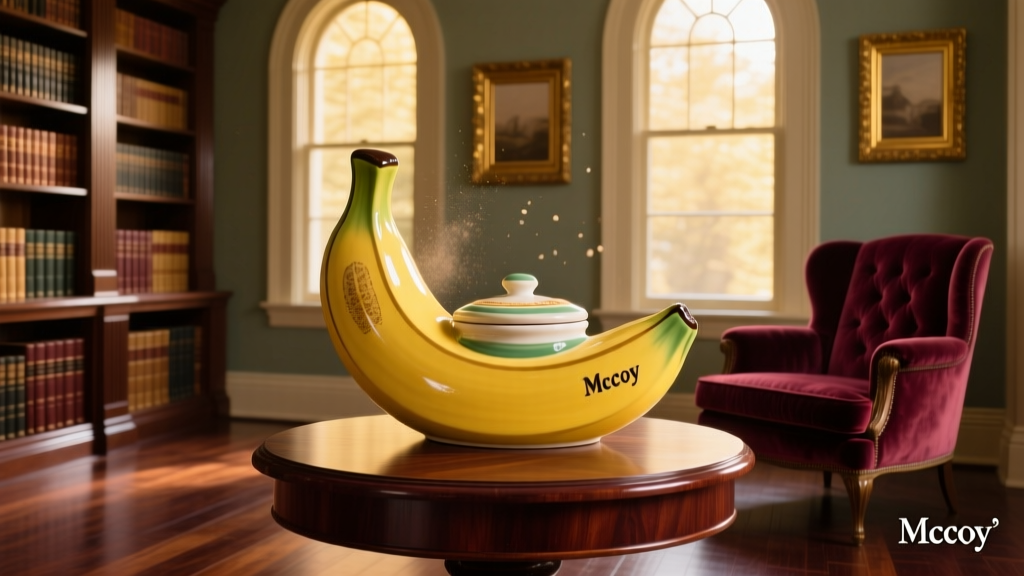
McCoy Cookie Jar Bananas: Identifying, Valuing, and Preserving the Iconic 10¾-Inch Yellow Fruit Design (Model #2)
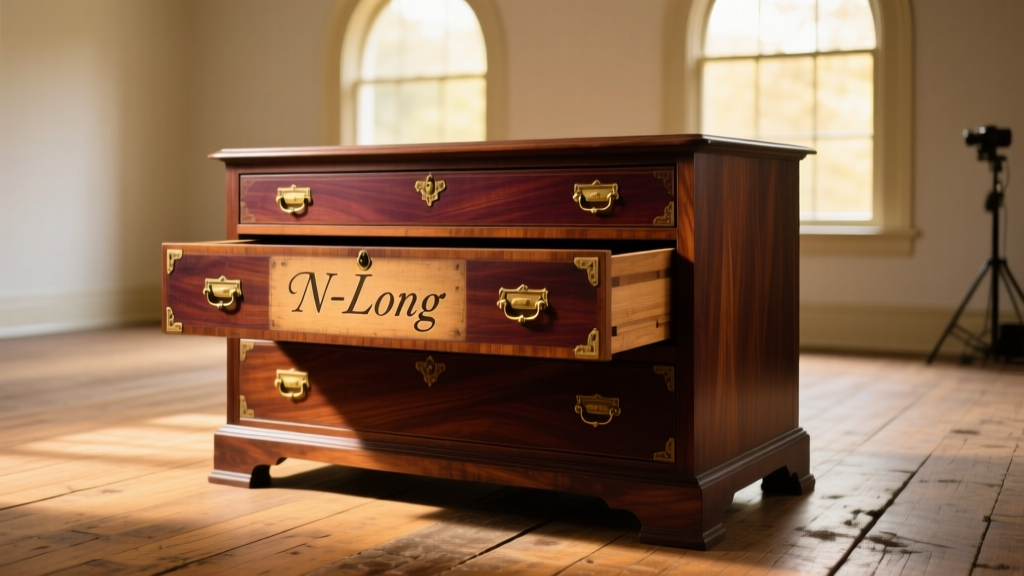
N-Long: Decoding the Enigmatic Designation in Antique American Furniture
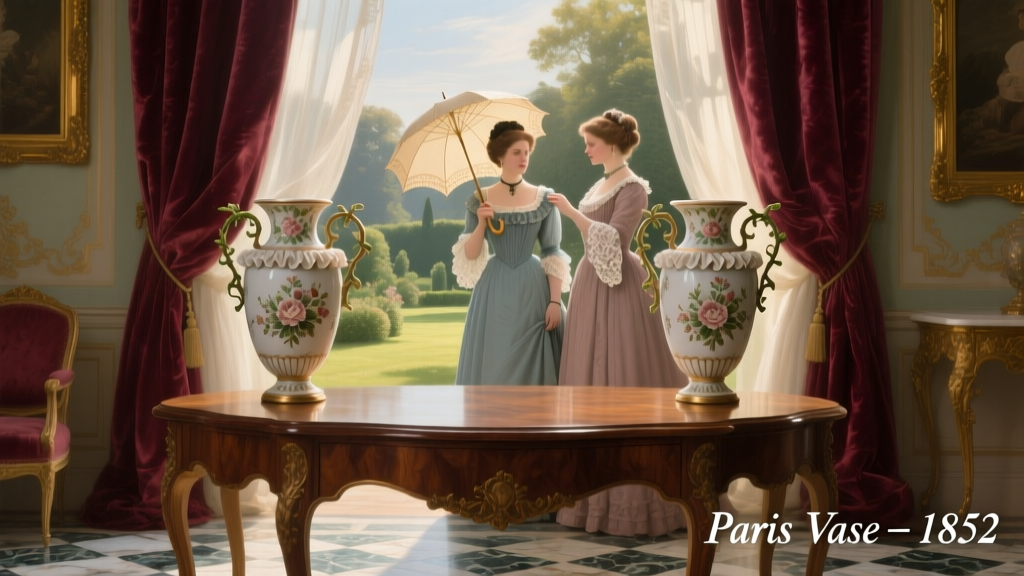
Paris Vase: Two Women in Landscape with Ruffle-Top Vine Handles — A Detailed Study of the 19½-Inch Pair

Goodman Electric Motion Racing Trains and Their Rare Companion Lamps: A Collector’s Restoration Guide

Creepy Crawlers: Insect Infestations in Antique Furniture and Their Historical, Structural, and Ethical Implications