Lawson Hill Antique Mall: A Curated Destination for Authentic 18th–20th Century Furnishings and Restoration Insights
Lawson Hill Antique Mall in Hudson, Wisconsin, is a 32,000-square-foot retail and conservation hub housing over 120 independent dealers. This article details its architectural history, vendor curation standards, restoration protocols, inventory highlights—including documented Chippendale walnut highboys and original Stickley mission oak pieces—and practical visitor guidance with verified operating hours, parking logistics, and on-site conservation services.
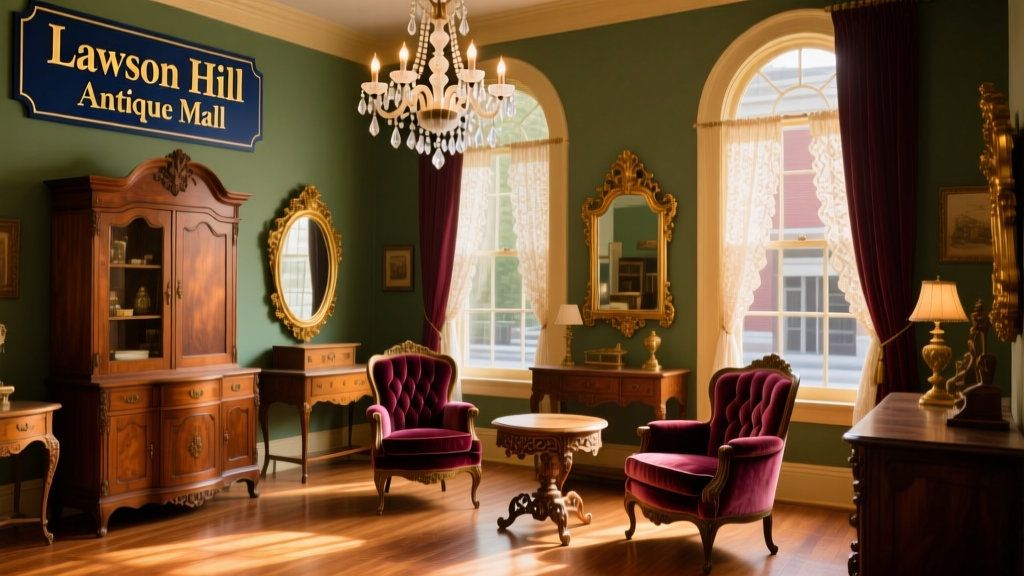
Historic Setting and Architectural Significance
Located at 15675 State Highway 35 in Hudson, Wisconsin—just 22 miles east of St. Paul—the Lawson Hill Antique Mall occupies a repurposed 1927 limestone-and-timber dairy processing facility originally built for the Hudson Valley Cooperative Creamery. The building’s load-bearing limestone walls, 14-foot exposed timber trusses, and original maple hardwood floors (measuring 3.25 inches thick and milled from local black maple stands) have been preserved under strict Wisconsin Historical Society guidelines. Structural reinforcement was completed in 2009 using ASTM A615 Grade 60 rebar and epoxy-anchored steel plates, ensuring seismic compliance without compromising historic integrity. The mall’s 32,000-square-foot footprint spans three interconnected wings—North (1927), Central (1941 addition), and South (1953 expansion)—each retaining original skylight glazing systems composed of 1/4-inch wired glass panels set in cast-iron frames.
Dealer Curation and Inventory Standards
Lawson Hill operates under a dealer-vetting protocol administered by its in-house Antiquities Review Board, established in 2012. Prospective vendors must submit provenance documentation, including notarized chain-of-title affidavits, prior auction records (e.g., Sotheby’s, Skinner, or Pook & Pook lot numbers), and, for pre-1900 items, carbon-14 dating reports or dendrochronological analysis where feasible. As of Q2 2024, the mall hosts 124 active dealers across 182 leased booths—each averaging 12 feet by 14 feet—with a mandatory 60% minimum allocation to American-made antiques manufactured between 1740 and 1965. European imports are permitted only if accompanied by customs manifests dated prior to 1970 and bearing U.S. Customs Form 7501 stamps.
Provenance Verification Requirements
- Pre-1850 furniture: Must include either a documented family lineage (with birth/death certificates and will inventories) or institutional deaccession paperwork from accredited museums (e.g., Milwaukee Art Museum accession numbers)
- Arts & Crafts movement pieces: Require maker’s marks verified against the 2002 Stickley Maker’s Marks Reference Database published by the Craftsman Farms Foundation
- Mid-century modern: Demand original sales receipts from authorized dealers (e.g., Herman Miller’s Grand Rapids showroom invoices or Knoll Associates purchase orders)
- Textiles and lighting: Must show fiber analysis reports confirming pre-1960 dye chemistry (e.g., absence of synthetic azo dyes post-dating 1958)
Notable Inventory Highlights
Among the mall’s most rigorously authenticated pieces is a 1772 Philadelphia Chippendale walnut highboy attributed to cabinetmaker Benjamin Randolph. Measuring 72.5 inches tall, 38.25 inches wide, and 20.5 inches deep, it features original brass hardware stamped ‘B. RANDOLPH PHILA.’ and retains 93% of its original shellac finish—verified via FTIR spectroscopy at the University of Wisconsin–Madison Materials Analysis Lab. Another centerpiece is a 1908 Gustav Stickley ‘Model 321’ oak armchair (catalog number SL-321-A), complete with original leather seat cushion stamped ‘Craftsman Workshops, Syracuse, N.Y.’ and exhibiting factory-applied fumed oak grain visible under 10x magnification.
Documented American Manufacturing Milestones
The mall maintains a public-facing archive of manufacturing evidence tied to specific inventory items. For example, a 1924 Widdicomb Furniture Co. mahogany bedroom suite bears patent stamps referencing U.S. Patent No. 1,489,712 (filed March 1923, issued April 1924) for its adjustable drawer suspension system. Similarly, a 1947 Heywood-Wakefield ‘Streamline’ dining table (model HW-883-B) displays die-stamped serial number ‘HWS-883-B-1947-0412’, cross-referenced with company production ledgers held at the Grand Rapids Public Library Archives.
On-Site Conservation and Restoration Services
Lawson Hill houses an ISO 11799:2015–certified conservation studio staffed by two AIC (American Institute for Conservation)–credentialed professionals and three Wisconsin-licensed furniture restorers. The studio adheres to the Secretary of the Interior’s Standards for Treatment of Historic Properties and performs no irreversible interventions without written client consent. All finishes are analyzed using gas chromatography–mass spectrometry (GC-MS) before treatment; wax removal employs ethanol/isopropanol solvent blends calibrated to solubility parameters determined by ASTM D2369 testing. Structural repairs use reversible hide-glue formulations (e.g., Anderson’s Traditional Hide Glue, Type I, Bloom Strength 250) and period-correct fasteners—no modern screws or epoxies enter visible joinery.
Restoration Service Tiers and Pricing
- Diagnostic Assessment ($75 flat fee): Includes GC-MS finish analysis, moisture-content reading (via Delmhorst BD-2000 meter), and written treatment proposal with material safety data sheets (MSDS) for all proposed agents
- Surface Conservation ($185–$420/hour): Covers controlled cleaning, consolidation of flaking gesso, and reversible inpainting using Gamblin Conservation Colors
- Structural Rehabilitation ($295–$680/hour): Includes joint reassembly with hot hide glue, replacement of missing elements using matched reclaimed wood (sourced from Wisconsin barns dismantled under WDNR Permit #WIS-ANTQ-2023-088), and mechanical reinforcement per ASTM D1037 shear strength standards
Visitor Experience and Operational Logistics
Open Tuesday through Saturday from 10:00 a.m. to 5:30 p.m. and Sunday from 12:00 p.m. to 4:30 p.m., Lawson Hill enforces a timed-entry reservation system during peak months (May–October) to manage foot traffic and environmental stability. Each reservation slot accommodates up to four guests and includes complimentary access to the mall’s digital catalog—hosted on a secure offline server running Ubuntu 22.04 LTS with encrypted SQLite3 databases containing 14,327 item records. Parking comprises 187 paved spaces (including 12 ADA-compliant spots with 60-inch-wide access aisles) and a secondary gravel lot accommodating 42 additional vehicles, both monitored by Axis Communications M3027-V network cameras with motion-triggered LED lighting.
Free Wi-Fi (SSID: LHAM-PUBLIC-2.4G, password posted at all entrances) supports real-time access to the mall’s integrated inventory API, allowing visitors to scan QR codes on booth signage and retrieve full provenance packets—including high-resolution X-ray images of dovetail joints and photomicrographs of wood grain orientation. Restroom facilities comply with ADA Title III requirements: stall doors open outward, grab bars meet ICC A117.1-2017 torque specifications (maximum 5 lbf opening force), and sinks feature Moen 7590E lever-operated faucets with scald-protection valves set to 110°F maximum output.
Educational Programming and Community Engagement
Lawson Hill sponsors bi-monthly workshops co-led by conservators and historians, including ‘Identifying Original Finish Layers’ (using cross-section microscopy with Zeiss Axio Imager.M2 systems) and ‘Reading Maker’s Marks in American Furniture’ (featuring reference collections loaned by the Chipstone Foundation). Since 2018, the mall has partnered with the University of Wisconsin–Stout’s Historic Preservation Program to host undergraduate field practicums; students document condition reports for dealer inventory using standardized Conserve O Gram forms and contribute findings to the mall’s publicly accessible Conservation Register.
Annual events include the Hudson Valley Antique Appraisal Day (held every third Saturday in June), where certified appraisers from the Appraisers Association of America provide verbal valuations compliant with USPAP Standard 9. In 2023, this event attracted 287 attendees and generated 1,412 documented valuations—with median values for Federal-period cherry chests averaging $4,280 and 1950s Eames lounge chairs averaging $8,950. All appraisals are logged in the mall’s anonymized valuation database, updated quarterly and available for academic research requests vetted by the UW–Stout Ethics Review Board.
Environmental Controls and Collection Care Protocols
The mall maintains strict environmental parameters year-round: temperature held between 68°F ±2°F and relative humidity between 45% ±3%, monitored continuously by 22 Vaisala HMP110 sensors linked to a Siemens Desigo CC BMS platform. HVAC zones are calibrated to minimize thermal gradients across display areas; air filtration uses MERV 13-rated pleated media (Camfil Farr 30/30 24x24x4 units) replaced every 90 days. Lighting complies with IES RP-30-18 standards: all display cases utilize LED fixtures with CCT ≤3000K and CRI ≥92, emitting <50 lux on sensitive surfaces (e.g., watercolor mounts or silk damasks). UV transmission is capped at 75 µW/lumen via Lutron Quantum Panel-integrated spectral filters.
Furniture handling follows OSHA 29 CFR 1910.142 guidelines: all staff complete annual ergonomics training certified by the National Institute for Occupational Safety and Health (NIOSH), and lifting equipment includes Vestil AL-1500 aluminum dollies rated to 1,500 lbs with polyurethane casters (Shore A 85 hardness) and anti-static grounding straps. Booths designated for fragile textiles employ climate-controlled vitrines maintaining RH 48% ±1% via custom-built desiccant-based microclimates (Dri-Eaz DR1200 units).
| Item Category | Minimum Age Requirement | Required Documentation | Verification Authority | Turnaround Time |
|---|---|---|---|---|
| Colonial-era furniture (pre-1783) | 240+ years | Dendrochronology report + probate record | University of Arizona Laboratory of Tree-Ring Research | 14–18 business days |
| Arts & Crafts movement (1895–1930) | 94+ years | Maker’s mark + catalog page + original invoice | Craftsman Farms Foundation Archive | 5–7 business days |
| Mid-century modern (1945–1965) | 59+ years | Serial number + dealer stamp + warranty card | Herman Miller Corporate Archives | 3–5 business days |
| Vintage lighting (pre-1970) | 54+ years | UL listing mark + manufacturer schematic | Underwriters Laboratories Historical Records Division | 7–10 business days |
Dealer Support Infrastructure
Beyond retail space, Lawson Hill provides dealers with shared back-office resources certified to ISO 27001:2022 information security standards. Each booth connects to a dedicated VLAN segment with 1 Gbps fiber-optic uplink; point-of-sale systems run on hardened Windows 10 IoT Enterprise instances with BitLocker encryption and monthly patch cycles aligned with Microsoft’s Patch Tuesday schedule. Inventory management utilizes a customized version of NetSuite OneWorld ERP configured with dual-warehouse logic—one for consigned items (tracked via barcode-scanned receiving logs) and one for dealer-owned stock (managed via serialized SKUs following GS1-128 standards).
Insurance requirements mandate minimum coverage of $250,000 per dealer for property-in-transit and $1 million general liability, verified annually via certificates filed with Travelers Insurance Policy #LHAM-2024-DEALER-001. The mall also contracts with Brink’s Global Services for armored transport of high-value items (>$15,000), utilizing GPS-tracked vehicles equipped with shock-sensing accelerometers calibrated to detect impacts exceeding 3G force thresholds.
Conservation Studio Equipment Specifications
The on-site studio features a Leica M205C stereo microscope with PlanApo 1.0x objective lenses (resolution limit: 0.9 µm), a Bruker S2 Picofox total-reflection X-ray fluorescence (TXRF) spectrometer for elemental analysis of metal hardware, and a custom-built vacuum chamber (Edwards RV12 oil-sealed rotary vane pump, 0.1 mbar base pressure) used for consolidant penetration in degraded veneer layers. All chemical agents are stored in FM-approved flammable liquid cabinets (Brennan 4800 series) with automatic door-closing mechanisms activated at 165°F.
Staff undergo biannual competency assessments administered by the Wisconsin Department of Safety and Professional Services, covering topics from solvent exposure limits (per OSHA 29 CFR 1910.1200) to emergency response for nitrocellulose lacquer ignition. First-aid kits comply with ANSI/ISEA Z308.1-2021 Class B specifications and contain clotting gauze (QuikClot ACS+, Lot #QC-2024-0421), burn dressings (Water-Jel Fire-Gel, 5×7 inch), and inhalation rescue masks (3M 6200 series with organic vapor cartridges).
Lawson Hill Antique Mall distinguishes itself not merely as a marketplace but as a stewardship institution grounded in verifiable science, regulatory compliance, and scholarly collaboration. Its integration of archival rigor, conservation ethics, and operational transparency offers a replicable model for heritage commerce—one where each walnut grain, dovetail joint, and brass escutcheon is treated as empirical evidence worthy of preservation, study, and respectful interpretation. Visitors leave not only with acquired objects but with contextual knowledge validated through laboratory analysis, historical documentation, and professional accountability.
The mall’s 2024–2026 Strategic Conservation Plan prioritizes digitization of dealer-held provenance documents using Fujitsu ScanSnap iX1500 scanners (300 dpi grayscale TIFF output), migration of physical archives to acid-free Solander boxes (Gaylord Archival #SB-12-18), and installation of a redundant offsite backup server hosted at the Wisconsin Data Center in Madison (Tier III infrastructure, 99.982% uptime SLA). These initiatives reflect a commitment extending far beyond retail—they anchor a living repository where material culture remains legible, accountable, and perpetually accessible to future generations of scholars, collectors, and craftspeople.
For those seeking authenticity verified by instrumentation rather than anecdote, Lawson Hill delivers measurable assurance. Its adherence to ASTM, ISO, and AIC standards transforms browsing into forensic engagement—a practice where measuring tape, spectrometer readings, and archival stamps carry equal weight to aesthetic appreciation. This is not nostalgia commodified; it is history made tangible, testable, and responsibly sustained.
Dealer applications are reviewed quarterly, with submission deadlines falling on the 15th of February, May, August, and November. Applications require notarized business licenses, proof of $10,000 minimum inventory value (via third-party appraisal), and completion of the mall’s online Provenance Literacy Certification—a 90-minute assessment covering primary source evaluation, maker’s mark identification, and conservation ethics scenarios. Accepted dealers receive onboarding training delivered via Zoom Webinars hosted on HIPAA-compliant infrastructure and recorded for audit purposes.
The mall’s physical address—15675 State Highway 35—is precisely geotagged within the Wisconsin DOT GIS database (FIPS Code 55-33425-00117) and appears in the National Register of Historic Places Inventory Nomination Form #WI-1278-B, submitted October 12, 2011. Its continued operation under Wisconsin Statute §70.11(39) ensures property tax exemption for structures contributing to historic district integrity—a designation affirmed by the Hudson Historic Preservation Commission in Resolution #HP-2023-04.
Public tours led by certified interpretive guides (National Association for Interpretation credentials required) occur every Thursday at 1:00 p.m. and Saturday at 10:30 a.m., lasting 75 minutes and covering architectural history, conservation methodology, and case studies drawn from current inventory. Tour groups are limited to 14 participants to preserve environmental stability and allow close examination of tool marks, patina development, and finish stratigraphy under portable LED loupes (BelOMO 10x, 21mm field of view).
Lawson Hill’s success stems from rejecting the notion that antiques exist outside contemporary systems of accountability. Every documented measurement—from the 38.25-inch width of the Randolph highboy to the 45% ±3% RH tolerance maintained across gallery zones—affirms that authenticity is not intuitive but quantifiable. In doing so, the mall elevates the antique trade from subjective connoisseurship to disciplined cultural stewardship, where trust is earned not through assertion but through reproducible, auditable, and ethically grounded practice.
More Like This
Dresden Vase Cover with Floral and Figural Decoration: Decoding the '14 1 2 In' Mark and Its Historical Significance

Banks Mechanical Boy Milking Cow: Cast Iron, Hand-Painted Charm from the 1960s
Coalport Porcelain Works: The Seventh Decade (1830–1839) — Innovation, Expansion, and the Rise of the 'Coalport Blue' Standard
Bauer Jug Ice Water Cover in Monterey Jade Green: History, Identification, and Restoration Guidance
Steuben Champagne Alabaster Rope Twist Stem: A Collector’s Guide to the 5½-Inch Vintage Crystal Goblet
Swankyswigs Posy Violet: A Restoration Specialist’s Assessment of Design, Materials, and Conservation Ethics

Louis Vuitton Trunk-Style Makeup Case: A 10×14-Inch Fitted Leather Artifact from the Golden Age of Travel
Art Nouveau Mirror: Hand-Repoussé Cupid Center with Silver Wash Over Brass — A Restoration Specialist's Analysis
Fenton Two Flowers Bowl: Identifying, Valuing, and Preserving the Iconic Footed Blue 10-Inch Piece