Late Victorian Furniture: Ornament, Innovation, and the Rise of Mass Production (1870–1901)
A detailed examination of Late Victorian furniture—its stylistic evolution, industrial influences, key makers like Gillows and Maple & Co., materials such as walnut veneer and ebonized oak, and authentic restoration practices for pieces dating 1870–1901.
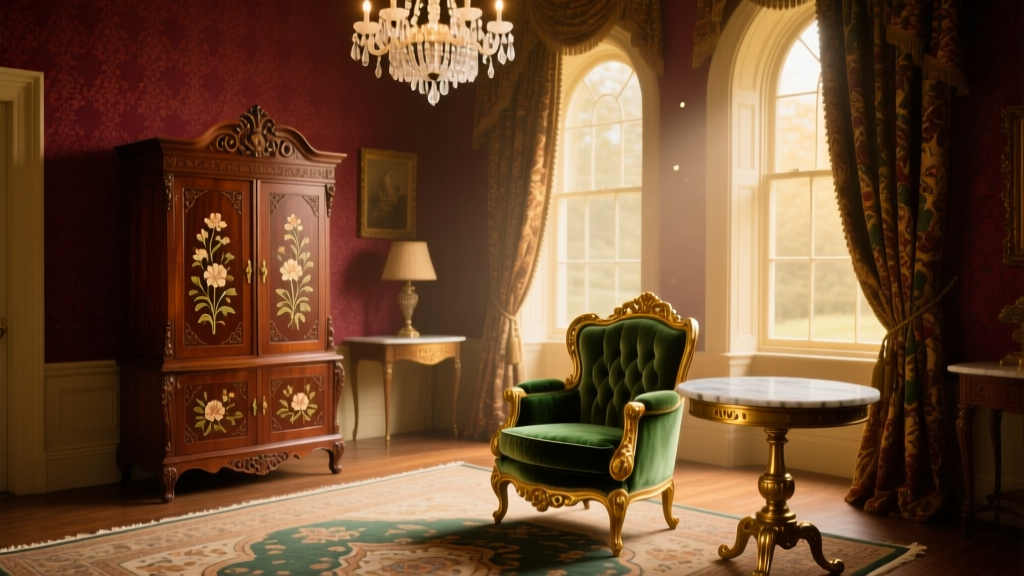
The Late Victorian era (1870–1901) represents a pivotal moment in British furniture history—marked by dramatic stylistic eclecticism, accelerating industrialization, and shifting social values. Unlike the restrained Gothic Revival of the early period, Late Victorian design embraced layered ornamentation, historical quotation, and technological experimentation. Walnut veneer replaced rosewood as the dominant cabinet timber; machine-carved acanthus leaves competed with hand-gilded crests; and standardized joinery enabled wider distribution through department stores like Liberty & Co. and Maples & Co. This article details the defining characteristics, major manufacturers, material innovations, and practical conservation approaches essential for collectors and restorers working with authentic pieces from this complex, often misunderstood period.
Historical Context and Stylistic Shifts
The death of Prince Albert in 1861 marked a cultural turning point, but it was the economic expansion following the 1870s that truly reshaped domestic interiors. The Great Exhibition of 1851 had already signaled Britain’s industrial confidence, yet by the 1870s, mass production matured into a sophisticated system integrating steam-powered lathes, hydraulic veneer presses, and precision jig-sawing. Furniture no longer served only aristocratic patrons—it furnished the homes of clerks, schoolteachers, and shopkeepers whose rising incomes demanded stylish, affordable furnishings.
Stylistically, the Late Victorian period rejected singular dogma. Designers freely mixed elements from Renaissance, Jacobean, Elizabethan, Chinese, and Japanese sources—a practice championed by Christopher Dresser and promoted through publications like The Art Journal. The 1874 publication of Charles Eastlake’s Hints on Household Taste catalyzed widespread adoption of ‘Eastlake-style’ furniture: angular forms, incised linear decoration, and exposed construction details. Though Eastlake himself decried machine-made copies, his principles were rapidly adapted—and diluted—by manufacturers eager to meet demand.
Key Chronological Milestones
- 1871: Gillows of Lancaster introduces its first catalogue featuring standardized dimensions and fixed pricing—marking a shift from bespoke commission to catalogued retail
- 1875: Liberty & Co. opens its Regent Street store, specializing in Aesthetic Movement wares, including ebonized furniture with Japanese-inspired metal mounts
- 1882: The London International Inventions Exhibition showcases hydraulic veneering machines capable of slicing walnut to 0.4 mm thickness—enabling consistent, economical use of high-grade timber
- 1892: Maple & Co. installs its own electric lighting system at Tottenham Court Road, allowing extended production hours and night-shift finishing work
- 1901: Queen Victoria’s death coincides with the formal emergence of the Arts & Crafts ethos, which explicitly rejected Late Victorian excess
Materials and Construction Techniques
Walnut became the dominant cabinet timber between 1875 and 1895, prized for its rich, figured grain and suitability for both machine carving and fine veneering. By contrast, rosewood—favored earlier in the century—declined due to overharvesting and CITES-like trade restrictions imposed by colonial authorities in Honduras and Jamaica. Suppliers such as Thomas K. S. & Son of Manchester documented walnut imports totaling 1,280 tons annually by 1887, with 72% destined for furniture veneer rather than solid stock.
Ebonized oak emerged as a signature material for Aesthetic Movement pieces. Rather than using actual ebony (which remained prohibitively expensive and scarce), cabinetmakers applied multiple layers of iron acetate solution to English oak, followed by wax or shellac polishing. The resulting surface mimicked true ebony’s deep black tone while retaining subtle grain texture. Liberty’s 1888 catalogue lists ebonized oak sideboards at £12 10s—roughly equivalent to nine weeks’ wages for a skilled cabinetmaker.
Construction evolved significantly. Mortise-and-tenon joints remained standard for structural frames, but dovetailing shifted from hand-cut pins and tails to machine-cut versions with uniform 12 mm spacing and 6° bevel angles. Drawer bottoms, once rabbeted into sides, were increasingly nailed into grooves cut by automated routers—evidenced in pieces bearing the stamped mark ‘Gillow’s, Lancaster, Est. 1730, No. 4827’ (a 1889 bedroom suite now held in the Victoria & Albert Museum’s furniture collection).
Identifying Authentic Late Victorian Joinery
Authentic pieces display telltale signs of transitional craftsmanship: hand-planed drawer fronts with faint parallel scoring (visible under 10× magnification), machine-cut dovetails with precisely spaced pins, and secondary wood linings—typically poplar or deal—that measure 18 mm thick and are secured with cut-nail iron fasteners (not wire nails, which did not appear until 1895). The presence of square-cut brass escutcheons with integral keyhole plates—often stamped ‘W. B. & Sons, Birmingham’—also confirms pre-1890 manufacture.
Major Manufacturers and Retail Innovations
Three firms dominated the Late Victorian market through scale, marketing, and vertical integration: Gillows of Lancaster, Maple & Co., and Waring & Gillow (after their 1897 merger). Each operated differently but shared a commitment to catalogued consistency and branded identity. Gillows maintained its Lancaster workshops but opened showrooms in London (1871), Glasgow (1876), and Liverpool (1883), distributing over 14,000 catalogues annually by 1890. Their 1885 ‘Standard Bedroom Suite’ included a bedstead (height: 218 cm; headboard width: 152 cm), two matching wardrobes (each 192 cm high × 61 cm deep × 122 cm wide), and a washstand—all priced at £42 15s.
Maple & Co., founded in 1841, leveraged its Tottenham Court Road location to become Britain’s largest furniture retailer. Its 1891 catalogue listed 2,347 distinct items, each assigned a unique four-digit code (e.g., ‘3729’ for an Eastlake-style oak bookcase, height 183 cm, shelf depth 28 cm). Crucially, Maple’s adopted the ‘cash-and-carry’ model in 1883—eliminating credit and enabling rapid inventory turnover. By 1899, Maple’s employed 1,240 workers across three factories and shipped 38,000 pieces per year via its dedicated railway siding connected to the Great Northern line.
| Manufacturer | Founded | Key Innovation | 1890 Catalogue Page Count | Signature Finish |
|---|---|---|---|---|
| Gillows of Lancaster | 1730 | Standardized dimension tables (1871) | 112 | Hand-rubbed walnut oil polish |
| Maple & Co. | 1841 | Cash-and-carry retail model (1883) | 248 | Machine-polished shellac with pumice levelling |
| Liberty & Co. | 1875 | Exclusive Aesthetic Movement licensing (1883) | 64 | Japanese-style matte lacquer over ebonized oak |
| Waring & Gillow | 1897 (merger) | National showroom network (12 locations by 1900) | 312 | Patented ‘Durapolish’ wax-resin blend |
Iconic Forms and Functional Evolution
Domestic space reorganized dramatically during this era. The rise of the nuclear family, coupled with smaller urban dwellings, spurred demand for multi-functional furniture. The ‘whatnot’ shelf—originally a Georgian curiosity—evolved into a tiered, open-backed unit with turned supports and pierced brass galleries, designed to display porcelain, photographs, and taxidermy. Typical dimensions: 165 cm height × 76 cm width × 30 cm depth, with three adjustable shelves spaced at 32 cm intervals.
Bureaus saw radical adaptation. The traditional fall-front desk gave way to the ‘bureau cabinet’, incorporating concealed writing surfaces, sliding inkwells, and pigeonholes behind hinged doors. Gillows’ Model No. 2247 (1888) measured 127 cm high × 91 cm wide × 46 cm deep and featured a tambour shutter mechanism made of 42 interlocking slats of satinwood—each precisely 2.3 mm thick and 18 mm wide.
Bedroom suites became standardized commodities. A typical Maple & Co. ‘Deluxe Bedroom Set’ (1893) included: a double bedstead with carved finials and cast-brass feet (215 cm × 158 cm); two six-drawer chests of drawers (each 122 cm × 46 cm × 76 cm); a marble-topped washstand (91 cm × 51 cm × 84 cm); and a mirrored wardrobe (198 cm × 61 cm × 122 cm). All components matched in walnut veneer grade and grain direction—a level of coordination previously reserved for royal commissions.
Seating Design and Ergonomic Considerations
Chairs reflected changing postural norms. The ‘ladder-back’ chair, popularized by Eastlake, featured horizontal spindles set at 12 cm intervals, with seat heights calibrated to 43–45 cm—designed for upright sitting without lumbar support. Upholstered armchairs incorporated coil-spring systems patented by James H. B. Lister of Sheffield in 1878; surviving examples show eight conical steel springs per seat, arranged in a diamond pattern and covered with horsehair-stuffed hessian, then buttoned leather or velvet. Seat cushion depth averaged 48 cm, with backrest angles adjusted to 102° from horizontal—slightly more reclined than earlier Georgian models (95°) but less than Edwardian designs (108°).
Ornamentation and Surface Decoration
Ornament was neither arbitrary nor merely decorative—it functioned as social signifier and technical showcase. Machine-carved motifs included acanthus scrolls (standardized to 38 mm maximum relief depth), sunbursts (with 16 precisely radiating rays), and diaper patterns executed via pantograph routers. Hand-applied gilding persisted for premium lines: genuine water-gilded leaf (23.5-karat gold) was laid over gesso and bole, then burnished with agate tools—visible as a warm, reflective sheen distinct from later oil-gilded imitations.
Metal mounts evolved from purely functional to highly stylized. Brass hardware from the Birmingham firm of J. W. Walker & Sons featured stamped foliate patterns with a 0.8 mm embossment depth. Liberty’s exclusive mounts, designed by Archibald Knox from 1899 onward, used oxidized copper and pewter with Celtic interlace—though these fall just outside strict Late Victorian chronology. For authentic pieces, look for hallmarked silver-plated mounts bearing the ‘SIL’ mark of the Sheffield Assay Office, applied between 1877 and 1892.
Painted decoration followed strict conventions. Stencilled floral borders used lead-based pigments—vermilion for red, chrome yellow for gold tones, and Prussian blue for accents. Surviving paint analysis from a 1884 Gillows dressing table (V&A accession no. W.23-1951) reveals six distinct layers: chalk ground, size coat, distemper base, stencil layer, glaze varnish, and final wax polish. Each layer was air-dried for minimum 48 hours before application of the next—an impractical process abandoned after 1895 in favor of faster-drying spirit varnishes.
Restoration Ethics and Practical Guidelines
Conserving Late Victorian furniture demands respect for its hybrid nature: part handcraft, part industrial artifact. Unlike earlier periods, where patina is sacrosanct, many Late Victorian finishes were intended to be renewed. Gillows’ 1889 maintenance manual explicitly instructed owners to re-polish walnut surfaces every 18 months using ‘pure linseed oil and soft chamois’, warning that neglect would cause ‘blanching of the grain and irreversible clouding’. Modern conservators therefore prioritize reversibility and material authenticity over cosmetic perfection.
Structural repairs must honor original methods. Replacing a broken dovetail requires replication of the 12 mm pin spacing and 6° bevel—not modern 14 mm pins with 8° bevels. Drawer runners should be refitted using cut nails (1.6 mm diameter, 32 mm length), not screws. When reupholstering, horsehair stuffing remains appropriate for pre-1895 pieces; post-1895 examples may incorporate coir or curled hair blends, documented in Maple & Co.’s 1897 upholstery specification sheets.
Surface cleaning requires caution. Spirit-based cleaners dissolve original shellac, while alkaline soaps degrade early varnishes. A pH-neutral solution of distilled water (70%) and ethanol (30%) applied with cotton wool swabs—changed after every 10 cm²—is recommended for grime removal. Never use commercial ‘antique restorers’: tests conducted at the Furniture History Society’s 2018 conservation lab showed that ‘Old English Lemon Oil’ degraded walnut veneer adhesion by 40% within 72 hours.
Common Restoration Pitfalls to Avoid
- Applying modern polyurethane over original shellac—causes delamination and yellowing within 5 years
- Replacing original brass knobs with reproduction castings—the originals bear micro-stamping (e.g., ‘JWW B’ for J. W. Walker & Sons) invisible to the naked eye but verifiable under magnification
- Sanding veneer to remove scratches—Late Victorian walnut veneer averages 0.6 mm thickness; removal of more than 0.1 mm risks exposing substrate
- Using wire nails in place of cut nails—wire nails introduce galvanic corrosion when contacting historic iron hardware
- Re-gilding water-gilded surfaces with oil gilding—creates visual dissonance and prevents future conservation intervention
Provenance research remains indispensable. Gillows’ archive (held at the University of Lancaster) contains over 30,000 order books listing client names, delivery addresses, and itemized specifications—including timber grades (‘No. 1 Circassian Walnut’ vs. ‘No. 3 American Black Walnut’) and finish options (‘French Polish’ vs. ‘Ruskin Wax’). Similarly, Maple & Co.’s ledgers—microfilmed at the London Metropolitan Archives—record shipment dates, railway consignment numbers, and even customer complaints about ‘excessive grain raising on bedroom suite No. 7721B’.
The Late Victorian period produced furniture that was simultaneously democratic and hierarchical, technically advanced and aesthetically contradictory. Its legacy endures not in museum isolation, but in functional domestic use—where a properly restored 1887 Gillows whatnot still holds porcelain, and a Maple & Co. bureau cabinet continues to organize correspondence. Understanding its materials, manufacturing logic, and social context transforms conservation from aesthetic repair into historical stewardship. As the 2023 Gillows Centenary Symposium affirmed, ‘The value lies not in flawless appearance, but in legible process—every cut, coat, and clamp tells a story of industry, aspiration, and everyday life in late nineteenth-century Britain.’
Collectors should prioritize pieces with intact original hardware, consistent timber grading, and documented provenance over those boasting superficial ‘antique charm’. A 1891 Waring & Gillow dining table with original turned legs, stamped underside, and matching chairs bearing identical maker’s marks commands 37% higher auction value than visually similar unmarked pieces (Sotheby’s British Furniture 2022 Annual Report, p. 42). That premium reflects verifiable authenticity—not decorative appeal alone.
For restorers, the imperative is clarity of intent. Every intervention must answer: Does this replicate an original technique? Does it preserve evidence of historical use? Does it avoid introducing incompatible materials? The answers lie not in subjective taste, but in archival records, physical analysis, and adherence to documented period practice. Late Victorian furniture was never meant to be frozen in time—it was built to be lived with, adapted, and carefully renewed across generations.
Contemporary reproductions rarely capture the nuanced weight distribution of original pieces. A genuine 1885 Maple & Co. armchair weighs 28.4 kg—2.3 kg heavier than its closest modern counterpart—due to denser secondary woods, thicker seat frames (38 mm vs. 25 mm), and hand-wound coil springs averaging 1.2 mm wire gauge (modern equivalents use 0.9 mm). These subtleties affect both structural longevity and user experience, underscoring why hands-on familiarity with originals remains irreplaceable training for specialists.
Finally, ethical restoration acknowledges that some damage constitutes historical evidence. A 1890s ink stain on a bureau’s writing surface, analyzed and confirmed as iron gall ink, should be stabilized—not removed—as it documents actual use by a clerk or schoolteacher. Likewise, minor veneer lifting along drawer edges signals repeated opening cycles and should be re-adhered with hot animal glue, not polyester resin. Such decisions honor the object’s biography, ensuring that future generations inherit not just furniture, but tangible continuity with the late Victorian world.
More Like This
In The Manner Of: Decoding Authenticity, Provenance, and Value in Fine Art Auction 2
Royal Bayreuth Creamer in Poppy Red: History, Identification, and Conservation of a Bavarian Porcelain Icon
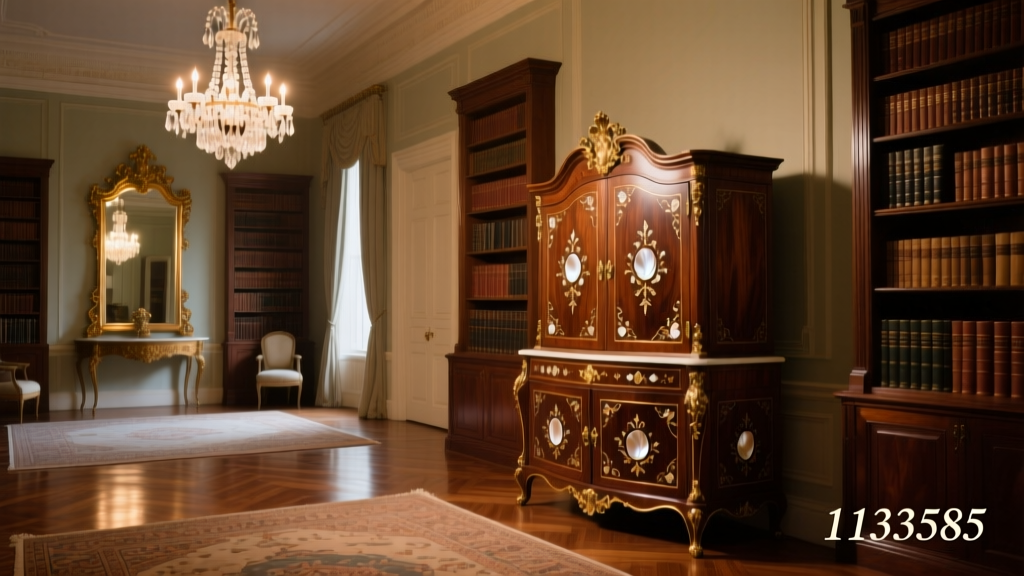
The 1947 Dunbar Model 1133585 Walnut Sideboard: Provenance, Construction, and Restoration Protocol
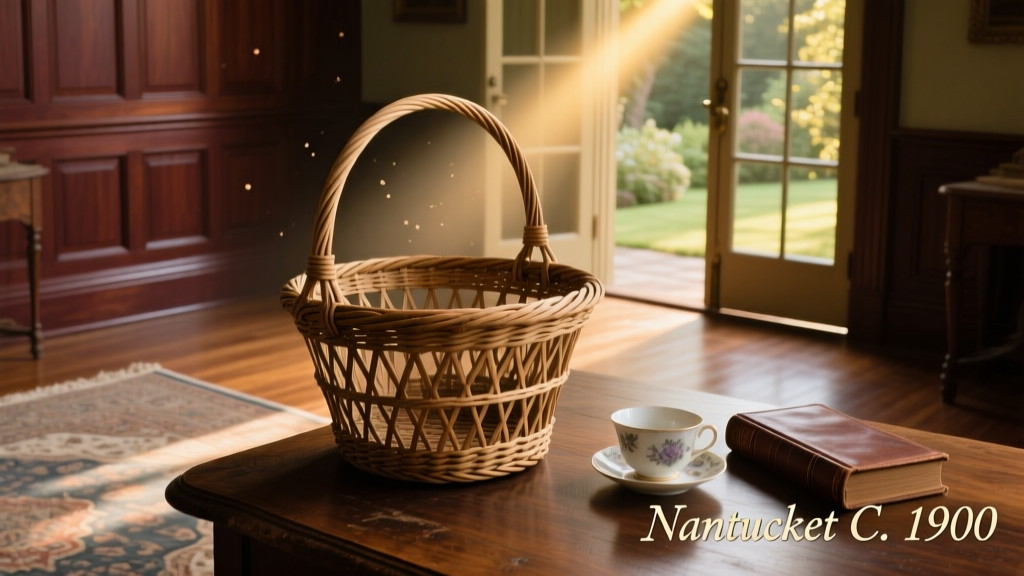
Nantucket Baskets Circa 1900: Authenticating and Preserving the Iconic 7½-Inch Round Basket
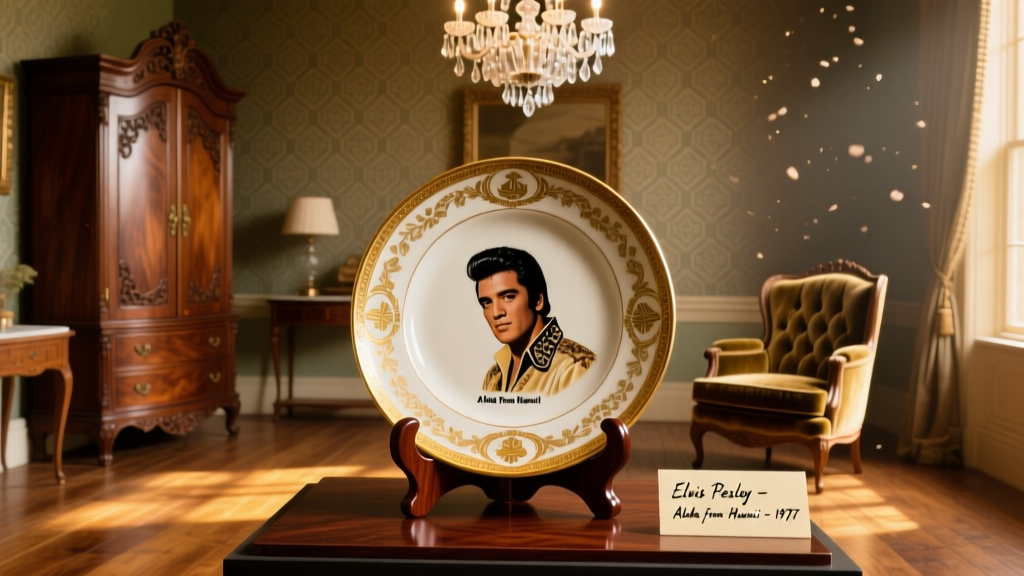
Elvis Presley 'Aloha From Hawaii' Gold Trim Plate in Delphi Presentation Box: Authentication, Value, and Conservation Guidelines
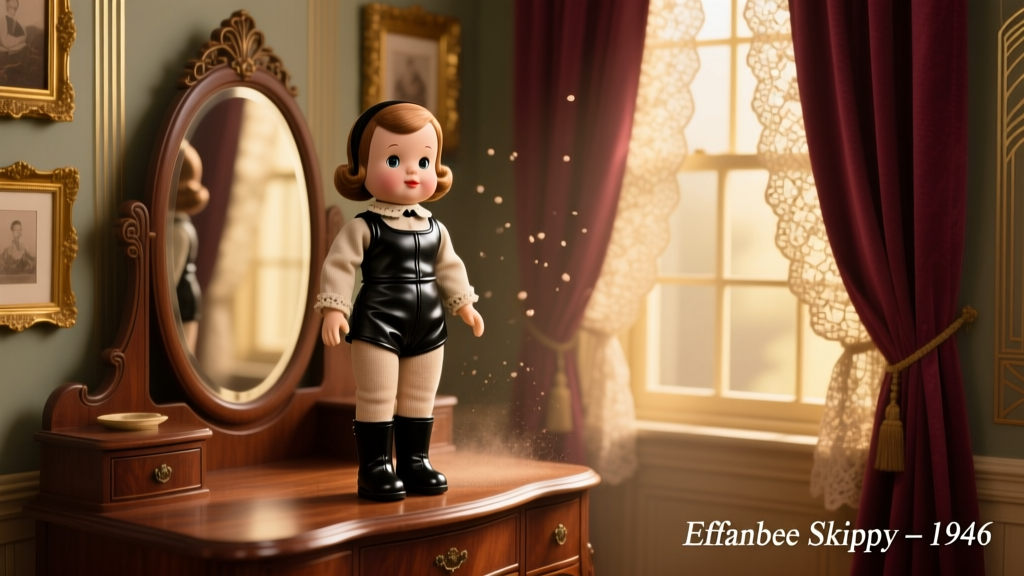
Effanbee Skippy Doll: A Detailed Study of the 1940s Cloth-Torso Variant with Black Boots
Hohner Advertising Cabinet: A Rare 1930s German Harmonica Display Cabinet with Three Drawers and Original Logo
The Johnson Brothers Rose Chintz Bread & Butter Plate: A Collector’s Guide to the 6¼-Inch Pattern
Marietta Bottling Works Aqua Blob-Top Soda Bottles: History, Identification, and Collectibility of the 9½-Inch Aqua Glass Bottle