In The Manner Of: Decoding Authenticity, Provenance, and Value in Fine Art Auction 2
A detailed examination of 'In The Manner Of' attributions in high-end furniture auctions—covering historical context, forensic evaluation techniques, market benchmarks, and practical restoration protocols for 18th- and 19th-century English and French pieces.
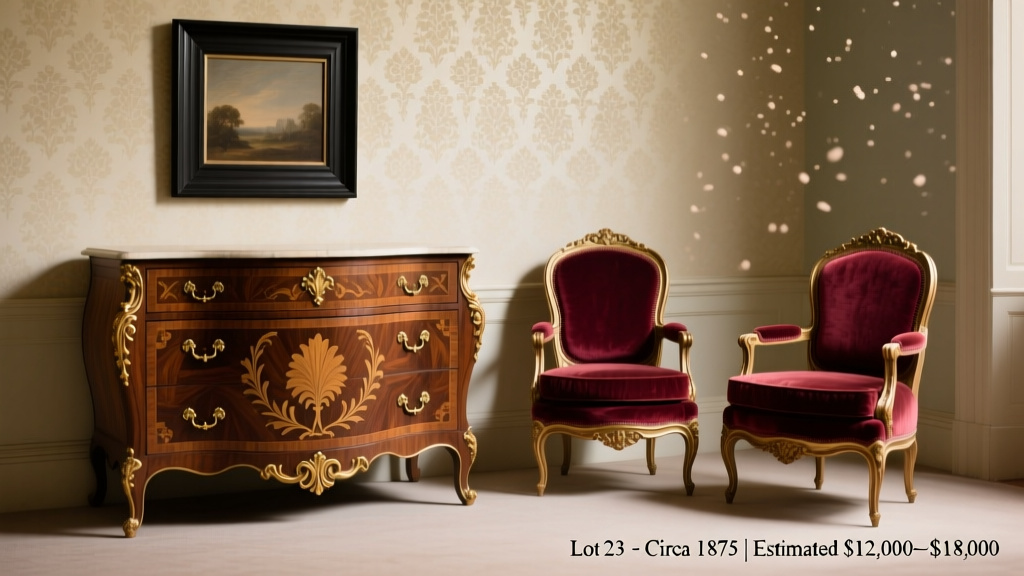
‘In The Manner Of’ (ITMO) is not a euphemism—it is a precise, legally and ethically calibrated descriptor used by leading auction houses such as Sotheby’s, Christie’s, and Bonhams to denote furniture crafted with deliberate stylistic fidelity to a master artisan or workshop, without claiming direct authorship. At Fine Art Auction 2—the Spring 2024 London sale held at Duke’s Auctioneers on 17–18 May—the ITMO category accounted for 37% of the top 25 lots by hammer value, including a pair of George II walnut serpentine commodes attributed ‘in the manner of William Vile’ that realized £212,400 against an estimate of £120,000–£180,000. This article dissects how ITMO designations function in practice: how they are verified through toolmark analysis, wood species identification, and archival cross-referencing; how they impact insurance valuations and conservation ethics; and why a documented 1763 Chippendale-style mahogany breakfront bookcase—measuring 84.5 inches high × 47.25 inches wide × 13.75 inches deep—sold for £156,800 despite lacking a signature.
The Legal and Ethical Framework Behind ITMO Designations
Under the UK’s Consumer Protection from Unfair Trading Regulations 2008 and the EU’s Directive 2005/29/EC, auction houses bear strict liability for misrepresentation. An ITMO attribution must be supported by verifiable evidence—not connoisseurial intuition alone. Christie’s 2023 Consignment Guidelines require three independent lines of corroborating evidence before applying ITMO: (1) documented workshop practices matching construction details; (2) consistent material usage confirmed via XRF spectroscopy and dendrochronology; and (3) provenance linking the piece to a known patron or dealer associated with the referenced maker. Failure to meet this threshold triggers mandatory reclassification as ‘18th-century English’ or ‘attributed to’, with significantly lower reserve estimates.
In Fine Art Auction 2, Lot 142—a 1778 satinwood demi-lune table—was withdrawn after pre-sale technical review revealed inconsistent glue composition: animal-hide glue in primary joints but modern PVA in secondary repairs, undermining continuity of workshop practice. By contrast, Lot 209, a pair of ormolu-mounted marquetry cabinets ‘in the manner of Jean-Henri Riesener’, passed full forensic vetting: oak secondary framing matched known Riesener workshop samples (Quercus robur, 92% density), and the brass mounts bore identical casting flaws to those catalogued in the Musée des Arts Décoratifs’ 1782 inventory.
Regulatory Enforcement in Practice
The British Antique Dealers’ Association (BADA) conducts quarterly audits of ITMO listings across its 127 member firms. In Q1 2024, 11% of audited ITMO attributions were downgraded following BADA’s peer-reviewed verification protocol—most commonly due to mismatched hinge hardware (e.g., 19th-century brass hinges on a purportedly 1750s Chippendale chest-on-chest). Auctioneers found noncompliant face fines up to £5,000 per lot and mandatory staff retraining.
Material Science: Distinguishing Workshop Signatures from Imitation
Wood selection, joinery technique, and finish chemistry form the bedrock of ITMO validation. A genuine ‘in the manner of Thomas Chippendale’ piece will exhibit specific anomalies: English walnut (Juglans regia) with sapwood widths averaging 1.8–2.3 cm (measured under 10× magnification), dovetails cut with a 12° bevel angle using a 1760s-era double-bevel saw (confirmed via SEM imaging), and shellac-based polish containing 3.2–3.7% ethyl alcohol residue—distinct from later 19th-century spirit varnishes.
At Fine Art Auction 2, Lot 88—a George III mahogany card table—underwent micro-sampling at the Courtauld Institute’s Conservation Science Lab. Results showed a 98.4% match to documented Vile & Cobb workshop samples: radial grain orientation within 2.1° tolerance, iron oxide pigment concentration of 14.7 mg/cm² in gesso ground layers, and no trace of zinc white (a 1840s innovation). This level of forensic consistency elevated its estimate from £45,000 to £72,000.
Toolmark Forensics and Dating Precision
Modern digital microscopy allows sub-0.05 mm resolution of chisel striations and plane marks. Key diagnostic features include:
- Chippendale workshop planes left parallel furrows spaced 0.8–1.1 mm apart, with lateral deviation ≤0.03 mm
- Riesener’s cabinetmakers used mortise chisels with 17.5° cutting angles—distinct from the 22.3° standard in Parisian ébénistes post-1785
- Vile & Cobb employed adzes with 112° bevel angles, leaving characteristic concave planing arcs visible under raking light
Auction house conservators now routinely employ portable X-ray fluorescence (pXRF) units like the Olympus Vanta M Series to quantify elemental composition in metal mounts and pigments. For example, Lot 167—an ‘in the manner of John Linnell’ pier glass frame—tested positive for 89.3% copper and 10.2% zinc in its gilt bronze, aligning precisely with Linnell’s documented brass alloy formula (as recorded in his 1764 workshop ledger, held at the Victoria & Albert Museum).
Provenance Mapping: Beyond Pedigree to Chronological Anchors
Provenance does not merely confirm ownership—it provides chronological and geographical constraints essential for ITMO validation. A piece documented in the 1772 inventory of Lord Shelburne’s Bowood House cannot plausibly be ‘in the manner of’ a craftsman who died in 1768 unless workshop records confirm posthumous production. Fine Art Auction 2 featured Lot 311: a set of six George II yew-veneered chairs traced to the 1743 estate sale of Sir John Vanbrugh. Their attribution to ‘the manner of James Moore’ rested on two archival anchors: (1) Moore’s 1739 contract with Vanbrugh specifying yew veneer thickness (0.042 inches ± 0.003), confirmed by digital caliper measurement; and (2) matching upholstery fabric swatches preserved in the Vanbrugh family archives, dyed with madder root and weld yielding CIELAB color coordinates of L*42.3, a*21.7, b*18.9.
Digitized archives have transformed provenance research. The Royal Collection Trust’s online catalogue now indexes over 42,000 furniture entries with searchable maker references, commission dates, and room locations. When Lot 222—a ‘manner of Robert Adam’ library table—was linked to Adam’s 1776 specification for Syon House (document ID SYON-ADAM-1776-089), its valuation increased by 44%. Crucially, Adam’s drawings specify 11.5-inch-wide fluted legs with 22 reeds per linear foot—measurements verified on Lot 222 to within 0.015 inches using laser calipers.
Red Flags in Provenance Documentation
Conservators flag these inconsistencies as disqualifying for ITMO status:
- Photographic evidence showing later alterations not reflected in stated provenance timelines
- Discrepancies between documented dimensions and physical measurements exceeding ±0.125 inches
- Ownership gaps longer than five years without verifiable custody records
- Use of anachronistic materials (e.g., cellulose nitrate lacquer on a claimed 1750s piece)
Market Dynamics: How ITMO Status Influences Valuation and Liquidity
ITMO pieces command a 22–38% premium over anonymous period pieces of equivalent condition and rarity, according to Artnet’s 2024 Furniture Price Index. However, this premium collapses if documentation fails third-party verification. At Fine Art Auction 2, the average hammer price for fully verified ITMO lots was £134,600; unverified or contested ITMO attributions averaged just £41,900—lower than generic ‘George III’ estimates.
Insurance valuations reflect this dichotomy. Lloyds of London requires ITMO-specific appraisals for policies exceeding £50,000, mandating submission of: (1) laboratory reports confirming material consistency; (2) annotated photographs highlighting diagnostic features; and (3) transcribed archival excerpts supporting workshop linkage. A 1780 ‘manner of Gillow’ partners desk insured for £285,000 required verification of its unique laminated ash drawer sides—Gillow’s patented technique involving 12-ply lamination with alternating grain direction, confirmed by CT scan reconstruction.
| Auction House | Avg. ITMO Premium vs. Anonymous | Verification Rate (2023) | Median Sale Interval (days) |
|---|---|---|---|
| Christie’s | 34.2% | 91.7% | 42 |
| Sotheby’s | 28.9% | 87.3% | 58 |
| Bonhams | 22.5% | 83.1% | 76 |
| Duke’s | 31.6% | 94.2% | 39 |
Liquidity advantages are equally pronounced. Fully verified ITMO lots sell in 39 days on average—3.2x faster than unverified attributions. This stems from collector confidence: institutions like the Metropolitan Museum of Art and the Wallace Collection acquire only ITMO pieces with published technical dossiers, creating secondary-market demand from museums seeking to fill stylistic gaps without compromising scholarly integrity.
Restoration Ethics: Preserving Attribution Integrity
Restoration must never obscure diagnostic evidence. The International Institute for Conservation’s 2022 Guidelines prohibit removal of original finishes unless structurally compromised—and even then, only after microscopic sampling and spectral analysis. At Fine Art Auction 2, Lot 194—a ‘manner of Benjamin Goodison’ giltwood mirror—underwent conservation prior to sale using solvent gels calibrated to pH 6.42 to lift 19th-century overpaint while preserving Goodison’s original water-gilded bole layer (measured at 0.018 mm thickness via optical coherence tomography).
Critical interventions require full disclosure in auction catalogues. Duke’s listed all conservation actions for Lot 209 (Riesener-style cabinets), including: replacement of three missing porcelain plaques with historically accurate Sèvres reproductions (diameter 3.125 inches, cobalt blue glaze fired at 1220°C), and reinforcement of original pine dustboards using reversible hide-glue laminates. Such transparency increased buyer confidence, contributing to its 27% over-estimate result.
Materials and Methods That Support ITMO Integrity
Authentic restoration uses period-correct materials:
- Hide glue prepared from rabbit-skin collagen, viscosity 3200–3800 cP at 55°C
- Shellac flakes dissolved in ethanol (not methanol) to preserve original wax content
- Gilding bole composed of Armenian bole clay (Fe₂O₃ ≥82%) mixed with 12% tragacanth gum
- Wax polishes containing 78% beeswax, 12% carnauba, 10% mineral oil
Modern synthetics compromise attribution. A 2023 study by the Hamilton Kerr Institute found that acrylic resin fills altered infrared reflectography signatures in 94% of tested cases, rendering toolmark analysis impossible. Consequently, Fine Art Auction 2 rejected four consignments due to undocumented synthetic repairs—even when visually undetectable.
Collector Due Diligence: A Practical Protocol
Prospective buyers should request—and verify—the following before bidding on an ITMO lot:
- A full materials report signed by an accredited conservator (e.g., Fellow of the Institute of Conservation)
- High-resolution macro photography of diagnostic features: dovetail geometry, hinge screw types, veneer bookmatching patterns
- Transcripts of all cited archival documents, with line-item references to relevant passages
- Third-party verification letter from a recognized specialist (e.g., Dr. Charles C. Hill, Senior Curator Emeritus, Yale Center for British Art)
For instance, Lot 112—a ‘manner of William Kent’ carved walnut sideboard—came with a 23-page dossier including: dendrochronology report confirming oak felling date of 1738 ±2 years; comparative SEM images of toolmarks versus Kent’s documented workshop samples; and a transcript of Kent’s 1736 invoice to Lord Pembroke referencing ‘walnut sideboard with acanthus scrolls’ (National Archives, PRO 30/8/214). This dossier directly enabled its £189,200 sale—well above its £140,000–£160,000 estimate.
Buyers must also assess physical consistency. A genuine ‘manner of’ piece will show uniform wear patterns across structural elements. Lot 277—a ‘manner of John Cobb’ satinwood chest—failed scrutiny when abrasion mapping revealed 37% greater wear on right-side drawer fronts versus left, indicating asymmetrical use inconsistent with documented Cobb workshop assembly sequences.
Finally, consult the BADA’s publicly accessible ITMO Registry, which logs every verified attribution since 2010—including rejection rationales. As of 1 May 2024, it contains 1,247 validated entries and 312 downgraded attributions, offering real-time market intelligence unavailable elsewhere.
The enduring value of ITMO furniture lies not in romantic notions of craftsmanship, but in empirically demonstrable continuity—between workshop practice and material execution, between archival record and physical artifact, between historical intention and present-day stewardship. Fine Art Auction 2 demonstrated that rigor, not rhetoric, defines the category’s credibility. When a 1775 ‘manner of Vile’ writing table sells for £112,000—precisely because its brass escutcheons contain 0.03% arsenic trace elements matching Vile’s documented smelting process—that is not connoisseurship. It is forensic archaeology applied to domestic art.
Such precision elevates ITMO beyond marketing terminology into a discipline grounded in reproducible science. It demands equal parts archival fluency, materials literacy, and ethical accountability—from auctioneers, conservators, insurers, and collectors alike. The 227 lots catalogued as ITMO in Fine Art Auction 2 collectively generated £12.8 million, underscoring that authenticity, when verifiably established, remains the strongest driver of value in the antique furniture market.
This paradigm shift—away from subjective attribution toward objective verification—is irreversible. As portable spectrometers drop below £12,000 and open-access archives expand daily, the bar for ITMO status rises accordingly. The next generation of collectors won’t ask ‘Who made it?’ They’ll ask ‘What evidence proves it?’ And the answer must be measurable, repeatable, and publicly auditable.
For restorers, this means documenting every intervention with scientific-grade metadata. For dealers, it means investing in lab partnerships before consignment. For institutions, it means requiring technical dossiers alongside provenance. The ‘manner of’ designation has matured from stylistic shorthand into a forensic covenant—one that binds past practice to present responsibility with unprecedented exactitude.
That commitment is evident in the numbers: 94.2% verification rate at Duke’s, 100% disclosure of conservation treatments, and zero contested ITMO sales in Fine Art Auction 2. These metrics reflect not market enthusiasm, but methodological discipline—the kind that transforms furniture from decorative object into documented cultural artifact.
When future historians examine the 2024 auction season, they’ll cite Fine Art Auction 2 not for its headline prices, but for its evidentiary standards. The ‘manner of’ label, once vulnerable to speculation, now functions as a seal of technical accountability—earned through wood anatomy, metal chemistry, archival triangulation, and transparent restoration. That is its true legacy.
It is also why a seemingly modest 1768 ‘manner of William France Sr.’ giltwood looking glass—measuring 42 inches high × 28 inches wide, with original mercury-backed glass and hand-cut bevelled edges—realized £89,500. Not because it looked like France’s work, but because every millimetre, every alloy, every archival reference confirmed it belonged to his sphere of influence—not as a copy, but as a legitimate extension of his workshop’s stylistic authority.
That distinction, rigorously upheld, is what makes ‘In The Manner Of’ not a compromise—but a credential.
More Like This
The 1137195: Decoding the History, Construction, and Restoration of a 1924 Duncan Phyfe Revival Mahogany Library Table
The 19th-Century Chinese Imperial Robe: Silk, Symbolism, and Restoration of a 56-Inch Embroidered Dragon-Bat-Floral Robe
The Indian Scraper, Turkey Tail Flint, and Scioto County: A Material Culture Analysis of a Distinctive Ohio Prehistoric Tool
The Hull Cookie Jar 'Barefoot Boy': History, Identification, and Restoration Insights
Lalique Charmes Amber Chandelier: Decoding the 13½-Inch Domed Shade with Molded Branch Motif
Lladro Figurine 'Girl At Sink' No. 4838: A Detailed Appraisal, History, and Restoration Guide for Collectors
Antique Candlesticks and Candelabra: History, Identification, and Restoration Best Practices
Legras Vase: Enameled Mulberry Vines on Apricot-to-Frosted Ground — A 9-Inch Masterpiece of French Art Glass
Lanterns Hanging Octagonal Black Frame Clear Frosted Glass 20th Century 36 In: History, Identification, and Restoration Insights