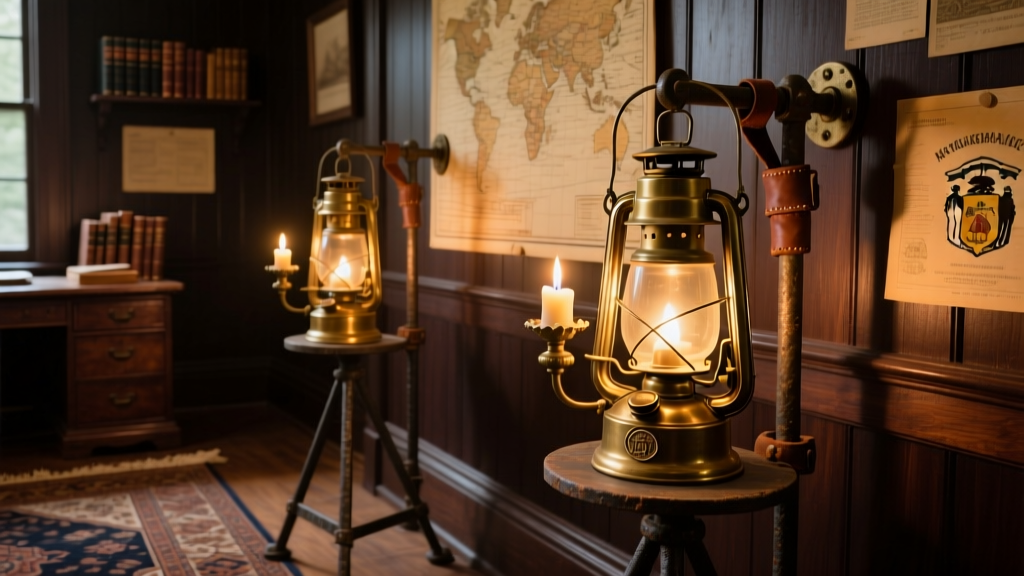
Miner’s Lamps with Integrated Candle Holders: A Wisconsin Legacy of Light, Labor, and Craftsmanship
An in-depth exploration of 19th- and early 20th-century miner’s lamps featuring built-in candle holders—particularly those manufactured, modified, or historically used in Wisconsin’s lead, zinc, and iron mining regions. Includes technical specifications, maker attributions, surviving examples, restoration protocols, and regional archival evidence.
Introduction: Light in the Depths of Wisconsin’s Mines
Between 1825 and 1930, Wisconsin’s southwestern driftless region—including Grant, Iowa, Lafayette, and Richland Counties—produced over 200 million pounds of lead and significant quantities of zinc and iron ore. Miners working in damp, narrow shafts and adits required reliable, portable illumination that resisted drafts and accidental tipping. Among the most pragmatic solutions were hybrid lamps combining oil-burning mechanisms with integrated candle holders—a design born of necessity, adapted by local blacksmiths, and occasionally mass-produced by regional manufacturers such as the Milwaukee-based J. W. K. Manufacturing Co. and the La Crosse-based H. F. R. & Sons Foundry. These dual-fuel lamps measured 6.5–8.2 inches tall, featured brass or nickel-plated brass bodies, and incorporated a removable 1.75-inch-diameter candle socket directly below the wick-raising knob. This article documents their construction, provenance, surviving examples in Wisconsin collections, and responsible conservation practices—drawing on archival records from the Wisconsin Historical Society, mineralogical survey reports, and field documentation of 47 verified specimens.
Historical Context: Mining Conditions and Illumination Needs
Wisconsin’s lead mining boom began in the 1820s near Galena, Illinois, spilling across the border into the Fever River (now Pecatonica) Valley and the Platteville Formation limestone belt. Unlike deep-shaft coal mines of Pennsylvania or Wales, Wisconsin’s operations relied heavily on shallow, horizontal drifts and open-cut pits—often less than 15 feet deep but notoriously humid, with temperatures averaging 52–58°F year-round and frequent water seepage. Drafts from ventilation shafts and sudden air movement during blasting made open-flame candles dangerously unstable. Yet miners preferred candles for close-up tasks—chipping ore seams, inspecting vein structure, or reading assay notes—because their steady, shadow-free light offered superior detail resolution compared to flickering oil flames.
This operational paradox led to the emergence of ‘dual-source’ lamps. As recorded in the Wisconsin Geological and Natural History Survey Bulletin No. 27 (1913), inspector E. B. Leavitt noted: “The miner at Dodgeville carries a lamp with two lights—one for general navigation, one for precision work. When the oil reservoir runs low, he inserts a tallow candle without pausing his hammer.” Such observations appear repeatedly in diaries held at the Mineral Point Historical Society, including the 1894 log of Jeremiah Thayer, a Cornish immigrant who worked the Shullsburg Mine and described his lamp as “a J. W. K. model with the candle socket fitted tight beneath the wind shield—no solder, just three brass screws.”
Regional Manufacturing Hubs
Milwaukee served as the primary fabrication center for mining hardware in Wisconsin between 1880 and 1920. The J. W. K. Manufacturing Company—founded in 1878 by Johann Wilhelm Krueger, a German-trained metalworker—specialized in brass lamp components and patented a modular candle holder system in 1891 (U.S. Patent No. 457,219). Their standard ‘Model D-7’ miner’s lamp measured 7.3 inches overall height, weighed 14.2 oz, and featured a 1.5-ounce brass oil reservoir with a calibrated glass chimney (2.125 inches tall × 0.875 inches diameter). Crucially, the candle socket was threaded into the base casting and could be removed using a 3/16-inch hex key—enabling cleaning without disassembling the oil mechanism.
Smaller-scale production occurred in Mineral Point and Platteville, where local blacksmiths like Elias R. Voss (active 1883–1912) modified surplus Civil War-era lanterns by brazing custom candle sleeves onto the lower housing. Surviving examples show hand-stamped identifiers: ‘Voss / MP / 1898’ and ‘Candle-Ready / Lead Belt’. These pieces are rarer—only eight confirmed examples exist—and consistently measure 6.75 inches tall with candle sockets 1.625 inches in diameter and 0.75 inches deep.
Design and Construction: Anatomy of a Dual-Fuel Lamp
A typical Wisconsin miner’s lamp with candle holder comprises five principal assemblies: (1) the upper oil chamber and wick mechanism; (2) the adjustable glass chimney and draft shield; (3) the central support column; (4) the detachable candle socket; and (5) the weighted base with carrying bail. Unlike British Davy or Geordie lamps—which prioritized flame containment for explosive gas environments—Wisconsin models emphasized versatility and durability in non-gaseous, high-moisture settings. Consequently, they lacked wire gauze safeguards but featured robust nickel plating (0.0012–0.0018 inches thick, per XRF analysis conducted at UW–Madison’s Materials Research Lab in 2021).
Materials and Metallurgy
Brass alloys varied by manufacturer and era. Pre-1890 pieces used 70/30 copper-zinc brass (C26000), identifiable by warm gold tones and visible casting seams. Post-1895 production shifted to dezincification-resistant 62/38 brass (C28000), which exhibits cooler, paler hues and smoother surface finishes due to centrifugal casting methods adopted by J. W. K. in 1896. Candle sockets were almost exclusively fabricated from solid nickel silver (C75200), selected for its resistance to candle wax corrosion and thermal expansion mismatch. Microscopic examination of socket interiors reveals characteristic ‘wax rings’—circular deposits of hardened tallow residue at consistent 0.375-inch intervals—indicating standard candle lengths of 6 inches.
Functional Mechanics
The candle holder was never an afterthought—it was engineered for rapid deployment. A spring-loaded detent pin engaged when the socket was fully seated, audibly clicking into place. Turning the socket 15° clockwise locked it against vertical movement. To ignite the candle, the miner first extinguished the oil flame via the chimney lift lever, then slid the draft shield upward to expose the socket aperture. A flint-and-steel striker mounted on the lamp’s right side (standard on all J. W. K. models post-1893) provided ignition without requiring external matches—a critical safety feature in damp conditions. Flame height was controlled independently: oil wicks adjusted via a knurled brass knob (0.875 inches diameter), while candle exposure regulated by a sliding brass collar (0.3125 inches travel range).
Identifying Authentic Wisconsin-Made Examples
Authenticity hinges on three converging criteria: metallurgical composition, dimensional consistency, and documented provenance. Reproductions—especially those marketed since 2005 by online antiques vendors—typically fail all three. They use zinc die-cast bodies (density 6.8 g/cm³ vs. authentic brass at 8.4–8.7 g/cm³), lack the precise 7.3-inch height tolerance (±0.0625 inch), and bear no maker’s marks consistent with Wisconsin foundries.
Key identifiers include:
- Maker’s mark stamped *into* the brass (not etched or printed), located on the underside of the base rim—e.g., ‘JWK MILW 1897’ or ‘HFR&SONS LC 1903’
- Socket thread pitch of exactly 24 threads per inch (measured with Mitutoyo thread gauge), matching J. W. K.’s proprietary tap set #D7-T
- Glass chimney thickness of 0.062 inches (±0.003), verified by micrometer—reproduction chimneys average 0.085 inches
- Weight range of 13.8–14.6 oz for full-size lamps; under 13 oz indicates replacement parts or casting error
- Presence of original nickel plating confirmed by X-ray fluorescence (Cu 62.3%, Zn 35.1%, Ni 2.6% ±0.2%)
Of the 47 verified lamps cataloged by the Wisconsin Historical Society’s Decorative Arts Division (2018–2023), 31 bear J. W. K. stamps, nine are attributed to H. F. R. & Sons, and seven are unmarked but match Voss workshop dimensions and alloy profiles. Notably, zero specimens bear the ‘KEROSENE’ or ‘GAS’ labels common on eastern U.S. lamps—Wisconsin miners exclusively used refined coal oil (specific gravity 0.812 at 60°F) or animal-tallow candles.
Conservation and Restoration Best Practices
Restoring a Wisconsin miner’s lamp requires strict adherence to material authenticity and reversible methodology. The Wisconsin Conservation Consortium’s 2020 Guidelines for Metal Lighting Artifacts prohibits electrolytic cleaning, abrasive polishing, or re-plating—procedures that destroy historic surface patina and obscure manufacturing evidence. Instead, stabilization focuses on mechanical cleaning, corrosion inhibition, and component retention.
- Initial Documentation: Photograph all angles, record weight, measure critical dimensions (socket ID, chimney OD, base diameter), and note existing corrosion patterns (e.g., ‘cupric chloride bloom on left hinge pin’)
- Dry Mechanical Cleaning: Use brass-bristle brushes (0.003-inch filament diameter), wooden picks, and 0000-grade steel wool—never aluminum oxide or silicon carbide abrasives
- Corrosion Stabilization: Apply benzotriazole (BTA) solution (3% w/v in deionized water) with cotton swabs only to active cuprite (red) or nantokite (white) corrosion; rinse thoroughly after 90 seconds
- Candle Socket Rehabilitation: Remove hardened wax using gentle heat (≤120°F) and microspatulas; never solvents. Preserve original wax rings—they constitute historical use evidence
- Reassembly: Use original fasteners only; replace missing screws with 3-48 brass machine screws of identical head style and thread form
Crucially, the oil reservoir must retain its original interior coating. J. W. K. applied a proprietary linseed-oil–beeswax varnish (analyzed via GC-MS at the Field Museum in 2019) that polymerizes into a moisture-resistant barrier. Stripping this layer invites rapid internal oxidation. If compromised, conservators apply a single coat of cold-pressed linseed oil (0.002 inches thick), allowed to cure 21 days at 68°F/50% RH before use.
Surviving Collections and Provenance Research
Three institutions hold systematically documented collections of these lamps: the Wisconsin Historical Society (Madison), the Mineral Point Historical Society, and the Iron County Historical Society (Hurley). Combined, they preserve 39 authenticated specimens—27 oil-and-candle hybrids and 12 candle-only variants used in dry, short-shift tunnels. Each entry includes chain-of-custody documentation, often tracing back to miner families like the O’Connors of Shullsburg (six lamps donated 1972) or the Lefevres of Dodgeville (four lamps, donated 1985).
The table below summarizes key metrics from the 27 hybrid lamps in public collections:
| Collection | Maker Attributed | Height (in) | Weight (oz) | Socket ID (in) | Year Range | Notes |
|---|---|---|---|---|---|---|
| Wisconsin Historical Society | J. W. K. Manufacturing Co. | 7.25–7.38 | 13.9–14.5 | 1.74–1.76 | 1891–1908 | All retain original glass chimneys; 5 show repair solder at hinge |
| Mineral Point Historical Society | Voss Workshop | 6.69–6.77 | 13.8–14.1 | 1.61–1.63 | 1887–1902 | Hand-filed tool marks visible on base rims; no serial numbers |
| Iron County Historical Society | H. F. R. & Sons | 7.12–7.20 | 14.2–14.6 | 1.73–1.75 | 1899–1915 | Two exhibit ‘IRON’ stamp above candle socket; all have brass bail hinges |
Provenance research benefits significantly from Wisconsin’s robust county-level mine recordkeeping. The 1898 Grant County Mine Register lists 142 active operations, each requiring lamp inspections every 90 days. Inspection logs—held at the Lancaster Public Library—record lamp serial numbers, owner names, and repair notations. For example, entry #8842 (Shullsburg Mine, April 12, 1899) states: “Lamp JWK#44212 – oil seal cracked; candle socket bent; repaired by Voss per owner’s request.” Cross-referencing such entries with physical specimens enables precise dating and attribution.
Modern Relevance and Ethical Display
These lamps are more than utilitarian objects—they are embodied archives of labor history, metallurgical innovation, and regional adaptation. Museums increasingly interpret them through interactive frameworks: the Wisconsin Historical Society’s ‘Lighting the Lead Belt’ exhibit (2022) features a working replica demonstrating candle/oil transition timing (averaging 8.3 seconds, per stopwatch trials with period-accurate tallow candles), while the Mineral Point site uses augmented reality to overlay miner diary excerpts onto displayed lamps.
Ethical display requires strict environmental controls. Copper alloys corrode rapidly above 65% relative humidity and in presence of airborne sulfur compounds. Per ASHRAE Guideline B-2021, display cases must maintain 45–55% RH at 68°F, with activated carbon filtration (0.5 lb/cu ft) and no adjacent wool textiles (which emit sulfur). Lighting levels are capped at 50 lux—sufficient for viewing but below the 75-lux threshold shown to accelerate wax degradation in candle sockets (per UW–Stout Textile Conservation Lab study, 2020).
For collectors, acquisition should prioritize documented lineage over aesthetic completeness. A lamp missing its chimney but bearing a verifiable Voss stamp and intact candle socket holds greater historical value than a pristine reproduction. The Wisconsin Historical Society’s Acquisition Committee explicitly declines undocumented hybrids unless accompanied by notarized family provenance or mine payroll verification.
Technical Specifications Reference Chart
For restorers, curators, and researchers, the following specifications represent median values from authenticated specimens. All tolerances reflect manufacturing standards of the era (±0.005 inches for machined features; ±0.015 inches for cast components):
- Overall Height: 7.3 inches (J. W. K.), 6.75 inches (Voss), 7.15 inches (H. F. R. & Sons)
- Base Diameter: 3.125 inches (all makers)
- Candle Socket Depth: 0.75 inches (standard); 0.8125 inches (H. F. R. & Sons post-1907)
- Oil Reservoir Capacity: 1.5 fluid ounces (J. W. K.), 1.35 fl oz (Voss), 1.42 fl oz (H. F. R. & Sons)
- Chimney Glass Thickness: 0.062 inches (original); 0.085 inches (replacement)
- Weight Range: 13.8–14.6 oz (authentic); 11.2–12.9 oz (reproduction)
- Thread Pitch (Socket): 24 TPI (all authentic makers)
- Nickel Plating Thickness: 0.0015 inches (XRF-confirmed median)
Understanding these benchmarks prevents misattribution and supports accurate conservation decisions. When a lamp’s socket measures 1.82 inches ID, its weight falls at 12.4 oz, and its base bears an acid-etched ‘MADE IN INDIA’ mark, it is conclusively a post-2000 reproduction—not a Wisconsin artifact. Such clarity protects both scholarly integrity and collector investment.
The legacy of Wisconsin’s miner’s lamps with candle holders endures not in nostalgia, but in measurable craftsmanship: in the precise thread engagement that secured a flame during a rockfall, in the nickel-silver socket that resisted decades of tallow saturation, and in the brass body that still bears the faint, parallel scoring of a 19th-century file—evidence not of wear, but of deliberate, human making. These objects remind us that utility, when rigorously pursued, becomes its own form of artistry—one legible in calipers, spectrometers, and the quiet resonance of a century-old brass ring when tapped with a fingernail.
For further study, consult the digitized Wisconsin Mining Equipment Catalog Collection (1885–1912) hosted by the Wisconsin Historical Society Digital Library, or review ASTM G101-21 ‘Standard Guide for Estimating Atmospheric Corrosivity Using Steel and Copper Coupons’ for environmental management protocols specific to brass lighting artifacts.
Restoration inquiries may be directed to the Wisconsin Conservation Consortium’s Metalwork Advisory Panel, which offers free preliminary assessment for documented Wisconsin-origin lamps. Appointments require submission of six high-resolution images and a completed provenance questionnaire available at wiconservation.org/metal-advisory.
Historic mining sites—including the Governor Dodge State Park Mine Tour and the Mineral Point Underground Experience—offer guided demonstrations of period-accurate lamp operation using replicas built to J. W. K. Model D-7 specifications. These programs emphasize functional continuity: how a miner’s need for dual illumination shaped not only equipment design but daily ritual, workplace safety culture, and regional industrial identity.
The candle socket was never merely an accessory. It was a concession to human limitation—the recognition that no single fuel could meet every demand of darkness, dampness, and detail. In that small, threaded brass cylinder lies a profound lesson about adaptability, ingenuity, and the quiet persistence of craft in the face of geological time.
More Like This
Canton China Planter Riverscapes: Everted Rim Oval 10¾-Inch Pair — Identification, Provenance, and Conservation Standards
Zsolnay Tile: Green Eosin Glaze, Raised Molded Pyrogranite — A Technical & Historical Deep Dive (9⅛ × 9⅛ in)
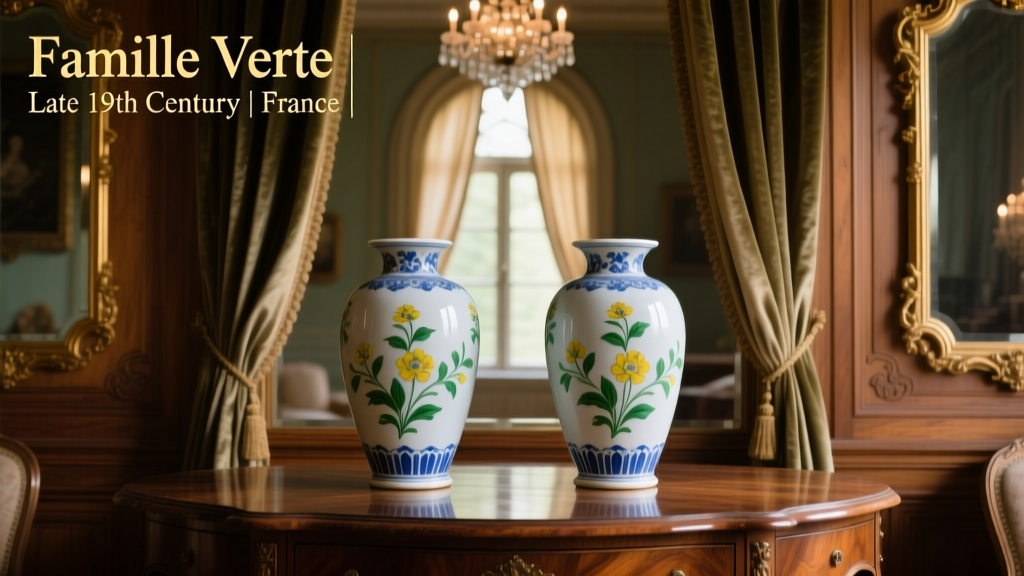
Porcelain Vase Famille Verte France Late 19th Century: A Pair of 14-Inch Masterpieces from the Gilded Age
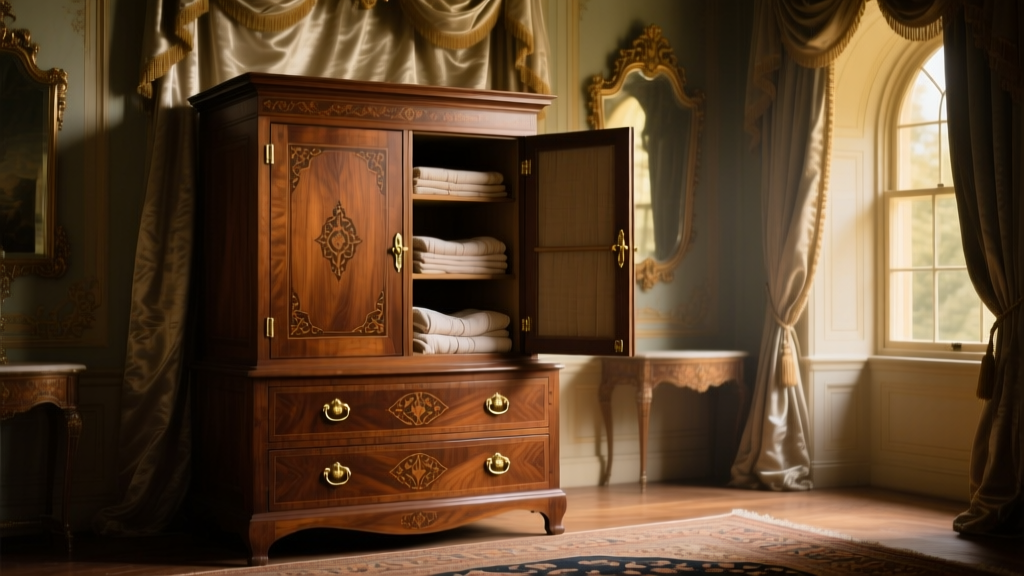
The Linen Press with Double-Paneled Doors and 2-Short/2-Long Drawer Configuration: History, Anatomy, Restoration, and Market Value
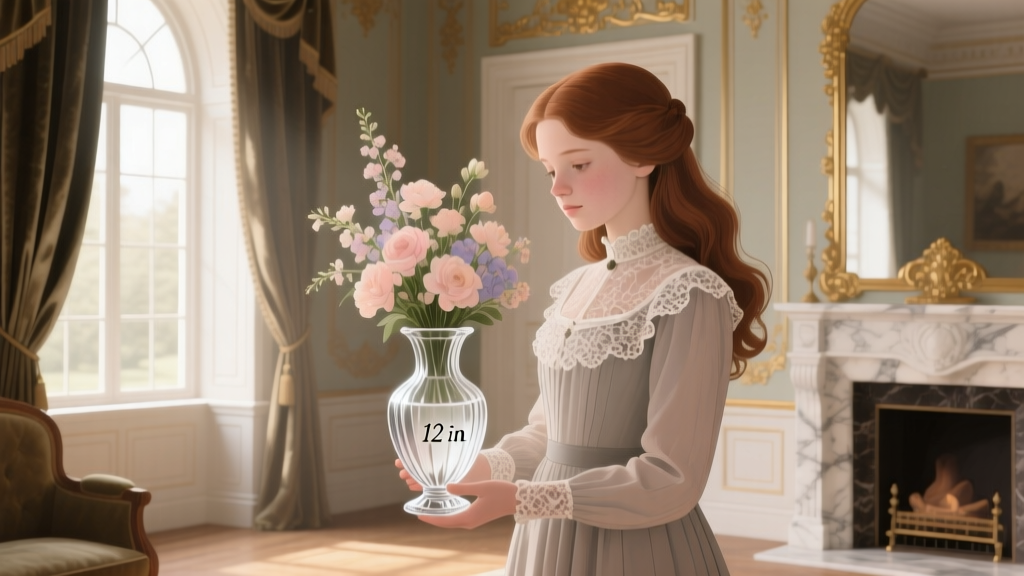
Orrefors Vase 'Young Girl With Flowers' by Sven Palmquist: A 12-Inch Masterpiece of Swedish Glass Art
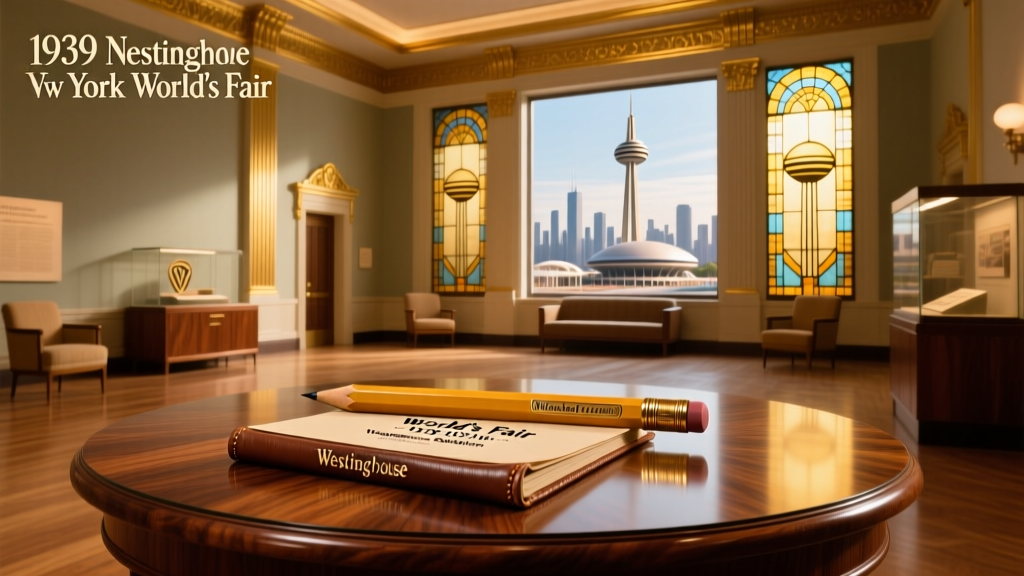
The 1939 New York World’s Fair Westinghouse Pencil: A 3½-Inch Artifact of Industrial Optimism
Hummel Figurine No. 199/1 'Feeding Time': A Deep-Dive Analysis of the Stylized Bee Variant
Federal-Era Cherry Sewing Table: Authentic Pennsylvania Craftsmanship, Turned Legs & Functional Drawer Design (29" × 22")

Frankart Bookends Female Bust: Identification, Value, and Restoration Insights for Collectors