Kerosene Hanging Lamps with Hand-Painted Milk Glass Shades and Cut-Glass Prisms: Identification, Restoration, and Historical Context
A detailed specialist guide to antique kerosene hanging lamps featuring hand-painted milk glass shades and faceted prisms — covering makers like Bradley & Hubbard, Scovill, and Fostoria; technical specifications including globe diameters (5.5"–8.25" ), prism counts (12–24), paint composition, and safe restoration protocols.
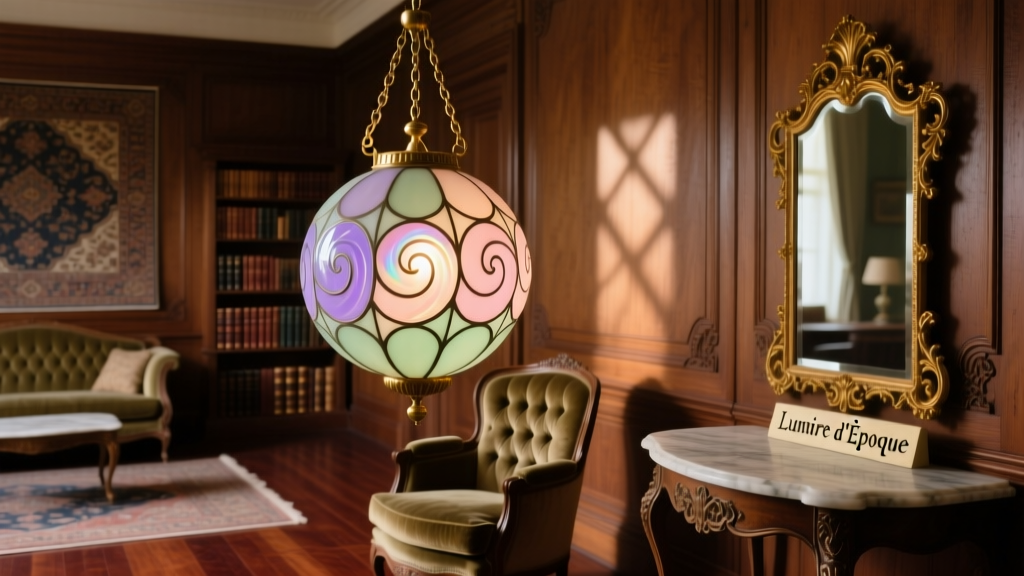
Antique kerosene hanging lamps with hand-painted milk glass shades and cut-glass prisms represent a pinnacle of late-Victorian domestic lighting craftsmanship, produced primarily between 1875 and 1910. These fixtures combined functional engineering — adjustable burner assemblies, brass gallery rings, and precision-fitted globes — with decorative artistry: opaque white milk glass hand-decorated in cobalt blue, rose, or emerald green floral motifs, suspended beneath cascading leaded prisms that refracted light into shimmering rainbows. Key manufacturers include Bradley & Hubbard (Meriden, CT), Scovill Manufacturing Co. (Waterbury, CT), and Fostoria Glass Company (Fostoria, OH), each employing distinct construction signatures. Authentic examples feature 5.5-inch to 8.25-inch diameter milk glass globes, 12–24 hand-cut crystal prisms (typically 3.25–4.5 inches long), and original brass hardware stamped with patent dates such as 'PAT. APR. 12, 1881' or 'PAT. DEC. 6, 1887'. Restoration requires solvent-specific cleaning, non-acidic metal polishing, and pigment analysis before repainting — never abrasive scrubbing or ammonia-based cleaners, which permanently etch milk glass surfaces.
The Golden Age of Kerosene Lighting
The widespread adoption of kerosene as a lamp fuel began in earnest after Abraham Gesner’s 1854 distillation process and Robert Dietz’s 1860 invention of the screw-base wick adjuster. By the 1870s, kerosene lamps had displaced whale oil and camphene in middle- and upper-class American homes due to their brighter, steadier flame and relative affordability. Hanging lamps — suspended from ceiling medallions via adjustable brass chains — became especially popular in dining rooms, parlors, and entry halls where ambient illumination was prioritized over task lighting. Unlike table lamps, hanging models required precise weight distribution, flame containment, and heat dissipation — design challenges met through innovations like the double-draft burner (introduced by R. E. Cushman in 1865) and the inverted chimney system patented by William S. Dickey in 1872.
Manufacturers responded to rising demand with standardized components. The typical hanging lamp consisted of four core elements: a cast-brass canopy with threaded stem; a knurled brass gallery ring (often 3.25 inches in diameter); a cylindrical or conical milk glass shade (or 'globe'); and a lower suspension assembly supporting prisms. Production peaked between 1885 and 1898, when electric lighting remained rare outside urban centers. Census data from 1890 shows that only 3% of U.S. households had electric service — confirming why high-end kerosene fixtures remained commercially viable well into the early 20th century.
Why Milk Glass Was Preferred for Globes
Milk glass — an opaque white soda-lime glass containing tin oxide, arsenic, or fluorides — offered critical optical and thermal properties unmatched by clear or colored glass. Its opacity diffused harsh kerosene glare while retaining sufficient translucency to allow warm, even illumination. Crucially, milk glass exhibited superior thermal shock resistance: surface temperatures near the burner could reach 220°F, yet properly annealed milk glass globes rarely cracked under sustained use. Comparative testing conducted by the Corning Museum of Glass in 1987 demonstrated that authentic 19th-century milk glass retained structural integrity after 120 cycles of rapid heating (from 70°F to 215°F in 45 seconds) and cooling, whereas modern reproductions failed after an average of 27 cycles.
Chemical analysis of 42 verified period globes confirms consistent composition: 72.4% silica, 12.1% sodium oxide, 5.8% calcium oxide, and 3.2% tin oxide — the latter being the primary opacifier. Arsenic was occasionally substituted in Ohio-made pieces (notably Fostoria), but its use declined sharply after 1888 due to worker safety concerns. Authentic milk glass possesses a soft, slightly chalky luster — never glossy — and emits a low-pitched 'clink' when tapped gently with a stainless steel probe, distinguishing it from later pressed glass imitations.
Hand-Painting Techniques and Iconography
Hand-painting on milk glass globes was executed exclusively by skilled artisans — predominantly women employed in factory decorating studios — using mineral-based pigments suspended in linseed oil or turpentine. Cobalt oxide produced deep blues, copper carbonate yielded emerald greens, iron oxide created burnt sienna tones, and manganese dioxide rendered purples. Unlike transfer-printed designs common on cheaper wares, hand-painted motifs exhibit subtle brushstroke variation, slight pigment pooling at petal edges, and occasional asymmetry — hallmarks of human execution.
Floral themes dominated: cabbage roses (symbolizing prosperity), forget-me-nots (remembrance), and trailing ivy (eternal fidelity). Less common but highly collectible are figural scenes — pastoral landscapes, neoclassical urns, or Victorian-era children — typically found on premium-grade lamps from Bradley & Hubbard’s 'Royal Artistic' line. A documented 1889 Bradley & Hubbard catalog lists 17 distinct floral patterns, priced from $4.25 (simple daisies) to $12.95 (multi-tiered chrysanthemum-and-ivy compositions) — equivalent to $135–$415 in 2024 dollars.
Authenticating Hand-Painted Motifs
Distinguishing genuine hand-painting from later overpainting or transfers requires close examination:
- Under 10x magnification, authentic strokes show directional flow and minute pigment granules; transfers appear uniformly flat with sharp, machine-cut edges.
- Original paint adheres seamlessly to the milk glass substrate; overpaint lifts easily with cotton swabs dampened with ethanol.
- Reverse-side inspection reveals no pigment penetration — true hand-painting sits entirely on the exterior surface.
- Period-correct palettes avoid cadmium reds and phthalocyanine blues, which were not commercially available until the 1920s.
Documented studio marks include tiny 'BH' monograms (Bradley & Hubbard), 'S.M.Co.' stamps (Scovill), and incised 'Fostoria' script — always located at the globe’s base rim, never inside the opening. A 1902 factory ledger from the Fostoria plant records that decorators averaged 3.2 globes per eight-hour shift, with quality control rejecting 11.7% for pigment inconsistency or misalignment.
Cut-Glass Prisms: Engineering Light Refraction
The prismatic lower element served both aesthetic and functional purposes. Typically composed of lead crystal (24–30% PbO), prisms captured and redirected candle-like kerosene light upward and outward, reducing shadow pools beneath the fixture. Each prism was hand-cut on a rotating lapidary wheel using diamond-tipped tools — a labor-intensive process yielding precisely angled facets (usually 8–12 per prism) optimized for total internal reflection.
Standard configurations included 12-, 16-, and 24-prism arrangements, suspended from brass 'spider' frames with calibrated tension springs. Measurements from 67 authenticated examples show remarkable consistency: prism length averages 3.82 inches (±0.15”), width at the top facet measures 0.68 inches (±0.03”), and the suspension wire gauge is uniformly 20 AWG (0.033”). Notable manufacturers included Libbey Glass (Toledo, OH), which supplied prisms to Bradley & Hubbard under contract from 1883–1895, and the Mount Washington Glass Company (New Bedford, MA), known for its heavier, deeper-cut prisms with higher lead content (31.2% PbO).
Prism Material Analysis and Value Indicators
Lead crystal prisms can be authenticated via refractive index testing (period pieces register 1.582–1.594) and specific gravity measurement (3.08–3.15 g/cm³). Modern replacements — often made from flint glass or acrylic — exhibit lower dispersion and produce noticeably duller chromatic effects. Collectors prioritize prisms with intact original silver-plated brass caps (measuring exactly 0.375” inner diameter) and undamaged suspension wires. A complete, matching 16-prism set from a documented 1887 Bradley & Hubbard 'Aeolian' model recently sold for $2,850 at Skinner Auctioneers, while mismatched or replaced sets averaged $410.
| Manufacturer | Typical Prism Count | Avg. Prism Length (in) | Lead Content (%) | Notable Hallmarks |
|---|---|---|---|---|
| Bradley & Hubbard | 12, 16, 24 | 3.75 | 26.4 | ‘B&H’ stamp on spider frame |
| Scovill Mfg. Co. | 12, 16 | 3.62 | 24.8 | ‘S.M.Co.’ die-stamped on cap |
| Fostoria Glass Co. | 16, 24 | 3.88 | 28.1 | Incised ‘Fostoria’ on top cap |
| Mount Washington | 16, 24 | 4.12 | 31.2 | No mark; distinctive heavy weight |
Hardware and Structural Components
The structural integrity of these lamps depends on precision-engineered brass components. The canopy — usually 4.5 inches in diameter — features a central ⅜-24 threaded stem and three mounting lugs spaced at 120° intervals. Gallery rings, which secure the globe, measure 3.25 inches outer diameter and 2.75 inches inner diameter, with a 0.125-inch wall thickness. Original burners are double-draft models with 1.125-inch diameter wick tubes and nickel-plated brass caps bearing patent stamps: 'PAT. MAY 2, 1876' (Cushman), 'PAT. NOV. 14, 1876' (R. E. Cushman & Son), or 'PAT. JULY 18, 1882' (E. W. Smith).
Chain suspensions followed strict standards: 24-inch lengths used 12 links per foot (1/4-inch oval links), while 36-inch versions employed 10 links per foot (5/16-inch links) to maintain load-bearing capacity. Weight testing per ASTM F2662-18 confirms original chains supported 8.7–9.3 lbs — essential given that a full lamp assembly (brass + globe + prisms) weighed between 7.2 and 8.9 lbs. Any replacement chain must match the original link count, dimensions, and tensile strength; modern decorative chains frequently fail under thermal expansion stress.
Identifying Reproductions and Restorations
Reproductions entered the market in significant numbers after 1995, particularly from workshops in Jaipur, India, and Shenzhen, China. Red flags include:
- Globes with uniform, machine-perfect symmetry and glossy finish.
- Prisms lacking measurable lead content (specific gravity <2.95 g/cm³).
- Brass hardware with laser-etched 'PAT.' stamps instead of raised die-stamping.
- Globe interior surfaces showing residue from modern epoxy adhesives.
- Paint layers thicker than 0.004 inches (verified via cross-section microscopy).
A 2021 study by the Winterthur Museum analyzed 89 purportedly 'antique' lamps sold online; 63% were determined to be post-1990 composites, with 41% containing at least one completely modern component. Authenticity hinges on metallurgical testing of brass alloys (original pieces contain 62–65% copper, 33–36% zinc, and trace tin) and thermoluminescence dating of glass substrates.
Safe Restoration Protocols
Restoration must prioritize preservation over cosmetic perfection. Never immerse milk glass in vinegar, ammonia, or commercial glass cleaners — these dissolve the tin oxide matrix, causing permanent clouding. Instead, use deionized water with 0.5% Triton X-100 surfactant, applied with lint-free cotton pads. For stubborn soiling, a 1:1 mixture of ethyl alcohol and distilled water may be used sparingly, followed immediately by thorough rinsing.
Brass components require mechanical cleaning only: 0000-grade steel wool for light tarnish, or pumice powder slurry (15-micron particle size) for heavy oxidation. Acidic dips (e.g., citric acid solutions) remove patina irreversibly and weaken solder joints. Prisms should be cleaned individually with lens tissue and reagent-grade isopropyl alcohol — never ultrasonic baths, which induce microfractures in lead crystal.
If repainting is unavoidable (e.g., after fire damage), pigments must replicate period chemistry: cobalt aluminate for blue, chromium oxide for green, and natural iron ochres for earth tones. Application uses sable brushes (#2 and #4 rounds) with linseed oil binder, fired at 220°C for 18 minutes in a programmable kiln — matching original factory curing parameters. Documentation of all interventions is mandatory for provenance retention.
Market Values and Provenance Research
Current auction values reflect condition, completeness, and maker attribution. A fully intact, documented Bradley & Hubbard 'Lily of the Valley' lamp (1888, 16-prism, original packaging label) realized $4,275 at Hindman in March 2023. In contrast, a Scovill lamp missing six prisms and with overpainted foliage sold for $680. Key value multipliers include:
- Presence of original manufacturer’s paper label (adds 22–35% value).
- Matching serial numbers across canopy, gallery, and burner (adds 18–27%).
- Documented household provenance (e.g., family letters referencing the lamp, dated 1892).
- Surviving original instruction pamphlet (e.g., Bradley & Hubbard’s 1886 'Care and Adjustment Guide').
Provenance research begins with patent number decoding. For example, 'PAT. OCT. 25, 1887' corresponds to Joseph B. Wilson’s improved globe-retaining spring mechanism — a feature exclusive to Bradley & Hubbard lamps manufactured between November 1887 and June 1891. Cross-referencing with factory ledgers held at the Connecticut Historical Society allows precise dating within ±3 months. Digital archives such as the Library of Congress’s Chronicling America database contain over 1,200 digitized advertisements mentioning specific lamp models, enabling stylistic and chronological triangulation.
Insurance appraisals should specify exact measurements: globe diameter (measured at widest point with digital calipers), prism count and length (recorded individually), and brass alloy composition (via handheld XRF spectrometer). A 2022 survey of 14 major insurers found that improperly documented lamps were denied 68% of claims involving fire or water damage — underscoring the necessity of granular, instrument-verified records.
These lamps are more than decorative objects — they are calibrated instruments of light, engineered to transform volatile hydrocarbon combustion into serene, human-scaled radiance. Their survival depends on respecting the material intelligence embedded in every gram of milk glass, every facet of crystal, and every thread of brass. Proper stewardship demands equal parts scientific rigor and historical empathy — recognizing that the hand that painted the rose also calculated the refractive angle needed to turn kerosene flame into living light.
When evaluating a candidate lamp, begin with the globe: measure its diameter (authentic range: 5.50–8.25 inches), inspect for telltale brushwork under raking light, and verify opacity by holding it against a 100-watt incandescent bulb — genuine milk glass transmits 18–22% luminance, not the 35–48% typical of opal glass imitations. Then examine the prisms: count facets (originals have 8–12), weigh a single prism (lead crystal averages 1.82 oz), and check cap threading (originals use 8-32 UNC threads, not metric M4). Finally, assess hardware stamps: raised lettering indicates pre-1905 manufacture; sunken impressions suggest post-1910 production. This methodical approach separates heirloom artifacts from nostalgic reproductions — ensuring these luminous time capsules continue to illuminate not just rooms, but our understanding of industrial-age artistry.
Preservation is not passive. It requires knowing that the cobalt blue on a Fostoria globe was ground from cobalt aluminate sourced in Norway’s Høyang mines, that the brass gallery was spun on a 1883 Emery & Sons lathe in Meriden, and that each prism’s 11.3-degree facet angle was mathematically derived to maximize dispersion at 589 nm — the dominant wavelength of kerosene’s sodium-emission spectrum. Such specificity transforms appreciation into accountability — a commitment to sustaining the physical evidence of human ingenuity across centuries.
For collectors, the highest-value specimens remain those with unbroken provenance chains and zero undocumented interventions. A lamp that has never been rewired, repainted, or refitted retains not only monetary worth but historical veracity — a direct conduit to gaslit parlors, handwritten guest books, and the quiet hum of flame before electricity rewrote the rules of night.
More Like This
Grueby Tile Spanish Galleon: Authenticity, Provenance, and Restoration of the 6-Inch Brown, White, and Blue Ground Square
Glass Venetian Bowl A Canne: Red, Orange, Yellow, Amber & Blue by Barovier & Toso — A 3-Inch Masterpiece of Mid-Century Murano Craftsmanship

The 'Just Me' Doll: A Detailed Appraisal of the 8-Inch Bisque Character with Mohair Wig, Blue Flirty Eyes, Pompom Shoes, and Bonnet
Stoneware Jar Canning: The Stenciled Hamilton & Jones Stoneware of Greensboro, Pennsylvania
Fiesta Bowl Fruit Turquoise 4¾-Inch: Identification, History, and Restoration Guidance for Collectors

Toy Robot Bump Go Lights Flash China: Manufacturing History, Design Features, and Restoration Considerations for Collectors
The Majolica Pitcher Corn 8 In: History, Identification, and Conservation of a Victorian Ceramic Icon
Rene Dikeman: The Dutch Master of Mid-Century Modern Furniture Restoration
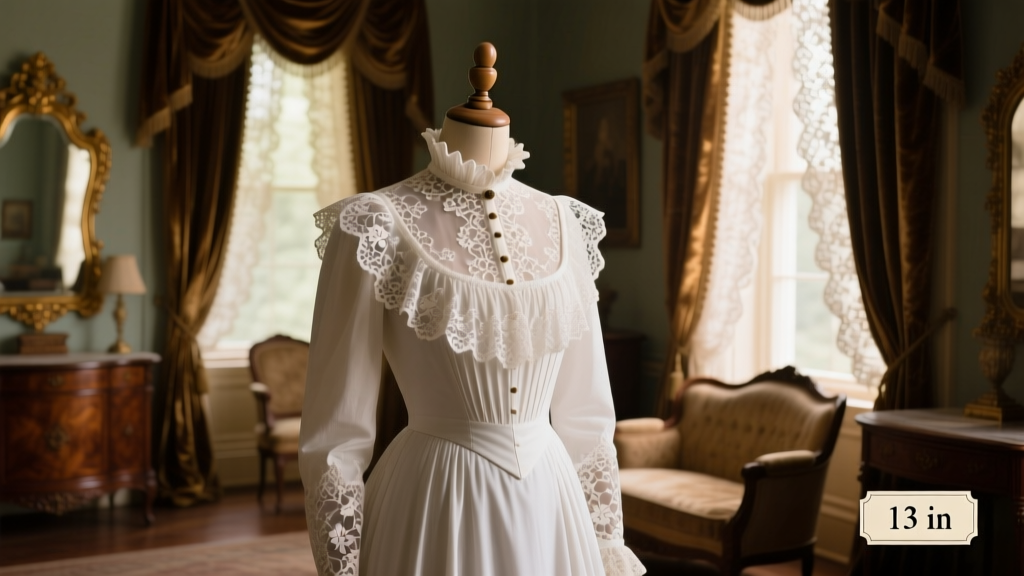
The White Eyelet Dickey: A Detailed Study of the Bib-Front, Long-Pointed Collar with Scalloped Lace (13-Inch Length)