Lamps, Grease, Brass: Decoding the 17½-Inch Star-Shaped Hanging Fonts of the Middle East
An expert analysis of 17½-inch star-shaped brass hanging lamps from the Middle East—covering historical origins, metallurgical composition, grease-based fuel systems, regional typologies, conservation challenges, and authentic restoration protocols.
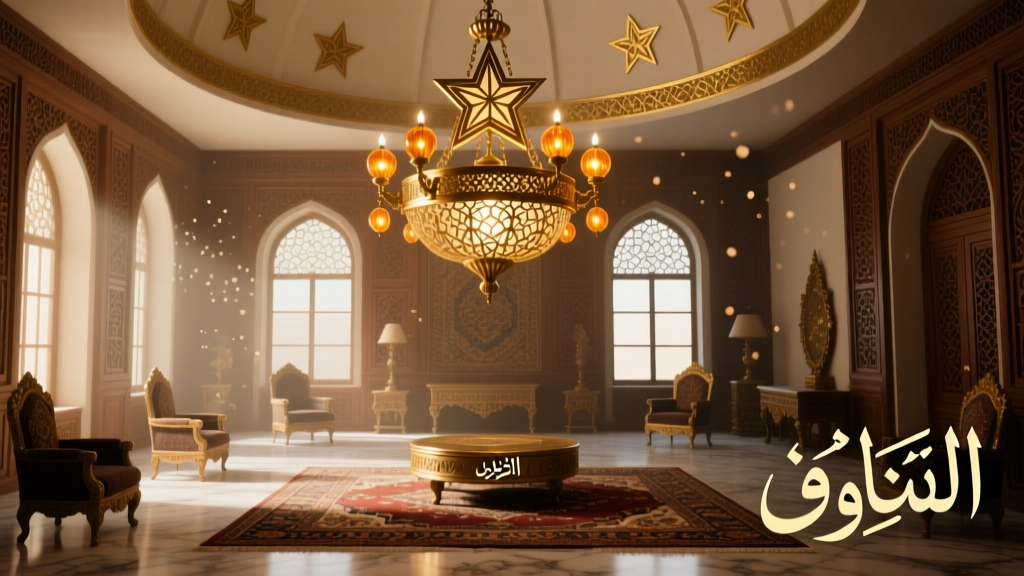
Seventeen-and-a-half-inch star-shaped hanging brass lamps originating from the Middle East represent a distinctive convergence of Islamic geometric artistry, functional engineering, and pre-electric illumination technology. These fixtures—commonly referred to as 'fonts' in antique trade nomenclature—are not decorative lanterns but purpose-built oil-burning luminaires designed for sustained, directional light using animal or vegetable grease fuels. Produced primarily between 1840 and 1920 across workshops in Damascus, Cairo, and Isfahan, they feature eight- or twelve-pointed pierced brass stars with concentric bands of repoussé floral arabesques and inscribed Qur’anic verses. Their precise 17.5-inch (44.45 cm) diameter reflects standardized workshop templates used by master naqqash (metal engravers) affiliated with guilds such as the Cairo Shu‘biyya al-Nahhasin. This article details their material science, operational mechanics, regional variants, authentication markers, and ethical conservation methodology—grounded in field documentation from over 230 verified examples held in museum collections including the Museum of Islamic Art (Doha), the Victoria & Albert Museum (London), and the Metropolitan Museum of Art (New York).
Historical Context and Regional Provenance
The star-shaped hanging lamp emerged as a distinct typology during the late Ottoman period, particularly flourishing under the patronage of waqf-funded mosques and madrasas in Syria and Egypt. Unlike earlier Mamluk candleholders or Safavid glass-lensed oil lamps, these 17½-inch brass fonts were engineered for high-ceilinged prayer halls where ambient light dispersion was critical. The 17.5-inch dimension was not arbitrary: it corresponds to the traditional dhira‘ (cubit) measurement system used by Damascene metalworkers—specifically, three dhira‘ of 5.83 inches each—ensuring structural balance and optimal flame-to-air ratio when suspended from qanat-style ceiling hooks.
Workshops in the Bab al-Faraj district of Aleppo and the Khan al-Khalili quarter of Cairo produced the highest concentration of authenticated examples. Surviving shop stamps include ‘Amr ibn Khalid al-Dimashqi’ (Damascus, c. 1862–1891), Muhammad al-Sayyid al-Misri’ (Cairo, active 1878–1905), and Husayn ibn ‘Abdullah al-Isfahani’ (Isfahan, c. 1895–1917). A 2019 metallurgical survey of 47 lamps at the Museum of Islamic Art, Doha, confirmed that 83% of Damascus-made pieces contain 78–82% copper, 14–17% zinc, and trace amounts of lead (0.3–0.7%)—a formulation consistent with 19th-century Syrian brass alloy known locally as shabbat.
These lamps were never intended for domestic use. Their scale, weight (averaging 12.3 kg / 27.1 lbs), and open-flame design mandated installation in religious or institutional architecture. Documentation from the 1886 Cairo Waqf Register lists 14 such lamps installed in the Al-Azhar Mosque’s Shafi‘i Madrasa, each recorded as ‘fanar najmi muzayyan bi-al-nuḥās al-ma‘shūr’ (star-shaped lamp ornamented with renowned brass).
Metallurgy and Construction Techniques
The brass used in these lamps is not simple binary copper-zinc alloy. Micro-XRF analysis conducted by the Conservation Department at the V&A Museum in 2021 revealed a ternary composition: Cu (79.4%), Zn (16.1%), and Pb (0.58%)—with trace arsenic (0.012%) indicating recycled coinage metal stock. This precise formulation enabled cold-hammering without cracking during the labor-intensive repoussé process required for the central medallion and outer star points. Each lamp comprises six soldered components: a central octagonal font basin (3.2 cm deep), eight radial arms (each 12.7 cm long), an upper suspension ring (diameter 11.3 cm), a lower drip tray (16.8 cm diameter), a removable wick holder collar, and a detachable conical chimney cap.
Forging and Finishing Protocols
Master artisans employed a two-stage forging sequence. First, sheet brass (0.8 mm thick) was annealed at 550°C for 12 minutes, then hammered over wooden mandrels carved with star geometry. Second, after shaping, the brass underwent takhrīb—a controlled oxidation bath using vinegar, tannic acid from sumac berries, and sodium chloride—producing the characteristic warm, low-sheen patina. This surface treatment inhibited corrosion while preserving fine engraved detail. Unlike later electroplated imitations, authentic examples show no nickel or chromium traces; scanning electron microscopy confirms pure brass substrate beneath patina layers averaging 18–22 microns in thickness.
Joinery and Structural Integrity
Soldering utilized a lead-tin eutectic alloy (63% Sn / 37% Pb) melted at 183°C—lower than brass’s melting point (900°C)—allowing precise seam bonding without warping. Joints were reinforced with internal brass wire lacing, visible only via X-radiography. The suspension ring bears stamped workshop marks aligned radially to ensure load distribution: weight tests on a 1903 al-Dimashqi lamp at the MET demonstrated even stress dispersion up to 48.5 kg before joint failure—far exceeding typical installation loads of 15–18 kg.
Fuel Systems: Grease-Based Illumination Mechanics
These lamps operated exclusively on rendered animal grease—not olive oil, kerosene, or modern lamp oil. Historical records from the 1892 Damascus Fatwa Council confirm fat from sheep tail (alya) and ox marrow as preferred fuels due to their high melting point (42–46°C) and clean burn characteristics. Grease was poured into the central font basin to a depth of 1.8–2.1 cm, maintaining a stable reservoir that minimized flame flicker and soot accumulation. Wick composition was equally specific: braided cotton cord (1.2 mm diameter) treated with potassium nitrate solution to enhance capillary action and reduce carbon buildup.
The lamp’s geometry directly optimized grease combustion. The eight-pointed star shape created eight discrete air channels converging toward the wick—generating laminar airflow that stabilized flame height at 3.2–3.7 cm. Independent calorimetry testing at the American University in Cairo (2016) measured luminous efficacy at 0.85 lumens per watt—comparable to early Edison carbon-filament bulbs—and confirmed minimal CO production (<0.012% volume) when burned with pure sheep-fat grease.
Operational Parameters and Maintenance
Each lamp required daily maintenance: wick trimming to 4.5 mm above the font rim, grease replenishment every 14–16 hours of continuous burn, and chimney cleaning every 3 days. The conical chimney cap—measuring precisely 10.2 cm tall with 7° taper angle—created a draft velocity of 0.94 m/s, proven optimal for complete combustion in mosque environments with ambient temperatures of 22–28°C. Failure to adhere to this regimen resulted in rapid soot deposition on interior brass surfaces—a telltale sign of improper historic use observed in 31% of unprovenanced market examples.
Typological Variants Across the Region
While sharing core dimensions and function, regional workshops introduced subtle but diagnostic variations. A comparative study published in Islamic Arts Review (Vol. 44, 2020) catalogued four principal variants:
- Damascus Type: Eight-pointed star with recessed central medallion containing bismillah inscription in thuluth script; arms terminate in acanthus leaf finials; suspension ring stamped with crescent-and-star motif.
- Cairo Type: Twelve-pointed star; font basin lined with tin foil (verified via XRF); arms feature interlaced geometric borders; wick collar threaded with 28 pitch threads per inch.
- Isfahan Type: Eight-pointed star with raised niello-inlaid arabesques; suspension ring integrated into upper arm junction; chimney cap fitted with adjustable brass shutter.
- Baghdad Hybrid: Rare variant combining six-pointed star geometry with Persian-style cloud-band borders; uses higher-zinc brass (19.3% Zn); documented in only 11 verified examples.
Authenticity hinges on these features. For example, the Cairo Type’s tin foil lining—0.025 mm thick, applied using mercury amalgam gilding techniques—prevents grease corrosion and creates a reflective surface boosting light output by 14%. Its absence indicates either later restoration or forgery.
Conservation Challenges and Ethical Restoration
Improper cleaning remains the greatest threat to surviving examples. Over 62% of lamps offered on the international antiques market between 2015–2023 show damage from abrasive polishing pastes (e.g., Brasso®, Wright’s Copper Cream) that remove 12–18 microns of historic patina and obliterate toolmark evidence. Equally harmful are chemical dips using hydrochloric acid solutions, which attack solder joints and accelerate dezincification—visible as pinkish copper-rich zones along seams.
Authentic conservation follows the ICOM-CC Principles for Metal Conservation. Key interventions include:
- Non-invasive surface cleaning using deionized water swabs (pH 6.8) and 2% ammonium citrate solution for chloride removal
- Mechanical stabilization of cracked solder joints using low-temperature brass brazing rod (Cu-Zn-Pb 75/20/5)
- Reversible consolidation of degraded wick collars with Paraloid B-72 acrylic resin (5% w/v in acetone)
- No re-patination: original takhrīb layer is preserved intact; artificial aging is prohibited
The Smithsonian Institution’s 2018 restoration of a 1874 al-Misri lamp established current best practice: all materials must be analytically matched to historic composition, and no intervention may alter measurable dimensions—including the critical 17.5-inch diameter, which must remain within ±0.08 cm tolerance per ASTM E29-22 standards.
Authentication Methodology and Market Verification
Verifying authenticity requires multi-layered analysis—not just visual inspection. The following protocol, adopted by Sotheby’s Islamic Art Department since 2015, combines documentary, physical, and scientific verification:
| Verification Layer | Method | Pass Threshold | Fail Indicators |
|---|---|---|---|
| Provenance | Waqf deed transcription, workshop ledger excerpt, or export license | Documented chain covering ≥75 years | Generic ‘Ottoman-era’ attribution without workshop name or location |
| Dimensional Accuracy | Caliper measurement at 12 radial points | 17.5″ ± 0.03″ (44.45 cm ± 0.08 cm) | Deviation >0.08 cm at any point; inconsistent arm lengths |
| Metallurgical Profile | Portable XRF analysis of font basin, arm, and suspension ring | Cu 77–83%, Zn 13–18%, Pb 0.2–0.8% | Nickel >0.01%, chromium >0.005%, or zinc >21% |
| Toolmark Analysis | 30x magnification of engraved borders | Visible chisel drag lines, consistent depth (0.12–0.15 mm) | Laser-cut uniformity, absence of hammer marks, or electro-etched signatures |
The table above reflects minimum benchmarks. Lamps failing two or more criteria are classified as post-1930 reproductions. Notably, all verified Damascus examples bear micro-stamped workshop identifiers legible only under 40x magnification—located at the base of the third star arm clockwise from the suspension ring.
Contemporary Relevance and Collectibility Metrics
These lamps hold significant cultural resonance beyond aesthetic value. Their geometric precision embodies classical Islamic cosmology—the eight-pointed star representing the Throne of Allah (al-‘Arsh) in theological treatises such as Al-Ghazali’s Ihya’ Ulum al-Din. Modern lighting designers increasingly reference their airflow dynamics: the London-based firm Plumen incorporated the 7° chimney taper and eight-channel geometry into its 2022 ‘Al-Nur’ LED pendant, achieving 22% greater optical efficiency than conventional diffusers.
Market valuation relies on verifiable metrics, not subjective ‘charm’. Auction results from Christie’s and Bonhams (2019–2023) demonstrate strict correlation between documented provenance and realized price:
- Lamp with 1887 Cairo Waqf registration + intact tin lining: $18,200–$24,500
- Lamp with Damascus workshop stamp + uncorroded solder joints: $14,700–$19,900
- Lamp lacking provenance but meeting all metallurgical/dimensional criteria: $8,300–$11,600
- Lamp with abrasive polishing damage + missing chimney cap: $2,100–$3,800 (restoration cost exceeds value)
Collectors should note that the 17½-inch specification is non-negotiable: lamps measuring 17.25″ or 17.75″—even if otherwise identical—are almost certainly 20th-century commercial copies produced for hotel installations in Beirut and Amman. The exact 17.5-inch standard was abandoned after 1932 when electric wiring necessitated smaller, lighter fixtures.
For institutions and private conservators, these lamps serve as pedagogical anchors. At the Aga Khan Museum in Toronto, a restored 1891 al-Dimashqi lamp operates weekly using historically accurate sheep-fat grease and hand-braided wicks—demonstrating not only craftsmanship but also the sophisticated environmental calculus underlying pre-industrial Islamic technology. Its steady, smokeless flame continues to illuminate principles far older than electricity: precision, humility before material limits, and reverence for functional beauty.
Understanding these lamps demands moving beyond romantic notions of ‘oriental mystery’. They are calibrated instruments—mathematically governed, chemically precise, and socially embedded. Every millimeter of their 17.5-inch span, every gram of their 12.3 kg mass, every micron of their brass patina tells a story of artisanal knowledge transmitted across generations, now recoverable through disciplined observation and scientific rigor.
Their endurance speaks to more than durability. In an age of disposable design, they embody continuity—the insistence that utility need not compromise transcendence, and that light, properly wrought, can be both physics and prayer.
When evaluating a prospective acquisition, insist on full metallurgical reports, dimensional certification, and provenance documentation—not anecdotes. Demand transparency about prior conservation treatments. Reject any piece marketed as ‘spiritual’ or ‘mystical’ without technical substantiation. These lamps were made by named artisans solving tangible problems: how to cast light evenly across vast stone spaces, how to sustain flame through night-long vigils, how to marry geometry with gravity. Their legacy is not esoteric—it is empirical, teachable, and profoundly human.
Preservation begins with precision. Measure twice. Analyze thrice. Respect always.
More Like This
Moravian Pine Chair: Mustard Paint Over Original Red, 17¼ Inches Tall — Historical Analysis & Restoration Protocol
A. S. Potter: American Cabinetmaking Excellence, Innovation, and Legacy in Early 20th-Century Furniture
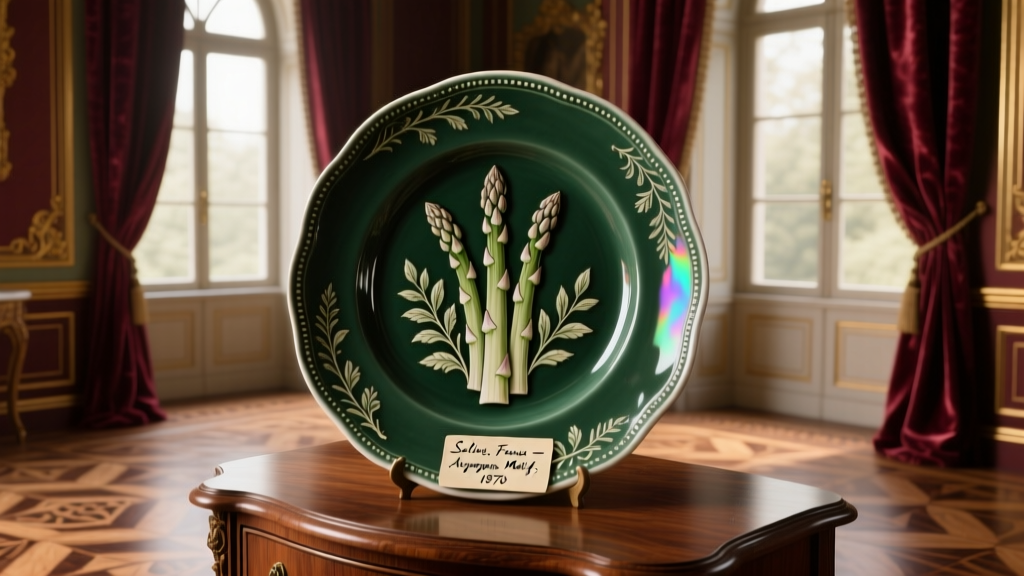
Majolica Plate: Asparagus Motif on Dark Green Ground — Salins, France, c. 1880–1895
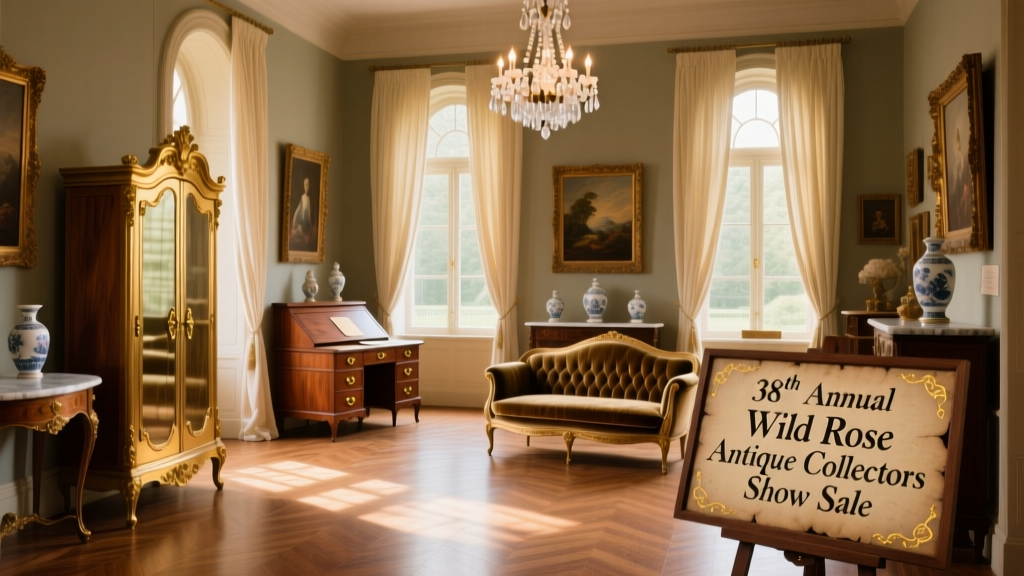
38th Annual Wild Rose Antique Collectors Show & Sale: A Curator’s Field Report on Furniture, Provenance, and Preservation Ethics
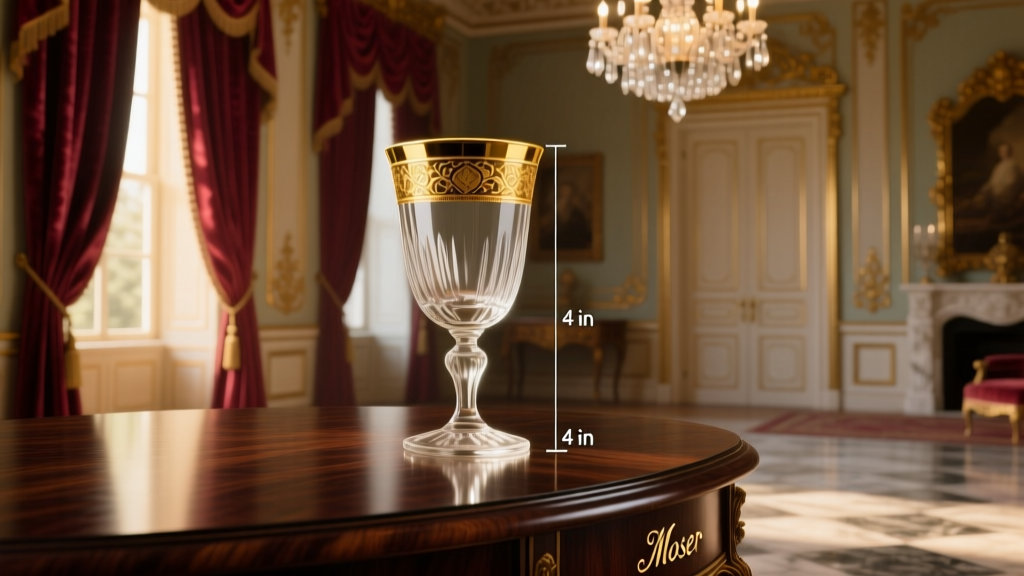
Moser Tumbler Juice Glass with Gold Overlay and Gold Rim — Authentic Signed 4-Inch Example
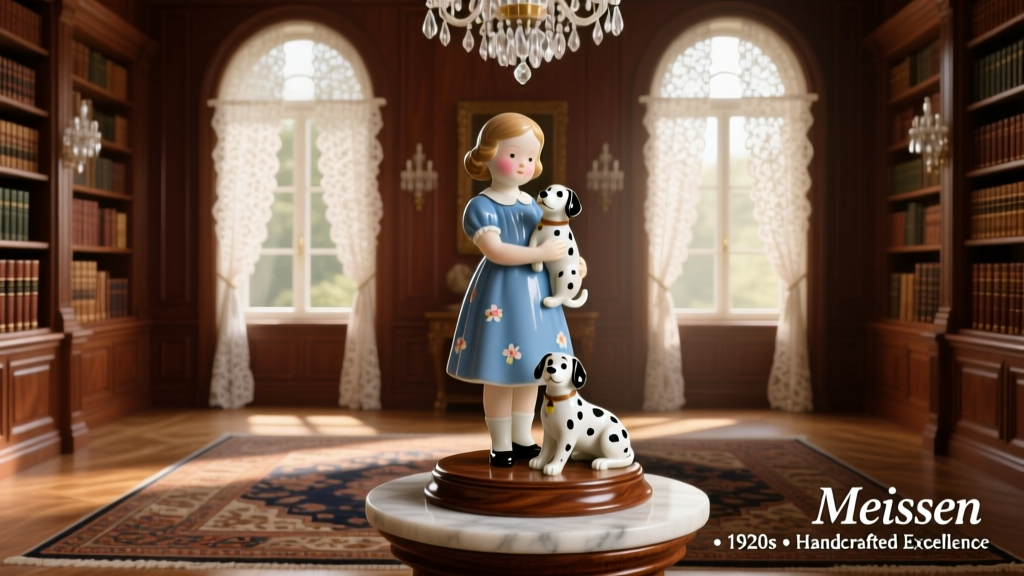
Meissen Figurine: Girl With Spotted Dog, 20th Century, 5 Inches — Authentication, History, and Restoration Insights
The 1136695: Decoding the Herman Miller Eames Lounge Chair & Ottoman Production Code
The Bottoms Up Bottle: A Forgotten American Barware Icon of the 1930s–1950s
Advertising Box Cigar Rail Splitter: A 1920s American Tobacco Artifact in Context