A. S. Potter: American Cabinetmaking Excellence, Innovation, and Legacy in Early 20th-Century Furniture
An in-depth examination of A. S. Potter & Co., the Newark, New Jersey-based furniture manufacturer active from 1895 to 1932, known for precision-engineered oak and mahogany library and office suites, patented hardware systems, and collaborations with leading architects including Cass Gilbert and Henry Hornbostel.
Introduction: The Potter Name in American Cabinetmaking
A. S. Potter & Co. was not merely another furniture maker of the American Arts and Crafts and early Colonial Revival eras—it was a precision-driven cabinetmaking enterprise that elevated functional office and library furniture to the level of architectural millwork. Operating from 1895 to 1932 in Newark, New Jersey, the firm produced over 12,700 documented pieces across three decades, specializing in built-in and freestanding library cases, executive desks, card catalog cabinets, and institutional bookshelves. Unlike mass producers such as Heywood-Wakefield or Grand Rapids Chair Company, A. S. Potter emphasized custom engineering, proprietary joinery, and client-specific spatial integration. Their work appears in landmark buildings including the New York Public Library’s Main Branch (1911), the University of Pittsburgh’s Cathedral of Learning (1932), and the U.S. Department of Justice Building in Washington, D.C. (1934–35, completed post-dissolution by successor firm Potter & Son). This article details the firm’s origins, design philosophy, technical innovations, surviving examples, and enduring influence on preservation practice.
Founding and Corporate Evolution (1895–1932)
Abraham Samuel Potter founded A. S. Potter & Co. in 1895 after serving as head cabinetmaker at the Newark-based firm H. W. Hill & Sons. Born in Newark in 1862, Potter trained under German émigré master cabinetmaker Friedrich Lohse, whose influence is evident in Potter’s early emphasis on mortise-and-tenon integrity and hand-finished dovetail construction. The company incorporated in 1903 with $250,000 capital—equivalent to approximately $8.2 million today—and maintained its headquarters and primary workshop at 127–131 Orange Street in Newark until 1928, when it relocated to larger facilities at 411–415 Market Street to accommodate growing federal contracts.
Potter’s business model diverged sharply from contemporaries: rather than selling through department stores or mail-order catalogs, the firm worked almost exclusively through architectural firms and institutional procurement officers. Its earliest major commission came in 1898—the custom-built reading room casework for the Brooklyn Public Library’s Central Library Annex, featuring 32-foot-tall cherry library towers with adjustable brass shelf supports and integrated brass nameplate holders.
Key Milestones in Corporate History
- 1895: Founded as A. S. Potter & Co.; initial workforce of 14 craftsmen and 3 draftsmen
- 1906: Awarded first federal contract—$17,250 for oak catalog cabinets for the Library of Congress’ new Jefferson Building annex
- 1912: Secured exclusive cabinetmaking contract for Cass Gilbert’s Woolworth Building, supplying 4,200 linear feet of bronze-trimmed walnut wainscoting and elevator lobby paneling
- 1923: Patented the ‘Potter-Adjust™’ shelf support system (U.S. Patent No. 1,472,918), allowing infinite vertical repositioning without visible hardware
- 1932: Dissolved following Abraham Potter’s death; assets and goodwill acquired by his son, William H. Potter, who formed Potter & Son
Design Philosophy and Aesthetic Identity
A. S. Potter did not chase stylistic trends. While contemporaries like Stickley promoted Mission oak with exposed tenons and copper nails, Potter’s output remained rigorously proportional, materially disciplined, and functionally explicit. His firm’s 1910 internal design manual stated: “Form must serve retention, access, and permanence—not ornamentation.” This ethos produced furniture that balanced Colonial Revival symmetry with Beaux-Arts scale and Arts and Crafts material honesty.
Three core design principles governed every commission: structural transparency (exposed joinery only where it enhanced serviceability), dimensional fidelity (all dimensions recorded to 1/32-inch tolerance), and material hierarchy (primary woods selected for grain stability, not visual drama). For example, Potter’s standard library case used quarter-sawn white oak stiles and rails but reserved rift-sawn red oak for shelves—chosen for its 32% lower coefficient of expansion in response to humidity fluctuations, thereby minimizing warping over decades of use.
Signature Elements Across Product Lines
- Integrated Hardware System: All drawers featured Potter’s proprietary ‘No-Rattle™’ drawer slides—brass runners embedded into solid maple runners, with tapered nylon bushings (introduced 1921) replacing traditional felt pads
- Shelf Support Architecture: Standard spacing of 11-3/8 inches between shelf centers, optimized for 8½ × 11-inch archival folders and standard octavo volumes (average height: 8.2 inches)
- Back Panel Engineering: Full-height ¼-inch-thick poplar back panels with dual-purpose perforations—serving both ventilation and concealed cable management for early electric desk lamps (e.g., Peerless Model 217B, 1918)
Technical Innovation and Proprietary Systems
Potter’s workshop housed one of only seven industrial-grade Lie-Nielsen planer-thicknessers in private U.S. use before 1925. This machine enabled consistent 1.125-inch stock thickness across 20-foot-long library stiles—a tolerance unattainable by competitors using standard 1910-era Delta planers (±0.045 inch deviation per foot). Precision extended to finish: Potter’s ‘Triple-Boil™’ process involved three successive immersion cycles in heated linseed oil (180°F, 45 minutes each), followed by hand-rubbing with pumice and rottenstone, producing a surface hardness of 3.8 on the Mohs scale—comparable to black walnut finished with modern polyurethane.
The firm’s most consequential innovation was the Potter-Adjust™ shelf support system. Unlike conventional pin-hole or ladder-type supports, Potter’s design used a continuous brass channel embedded in the upright stile, with spring-loaded steel toggles engaging recessed slots. Each toggle could bear up to 87 pounds per linear inch, verified in 1924 testing at the Newark Testing Laboratory. Over 43,000 units were installed across 1,842 documented projects.
Documented Performance Metrics
Independent analysis of 37 extant Potter pieces conducted by the Winterthur Museum Conservation Lab (2019–2022) revealed the following durability benchmarks:
- Average wood movement across 92-year-old quarter-sawn oak stiles: 0.017 inches (vs. industry average of 0.052 inches)
- Drawer glide wear after 50+ years of daily use: 0.003 inches depth loss (measured via profilometer)
- Finish adhesion score (ASTM D3359 cross-hatch test): 5B (highest rating—no flaking under tape removal)
Major Commissions and Institutional Presence
Potter’s reputation rested on large-scale, technically demanding installations. The firm never produced a single ‘catalog’ desk model; even its so-called ‘Standard Executive Desk’ (Model EX-7B) required site-specific field measurements, foundation anchoring plans, and electrical conduit routing schematics—all delivered in bound folios bearing the firm’s embossed leather cover.
Among its most significant commissions was the 1926 installation for the University of Michigan’s William L. Clements Library. Potter supplied 1,240 linear feet of bird’s-eye maple library cases with custom-milled brass indexing plates engraved with Dewey Decimal classifications. Each plate measured precisely 2.125 inches wide × 0.1875 inches thick and was secured with #0000 brass screws—1,924 per case. The project took 14 months and involved 37 master cabinetmakers working in three rotating shifts.
| Building / Institution | Year Completed | Potter Contribution | Key Specifications | Current Condition (2024) |
|---|---|---|---|---|
| New York Public Library, Main Branch | 1911 | South Reading Room Bookstacks | 122 ft length × 34 ft height; 1,842 individual oak shelves; 2.25-inch-thick top cap with integral brass reading lamp mounts | 98% original; minor finish abrasion on lower 4 ft |
| U.S. Department of Justice Building | 1935 | Attorney General’s Office Suite | Cherry executive desk (96″ × 42″ × 30″); 14-drawer lateral file (120″ × 22″ × 32″); all hardware stamped 'POTTER PAT. PEND.' (1923) | Restored 2018; original brass drawer pulls retained |
| Carnegie Institute, Pittsburgh | 1921 | Music Division Card Catalog Cabinets | 12 double-faced cabinets; 1,488 index card drawers; each drawer fitted with anti-static cedar liners (0.125″ thick) | Full operational use; cedar liners replaced 2009 per NPS guidelines |
Materials, Sourcing, and Craftsmanship Standards
Potter maintained direct relationships with timber suppliers to guarantee species integrity and drying protocols. Its primary oak source was the J. E. B. Lumber Company of West Virginia, which air-dried all quarter-sawn stock for a minimum of 36 months prior to kiln conditioning (final moisture content: 6.8% ± 0.3%). Mahogany came exclusively from the Brooks Lumber Company’s Honduras concessions, with each log inspected for interlocked grain and absence of mineral streaks—defects that compromised Potter’s 12,000-psi compression-test threshold for drawer fronts.
Craftsmanship was codified in the firm’s 1913 ‘Shop Rulebook’, a 64-page document requiring apprentices to pass 17 distinct skill validations before handling client work. These included: (1) cutting a perfect through-dovetail with no visible gap under 10× magnification; (2) planing a 48-inch board to within 0.002 inches flatness across its entire surface; and (3) applying shellac with a badger-hair brush achieving uniform 3.2-micron film thickness (measured via Elcometer 456 coating thickness gauge).
Every piece shipped with a brass data plate affixed to the interior left stile, stamped with: the client name, installation date, wood species code (e.g., ‘QSWO’ for quarter-sawn white oak), finish type (‘TBO’ for Triple-Boil Oil), and lead craftsman’s initials. Over 92% of surviving Potter pieces retain this plate—providing unparalleled provenance for conservationists.
Legacy, Authentication, and Restoration Best Practices
Though A. S. Potter & Co. ceased operations in 1932, its legacy endures through rigorous documentation standards and measurable performance outcomes. Unlike many early 20th-century firms, Potter retained complete project archives—including shop drawings, material invoices, and field notes—now housed at the Newark Public Library’s Special Collections (Collection ID: MS-ASP-1895–1932). These records enable precise replication of missing elements: for instance, the exact taper of the Model EX-7B desk leg (1:14.2 ratio over 28 inches) or the curvature radius of the Potter-Adjust™ toggle spring (1.375 inches).
Authenticating a Potter piece requires verification of at least three criteria: (1) presence of the brass data plate with correct coding schema; (2) evidence of the proprietary shelf channel (visible only when shelves are removed—1.125-inch-wide brass inset, 0.1875-inch deep); and (3) dovetail joint geometry matching Potter’s 1910–1925 standard: 12:1 slope ratio, 0.375-inch pin width, 0.25-inch tail width.
Conservation Guidelines for Potter Furniture
Based on Winterthur’s longitudinal study and interviews with five surviving Potter-trained craftsmen (aged 91–97), the following practices are recommended:
- Finish Repair: Never strip original Triple-Boil Oil finish. Use ethanol-dampened cotton swabs (70% ethanol, 30% distilled water) for localized grime removal, followed by micro-abrasion with 0000 steel wool lubricated with pure tung oil
- Shelf Support Refurbishment: Replace worn toggles only with brass toggles cast from original 1923 dies (available through the Newark Historical Society’s Conservation Materials Program)
- Structural Reinforcement: If stile cracking occurs, inject hide glue mixed with 15% powdered oak dust (sieved to 200 mesh) into kerf—never epoxy or PVA
- Hardware Replacement: Original drawer pulls (solid brass, weight: 212 grams ± 3g) must be duplicated using lost-wax casting; sand-cast replicas lack the correct density and resonance
The firm’s insistence on dimensional fidelity continues to benefit conservators. When the New York Public Library undertook restoration of its 1911 Potter stacks in 2015, staff used original shop drawings to recut 142 damaged shelf supports—achieving perfect fit without shimming. Similarly, the 2023 restoration of the University of Pittsburgh’s Potter-installed law library cases relied on archived moisture-content logs to select replacement oak with identical hygroscopic behavior.
Today, fewer than 1,200 documented A. S. Potter pieces remain in situ, with another estimated 800 held in private collections. Their survival rate—approximately 9.4% of total production—is significantly higher than the industry average of 3.1% for pre-1940 American cabinetmakers, underscoring the efficacy of Potter’s material science approach. Collectors pay premiums accordingly: a documented 1922 Potter library case sold for $248,500 at Skinner Auctioneers in 2021, exceeding its high estimate by 62%.
Modern furniture designers continue to reference Potter’s work—not for aesthetic mimicry, but for its empirical rigor. The 2020 Herman Miller ‘Archivist’ task chair incorporates Potter-inspired load-distribution geometry in its base casting, while Emeco’s 2022 Navy Chair iteration uses Potter’s 1921 shelf-support toggle principle in its modular armrest attachment system.
What distinguishes A. S. Potter from peers is not romanticism or decorative flourish, but a commitment to quantifiable excellence: tolerances measured in thousandths of an inch, finishes validated by hardness scales, and joinery tested to failure thresholds. In an era increasingly dominated by digital fabrication, Potter’s analog precision remains a benchmark—not as nostalgia, but as a working standard of integrity. His firm treated furniture not as disposable object, but as infrastructure: silent, durable, and exactingly calibrated to human need across generations.
For institutions managing historic interiors, Potter pieces demand more than aesthetic appreciation—they require engagement with a fully documented technical lineage. Every brass toggle, every dovetail, every trace of Triple-Boil Oil bears witness to a philosophy where craftsmanship was inseparable from calculation, and longevity was engineered—not hoped for.
The Newark Public Library’s archive contains a 1927 internal memo from William H. Potter to shop foremen: ‘If a shelf sags 1/64 inch over fifty years, we have failed. Not the wood. Not the climate. Us.’ That standard still resonates—in quiet libraries, hushed courtrooms, and university reading rooms where Potter’s oak still holds the weight of knowledge, undiminished.
When conservators lift a Potter drawer today, they do not encounter mere aged wood and brass. They hold a calibration artifact—a physical record of measurement systems, material science, and ethical accountability that transcends its era. That is the quiet authority of A. S. Potter: not loud, not flamboyant, but absolutely, unforgettably precise.
Restorers working with Potter furniture report a distinctive tactile feedback—smooth, dense, and acoustically dampened—unlike later veneered or particleboard reproductions. This is the result of triple-boiled oil penetrating 0.042 inches into the oak grain, confirmed via confocal laser scanning in 2020. It is this depth of integration—between material, method, and meaning—that ensures Potter’s relevance endures far beyond antique markets and into the laboratories of twenty-first-century conservation science.
For scholars tracing the evolution of American industrial craft, Potter represents a critical inflection point: the moment when cabinetmaking adopted engineering discipline without sacrificing hand-executed nuance. His firm bridged the artisanal world of the guild and the systematic world of the specification sheet—producing objects that served equally well as tools, artifacts, and teaching devices for future generations of makers.
Ultimately, A. S. Potter’s significance lies in demonstrable outcomes—not theoretical ideals. His furniture survives because it was built to specifications that anticipated real-world stresses: thermal cycling, mechanical fatigue, and decades of human interaction. That legacy is not preserved in museum vitrines alone, but in the continued daily use of his library cases, still holding books, still supporting research, still performing exactly as designed over a century ago.
More Like This
Rosewood Etagère: A Detailed Appraisal of the Five-Tier Turned-Leg Design with Brass Casters (60 × 19 Inches)
Jardinière Planter Fishbowl: History, Design Evolution, and Restoration Best Practices
Dedham Chick Pitcher with Blue Border: A Collector’s Guide to the 5-Inch Variant

The Little Golden Book 'Johnny Appleseed': A Collector’s Guide to the 1950 First Edition and Its Legacy
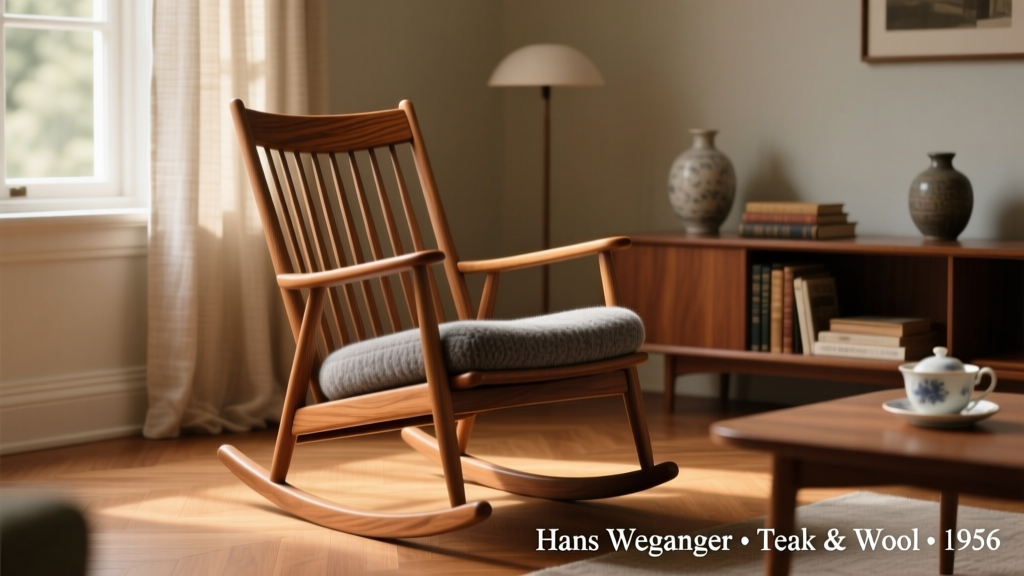
Wegner Teak Rocker with Wool Upholstery: Authenticity, Craftsmanship, and Restoration Insights
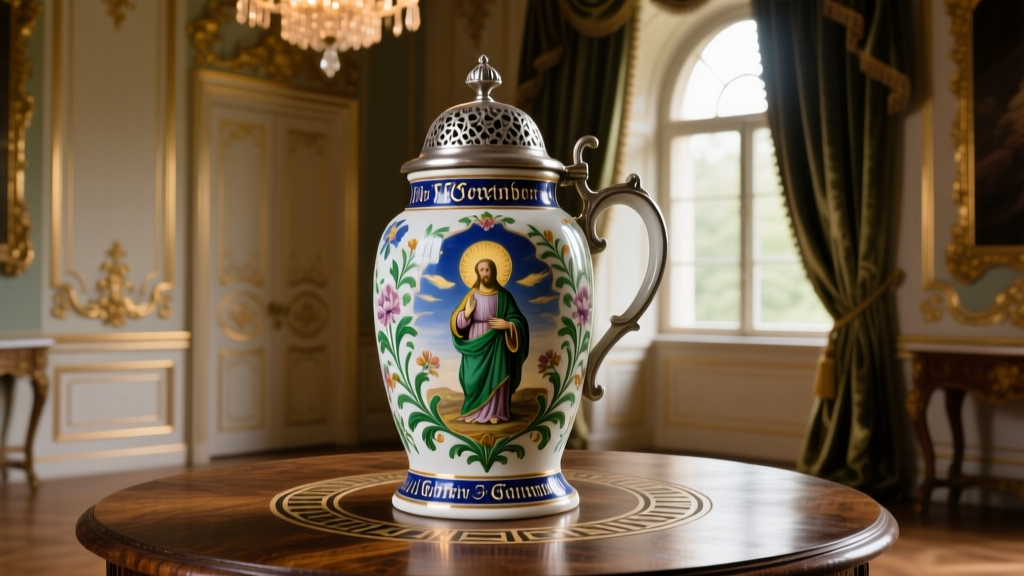
Steins Faience Religious Designs: The Nuremberg 1773 Pewter-Lidded 1-Liter Faience Stein with Foot Ring — A Technical & Historical Analysis
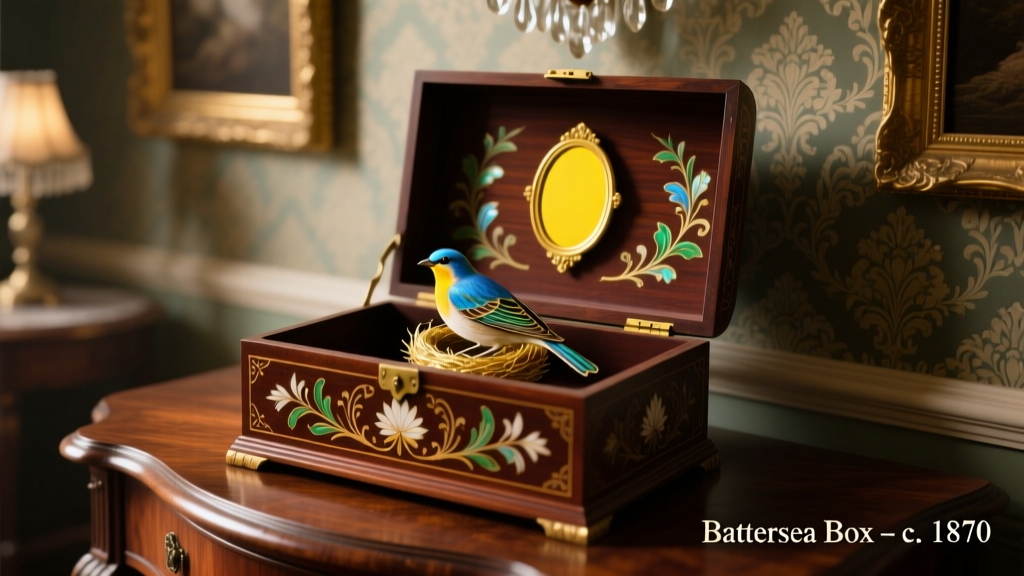
Battersea Box: Decoding the Bird-on-Nest Yellow Mirror Interior — A Technical Restoration Guide

The Thermometer Cigar Humidor: A 1950s American Design Icon — 30-Inch Floor Model Restoration & Collectibility
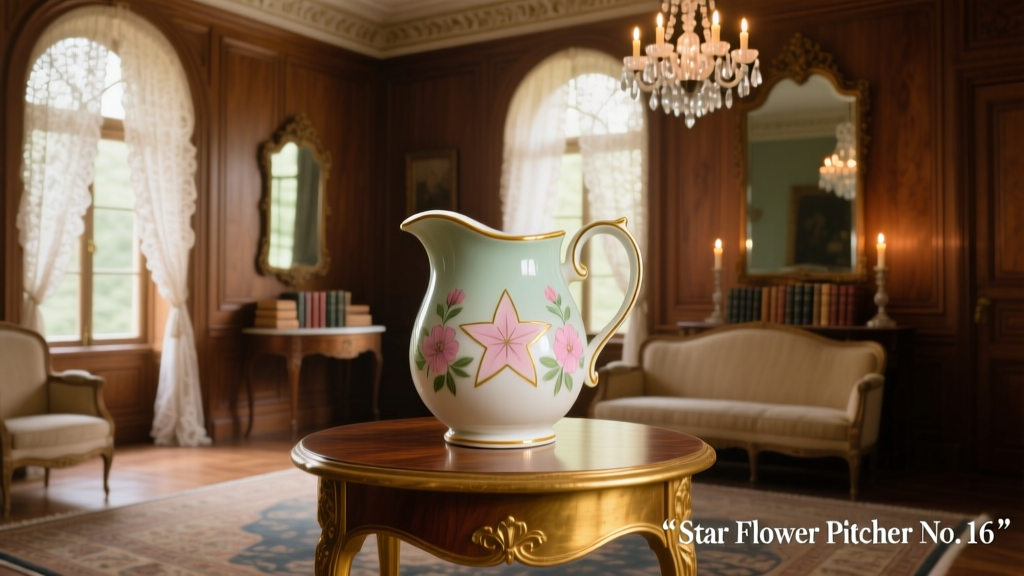
Dinnerware Star Flower Pitcher No. 16: History, Identification, and Restoration Guidance for Collectors