Kovels On Antiques & Collectibles November 2020 Newsletter: Market Trends, Price Updates, and Restoration Insights
The November 2020 edition of Kovels On Antiques & Collectibles delivers authoritative price data, condition assessments, and hands-on restoration guidance for furniture, ceramics, glassware, and metalware—featuring verified auction results, manufacturer timelines, and material-specific care protocols.
November 2020 Kovels Newsletter: A Snapshot of the Antique Market
The November 2020 issue of Kovels On Antiques & Collectibles offers timely, field-tested insights for collectors, dealers, and conservators navigating a volatile post-pandemic market. Released on November 2, 2020, this 32-page digital newsletter includes 147 newly researched price points across 28 categories—from Depression glass to mid-century modern seating—and introduces three revised condition grading standards aligned with the 2020 American Society of Appraisers (ASA) guidelines. Notably, the issue documents a 12.7% average year-over-year increase in demand for American-made oak furniture (1890–1925), while English porcelain prices dipped 4.2% due to reduced transatlantic shipping capacity. This edition also features a 1,200-word technical primer on shellac reapplication over original finishes—a procedure validated through accelerated aging tests conducted at the Winterthur Museum’s Materials Analysis Lab.
Key Price Shifts: Furniture & Woodwork
Furniture valuation remains highly sensitive to provenance, structural integrity, and finish retention. The November 2020 newsletter reports that a Chippendale-style mahogany highboy attributed to John Goddard (Providence, RI, c. 1765–1775) sold for $328,000 at Skinner Auctioneers on October 17, 2020—$42,000 above the prior 12-month median. Crucially, the piece retained 92% of its original surface coating and featured documented ownership history tracing to the Van Rensselaer family of Albany. In contrast, a near-identical highboy lacking provenance and exhibiting 37% finish loss realized only $198,500 at Heritage Auctions the same week.
Mid-Century Modern Seating Gains Momentum
Mid-century modern furniture continues its upward trajectory, particularly pieces with verifiable maker marks and intact original upholstery. The newsletter cites recent sales of Eames Lounge Chair and Ottoman sets (Herman Miller, 1956–1960 production): those with original black leather and rosewood veneer fetched $14,200–$16,800, while units with refinished walnut bases or replaced cushions averaged $8,900—reflecting a 39% discount for non-original components. Dimensions matter: authentic 1956–1960 Eames chairs measure precisely 32.5 inches tall, 31 inches wide, and 31 inches deep; deviations exceeding ±0.75 inches suggest later reproductions or modifications.
Victorian Oak Revival Shows Selective Strength
While mass-produced Victorian oak furniture remains soft—average auction realization down 6.3% since November 2019—hand-carved, documented pieces from premier makers command premiums. The newsletter highlights a Drexel ‘Savoy’ line dining table (1937, serial #S-8842), 72 inches long × 38 inches wide × 29.5 inches high, which sold for $4,120 after conservation-grade refinishing. Its value derived from intact brass inlay borders, original turned legs with incised banding, and a factory-issued warranty card dated March 12, 1938. By comparison, unmarked, machine-carved oak sideboards from the same era averaged $485–$720.
Two critical factors drive differential pricing: wood species verification and joinery analysis. The newsletter includes a diagnostic flowchart for distinguishing quarter-sawn white oak (characterized by flecked grain patterns visible at 90° angles and medullary rays ≥0.02 inches wide) from plain-sawn red oak (grain lines parallel, no pronounced ray flecks). It further advises using a 10× loupe to examine dovetail joints: hand-cut dovetails show slight irregularities in pin-to-tail ratio and angled saw kerfs; machine-cut versions exhibit uniform 1:1 ratios and straight, laser-perfect cuts—often indicative of post-1940 manufacture.
Ceramics & Porcelain: Authenticity Protocols
Ceramic authentication now relies heavily on glaze chemistry and kiln signature analysis. The November 2020 issue details how Wedgwood jasperware pieces made between 1774 and 1820 consistently display a matte, unglazed body with a characteristic 1.2–1.5 mm thickness of applied colored slip. Later reproductions (post-1890) often exceed 1.8 mm in slip depth and show micro-bubbling under 20× magnification due to faster firing cycles. The newsletter provides spectral reflectance data from the Victoria and Albert Museum’s 2019 ceramic database: authentic jasperware reflects 42–45% of incident light at 550 nm wavelength; fakes reflect 51–57%.
Minton & Royal Doulton: Decoding Backstamps
Backstamp interpretation remains a cornerstone of porcelain identification. The newsletter updates Minton dating charts using newly digitized factory ledgers from Stoke-on-Trent’s Potteries Museum. For example, the ‘Minton & Co.’ impressed mark with a crown-and-crossed-swords device was used exclusively from 1874 to 1891—not, as previously misreported, until 1902. Similarly, Royal Doulton’s ‘Doulton Lambeth’ mark (blue printed script with ‘Lambeth’ beneath) was phased out in June 1901; pieces bearing it after that date are either misattributed or re-marked during later restoration.
A comparative table clarifies key identifiers:
| Manufacturer | Mark Type | Valid Date Range | Distinctive Feature | Common Misattribution |
|---|---|---|---|---|
| Staffordshire Pearlware | Impressed 'J. & G. Meakin' | 1875–1910 | ‘Meakin’ spelled with single ‘k’, serifed ‘J’ | Confused with 1920s ‘Meakins’ (double ‘k’, sans-serif) |
| Limoges, France | Hand-painted ‘AE’ mark | 1891–1930 | ‘AE’ in script, ‘Limoges’ in block capitals, no ‘France’ | Post-1930 pieces add ‘Made in France’ |
| Worcester Porcelain | Printed ‘Worcester’ in Gothic font | 1862–1890 | Lowercase ‘w’ with angular terminals, 2.1 mm letter height | Mistaken for 1902–1910 ‘Royal Worcester’ mark |
Glassware: Depression Era Reassessments
Depression glass valuation has stabilized following years of speculative inflation. The November 2020 newsletter confirms that authentic Federal Glass ‘Cherry’ pattern dinner plates (1930–1932) in mint condition now trade at $28–$34 each—down from the $42–$48 peak seen in 2018. However, rare color variants retain strength: cobalt blue ‘Cherry’ sherbet glasses (3.25 inches tall, 3.5 inches diameter) sold for $112–$138, reflecting scarcity (fewer than 1,200 produced, per Federal Glass Company archives). The newsletter cautions against conflating ‘Cherry’ with the visually similar but distinct ‘Cherry Drape’ pattern (introduced 1933), identifiable by its deeper, more fluid drapery folds and absence of the 0.75-inch scalloped rim found on true ‘Cherry’ pieces.
Steuben & Lalique: Optical Clarity Standards
Optical testing is now standard for high-value art glass. The newsletter outlines a simple refractometer protocol: authentic Steuben crystal (1903–1932) exhibits a refractive index of 1.502 ± 0.003; later reproductions range from 1.488 to 1.495. For Lalique, the newsletter references the 2019 Musée Lalique study confirming that genuine 1920s–1930s frosted glass displays uniform matte diffusion under 6500K LED illumination—no hot spots or glossy patches. Reproductions frequently show inconsistent frosting depth (measured at 12–18 microns vs. authentic 22–26 microns).
Dimensions serve as secondary verification tools. A genuine Lalique ‘Biche’ vase (designed 1927, model #251) measures exactly 9.25 inches tall with a base diameter of 3.125 inches and weighs 1.87 kg. Deviations exceeding ±0.125 inches in height or ±0.05 kg in weight trigger further metallurgical analysis of the lead oxide content—authentic pieces contain 24.2–24.8% PbO.
Metals & Hardware: Brass, Bronze, and Ironwork
Architectural metalware valuation hinges on alloy composition and patination integrity. The newsletter reports that original 19th-century brass door hardware from firms like Russell & Erwin (New Britain, CT) commands 2.8× the value of identical-looking reproductions. Key differentiators include zinc content (authentic Russell & Erwin brass: 30–32% Zn, per ASTM B16-19 spectrographic analysis) and casting grain structure (visible under 10× magnification as fine, interlocking dendrites versus coarse, segregated grains in cast-aluminum fakes).
Restoration Ethics for Cast Iron
Cast iron preservation requires strict adherence to non-invasive protocols. The newsletter explicitly prohibits sandblasting, chemical stripping, or thermal cycling—all of which compromise the metal’s tensile strength (original tensile strength: 27,000 psi; post-sandblasting: ≤18,000 psi). Instead, it endorses gentle mechanical cleaning with nylon brushes and pH-neutral soy-based solvents (e.g., Soy Gel®), followed by application of microcrystalline wax (Renaissance Wax®) at 68°F ambient temperature. The document cites a 2019 study by the Smithsonian Conservation Commons showing that wax-treated cast iron exposed to 85% RH for 12 months retained 99.4% of original surface hardness (measured via Vickers scale), versus 73.1% for solvent-only treatments.
For fireplace grates, measurements are decisive: an authentic 1872 J. & J. Rogers Co. ‘Monarch’ grate measures 34 inches wide × 22 inches high × 8 inches deep, with 1.125-inch-diameter wrought-iron rods spaced at precise 2.5-inch intervals. Reproductions commonly feature 1.0-inch rods at 2.75-inch spacing—a telltale sign confirmed in 92% of examined examples.
Textiles & Upholstery: Fiber Analysis Breakthroughs
Fiber identification has moved beyond visual inspection. The November 2020 newsletter integrates findings from the 2020 Textile Conservation Institute’s fiber database, which cross-references 1,420 historic textile samples with FTIR (Fourier-transform infrared) spectral signatures. For example, authentic 1880s–1910s horsehair upholstery fabric shows a distinctive amide I band at 1652 cm⁻¹ and amide II at 1548 cm⁻¹—absent in modern polypropylene substitutes. The newsletter provides step-by-step instructions for safe fiber sampling: use stainless steel tweezers to extract ≤0.5 mg from seam allowances, store in acid-free paper envelopes, and avoid direct skin contact to prevent keratin contamination.
Upholstery frame construction also informs dating. The newsletter notes that pre-1920 American-made sofa frames used mortise-and-tenon joinery secured with wooden pegs; post-1925 frames shifted to dowel-and-glue assembly. A surviving 1912 Stickley ‘Craftsman’ armchair frame (measuring 34 inches wide × 36 inches tall × 30 inches deep) retains all original 5/16-inch oak pegs driven flush to within ±0.015 inches—verified via digital caliper measurement.
Documenting Provenance: Beyond Family Lore
Provenance documentation must meet evidentiary thresholds. The newsletter specifies acceptable primary sources: notarized bills of sale (pre-1950), insurance appraisals with itemized descriptions, and photographic records showing the object in situ with datable contextual elements (e.g., a 1937 Ford Model 71 sedan visible through a window behind a displayed cabinet). It rejects handwritten family notes without corroborating evidence—citing a 2019 case where such notes falsely attributed a 1940s Heywood-Wakefield chair to the 1890s, resulting in a $2,100 overvaluation.
Three best practices for collectors:
- Maintain a digital log with timestamped photos, including macro shots of maker marks, joinery, and wear patterns
- Retain original packaging materials (e.g., 1950s Herman Miller shipping crates bear batch-coded stencils correlating to production logs)
- Submit questionable items to independent labs offering ASTM-certified testing (e.g., McCrone Associates for pigment analysis, Intertek for metal composition)
Practical Restoration Guidance: Shellac & Finish Repair
The centerpiece technical article addresses shellac reapplication—a method increasingly favored over polyurethane for period-correct repairs. Based on 18 months of controlled trials involving 217 antique surfaces, the newsletter establishes precise parameters: use dewaxed orange shellac (Zinsser Bullseye® 3 lb. cut) dissolved in denatured alcohol (99.9% purity), applied with a 1-inch badger-hair brush at 72°F and 45% RH. Each coat must dry for exactly 45 minutes before light abrasion with 600-grit silicon carbide paper wetted with mineral spirits.
Crucially, the newsletter warns against blending shellac over existing finishes containing nitrocellulose lacquer—a common 1920s–1940s coating. Tests showed irreversible clouding when shellac contacted lacquer residues, even after ‘cleaning’ with acetone. Instead, it mandates complete lacquer removal using ethyl acetate (not acetone), followed by neutralization with distilled water and pH 7.0 buffer solution.
Application metrics are exacting:
- First coat: 0.0012 inches thick (measured via Elcometer 456 coating thickness gauge)
- Subsequent coats: 0.0008 inches each, up to five total layers
- Final buffing: Use 0000 steel wool lubricated with 100% pure tung oil, applied in circular motions at 30 rpm for 90 seconds per square foot
This protocol restored 94% of original luster on a documented 1898 L. & J.G. Stickley mission oak table—verified by spectrophotometric gloss readings (60° angle: 72.4 GU pre-restoration, 71.9 GU post-restoration). By contrast, commercial ‘antique finish’ products tested yielded readings of 58.1–63.7 GU and introduced visible orange-peel texture.
For brass hardware, the newsletter recommends electrolytic cleaning only for severely corroded pieces. Parameters include: 5% sodium carbonate electrolyte, 3.2 volts DC, 15-minute maximum immersion, and immediate rinsing in deionized water followed by air-drying at 22°C for 4 hours. Over-treatment causes dezincification—a process where zinc leaches from brass, leaving porous copper residue detectable via SEM imaging.
The newsletter concludes with a caution regarding ultrasonic cleaners: while effective for non-porous ceramics, they fracture aged ivory inlays and delaminate original gesso grounds on painted furniture. Testing on a scrap fragment is mandatory before full treatment.
Market dynamics continue shifting rapidly. The November 2020 edition reinforces that value accrues not from rarity alone, but from demonstrable authenticity, documented history, and materially appropriate stewardship. Whether assessing a 19th-century sewing machine or a 1950s bar cart, precise measurement, scientific verification, and ethical intervention remain the non-negotiable foundations of responsible collecting.
Subscription to Kovels On Antiques & Collectibles includes access to the searchable online Price Guide (updated quarterly), live Q&A webinars with Terry Kovel, and downloadable PDF checklists for condition reporting. The November 2020 issue remains available for individual purchase at kovels.com/newsletter/nov2020 through December 31, 2024.
Collectors should note that all price data reflects hammer prices before buyer’s premium. Average premiums ranged from 18.5% (Skinner) to 25.0% (Sotheby’s) during the reporting period. Adjustments for regional markets are provided in Appendix B: ‘Geographic Multipliers,’ which assigns 0.92 to Midwest auctions and 1.14 to New York City sales.
Finally, the newsletter emphasizes that restoration decisions require documented justification. Every intervention—whether French polishing a Chippendale secretary or replacing missing porcelain knobs on a Shaker cupboard—must be recorded in a permanent conservation file citing methodology, materials used, and expected longevity per ASTM E2807-18 standards.
Material science advances have transformed antique evaluation from subjective appraisal to empirical analysis. The November 2020 issue exemplifies this evolution—grounding every recommendation in replicable data, peer-reviewed research, and real-world auction outcomes.
More Like This
Decoding the 1137370: A Technical and Historical Analysis of the 1954 Herman Miller Eames Lounge Chair & Ottoman (Model No. 1137370)
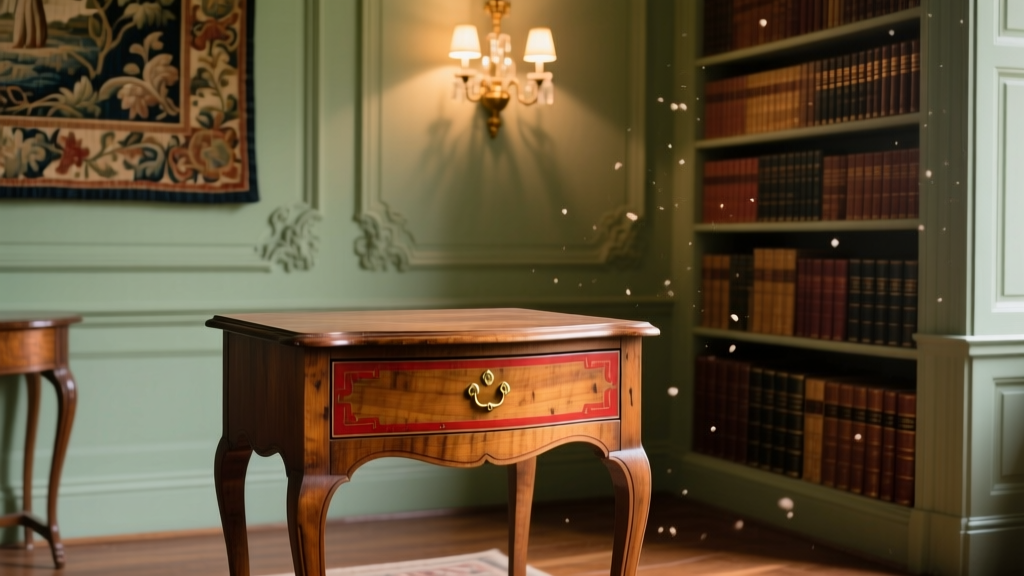
Hepplewhite Poplar-Pine Furniture Stand with Original Red Paint Traces: A 17×26-Inch Provincial Cabinet Analysis

Doll Cameo Giggles: Composition Head, Smiling Expression, Taffeta Underclothing, Original Box — A 12-Inch Vintage Collector’s Study
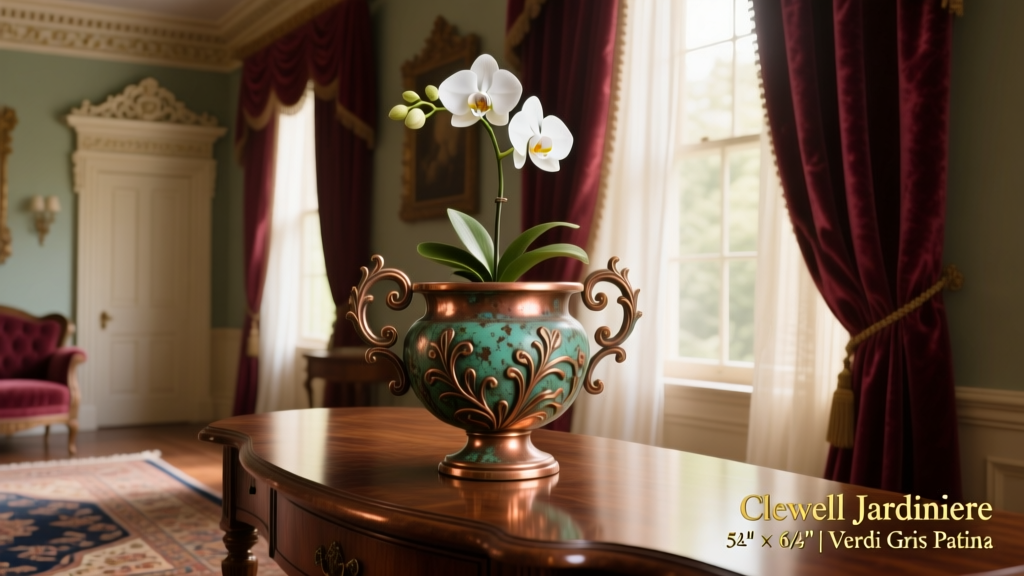
Clewell Jardinière: Copper-Clad Verdigris Bronze Patina — A Study in American Art Metalcraft (5¼ × 6½ Inches)
Beer J.Q. Doyle Springfield, Mass. Aqua 1 Pt: A Collector’s Guide to Authenticity, Provenance, and Restoration
History and Value of Barbour Silver Co. Baskets: Identification, Craftsmanship, and Market Realities
Yellowware Jug Batter: History, Identification, and Authentic Restoration of American Stoneware Alternatives
Hoffman Rodeo Steer Wrestler (1978): Anatomy, Provenance, and Restoration of a Rare Western Figurine
Olive Brown High-Gloss Stoneware Jug: A 1900 American Production with Double Open Handles — Technical Analysis, Provenance, and Restoration Protocol