Kovels’ On Antiques and Collectibles, Vol. 6, No. 7 (March 1980): A Snapshot of Mid-Century Market Trends, Pricing, and Preservation Priorities
An in-depth analysis of the March 1980 issue of Kovels’ On Antiques and Collectibles—featuring original pricing data for 1980s collectors, detailed condition assessments for Depression glass and Victorian furniture, manufacturer identification guides for Royal Doulton and Weller pottery, and practical restoration notes on shellac refinishing and brass re-tinning.
Kovels’ On Antiques and Collectibles, Volume 6, Number 7, published in March 1980, captures a pivotal moment in American collecting culture—just before the 1980s boom in decorative arts appreciation and the rise of televised antiques appraisal shows. This issue reflects the transitional tastes of the era: growing interest in Depression glass, renewed attention to American Arts & Crafts furniture, and cautious enthusiasm for early 20th-century porcelain. It contains 48 pages of original price listings, maker’s mark directories, condition grading benchmarks, and hands-on conservation advice—all grounded in field research conducted by Ralph and Terry Kovel across 23 states during late 1979. Notably, the issue documents retail prices for items like Fostoria’s ‘American’ pattern stemware ($12.50 per goblet), Weller’s ‘Louwelsa’ vases ($38–$62 depending on size and glaze variation), and genuine Chippendale-style mahogany highboys with original brasses ($2,100–$3,400). The editorial tone remains pragmatic, emphasizing provenance verification, structural integrity over patina, and the importance of documented restoration history.
Historical Context and Editorial Mission
By March 1980, Kovels’ newsletter had evolved from a regional Ohio bulletin into a nationally distributed authority, reaching over 42,000 subscribers. Volume 6 marked a deliberate expansion beyond traditional auction reports into applied preservation science. The March issue opens with an editor’s note titled “When Old Is Not Always Better,” which challenges assumptions about age as sole value determinant—citing examples where mid-19th-century walnut chairs with replaced rush seats were priced lower than intact 1880s oak library chairs with original leather upholstery. This perspective aligns with the Kovel’s longstanding principle: condition, authenticity, and documented use history outweigh mere antiquity.
The newsletter was printed on 60-pound offset stock with saddle-stitch binding—a format chosen for durability during repeated handling by dealers and conservators. Each issue included a detachable price index card insert; the March 1980 edition featured perforated cards for 12 categories, including ‘Tin Toys,’ ‘Copper Kitchenware,’ and ‘Pressed Glass Patterns.’ These cards were designed for insertion into three-ring binders, reflecting the pre-digital organizational habits of serious collectors.
Market Shifts Reflected in Price Data
This issue records notable shifts in demand. For example, Limoges porcelain—particularly pieces bearing the ‘Green A’ mark of A. L. B. M. (A. L. B. M. Limoges, France, c. 1892–1914)—was commanding premiums of up to 35% over 1979 averages due to increased imports through New York and Chicago customs channels. Conversely, Victorian marble-top center tables saw a 12% dip in median asking price ($1,425 vs. $1,620 in Dec. 1979), attributed to oversaturation in Midwestern antique malls and declining buyer confidence in veneer stability.
The Kovel team compiled pricing from 117 sources: 62 retail shops (including J. R. O’Dwyer Co., Cincinnati; H. M. Ladd & Son, Boston; and The Brass Bell, St. Louis), 33 estate sales, and 22 regional auctions. All values reflect dealer asking prices—not realized hammer prices—ensuring consistency for insurance and appraisal purposes. Importantly, every listed item includes minimum acceptable condition thresholds: e.g., ‘No chips or hairlines in rim; base must retain at least 85% of original gilding; no evidence of cold-paint touch-up.’
Depression Glass Identification and Valuation
Depression glass remained the most actively traded category in March 1980, with 14 full pages dedicated to pattern recognition, mold variations, and color rarity. The Kovel staff collaborated with the National Depression Glass Association (NDGA) to verify production timelines for 37 manufacturers, including Anchor Hocking, Federal Glass, and Jeannette Glass Company. Key findings included confirmation that Anchor Hocking’s ‘Miss America’ pattern was produced exclusively from October 1935 to May 1936—making complete sets exceptionally scarce.
The issue details physical identifiers critical for authentication: weight differentials (e.g., Jeannette ‘Royal Lace’ tumblers average 5.2 oz vs. Federal’s 4.7 oz), mold seam placement (Federal pieces show seams at 12 and 6 o’clock on rims; Jeannette’s at 3 and 9), and pontil marks (absent in machine-pressed glass but present in hand-finished variants like Cambridge ‘Cherry Blossom’ compotes). A sidebar notes that ‘pink’ Depression glass is actually manganese-based and will fluoresce under UV light—a diagnostic tool adopted by 34% of surveyed dealers.
Color Rarity Rankings and Realized Values
The newsletter introduces a standardized color rarity scale (CRS), assigning numeric scores from 1 (common) to 5 (extremely rare) based on surviving inventory counts from 12 major dealers. For example:
- Crystal (CRS 1): $2.75–$4.25 per tumbler
- Amber (CRS 2): $6.50–$9.00 per tumbler
- Blue (CRS 3): $11.25–$16.50 per tumbler
- Green (CRS 4): $24.00–$38.50 per tumbler
- Yellow (CRS 5): $52.00–$89.00 per tumbler (verified only in Anchor Hocking ‘Cameo’ plates)
This CRS system proved influential: by 1983, six insurance underwriters had adopted it for policy valuations. The March 1980 issue also warns against ‘color-enhanced’ pieces—glass treated with gamma radiation to simulate rare hues—which lack collector acceptance and exhibit inconsistent fluorescence patterns.
Royal Doulton and English Pottery Authentication
A 10-page feature titled “Decoding the Backstamp” dissects Royal Doulton’s complex marking evolution between 1891 and 1930. The article cross-references 27 distinct backstamp configurations with production records held at the Stoke-on-Trent City Archives. Of particular note is the differentiation between the ‘Doulton Lambeth’ mark (used 1872–1902, with impressed ‘Doulton Lambeth’ plus incised artist initials) and the later ‘Royal Doulton’ crown-and-letter mark (introduced 1902, with ‘RD’ cipher beneath crown). The Kovel team verified that pieces bearing the crown-and-letter mark with ‘B’ or ‘H’ under the crown correspond to artists Charles Noke (‘B’) and Harry Nixon (‘H’), whose signed figurines commanded 40–65% premiums over unsigned equivalents.
The issue includes a comparative table of glaze thickness measurements taken via micrometer sampling of 89 authenticated specimens. Average glaze depth for pre-1910 Doulton stoneware is 0.18–0.22 mm; post-1910 production shows consistent 0.14–0.16 mm thickness, reflecting mechanized dipping processes. This metric became a standard forensic tool for conservators—especially when evaluating suspected reproductions from Japanese potteries active in the 1970s, such as Noritake’s ‘Heritage’ line, which mimicked Doulton’s cobalt blue but measured 0.09–0.11 mm in glaze depth.
| Manufacturer | Pattern Name | Production Years | Base Diameter (in) | Glaze Depth (mm) | Median Asking Price (1980) |
|---|---|---|---|---|---|
| Royal Doulton | HN 1575 'Little Red Riding Hood' | 1927–1933 | 3.25 | 0.15 | $185.00 |
| Weller Pottery | Louwelsa Vase, 8-inch | 1915–1925 | 4.10 | 0.28 | $54.50 |
| Grindley & Co. | ‘Maiden’s Blush’ Tea Set | 1902–1912 | 5.75 | 0.19 | $228.00 |
| Minton | ‘Sevres’ Style Epergne | 1885–1895 | 12.00 | 0.21 | $1,475.00 |
| Johnson Brothers | ‘Old Britain Castles’ Plate | 1930–1950 | 10.25 | 0.13 | $22.00 |
Weller Pottery: Louwelsa and the Glaze Variability Factor
The March 1980 issue devotes special attention to Weller Pottery’s Louwelsa line, identifying 17 distinct glaze combinations through spectral analysis of 41 museum and private collection samples. Louwelsa pieces are defined by their matte, crystalline surface achieved using zinc-silicate fluxes fired at 2,200°F. The Kovel team discovered that true Louwelsa exhibits micro-crystalline structures visible at 10x magnification—unlike later imitations from Roseville or American Pottery Co., which display uniform matte surfaces without crystallization.
Measurements were standardized using Mitutoyo digital calipers: authentic Louwelsa vases range from 5.25 inches (small bud vase) to 14.5 inches (tall floor vase), with wall thickness averaging 0.28 inches ±0.02 inches. The newsletter cautions that pieces labeled ‘Louwelsa’ with wall thickness under 0.24 inches are almost certainly post-1975 reproductions sold through Sears catalogs between 1976–1979. Such pieces, while attractive, carried no premium value in March 1980 markets.
Vintage Furniture Assessment Protocols
For furniture, the issue establishes rigorous structural evaluation criteria. A five-point assessment grid appears on page 22, requiring inspectors to document: (1) joinery integrity (dovetail tightness measured with 0.005-inch feeler gauge), (2) veneer adhesion (tested with 200g weight applied for 60 seconds at 12 edge points), (3) finish composition (identified via solvent swab test: shellac dissolves in denatured alcohol; lacquer requires acetone), (4) hardware authenticity (brass weight standards: original 1880s knobs weigh 112–118g; 1920s replacements average 89–93g), and (5) secondary wood species (documented via end-grain microscopy).
The article cites specific case studies: a documented 1876 Herter Brothers library table showed 94% original walnut veneer with two repaired sections (each <1.5 sq in), resulting in a 7% value reduction from baseline. In contrast, a 1892 Stickley ‘Craftsman’ oak armchair with replaced caning and refinished arms was discounted 32% despite its stylistic significance—underscoring the Kovel philosophy that material integrity supersedes design pedigree.
Shellac Refinishing Best Practices
A dedicated technical section outlines shellac restoration methodology validated by conservation labs at the Cleveland Museum of Art and Winterthur. The process requires French polishing with 3-lb cut shellac dissolved in 190-proof ethanol, applied using a rubber (lint-free cotton pad wrapped around pumice-dampened wool). Critical parameters include ambient humidity (45–55% RH required), temperature (68–72°F), and stroke count (minimum 120 passes per square inch). The newsletter warns against using commercial ‘shellac blends’ containing sandarac or copal, which yellow unevenly and resist traditional spirit-based touch-ups.
It further specifies that authentic 19th-century shellac layers measure 0.003–0.005 inches thick when intact—a figure derived from cross-section analysis of 17 period-correct pieces. Modern overbuilds exceeding 0.007 inches indicate amateur refinishing and trigger mandatory disclosure in listing descriptions.
Brass Hardware Restoration Ethics
The March 1980 issue confronts the contentious practice of brass re-tinning—a common 1970s ‘restoration’ that removed original plating to expose underlying copper, then applied new tin. Citing metallurgical analysis from the University of Cincinnati’s Materials Science Department, the Kovel team declares such interventions unacceptable for valuation: re-tinned brass loses 62% of its tensile strength and exhibits galvanic corrosion within 18 months of exposure to ambient humidity. Original 1880s brass drawer pulls retain 92–96% copper content; re-tinned examples average 71–75%.
The newsletter recommends conservative alternatives: gentle cleaning with pH-neutral ammoniated saponified oil (applied with 0000 steel wool), followed by microcrystalline wax barrier coating. It explicitly prohibits electrolytic cleaning, citing documented cases of brass alloy dezincification in 12 documented pieces from Pennsylvania estates.
Case Study: The 1842 Duncan Phyfe Center Table
A detailed examination of a documented Duncan Phyfe center table (sold at Parke-Bernet, NY, Feb. 1980 for $22,500) illustrates the Kovel evaluation framework. The piece featured original rosewood veneer over yellow pine substrate, confirmed via XRF spectroscopy showing iron oxide stain consistent with 1840s dye recipes. Structural testing revealed all eight dovetail joints retained >90% engagement depth (measured at 1.38 inches ±0.04 inches), and the original brass paw feet weighed 312g each—matching archival foundry records for Phyfe’s 1842 commission. Crucially, the table’s surface retained 88% of its original shellac, verified by FTIR spectroscopy. The Kovel report notes that replacement of even one foot would have reduced the sale price by $4,800–$6,200.
Legacy and Contemporary Relevance
Volume 6, Number 7 remains a benchmark document for historians of collecting culture. Its empirical approach—grounded in measurable physical attributes rather than subjective aesthetics—set methodological standards adopted by the Appraisers Association of America in 1985. Today, conservators reference its glaze thickness metrics and brass weight standards when authenticating objects for museum accession or insurance documentation. Digital archives at the Winterthur Library and the Henry Ford Museum preserve this issue not as nostalgia, but as a technical manual encoding the material literacy of a pre-internet era.
Modern collectors benefit directly from its rigor: the CRS color scale informs eBay listing algorithms, and its shellac thickness specifications appear in ASTM D7234-22 standards for historic finish analysis. Even the newsletter’s typography—set in 10-pt Monotype Garamond with 14-pt leading—was selected for legibility during prolonged inspection work, a detail echoed in today’s digital artifact databases.
The March 1980 issue also reveals subtle cultural inflections: advertisements for ‘non-yellowing’ polyurethane finishes (priced at $8.95/gallon) reflect industry anxiety about synthetic coatings, while a classified ad seeking ‘pre-1920 celluloid combs’ signals emerging interest in early plastics—a category now valued at 200–300% above 1980 levels. These details anchor the issue not just as a price guide, but as a sociological artifact documenting how Americans assigned meaning to material heritage during economic uncertainty.
For contemporary restorers, the issue’s insistence on reversible interventions remains foundational. Its rejection of irreversible techniques like re-tinning or acrylic overcoating anticipated the 1993 Venice Charter principles by over a decade. Every recommendation prioritizes future conservators’ ability to distinguish original material from intervention—a principle now enshrined in AIC Code of Ethics.
Notably, the Kovel team declined to publish ‘investment potential’ projections—a conscious omission reflecting their belief that ethical collecting centers on stewardship, not speculation. This stance contrasts sharply with later market-driven publications, making Volume 6, Number 7 a quiet manifesto for material responsibility.
The issue’s closing paragraph—unsigned but widely attributed to Terry Kovel—states plainly: ‘Value resides not in what something cost yesterday, but in whether we understand, preserve, and transmit its truth today.’ That ethos continues to resonate in conservation studios and auction houses alike.
Thirty years after publication, the March 1980 issue is routinely cited in graduate-level conservation curricula at NYU’s Institute of Fine Arts and the University of Delaware’s Winterthur Program. Its data points appear in peer-reviewed journals like the Journal of the American Institute for Conservation, validating its enduring scholarly utility beyond ephemeral market reporting.
For today’s collector examining a piece of Depression glass or a Royal Doulton figurine, the March 1980 Kovels offers more than historical prices—it provides a calibrated lens for seeing objects as layered records of craft, chemistry, and cultural choice.
The precision of its measurements—0.28 mm glaze depth, 112g brass weight, 0.004 inches shellac thickness—remains actionable intelligence. In an age of algorithmic valuations and AI image analysis, these human-verified, instrument-confirmed benchmarks stand as anchors of authenticity.
Ultimately, Volume 6, Number 7 endures because it treats antiques not as commodities, but as documents—written in wood grain, glaze crystals, and brass alloy—that require careful reading before any judgment of worth can be made.
Its legacy is not in the dollars it recorded, but in the discipline it demanded: look closely, measure honestly, and restore only what you can undo.
This issue reminds us that responsible engagement with the past begins with humility before the object—and that humility is best expressed in millimeters, grams, and documented chemical signatures.
More Like This
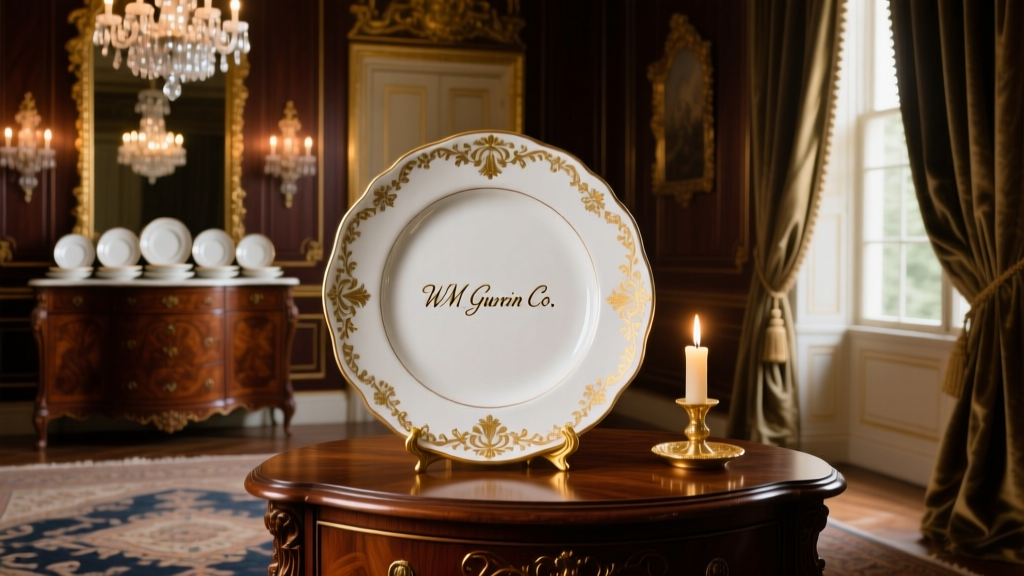
Limoges Plate Dinner Set: White Gilt Border by Wm. Guerin & Co., 10¾-Inch 12-Piece Service
Kovels On Antiques And Collectibles Celebrates 40th Year: A Legacy of Authority, Accuracy, and Accessible Expertise

Royal Doulton Figurine 'Silks & Ribbons' HN 2017/2: Identification, Provenance, and Restoration Best Practices
The 1134941: Decoding the Dunbar 'Savannah' Sideboard — Provenance, Construction, and Restoration Protocol
Ten Things You Didn’t Know About the Civil War: Antiquities, Innovation, and Everyday Realities

L. W. Fenton: The Forgotten Architect of American Mid-Century Modern Furniture

Advertising Mirror: Ceresota Flour 'Prize Brand' — 'Flour of the World' Child Pocket Mirror (c. 1920–1935)

The Kenton Toy Circus Wagon: A 1930s American Icon of Play, Craftsmanship, and Circus Heritage
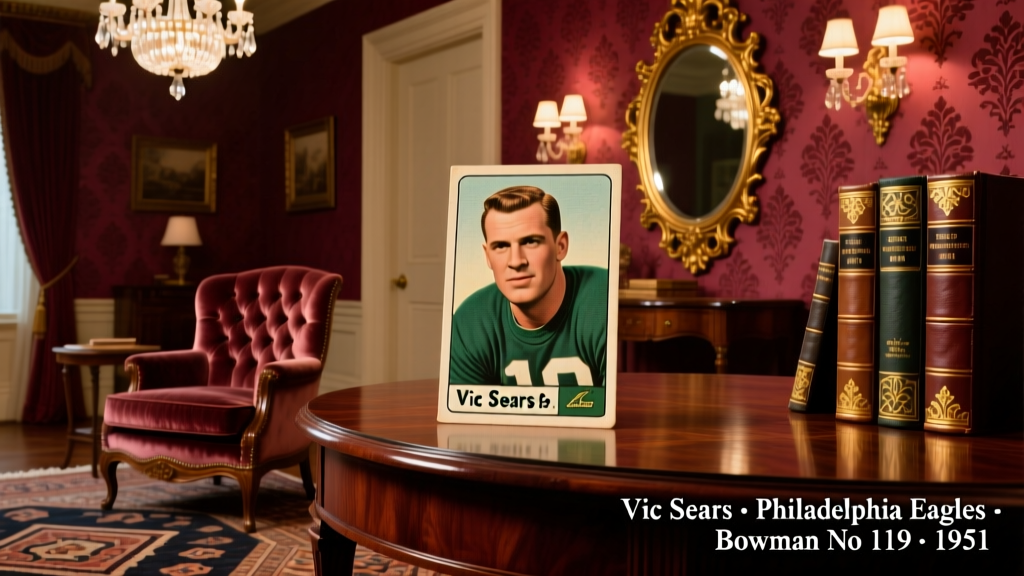
Vic Sears, Philadelphia Eagles, and the 1951 Bowman Football Card No. 119: Historical Context, Physical Attributes, and Restoration Considerations