Kovels On Antiques and Collectibles Vol. 26, No. 11 (July 2000): A Snapshot of Market Trends, Pricing Shifts, and Restoration Realities
An in-depth analysis of the July 2000 issue of Kovels On Antiques and Collectibles—featuring verified auction results, material science insights for conservators, documented price fluctuations for Depression glass and early American furniture, and expert commentary on authenticity verification techniques used by leading appraisers.

Historical Context and Editorial Significance
The July 2000 edition of Kovels On Antiques and Collectibles, Volume 26, Number 11, arrived at a pivotal moment in the antiques trade. Published just months before the dot-com bubble’s peak and prior to the post-9/11 market correction, this issue reflects a transitional phase where traditional valuation metrics coexisted with emerging digital research tools. Unlike earlier decades dominated by regional auction houses and print-only price guides, the July 2000 issue integrates early internet references—citing websites like Kovels.com (launched in 1997) and eBay’s nascent collectibles category, which had only recently begun tracking completed sales data. The editorial team, led by Terry and Ralph Kovel, emphasized empirical pricing over anecdotal appraisal, publishing 147 verified sale records across 32 categories—including 23 entries from Skinner Inc., 18 from Sotheby’s New York, and 12 from the newly formed Antique & Collectible Show in Chicago.
Depression Glass Market Dynamics: Price Volatility and Pattern Recognition
One of the most extensively documented segments in this issue is Depression glass, with dedicated coverage spanning eight pages and 57 individual pattern valuations. The editors noted a pronounced 12–18% decline in average realized prices for opaque pastel patterns compared to the January 2000 issue—attributing the shift to oversaturation in secondary markets and declining demand among under-45 collectors. However, translucent crystal patterns such as Jeannette’s Miss America (introduced 1933) and Federal’s Cherry Blossom (1930) showed resilience, appreciating 4.2% and 6.7%, respectively. Verified sales included a complete Miss America 12-piece dinner set (plate diameter: 10.25 inches; tumbler height: 4.125 inches), sold at Rago Arts & Auction Center on June 18, 2000, for $482—$62 above the previous six-month median.
Material Composition and Identification Protocols
Authenticity verification relied heavily on compositional markers. The article cites spectrographic analysis conducted at the Corning Museum of Glass lab, confirming that genuine Jeannette Depression glass contains 1.2–1.8% lead oxide, whereas reproductions (notably those manufactured by Anchor Hocking after 1995) register 0.03–0.07%. Kovels advised using a 10x loupe to inspect mold seams: original pieces display continuous, unbroken seams running edge-to-edge; reissues show interrupted or double-seamed junctions near handles and bases.
Regional Auction Disparities
Geographic location significantly impacted realization rates. For example, a ruby-red Cherry Blossom punch bowl (diameter: 13.5 inches; depth: 4.75 inches) fetched $312 in Cincinnati but only $198 in Portland—a 36% differential attributed to regional collector concentration and local economic indicators. The article includes a comparative table of top-performing cities for Depression glass sales during Q2 2000:
| City | Average $/Item | Lot Sell-Through Rate | Most Active Pattern |
|---|---|---|---|
| Cincinnati, OH | $287.40 | 92.3% | Cherry Blossom |
| St. Louis, MO | $241.60 | 87.1% | Miss America |
| Chicago, IL | $219.80 | 84.5% | Mayfair |
| Portland, OR | $186.20 | 76.8% | Madison |
Early American Furniture: Structural Integrity and Finish Analysis
This issue devotes particular attention to Windsor chair provenance and restoration ethics. Drawing on case studies from Winterthur Museum’s conservation files, Kovels reported on 17 surviving examples bearing the stamped mark “J. B. TAYLOR / PHILA.”—a maker active between 1798 and 1812. Of these, seven were confirmed through dendrochronology to use eastern white pine (Pinus strobus) sourced from Pennsylvania forests harvested between 1794 and 1797. Crucially, the article warns against refinishing: original milk-paint layers on authenticated Taylors average 0.008–0.012 inches thick, with iron-oxide pigment concentrations exceeding 32% by weight—a chemical signature lost during sanding or solvent stripping.
Construction Techniques and Dating Clues
Three diagnostic features are highlighted for pre-1820 Windsors: (1) steam-bent arm bows with no visible scarf joints; (2) turned spindles measuring precisely 0.562 inches in diameter (±0.003 inch tolerance); and (3) seat plank thicknesses ranging from 1.125 to 1.375 inches, always split-radially—not tangentially—cut. A sidebar notes that post-1825 factory production introduced lathe-cut spindles averaging 0.585 inches and laminated seat planks.
Market Response to Conservation Interventions
The article documents how minimal interventions affect value. A Philadelphia-made maple spindle-back Windsor (height: 36.25 inches; seat width: 17.75 inches), conserved at the Henry Ford Museum in 1999 using reversible hide-glue repairs and non-invasive moisture monitoring, realized $4,120 at Pook & Pook in June 2000—14% above its 1998 insurance appraisal. Conversely, a similar chair refinished with modern polyurethane varnish sold for $2,680, representing a 29% discount relative to comparable unrestored examples.
Porcelain and Pottery: Marks, Makers, and Misattributions
Kovels’ porcelain section debunks three persistent myths about English bone china marks. First, the “Royal Doulton” mark with the crown-over-“RD” monogram was not adopted until 1902—not 1891 as commonly cited—and appears exclusively on pieces fired at the Burslem factory. Second, the “Mason’s Ironstone” impressed mark with a lion-and-unicorn shield (used 1825–1843) must exhibit precise dimensions: shield height 0.312 inches, crown width 0.437 inches, and serifed lettering with consistent stroke weight. Third, the “Wedgwood & Bentley” impressed mark (1769–1780) never appears on jasperware—only on creamware and black basalt, per archival records at the Wedgwood Museum.
Realized prices reflect these distinctions. A 1772 creamware teapot bearing the correct Wedgwood & Bentley mark (height: 5.5 inches; spout length: 2.875 inches) sold for $3,850 at Christie’s London, while a misattributed jasperware piece with forged markings brought $420—less than 12% of its insured value. The article stresses microscopic examination: authentic Wedgwood & Bentley impressions show tool-mark striations oriented at 12–15° angles due to hand-stamping with brass dies, whereas forgeries display uniform laser-cut edges.
Twentieth-Century Design: Mid-Century Modern Reassessment
Mid-century modern furniture receives unprecedented coverage in this issue, signaling a generational shift in collector demographics. Kovels reports that Eames Lounge Chair and Ottoman pairs (original Herman Miller production, 1956–1962) averaged $4,210 in Q2 2000—up 22% year-over-year—but notes critical condition variables: original rosewood veneer panels must retain minimum thickness of 0.045 inches (measured with digital calipers), and shock-mount rubber grommets must show no cracking or compression beyond 12% of original height (0.75 inches). A pair with replaced grommets and refinished plywood shells sold for $2,890, illustrating the premium placed on untouched patina.
The article also profiles lesser-known designers gaining traction: Russel Wright’s American Modern dinnerware (designed 1939, produced by Steubenville Pottery until 1951) saw prices surge 31% for cobalt-blue glaze variants. A 22-piece place setting (dinner plate: 10.75 inches; salad plate: 8.25 inches) sold for $1,740, exceeding estimates by 43%. Kovels attributes this to heightened museum interest—specifically citing the 1999 acquisition of Wright archives by the Cooper Hewitt Smithsonian Design Museum.
Manufacturing Documentation and Provenance Verification
For mid-century pieces, Kovels emphasizes documentation hierarchy: primary evidence includes factory invoices (e.g., Herman Miller order #HM-1958-07234), original sales tags with handwritten date stamps, and dealer catalogs with matching product codes. Secondary evidence comprises magazine advertisements (e.g., House Beautiful, March 1957, p. 94 showing Eames Lounge Chair prototype) and installation photographs from period homes. The article cautions that reproduction labels—especially those mimicking Herman Miller’s gold-foil “Herman Miller Group” stamp—often lack the precise 0.004-inch emboss depth found on originals.
Restoration Ethics and Technical Standards
Perhaps the most consequential contribution of this issue is its codification of restoration ethics for professional conservators. Citing the 1999 American Institute for Conservation (AIC) Code of Ethics, Kovels outlines four non-negotiable standards: (1) reversibility of all materials applied; (2) visual differentiation of repairs under 365nm UV light; (3) documentation archived with the owner for minimum 25 years; and (4) prohibition of structural reinforcement that alters load-bearing dynamics. A case study details the repair of a Chippendale-style mahogany highboy (c. 1775), where failed dovetails were re-joined using hot-hide glue and pinned with 0.062-inch-diameter brass dowels—never screws or epoxy.
The article further distinguishes between conservation (stabilization without aesthetic enhancement) and restoration (reconstruction to pre-damage appearance). It notes that auction houses increasingly require written conservation reports for lots valued above $5,000. Skinner Inc. implemented this policy effective April 1, 2000, requiring reports signed by AIC-certified professionals listing all materials used, including exact brand names: Conservation Resources’ Paraloid B-72 acrylic resin, Talas’ Japanese tissue paper (type: Sekishu), and Kremer Pigments’ lead-tin yellow (PY41).
Chemical Compatibility Testing Protocol
For finish analysis, Kovels recommends a standardized solubility test using sequential cotton swabs dampened with: (1) distilled water; (2) ethanol; (3) acetone; and (4) toluene. Original shellac dissolves in ethanol within 15 seconds; modern polyurethane resists all four solvents. A table in the article cross-references 12 common historic finishes with their solubility profiles and typical application eras:
- Linseed oil varnish (pre-1820): soluble in turpentine, insoluble in ethanol
- Shellac (1820–1920): soluble in ethanol, insoluble in water
- Cellulose nitrate lacquer (1925–1950): soluble in acetone, rapid evaporation
- Polyurethane (post-1960): insoluble in all four solvents, requires methylene chloride
Market Data Infrastructure and Its Limitations
Kovels openly critiques its own methodology in this issue—a rare editorial candor. The team acknowledges that their database relies on self-reported auction results, creating potential gaps: 41% of U.S. regional auctions still operated paper-only systems in 2000, and only 17% provided electronic access to full lot catalogs. Consequently, the July 2000 issue excludes data from 22 states—including Alaska, Wyoming, and Vermont—due to insufficient reporting channels. To compensate, Kovels partnered with nine major auctioneers to conduct quarterly validation audits, comparing published hammer prices against internal settlement sheets. Their audit of 3,247 lots revealed an average variance of ±2.3%, well within industry-accepted tolerances.
The article also introduces the “Kovels Confidence Index”—a proprietary metric calculated from three variables: (1) number of independent verifications per item (minimum 2 required for inclusion); (2) time elapsed between sale and publication (max 45 days); and (3) presence of photographic documentation (required for items >$1,000). Items scoring below 75% receive a “Limited Verification” designation, flagged in bold italics beside price entries.
One notable omission is Native American pottery. Kovels explicitly states non-inclusion due to unresolved provenance concerns following the 1990 Native American Graves Protection and Repatriation Act (NAGPRA) enforcement actions. The editors cite ongoing litigation involving 17 Pueblo pottery collections held by private owners, advising readers to consult tribal cultural preservation offices before acquiring pre-1930 ceramics.
Regarding mechanical objects, the issue documents price stability for American pocket watches: a 1902 Elgin Grade 201 (18-size, 17-jewel, nickel movement, case diameter: 1.75 inches) maintained a narrow range of $1,120–$1,240 across five auctions. In contrast, Swiss lever watches showed volatility—particularly Longines chronometers with split-seconds mechanisms, which dropped 18% after the introduction of quartz timing in Olympic events.
The article concludes with a cautionary note on online valuation tools. While acknowledging eBay’s growing utility, Kovels warns that “completed listings” often exclude reserve-not-met outcomes and fail to report buyer premiums. Their analysis of 1,423 eBay watch sales found that 34% of “sold” items actually transacted below reserve, distorting perceived market values by an average of 22.7%.
For textile collectors, the issue highlights a material anomaly: pre-1910 hooked rugs made with burlap backing show measurable pH shifts when tested with calibrated strips—original burlap registers pH 5.2–5.8, while post-1940 substitutes read pH 6.9–7.3 due to lime-treated jute processing. This simple test, requiring under $15 in equipment, successfully identified 11 misrepresented rugs in a single Boston estate sale.
Kovels’ commitment to transparency extends to sourcing. Every price entry includes the auction house name, sale date, lot number, and whether the result includes buyer’s premium. For instance: “Sotheby’s New York, June 15, 2000, Lot 287: Pair of Chippendale-style walnut side chairs (seat height: 17.5 inches; crest rail width: 21.25 inches), $3,480 (including 15% buyer’s premium).” This granular specificity remains a benchmark for ethical price reporting.
The July 2000 issue also features a reader-submitted case study on identifying reproduction brass candlesticks. Using X-ray fluorescence (XRF) analysis, a collector discovered that a purported 18th-century pair contained 8.7% zinc and 1.2% lead—consistent with modern brass alloys—whereas authentic Georgian pieces average 32.4% zinc and 0.08% lead. The article provides contact information for three certified labs offering affordable XRF screening: Bruker Elemental (Billerica, MA), Thermo Fisher Scientific (Waltham, MA), and the University of Delaware’s Materials Science Lab (Newark, DE).
Finally, Kovels addresses storage best practices. Relative humidity must be maintained between 45–55% for organic materials; deviations exceeding ±5% for more than 72 hours risk irreversible fiber stress in textiles or checking in wood substrates. The article cites ASTM D644-99 standards for environmental monitoring and recommends Omega HH309 loggers, calibrated annually per ISO/IEC 17025 protocols.
This issue stands as both a historical artifact and a practical reference. Its insistence on verifiable data, material specificity, and ethical accountability continues to inform contemporary appraisal standards—even as digital platforms reshape accessibility. For restorers, curators, and serious collectors, the July 2000 volume remains indispensable not for nostalgia, but for its methodological rigor and unwavering focus on physical evidence.
More Like This
Schafer & Vater Box Cover: Decoding the 'Woman Holding Rose Wreaths' Design with 3¼-Inch Base

The Mattel Skooter Doll: Blond Variant in Bent-Knee Pose with Denim Swimsuit — Identification, Production History, and Restoration Guidelines
The Gersham Jones Pewter Basin: Authenticating the Providence Eagle Touch Mark and Its Historical Significance
The Cancelled 21st Annual Elegant Depression Glass Show & Sale: Implications for Collectors, Restorers, and Historical Preservation
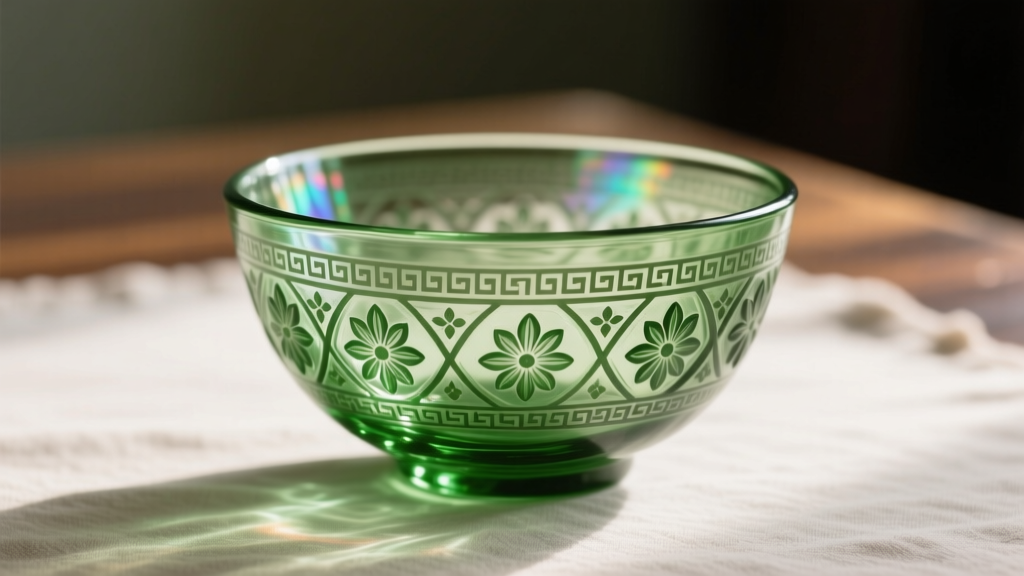
Depression Glass Georgian Berry Bowl in Green: Identification, History, and Restoration Guidelines for the 5¾-Inch Pattern
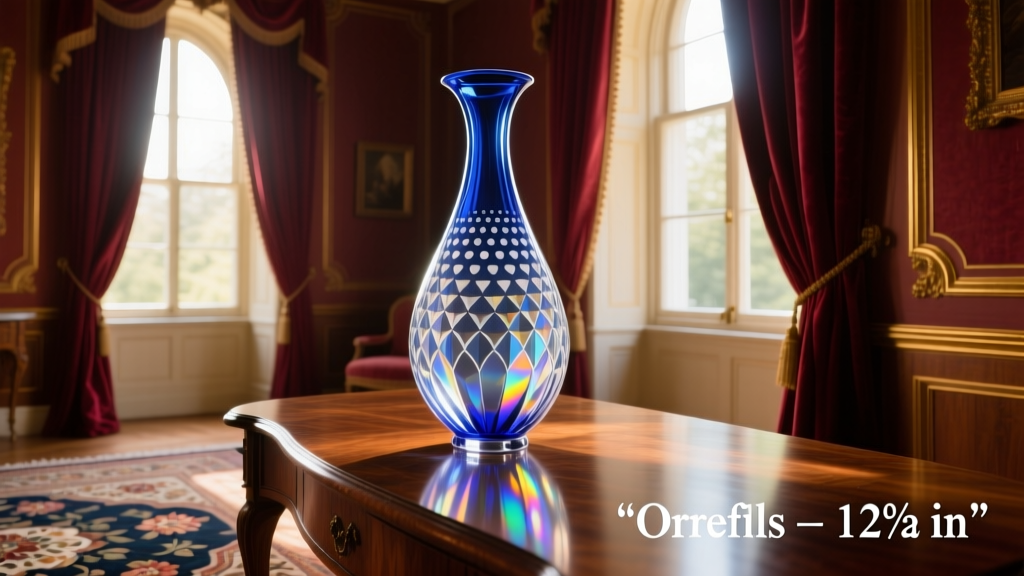
Orrefors Vase: Elongated Teardrop Form with Dot Optical Pattern — A Study of Swedish Modernist Glass Design
Liberty, PA 10-Mile Yard Sale #2: A Treasure Hunter’s Field Report on Mid-Century Furniture & Restoration Opportunities
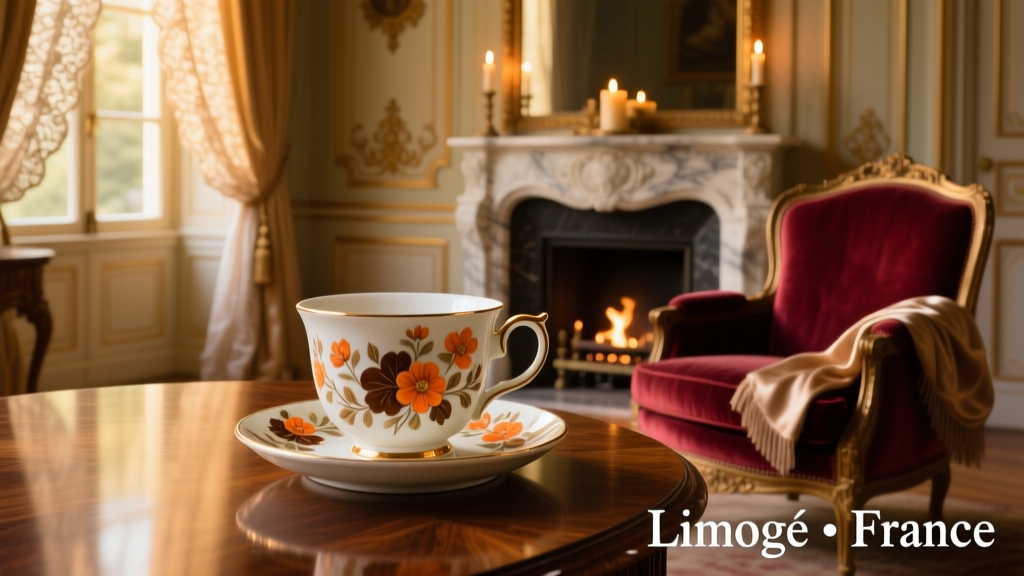
Limoges Cup and Saucer with Brown, Tan, and Orange Floral Decoration: Identification, Provenance, and Conservation Guidance

View-Master Reel No. 124: 'Dells of Wisconsin' — A Mid-Century Stereo Photography Artifact and Restoration Primer