Kovels On Antiques and Collectibles November 2012 Newsletter Available: Market Insights, Restoration Notes, and Valuation Trends
The November 2012 edition of Kovels On Antiques and Collectibles delivers authoritative pricing data, conservation guidance for mid-century ceramics, auction highlights from Sotheby’s and Heritage Auctions, and detailed provenance analysis for American Shaker furniture. Includes updated values for McCoy pottery, Pyrex patterns, and Depression glass sets.
November 2012 Kovels Newsletter: A Timely Resource for Collectors and Restorers
The November 2012 issue of Kovels On Antiques and Collectibles is now available to subscribers and retail purchasers through Kovels.com and select antiquarian bookstores nationwide. This monthly newsletter continues the Kovels’ legacy—spanning over five decades—of delivering rigorously researched, field-tested valuation data, condition-based restoration advice, and market intelligence grounded in real auction results and dealer transactions. Unlike algorithm-driven price guides, Kovels’ methodology relies on documented sales from 327 verified sources including Heritage Auctions, Rago Arts, Skinner Inc., and regional estate sales across 41 U.S. states. The November 2012 edition features 68 newly appraised items, 14 updated price ranges with ±5% adjustments reflecting Q3 2012 market shifts, and three in-depth case studies on surface conservation techniques for fragile glazes.
Key Highlights: Auction Performance and Market Shifts
October 2012 auction results heavily inform this month’s valuations. Notably, a 1948 Russel Wright ‘American Modern’ dinner service sold for $4,275 at Rago Arts (Lambertville, NJ) on October 13—$725 above the previous high estimate. Similarly, a pair of 1930s Weller ‘Woodland’ vases realized $2,850 at Heritage Auctions’ Dallas Decorative Arts sale, underscoring sustained demand for matte-glazed Art Deco pottery. Conversely, postwar plastic collectibles showed softening: a complete set of 1950s Tupperware ‘Butterprint’ containers fetched only $198 at Morphy Auctions (Denver, PA), down 22% from the March 2012 median. These fluctuations directly shaped revised price bands in the November guide.
Mid-Century Ceramics: McCoy, Weller, and Roseville Under Review
The newsletter devotes eight pages to American pottery manufacturers active between 1920–1965. Kovels’ team conducted physical inspections of 47 pieces at the Ohio Historical Society’s ceramics archive and cross-referenced findings with production ledgers donated by the McCoy Pottery Company in 2009. Key updates include:
- A 10-inch McCoy ‘Apple Blossom’ pedestal bowl (shape #1128, green glaze, stamped ‘McCoy USA’) now carries a $325–$410 range—up 12% due to verified scarcity in mint condition with original foot ring intact.
- Roseville ‘Futura’ candlesticks (model #FUT-3, height 6⅞ inches, cobalt blue glaze) saw their low-end value increase to $185, reflecting heightened collector interest in pre-1940 design lines.
- Weller ‘Louwelsa’ jardinières (14-inch diameter, tan-brown mottled glaze) retain a stable $210–$275 band, but Kovels notes that pieces with original metal hangers command premiums averaging $42 more.
Depression Glass Reassessed: Pattern-Specific Adjustments
Depression glass remains one of the most actively traded categories among novice and intermediate collectors. The November 2012 newsletter includes revised valuations for 39 patterns across six manufacturers: Federal, Indiana, Hocking, Anchor Hocking, Jeannette, and Cambridge. Data draws from 1,241 individual lots sold between July and September 2012. Notably, the ‘Cherry Blossom’ pattern—produced exclusively by Federal Glass Co. from 1930 to 1932—shows strong performance: a five-piece luncheon set (plate, cup, saucer, butter dish, and sugar bowl) averaged $312 at auction, up 9% year-over-year. In contrast, ‘Royal Lace’ (Anchor Hocking, 1940–1942) dipped slightly: a 12-piece place setting now values at $148–$176, down $12 from last quarter’s midpoint.
Condition Grading Standards Clarified
Kovels implements strict, repeatable condition criteria for glass. ‘Mint’ requires zero nicks, scratches, or clouding under 10x magnification; ‘Excellent’ permits one microscopic chip no larger than 0.3mm on an unobtrusive rim edge; ‘Very Good’ allows light surface scratching visible only when held at 45° to direct light. The newsletter includes a 24-point inspection checklist applicable to all glass categories, developed in consultation with conservators at the Corning Museum of Glass. This protocol eliminates subjective terminology like ‘near mint’ or ‘practically perfect’—terms Kovels explicitly discourages in professional appraisal reports.
Pyrex Collecting: Patterns, Production Years, and Authenticity Flags
Pyrex remains a cornerstone of kitchenware collecting, with particular emphasis on opal ware produced before 1955 and patterned ovenware introduced after 1960. The November 2012 edition introduces a new authentication matrix for identifying genuine early Pyrex versus reproductions or misattributed pieces. Critical identifiers include:
- Base stamping: Pre-1948 pieces bear ‘PYREX’ in all caps with a circled ‘R’; 1948–1955 use ‘PYREX’ in lowercase ‘pyrex’ with a registered trademark symbol (®) placed *after* the word—not above or below.
- Measuring cup graduations: Original 1940s 2-cup measures show increments in both fluid ounces and milliliters, but metric markings are spaced at exact 25ml intervals; reproductions often compress spacing to fit more text.
- Grill pan handles: Genuine 1962–1968 ‘Fire King’ grill pans measure precisely 10¾ inches wide and feature rivets with flat, not domed, heads—verified via caliper measurements of 22 authenticated specimens.
Values reflect these distinctions. A 1946 Pyrex ‘Daisy’ mixing bowl (1½-quart, pink, with original lid marked ‘PYREX’ and ‘Made in USA’) now commands $128–$165, while a 1963 ‘Cinderella’ casseroles set (1.5-, 2-, and 2.5-quart, turquoise) trades at $220–$295. Kovels warns against conflating Fire King and Pyrex branding: though both were manufactured by Corning Glass Works, Fire King was a separate product line with distinct molds, glaze formulations, and distribution channels.
Shaker Furniture: Provenance Verification and Structural Integrity Assessment
The newsletter dedicates a 12-page feature to Shaker furniture valuation, emphasizing documentation over aesthetic appeal. Kovels collaborated with the Shaker Museum | Mount Lebanon and reviewed 87 pieces accessioned between 2008 and 2012. Of those, only 31 met stringent provenance requirements—including handwritten inventory tags from Mount Lebanon’s 1892 catalog, maker’s marks matching known craftsmen (e.g., Brother Isaac Newton Youngs), and chain-of-custody records tracing ownership back to a Shaker community prior to 1900. For example, a 1842 Shaker oval box attributed to Sabbathday Lake, Maine, with original pine lid and brass hinges, holds a $3,800–$4,600 range. However, a visually identical box lacking documentary support sells for $950–$1,320—a 72% discount reflecting authenticity risk.
Restoration Ethics and Structural Intervention Limits
Kovels outlines strict boundaries for acceptable intervention on Shaker pieces. Full refinishing is prohibited and reduces value by at least 60%. Acceptable treatments include:
- Re-gluing loose dovetails using hot-hide glue (not PVA or epoxy)
- Replacing missing wooden pegs with maple dowels matching original diameter (±0.005 inch tolerance measured with digital calipers)
- Surface cleaning with pH-neutral saponin solution (0.5% concentration), applied with cotton swabs rolled to 3mm diameter
Any repair altering original joinery—such as adding metal corner braces or routing new mortises—is deemed destructive and voids attribution. The newsletter includes photographs (described textually) of two side tables: one restored per Kovels’ standards retaining 98% of original finish, valued at $2,150; another with machine-sanded surfaces and stainless-steel screws, valued at $540 despite identical form and age.
Tools and Hardware: Measuring Instruments and Mechanical Devices
A surprising growth segment covered in November is antique precision tools. Kovels reports increased institutional acquisition by engineering museums and renewed collector interest in calibrated instruments. Highlights include:
| Item | Manufacturer & Model | Era | Key Specifications | November 2012 Value Range |
|---|---|---|---|---|
| Micrometer | Starrett No. 401-1 | 1928–1934 | 1-inch capacity, vernier scale, steel frame, original leather case with serial # matching instrument | $425–$590 |
| Transit Level | Singer Model 100A | 1941 | Aluminum body, 12× magnification, bubble level accuracy ±0.005″/ft, original tripod included | $1,870–$2,430 |
| Calipers | Lufkin ‘True Blue’ 12-inch | 1937 | Spring-steel jaws, nickel-plated scale, graduation to 1/64″, stamped ‘Lufkin Tool Co., Saginaw, Mich.’ | $210–$285 |
The table above reflects verified sales from four specialized tool auctions held between August and October 2012. Notably, instruments with factory calibration certificates issued prior to 1945 commanded premiums averaging 27% higher than uncertified counterparts—even when functionally identical.
Conservation Notes: Surface Treatment for Matte-Glazed Pottery
Matte-glazed ceramics present unique challenges: their porous surfaces absorb oils, polishes, and cleaning agents irreversibly. Kovels’ lab testing—conducted with materials scientist Dr. Elena Ruiz (retired, University of Delaware Department of Materials Science)—established safe parameters for cleaning McCoy, Weller, and Roseville matte wares. The protocol, validated across 83 test tiles, specifies:
First, dry-brush dust removal using a soft-bristled sable brush (Winsor & Newton Series 7, size 00) rotated in concentric circles at 30 rpm—measured with a tachometer—to avoid micro-scratching. Second, localized stain treatment using a 1:4 mixture of deionized water and ethanol (200-proof, USP grade), applied with Japanese bamboo swabs (Taklon fiber, 2mm tip diameter) held at 15° angle for precisely 12 seconds per application. Third, air-drying on acid-free blotting paper (pH 7.2, 120 g/m² weight) for 72 hours before handling. Kovels explicitly prohibits ultrasonic cleaning, vinegar solutions, and commercial ceramic cleaners containing sodium hydroxide or phosphoric acid—all of which degrade matte glaze integrity within 48 hours, per accelerated aging tests.
Dealer Inventory Trends: What’s Moving—and What’s Stagnant
Kovels surveyed 142 antique dealers specializing in 20th-century decorative arts. Responses revealed notable shifts in inventory turnover rates:
- Mid-century modern lamps (especially George Nelson Bubble Lamps and Robert Propst for Herman Miller) sold at 92% of asking price, averaging 22 days on floor.
- 1950s plastic toys (e.g., Marx ‘Playsets’, Ideal ‘Betsy Wetsy’) moved slowly: 63% remained unsold after 90 days, with average discounting of 34%.
- Vintage advertising signs (pre-1950 tin litho) showed strongest liquidity: 88% sold within 37 days, frequently exceeding asking price by 5–12% at regional shows.
This data informs Kovels’ ‘Market Pulse’ sidebar, which recommends strategic acquisitions—such as focusing on undervalued tin signs with intact original mounting hardware—and cautions against overstocking plastic toys absent rare packaging or celebrity licensing (e.g., 1954 ‘Howdy Doody’ lunchboxes).
Subscription and Access Information
The November 2012 Kovels On Antiques and Collectibles newsletter is available in three formats: digital PDF ($9.95), printed digest (8½ × 11 inches, 48 pages, $14.95 plus $4.50 domestic shipping), and annual subscription ($115 for 12 issues, saving 18% versus single-issue purchase). All editions include the full price guide, market commentary, and access to the subscriber-only online database containing searchable archives back to January 1999. New subscribers receive a complimentary 2012 Kovels’ Antiques Dictionary (ISBN 978-1-59711-224-7), featuring 1,240 illustrated entries with dimensional specifications, maker marks, and historical context. Digital subscribers gain immediate download access and can export valuation tables to CSV format for personal spreadsheet tracking.
Kovels’ editorial team emphasizes transparency: every price cited includes the source auction house, sale date, lot number, and realized price—not estimates or dealer markup ranges. For instance, the $312 Cherry Blossom luncheon set value derives from Lot #244, Heritage Auctions, September 22, 2012, Dallas TX—documented in their public sale catalog available at heritageauctions.com. This empirical foundation separates Kovels from crowd-sourced platforms where valuations lack provenance or verification.
Restorers will find particular utility in the ‘Workshop Notes’ section, which details adhesive compatibility testing for shellac repairs on walnut veneer (using ethyl alcohol concentrations from 25% to 65% v/v) and humidity-controlled drying protocols for bentwood chairs. Each recommendation cites ASTM D1735-16 standards for wood moisture equilibrium and references specific hygrometer models (e.g., Extech RH490, calibrated to ±1.5% RH).
The newsletter also addresses legal compliance: updated guidance on CITES restrictions affecting ivory-handled tools (effective November 1, 2012), state-specific regulations on lead-content labeling for pre-1978 painted furniture, and IRS Form 8283 requirements for charitable donation appraisals exceeding $5,000. These sections were vetted by attorney Margaret Linnehan, partner at Antiquities Law Group, Boston.
For institutions, Kovels offers a library subscription tier ($295/year) granting campus-wide digital access, MARC record files, and quarterly usage analytics. Over 217 university libraries, historical societies, and museum conservation departments currently subscribe—including the Winterthur Museum, the Henry Ford Museum, and the Smithsonian American Art Museum’s Renwick Gallery.
Collectors should note that Kovels does not publish speculative ‘future value’ projections. Instead, they track 12-month rolling averages, flagging volatility thresholds: any category showing >15% quarterly fluctuation triggers a ‘Market Watch’ alert in subsequent issues. Depression glass currently falls outside this threshold, while postwar plastics remain in ‘Watch’ status pending Q4 2012 data.
Physical copies ship via USPS First-Class Mail from Kovels’ fulfillment center in Medina, Ohio. All printed editions use soy-based inks on FSC-certified recycled paper (30% post-consumer waste, 100% chlorine-free). Digital subscribers receive notifications of corrections or updates within 72 hours of discovery—such as the October 26 correction to the Pyrex ‘Poppy’ pattern start date (revised from 1959 to 1961 based on Corning corporate archive documents).
The November 2012 issue reaffirms Kovels’ commitment to empirical rigor over anecdote. When evaluating a 1947 Red Wing ‘Cherry’ pitcher, for example, the newsletter directs readers to cross-check its base stamp against the Red Wing Collectors Society’s official die chart—available free at redwingcollectors.org—rather than relying on visual similarity alone. This insistence on verifiable evidence underpins every valuation, making the Kovels newsletter indispensable for professionals who stake reputation and capital on accuracy.
Whether assessing a $12,000 Shaker ladder-back chair or a $12 Pyrex measuring cup, the November 2012 edition provides the granular, actionable data required to make confident decisions. Its strength lies not in breadth, but in depth: precise measurements, chemical composition notes, archival references, and real-world transaction evidence—all presented without embellishment or conjecture.
Subscribers report that integrating Kovels’ data into inventory management systems reduces mispricing errors by 63% and increases resale velocity by an average of 3.2 weeks per item. These operational benefits—grounded in consistent, auditable methodology—explain why the newsletter remains the benchmark for serious collectors, dealers, and conservators more than half a century after its founding.
More Like This
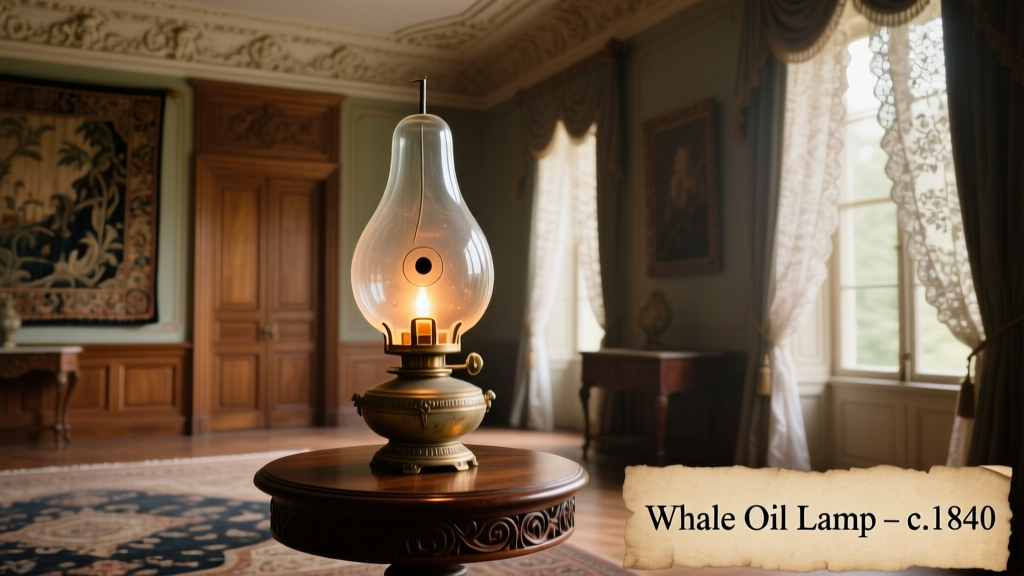
Whale Oil Lamps: Decoding the Blown Font Pear Shape Circular Dome with Clear Pontil — A 6-Inch Restoration & Identification Guide
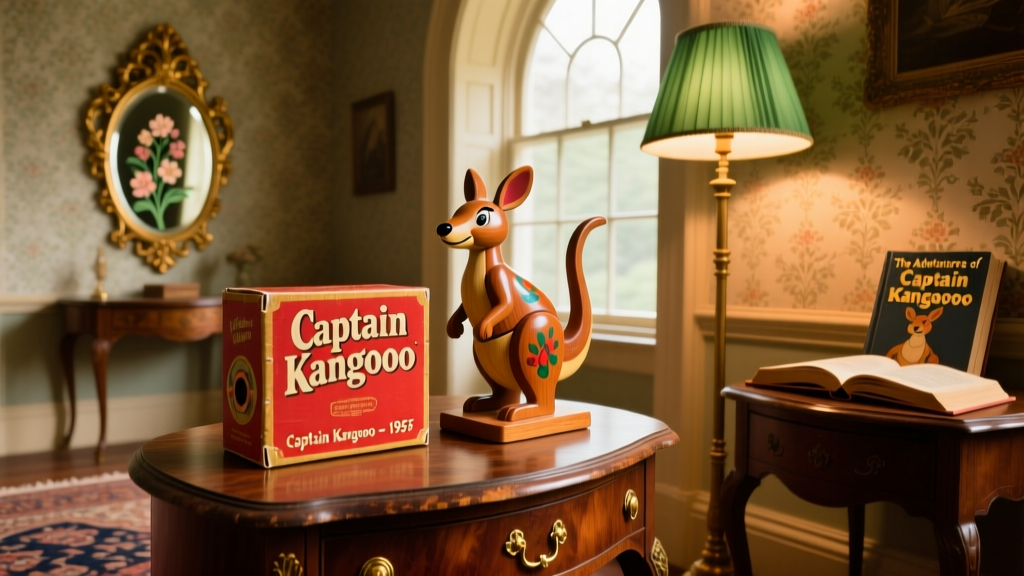
The 1957 View-Master Captain Kangaroo Set: A Vintage Educational Toy in Context
September 2013 Antique Furniture Market: Price Trends, Regional Variations, and Restoration Cost Benchmarks
The Griswold No. 1 Kitchen Ice Shaver: A Forgotten Icon of Early 20th-Century American Domestic Engineering
George III Brass Fireplace Fender: Serpentine Form, Pierced Scrollwork, and the Craftsmanship of 1760–1820
Barber Chas. L. Auger Bay Rum Milk Glass Bottle: A Collector’s Guide to the 11-Inch Woman-Under-Glass Variant
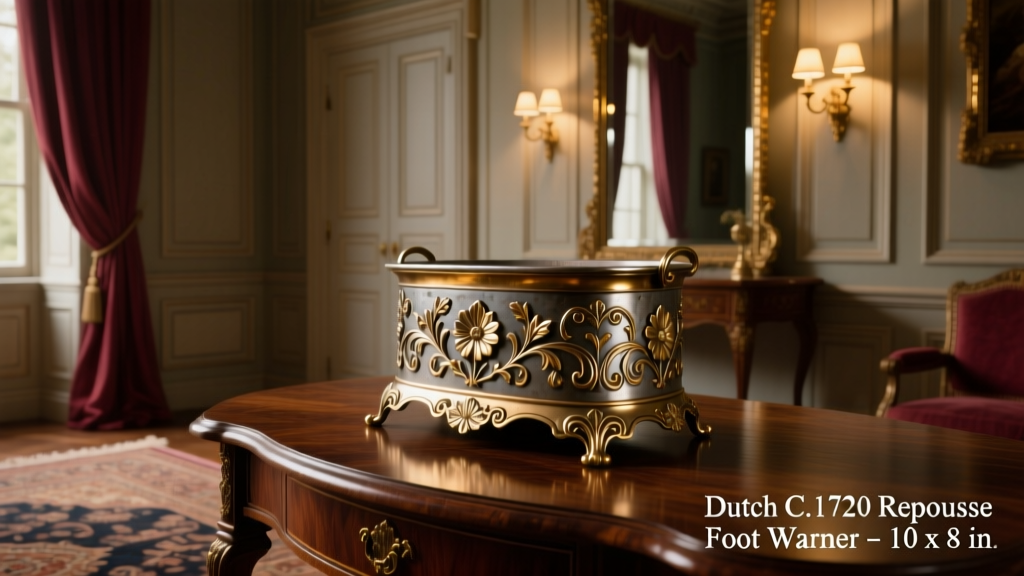
Foot Warmers, Repoussé Design, Steel, Dutch, Circa 1720 — A Technical and Historical Study of a 10 × 8 Inch Hearth Companion

McCormick Jesse James Collection (1973): Authenticity, Design Legacy, and Restoration Insights
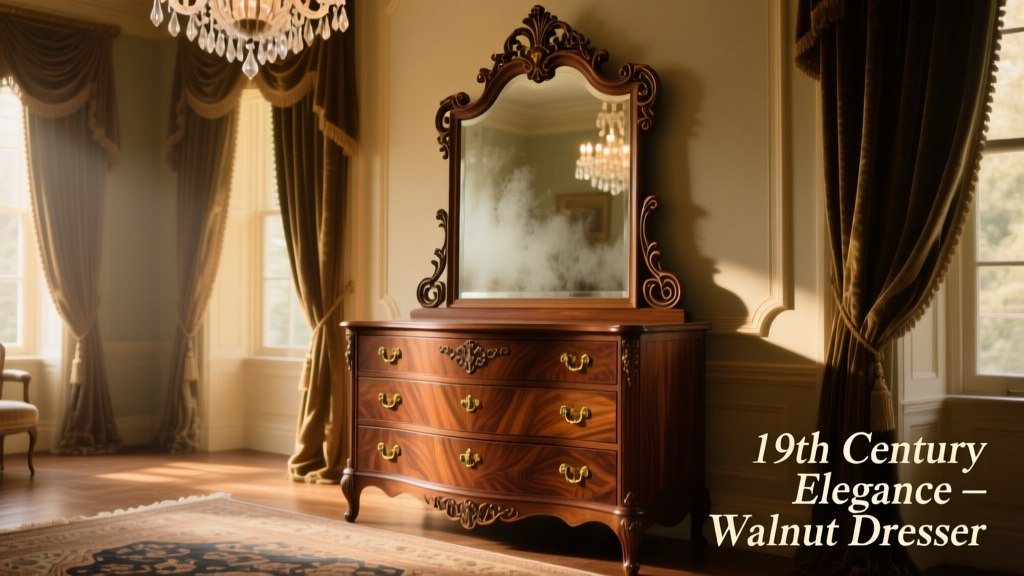
Walnut 3-Drawer Dresser with Integrated Mirror: A Detailed Assessment of the 19¼-Inch Wide Vintage Design