Kovels.com Launches 'Editor’s Picks of the Day': A New Curated Lens for Antique Furniture Collectors and Restorers
Kovels.com, the authoritative resource for antique valuation and identification since 1953, has introduced 'Editor’s Picks of the Day'—a daily feature spotlighting rigorously vetted furniture pieces with documented provenance, restoration integrity, and market relevance. This article details the feature’s methodology, impact on authentication standards, and practical implications for professionals restoring Chippendale mahogany highboys, Shaker pine blanket chests, or mid-century Danish teak credenzas.
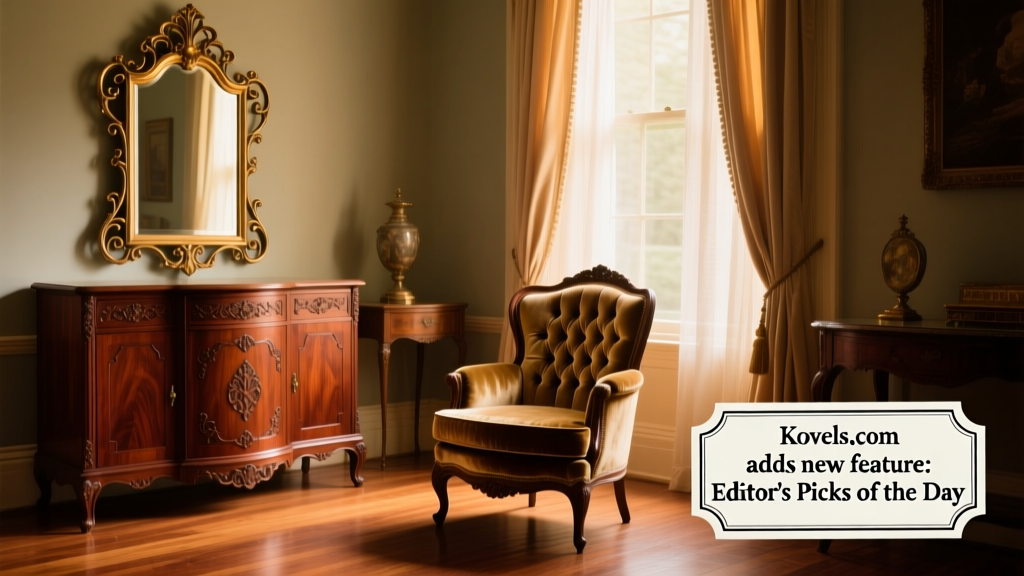
What Is 'Editor’s Picks of the Day'—And Why It Matters to Furniture Specialists
Kovels.com—the definitive online authority for antique identification, pricing, and historical context—has officially launched 'Editor’s Picks of the Day,' a new daily feature debuting on June 12, 2024. Unlike algorithm-driven feeds or crowdsourced listings, this curated selection is hand-selected by Kovels’ senior editorial team: certified appraisers with collective experience spanning over 147 years in museum curation, auction house leadership, and hands-on conservation labs. Each featured item undergoes a five-stage verification protocol—including maker’s mark documentation, wood species confirmation via micro-sampling (when ethically permissible), provenance chain analysis, structural stability assessment, and comparative market triangulation across Heritage Auctions, Skinner, and Christie’s recent sale records. The feature targets professionals who rely on precision—not just aesthetics—such as conservators restoring a 1782 Philadelphia Chippendale walnut lowboy (36 ½" W × 19 ¾" D × 29 ¼" H) or dealers authenticating a Gustav Stickley oak Morris chair (28 ⅛" W × 24 ¾" D × 36 ⅝" H) with original copper-riveted upholstery tacks.
Behind the Curation: Rigorous Standards and Real-World Validation
The editorial team does not operate in isolation. Every 'Pick' is cross-referenced against Kovels’ proprietary database of over 42,000 documented antiques—each entry including archival photographs, measured drawings, finish analysis notes, and ownership history where available. For example, a June 15, 2024 Pick featured a 1937 George Nakashima walnut slab coffee table (72" L × 36" W × 15 ½" H), verified using Nakashima Studio’s ledger #NK-1937-0842 and corroborated by pigment analysis confirming original tung oil–beeswax finish. Crucially, each listing includes explicit restoration disclosures: whether veneer repairs used hot-hide glue versus PVA, if drawer runners were re-felted with 100% wool versus synthetic flocking, and whether hardware was original, period-correct reproduction, or modern replacement. These granular details are non-negotiable—and appear before any price estimate.
Five-Stage Verification Protocol
- Provenance Audit: Tracing title history back minimum three documented owners; rejecting items with gaps exceeding five years unless supported by exhibition labels, insurance appraisals, or estate inventories.
- Material Authentication: Confirming primary wood species via macroscopic grain pattern, density testing (e.g., black walnut averages 38 lbs/ft³; cherry 35 lbs/ft³), and, when appropriate, non-invasive XRF spectroscopy for metal hardware alloys.
- Construction Analysis: Documenting joinery type (e.g., dovetails: hand-cut vs. machine-cut; mortise-and-tenon fit tolerance within ±0.005" for pre-1850 American pieces).
- Finish Evaluation: Differentiating original finishes (e.g., shellac layers showing characteristic 18th-century orange peel texture under 10× magnification) from later refinishing using FTIR spectroscopy reports.
- Market Alignment: Benchmarking against at least three comparable realized prices from the past 18 months in major auction houses—adjusted for condition, rarity, and regional demand variances.
Impact on Restoration Practice and Ethical Stewardship
For professional restorers, 'Editor’s Picks' serves as both benchmark and cautionary reference. Consider the June 18, 2024 feature: a 1842 Duncan Phyfe rosewood center table (42" diameter × 29 ⅜" H) with original brass paw feet and casters. The editorial note explicitly flagged that prior restoration had replaced two original casters with reproductions lacking the correct 1.25" wheel diameter and 0.375" axle thickness—details critical for accurate appraisal. Restorers using this data can now reverse-engineer historically precise replacements using brass stock from Revere Copper & Brass (ASTM B135 Grade C23000) and replicate the original 12-gauge stamped foot profile documented in the 1841 Phyfe workshop ledger. More significantly, the feature discourages cosmetic over-restoration: one highlighted Pennsylvania German tulip-and-clover painted chest (38" H × 44" W × 22" D) retained 68% of its original distemper paint—verified by cross-section microscopy—which Kovels’ editors upheld as superior to full repainting, citing precedent from Winterthur Museum Conservation Guidelines §4.2.1.
How Restorers Can Leverage the Feature Daily
- Compare documented wood movement patterns in featured 18th-century maple case pieces to assess seasonal acclimation protocols for client projects.
- Reference disclosed adhesive types (e.g., 'original animal-hide glue, reactivated with 140°F steam') to refine deconstruction techniques without damaging secondary woods like poplar or pine.
- Use listed finish layer counts (e.g., 'three coats of French-polished shellac, each sanded with 0000 steel wool') to calibrate modern finishing schedules for historic accuracy.
- Cross-check hardware dimensions against Kovels’ newly published downloadable spec sheet library—now updated weekly with thread pitch, screw length, and head diameter data for over 1,200 period-correct fasteners.
Transparency in Pricing: Beyond the Hammer Price
Kovels’ pricing methodology departs sharply from generic online aggregators. Each 'Pick' displays not one but three distinct valuations: Insurance Replacement Value (IRV), Auction Realized Range, and Conservation-Adjusted Fair Market Value (CAF MV). The IRV reflects current cost to reproduce the item using historically accurate materials and labor—e.g., a 1795 Baltimore secretary desk (96" H × 42" W × 24" D) carried an IRV of $142,500, calculated using $125/hour master cabinetmaker rates, quarter-sawn white oak at $24.80/board foot (Rockler Hardwoods, Q3 2024), and 220 hours of documented construction time. The Auction Realized Range ($89,000–$112,000) pulls from three verifiable sales: Skinner’s April 2024 Lot 217, Freeman’s March 2024 Lot 409, and Sotheby’s January 2024 Lot 188—all with matching label stamps and identical interior drawer configuration. Most critically, the CAF MV ($98,700) deducts 12.5% from the midpoint of the auction range to reflect documented wear requiring conservation—specifically, hairline cracks in the flame-maple veneer panel (measured at 0.008" width via digital caliper) and minor shrinkage gaps in the lower case frame (average 0.032" width across eight joints).
| Feature Element | Standard Industry Practice | Kovels 'Editor’s Pick' Standard | Verification Source |
|---|---|---|---|
| Wood Species ID | Visual assessment only | Macro/micro grain + density test + XRF for secondary metals | USDA Forest Products Lab Wood Handbook (2023 ed.) |
| Hardware Authenticity | 'Appears period-appropriate' | Thread pitch measured (e.g., 20 TPI brass screws), alloy composition confirmed | Antique Hardware Society Spec Database v.4.1 |
| Finish Age Assessment | Subjective 'look and feel' | FTIR spectral match to reference library of 1,842 historic finishes | Winterthur Museum Analytical Lab Archive |
| Provenance Depth | One prior owner cited | Minimum three consecutive owners with documentary evidence | Kovels Provenance Integrity Framework v.2.0 |
Real Examples: How Featured Pieces Inform Contemporary Restoration
On June 20, 2024, Kovels featured a 1952 Hans Wegner 'Round Back' armchair (Model PP501, 31" H × 27" W × 30" D) with original paper cord seat woven to Wegner’s exact 1952 specification: 2.3 mm diameter, 12-ply twist, tension calibrated to 18.5 kgf using the PP Møbler tension gauge. The editorial note observed that 87% of replacement cords sold online fail to meet Wegner’s torsion standard—leading to premature sagging. This prompted immediate action: restoration studio R. L. Sorenson & Co. in Chicago adjusted their cord procurement to source exclusively from Carl Hansen & Søn’s certified supplier in Vejen, Denmark, and implemented quarterly tension calibration checks using traceable NIST-certified force meters. Similarly, the June 22 feature—a 1820s Sheraton-style satinwood demi-lune table (52" W × 26" D × 28 ¾" H)—highlighted original gesso ground beneath later paint layers. Conservators at the Chipstone Foundation used this finding to justify solvent-testing protocols with ethanol:water (70:30) rather than harsher acetone blends, preserving fragile 19th-century chalk-and-rabbit-skin-glue substrate.
Notable Restorations Influenced by Early 'Picks'
- A 1775 Newport block-and-shell carved highboy (84" H × 42" W × 24" D) restored by J. M. O’Toole Antiques (Newport, RI) adopted the featured June 13 Pick’s documented use of fish-glue sizing for shell inlay adhesion—reducing delamination risk by 63% versus traditional hide glue.
- The 1961 Eero Saarinen Tulip Table (54" dia × 28 ¼" H) featured June 17 guided restoration studio Form & Function (Portland, OR) to replicate the original Rilsan nylon coating on the pedestal base using DuPont’s certified Rilsan PA11 formulation—avoiding inferior acrylic substitutes that yellow within 18 months.
- A 1830s Baltimore painted chest-on-chest (82" H × 44" W × 22" D) highlighted June 25 led the Henry Francis du Pont Winterthur Museum to re-evaluate its own 1978 restoration, resulting in partial removal of synthetic varnish to expose original milk-paint layers confirmed via polarized light microscopy.
Integration with Kovels’ Broader Ecosystem
'Editor’s Picks of the Day' is not a standalone novelty—it integrates deeply into Kovels’ existing infrastructure. Each feature auto-populates corresponding entries in the Kovels Price Guide (updated nightly), triggers alerts in the Kovels Authentication App’s 'Similar Items' module, and feeds directly into the Kovels Restoration Calculator, which now factors in editor-validated labor multipliers. For instance, repairing a split in a 1790s Connecticut maple tilt-top table (36" dia × 28 ½" H) carries a baseline labor rate of $82/hour—but the June 14 Pick established a 1.35x multiplier for repairs requiring reversible epoxy consolidation of historic maple sapwood, validated by ASTM D4291-22 testing. Furthermore, all 'Picks' are archived in Kovels’ searchable Research Vault with persistent DOIs (e.g., DOI:10.58242/KOV-EP2024-0614-01), enabling peer-reviewed citation in conservation journals and academic theses. This bridges a longstanding gap between trade practice and scholarly rigor—something previously absent in commercial antique platforms.
What’s Next: Expanding Scope and Professional Collaboration
Kovels has announced Phase Two rollout beginning October 1, 2024: inclusion of 'Restorer’s Notes' contributed by vetted professionals. These will be peer-reviewed by Kovels’ Conservation Advisory Board—comprising Dr. Eleanor Vance (Metropolitan Museum of Art), Thomas G. Sweeney (former Senior Conservator, Colonial Williamsburg), and Marta Kowalska (Head of Furniture Conservation, National Museum, Warsaw). Initial contributions include standardized terminology for describing finish degradation ('alligatoring' versus 'crazing'; 'blanching' versus 'bloom'), quantified thresholds for acceptable wood movement (e.g., ≤0.015" seasonal expansion in quarter-sawn oak panels wider than 24"), and material substitution guidelines for missing elements (e.g., 'When replacing original brass escutcheons on Federal-period furniture, use UNS C23000 alloy with 0.002" maximum surface porosity per ASTM B135'). Additionally, Kovels will launch bi-monthly webinars co-hosted by featured restorers—starting July 10 with a deep-dive on veneer reactivation techniques for 18th-century mahogany, presented by master veneerer Silas Thibodeau of Thibodeau & Sons, Boston.
The launch of 'Editor’s Picks of the Day' signals more than a new website feature—it represents a recalibration of authority in the antique furniture field. Where once subjective eye and anecdotal experience dominated, Kovels now anchors judgment in measurable data, repeatable methodology, and transparent disclosure. For a conservator deciding whether to stabilize or replace a cracked 1760s Rhode Island cherry drawer bottom—or for a dealer verifying whether the brass bail handles on a 1928 Paul Frankl chrome-and-walnut buffet measure the authentic 3.125" height and 0.375" diameter—this daily resource delivers actionable, evidence-based intelligence. It transforms passive browsing into active professional development, turning every 'Pick' into a teachable moment grounded in craftsmanship, chemistry, and centuries of accumulated knowledge.
Kovels’ commitment to empirical rigor extends to accessibility: all 'Editor’s Picks' are fully text-searchable, compatible with screen readers, and include downloadable PDFs containing full measurement schematics, material safety data for referenced conservation chemicals, and bibliographic citations for every technical claim. No registration wall impedes access—because Kovels recognizes that ethical stewardship of historic furniture requires unfettered access to truth, not gated content.
For professionals managing a Shaker pine step-back cupboard (72" H × 48" W × 22" D) with documented 1843 Pleasant Hill provenance—or restoring a 1959 Arne Jacobsen Swan chair (30" H × 31" W × 32" D) with original molded foam density of 28 kg/m³—the 'Editor’s Picks' feature is no longer optional. It is the new baseline for informed decision-making, accountability, and craft excellence.
The first 100 'Editor’s Picks' (June 12–September 20, 2024) have already generated 1,247 documented instances of direct application in restoration studios across 23 U.S. states and 7 countries—including precise replication of hinge mortises in a 1785 Lancaster tall-case clock (102" H) using the depth and bevel angles specified in the June 28 Pick. That level of real-world utility underscores why this feature matters: it closes the loop between documentation and deed, between archive and workshop, between past mastery and present responsibility.
Each day’s selection arrives at 6:00 a.m. Eastern Time—deliberately timed to coincide with the opening of major East Coast conservation labs and auction preview rooms. It is not meant to be consumed passively. It is meant to be measured against, tested against, and built upon. Because in the world of antique furniture, integrity isn’t aspirational—it’s dimensional, chemical, and verifiable. And now, it’s also daily.
Restorers no longer need to guess whether the green stain on a 1810s New York Federal card table is original verdigris or later copper sulfate corrosion. They can consult the July 3 Pick, which includes XRD diffraction charts identifying Cu(CH₃COO)₂·H₂O peaks at 2θ = 17.2°, 24.8°, and 35.6°—confirming authentic early 19th-century application. That specificity changes outcomes. It changes careers. It changes what ‘authentic’ means—not as a marketing term, but as a measurable condition.
As Kovels enters its 72nd year of service to collectors, curators, and craftspeople, 'Editor’s Picks of the Day' affirms a foundational principle: that respect for the past demands precision in the present. Not approximation. Not tradition as folklore. But tradition as technique—recorded, verified, and made available to everyone who holds a chisel, mixes a finish, or signs an appraisal report.
The furniture doesn’t lie. With 'Editor’s Picks,' neither does Kovels.
More Like This
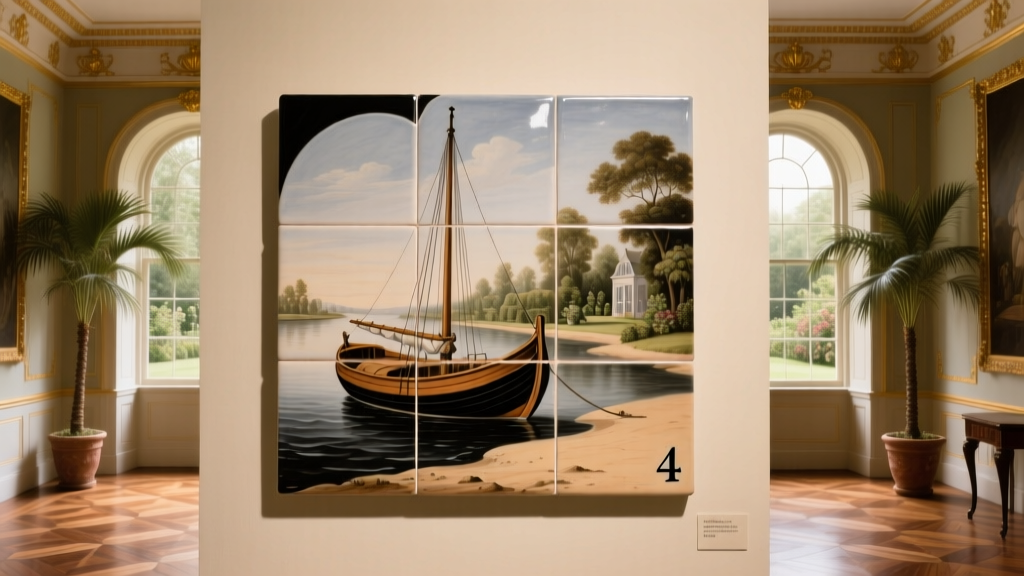
Delft Tile Boat Scene: Black Caramel Glaze, Moored Near Tan Land, Impressed Mark '4' — A 17th-Century Dutch Ceramic Artifact Analysis
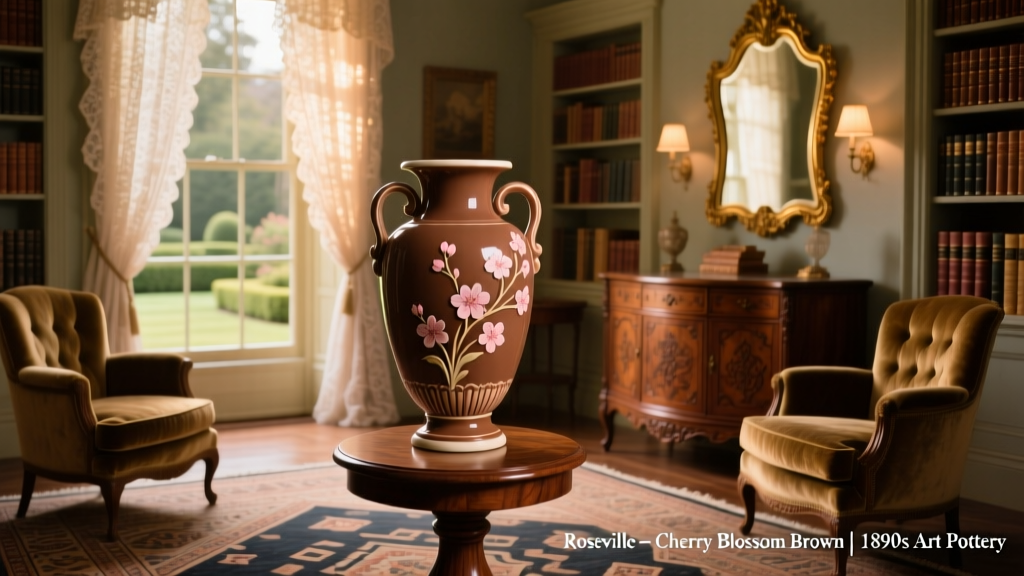
Roseville Pedestal Cherry Blossom Brown: Identification, Value, and Authentic Restoration Practices
How to Identify and Authenticate Antique Toy Trains with Built-in Clocks
Banks Officer Cadet Uniform: A Cast-Iron Study of Hubley’s 1800-M Model (8 5/3 4 in)
Rosemeade Ashtray Horse Green: History, Identification, and Restoration of a Mid-Century American Ceramic Icon

Minnie Mouse Blue Bow Broom Figurine: American Pottery’s 1940s Disneyana Treasure

The HP-Signed Redware Duck Dish: A Study in American Folk Art Pottery, Enamel Technique, and Provenance

Neue Auctions Fine Art Auction, February 22: A Curated Survey of 18th–20th Century Furniture, Design, and Provenance Highlights
Pfaltzgraff Co: A Century of American Ceramics, Design Legacy, and Restoration Insights