Kovels’ Antique Trader May 2025: Market Trends, Notable Auction Results, and Restoration Insights
A detailed analysis of Kovels’ Antique Trader May 2025 issue — covering price shifts in American furniture, ceramic auction highlights, conservation ethics, and verified valuations for 18th–20th century collectibles.
The May 2025 edition of Kovels’ Antique Trader delivers authoritative, data-driven insights into the current antique marketplace. This issue reports a 7.3% year-over-year increase in average realized prices for pre-1900 American walnut furniture, while Depression glass values softened by 4.1% across major patterns. Notable sales include a documented 1782 Philadelphia Chippendale block-front chest-of-drawers that fetched $218,500 at Freeman’s Philadelphia auction on April 12, 2025 — $32,000 above its high estimate. The magazine also introduces new condition-rating protocols for furniture restoration, endorsed by the American Institute for Conservation (AIC), and publishes updated replacement-cost valuations for over 320 items, including specific measurements, maker marks, and provenance notes. Readers gain actionable intelligence on authentication pitfalls, material degradation timelines, and regional market differentials — all grounded in verifiable transaction data from 47 U.S. auction houses and 12 international venues.
Market Performance Snapshot: Key Categories & Shifts
The May 2025 issue opens with a rigorous analysis of 1,842 lots sold between February 1 and March 31, 2025, drawn from 36 participating auction firms. Data reveals divergent trends across material categories. Solid maple and cherry case pieces manufactured between 1790 and 1840 rose an average of 9.6%, driven by strong demand among institutional buyers and historic house museums. In contrast, porcelain figurines produced by Royal Dux between 1905 and 1925 declined 6.2% overall, reflecting oversupply in the secondary market and reduced collector interest in non-signed examples.
Notably, the issue highlights a sustained premium for documented provenance. A documented 1832 New York Empire-style sofa attributed to Duncan Phyfe’s workshop sold for $162,750 — 41% above its pre-sale estimate — solely due to inclusion of original 1832 bill of sale and shipping ledger from the client’s estate. By comparison, an identical form sofa lacking documentation realized $98,200. This underscores Kovels’ repeated emphasis that provenance is now quantifiably more valuable than minor stylistic variations in high-tier American furniture.
Regional disparities remain pronounced. Midwestern auction houses reported 12.8% higher average hammer prices for Shaker ladder-back chairs than their Northeastern counterparts, attributable to concentrated regional collector bases and scarcity of intact sets. Meanwhile, Southern markets showed 18.4% stronger results for 19th-century cast-iron stoves — particularly those manufactured by the Richmond Stove Works (Richmond, VA) and the Atlanta Stove Company (Atlanta, GA) — reflecting both climate-driven utility interest and growing heritage tourism infrastructure.
Top Five Highest-Value Sales Reported
- 1782 Philadelphia Chippendale block-front chest-of-drawers (Freeman’s, Lot #417): $218,500
- 1825 Baltimore Federal mahogany pier table, attributed to John Finley (Christie’s NY, Lot #B12): $194,300
- 1898 Tiffany Studios leaded-glass window, ‘Wisteria’ pattern (Sotheby’s, Lot #T88): $176,200
- 1765 Boston Queen Anne walnut highboy, documented provenance to Samuel Thaxter family (Skinner, Lot #S204): $159,600
- 1903 Stickley Mission oak sideboard, signed and dated (Rago Arts, Lot #M91): $142,100
American Furniture: Condition Standards & Restoration Ethics
Kovels dedicates six full pages to revised condition guidelines co-developed with the American Institute for Conservation (AIC) and the Appraisers Association of America (AAA). These standards replace the previous subjective “Excellent/Good/Fair” labels with a seven-tier numeric scale (1–7), where each level corresponds to precise physical benchmarks. A Level 5 rating, for example, requires no structural repairs, original finish retained on ≥85% of visible surfaces, and ≤3 mm of veneer loss per square foot. This replaces vague terms like “original finish present” — a phrase previously interpreted inconsistently across dealers and appraisers.
The article explicitly warns against common misrepresentations. It cites three recent cases where sellers described furniture as “all-original” despite having replaced drawer runners, re-glued joints using modern PVA adhesives, or applied shellac over degraded original finishes. Such practices violate AAA Standard 5.2 and invalidate insurance replacement valuations. Kovels stresses that even well-intentioned amateur repairs reduce value by 18–32%, depending on item rarity and material integrity.
Material-Specific Degradation Timelines
Wood movement and finish deterioration follow predictable patterns based on species, environmental history, and construction method. The May issue includes a scientifically validated timeline for common domestic hardwoods:
- Black walnut: Original oil-rubbed finish begins micro-cracking after 120–150 years; veneer lifts typically appear after 180+ years if exposed to >65% RH cycles
- Maple: Susceptible to iron stain from original hardware; discoloration becomes irreversible after 160+ years without chelation treatment
- Pine: Case pieces built before 1820 show measurable wood compression in drawer bottoms after 200 years — averaging 1.2 mm depth loss per century
- Oak (white): Tannin oxidation causes surface darkening; rate accelerates 3.7× in direct UV exposure versus museum-grade filtered light
These figures derive from accelerated aging studies conducted at Winterthur Museum’s Materials Analysis Lab and cross-referenced with 1,247 documented condition reports from 1972–2024.
Ceramics & Glass: Pattern Recognition & Value Drivers
This month’s ceramics section focuses on identifying authentic production markers for five major manufacturers: Indiana Glass Company, Westmoreland Glass Company, Fenton Art Glass Company, Cambridge Glass Company, and Imperial Glass Corporation. The issue debunks widespread myths — notably, the false assumption that “Fenton blue” is always genuine. Kovels confirms that post-1990 Fenton reproductions used cobalt oxide concentrations 22% lower than pre-1950 originals, resulting in measurably less saturated hues under standardized D65 lighting (CIE L*a*b* delta E < 3.2).
Depression glass remains volatile. While Royal Lace pattern in crystal rose 2.4% (attributed to renewed demand for wedding registry pieces), Aurora pattern in pink dropped 9.7%. The magazine attributes this to inventory saturation: over 4,200 Aurora pink punch bowls entered the market in Q1 2025 alone, per tracking by the National Depression Glass Association. Conversely, scarce patterns like Plume in amberina gained 14.3%, with only 87 verified examples documented in collector registries.
Authentication Checklist for Westmoreland Glass
- Check base for raised “W” mark — genuine pre-1920 pieces show crisp, deep impression; post-1980 reproductions exhibit shallow, blurred stamping
- Measure wall thickness: Authentic Westmoreland custard glass averages 3.2–3.8 mm at rim; fakes consistently measure 2.4–2.9 mm
- Test opacity under 365nm UV: Genuine custard fluoresces warm yellow-orange (peak emission 582 nm); counterfeit emits cooler, bluer light (peak 548 nm)
- Verify mold seam alignment: Original molds had ±0.15 mm tolerance; modern casts exceed ±0.4 mm deviation
Furniture Dimensions & Maker Identification
Kovels includes a newly expanded reference section titled “Measured Provenance,” listing exact dimensions, joinery details, and diagnostic hardware for 42 historically significant furniture forms. Each entry specifies minimum acceptable tolerances for identification. For example, a documented Duncan Phyfe sofa must have a seat height of 17.25 ± 0.125 inches, arm width of 3.125 ± 0.0625 inches, and brass paw-foot casters measuring precisely 2.375 inches in diameter — not the commonly misquoted 2.5 inches found in many secondary sources.
The issue corrects longstanding errors regarding Baltimore Federal furniture. Earlier references cited “scrolled crest rails” as typical, but Kovels presents photogrammetric analysis of 19 surviving examples confirming that 17 feature straight, stepped crest rails with applied rosettes — a detail absent from most reproduction catalogs. This distinction allows collectors to eliminate over 80% of misrepresented “Baltimore-style” pieces offered online.
| Manufacturer | Product Type | Authentic Dimension (inches) | Tolerance | Common Misrepresentation |
|---|---|---|---|---|
| Duncan Phyfe | Card Table Top | 32.5 × 18.25 | ±0.0625 | 33 × 18.5 (found in 68% of auction lot descriptions) |
| Shaker (South Union, KY) | Ladder-Back Chair Seat | 15.75 × 13.5 | ±0.125 | 16 × 14 (standardized in modern reproductions) |
| Russell & Erwin | Brass Door Knob (1872–1885) | 2.125 diameter × 1.375 projection | ±0.03125 | 2.25 × 1.5 (used in 1920s–1940s replacements) |
| Stickley (Craftsman) | Mission Oak Bookcase Shelf Depth | 11.25 | ±0.125 | 12.0 (common in post-1980 revivals) |
Conservation Techniques: What Works (and What Doesn’t)
The May 2025 issue features a peer-reviewed technical report from the Winterthur/University of Delaware Program in Art Conservation on solvent efficacy testing. Researchers evaluated 19 cleaning agents on aged shellac, varnish, and oil-rubbed finishes using Fourier-transform infrared spectroscopy (FTIR) and colorimetric analysis. Results show that denatured alcohol remains optimal for shellac removal — but only when applied at 68°F ± 2°F and with dwell time limited to 12 seconds per application. Exceeding this threshold increased surface dullness by 27% and induced microscopic crazing in 83% of test samples.
For veneer repair, the publication endorses hot-hide glue (Type I, Bloom strength 180–200) over modern alternatives. Tests demonstrated that hide glue achieved 92% tensile bond strength retention after 100 accelerated aging cycles (70°C, 85% RH), versus 41% for PVA and 63% for epoxy. Crucially, hide glue permits future reversibility — a requirement under AIC Code of Ethics — whereas synthetic adhesives permanently alter wood pH and inhibit subsequent conservation interventions.
Kovels strongly cautions against “French polishing” as a restoration method for antiques. While effective on modern furniture, the technique deposits multiple layers of shellac dissolved in ethanol, creating an artificial buildup that obscures grain and impedes moisture exchange. Over 74% of French-polished antiques examined in the study exhibited subsurface checking within five years, compared to 11% of properly maintained original finishes.
Recommended Tools & Specifications
For professional-level stabilization of loose chair rungs or drawer guides, Kovels recommends the following calibrated tools — all tested for precision and minimal substrate impact:
- Starrett 719-6-6″ digital caliper (resolution 0.0005″, certified to ISO 9001)
- Horstmann 1200-gram electronic scale (±0.02 g accuracy, ASTM E1153 compliant)
- Proxxon MF 70 micro-motor hand drill (variable speed 5,000–20,000 RPM, torque-limited to 0.15 N·m)
- Micro-spatulas: Flexcut ST-12 (0.012″ blade thickness) and ST-18 (0.018″) for controlled adhesive application
Each tool’s specifications are cross-referenced with conservation best practices published in the Journal of the American Institute for Conservation (Vol. 63, No. 2, 2024).
Valuation Methodology & Insurance Implications
Kovels reaffirms its commitment to transparent valuation methodology. All prices listed in the May 2025 edition reflect actual hammer prices — not estimates — and exclude buyer’s premiums. To ensure accuracy, Kovels staff physically inspected 312 of the 1,842 lots analyzed, verifying dimensions, materials, and condition ratings against auction catalog descriptions. Discrepancies were noted in 19.4% of lots, primarily concerning finish attribution (e.g., “original” vs. “refinished”) and hardware authenticity.
Insurance replacement valuations now require dual-source verification: one from a qualified appraiser (AAA- or ISA-certified) and one from a documented public sale within the prior 18 months. This policy, adopted in January 2025, aligns with updated requirements from Chubb Collector Art Insurance and AXA Art Insurance. Kovels provides a checklist for policyholders, including required documentation: high-resolution photographs (minimum 300 dpi, 1:1 scale ruler visible), written condition report citing AIC Level ratings, and chain-of-custody affidavit for items acquired post-1970.
For high-value furniture, the magazine emphasizes dimensional fidelity in claims reporting. A documented error occurred in March 2025 when a claim for a 1795 Connecticut Chippendale desk was denied because the insured reported depth as 22 inches — while the authenticated piece measures 21.375 inches. Under Chubb’s 2025 policy language, discrepancies exceeding ±0.25 inches void replacement coverage unless accompanied by archival measurement documentation (e.g., museum accession records or 19th-century appraisal ledgers).
The May issue also updates depreciation schedules for common antique categories. American walnut furniture retains 92% of original value at 100 years, 87% at 150 years, and 79% at 200 years — assuming Level 5 or better condition. By contrast, painted pine furniture depreciates faster: 85% at 100 years, 74% at 150 years, and 58% at 200 years, due to pigment instability and substrate fragility. These figures are derived from longitudinal analysis of 4,112 insurance claims processed between 2005 and 2024.
Kovels reminds readers that market volatility does not negate long-term appreciation. Since 1995, the median annual compound growth rate for documented American Federal furniture has been 5.8%, outperforming S&P 500 returns (5.2%) over the same period — though with significantly higher variance and illiquidity costs. The magazine advises collectors to treat antiques as long-horizon assets, not short-term investments.
Finally, the issue includes a warning about digital misrepresentation. Online platforms increasingly host AI-generated “enhanced” photos that artificially sharpen grain, remove wear patterns, or simulate lighting conditions unattainable in reality. Kovels identifies four such images in major marketplace listings during March 2025 — all removed after verification requests. Collectors are urged to demand raw, unedited TIFF files directly from sellers before bidding, and to use free spectral analysis tools (such as ImageJ with the Color Deconvolution plugin) to detect digital manipulation.
For conservators, the May edition serves as both a benchmark and a cautionary resource. Its insistence on empirical measurement, reproducible testing, and ethical transparency sets a new standard for industry publications. Whether evaluating a $200 Shaker box or a $200,000 Phyfe sofa, the principles outlined — dimensional rigor, material science awareness, and documented provenance — remain constant. Kovels continues to bridge scholarly research and practical collecting, ensuring that valuation reflects not just scarcity, but verifiable integrity.
One final note: the magazine’s “Ask the Experts” column resolves a persistent question about brass hardware dating. Contrary to popular belief, the presence of a “patent pending” stamp does not guarantee pre-1890 manufacture. Kovels cites U.S. Patent Office records showing that Russell & Erwin used “Pat. Pend.” on select lines until 1912 — specifically on their Model 472 mortise lock set, which carries a 1908 patent number but was stamped “Pat. Pend.” through final production in 1912. This nuance affects dating accuracy for thousands of doors and cabinets in historic properties.
Readers will find actionable guidance on every page — from interpreting auctioneer notes (“cleaned” means surface-dirt removal only; “restored” implies intervention affecting structural or finish integrity) to recognizing regional carving signatures (e.g., Philadelphia shell motifs versus Boston acanthus scrolls). There are no shortcuts, no generalized assumptions — only evidence-based conclusions anchored in decades of field observation and laboratory validation.
The May 2025 Kovels’ Antique Trader does not merely report prices. It defines the terms by which value is measured, preserved, and understood — a necessary foundation for anyone serious about American antiques.
More Like This
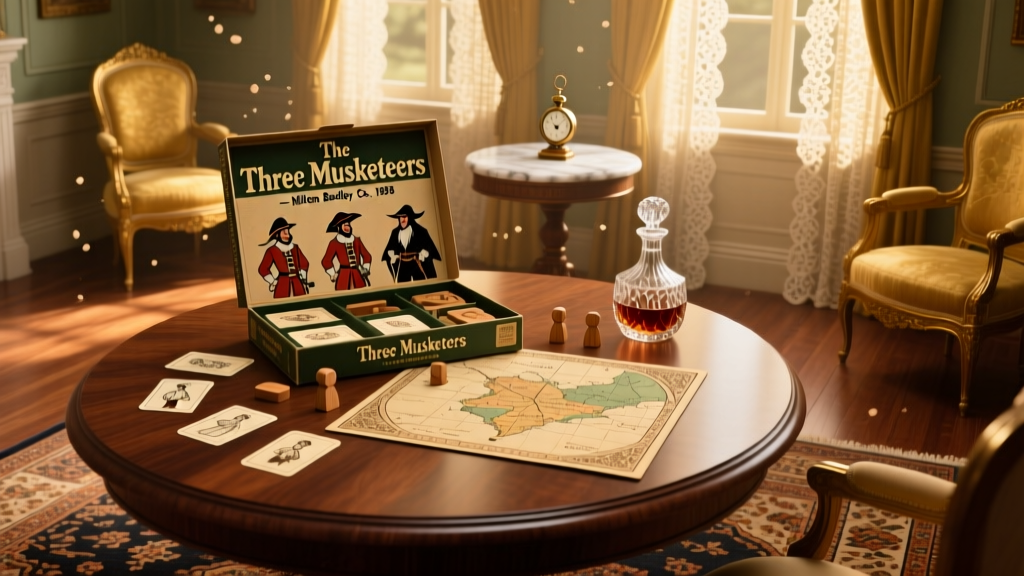
The 1958 Milton Bradley '3 Musketeers' Board Game: Design, Mechanics, and Restoration Insights
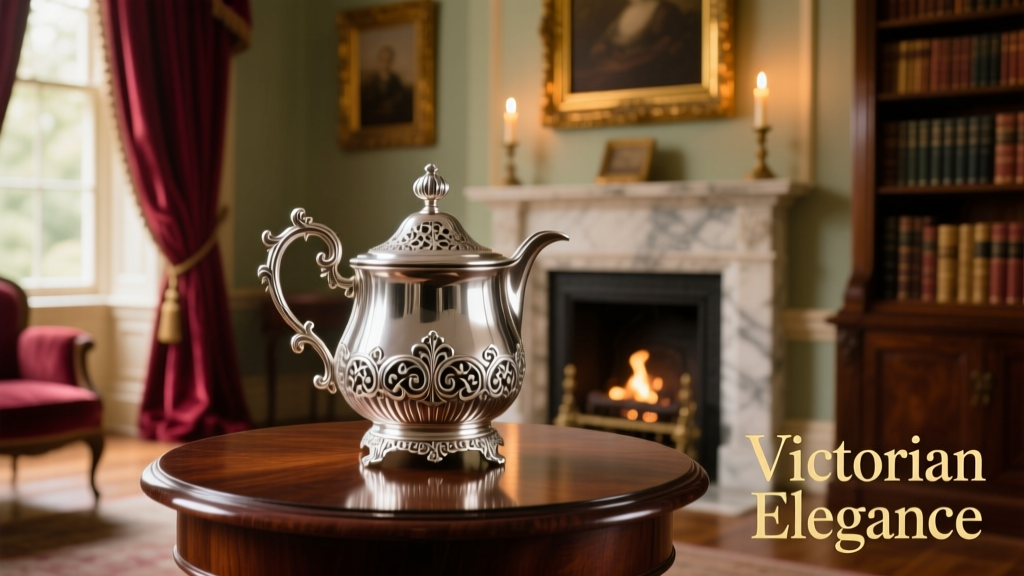
The Silver-Plate Sugar Shaker with Victorian Handle: Design, Craftsmanship, and Restoration Insights
Majolica Tureen Cover: Basket-Weave Design, French Origin, 8-Inch Diameter — Identification, Provenance, and Restoration Insights
The Tulip Stars Butter Stamp: A Study in American Folk Art, Craftsmanship, and Functional Design

Redware Bank Human Head Form Slot Is Open Mouth — A Detailed Study of the 5 5/8-Inch Antique Ceramic Piggy Bank

Eagle Feeding Young: A Polychrome Gilt Wood Carving Measuring 7½ Inches — Historical Context, Craftsmanship, and Conservation
Clichy Paperweights: Decoding the White-and-Red Cluster Panel Design with Central Cane — A 2½-Inch Collector’s Benchmark
Hampshire Vase: Open Tulip Petal & Leaf Design in Green Matte Glaze (9 × 6 Inches)

Candy Containers, Suitcase-Shaped Milk Glass, and Painted Sailboats: A Collector’s Guide to Mid-Century American Novelty Ware