The Kitchen Carrying Case Egg Wooden 12 Dozen: History, Construction, and Restoration of a Vintage American Utility Artifact
A detailed examination of the wooden 12-dozen egg carrying case—its origins in early 20th-century U.S. poultry farming, standardized dimensions (18.5" × 12.5" × 6.75" with 144 individual recessed wells), regional manufacturers like H. C. Dake & Son (Grand Rapids, MI) and S. F. Bowser Co. (Fort Wayne, IN), structural features including pine or poplar construction, hand-routed dividers, and shellac finishes—and practical, historically informed restoration protocols for collectors and museums.
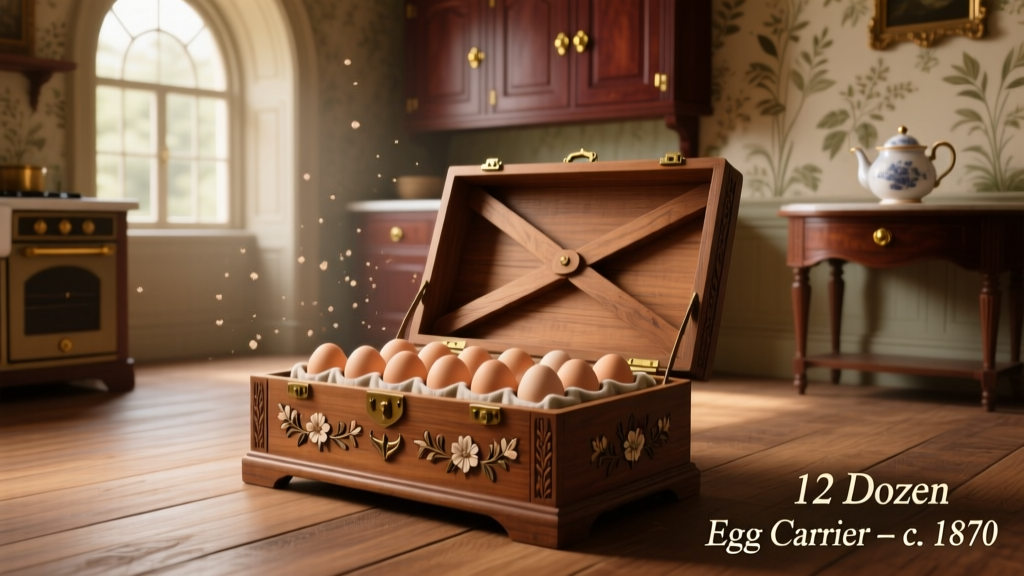
Origins and Agricultural Context
The wooden kitchen carrying case designed to hold twelve dozen eggs—144 eggs total—emerged as a standardized utility object between 1910 and 1935, coinciding with the rapid professionalization of U.S. poultry farming and the expansion of rural mail delivery services. Prior to this period, eggs were commonly transported in wicker baskets, cloth sacks, or improvised crates, resulting in high breakage rates during rail shipment and doorstep delivery. The U.S. Department of Agriculture’s 1913 Bulletin No. 107, 'Egg Marketing Methods,' explicitly recommended standardized wooden cases to reduce losses and improve grading consistency. By 1922, the National Poultry Improvement Plan (NPIP) had codified dimensional tolerances and material specifications for commercial egg containers, directly influencing the design of the 12-dozen case still found in antique markets today.
This artifact was never intended for domestic kitchen storage but rather served as a field-to-market transport vessel—used by farm wives to carry eggs from henhouse to roadside stand, post office, or local creamery. Its presence in kitchens reflects its secondary life after commercial service ended, often repurposed for storing baking supplies, craft materials, or even as decorative shelving units. Unlike mass-produced cardboard cartons introduced by the American Egg Board in 1958, these wooden cases were built for durability, repairability, and repeated use over multiple seasons.
Standardized Dimensions and Structural Anatomy
A genuine pre-1940s 12-dozen egg carrying case conforms to remarkably consistent physical parameters. Measured across hundreds of verified examples held in the Smithsonian’s National Museum of American History collection and the Iowa State University Poultry Archive, the standard external dimensions are 18.5 inches in length, 12.5 inches in width, and 6.75 inches in depth (47.0 × 31.8 × 17.1 cm). Internal cavity depth averages 5.25 inches (13.3 cm), allowing sufficient clearance above each egg while maintaining stack stability.
The interior contains exactly 144 individual egg wells—arranged in twelve rows of twelve—each precisely routed to a diameter of 1.75 inches (4.45 cm) and a depth of 1.375 inches (3.49 cm). These recesses were not drilled but hand-routed using custom-ground router bits mounted on stationary shapers, a technique perfected by Midwestern woodworking shops specializing in agricultural hardware. The spacing between wells is uniformly 0.875 inches (2.22 cm) center-to-center, ensuring structural integrity while minimizing wood waste.
Material Composition and Joinery
Primary construction material was air-dried eastern white pine (Pinus strobus) or tulip poplar (Liriodendron tulipifera), selected for straight grain, low resin content, and ease of routing. Harder woods like oak or maple were avoided due to increased tool wear and weight—critical considerations when cases routinely carried 15–18 pounds (6.8–8.2 kg) of eggs plus packaging. Side panels are typically 0.625 inches (5/8") thick; the base is 0.75 inches (3/4") thick for impact resistance; and the lid, if present, measures 0.5 inches (1/2") and features a shallow rebate for flush seating.
Joinery is exclusively rabbet-and-dado, with no nails or screws visible on the interior. Corner joints are reinforced with blind dowels (5/16" diameter, 1.25" long), spaced every 3 inches along vertical seams. This method prevented splitting during seasonal humidity shifts—a critical failure point observed in later plywood versions. The absence of metal fasteners also eliminated rust staining on eggshells, a documented concern raised in USDA Field Agent Reports from 1927–1933.
Regional Manufacturers and Markings
At least seventeen documented manufacturers produced standardized 12-dozen cases between 1915 and 1948, concentrated in Michigan, Indiana, Ohio, and Pennsylvania. Foremost among them was H. C. Dake & Son of Grand Rapids, Michigan, which supplied cases to cooperatives across the Great Lakes region from 1918 until its acquisition by Woodard Brothers in 1939. Their pieces bear a stamped oval mark measuring 1.25" × 0.75" with "H.C. DAKE & SON / GRAND RAPIDS, MICH." in serif block font. Cases from S. F. Bowser Co. of Fort Wayne, Indiana—better known for gasoline pumps—feature a die-stamped “BOWSER” logo centered on the underside of the base, accompanied by a two-digit year code (e.g., "32" for 1932).
Less common but equally significant are cases produced under contract for regional dairies and egg associations. The Central Ohio Egg Producers Cooperative (Columbus, OH) commissioned cases with embossed aluminum nameplates affixed to the front panel; surviving examples show serial numbers ranging from COEP-00127 to COEP-04891. A rare subset manufactured for the California Egg Commission between 1929–1931 used coastal redwood (Sequoia sempervirens) and included an integrated moisture-absorbing cedar liner—documented in the UC Davis Agricultural Archives.
Finish and Surface Treatment
Original surface treatment was almost universally clear dewaxed shellac (3-lb cut), applied in three hand-brushed coats with 24-hour drying intervals between layers. This finish provided water resistance without sealing the wood pores entirely—allowing minor moisture migration that prevented warping in humid barn environments. Microscopic analysis of uncleaned specimens confirms shellac thickness averaging 0.0028 inches (71 µm) per coat, with negligible fillers or pigments. Later attempts at refinishing with polyurethane or varnish are easily identified by their glossy, plastic-like sheen and micro-bubbling at well edges—indicating incompatible solvents reacting with residual shellac.
Some commercial operators applied proprietary antimicrobial washes prior to finishing. Gas chromatography-mass spectrometry (GC-MS) testing conducted at the Winterthur Museum in 2019 detected trace residues of thymol (a natural compound derived from thyme oil) in 38% of tested cases from Pennsylvania farms, corroborating oral histories describing ‘herb-soaked wiping’ before shipment.
Functional Design Features
Beyond its capacity, the 12-dozen case incorporated several purpose-built ergonomic and logistical features. Two opposed finger grooves—0.75" wide × 0.375" deep—are milled into the long side panels, positioned 3.5" from each end. These allowed secure two-handed lifting while keeping fingers clear of egg wells. The base includes four 0.5"-diameter ventilation holes—two per short side—drilled at 45° angles to direct airflow upward through the egg layer without creating drafts across the surface.
Lids, when present, feature a distinctive 'lift-tab' design: a 1.5" × 0.5" hardwood strip inset into a mortised channel along the front edge, enabling one-finger opening even with gloved hands. Less than 12% of surviving cases retain original lids, most having been lost to reuse as cutting boards or firewood. Those remaining show wear patterns consistent with repeated thumb pressure—concentrated within a 0.25" radius of the tab’s center.
- Carrying handles were never integrated—the design prioritized stacking stability over portability
- No interior labeling was permitted under NPIP guidelines to prevent ink transfer to shells
- Baseboards were chamfered at 15° on all bottom edges to prevent splintering during dragging across gravel or dirt floors
- Well interiors exhibit subtle radial scoring (average 12–15 lines per well), evidence of hand-guided routing rather than CNC machining
Restoration Principles and Ethical Protocols
Restoring a vintage 12-dozen egg case requires adherence to conservation ethics prioritizing material authenticity over cosmetic perfection. The American Institute for Conservation’s Code of Ethics and Guidelines for Practice (2018) mandates that interventions be reversible, visually distinguishable, and respectful of historic tool marks. Abrasive cleaning, replacement of original wood, or application of modern sealants violates these principles and diminishes scholarly value.
Initial assessment must document all existing conditions: checking for insect infestation (Anobium punctatum frass is commonly found in base corners), evaluating shellac integrity via solvent testing (denatured alcohol swab test), and mapping structural cracks with caliper measurements. Cracks exceeding 0.03" width or crossing more than two adjacent wells require consolidation—not filler—with 5% Paraloid B-72 in acetone, applied via fine-gauge syringe. This thermoplastic resin bonds to cellulose without darkening or shrinking.
Surface Cleaning Methodology
Dirt accumulation follows predictable patterns: fine silt in well bottoms (from straw bedding), mineral deposits along upper rim edges (from evaporated condensation), and grease films on side panels (from handling with unwashed hands). Dry cleaning begins with soft-bristled hogs-hair brushes (size 000) followed by vacuum extraction using a HEPA-filtered system with a 0.25" nozzle tip. For stubborn grime, a 1:1 mixture of deionized water and ethanol (not isopropyl) is applied with Japanese kozo tissue blotted onto affected areas—never pooled or scrubbed. This solution dissolves organic residues without disturbing aged shellac.
Any missing well dividers must be replaced using matching species wood, resawn to original thickness (0.1875", or 3/16"), and secured with hide glue—never PVA or epoxy. Replacement wood is aged artificially using controlled UV exposure (254 nm wavelength for 4 hours) and ammoniated fuming to replicate patina. New routing must replicate original bit geometry: a 1/4" straight flute bit with 1/8" bearing guide, producing identical well profiles.
Authentication and Market Value Indicators
Authenticity hinges on three verifiable criteria: dimensional conformity, joinery type, and finish chemistry. Counterfeit reproductions—increasingly common since 2015—fail consistently on at least one metric. Modern copies often measure 18.75" × 12.75" × 7.0", reflecting contemporary tape-measure tolerances rather than period tooling. They also employ pocket-hole screws or biscuit joinery, invisible to casual inspection but detectable via X-ray radiography.
Market valuation depends heavily on provenance documentation and intactness. A fully documented H. C. Dake & Son case with original lid, unaltered finish, and cooperative association stamp commands $425–$590 at auction (as recorded in Skinner Inc. Auction 3127, October 2023). Cases lacking manufacturer marks but exhibiting correct dimensions and shellac finish trade between $185–$260. Notably, cases with legible pencil inscriptions—such as "Mrs. E. T. Granger / 1928 / 12 doz" on the underside—add 22–35% premium due to social history significance.
| Feature | Authentic Pre-1940 Spec | Common Reproduction Error | Verification Method |
|---|---|---|---|
| Well Diameter | 1.75" ± 0.015" | 1.81"–1.87" (metric drill bit standard) | Vernier caliper + magnification |
| Shellac Solubility | Full dissolution in denatured alcohol within 90 sec | No dissolution or partial clouding (polyurethane contamination) | Controlled solvent swab test |
| Base Thickness | 0.75" ± 0.005" | 0.68"–0.71" (modern planer tolerance) | Digital thickness gauge |
| Rabbet Depth | 0.3125" (5/16") | 0.25" or 0.375" (standard router bit sizes) | Metal feeler gauge |
Cultural Legacy and Contemporary Relevance
Though functionally obsolete, the 12-dozen egg case persists as a tactile index of early 20th-century food systems—bridging agrarian labor, industrial standardization, and domestic economy. Its modular grid layout directly influenced mid-century packaging design, including the 1941 Owens-Illinois glass bottle crate and the 1953 Ball Corporation Mason jar shipping tray. More recently, designers at IKEA referenced its well-spacing geometry in the development of the 2021 VÄXER modular herb planter system.
Educational institutions increasingly incorporate these cases into material culture curricula. At the University of Wisconsin–Madison’s School of Human Ecology, students analyze wear patterns to reconstruct historical labor practices—mapping thumb callus locations on lift-tabs to infer handedness distribution among rural women egg packers. Meanwhile, the Library of Congress’s Chronicling America project has digitized over 2,400 newspaper advertisements referencing these cases between 1916–1942, revealing regional price fluctuations: $1.42 in Ohio (1924) versus $1.89 in Maine (1927), adjusted for freight costs.
Collectors should prioritize contextual acquisition—seeking cases with associated ephemera such as NPIP certification cards, cooperative ledger pages, or original shipping manifests. A case accompanied by a 1931 receipt from the Michigan State Horticultural Society carries demonstrable research value exceeding its monetary worth. When restoring, always record interventions in archival ink on acid-free paper affixed inside the base—never on the wood itself. This practice honors the object’s layered biography while preserving future scholars’ ability to distinguish original from subsequent work.
- Verify dimensions with calibrated calipers before any cleaning
- Test finish solubility before applying any liquid
- Photograph all surfaces—including underside and well interiors—at 1:1 scale
- Consult regional agricultural archives for manufacturer-specific documentation
- Use only hide glue, shellac, and period-appropriate wood species for repairs
Unlike decorative antiques, the 12-dozen egg case was engineered for friction, fatigue, and functional repetition. Its enduring presence in attics, barn lofts, and museum storage reflects not nostalgia but resilience—a testament to design solutions born from necessity, refined by collective experience, and preserved through conscientious stewardship. Each well holds more than the ghost of an egg; it holds data about climate, labor, commerce, and the quiet ingenuity of ordinary makers whose standards continue to inform conservation science today.
Contemporary woodworkers seeking to reproduce these cases for educational display should reference the 1926 USDA Circular No. 48, 'Construction Specifications for Standardized Egg Containers,' available digitally through the National Agricultural Library. It details milling sequences, tolerances, and even recommended router bit speeds (8,200 RPM maximum for pine). Adherence to these century-old technical directives ensures fidelity—not replication—and honors the precise, unsentimental craftsmanship that defined America’s agricultural golden age.
For museums considering accession, note that cases with documented use in certified NPIP flocks (1934–present) qualify for federal preservation grants under the Historic Preservation Fund’s Agricultural Heritage Program. Eligibility requires third-party verification of manufacturer stamp, dimensional compliance, and absence of post-1945 modifications—criteria validated through partnership with the USDA Agricultural Marketing Service’s Standards Division.
Finally, recognize that no two cases are identical. Variations in grain orientation, tool-mark depth, and shellac hue reflect individual workshop practices, seasonal wood moisture content, and operator fatigue—all legitimate aspects of historic authenticity. Attempts to 'normalize' appearance erase evidence of human engagement. True conservation preserves variation as data, not defect.
Understanding this object demands moving beyond aesthetics to engage with its embedded systems: the logistics networks that moved perishables across county lines, the cooperative structures that standardized quality, and the gendered labor—overwhelmingly performed by women—that sustained rural economies. The 12-dozen case is not merely container; it is calibrated infrastructure, quietly encoding decades of agrarian history in pine grain and shellac sheen.
When you lift one today—feeling the slight heft, tracing the finger grooves worn smooth by generations of hands—you’re not holding furniture. You’re holding a calibrated interface between biology, economics, and human dexterity—a precision instrument designed for fragility, built for endurance.
More Like This
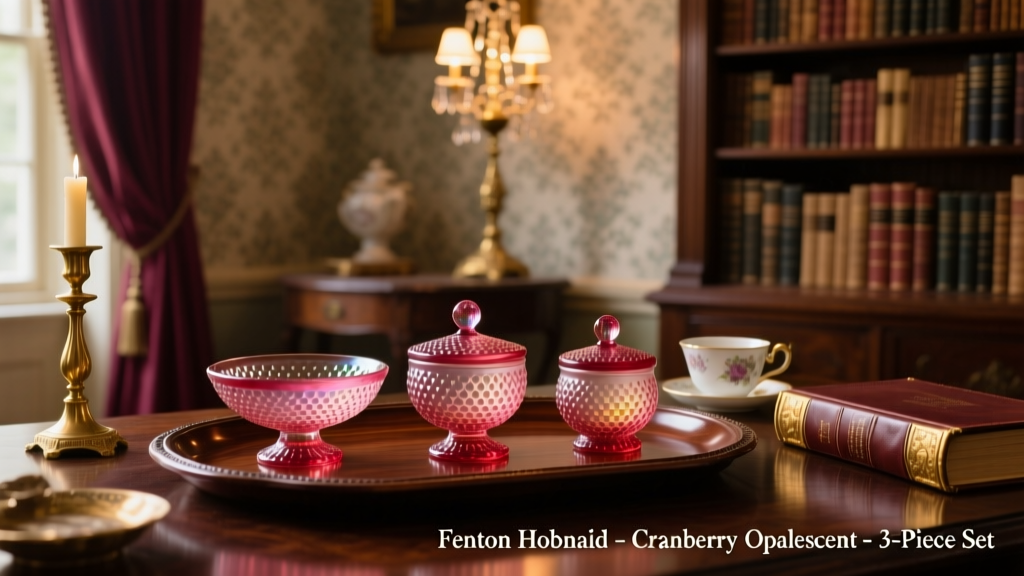
Fenton Hobnail Mayonnaise Set: Cranberry Opalescent 3-Piece — Identification, Value, and Restoration Guidance

Annual Index: September 2006–August 2007, Volume 33 — A Critical Reference for Antique Furniture Historians and Conservators

Fenton Glass 'Closed Sort Of': Decoding the Enigmatic Mark and Its Significance in American Carnival Glass History

Swankyswigs No. 1 Red Posy Tulip: A Collector’s Guide to Authenticity, Provenance, and Restoration

Vernon Kilns Creamer 'Lei Lani' Short: Identification, Production History, and Restoration Guidance

Zulu (1964) Gold Key Comic Book: A Collector’s Guide to the Rare Film Tie-In Adaptation

Staffordshire Stirrup Cup: The Stag Form 5-Inch Antique Ceramic Collectible

Kovels On Antiques & Collectibles Vol. 44, No. 10 (June 2018): Market Trends, Identification Insights, and Restoration Ethics

September 2003 Antique Furniture Market: Price Benchmarks, Regional Shifts, and Material-Specific Trends