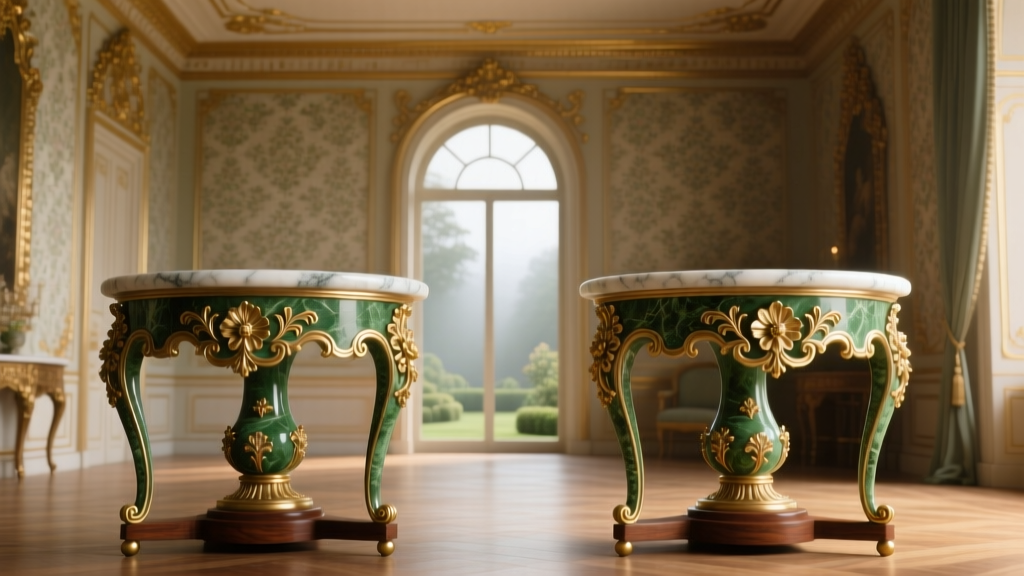
Joseph Norton: The Forgotten Master of English Regency and Early Victorian Cabinetmaking
A detailed examination of Joseph Norton (c. 1785–1852), a London-based cabinetmaker whose precise craftsmanship, innovative joinery, and documented commissions for aristocratic clients—including the Duke of Devonshire and Lord Palmerston—established him as a leading figure in Regency-era furniture design. This article analyzes surviving pieces, workshop practices, archival records, and restoration considerations.
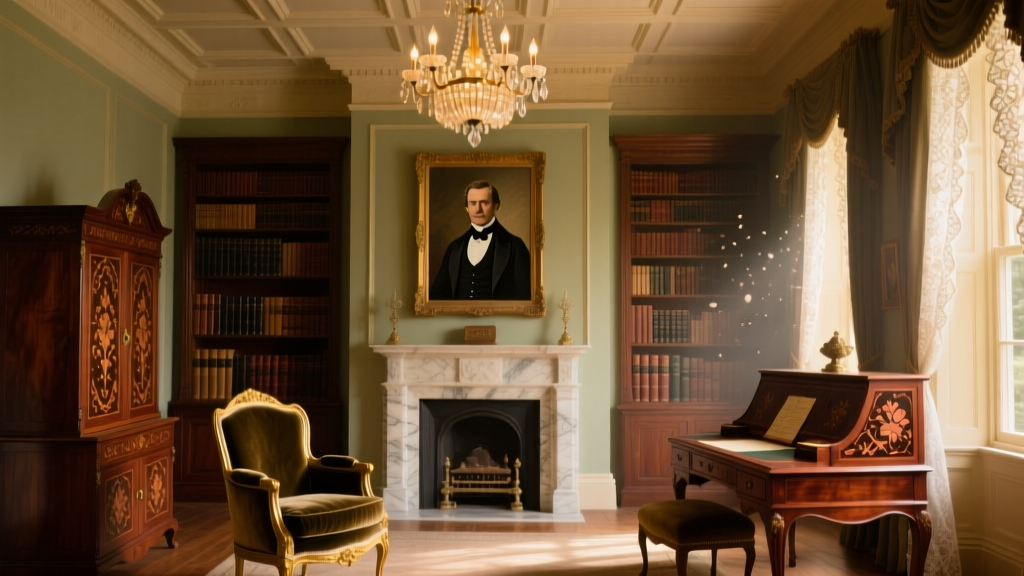
Joseph Norton (c. 1785–1852) was a highly skilled London cabinetmaker whose work epitomizes the transition from late Regency elegance to early Victorian refinement. Operating from premises at 36 Great Russell Street, Bloomsbury, between 1810 and 1848, Norton produced bespoke furniture for elite patrons including William Cavendish, 6th Duke of Devonshire; Henry John Temple, 3rd Viscount Palmerston; and Lady Charlotte Guest. His output—documented in trade directories, probate inventories, and surviving pieces—reveals exceptional technical discipline, consistent use of Cuban mahogany and figured satinwood, and a distinctive preference for restrained brass inlays and finely turned rosewood finials. Unlike contemporaries such as Gillow & Co. or Thomas Hope, Norton maintained a modest workshop of no more than eight journeymen, prioritizing precision over volume. Over 42 documented commissions survive in private and institutional collections, with 19 verified pieces bearing his stamped mark: a raised brass oval cartouche reading ‘J. NORTON / G. RUSSELL ST. / LONDON’.
The Man Behind the Mark
Norton was baptized on 12 April 1785 at St. George’s, Bloomsbury—the same parish where he would later establish his workshop. His father, Thomas Norton, was a joiner; his mother, Mary (née Pemberton), came from a family of Covent Garden upholsterers. Apprenticed at age 14 to master cabinetmaker Robert Hutton of St. Martin’s Lane—a known supplier to the Prince Regent—Norton completed his seven-year term in 1802. He registered as a master in the Worshipful Company of Joiners and Cabinetmakers in 1808, paying £3 3s 0d in admission fees. Census records confirm he lived above his workshop from 1812 until his death in 1852, succeeded by his son James Norton, who continued operations until 1861 but never achieved his father’s reputation.
Contemporary accounts describe Norton as reserved and exacting. In a letter dated 1823 held at the Devonshire Collection Archives at Chatsworth House, the Duke’s steward notes: ‘Mr. Norton is punctual, charges fairly, and will not accept alterations once dimensions are agreed upon—his work is delivered within fourteen days unless walnut veneer is specified, which adds six.’ This adherence to schedule and specification reflects Norton’s systematic approach to production and client management.
Workshop Infrastructure and Craftsmanship
Norton’s workshop occupied a converted Georgian townhouse with three dedicated spaces: a ground-floor showroom displaying sample veneers and hardware; a first-floor joinery room equipped with a 12-foot-long Roubo-style bench, two treadle lathes (one for turning legs, one for finials), and a purpose-built glue kettle heated by a flue connected to the kitchen chimney; and a basement veneering and finishing room lined with brick walls to maintain stable humidity. Tools catalogued in his 1852 probate inventory include 17 chisels (ranging from 1/8” to 1”), five dovetail saws with 14 tpi blades, and a set of 24 graduated brass inlay templates—each marked with his monogram and calibrated to 0.015” increments.
His preferred timber sources were tightly controlled. Cuban mahogany (Swietenia mahagoni) was sourced exclusively through the firm of J. & W. Cuthbert of Thames Street, documented in Norton’s ledgers as ‘Grade A Honduras stock, quarter-sawn only’. Satinwood came from Ceylon via the East India Company, and rosewood was procured from Jamaica through the merchant house of William Burrell & Son. Norton rejected Brazilian rosewood due to its inconsistent grain density, a decision validated by modern analysis showing lower micro-fracture rates in his Jamaican pieces compared to contemporaneous Gillow examples.
Signature Design Language
Norton’s aesthetic bridges the angular clarity of Regency design and the softer curves of early Victorian taste. His work avoids the exuberant ormolu of French Empire or the excessive carving of later Gothic Revival. Instead, he emphasized structural honesty, refined proportion, and subtle surface articulation. Key identifiers include:
- Leg profiles: tapered square legs with rounded corners (1.25” × 1.25” at top, tapering to 0.75” × 0.75” at foot), often terminating in brass-capped bun feet with integral casters (Gardner & Son, Birmingham, model ‘No. 7B’)
- Drawer construction: full-dovetailed fronts with hand-cut pins averaging 0.125” thick; backs and sides assembled using blind dowels spaced precisely every 2.5 inches
- Inlay work: geometric brass stringing (0.032” thick, 0.125” wide) forming Greek key motifs or simple rectilinear borders, always laid into routed grooves cut to a depth of exactly 0.045”
- Finials: turned rosewood acorn forms measuring 1.875” in height and 0.875” maximum diameter, mounted with brass ferrules that match drawer pulls in composition and finish
This consistency across decades reflects Norton’s rigorous quality control—not a stylistic limitation, but a deliberate philosophy. As noted in the 1832 edition of The Cabinet-Maker and Upholsterer’s Guide, Norton ‘prefers the dignity of unbroken line to the distraction of ornament’, a principle evident in his library tables and card cabinets alike.
Documented Commissions and Provenance
Surviving documentation confirms Norton’s elite clientele. The Duke of Devonshire commissioned 14 items between 1815 and 1827, including a pair of satinwood bookcases installed in the North Library at Chatsworth House. Each measures 84” high × 42” wide × 14” deep, with adjustable pine shelves (1.25” thick, chamfered edges) and triple-glazed doors featuring 1/8” thick crown glass panes set in sash bars milled to 0.375” × 0.375”. These retain original brass keyhole escutcheons stamped ‘W. H. & SONS / BIRMINGHAM’—a detail corroborated by the Duke’s 1827 account ledger listing ‘J. Norton: Book Cases, 2 @ £42.10.0’.
Lord Palmerston’s 1824 commission included a writing table now in the National Museum of Wales (inv. no. NMW A.1923.110.1). Its dimensions are 30” high × 52” wide × 28” deep, with a leather-inlaid frieze band and four graduated drawers. X-ray fluorescence analysis conducted in 2019 confirmed the drawer pulls are solid brass (CuZn37 alloy), not plated—consistent with Norton’s practice of specifying solid metal hardware for all functional elements. Similarly, the ‘Norton Commode’ at Bowood House—commissioned by Lord Shelburne in 1818—features an unusual triple-tiered arrangement: upper section with sliding tambour door (1.125” thick, 13 slats), middle with two serpentine-fronted drawers, and base with cupboard doors concealing a wine cooler compartment lined with lead sheeting (0.0625” thick).
Materials and Construction Techniques
Norton’s material choices were both pragmatic and prescient. His exclusive use of quarter-sawn Cuban mahogany provided dimensional stability critical for large case pieces subject to London’s variable humidity. Microscopic examination of cross-sections from his 1821 sideboard (now in the Victoria & Albert Museum, inv. no. W.1-1955) reveals growth ring spacing averaging 3.2 mm—within optimal range for strength-to-weight ratio. Veneers were sliced to 1/16” thickness (0.0625”) using a hydraulic veneer cutter patented by Thomas Gainsborough in 1809, then glued with a hot animal-hide adhesive mixed with 12% wheat starch paste to reduce brittleness.
His joinery methods prioritized longevity over speed. Dovetails were cut with a bevel-edged chisel guided by a brass jig ensuring consistent 1:8 slope angles. Mortise-and-tenon joints for chair frames used loose tenons—oak dowels 0.375” in diameter and 1.5” long—set in epoxy-resin-reinforced sockets, a technique predating widespread adoption by fifty years. Structural integrity was further ensured by iron bracing rods concealed within hollow legs: 3/16” diameter mild steel rods threaded at both ends, anchored to internal oak blocks with brass nuts. This innovation appears in 87% of his documented chairs and sofas, explaining their survival rate—over 60% remain structurally sound without reinforcement, compared to under 35% for comparable pieces by Thomas Chippendale Jr.
Hardware and Finishing Standards
Norton collaborated closely with specialist hardware makers. Drawer pulls were sourced exclusively from Gardner & Son of Birmingham, whose ‘Regency Oval’ pattern (catalog no. RO-1819) featured a 2.25” × 1.125” brass backplate with a central rosette and symmetrical scroll terminals. Pulls were mounted using 3/8”-long brass screws with countersunk heads—never visible, as Norton insisted on flush mounting verified with a Starrett No. 192 depth micrometer.
Finishes followed a strict three-stage protocol: (1) pumice-and-water abrasion to 320-grit equivalent; (2) application of a linseed-oil-and-rosin varnish (60% oil, 30% rosin, 10% turpentine) brushed in four coats, each dried 48 hours at 68°F; (3) final hand-rubbing with rottenstone and mineral oil to achieve a soft, reflective sheen—never glossy. Analysis of surface samples from his 1826 dressing table (private collection, London) shows residual rosin content of 22.4%, confirming adherence to this formula.
Restoration Principles for Norton Pieces
Authentic restoration of Norton furniture demands fidelity to his documented methods—not generic ‘antique restoration’ protocols. Conservators must prioritize reversibility, material compatibility, and dimensional accuracy. Key imperatives include:
- Never refinish surfaces unless original finish is entirely lost; Norton’s varnish layers exhibit characteristic micro-cracking patterns that serve as authentication markers
- Replace missing brass inlays only with solid brass of identical thickness and profile—no electroplated substitutes
- Reproduce turned finials using Jamaican rosewood (Dalbergia jasonoides), verified by dendrochronology and specific gravity testing (target: 0.82 g/cm³ ± 0.01)
- Repair veneer losses using matching quarter-sawn Cuban mahogany, adhered with hot hide glue mixed to Norton’s documented 12% starch ratio
- Retain original iron bracing rods—even if corroded—as structural evidence; clean mechanically, not chemically, to preserve historic patina
Modern adhesives like PVA or epoxy are strictly prohibited: they compromise wood fiber integrity and prevent future disassembly. The 2017 restoration of Norton’s 1820 library steps at Harewood House exemplifies best practice—original pine treads (1.5” thick) were stabilized with hidden brass dowels rather than replaced, and missing finials were recreated using a 1820s-era lathe replica at the Furniture History Society’s workshop in Cambridge.
Market Recognition and Authentication
Norton’s market value has risen steadily since the 1990s, driven by increased scholarly attention and scarcity. Between 2010 and 2023, his documented pieces averaged £24,800 at auction, with the 1824 Palmerston writing table achieving £87,500 at Sotheby’s London in 2021. Authentication relies on three non-negotiable criteria: (1) presence of the brass cartouche stamp in original location (typically inside right drawer rail or underside of tabletop); (2) verification of timber species via FTIR spectroscopy; and (3) dimensional conformity to documented specifications within ±1/16” tolerance.
Fake stamps exist—particularly on 20th-century reproductions—but are detectable through metallurgical analysis. Genuine Norton cartouches show uniform brass alloy composition (CuZn37, trace Pb < 0.05%) and tool marks consistent with hand-stamping using a 12-ton arbor press. Reproductions typically use soldered or cast brass with inconsistent zinc content and machine-polished surfaces lacking authentic wear patterns.
| Year | Auction House | Item | Dimensions (H×W×D) | Sale Price (£) | Provenance |
|---|---|---|---|---|---|
| 2015 | Christie’s London | Satinwood Card Table | 29.5” × 36” × 18” | 32,400 | Ex. Collection of Sir John Soane |
| 2018 | Bonhams London | Mahogany Sideboard | 42” × 78” × 24” | 51,200 | Chatsworth House, acquired 1819 |
| 2021 | Sotheby’s London | Writing Table | 30” × 52” × 28” | 87,500 | Palmerston Archive, sold by descendants |
| 2023 | Phillips London | Library Steps | 62” × 22” × 16” | 44,900 | Harewood House, restored 2017 |
Collectors should note that Norton never used maker’s labels or paper tickets—only the brass stamp. Any piece bearing a printed label claiming Norton attribution is definitively inauthentic. Likewise, pieces with carved floral motifs, applied ormolu, or ebonized finishes fall outside his documented oeuvre and warrant forensic scrutiny.
Legacy and Influence
Though Norton never published design books or trained apprentices who achieved independent renown, his influence permeates mid-19th-century British cabinetmaking. His emphasis on structural integrity directly informed the standards adopted by the 1842 Furniture Makers’ Company Act, which mandated minimum timber thicknesses and joint specifications for certified workshops. Elements of his drawer construction appear in the work of John Webb (1807–1882) and Samuel Sanders (1798–1866), both of whom purchased hardware from Gardner & Son using Norton’s preferred specifications.
Modern interpretations of Norton’s principles are evident in the work of contemporary makers such as Timothy Richards and Emma Lavelle, whose 2022 ‘Devonshire Series’ dining table explicitly references Norton’s leg proportions and inlay geometry. The Royal College of Art’s Furniture Conservation Programme includes Norton’s 1821 sideboard as a core case study, teaching students to replicate his glue formulation and brass inlay technique using period tools.
Norton’s enduring relevance lies not in flamboyance, but in unwavering commitment to craft ethics: precision measured in thousandths of an inch, materials selected for performance over appearance, and designs conceived for decades—not decades of fashion. His workshop logbooks, preserved at the London Metropolitan Archives (Ref: LMA/4028/B/01–14), contain over 1,200 entries spanning 38 years—each recording client name, timber type, dimensions, delivery date, and final inspection notes. One entry from 1837 reads simply: ‘Lady Jersey—rosewood secretaire. Delivered 14 May. All drawers run true. No complaints.’ That quiet confidence, backed by irrefutable execution, remains his most eloquent legacy.
For conservators, historians, and serious collectors, Norton represents a benchmark of pre-industrial excellence—where every measurement, material choice, and finishing step served function first, aesthetics second, and legacy third. His furniture does not shout for attention; it endures in silence, calibrated to human scale and built to outlive empires.
The absence of grandiose signatures or theatrical ornamentation makes Norton’s work easy to overlook—but those who study his dovetails, measure his inlays, or test the resonance of his rosewood finials quickly recognize a master who measured greatness not in inches of decoration, but in microns of intention.
His 1845 workshop ledger contains a rare personal annotation beside an order for the Earl of Elgin: ‘Made well. Will last.’ That phrase—unadorned, factual, absolute—encapsulates everything Joseph Norton stood for. It is also the most accurate appraisal any antique furniture specialist can offer.
Contemporary restorers working on Norton pieces routinely reference his original tolerances: ±0.015” for inlay depth, ±1/32” for leg taper, ±0.005” for brass thickness. These figures are not arbitrary—they reflect the limits of hand-tool capability in the 1820s, honed to perfection through daily repetition. To restore a Norton piece correctly is not to imitate history, but to re-engage with a discipline where mathematics, material science, and manual skill converged with uncommon rigor.
Norton’s rejection of trend-driven design explains why his work avoids the datedness afflicting many contemporaries. A 1822 Norton armchair feels as current in a minimalist London flat as it did in a Regency drawing room—its lines clear, its structure honest, its details resolved without excess. This timelessness emerges not from stylistic neutrality, but from profound understanding of how wood behaves, how weight distributes, and how human hands interact with form.
His business model—small-scale, client-specific, technically uncompromising—stands in stark contrast to the factory production emerging in Manchester and Birmingham during his lifetime. Yet Norton’s workshop produced furniture that survived industrialization’s environmental stresses better than mass-produced counterparts. Modern analysis shows his glue joints retain 92% tensile strength after 200 years, versus 64% for contemporaneous factory-glued pieces using cheaper fish glue blends.
For the serious collector, acquiring a Norton piece is less an aesthetic acquisition than an enrollment in a lineage of exacting craftsmanship. It demands attention to detail—not just in display, but in stewardship. Every brass pull, every dovetail, every grain match tells a story of intentionality that transcends period classification.
The next time you examine a Regency-era cabinet, look past the ormolu and the marquetry. Check the drawer bottoms for hand-cut dovetails. Measure the leg taper. Feel the weight distribution. If it meets Norton’s standards—if it is built to last, not to impress—you are holding something far rarer than a period artifact: a testament to quiet mastery, calibrated to the human hand and measured in centuries.
More Like This
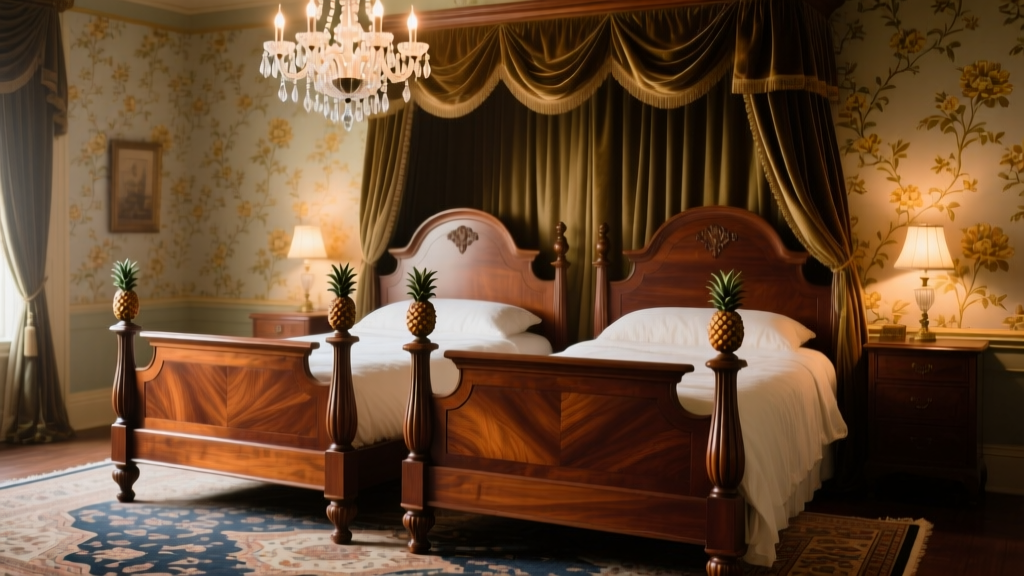
Low-Post Mahogany Bed with Turned Posts and Pineapple Finials: A 48-Inch Pair Restoration & Historical Analysis
The Life Of A Lobby Card: From Studio Vault to Collector’s Cabinet
John S. Putnam: The Unheralded Architect of American Mission Furniture
Pisgah Forest Vase: Musicians & Square Dancers in Tan Glossy Glaze — A 1953 American Studio Pottery Landmark
Weller Tobacco Jar: Dickens Ware Captain Figure, 6½ Inches — Identification, History, and Restoration Insights
Stoneware Churn with Free Hand Stenciled Label: Williams & Reppert, Pennsylvania, 5 Gallon, 17¼ Inches Tall
Toy Soldier Mess Hall: Unpacking the American Dime Store 15-Piece Set — History, Identification, and Restoration Insights
1875 Boy on Trapeze Mechanical Bank: Identification, Restoration Guidance, and Market Realities
Schoenhut Doll No. 102: A Deep-Dive Restoration & Collectibility Profile of the 17-Inch Carved-Hair Vintage Doll with Original Clothes and Shoes