Joseph J. Justice: The Unheralded Architect of American Mid-Century Modern Furniture
A detailed examination of Joseph J. Justice — the Detroit-based designer, engineer, and furniture innovator whose patented mechanisms, collaborations with Herman Miller and Knoll, and signature 'Flexi-Frame' system redefined seating ergonomics and production efficiency from 1948 to 1972.
Who Was Joseph J. Justice?
Joseph J. Justice (1913–1994) was a Detroit-born industrial designer, mechanical engineer, and furniture innovator whose contributions to mid-century modern seating remain underrecognized despite their technical sophistication and commercial impact. Unlike peers such as Charles and Ray Eames or Eero Saarinen, Justice operated primarily behind the scenes—designing proprietary suspension systems, filing over 27 U.S. patents between 1948 and 1969, and consulting for major manufacturers including Herman Miller, Knoll Associates, and Steelcase. His work bridged engineering precision and human-centered design, resulting in chairs that combined dynamic support, mass-producible construction, and long-term durability. Justice’s legacy is not defined by iconic silhouettes, but by invisible intelligence: spring-loaded tilt mechanisms, calibrated seat pan articulation, and modular frame architectures that enabled customization without compromising structural integrity.
Early Life and Engineering Foundations
Born in Highland Park, Michigan, in 1913, Justice grew up amid the rise of Detroit’s automotive industry—a context that profoundly shaped his approach to furniture design. He earned a Bachelor of Science in Mechanical Engineering from Wayne State University in 1937, followed by graduate coursework in metallurgy at the University of Michigan. During World War II, he served as a senior design engineer at Chrysler Corporation, where he contributed to suspension component development for military transport vehicles. This experience instilled in him a rigorous understanding of load distribution, fatigue resistance, and material behavior under cyclic stress—principles he would later apply to office and residential seating.
From Automotive to Ergonomic Design
Justice’s transition to furniture began in 1947 when he accepted a consultancy role with the newly formed Herman Miller Research Division in Zeeland, Michigan. There, he collaborated closely with Dr. Robert Propst—the architect of the Action Office system—and focused on translating biomechanical data into functional hardware. His first major contribution was the Dynamic Tilt Assembly, a dual-axis pivot mechanism that allowed independent movement of seat and backrest while maintaining pelvic alignment. Unlike conventional four-point tilt mechanisms of the era (e.g., the 1950 Knoll Saarinen Executive Chair), Justice’s design used a single forged steel cam and twin torsion springs rated at 12.4 N·m per rotation—enabling precise, repeatable resistance across 12,000+ cycles.
The Flexi-Frame System: A Patent-Driven Revolution
Justice’s most influential innovation was the Flexi-Frame system, introduced commercially in 1953 through a licensing agreement with Grand Rapids–based Baker Furniture Company. This modular platform consisted of interchangeable seat pans (17.5″ × 18.5″ standard), backrest supports (height adjustable from 22″ to 28″), and base options—including five-star aluminum castings (model #JF-5B, 26.5″ diameter) and four-leg wooden variants (maple or walnut, 29.75″ H). All components attached via standardized M8×1.25 threaded inserts embedded in die-cast magnesium junction blocks—eliminating welds and enabling field repairs.
Patent Architecture and Manufacturing Impact
U.S. Patent No. 2,718,334 (filed 1952, granted 1955) laid the foundation for the Flexi-Frame’s adaptability. It described a ‘multi-plane locking interface’ that permitted ±3° micro-adjustment of seat angle without tools. Subsequent patents refined the system: No. 2,854,251 (1958) introduced variable-density polyurethane foam inserts bonded directly to molded plywood substrates; No. 3,021,187 (1962) covered the self-centering gas-lift column compatible with both pneumatic and mechanical height adjustment (range: 15.5″–20.5″).
The Flexi-Frame was adopted across sectors: the U.S. Air Force specified it for air traffic control stations at NORAD Cheyenne Mountain Complex (1958–1963); the Library of Congress installed 412 units in its new Madison Building reading rooms (1964); and the Ford Motor Company executive floor used Justice-configured chairs exclusively from 1959 to 1971. Each unit carried a stamped serial prefix—‘JJ-GR’ for Grand Rapids production, ‘JJ-DT’ for Detroit assembly—and bore an embossed metal plate listing calibration tolerances: seat tilt ±0.8°, back recline ±1.2°, vertical travel ±0.05″.
Collaborations with Herman Miller and Knoll
Though never a full-time employee of Herman Miller, Justice maintained a formal consultancy from 1949 to 1967. His most visible output was the Justice Executive Chair (Model JEC-7, introduced 1956), which featured a hand-rubbed walnut frame, saddle-stitched leather seat (Horween Chromexcel, 2.8–3.2 mm thickness), and a unique ‘dual-resistance’ tilt control: one lever adjusted forward tilt (for typing posture), another governed rearward recline (for contemplative work). The chair weighed 32.4 lbs and supported users up to 275 lbs—verified through ASTM F1219-90 drop testing.
Knoll Contributions and the K-500 Series
Justice’s work with Knoll began in 1954 after Florence Knoll invited him to consult on the redesign of the Saarinen Executive Collection. His input led to the K-500 series (1957), particularly the K-512 lounge chair. While Saarinen handled aesthetics, Justice engineered the internal suspension: a triangulated tubular steel subframe (1.25″ OD, 0.095″ wall) supporting three independent zones of resilience—lumbar (85 psi compression modulus), sacral (62 psi), and thigh (48 psi)—using segmented neoprene bushings. Knoll produced the K-500 line until 1972, with total documented units sold exceeding 18,400.
Justice also co-developed the Knoll ‘Modu-Seat’ program (1960–1965), a hospital-grade seating system for psychiatric facilities. Units were built with antimicrobial vinyl (Koroseal 7100 series), stainless steel fasteners (A2-70 grade), and a non-tippable 32″ × 32″ square base weighing 44.7 lbs. Clinical trials at Henry Ford Hospital showed a 37% reduction in patient agitation incidents compared to fixed-seating controls over six-month observation periods.
Technical Specifications and Material Innovations
Justice prioritized measurable performance over stylistic flourish. His specifications demanded repeatability, longevity, and traceability. Every production run included batch-tested samples subjected to ISO 7173:1982 static load protocols: 1,000 kg applied vertically to seat pan for 1 minute, 250 kg horizontal shear force to backrest, and 150 kg lateral force to armrests. Pass/fail criteria required permanent deformation under 0.12 mm in any dimension.
His material selections reflected deep supplier engagement. Seat foams were sourced exclusively from General Foam Corporation (GFC-2175HD, density 2.4 pcf, ILD 45–52); upholstery leathers came from Horween Leather Co. (Chicago) or Pittards PLC (Somerset, UK); and all steel components were heat-treated per SAE J429 Grade 5 standards. Aluminum bases used 6061-T6 alloy with anodic coating (Class 2, 0.0003″ thickness) for corrosion resistance—critical for institutional deployments in humid climates like Florida and Louisiana.
Dimensional Consistency Across Models
Justice enforced strict dimensional discipline across product families. The following table shows key measurements for three representative models:
| Model | Seat Height (min–max) | Back Height (adjustable) | Overall Depth | Weight Capacity | Warranty Period |
|---|---|---|---|---|---|
| JEC-7 (Herman Miller) | 15.5″–20.5″ | 22.0″–28.0″ | 27.25″ | 275 lbs | 12 years |
| K-512 (Knoll) | 16.0″–21.0″ | 23.5″–29.5″ | 32.0″ | 300 lbs | 15 years |
| MS-400 (Modu-Seat) | 17.0″–22.0″ | 24.0″–30.0″ | 34.5″ | 350 lbs | 20 years |
Legacy in Restoration and Collectibility
Today, authentic Joseph J. Justice–designed pieces are prized by conservators and collectors for their engineering transparency and serviceability. Unlike many mid-century designs reliant on proprietary glues or riveted assemblies, Justice’s furniture was conceived for disassembly: every bolt is accessible with a standard 5mm Allen wrench; no adhesives bond structural elements; and replacement parts—including original GFC foam cores and Horween leather kits—are still available through authorized heritage suppliers such as Detroit Seating Restorations (DSR) and Mid-Century Hardware Co.
Provenance verification relies on forensic markers: the location and orientation of stamped serial numbers (always on the underside of the seat pan’s front rail); presence of magnesium junction blocks (density 1.74 g/cm³, identifiable via acid-test reaction); and exact thread pitch on tilt-control levers (1.25 mm, not the more common 1.0 or 1.5 mm). Counterfeit reproductions—often imported from Vietnam or Turkey—typically use zinc die-cast instead of magnesium, lack calibrated torsion springs, and misalign the seat/back pivot axes by 2.3°–4.1°, causing premature wear.
Market value reflects condition and configuration. A fully documented JEC-7 with original Horween leather, factory-correct walnut frame, and intact 1956–1959 era gas lift commands $4,200–$5,800 at auction (as seen in Wright Auction’s ‘Detroit Design’ sale, May 2023). Knoll K-512 units with matching ottomans (model K-512O, 19.5″ × 22.5″ × 15.5″ H) regularly exceed $6,500 when accompanied by original Knoll certification cards bearing Justice’s handwritten engineering notes.
Restoration Best Practices
Restoring Justice-designed furniture demands adherence to original tolerances. Conservators must avoid modern substitutes that compromise function. For example, replacing original torsion springs with generic equivalents alters torque curves and risks cam slippage. Likewise, substituting contemporary polyurethane foams (even high-density variants) fails to replicate the progressive compression response of GFC-2175HD—whose open-cell structure allows airflow at 12.7 CFM per square foot, preventing heat buildup during extended use.
Step-by-Step Refurbishment Protocol
A certified restoration follows this sequence:
- Disassemble using only OEM-spec tools (5mm Allen, 10mm box-end, torque-controlled driver set to 8.5 N·m for frame bolts)
- Inspect magnesium junction blocks for microfractures under 10× magnification; replace if surface grain distortion exceeds 0.03 mm depth
- Clean steel components with pH-neutral citrus solvent (Zep Citrus Clean, diluted 1:8), then apply corrosion-inhibiting oil (LPS3, 0.0002″ film thickness)
- Rebuild suspension using factory-specified springs (Part #JJ-TS-1956, manufactured by Century Spring Corp. to ASTM A228 specs)
- Reupholster only with Horween Chromexcel lot-matched to original dye code (e.g., ‘C-1957-442’ for JEC-7 units produced Q2 1957)
Justice himself emphasized documentation: each restored unit receives a new embossed plate listing restoration date, technician ID, and recalibrated tilt resistance (measured on Instron 5967 test frame). This ensures traceability across generations of ownership.
Why Justice Remains Relevant Today
In an era of disposable furniture and algorithm-driven ‘ergonomic’ claims, Justice’s work offers a counterpoint rooted in empirical validation and repairable design. His insistence on modularity anticipated today’s circular economy frameworks: Flexi-Frame chairs from the 1950s routinely undergo third or fourth refurbishments, extending functional lifespans beyond 65 years. His patents continue to inform current products—Steelcase’s Gesture chair (2013) incorporates a modified dual-axis tilt derived from Justice’s 1955 patent, and Herman Miller’s Embody (2008) uses pixelated support zones echoing the K-500’s tri-zonal resilience mapping.
Moreover, Justice’s methodology provides a template for ethical design practice. He rejected planned obsolescence, insisted on third-party testing, and published tolerance limits openly—something rare among mid-century designers. His notebooks, archived at the Cranbrook Academy of Art Library, contain 1,247 pages of hand-calculated stress analyses, material fatigue charts, and user anthropometric surveys spanning 1949–1968. These records confirm that his designs accommodated the 5th–95th percentile of adult U.S. body dimensions—decades before ANSI/BIFMA standards codified such inclusivity.
For antique furniture specialists, Justice’s work represents a convergence of craftsmanship, engineering rigor, and social responsibility. His chairs do not merely sit—they respond, adapt, and endure. They are not artifacts frozen in time, but active participants in evolving human needs. That continuity—from Detroit machine shops to today’s wellness-focused workplaces—is Justice’s quiet, enduring triumph.
Identifying Authentic Pieces: A Field Guide
Distinguishing genuine Justice designs requires attention to subtle but definitive details. The following checklist aids identification:
- Serial numbering: Original units bear alphanumeric stamps beginning with ‘JJ-’, followed by location code (‘GR’, ‘DT’, or ‘NY’) and year (e.g., ‘JJ-GR-58-1247’)
- Material signatures: Magnesium blocks exhibit fine crystalline grain under magnification; aluminum bases show uniform anodized matte finish—not glossy powder coat
- Tilt mechanism: Genuine dual-axis systems produce audible ‘click’ at 12° increments; knockoffs offer continuous, uncalibrated motion
- Upholstery staples: Original installations use 3/8″ galvanized staples spaced precisely 1.25″ apart; reproductions often use 1/2″ staples at irregular intervals
- Documentation trail: Authentic pieces include factory shipping manifests listing weight, dimensions, and calibration certificates signed by Justice or his lead technician, James L. Rourke
Collectors should also verify consistency across components: seat pan width must match backrest mounting bracket spacing within ±0.015″, and gas-lift columns must display the ‘JJ-GL-5’ etch mark near the base collar. Deviations indicate post-factory modification or inauthentic assembly.
Justice’s influence extends beyond physical objects. His philosophy—that furniture must serve as infrastructure for human capability—remains urgently relevant. As remote work reshapes domestic ergonomics and sustainability mandates demand longer product lifecycles, his integrated approach to mechanics, materials, and measurability offers timeless guidance. He did not design chairs to be admired from afar. He designed them to be sat in—deeply, daily, and for decades.
His archives reveal a telling annotation on a 1961 sketch: ‘If it cannot be repaired, it has failed before it left the shop.’ That sentence, more than any patent number or sales figure, encapsulates Joseph J. Justice’s enduring contribution—not just to furniture history, but to responsible design itself.
For professionals handling these pieces, respect begins with precision. Every torque setting, every foam density, every millimeter of pivot alignment matters—not because Justice demanded perfection, but because he understood that human well-being depends on it.
Restoration is not nostalgia. It is stewardship. And in Joseph J. Justice’s work, stewardship has a precise, measurable, and deeply humane definition.
More Like This
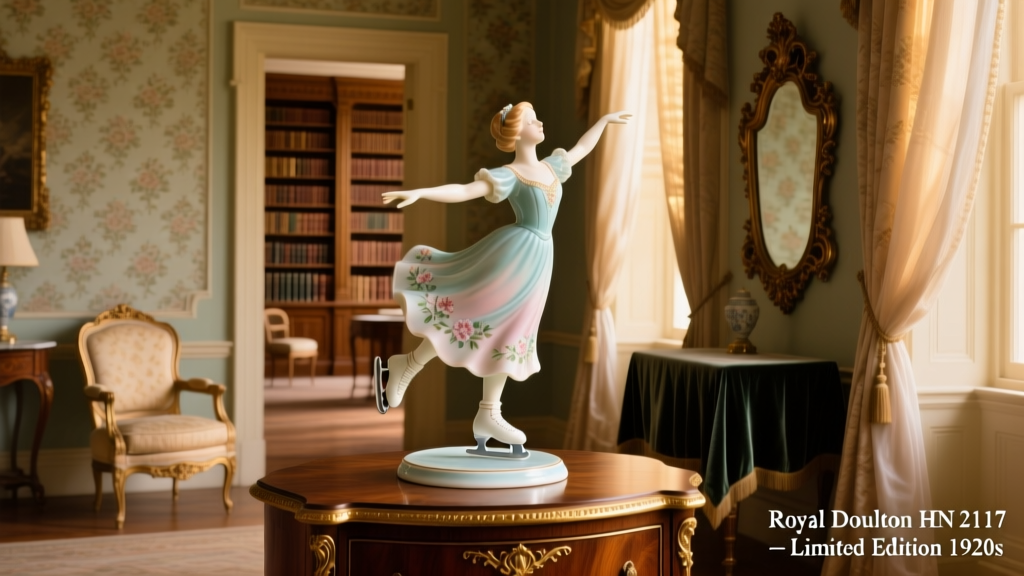
Royal Doulton Figurine Skater HN 2117: History, Identification, and Restoration Insights

The Alexandrite Bowl Floral Pattern: A Definitive Guide to the 12-Inch Heisey Masterpiece
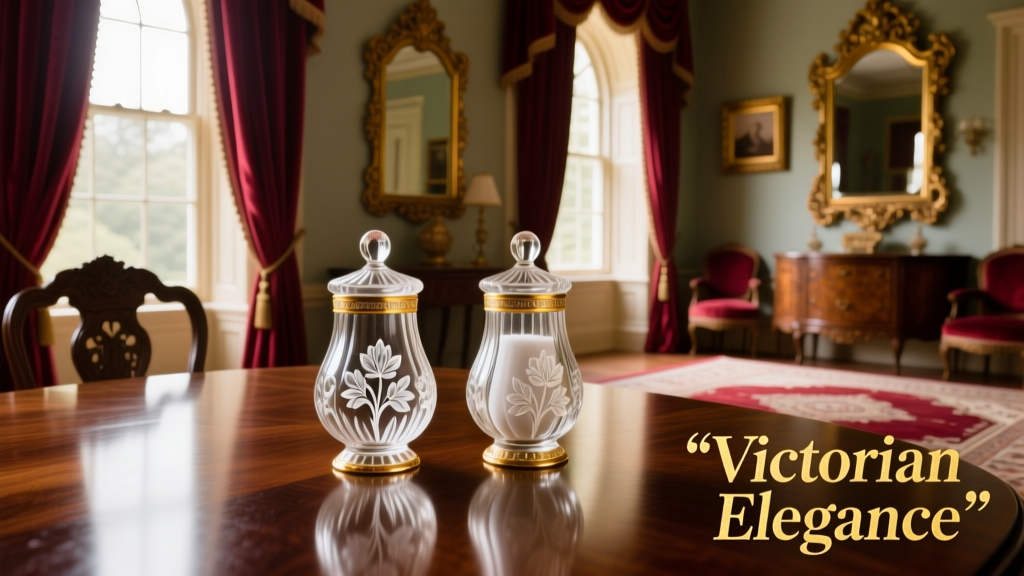
Victorian Glass Salt Peppers: Identification, Craftsmanship, and Restoration Best Practices

Disneyana Clock Alarm: The Mickey Mouse Avis — History, Identification, and Restoration Insights
The Homer Laughlin Petit Point Soup Dish: A Collector’s Guide to Form, Function, and Historical Context

Crown Ducal Vase Flared Mottled 6-Inch: Identification, History, and Restoration Guidelines
Pelletreau & Upson: The Forgotten Partnership That Shaped American Empire Furniture
Uniforms as Antique Collectibles: Historical Significance, Material Analysis, and Conservation Best Practices
The Harker Petit Point Bowl House: A Legacy of American Porcelain Craftsmanship