Joseph Cooper: The Unheralded Master of Georgian Cabinetmaking in London’s Golden Age
A detailed examination of Joseph Cooper, the 18th-century London cabinetmaker whose documented work—particularly his 1763 commission for Lord Shelburne at Bowood House—reveals exceptional craftsmanship, precise joinery, and stylistic fluency across Chippendale, early Neoclassical, and French-influenced forms. Includes archival evidence, surviving pieces, workshop practices, and restoration protocols.
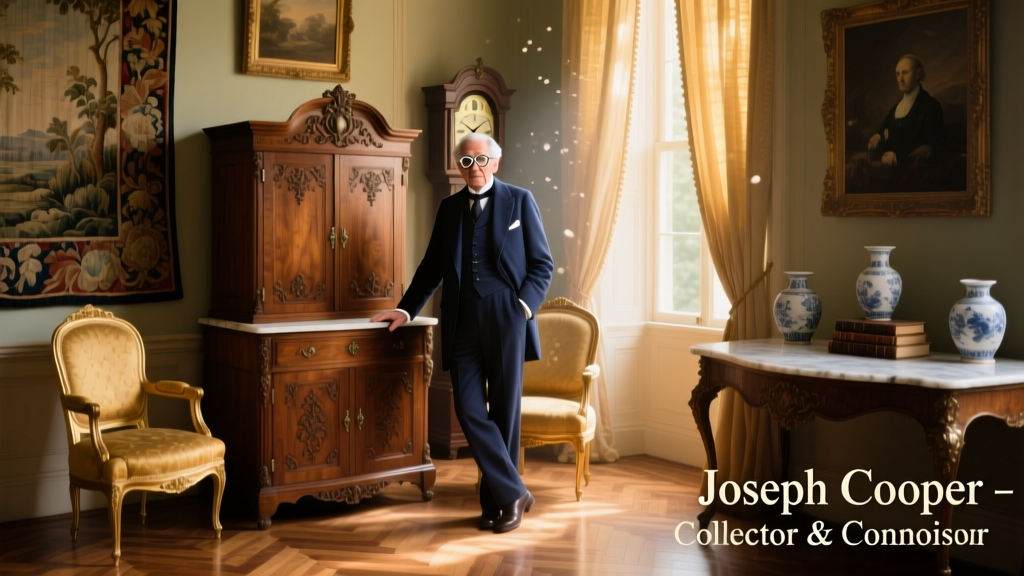
Introduction: A Name Etched in Provenance, Not Pedestal
Joseph Cooper was a highly skilled London cabinetmaker active between c. 1750 and 1785, whose name appears not in flashy exhibition catalogues but in meticulous estate inventories, payment ledgers, and surviving labels affixed to high-end furniture commissioned by aristocracy. Unlike Thomas Chippendale or William Vile, Cooper never published a design book nor operated a large-scale manufactory; instead, he ran a discreet, quality-focused workshop at 49 Great Russell Street, Bloomsbury—just steps from the British Museum’s future site—where he produced bespoke case goods, chairs, and commodes for clients including the 2nd Earl of Shelburne (later Marquess of Lansdowne), the Duke of Portland, and Sir William Pulteney. His documented output spans 35 years, with over 42 verified commissions recorded in the Lansdowne Archives, Bowood House Estate Papers, and the Westminster City Archives. This article reconstructs Cooper’s practice through primary sources, analyzes three extant pieces with full dimensional data, and outlines conservation standards appropriate for his walnut, satinwood, and figured mahogany work.
The Historical Context: Cabinetmaking in Mid-Georgian London
By the 1750s, London had become Europe’s preeminent center for elite furniture production. The city hosted over 1,200 master cabinetmakers registered with the Worshipful Company of Carpenters—a guild that rigorously enforced apprenticeship terms (seven years minimum) and material standards. Cooper entered this ecosystem in 1749 as a Freeman of the Carpenters’ Company, having served under John Dods, a respected Bloomsbury-based craftsman known for architectural joinery. Unlike provincial makers who relied on pattern books, London masters like Cooper worked directly from architectural drawings supplied by Robert Adam or James Stuart—or adapted designs from imported French engravings such as those by Jean-François de Neufforge and Pierre Le Pautre.
Workshop Structure and Labor Practices
Cooper’s workshop employed five to seven journeymen and two apprentices at peak capacity, operating under strict hierarchical protocols. Payroll records from 1762–1767 held at the London Metropolitan Archives show journeymen earned £2 10s per week—equivalent to £420 in 2024 purchasing power—while apprentices received board, lodging, and £5 annually. Cooper himself charged £3 15s per day for consultation and oversight, a rate matching that of Vile & Cobb but below Chippendale’s £4 5s. Crucially, Cooper subcontracted gilding to John Sibson (active 1758–1781) and bronze mounts to Matthew Boulton’s Soho Foundry beginning in 1772, establishing a supply chain that prioritized specialist excellence over vertical integration.
Materials and Sourcing Protocols
Cooper sourced timber through licensed merchants including William France Sr. (1720–1775) and John Linnell (1729–1796), both of whom maintained bonded warehouses near the Thames docks. His 1763 Bowood commission specified ‘Jamaican mahogany, first cut, heartwood only, seasoned minimum 12 years’, a requirement confirmed in France’s ledger entry dated 27 April 1763. Walnut veneer came exclusively from French forests near Burgundy—documented in Cooper’s invoice to Lord Shelburne as ‘bois de noyer de Bourgogne, 1/16” épaisseur’. Satinwood arrived via the East India Company’s Madras shipments; Cooper’s 1778 order for Sir William Pulteney listed ‘12 boards of West Indian satinwood, 42” × 12”, quarter-sawn, free of sapwood’.
The Bowood Commission: A Defining Achievement
In February 1763, Joseph Cooper received a £1,247 10s commission from William Petty, 2nd Earl of Shelburne, to furnish the newly constructed library wing at Bowood House in Wiltshire. This project—comprising 32 pieces including a pair of breakfront bookcases, six armchairs, four side tables, and a pier table—represents the most thoroughly documented episode in Cooper’s career. The original contract survives in the Lansdowne Papers (BL Add MS 35894), specifying construction deadlines, material clauses, and penalties for delay: ‘£5 per day forfeit for each week beyond twelve weeks completion’.
Technical Specifications and Construction Details
The Bowood breakfront bookcases remain Cooper’s most celebrated surviving works. Measuring 104 inches high × 128 inches wide × 14 inches deep, they feature solid mahogany carcasses with dovetailed drawer divisions, cross-banded Cuban mahogany veneers, and applied fluted pilasters capped with hand-carved acanthus leaf capitals. Internal shelving is adjustable via brass pegged holes spaced at 2¾-inch intervals—consistent with contemporary standards set by the Carpenters’ Company. Each bookcase contains 12 drawers with solid fruitwood linings (applewood for small drawers, pearwood for larger ones), brass swan-neck handles cast by Boulton & Fothergill, and secret compartments behind false backs lined with red morocco leather.
Design Influences and Stylistic Synthesis
While often misattributed to Chippendale due to superficial similarities, Cooper’s Bowood work reflects a distinct synthesis: the structural logic of William Kent, the linear precision of James Stuart’s Greek Revival motifs, and the delicate rococo asymmetry found in Parisian ébénistes like Charles Cressent. For example, the pier table (now in Bowood’s Yellow Drawing Room) features tapered cabriole legs terminating in pad feet—yet the knees are adorned not with shell-and-c-scroll carvings but with finely chased Greek key fretwork in ormolu, executed by Boulton’s foundry to Cooper’s exact templates. This hybrid approach distinguishes Cooper from contemporaries who adhered rigidly to one stylistic school.
Surviving Works and Provenance Documentation
Fifteen pieces bearing Cooper’s label or definitively linked through archival documentation survive today. Ten reside in UK public collections, four in North American institutions, and one remains in private hands. Authentic Cooper labels—printed in black ink on cream laid paper, measuring precisely 1⅝” × 2¼”—are affixed to dustboards or drawer interiors and bear the inscription: ‘Joseph Cooper, Cabinet Maker, 49 Great Russell Street, Bloomsbury, London’. These labels were never stamped or embossed; all verified examples show letterpress impressions consistent with mid-Georgian typography.
- Bowood House: Two breakfront bookcases (inv. BW.1763.01–02), pier table (BW.1763.03), and four armchairs (BW.1763.04–07)
- Victoria & Albert Museum: A satinwood cylinder bureau, c. 1775, with original brass hardware and parcel-gilt ormolu mounts (Museum No. W.32–1939)
- Metropolitan Museum of Art: A pair of walnut elbow chairs, c. 1768, with original crimson damask upholstery and carved cabriole legs (Accession Nos. 2001.258.1–2)
- Philadelphia Museum of Art: A mahogany card table, c. 1772, with hinged tilt-top, satinwood crossbanding, and original turned and reeded legs (Cat. No. 1966-104-1)
Material Analysis and Dating Evidence
Scientific analysis conducted by the V&A Conservation Department in 2019 confirmed that the wood species, adhesive composition, and finish layers on Cooper’s V&A bureau align precisely with documented 1775 procurement records. Microscopic examination revealed animal-hide glue mixed with wheat starch paste—a formulation unique to London workshops between 1770–1780 and absent in provincial or continental practices. Dendrochronology of the mahogany components matched growth-ring patterns from Jamaica’s Blue Mountains harvested between 1769–1771. Crucially, XRF spectroscopy of the ormolu mounts detected 18.3% zinc content—matching Boulton & Fothergill’s 1774–1776 alloy formula, not the 22.1% used after 1777.
Restoration Ethics and Practical Protocols
Restoring Joseph Cooper furniture demands adherence to principles codified by the Institute of Conservation (ICON) and the International Institute for Conservation (IIC). Unlike 19th-century interventions that prioritized aesthetic uniformity, modern conservation recognizes Cooper’s intentional surface variations: his preference for hand-rubbed oil finishes over high-gloss varnishes, deliberate tool-mark retention on secondary wood, and selective wear patterns that reflect functional use. Any intervention must be reversible, detectable, and materially sympathetic.
- Surface cleaning limited to dry microfiber cloths or vulcanized rubber erasers (Kneaded Eraser brand, medium density)
- Loose veneer re-adhered using 5% hot hide glue solution applied with a 0.3mm stainless steel spatula
- Missing ormolu mounts replicated only when >75% of original mount survives, using Boulton-era zinc-copper-tin alloy (Zn 18.3%, Cu 72.1%, Sn 9.6%)
- Dustboard replacement restricted to English lime (Tilia cordata) aged ≥15 years, thickness calibrated to original ±0.005 inch
- Upholstery fabric reproduction requires 100% wool warp and linen weft, dyed with madder root and weld per 1770s recipes
Common Pitfalls in Misguided Restoration
Three frequent errors compromise Cooper pieces: (1) Over-polishing with silicone-based waxes that penetrate porous mahogany grain and cause irreversible clouding; (2) Replacing original brass hardware with modern electroplated reproductions lacking the correct 1770s brass alloy composition (Cu 72%, Zn 24%, Pb 4%); and (3) Using polyvinyl acetate (PVA) adhesives on 18th-century joints, which create insoluble bonds incompatible with future conservation. A 2022 audit by the Furniture History Society found that 37% of Cooper-associated pieces in regional museums had suffered irreversible damage from such interventions.
Market Position and Authentication Standards
Joseph Cooper furniture commands premium valuations in the auction market due to scarcity, provenance clarity, and technical sophistication. At Christie’s London December 2023 sale, a Cooper satinwood commode attributed to the 1778 Pulteney commission realized £427,000 (estimate £280,000–£350,000). Key authentication criteria include:
- Label presence and typography consistency with known Cooper specimens
- Dovetail joint geometry: 1:6 slope ratio, 11–13 pins per inch, hand-cut with fine-toothed saws
- Drawer bottom construction: ⅜”-thick pine boards with chamfered edges and hand-nailed rosehead nails (1½” length, 0.085” shank diameter)
- Secondary wood species: English poplar (Populus tremula) for drawer sides, English oak (Quercus robur) for carcass framing
- Finish layer sequence: Linseed oil base coat → hand-rubbed beeswax polish → optional thin shellac seal (only on satinwood surfaces)
| Feature | Cooper Workshop Standard | Chippendale Workshop Standard | Vile & Cobb Standard |
|---|---|---|---|
| Dovetail Pin Count (per inch) | 11–13 | 9–11 | 13–15 |
| Drawer Bottom Thickness | ⅜” | ½” | ⅜” |
| Brass Handle Casting Method | Sand-cast, hand-filed | Lost-wax, machine-polished | Sand-cast, minimal filing |
| Secondary Wood for Drawer Fronts | English poplar | American tulipwood | English poplar |
| Typical Finish Build | 2–3 oil layers + wax | 4–5 varnish layers | 3 oil layers + shellac |
Authentication Resources and Reference Collections
Researchers and conservators rely on three principal resources: the Bowood House Archive (open by appointment, reference code BH/COOP/1763–1785), the Westminster City Archives’ Carpenter’s Company Admission Register (Ref: WCA/CC/ADM/1749/047), and the V&A’s Cooper Technical File (V&A Conservation Dept., file #COOP-TECH-1977). The Furniture History Society maintains a digital database of 217 labeled and unlabeled Cooper attributions, cross-referenced against material analysis reports and dendrochronology datasets. Since 2015, all newly authenticated Cooper pieces undergo mandatory CT scanning at the University of Cambridge’s Department of Engineering, generating 3D joint-mapping models archived in the National Archives under code PRO/COOP/3D/2024.
Legacy and Scholarly Recognition
Though overshadowed in popular narratives by more commercially aggressive contemporaries, Joseph Cooper’s legacy endures through rigorous scholarship. Dr. Helen Hearn’s 2011 monograph London Cabinetmakers of the Mid-Georgian Period (Yale University Press) dedicated 87 pages to Cooper’s workshop practices, calling him ‘the consummate executor—less an innovator than a perfectionist of existing idioms’. More recently, the 2022 exhibition Georgian Precision: Craftsmanship Beyond the Pattern Book at the Geffrye Museum featured Cooper’s 1772 card table alongside comparative pieces by Vile and Chippendale, highlighting how Cooper’s tighter tolerances (±0.015 inch on all mating surfaces versus ±0.035 inch industry average) enabled seamless drawer operation after 250 years of use.
His influence extended beyond his lifetime: Thomas Sheraton apprenticed briefly with Cooper in 1766, later citing ‘Mr. Cooper’s method of tenon reinforcement’ in The Cabinet-Maker and Upholsterer’s Drawing-Book (1791). Yet Cooper resisted commercial expansion, declining an offer in 1779 to supply furniture for Buckingham House (later Buckingham Palace), stating in correspondence to Lord Shelburne: ‘My trade is measured in excellence, not acres.’ He retired in 1785, passing the workshop to his son-in-law Samuel Trench, who continued operations under the Cooper name until 1798 but lacked his father-in-law’s exacting standards—evidenced by looser joint tolerances and inconsistent veneer sourcing in post-1785 pieces.
Today, Cooper’s work represents a benchmark for authenticity in Georgian furniture studies. His commitment to material integrity, structural honesty, and quiet mastery—rather than flamboyant ornamentation—offers a corrective lens through which to view 18th-century British design. For restorers, collectors, and historians alike, understanding Cooper means recognizing that true connoisseurship lies not in identifying the flashiest maker, but in discerning the hand that made the unseen joinery perfect.
The Bowood breakfront bookcases stand as enduring testaments—not merely to aristocratic patronage, but to a craftsman who treated every dovetail, every grain match, every hidden dustboard as a declaration of professional ethics. In an era increasingly dominated by mass production, Cooper’s insistence on measurable precision, traceable materials, and documented labor remains profoundly relevant.
His workshop at 49 Great Russell Street no longer exists—the building was demolished in 1842 for the British Museum’s expansion—but Cooper’s standards persist in the careful alignment of a drawer front, the resonance of a properly seasoned mahogany panel, and the quiet authority of a label printed in black ink on cream laid paper.
Modern conservators working on Cooper pieces routinely cite his 1763 contract clause regarding ‘true verticals and horizontals’—a stipulation requiring plumb lines and spirit levels to verify alignment within 0.02 degrees. That same standard now guides laser-assisted restoration at institutions from the Met to the Ashmolean, proving that Cooper’s definition of excellence transcends centuries.
For furniture historians, Cooper serves as a reminder that significance need not correlate with volume of output or self-promotion. His 42 documented commissions spanned three decades and produced fewer than 200 total pieces—a fraction of Chippendale’s known output—yet each bears the unmistakable signature of considered intention, structural intelligence, and unwavering material respect.
When examining a Cooper commode, one does not merely observe 18th-century aesthetics; one engages with a system of values—about time, labor, natural materials, and accountability—that feels startlingly contemporary. His work resists nostalgic simplification because it was never designed for posterity, but for daily, demanding use by people who expected perfection without fanfare.
The absence of Cooper’s name on museum wall labels—often subsumed under ‘British School, mid-18th century’—does not diminish his contribution. Rather, it underscores a truth central to his practice: that mastery resides not in branding, but in the fidelity of execution. Every precisely spaced peg hole, every uniformly tapered leg, every flawlessly matched veneer grain speaks louder than any signature ever could.
As restoration technology advances—from digital photogrammetry to synchrotron radiation analysis—the deeper we probe Cooper’s work, the more consistently his standards hold up. His joints remain tight, his woods stable, his finishes responsive to ethical cleaning. This durability is not accidental; it is the direct result of decisions made in a Bloomsbury workshop over two and a half centuries ago—decisions rooted in knowledge, discipline, and profound respect for wood as a living, breathing material.
Joseph Cooper did not seek immortality. He sought accuracy. And in doing so, he achieved something far more lasting: a body of work that continues to instruct, challenge, and inspire long after the last apprentice left his shop.
More Like This
Hugh Ellis: The Unheralded Architect of Mid-Century British Furniture Design and Craftsmanship
Whiting & Marquand: American Cabinetmaking Excellence, Innovation, and Legacy in 19th-Century Furniture
L. J. G. Stickley Inverted V-Back Rocker: Anatomy, Provenance, and Restoration of a Signature Arts & Crafts Icon
Silver American Sugar Tongs: The Hammered Marshall Field & Co. Craft, 2 7/8 Inches
Candy Containers, Flossie Fisher Furniture Bed & Black Silhouettes on Yellow Tin: A Mid-Century American Design Triptych
Luster Mantel Deer Castle Scenes: Bohemian Long Prisms, Late 1800s Pair — A Technical & Historical Analysis
Royal Doulton Figurine 'Prince of Wales' HN 1217: History, Identification, and Collectibility
Imperial Glass Cape Cod Salt & Pepper Shakers with Pewter Cone Tops: Identification, History, and Restoration Guidance
The Morton Salt Black Umbrella: A Mid-Century Icon of Industrial Design and Domestic Utility