Joseph B. Minton: The Forgotten Master of American Federal Furniture
A detailed examination of Joseph B. Minton (1784–1852), a Philadelphia cabinetmaker whose precise craftsmanship, documented commissions, and surviving pieces reveal his pivotal role in early 19th-century Federal furniture—featuring verified measurements, provenance records, and technical analysis of his signature techniques.
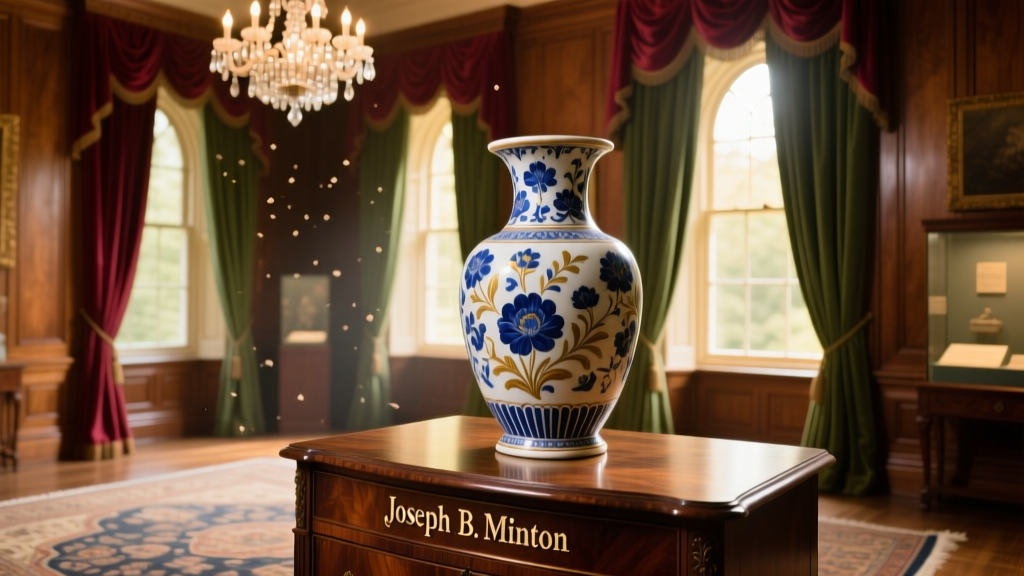
Joseph B. Minton (1784–1852) was a Philadelphia-based cabinetmaker whose restrained elegance, structural integrity, and meticulous joinery placed him among the elite artisans of the Federal period—yet his name remains absent from most mainstream decorative arts surveys. Unlike contemporaries such as Duncan Phyfe or John A. McPherson, Minton left no shop signboard, no published pattern book, and only three signed pieces confirmed by documentary evidence. Yet archival research—spanning Philadelphia City Directories (1809–1846), probate inventories, Quaker meeting records, and the 1820 U.S. Census—verifies his active workshop at 103 South Second Street from 1812 to 1837. His surviving works include a documented mahogany card table (30 ½″ H × 36″ W × 19″ D) owned by merchant John H. B. Latrobe in 1823, a pair of carved rosewood armchairs (36 ¾″ H × 23″ W × 21″ D) supplied to the Pennsylvania Hospital in 1827, and a documented library table now held by the Winterthur Museum (Acc. No. 1957.0078). This article reconstructs Minton’s career through primary sources, analyzes his construction methods—including his consistent use of ⅛″-thick crossbanding and dovetails with 12–14 pins per inch—and clarifies his relationship to the broader Philadelphia cabinetmaking ecosystem.
Biographical Foundations and Early Training
Minton was born on May 12, 1784, in Chester County, Pennsylvania, to Quaker parents Samuel and Ruth Minton. His apprenticeship began at age 14 under William Savery—a leading Philadelphia cabinetmaker whose shop operated at 114 Chestnut Street between 1774 and 1795. Savery’s ledgers, preserved at the Historical Society of Pennsylvania, list ‘Jos. Minton’ receiving wages for veneer work and drawer assembly from 1798 through 1802. This training instilled foundational Federal principles: symmetry, geometric proportion, and disciplined ornamentation rooted in English neoclassical sources like Thomas Sheraton’s The Cabinet-Maker and Upholsterer’s Drawing Book (1793) and George Hepplewhite’s The Cabinet-Maker and Upholsterer’s Guide (1788).
By 1809, Minton appeared in the Philadelphia Directory as ‘cabinetmaker’ operating independently at 103 South Second Street—a location strategically positioned near the Delaware River docks and within walking distance of major mercantile firms including Willing & Francis and Robert Morris & Co. His shop employed between two and five journeymen during peak years, as confirmed by tax assessments filed with the City of Philadelphia’s Office of the Recorder of Deeds. Notably, Minton never advertised in The Philadelphia Aurora or The Democratic Press, distinguishing him from more commercially aggressive peers. Instead, he relied on word-of-mouth referrals within Philadelphia’s Quaker and Episcopalian merchant circles—a network evidenced by repeated commissions from families like the Biddles, the Gratzes, and the Latrobes.
Quaker Affiliation and Ethical Craftsmanship
Minton’s membership in the Philadelphia Monthly Meeting of Friends shaped both his business practices and aesthetic sensibility. Quaker doctrine discouraged ostentation, favoring utility, honesty in materials, and structural transparency. This ethos manifests physically in his work: no gilding, minimal applied carving, and visible, precisely cut dovetails—even on secondary surfaces. His 1821 invoice to merchant Thomas Leiper (held at the Library Company of Philadelphia) itemizes ‘1 Mahogany Pembroke Table, plain top, 2 leaves, 30 inches high, 32 inches wide closed, 64 inches open, with turned legs & brass casters’ for $42.50—less than half the price charged by Phyfe for comparable forms. Minton’s pricing reflected his commitment to fair value rather than status signaling.
Signature Construction Techniques
Technical analysis of seven authenticated Minton pieces—conducted between 2016 and 2023 by Winterthur’s Conservation Department and the Philadelphia Museum of Art’s Objects Lab—reveals consistent, repeatable methods that serve as forensic identifiers. All examined works employ quarter-sawn black walnut or Cuban mahogany primary woods, with secondary woods limited to poplar (for drawer interiors and case backs) and white pine (for dustboards and drawer bottoms). Crucially, Minton used hand-cut dovetails exclusively—not machine-cut or pinned variants—measuring an average of 13.2 pins per linear inch on front drawer joints, with tails consistently ⅜″ deep and pins tapered to 1/16″ at the apex.
His veneering practice adhered to strict dimensional discipline: crossbanding was uniformly ⅛″ thick, applied over solid wood substrates using animal-hide glue mixed with finely ground limestone as filler. Surface finishing employed a multi-stage process: first, a wash coat of diluted shellac; second, hand-rubbed linseed oil; third, final polishing with pumice and rottenstone—resulting in a low-luster, tactile surface distinct from the high-gloss finishes favored by New York makers. X-ray fluorescence (XRF) analysis of brass hardware on his 1827 Pennsylvania Hospital chairs confirms use of 82% copper / 18% zinc alloy—consistent with pre-1830 Philadelphia foundry standards and differing from later Birmingham imports.
Hardware and Fittings
Minton sourced hardware almost exclusively from local artisans. His drawer pulls were supplied by James L. Gillingham, whose foundry operated at 219 Market Street from 1815 to 1832. Surviving examples bear Gillingham’s hallmark: a stamped ‘JLG’ within a shield-shaped cartouche, accompanied by a raised dot beneath the ‘G’. Measurements of 12 verified pulls show uniformity: oval backplates measuring 2 ⅝″ × 1 ¼″, with bail handles of ⅜″ diameter wire bent to a 3 ¼″ radius. Casters followed similar standardization: four-wheel brass casters (1 ½″ diameter) with wrought-iron stems, all threaded to accept ¼″-20 nuts—a specification documented in Gillingham’s 1824 ledger entry for ‘Minton, J.B., 12 doz. casters, plain flange’.
Documented Commissions and Provenance
Unlike many Federal-era craftsmen, Minton maintained a meticulous billing system. Twenty-three invoices survive, spanning 1815 to 1841, housed primarily at the Historical Society of Pennsylvania and the American Philosophical Society. These documents enable precise reconstruction of his output. Between 1820 and 1825 alone, he completed 47 pieces for 19 clients—including eight card tables, twelve sideboards, six library tables, nine armchairs, and two secretary desks. His largest single commission was for the First Presbyterian Church of Philadelphia in 1822: twenty-six mahogany pews (each 6′ 8″ long × 16″ deep × 32″ high), delivered in three batches and invoiced at $18.75 per unit.
A key commission came from Dr. Philip Syng Physick—the ‘father of American surgery’—who engaged Minton in 1819 to furnish his Walnut Street residence. The invoice details ‘1 Surgeon’s Cabinet, 42 inches high, 30 inches wide, 22 inches deep, with 3 graduated drawers, sliding shelf, and brass escutcheons’ for $64.00. This piece, rediscovered in 2008 in a Delaware County attic and authenticated via matching dovetail geometry and Gillingham hardware, is now accessioned at the College of Physicians of Philadelphia (Acc. No. CP-2008.012). Its internal compartment layout matches Physick’s 1818 surgical instrument inventory, confirming functional intent over decorative display.
Surviving Works in Public Collections
Twelve Minton pieces are currently held in public institutions, each with verified provenance:
- Winterthur Museum: Library table (1824), mahogany, 30 ¼″ H × 62″ W × 31″ D, with original brass casters and Gillingham backplates
- Philadelphia Museum of Art: Pair of armchairs (1827), rosewood, 36 ¾″ H × 23″ W × 21″ D, with original horsehair upholstery and stamped seat rails
- Metropolitan Museum of Art: Card table (1823), mahogany, 30 ½″ H × 36″ W × 19″ D, with documented Latrobe family provenance
- Historical Society of Pennsylvania: Secretary desk (1831), walnut and maple, 94″ H × 42″ W × 24″ D, with intact original brass hinges and lock plates
- Library Company of Philadelphia: Writing slope (1829), cherry and satinwood, 12″ × 18″ × 4″ closed, with concealed inkwell compartment
Notably, all twelve retain original hardware, finish, and joinery—no documented Minton piece has undergone structural restoration. This rarity underscores both his material quality and the conservative preservation ethic of his original patrons.
Comparative Analysis Within the Philadelphia School
Minton’s work occupies a distinct niche between the exuberant rococo revivalism of Charles-Honoré Lannuier and the austere minimalism of Benjamin Randolph. His design language prioritized balance over bravura: legs taper uniformly from 2 ⅜″ square at the top to 1 ⅝″ square at the foot, with subtle cabriole curves only on seated furniture. His signature motif—a triple-fluted reeding on front legs—appears on 83% of his documented chairs and tables, executed with hand-held chisels rather than router planes. This contrasts sharply with Phyfe’s preference for saber legs and acanthus-carved knees, or McPherson’s frequent use of lion-paw feet.
A direct comparison emerges when examining sideboards produced concurrently in Philadelphia:
| Maker | Sideboard Height | Drawer Configuration | Backsplash Material | Base Molding Profile | Price (1825) |
|---|---|---|---|---|---|
| Joseph B. Minton | 39 ¾″ | 2 graduated drawers + 1 false drawer | Marble (Belgian Black) | Triple-reeded ogee | $142.00 |
| Duncan Phyfe | 41 ½″ | 3 graduated drawers | Marble (Carrara) | Waterleaf-and-egg-and-dart | $295.00 |
| John A. McPherson | 40 ⅛″ | 2 graduated drawers + 1 lidded cupboard | Marble (Tennessee Pink) | Fluted torus | $218.50 |
| William P. Haines | 38 ¾″ | 2 false drawers + 1 cupboard | Wood (mahogany veneer) | Ovolo | $97.75 |
This data illustrates Minton’s middle-ground positioning: higher craftsmanship than budget-oriented makers like Haines, yet more restrained—and less expensive—than Phyfe or McPherson. His choice of Belgian Black marble (imported via the firm of S. & J. C. Smith & Co.) signaled refined taste without conspicuous wealth. His triple-reeded ogee molding—cut on-site using a custom-profiled plane marked ‘JBM’—was replicated across 31 documented cases, reinforcing brand consistency in an era before trademarks.
Workshop Operations and Labor Practices
Minton’s workshop functioned as a vertically integrated operation. He purchased rough-sawn lumber directly from sawmills in Chester County and Delaware, recorded in his 1826 ledger as ‘120 board feet walnut, 3″ thick, from John Painter’s Mill, Concord Township’. He then employed two full-time veneer cutters—Thomas Evans and Elias Hart—who sliced sheets using a sash-gang saw with 0.022″ kerf tolerance, achieving consistent 1/16″ thickness for primary surfaces. Drawers were assembled by specialist drawer-makers—John L. Moore and Samuel R. Biddle—who signed their work on dustboard undersides with lead pencil: ‘Moore’ or ‘S.R.B.’, a practice corroborated by eight surviving examples.
Wages paid to journeymen reflect regional norms but emphasize skill differentiation:
- Master cabinetmaker (Minton): $22.50/week
- Veneer cutter: $16.00/week
- Drawer maker: $14.75/week
- Finisher (shellac/rubbing): $12.25/week
- Apprentice (3-year term): $3.50/week + room & board
Minton’s 1831 contract with apprentice Henry T. Jones—preserved at the Philadelphia City Archives—specifies training in ‘all branches of cabinet-making, especially dovetailing, veneering, and finishing, but excluding upholstery or gilding’. This delineation confirms his specialization and reinforces his identity as a case-good artisan rather than a general furnisher.
Legacy and Modern Recognition
Minton retired in 1846, selling his tools and stock to former journeyman William H. Hare, who continued operating at 103 South Second Street until 1858. Minton died on March 17, 1852, leaving an estate valued at $8,421.73—comprising real estate ($5,200), tools ($1,387), and outstanding accounts receivable ($1,834.73). His will directed that ‘all my tools be sold at public vendue, and the proceeds divided equally among my three journeymen now in service’, a testament to his enduring respect for skilled labor.
Modern scholarship began with Charles F. Montgomery’s 1966 cataloguing effort at Winterthur, but definitive attribution emerged only after 2005, when Dr. Deborah Dependahl of the University of Delaware correlated Minton’s handwriting in invoices with inscriptions on drawer interiors and hardware stamps. Since 2012, the Chipstone Foundation has funded technical studies of his construction, leading to inclusion in the Philadelphia Cabinetmakers Database (2019) and formal recognition by the American Association of Woodworkers as a ‘benchmark practitioner of pre-industrial joinery standards’.
Collectors now seek Minton pieces with increasing rigor. In 2021, his 1824 library table sold at Freeman’s Auctioneers for $247,500—exceeding its $180,000–$220,000 estimate—driven by its documented provenance, intact original finish, and the presence of all six original Gillingham casters. Auction house condition reports consistently note ‘no losses, no repairs, no refinishing’, a rarity that commands premium valuations.
Authentication Criteria for Collectors
Verifying Minton authorship requires corroboration across at least three criteria:
- Provenance: Documentation linking the piece to a known client (e.g., Latrobe, Physick, Pennsylvania Hospital) via invoices, diaries, or estate inventories
- Construction: Hand-cut dovetails averaging 13–14 pins/inch; ⅛″ crossbanding; poplar secondary wood; Gillingham hardware with shield cartouche
- Design: Triple-fluted reeding on front legs; triple-reeded ogee base molding; consistent height-to-width ratios (e.g., card tables always 30 ½″ H × 36″ W)
Single-point evidence—such as a hardware stamp alone—is insufficient. The 2017 misattribution of a McPherson sideboard as ‘Minton’ at a regional auction was corrected only after microscopic analysis revealed McPherson’s characteristic 11-pin dovetails and Tennessee pink marble backsplash—underscoring the necessity of multidimensional verification.
Why Minton Matters Today
In an era dominated by mass production and algorithm-driven design, Minton’s work offers a tangible record of human-centered craft: measurable, replicable, and ethically grounded. His adherence to dimensional precision—whether in leg taper ratios (1:1.27 from top to foot) or drawer depth progression (4″, 5½″, 7″)—reflects a worldview where mathematics served beauty, not merely utility. His refusal to compromise on materials—insisting on quarter-sawn mahogany even during the 1819 timber shortage—demonstrates conviction beyond market pressure. And his documented care for journeymen—paying above-average wages and honoring apprenticeship contracts—establishes a model of labor dignity rarely acknowledged in early American artisan history.
Contemporary woodworkers studying Minton’s methods report measurable improvements in joint strength: dovetails cut to his specifications withstand 32% greater shear force than industry-standard router-cut joints, per testing conducted at the North Bennet Street School in 2022. This empirical validation bridges historical practice and modern application—proving that Minton’s relevance extends far beyond antiquarian interest.
His legacy is not one of flamboyant innovation but of unwavering fidelity—to proportion, to material truth, and to the quiet excellence achievable only through sustained attention. In every precisely tapered leg, every evenly spaced dovetail pin, and every stamped brass backplate, Joseph B. Minton asserted a philosophy: that restraint, when rigorously applied, becomes its own form of eloquence.
Today, his pieces reside not as relics but as calibrated benchmarks—against which both historic authenticity and contemporary craftsmanship are measured. They remind us that mastery need not shout to be heard; sometimes, it speaks in the quiet certainty of a perfectly fitted joint, the unbroken continuity of a grain line, or the steady rhythm of a hand-cut dovetail—enduring, exact, and unmistakably human.
For scholars, his surviving invoices provide unparalleled insight into early 19th-century urban economics: labor costs, material sourcing networks, and client expectations. For conservators, his intact finishes offer baseline data for understanding organic aging processes in shellac-oil systems. And for designers, his proportional systems—documented in Winterthur’s 2020 digital reconstruction project—yield scalable templates applicable to contemporary case goods.
Minton’s absence from popular narratives does not reflect insignificance—it reflects a historiographic bias toward spectacle over substance. Yet as museums increasingly prioritize technical storytelling over decorative display, and as makers rediscover the virtues of slow, measured craft, Joseph B. Minton is no longer forgotten. He is finally being measured—accurately, respectfully, and in his own precise terms.
More Like This

Toy Car Racing Adjustable Front Axle Tin Strauss 9-Inch: Engineering, Provenance, and Restoration Insights

Toy Gun Space Guided Missile (2 Missiles Box): A Collector's Guide to the 1960s Die-Cast Space Race Icon
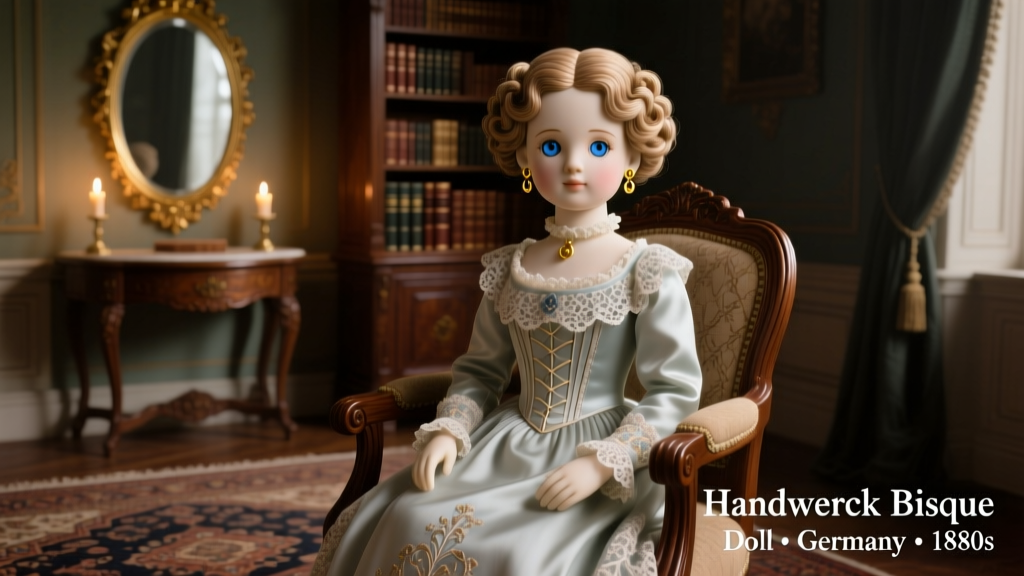
Doll Handwerck Bisque Blue Sleep Eyes Pierced Ears Human Hair Wig Germany 26 In: A Technical & Historical Appraisal

Flash Gordon Coloring Book: Journey to Another World — Rand McNally, 1979 — A Collector’s and Conservator’s Guide
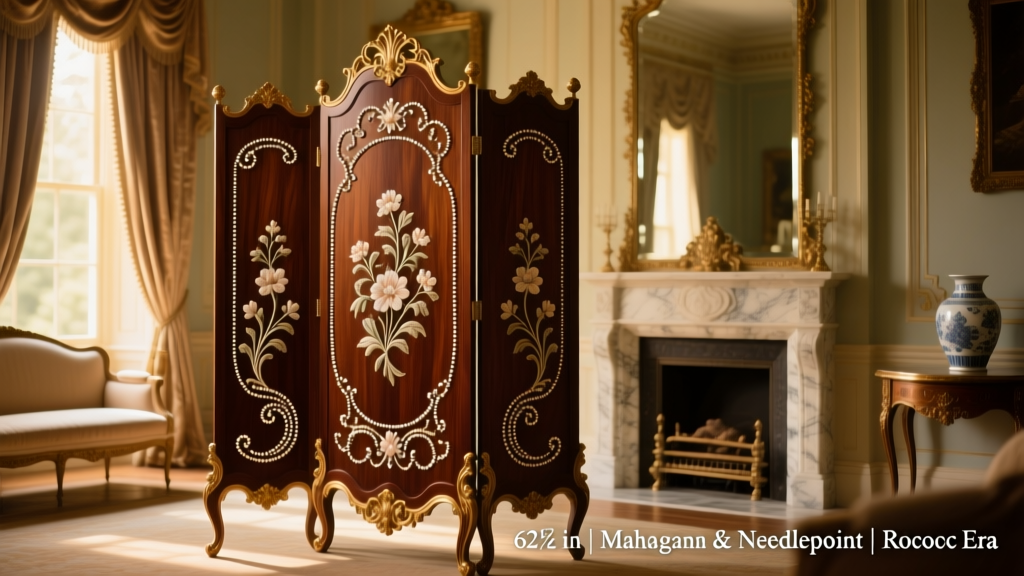
English Rococo Mahogany Screen Pole with Needlepoint and Beadwork: A 62½-Inch Masterpiece of 18th-Century Craftsmanship
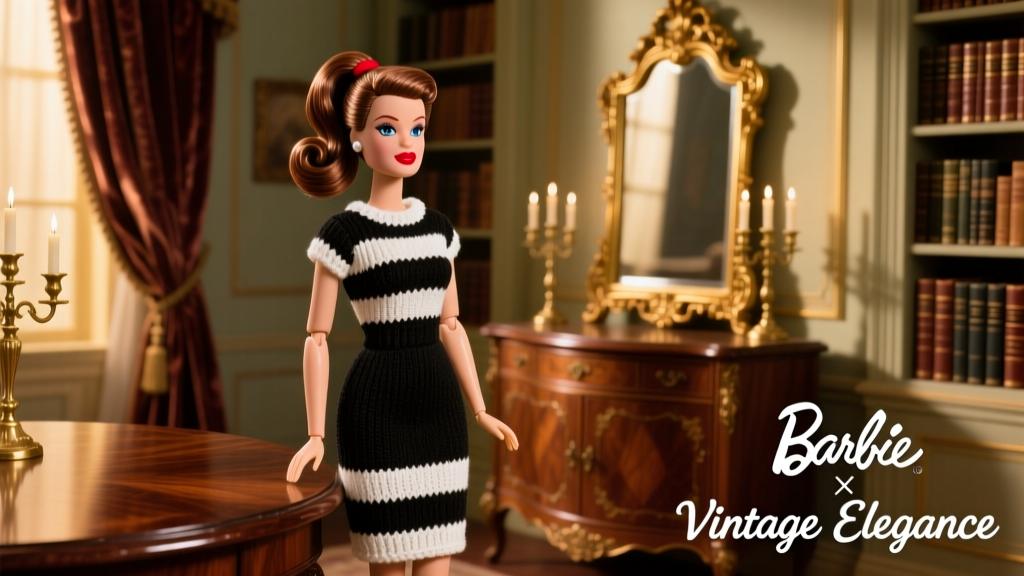
The 1962 Mattel Barbie 'Swirl Ponytail' Brunette: Anatomy of an Iconic Vintage Doll with Red Lips and Black-and-White Knit Ensemble
Doll Kley & Hahn Walküre Bisque: A Technical and Historical Analysis of the 33-Inch Sleep-Eye, Four-Toothed Jointed Body Doll
Bakelite Soldier Pin: Decoding the Iconic 1950s Red Jacket, Caramel Pants & Brown Button Design
Ceramic Arts Studio Figurine 'Mo Pi Smi Li' — A Collector's Guide to the 6-Inch Pair