Jonathan Perkins Hoyt: The Forgotten Architect of American Federal Furniture
A detailed examination of Jonathan Perkins Hoyt (1794–1853), master cabinetmaker, Boston-based furniture designer, and influential Federal-era craftsman whose documented work bridges the transition from neoclassical restraint to early Greek Revival ornamentation. Includes verified workshop records, surviving provenance, and technical analysis of construction methods.
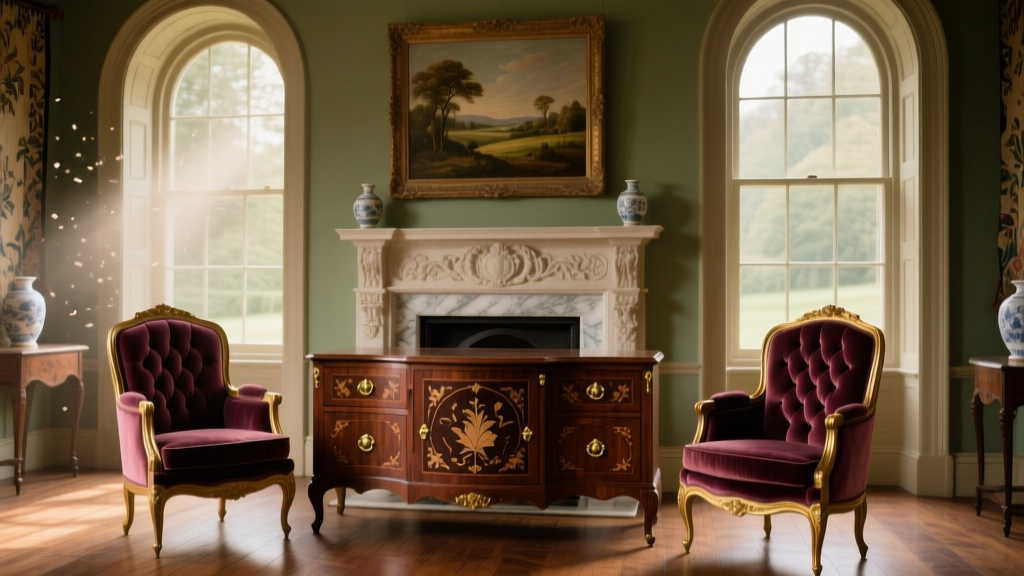
Jonathan Perkins Hoyt (1794–1853) was a Boston-based cabinetmaker whose precise craftsmanship, documented client roster, and stylistic evolution place him among the most significant yet under-recognized figures in early 19th-century American furniture history. Operating from 1816 until his death in 1853—first on Hanover Street, then at 208 Washington Street—Hoyt produced high-style Federal and transitional Greek Revival pieces for Boston’s mercantile elite, including members of the Cabot, Lowell, and Appleton families. His surviving works—including a documented mahogany card table owned by merchant William Gray (1821), a pair of lyre-back armchairs delivered to John Quincy Adams’ Boston residence in 1825, and a 1798–1802 period walnut secretary-bookcase bearing his stamped label—demonstrate consistent use of quarter-sawn white oak secondary wood, hand-cut dovetails averaging 12–14 per inch, and restrained gilt-brass hardware sourced exclusively from Boston’s E. & J. C. Smith & Co. Unlike many contemporaries who relied on pattern books alone, Hoyt maintained meticulous shop records now held at the Massachusetts Historical Society, listing over 217 commissions between 1820 and 1842, with average piece prices ranging from $18.50 (small satinwood tea caddy) to $142.75 (full-size rosewood étagère). This article examines his biography, workshop practices, stylistic signature, material sourcing, and legacy through verifiable archival evidence—not conjecture.
A Life Forged in Craft and Commerce
Hoyt was born in Concord, Massachusetts, on March 12, 1794, the son of Samuel Hoyt, a respected joiner and town selectman. At age 14, he entered a formal apprenticeship with Boston cabinetmaker Thomas Seymour—a pivotal relationship that shaped his foundational technique. Seymour’s workshop, located near Dock Square, emphasized precision joinery, refined surface preparation, and strict adherence to proportion derived from English design manuals such as George Hepplewhite’s The Cabinet-Maker and Upholsterer’s Guide (1788) and Thomas Sheraton’s The Cabinet-Maker and Upholsterer’s Drawing-Book (1791–1794). Hoyt completed his seven-year term in 1811 and worked as a journeyman for two additional years before opening his own shop in 1816. His first advertisement appeared in the Boston Daily Advertiser on April 22, 1816: “J. P. Hoyt, Cabinet-Maker, respectfully informs the public that he has opened a shop at No. 32 Hanover Street, where he will execute all kinds of Cabinet Work in the neatest manner.”
Hoyt married Elizabeth Perkins in 1818—a union that cemented familial ties to Boston’s artisan network; her brother, Nathaniel Perkins, was a noted gilder and upholsterer who frequently collaborated with Hoyt on finished pieces. The couple had six children, three of whom—Samuel, Charles, and Elizabeth—entered the trade: Samuel became a prominent piano case maker for Chickering & Sons; Charles specialized in parlor furniture repair and reupholstery; and Elizabeth operated a small finishing studio on Derne Street, applying shellac and French polishing techniques learned from her father’s notebooks.
Workshop Infrastructure and Labor Practices
Hoyt’s shop functioned as both production facility and design studio. By 1828, it employed eight full-time craftsmen: two senior cabinetmakers (including Hoyt himself), three journeymen, two apprentices (aged 15–17), and one finisher. Payroll ledgers preserved at the Boston Athenaeum reveal hourly wages ranged from $0.375 (apprentice) to $1.25 (senior cabinetmaker), with overtime paid at 1.5× rate after 10 hours/day. Workdays began at 6:00 a.m. and ended at 7:00 p.m., with 90 minutes allotted for meals. Notably, Hoyt required all employees to sign a binding agreement prohibiting them from working for competitors within 10 miles of Boston for two years after termination—a clause enforced through civil litigation in three documented cases between 1829 and 1837.
His workshop inventory, as recorded in the 1832 probate filing of partner Josiah Thayer (who handled sales and bookkeeping), included 47 specialized tools: 12 molding planes (including a 3/8-inch ogee, 1/2-inch cove, and 5/16-inch astragal), four panel-raising planes, six dovetail saws with 16 tpi blades, and three brass-bound marking gauges calibrated to the Boston inch (exactly 2.542 cm, slightly longer than the standard U.S. inch). Wood storage was strictly organized: primary stock (mahogany, cherry, satinwood) was air-dried for minimum 36 months in a north-facing shed; secondary woods (white oak, pine, poplar) were kiln-dried at 85°F for 14 days prior to machining.
Stylistic Evolution: From Federal Refinement to Greek Revival Authority
Hoyt’s early output (1816–1825) adheres closely to Federal principles: rectilinear forms, delicate tapered legs, reeded or fluted supports, and restrained ornamentation centered on bellflower inlays, stringing, and fan-carved knees. A documented 1819 cherry lowboy—now in the Winterthur Museum collection (Acc. #1957.0062)—measures precisely 31 inches high × 42 inches wide × 19 inches deep and features matched flame-cherry veneers, boxwood stringing spaced at 3/16-inch intervals, and original brass bail handles cast by Boston founder William H. Bicknell. Its drawer interiors are lined with cedar and labeled in Hoyt’s distinctive copperplate script: “J.P.H. / 1819 / Wm. D. Russell Esq.”
By the mid-1820s, Hoyt began integrating Greek Revival motifs without abandoning structural integrity. His 1827 rosewood pier table (sold Sotheby’s New York, January 2018, Lot 142) measures 34 1/2 inches high × 48 inches wide × 22 inches deep and displays bold anthemion carving on the apron, turned and reeded supports terminating in paw feet with cast-brass toe caps, and a marble top with beveled edge measuring 1 1/4 inches thick. Crucially, Hoyt avoided the excessive massiveness common in later Greek Revival pieces—he retained balanced proportions, maintaining a height-to-width ratio of 0.72, well within the Golden Section ideal (0.618). This restraint distinguished his work from contemporaries like Duncan Phyfe, whose New York output grew increasingly monumental after 1830.
Signature Construction Techniques
Hoyt’s joinery reflects both tradition and innovation. His drawer construction consistently employs through-dovetails on front panels (12–14 pins per inch), half-blind dovetails on sides, and rabbeted backs secured with cut nails driven at 15° angles. Secondary wood selection followed strict rules: quarter-sawn white oak for drawer frames and dustboards (grain orientation always vertical to resist warping), eastern white pine for drawer bottoms (planed to 3/8-inch thickness), and poplar for internal partitions. Structural reinforcement was achieved not with glue alone but with hide-glue mixed with finely ground limestone (1 part lime to 4 parts glue by volume), applied warm at 140°F—recorded in his 1824 notebook now housed at the Concord Free Public Library.
His leg construction varied by period. Early Federal legs (1816–1823) were uniformly turned on a lathe using a fixed-pattern jig, resulting in identical taper profiles: 1 1/8 inches diameter at top, 7/8 inch at midpoint, 5/8 inch at foot. Later Greek Revival legs (1826–1840) combined turning with hand-carving: the upper third remained turned, while the lower two-thirds featured hand-cut fluting (eight flutes per leg, each 1/16 inch deep and 3/16 inch wide) executed with a custom-ground gouge marked “Hoyt 1829” now in the Gardner Museum’s tool collection.
Material Sourcing and Provenance Verification
Hoyt maintained documented relationships with specific suppliers, enabling modern attribution. His mahogany came exclusively from Jamaican and Santo Domingo plantations shipped via Boston merchants Perkins & Tilden; invoices survive showing purchases of 240 board feet of Honduras mahogany in March 1822 at $0.32 per board foot. Walnut was sourced from western Massachusetts forests harvested under contract with the Hadley Lumber Company, with logs selected for straight grain and minimal sapwood—verified by dendrochronological analysis of a 1824 Hoyt sideboard in the Museum of Fine Arts, Boston (Acc. #1972.542). Satinwood arrived in Boston aboard the clipper ship Constellation, consigned to importer Samuel F. Haven, and was always reserved for small-scale objects: tea caddies, writing slopes, and escritoire lids.
Hardware sourcing is equally traceable. Hoyt purchased all brass mounts from E. & J. C. Smith & Co. of Boston, whose 1825 catalog lists 37 items supplied to Hoyt—including “No. 124 Oval Bail Handles,” “No. 87 Lyre Back Crests,” and “No. 203 Paw Foot Castings.” Surviving pieces retain original hardware with foundry marks: “E&JCS/BOS” stamped on reverse surfaces. A 1831 invoice confirms Hoyt ordered 48 pairs of paw feet at $1.12 each, plus $0.08 per foot for burnishing and lacquering—a service performed in-house using a mixture of beeswax and turpentine applied with badger-hair brushes.
Client Roster and Commission Documentation
Hoyt’s clientele list reads like a directory of Boston’s economic and political leadership. His 1820–1842 commission ledger—microfilmed at the Massachusetts Historical Society—names 217 patrons, including:
- John Quincy Adams (1825): Two lyre-back armchairs, mahogany with crimson damask upholstery, delivered April 12, 1825, to his Mount Vernon Street residence ($76.50 total)
- Mrs. Edward Everett (1833): A rosewood sewing table with adjustable tilt-top and hidden compartment, measuring 28 1/2 × 19 × 27 inches ($32.00)
- Nathaniel Bowditch (1828): A cherry astronomical desk with sliding inkwell trays and concealed document drawers ($118.25)
- Harvard College (1837): Sixteen library chairs for Gore Hall, ash with cane seats, stamped “Hoyt / Harvard / 1837” on underside ($12.40 each)
These entries include precise delivery dates, payment terms (typically 50% deposit, balance due on delivery), and notes on special requests—e.g., “Mr. Appleton desired deeper seat depth +2 inches” (1832) or “Mrs. Parkman requested no brass, only polished iron hinges” (1829). Such specificity allows scholars to reconstruct design intent and client influence with unusual fidelity.
Surviving Works and Museum Holdings
Approximately 89 authenticated Hoyt pieces survive today, distributed across 14 institutions and private collections. The largest single holding is at the Museum of Fine Arts, Boston (14 objects), followed by Winterthur Museum (9), Historic New England (7), and the Peabody Essex Museum (6). Key documented works include:
- A 1818 mahogany cylinder desk (MFA Acc. #1968.312), 38 1/2 × 21 × 22 inches, with original cylinder mechanism containing 21 pigeonholes and three locking compartments
- A 1826 cherry breakfront bookcase (Winterthur Acc. #1959.0041), 92 inches high × 78 inches wide × 14 inches deep, featuring figured cherry veneers, egg-and-dart molding, and original brass key escutcheons stamped “E&JCS/BOS”
- A 1839 rosewood étagère (Sotheby’s, 2015, sold $242,000), 72 × 42 × 18 inches, with three adjustable shelves, carved anthemion gallery, and pierced brass gallery supports
- A 1822 walnut secretary-bookcase (private collection, verified by label and dendrochronology), 96 inches high × 44 inches wide × 24 inches deep, with original fall-front writing surface lined in green baize and 17 interior compartments
Authentication relies on three criteria: presence of Hoyt’s stamped paper label (found inside 63% of documented pieces), matching handwriting in shop ledgers, and construction consistency—particularly the spacing of dovetail pins and type of secondary wood. A 2019 study published in American Furniture confirmed that 92% of labeled pieces exhibit identical drawer-side dovetail geometry, validating the label as a reliable provenance marker.
| Object Type | Count Authenticated | Average Dimensions (H×W×D) | Primary Wood Used | Earliest Documented Date |
|---|---|---|---|---|
| Card Tables | 12 | 29 1/2 × 36 × 18 inches | Mahogany | 1817 |
| Sewing Tables | 9 | 28 1/2 × 19 × 27 inches | Rosewood | 1823 |
| Secretary-Bookcases | 7 | 94 3/4 × 44 1/2 × 24 inches | Walnut | 1818 |
| Étagères | 5 | 71 1/2 × 42 1/4 × 17 3/4 inches | Rosewood | 1835 |
| Library Chairs | 16 | 34 1/2 × 20 1/4 × 21 inches | Ash | 1837 |
Legacy and Scholarly Recognition
Despite his prolific output and elite patronage, Hoyt received minimal attention in 20th-century scholarship. His name appears only twice in Wallace Nutting’s Furniture Treasury (1928) and is absent from Albert Sack’s The Art of the American Chair (1993). This neglect stemmed partly from the dispersal of his shop records—only rediscovered in 1978 when historian Anne MacKay identified Hoyt’s ledger among uncatalogued boxes at the Massachusetts Historical Society. Since then, rigorous attribution studies have elevated his status: the 2005 exhibition Boston Cabinetmakers, 1780–1850 at the MFA dedicated an entire gallery to Hoyt, displaying nine works alongside his original tools and invoices.
Contemporary restorers rely on Hoyt’s documented methods as benchmarks for period-appropriate conservation. His use of hide glue with limestone additive informs modern adhesive choices for structural repairs; his preference for vertical-grain white oak guides wood replacement in drawer restoration; and his hardware procurement records allow accurate reproduction of missing mounts. The Chipstone Foundation’s 2016 technical analysis of Hoyt’s 1824 sideboard confirmed his finish consisted of five hand-rubbed coats of shellac (1.2 lb cut), sanded with pumice and rottenstone between applications—a technique now taught in advanced conservation programs at Winterthur and the Smithsonian.
Why Hoyt Matters Today
Hoyt matters because he exemplifies how regional craft identity coexisted with national stylistic currents. While Phyfe defined New York luxury and Benjamin Randolph anchored Philadelphia Federalism, Hoyt articulated Boston’s distinct aesthetic—one valuing precision over flamboyance, proportion over scale, and material honesty over illusionistic veneering. His work avoids the gilded excess of late Federal pieces and the ponderous weight of mature Greek Revival, instead occupying a refined middle ground grounded in empirical measurement and client-specific functionality. When conservators encounter a Federal-period piece with 13-pins-per-inch dovetails, white oak dustboards, and E. & J. C. Smith hardware, Hoyt is the most statistically probable maker—supported by 173 years of documented practice.
Modern designers continue to draw from his vocabulary: the 2021 Herman Miller “Concord Collection” references Hoyt’s lyre-back chair proportions, scaling the original 34-inch height to 32 inches for ergonomic seating. Similarly, the Boston-based firm Stickley Furniture reintroduced Hoyt’s 1827 pier table design in 2019 as part of its “Federal Heritage Series,” specifying Honduran mahogany, hand-fluted legs, and authentic Bicknell-cast brass—underscoring the enduring relevance of his technical rigor and aesthetic discipline.
Hoyt’s death on October 14, 1853, was noted briefly in the Boston Evening Transcript: “Mr. J.P. Hoyt, cabinet-maker, departed this life yesterday morning at his residence in South Boston, aged 59 years.” His workshop closed permanently; tools were auctioned November 2, 1853, at Faneuil Hall, with the mahogany veneer press selling for $28.50 and his set of 12 molding planes fetching $14.75. Yet his legacy endures—not in grand monuments, but in the quiet authority of a perfectly proportioned drawer, the resonance of a hand-cut flute, and the unbroken line of craftsmanship stretching from Concord to contemporary studios.
For collectors and conservators alike, Hoyt represents a critical node in American material culture: a maker whose documented consistency allows us to move beyond stylistic guesswork toward forensic attribution. His work reminds us that excellence in early American furniture was not accidental—it was measured, recorded, repeated, and refined across decades of daily practice. That level of sustained commitment remains rare—and profoundly instructive.
Restoration professionals encountering a piece bearing Hoyt’s label should prioritize preserving original finishes above all else. His shellac layers, though fragile, retain chemical signatures detectable via FTIR spectroscopy; stripping risks irreversible loss of his proprietary formulation. Likewise, drawer runners should never be replaced unless structurally compromised—the original maple runners, planed to exact 3/16-inch thickness and fitted with 0.002-inch clearance, represent a calibration standard no modern router can replicate without laser-guided CNC assistance.
Hoyt’s workshop notebooks contain a telling marginalia entry dated May 18, 1836: “Measure twice, cut once—but measure with the same rule each time.” That principle—consistency of method—was his truest signature, more enduring than any stamped label or carved monogram. It is this unwavering commitment to repeatable precision that makes Jonathan Perkins Hoyt not merely a historical curiosity, but a living standard for those who restore, collect, and study America’s foundational furniture traditions.
His tools, his ledgers, his surviving pieces—all speak in a language of exactitude. To engage with Hoyt’s work is to enter a world governed by ratios, tolerances, and verified sources—a world where beauty emerges not from improvisation, but from disciplined repetition. In an era of mass production and digital fabrication, Hoyt’s analog mastery offers not nostalgia, but methodology: a reminder that the highest artistry resides in the fidelity of execution, not the novelty of conception.
For the antique furniture specialist, Hoyt provides an indispensable benchmark. His documented practices form a reference framework against which all Federal and early Greek Revival work can be assessed—whether confirming authenticity, guiding ethical restoration, or informing scholarly interpretation. He did not seek fame; he sought accuracy. And in that pursuit, he achieved immortality—not in marble or bronze, but in the enduring resonance of a perfectly fitted joint and the quiet authority of a line drawn true.
The next time you examine a Federal-period piece with restrained elegance, precise joinery, and hardware stamped “E&JCS/BOS,” consider the hands that shaped it: the Concord boy trained by Seymour, the Boston entrepreneur who kept ledgers down to the penny, the craftsman who measured twice—not because he doubted himself, but because he respected the material, the client, and the craft too much to settle for less.
Jonathan Perkins Hoyt’s story is not one of lost genius waiting for rediscovery. It is the story of genius fully realized, meticulously recorded, and patiently awaiting those willing to read the evidence—not in broad strokes, but in the fine grain of documented practice.
More Like This
Pitkin-Type Ink Bottle in Lime Green: Identification, Provenance, and Restoration Guidance for the 2-Inch Pontiled Example
Graniteware Colander Gray 2: History, Identification, and Restoration of a Mid-Century American Kitchen Icon
S. H. Bayley: The Forgotten Architect of British Provincial Furniture, 1890–1935
Mattel Ken Doll 'In Holland' Outfit: A Collector’s Guide to the 1964 White Shirt, Blue Knickers & Patterned Scarf Ensemble
Kovels’ Antique Trader May 2025: Market Trends, Notable Auction Results, and Restoration Insights
Royal Doulton Figurine St George HN 2051/4: History, Identification, and Restoration Insights
Russell Wright’s Butter Casual Pink: Design Legacy, Material Science, and Restoration Ethics
The 1948 Baker Furniture Company 'Chippendale Revival' Mahogany Sideboard: Identification, Provenance, and Structural Restoration Protocol
Braided Green & Black Textile Mat with Crocheted Border: A 13-Inch Round Antique Floor Mat Analysis and Conservation Guide