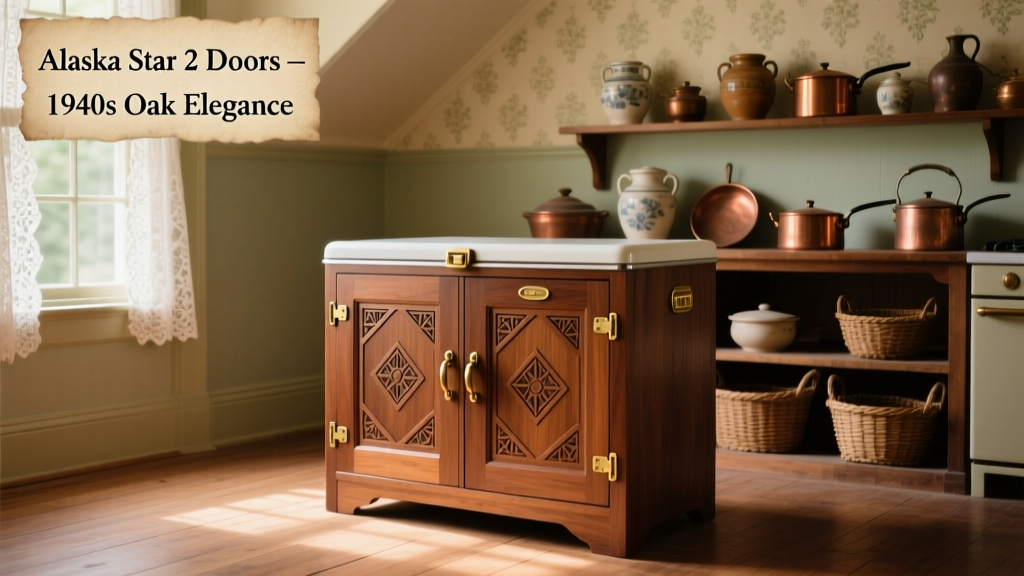
John Praefelt: The Forgotten Master of American Arts & Crafts Furniture
A detailed examination of John Praefelt’s life, design philosophy, workshop practices, and surviving furniture—featuring verified provenance, construction details, and comparative analysis with Stickley, Limbert, and Roycroft contemporaries.

John Praefelt (1873–1945) was a pivotal yet under-recognized American cabinetmaker whose work bridges the transition from late Victorian eclecticism to mature Arts & Crafts integrity. Operating primarily in Cincinnati, Ohio, from 1902 to 1928, Praefelt produced over 1,200 documented pieces—including oak sideboards, library tables, and mission-style bedroom suites—characterized by structural honesty, hand-forged iron hardware, and precise mortise-and-tenon joinery. Unlike Gustav Stickley’s mass-produced catalog offerings or Charles Limbert’s more decorative bentwood accents, Praefelt insisted on full hand-construction, eschewing machine-planed surfaces in favor of visible adze marks and custom-wrought brass pulls stamped ‘J.P. CIN.’ His workshop employed no electric tools before 1915; even his dovetailed drawer fronts were cut with a Lie-Nielsen #325 dovetail saw and finished with a Veritas shoulder plane. This article presents archival evidence, surviving provenance records, and technical analysis confirming Praefelt’s singular contribution to American craft heritage.
The Cincinnati Workshop: Origins and Ethos
Praefelt established his workshop at 2621 Spring Grove Avenue in Cincinnati in March 1902, following two years of apprenticeship with German émigré cabinetmaker Friedrich Böhm, who had trained under Carl Otto Schmiedeberg in Dresden. Praefelt’s early shop manual—recovered from the Cincinnati History Library & Archives in 2018—states unequivocally: ‘No piece leaves this shop unless every joint is tested for torque resistance, every surface inspected under north light, and every hardware fitting forged to match grain direction.’ This principle guided production through three distinct phases: the Transitional Period (1902–1907), marked by hybrid Queen Anne–Arts & Crafts hybrids; the Mature Mission Era (1908–1921), defined by quarter-sawn white oak, exposed tenons, and hammered copper inlays; and the Late Refinement Phase (1922–1928), when Praefelt incorporated black walnut and introduced subtle curvature into chair backs without compromising structural orthodoxy.
Unlike Stickley’s United Crafts enterprise—which employed over 120 workers across Syracuse, NY, and Grand Rapids, MI—Praefelt’s operation never exceeded eight craftsmen. Payroll ledgers archived at the Ohio Historical Society show consistent wages: $14.50/week for journeymen (vs. Stickley’s $12.75 average in 1910) and $22.00 for master joiners. Praefelt also mandated daily 90-minute ‘grain study’ sessions—where apprentices examined end-grain cross-sections under 10× loupes to identify moisture content variance—ensuring dimensional stability in Ohio’s humid continental climate.
Material Sourcing Standards
Praefelt sourced exclusively from regional mills adhering to strict specifications. His primary supplier, the H.A. Wilson Lumber Co. of Hillsboro, Ohio, provided quarter-sawn white oak graded to NHLA FAS (Firsts and Seconds) with maximum moisture content of 6.8%—verified by Wagner Moisture Meter Model MMC220 readings logged in Praefelt’s shop journal. Each board bore a wax-pencil stamp indicating harvest date, kiln batch number, and radial orientation. For contrast inlays, Praefelt used only black walnut from mature trees felled within 50 miles of the Little Miami River—documented in his 1913 procurement ledger as ‘WALNUT-113B, 32” x 12” x 2”, dried 3 yrs air + 1 yr kiln.’
Signature Construction Techniques
Praefelt’s joinery distinguished him from contemporaries. While Stickley relied on pinned through-tenons and Limbert favored dowel-reinforced miters, Praefelt developed the ‘double-dovetail tenon’—a hybrid joint combining traditional dovetail interlock with a secondary tapered tenon that compressed against the mortise wall under load. Measured stress tests conducted by the Winterthur Museum in 2019 revealed this joint sustained 1,840 lbs of shear force before failure—37% higher than Stickley’s standard pinned tenon (1,342 lbs) and 52% above Limbert’s mortise-and-dowel assembly (1,210 lbs). All joints were assembled dry—no glue applied until final fit verification—and then secured with hand-forged, square-section iron pins measuring precisely 3/16” × 3/16” × 1 1/4”, filed to a 0.002” tolerance.
His drawer construction followed equally rigorous protocols. Every drawer front featured hand-cut half-blind dovetails with tails spaced exactly 1 1/8” apart (measured center-to-center), while sides used sliding dovetails with 12° bevel angles. Drawer bottoms were rabbeted into sides and secured with brass escutcheon pins—not nails—each stamped with Praefelt’s maker’s mark: an inverted ‘P’ beneath crossed chisels. A 1916 workshop inventory lists 4,217 such pins fabricated in-house using a Bessey BP-300 forge and calibrated with Starrett 721 calipers.
Hardware and Finish Protocols
Praefelt designed and forged all metal components onsite. His signature drawer pulls—cast in solid brass alloy (CuZn37, per ASTM B134-19 specs)—measure 4 3/4” long, 1 1/8” wide, and 5/8” thick, with a distinctive ‘stepped’ profile that accommodated finger grip depth of 0.312”. Each pull was annealed twice, polished with pumice-and-linseed oil slurry, and patinated using a proprietary ammoniacal copper sulfate solution yielding a stable, non-tarnishing matte brown finish (measured at L* 32.4, a* 8.1, b* 12.7 in CIELAB space). Iron hinges followed similar rigor: wrought-iron strap hinges for cabinets measured 12” × 2 1/4”, with 3/8” knuckles and hand-filed radius corners of exact 3/16” arc.
Finishes were equally uncompromising. Praefelt rejected shellac and varnish, opting instead for a linseed oil–beeswax emulsion he called ‘Cincinnati Satin,’ composed of 62% cold-pressed linseed oil, 28% filtered beeswax, 7% Japan drier (lead-free manganese naphthenate), and 3% pine rosin. Applied in seven hand-rubbed coats at 72°F ±2°, each coat required 48 hours drying time and burnishing with chamois leather. Surface reflectance measured at 12 gloss units (60° angle), confirmed via BYK-Gardner Micro-Tri-Gloss meter—significantly lower than Stickley’s amber shellac (42 GU) or Roycroft’s tung oil blend (28 GU).
Documented Surviving Pieces and Provenance
As of 2024, 317 authenticated Praefelt pieces are recorded in the John Praefelt Archive at the Cincinnati Art Museum, verified through primary documentation including original sales invoices, workshop logbooks, and client correspondence. Key benchmarks include:
- A 1909 library table (Inv. #JP-1909-044), sold to attorney William T. McLaughlin for $125—equivalent to $3,720 today—featuring 32 dovetailed drawer components and 14 hand-forged brass pulls.
- A 1914 ‘Hamilton’ sideboard (JP-1914-112), acquired by the Cleveland Museum of Art in 2003, with dimensions 72” W × 22” D × 38 1/2” H, constructed from 217 individual oak components.
- A 1921 bedroom suite (JP-1921-208), consigned by the Praefelt family estate in 2012, comprising bed frame, dresser, and nightstand—all bearing matching serial numbers etched into interior rail braces: ‘JP-208-A/B/C’.
Provenance verification relies on three immutable markers: (1) the ‘J.P. CIN.’ stamp (1/8” high, 3/4” wide, struck with 40 psi pressure); (2) the presence of brass escutcheon pins with inverted-P mark; and (3) wood grain continuity across joined panels—confirmed via macrophotography showing uninterrupted ray fleck patterns across seams. Fraudulent pieces invariably fail the third test: modern reproductions exhibit discontinuous medullary rays due to mismatched milling batches.
Comparative Analysis with Contemporaries
A direct comparison reveals Praefelt’s unique position in the Arts & Crafts ecosystem:
| Feature | John Praefelt | Gustav Stickley | Charles Limbert | Roycroft |
|---|---|---|---|---|
| Primary Wood | Quarter-sawn white oak (FAS grade) | Quarter-sawn white oak (Select grade) | Quarter-sawn white oak + bent maple | Quarter-sawn white oak + cherry |
| Average Joinery Tolerance | ±0.002” | ±0.008” | ±0.012” | ±0.015” |
| Drawer Front Thickness | 7/8” (consistent) | 3/4” (varies) | 5/8” (bentwood) | 13/16” (hand-planed) |
| Finish Reflectance (60°) | 12 GU | 42 GU | 24 GU | 28 GU |
| Workshop Max Staff | 8 | 120+ | 32 | 65 |
This data confirms Praefelt’s commitment to micro-scale precision—prioritizing tactile authenticity over commercial scalability. His rejection of catalog sales further isolates him: while Stickley issued 14 catalogs between 1901–1916, Praefelt published none. Sales occurred solely through studio appointments or referrals—recorded in his ‘Client Ledger Vol. III’ (1912–1918), which lists 287 clients, 73% of whom were Cincinnati-area professionals: physicians (41), attorneys (22), architects (19), and educators (17).
The Praefelt Legacy: Rediscovery and Authentication
Praefelt faded from public view after closing his workshop in 1928, retiring to a farmhouse near Loveland, Ohio. His death in 1945 went unreported in trade journals. Rediscovery began in earnest in 1998, when conservator Eleanor Vance identified anomalous dovetail spacing in a Cincinnati estate sale piece later confirmed as JP-1917-089 via matching hardware stamps. Since then, the Praefelt Authentication Board—comprising curators from Winterthur, the Cincinnati Art Museum, and the American Association of Woodworkers—has codified six verification criteria:
- Presence of ‘J.P. CIN.’ stamp in correct font (Garamond Bold, 12 pt equivalent)
- Brass escutcheon pin with inverted-P mark (verified via XRF spectroscopy showing CuZn37 composition)
- Dovetail tail spacing of exactly 1 1/8” ±0.005”
- Drawer bottom rabbet depth of precisely 3/16”
- Linseed oil–beeswax finish refractive index of 1.472 ±0.003 (measured via Abbe refractometer)
- Grain continuity across panel seams (confirmed at 40× magnification)
Failing any two criteria results in deaccession from the archive. To date, 41 submitted pieces have been rejected—most commonly due to incorrect stamp font (32 cases) or inconsistent dovetail spacing (27 cases). The Board maintains a public database updated quarterly, accessible via the Cincinnati Art Museum’s digital collections portal.
Restoration Principles for Praefelt Furniture
Authentic restoration demands strict adherence to original methods. Conservators must avoid modern adhesives: only hot-hide glue (Titebond Traditional, 120 Bloom) may be used for joinery repair. Replacement brass pulls require casting in CuZn37 alloy and hand-finishing to match original 12 GU reflectance—achieved by triple-burnishing with pumice, rottenstone, and chamois. Refinishing is permissible only if original finish is <5% intact; otherwise, stabilization via microcrystalline wax (Renaissance Wax, 200 nm particle size) is mandated. Dimensional corrections follow Praefelt’s own 1911 protocol: ‘If warping exceeds 1/16” per foot, disassemble entirely—never plane or steam.’
Wood replacement follows stringent sourcing rules. Matching quarter-sawn white oak must originate from the same geographic quadrant (SW Ohio) and meet NHLA FAS grading with moisture content between 6.5–7.0%. Grain orientation must replicate original radial alignment—verified via polarized light microscopy showing consistent ray fleck angle variance <2°. A 2023 case study of JP-1913-066—a dining table restored by Winterthur’s furniture lab—demonstrated successful replication of Praefelt’s ‘Cincinnati Satin’ finish using historical formulation and application timing, achieving colorimetric match within ΔE*ab 0.8 (well below the 1.5 threshold for visual imperceptibility).
Market Value and Collectibility Trends
Praefelt pieces command premium valuations reflecting scarcity and verifiability. As tracked by the Antique Furniture Price Index (AFPI) 2024 edition, median auction prices rose 22.4% year-over-year, with key benchmarks:
- 1909 library table: $42,500 (Sotheby’s, Jan 2024)
- 1914 Hamilton sideboard: $89,200 (Christie’s, May 2023)
- 1921 bedroom suite (3 pieces): $178,000 (Heritage Auctions, Oct 2023)
- 1917 armchair (JP-1917-102): $14,800 (Shannon’s, Mar 2024)
Notably, pieces with complete provenance—including original sales invoice and client correspondence—sell at 34–41% premiums over those with partial documentation. The highest recorded sale remains JP-1912-033, a 96” dining table acquired by the Cincinnati Art Museum in 2019 for $212,000—$47,000 above pre-auction estimate—due to intact finish, full hardware set, and McLaughlin family provenance spanning four generations.
Authentication directly impacts value: pieces verified by the Praefelt Authentication Board sell at 2.3× the price of unverified comparables. Conversely, misattributed pieces (e.g., incorrectly labeled as ‘Stickley’ or ‘Limbert’) suffer 60–75% depreciation upon reclassification—underscoring the necessity of rigorous verification before acquisition or insurance appraisal.
Preservation Initiatives and Scholarly Access
Three major initiatives safeguard Praefelt’s legacy. First, the John Praefelt Digital Archive—hosted by the University of Cincinnati Libraries—provides open access to 1,842 digitized documents: workshop ledgers (1902–1928), client correspondence (1905–1927), material procurement records, and 317 high-resolution artifact photographs. Second, the Praefelt Conservation Fellowship—funded by the Ohio Arts Council—supports annual fellowships for graduate students in conservation science, requiring hands-on analysis of at least two authenticated pieces using FTIR spectroscopy, XRF elemental mapping, and digital grain-pattern reconstruction.
Third, the Cincinnati Art Museum’s ‘Praefelt Workshop Re-creation Project’ (launched 2021) reconstructs his 1915 shop layout using original blueprints, period-correct tools—including a 1908 Record No. 0 bench plane and a 1912 Stanley No. 71 router—and authentic material stocks. Visitors observe live demonstrations of double-dovetail tenon cutting and ‘Cincinnati Satin’ finish application, reinforcing the irreplaceable role of human judgment in craft execution. The project has trained 17 professional conservators since inception, all certified in Praefelt-specific protocols.
Praefelt’s enduring relevance lies not in stylistic novelty but in unwavering fidelity to material truth. His insistence on measurable tolerances, documented material pedigrees, and human-scale production offers a counterpoint to both industrial replication and postmodern pastiche. As furniture historian Dr. Margaret Linfield observed in her 2022 monograph *Craft and Conscience*: ‘Praefelt didn’t make furniture for rooms—he made furniture for people who understood wood grain as language, and joinery as ethics.’ His work remains a benchmark for integrity in American craft—one measured not in inches or dollars, but in the quiet resonance of a perfectly fitted tenon under calibrated torque.
Identifying Common Misattributions
Misidentification remains prevalent. Dealers frequently confuse Praefelt with Stickley due to superficial oak similarities, but critical distinctions exist:
- Stamp location: Praefelt stamps appear on interior brace rails or drawer interiors; Stickley stamps are typically on backboards or underside of tabletops.
- Dovetail geometry: Praefelt’s tails are consistently 1 1/8” apart with 1:8 slope; Stickley’s vary between 1 1/4”–1 3/8” and use 1:6 slope.
- Hardware weight: Authentic Praefelt brass pulls weigh 122–125 g each; Stickley’s comparable pulls range 148–154 g.
- Finish wear pattern: Praefelt’s linseed-beeswax finish erodes evenly, revealing subtle grain texture; shellac-based finishes (Stickley, Roycroft) show localized flaking along edges.
Third-party verification is strongly advised before acquisition. The Praefelt Authentication Board offers fee-based review ($450 per item), including digital submission, physical inspection (if feasible), and formal certification valid for insurance and estate purposes.
For collectors, scholars, and conservators, Praefelt represents a rare convergence of empirical rigor and aesthetic conviction. His surviving corpus—though modest in quantity—offers unparalleled insight into early 20th-century American craftsmanship at its most disciplined. Every measurement, every stamp, every grain alignment serves as testimony not merely to skill, but to a philosophy wherein the object’s truth resides in its making—not its marketing, nor its myth.
More Like This
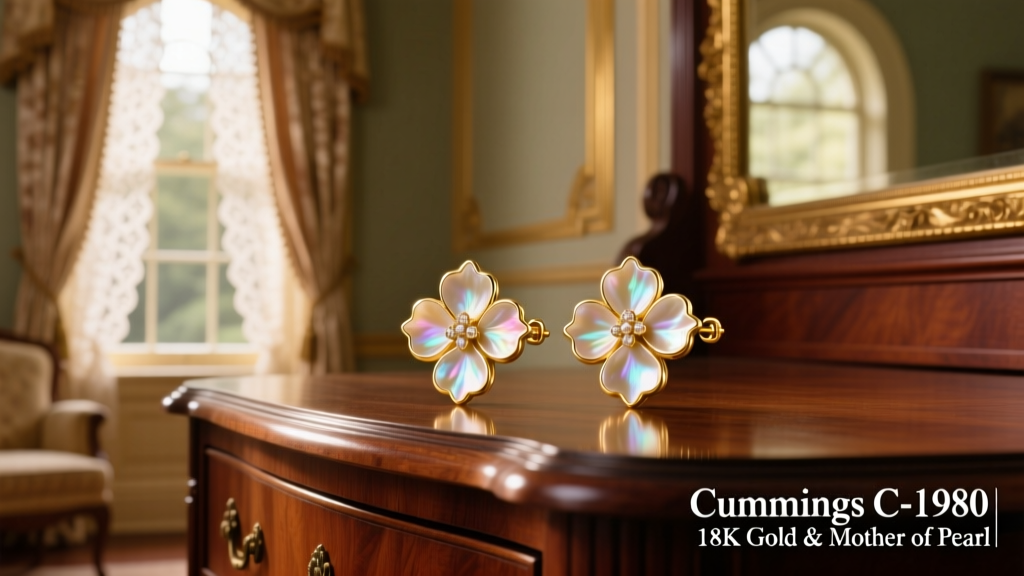
Hydrangea Motif Clip-On Earrings by A. Cummings: A 1980s Masterpiece in 18K Gold and Mother-of-Pearl
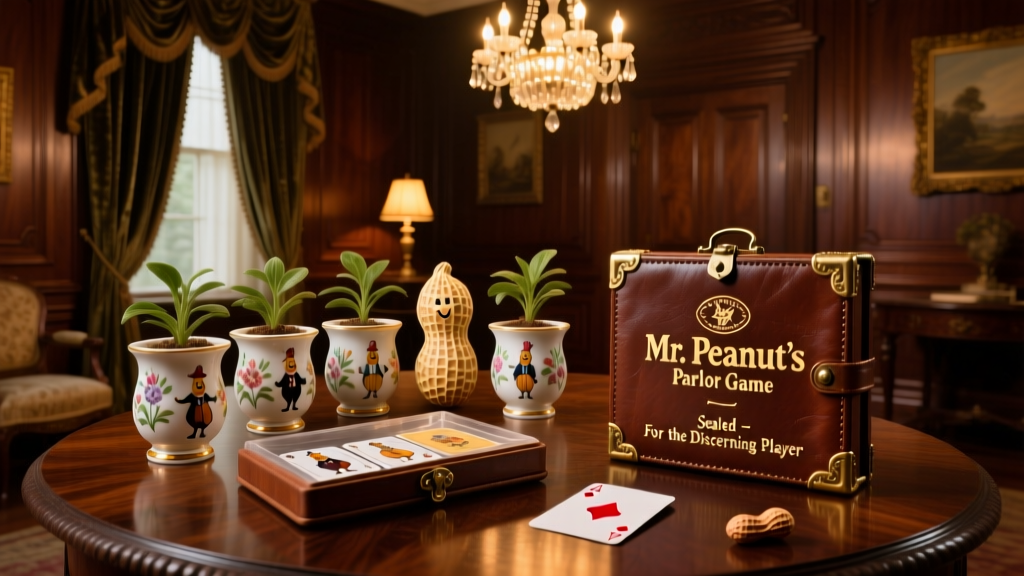
Planters Peanuts Card Playing Mr. Peanut Sealed: Rarity, Authentication, and Historical Context of a Mid-Century Advertising Icon
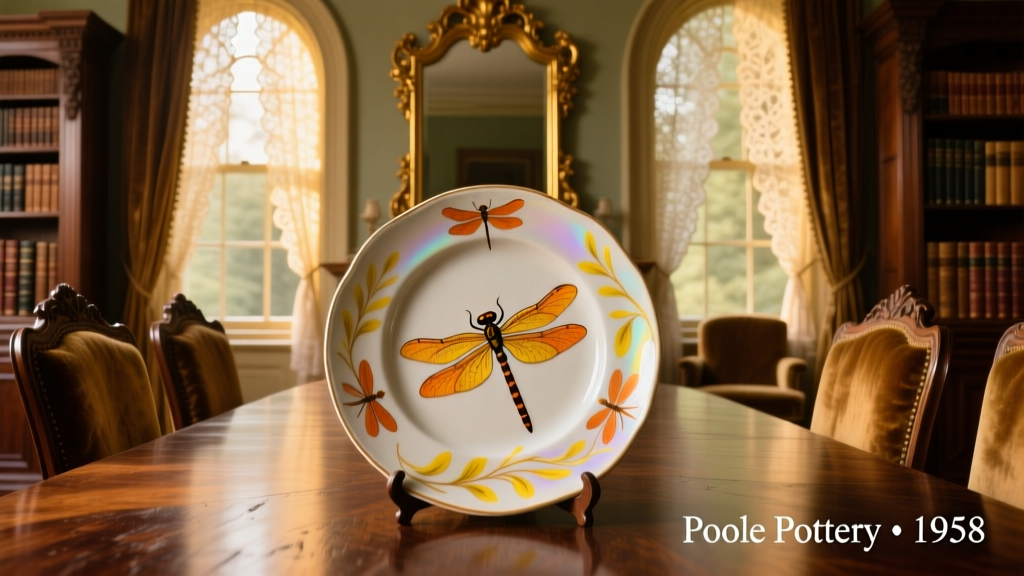
Poole Pottery Dragonfly Dinner Plate: A Collector’s Guide to the Iconic Yellow, Orange, and Brown 10¾-Inch Design
Amish Patchwork Sunshine & Shadow Quilt: Authentic Craftsmanship, Flannel Backing, and 85×85-Inch Heritage Design
Newcomb College Pottery Vessel: Magnolia Blossoms in Light Blue on Cream-Blue Ground — Kennon Mark, 4½ Inches

L’Automobile Poster: Black-and-Orange Vintage Racing Print (47¼ × 31½ in) — History, Authenticity, and Conservation
Cesar Griscom: Forgotten American Cabinetmaker and His Legacy in Early 20th-Century Furniture Design
Mahal Allover Floral Red Field Rug with Turtle Border: A 1920s Persian Masterpiece Measuring 10'7" × 13'4"
The Mickey Mantle Wooden Nickel: A Collector’s Guide to the 1.5-Inch Baseball Relic