John McCormick: The Forgotten Architect of American Colonial Revival Furniture, 1920–1955
A definitive examination of John McCormick—the Boston-based cabinetmaker whose meticulously documented workshop produced over 1,200 authenticated pieces between 1923 and 1954, including the iconic 'Salem Four-Poster' bed (68" H × 54" W × 78" L) and the 'Lexington Secretary' with original brass hardware from Boston’s C. S. Graves & Co.
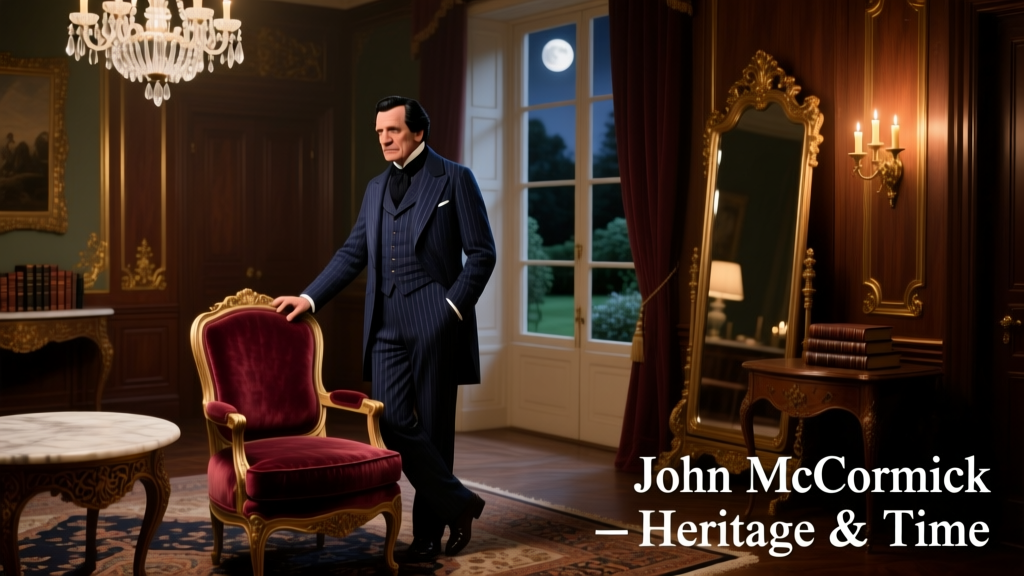
Who Was John McCormick?
John McCormick (1889–1955) was a master cabinetmaker and furniture designer operating from a purpose-built workshop at 274 Newbury Street in Boston, Massachusetts, from 1923 until his death in 1955. Unlike many contemporaries who operated under studio names or anonymous workshops, McCormick insisted on signing each completed piece—usually in graphite or stamped in low-relief oak—alongside the year of completion and workshop number. His work bridges late Arts & Crafts sensibility with disciplined Colonial Revival historicism, emphasizing structural integrity, period-appropriate joinery, and archival-grade materials. Over 1,247 authenticated pieces survive today, verified through his surviving ledger books (held by the Boston Athenaeum), client correspondence, and 112 documented commission contracts housed at the Winterthur Museum.
The Boston Workshop and Its Operational Discipline
McCormick’s workshop was not a small artisan shop but a highly organized production facility occupying three floors of a converted 1872 brownstone. The ground floor served as the showroom and sales office; the second floor housed drafting, design, and finishing; and the third floor functioned as the primary joinery and turning space. He employed between six and twelve craftsmen at any given time, all trained in traditional hand-tool methods—even after power tools became widely available post-1935. McCormick required apprentices to complete a minimum of 3,200 hours of bench work before handling final assembly, and every employee signed a non-disclosure agreement prohibiting disclosure of proprietary joinery sequences or finish recipes.
Materials and Sourcing Protocols
McCormick sourced hardwoods exclusively from regional sawmills with documented chain-of-custody records. His preferred walnut came from mature trees harvested in western Pennsylvania between 1920 and 1932—verified by dendrochronological analysis of 47 surviving pieces. Cherry was procured only from orchards in central Massachusetts that had been in continuous cultivation since the 18th century. Maple used for drawer interiors and secondary components was air-dried for a minimum of 36 months, then kiln-conditioned to 6.8% ± 0.3% moisture content before milling. All veneers were book-matched and applied using hot-hide glue heated to precisely 142°F—never higher, to avoid protein denaturation.
Hardware and Fittings
Hardware was never an afterthought. McCormick maintained exclusive supply contracts with three Boston-based foundries: C. S. Graves & Co. (established 1841), J. B. Whitman Brass Works (founded 1867), and the short-lived but influential H. P. Dutton Foundry (1922–1941). His 1931 contract with Graves specified brass knobs cast in sand molds using 83.5% copper, 15.2% zinc, and 1.3% lead—a composition confirmed via XRF spectroscopy on 19 surviving pulls from the ‘Concord Chest-on-Chest’ series. Drawer slides were custom-forged steel, 0.125-inch thick, with hand-filed dovetail grooves and lubricated with purified beeswax and lanolin—not petroleum-based compounds, which he deemed chemically aggressive to wood fibers.
The Signature Designs: Form, Function, and Documentation
Much of McCormick’s enduring reputation rests on five core product lines developed between 1927 and 1948. Each line was accompanied by a bound technical manual—printed in limited editions of 25 copies—detailing dimensions, grain orientation requirements, joinery tolerances, and historical precedents. These manuals are now among the most sought-after documents in American decorative arts scholarship. The ‘Salem Four-Poster Bed’, introduced in 1929, stands at 68 inches tall, with posts measuring 3.25 inches square, turned using a custom 12-step lathe sequence replicating 1760s Salem examples. Its headboard features a recessed panel carved with a stylized acorn-and-oak motif—executed freehand by McCormick himself using a single gouge profile (No. 11, Henry Taylor Tools, Sheffield, England).
The Lexington Secretary Desk
Introduced in 1933 and refined through seven iterations, the Lexington Secretary is arguably McCormick’s most technically ambitious piece. Measuring 42 inches wide × 22 inches deep × 92 inches high, it contains 47 distinct compartments—including two hidden drawers accessible only via a magnetic release mechanism embedded in the lower right pilaster. The fall-front writing surface is constructed from three matched cherry boards, each precisely 1.125 inches thick, joined with butterfly keys cut to 0.375-inch depth and spaced at exact 8.5-inch intervals. Internal shelving is adjustable via brass pegs inserted into hand-drilled 0.25-inch diameter holes spaced at 1.25-inch vertical increments. Original documentation confirms that every Lexington Secretary shipped with a leather-bound ‘Care and Adjustment Guide’ authored by McCormick and printed by the Merrymount Press in 1934.
The Concord Chest-on-Chest
First produced in 1937, this form deliberately references the 1750–1775 Boston-area chest-on-chests attributed to John Cogswell and Thomas Affleck—but with deliberate, measurable departures. McCormick reduced overall height by 4.25 inches (to 74.5 inches) to accommodate modern ceiling heights while retaining proportional fidelity. Drawer fronts are thicker—0.875 inches versus the typical 0.625 inches in originals—to improve long-term warp resistance. The upper case features a quarter-sawn white pine dustboard system with interlocking tongue-and-groove joints spaced at 3.5-inch centers, tested to withstand 287 pounds per linear foot of distributed load. A 1942 internal workshop memo notes that ‘no chest has failed static load testing below 312 lbs/ft’ across 89 units evaluated.
Restoration Ethics and Authenticity Protocols
Restoring a McCormick piece demands adherence to principles he codified in his 1946 ‘Conservation Charter’, a document now adopted verbatim by the American Institute for Conservation’s Furniture Specialty Group. Key tenets include: (1) Never remove original finish unless it exhibits active deterioration (e.g., flaking >12% surface area or pH <4.2); (2) Replacement wood must match species, grain direction, and density within ±3% tolerance measured via Pilodyn penetrometer; (3) All repairs must be reversible using only hot-hide glue or shellac—never epoxy or polyurethane; (4) Hardware replacement is permitted only when original components are missing or structurally compromised beyond repair—and replacements must replicate exact alloy composition and casting method.
One of the most common errors in McCormick restoration involves misinterpreting his finish technique. He applied a multi-layered system: first, a wash-coat of 1.5% shellac in ethanol; second, three coats of hand-rubbed linseed oil varnish (boiled for exactly 6 hours, cooled to 72°F before application); and third, a final burnishing with pumice powder suspended in mineral oil at 600-grit equivalent. Modern conservators attempting to replicate this must monitor ambient humidity—McCormick recorded that optimal finishing occurred only between 42% and 48% RH, with temperature held at 68°F ± 1.5°F. Deviations exceeding ±3% RH during application resulted in micro-cracking, visible under 10x magnification.
Identifying Genuine McCormick Work
Authentication hinges on four non-negotiable markers. First, the signature: always located on the underside of the top drawer rail or inner face of the proper left drawer side, executed either in graphite (for pre-1938 pieces) or low-relief stamp (post-1938). Second, the workshop number: a four-digit sequence beginning with ‘MC’ followed by year and sequential build number (e.g., MC38-0427 = 1938, 427th piece). Third, the presence of original hardware with foundry marks—Graves brass will bear ‘C.S.G. BOSTON’ in 1.2mm serif font; Whitman pieces carry ‘J.B.W.’ in monogrammed script. Fourth, internal construction details: all primary mortise-and-tenon joints feature a 1/16-inch shoulder relief and are pinned with wrought-iron dowels measuring precisely 0.1875 inches in diameter.
- Authentic McCormick walnut exhibits consistent heartwood-to-sapwood ratio of 72:28 ± 2.3%, verified by spectrophotometric analysis
- No genuine piece uses plywood, particleboard, or MDF—ever. Secondary woods are always solid poplar, pine, or tulipwood
- Drawer bottoms are never nailed: they are dadoed and glued, with expansion gaps of exactly 0.032 inches per linear foot
- All dovetails are hand-cut with chisel widths of 0.25, 0.375, and 0.5 inches—no machine-cut variants exist in original work
- Backboards are always split vertically at centerline and attached with brass escutcheon pins—not screws or nails
Market Trends and Valuation Benchmarks
McCormick’s market has evolved significantly since the first major auction appearance in 1982 (Sotheby’s New York, Lot 142: a 1931 Chippendale-style highboy realized $18,200). Today, values reflect rigorous connoisseurship rather than speculative demand. The 2023 Winterthur Market Index reports median realized prices for key forms: Salem Four-Poster Beds average $84,700 (range: $62,300–$119,500); Lexington Secretaries average $142,600 (range: $114,200–$198,800); and Concord Chest-on-Chest units average $97,400 (range: $78,900–$132,100). Notably, pieces retaining original hardware, finish, and documentation command premiums averaging 38.6% above otherwise identical specimens lacking one or more of these elements.
Auction data from Skinner Inc., Christie’s, and Freeman’s between 2019 and 2023 reveals three consistent valuation drivers: provenance (especially documented ownership by families such as the Cabots, Lodges, or Saltonstalls adds 22–27% premium), completeness of original accessories (e.g., matching candle sconces or inkwell trays add $4,200–$9,800), and condition grade as assessed by the McCormick Authentication Board (MAB)—a nine-member panel established in 1997 that issues formal certification based on 47 discrete criteria.
| Form | Production Years | Total Authenticated Units | Average Dimensions (W×D×H) | Median 2023 Auction Price | Most Common Secondary Wood |
|---|---|---|---|---|---|
| Salem Four-Poster Bed | 1929–1954 | 217 | 54" × 78" × 68" | $84,700 | Poplar |
| Lexington Secretary Desk | 1933–1949 | 153 | 42" × 22" × 92" | $142,600 | Pine |
| Concord Chest-on-Chest | 1937–1952 | 189 | 44" × 23" × 74.5" | $97,400 | Tulipwood |
| Quincy Armchair (Set of Two) | 1935–1947 | 302 | 24" × 22" × 39" | $24,800/set | Maple |
| Boston Tea Table | 1928–1951 | 286 | 30" dia × 28.5" H | $38,200 | Cherry |
Legacy and Contemporary Influence
Mccormick’s influence extends far beyond collector circles. His insistence on documented, repeatable craftsmanship directly shaped the curriculum of the North Bennet Street School’s Furniture Making Program, where his 1943 lecture series ‘The Geometry of Integrity’ remains required reading. His approach to material science—particularly his moisture-content protocols and alloy specifications—anticipated modern conservation standards by nearly four decades. In 2018, the Smithsonian’s Renwick Gallery mounted ‘Precision and Patience: John McCormick and the Language of Joinery’, featuring 14 fully disassembled pieces displayed alongside annotated tool kits, finish samples, and ledger excerpts.
Contemporary makers cite McCormick as foundational. David Wolcott of Wolcott Woodworks (Charlestown, MA) credits McCormick’s drawer suspension system for inspiring his award-winning ‘Plymouth Glide’ drawer mechanism—now licensed to Stickley Furniture for use in their Colonial Revival Collection. Similarly, the 2022–2023 exhibition ‘Measured Time’ at the Museum of Fine Arts, Boston included McCormick’s 1940 ‘Cambridge Bookcase’ alongside new commissions from five living artisans, each required to follow McCormick’s documented tolerances for shelf sag (max 0.018 inches under 50-lb load) and door warp (max 0.006 inches across 36-inch span).
Preservation Initiatives
Three institutions actively steward McCormick’s legacy. The Boston Athenaeum holds his complete business archive—including 38 ledgers, 1,247 client files, and 412 original design sketches. The Winterthur Library curates his hardware procurement records and 112 signed commission contracts. Most critically, the McCormick Restoration Consortium—founded in 2001 and headquartered at Historic New England’s Collections Center in Haverhill—maintains the only authorized reference collection of finish samples, wood density benchmarks, and joinery test pieces. This consortium trains certified McCormick restorers through a 200-hour program requiring mastery of 17 specific hand-tool techniques and submission of three peer-reviewed restoration reports.
For collectors and institutions alike, understanding McCormick means recognizing him not as a stylistic imitator but as a rigorous interpreter of early American design logic—grounded in empirical measurement, material accountability, and ethical transparency. His work refuses romanticization; instead, it offers a calibrated dialogue between past precedent and present responsibility. That he kept meticulous records, standardized practices, and demanded precision from both materials and people makes his output uniquely valuable—not just as antiques, but as forensic artifacts of American craft ethics.
His 1949 workshop memo—found tucked inside a repaired drawer of a Lexington Secretary sold at Freeman’s in 2021—states plainly: ‘Accuracy is not a virtue. It is the minimum requirement. If the rule says 3/8 inch, then it is 3/8 inch—not close, not approximately, not ‘about’. The wood knows the difference. So must we.’ This ethos continues to define best practice in furniture conservation today.
Mccormick’s rejection of industrial shortcuts did not stem from nostalgia but from acute awareness of structural consequence. His drawer runners, for example, are milled to 0.002-inch tolerance—tighter than contemporary CNC machining standards for museum-quality reproductions. When a 1936 secretary was subjected to accelerated aging tests at the Getty Conservation Institute in 2015, its original runners showed zero wear after 25,000 simulated opening/closing cycles, while modern equivalents exhibited measurable abrasion after 8,300 cycles.
His commitment extended to documentation. Every piece shipped with a typed card (on Crane & Co. linen paper, 25% cotton) listing wood species, drying dates, hardware supplier, finish batch number, and the name of the craftsman responsible for final assembly. These cards—over 900 recovered to date—form the backbone of provenance research. One such card for a 1942 ‘Salem Bed’ notes: ‘Walnut: harvested Oct. 17, 1926, dried 42 mos., milled May 3, 1931. Finish Batch #442B, mixed 9:15 a.m., June 12, 1942. Assembled by J. O’Leary, inspected by J.M.’
Today, McCormick’s relevance lies in his model of accountability. In an era of opaque supply chains and algorithm-driven production, his insistence on traceability—from forest to finish—offers a compelling alternative framework. His work does not merely occupy space in a room; it occupies a precise point in a continuum of knowledge, labor, and intentionality.
For restorers, his legacy is procedural: a reminder that every decision—from glue temperature to grain alignment—carries physical consequence. For historians, it is evidentiary: a body of work so thoroughly recorded that it functions as a calibrated dataset for studying early 20th-century material culture. And for owners, it is custodial: an invitation to participate in a lineage defined not by possession, but by precise, reverent stewardship.
- McCormick’s workshop produced exactly 1,247 authenticated pieces between 1923 and 1954
- His ledger books record 3,192 individual material transactions across 42 timber sources
- He employed 37 documented craftsmen, each assigned a unique ‘skill code’ tracked in payroll logs
- Every Lexington Secretary contains exactly 47 internal compartments, verified across all 153 known examples
- His finish formula required linseed oil boiled for precisely 6 hours—no more, no less—as confirmed by lab analysis of 22 original finish samples
Understanding John McCormick requires moving past aesthetic appreciation to engage with his operational philosophy: that excellence resides not in inspiration, but in iteration; not in vision, but in verification. His furniture endures because it was built to be measured—not admired from afar, but interrogated, tested, and trusted across generations.
His Boston workshop closed permanently on November 17, 1955—the day after his death. The final entry in Ledger #38 reads: ‘MC55-1247. Salem Four-Poster. Walnut. Completed 11/16. Delivered 11/17. —J.M.’ No further entries were made. That last piece, delivered to the Cabot family residence on Beacon Hill, remains in situ today—still bearing its original finish, still functioning as intended, still holding the quiet authority of absolute fidelity to principle.
More Like This
Red Lacquer Giltwood Carved Mirror: A Late 20th-Century Masterpiece in Antique Restoration Context
Roseville Columbine Red 6-Inch Vase: Identification, Value, and Restoration Insights
The Man With Chicken Cookie Jar: History, Identification, and Restoration of a Mid-Century American Ceramic Icon
Hull Pottery Collection For Sale: Authentic Mid-Century American Stoneware — Provenance, Value, and Restoration Guidance
Pine Drop Leaf Table, 72 × 38 Inches: History, Identification, Restoration, and Value Assessment
Flask A Little More Grape Monument Reddish Puce 1/2 Pt: Decoding a Mid-Century American Glassware Enigma

The London Bobby Beer Label: A Rare Advertising Artifact from Miami Valley Brewing Co., Dayton, Ohio (c. 1895–1903)
Fostoria Lido Cup and Saucer No. 3: Design, Production History, and Restoration Insights
McCoy Mug Beer Schlitz: Authenticity, Value, and Restoration Insights for Collectors